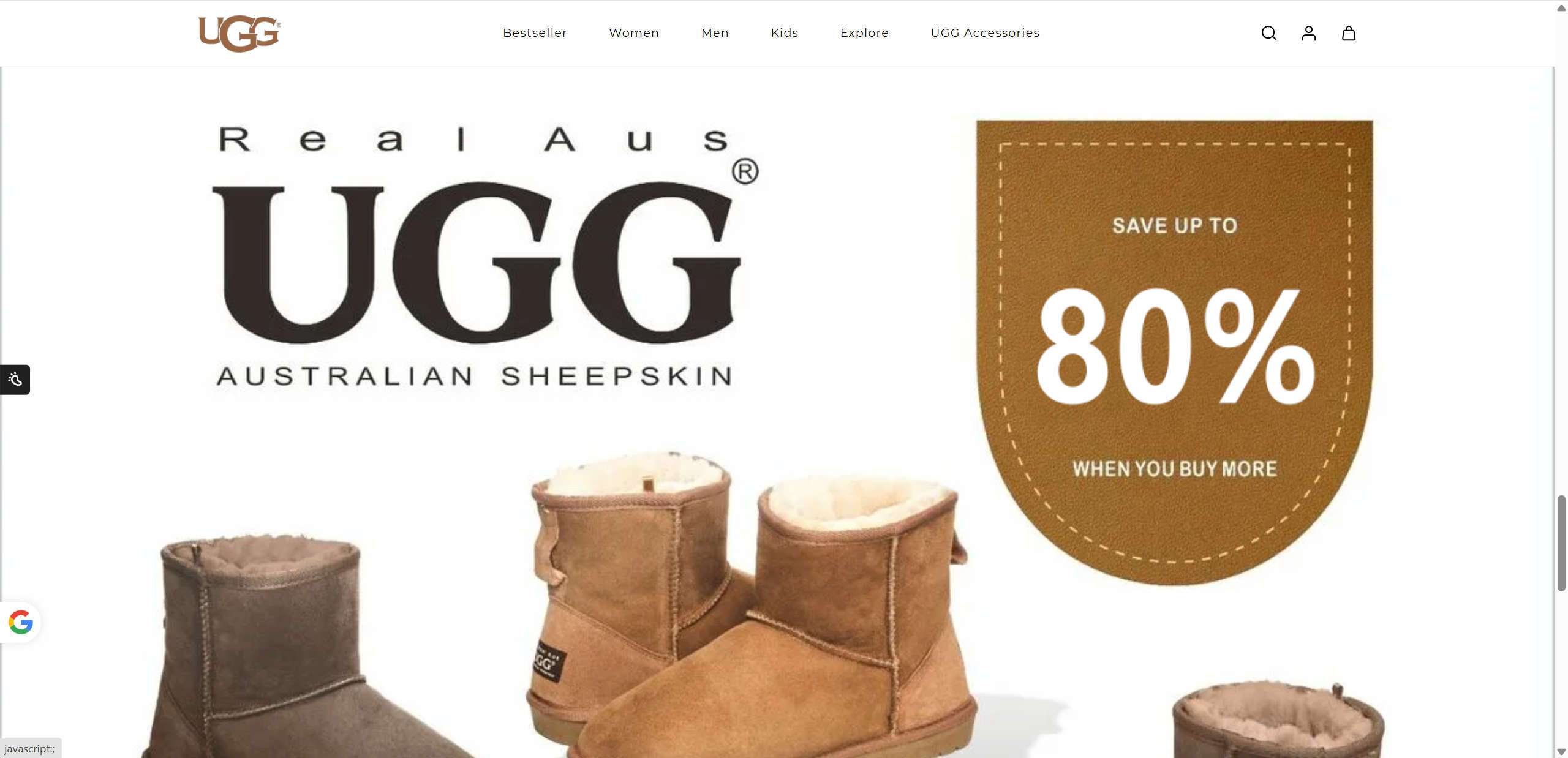
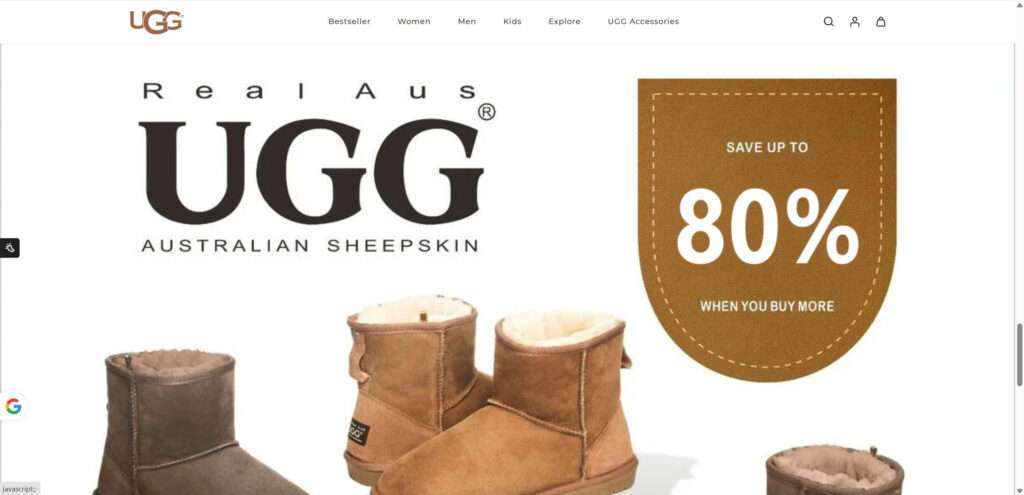
Across Facebook, Instagram, TikTok, and YouTube, millions of shoppers are being targeted by irresistible advertisements promoting an unbelievable “UGG 90% Off Clearance Event.” These ads feature high-quality photos of classic UGG boots, winter slippers, fleece-lined jackets, and popular seasonal products, all discounted from $179 down to $18.99, or from €200 to €22.50 depending on the victim’s location. Everything about these offers looks carefully crafted to appear genuine. The sites look professional, the photos look official, and the discounts seem like a once-in-a-lifetime opportunity. But none of it is real. The UGG 90% Off Sale Scam is one of the largest and fastest-expanding online shopping scams today, stealing money, personal data, and credit card information from unsuspecting shoppers worldwide.
This article exposes how the scam works, how the websites trick victims, the red flags to watch for, and the exact steps to take if you were affected.
Scam Overview
The UGG 90% Off Sale Scam is a global scam operation run by organized online fraud networks. These groups impersonate popular brands to steal payments and personal information. They operate hundreds of fraudulent websites that mimic the appearance of the official UGG store. Their goal is simple: collect as many orders as possible before authorities or hosting platforms shut down the websites, then launch new ones within hours under different domain names.
These scam networks rely heavily on social media advertising, especially platforms like Facebook, Instagram, and TikTok. Scammers use stolen photos, stolen product descriptions, fake customer reviews, and artificially generated urgency banners to create a false sense of legitimacy. Once victims place an order, scammers disappear with their money. In most cases, victims receive nothing. In some cases, they receive a cheap counterfeit item worth less than $3 — sent only so the scammer can technically claim that “a product was delivered.”
A Look at the Scam’s Scope and Reach
The UGG scam has exploded internationally because it exploits a powerful combination of:
- brand popularity
- seasonal demand
- holiday shopping periods
- psychological urgency
- realistic design copies
UGG boots and slippers are extremely popular during fall and winter. Scam networks know this, which is why these fraudulent websites often launch in waves during:
- early fall
- pre-Black Friday season
- holiday shopping rush
- end-of-season clearance periods
When customers see “90% Off UGG Clearance — Today Only,” they assume the brand is liquidating inventory for the season. Scammers know this psychological pattern and exploit it perfectly.
How the Fake UGG Sites Look
At first glance, fake UGG stores appear legitimate. They include:
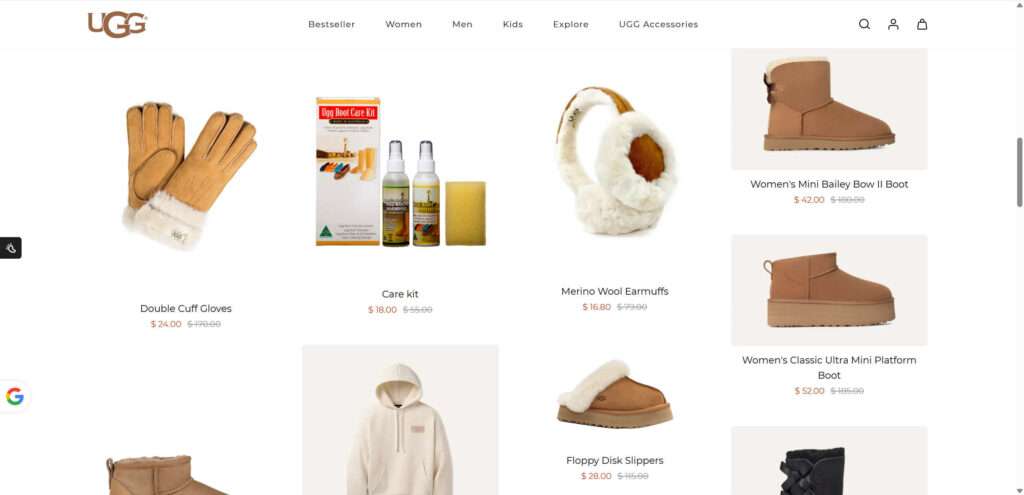
- Stolen official photos
Scammers download high-resolution images from the real UGG website and reuse them across all scam sites. - Copied product descriptions
Technical details, material descriptions, and size guides are taken directly from UGG’s official pages. - Fake “UGG Outlet” logos
Scammers add professional banners like “UGG Outlet Store,” “UGG Clearance,” and “UGG Warehouse Liquidation.” - Professional site layout
Many scam sites copy entire category pages from UGG’s legitimate store. - Artificial star ratings
Fake reviews claim that shoppers received genuine UGG boots quickly and were impressed by the quality. - Fake security badges
Icons like “Secure Checkout,” “PCI Compliant,” or “Trusted Store” are displayed even though they are meaningless graphics. - Location-based pricing
Visitors in Europe see prices in €, visitors in the UK see prices in £, and visitors in the US see prices in $.
This creates an illusion of authenticity. - Deceptive return policies
Scam sites display vague return addresses such as “Warehouse Handling Center, London, UK” or “Refund Center, Los Angeles,” but these addresses do not actually exist.
Why Victims Fall for This Scam
Shoppers fall victim for several reasons:
- The ads look real because scammers use official UGG photography.
- The discounts look plausible when framed as a “warehouse clearance” or “store closing sale.”
- Many people believe UGG has seasonal outlet events, even though they do not.
- Shoppers are targeted during peak buying seasons, when demand for winter boots is highest.
- Scam websites load quickly and look professional, giving users a false sense of trust.
- Consumers are trained to act quickly with online deals, especially when “limited stock remaining” banners are shown.
- The checkout process appears legitimate with SSL locks, fake trust badges, and secure-looking payment forms.
In essence, the scam is successful because it carefully imitates legitimacy at every step.
The Characteristics Seen Across UGG Scam Websites
Through investigation of hundreds of fraudulent UGG domains, several patterns consistently appear:
- Every product is discounted by between 70–95%
- No visible company information, registration details, or corporate address
- Only credit card payments accepted (no PayPal, no Klarna, no Afterpay)
- Recently registered domain names (often less than 30 days old)
- Broken English or unusual phrasing in site text
- Fake countdown timers that restart each time the page refreshes
- Fake buyer reviews dated before the domain existed
- Return policies referencing imaginary warehouses
- Social media icons linking nowhere
- Support emails that never reply
Websites may vary in layout, but the underlying behavior is identical.
Real Examples of UGG Scam Domains
Here are examples of scam UGG sites (all confirmed fraudulent):
- uggs-outlets-shop.store
- uggclearance-warehouse.shop
- outlet-uggvip.shop
- uggdiscount-eu.store
- officialugg-sale.shop
- uggslast-clearance.shop
- uggs-90off-event.store
Each site copies the same template, prices, photos, and discounts. Once the site receives a high number of complaints or chargebacks, scammers abandon it and launch a new one.
What Victims Commonly Receive
Victims commonly report receiving:
- a cheap polyester knockoff
- a $1 plastic coin purse
- a pair of synthetic slippers worth less than $5
- a random toy or accessory
- no delivery at all
In several cases, victims have been asked to return counterfeit goods to an address in China — an address the victim must pay expensive international postage for — only to have the return refused or ignored.
Security Risks Beyond Losing Money
This scam is especially dangerous because the fake websites harvest sensitive information. Victims unknowingly provide:
- full name
- home address
- phone number
- email address
- credit card number
- card expiration date
- CVV code
Fraudsters use this data for:
- unauthorized charges
- card testing attacks
- identity theft
- phishing attempts
- marketing of personal data to other scammers
Losing money is bad — but losing data can lead to weeks or months of additional fraud.
How the Scam Works
The UGG 90% Off Sale Scam follows a detailed and consistent strategy used by hundreds of fraudulent shops across the web. Understanding each stage helps prevent future victims from falling prey to the scheme.
Step 1: Scammers Create a Fake UGG Store
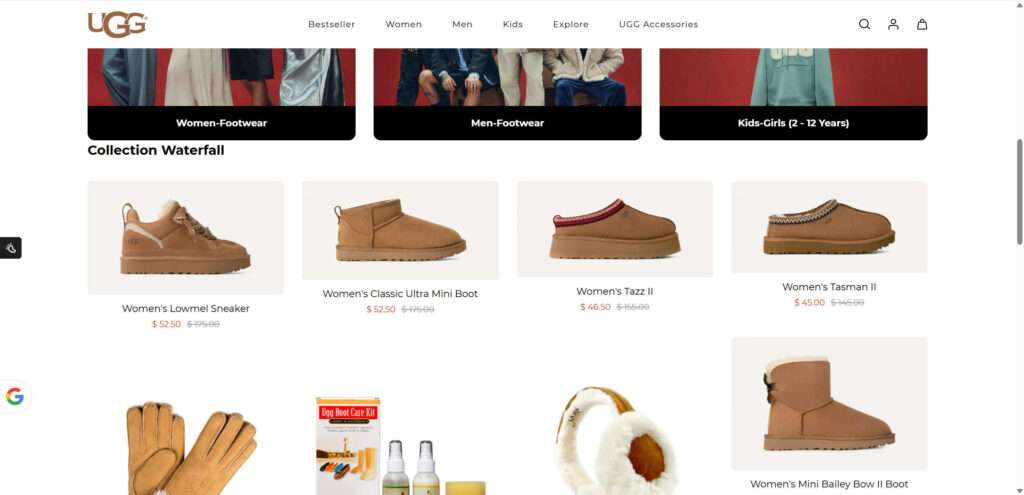
Fraudsters begin by purchasing a website template from a cheap online theme marketplace. They then customize the template to replicate the UGG brand. This involves:
- copying the UGG logo
- copying UGG’s official navigation menu
- copying UGG’s images and product descriptions
- adding fake “outlet sale” graphics
- creating false categories like “UGG Factory Clearance”
The design aims to trick shoppers into believing they are accessing a legitimate UGG outlet or factory store.
Step 2: Scammers Register a Deceptive Domain
Scammers select domain names that appear related to UGG. Examples include:
- ugg-clearance-eu.shop
- uggwarehouse-outlet.shop
- uggs90off.store
These domains often use cheap or obscure extensions such as:
- .shop
- .store
- .online
- .vip
- .live
- .top
Domains are usually registered anonymously and are active for only a few weeks before disappearing.
Step 3: Scammers Launch Paid Ads on Social Media
Fraudsters use paid advertising tools on:
- TikTok
- YouTube
- Google Display Network
These ads show:
- winter boots for $19
- slippers for €22
- jackets for £29
- “Everything 85%–90% Off” banners
- “Warehouse Closing Sale” announcements
The ads look professional because they use real product images taken from the genuine UGG website.
Step 4: Victims Click the Ad and Land on the Fake Store
The fake store includes:
- attractive landing pages
- discounts displayed in large font
- free shipping offers
- “limited stock” counters
- fake review sections
- fake trust badges
This creates the illusion of a real online store.
Step 5: Victims Add Boots or Slippers to the Cart
Shoppers choose incredibly low-priced items such as:
- Classic UGG boots for $24.99
- UGG Tasman slippers for €19.99
- UGG Adirondack boots for £32
The price difference between real UGG prices and the fake prices convinces many that the sale is unbeatable.
Step 6: Victims Enter Sensitive Information Into the Checkout Page
During checkout, victims enter:
- name
- address
- phone
- credit card info
Fraudsters can now:
- charge the card
- resell the data
- use the card for additional purchases
Step 7: Scammers Send Fake Confirmation Emails
Victims receive fake order confirmations from generic emails such as:
These emails promise shipping within 5–10 days, which never occurs.
Step 8: Scammers Ship Fake or Worthless Items (Sometimes)
To reduce chargeback rates, scammers sometimes ship:
- a cheap keychain
- synthetic slippers
- knockoff boots of terrible quality
Most victims receive nothing at all.
Step 9: The Website Disappears
After a few weeks:
- the site goes offline
- the ads stop running
- scam operators launch new domains
This cycle repeats endlessly.
How to Spot the Scam Ads and Websites
Identifying the UGG 90% Off Sale Scam early can protect you from financial loss and prevent your data from ending up in criminal networks. Scammers follow predictable patterns, and once you know what to look for, the fake ads and websites become easy to recognize.
How to Spot Fake UGG Ads on Social Media
- Unrealistic discounts like 80%–90% off
UGG boots priced at $19.99 or €22.50 are an automatic red flag. - Aggressive urgency language
Scam ads push messages such as:- Today Only
- Warehouse Closing
- Last Day Clearance
- Only 2 Left
- Stolen photography from the real UGG site
The photos look professional because they are stolen. - Ads from pages with no history
Fake pages often have:- no verification
- low follower count
- no previous posts
- Comments disabled
Scammers hide comments to prevent victims from warning others. - Ads redirect to strange URLs
Clicking the ad reveals domains like:- uggoutletshop-eu.store
- uggofficial-sale.shop
- uggwarehouse90.store
These are not official.
- Grammar or English mistakes in the ad text
Odd phrasing is a giveaway of overseas scam operations.
How to Identify Fake UGG 90% Off Websites
Even if the ads look real, the website itself exposes the scam.
- Suspicious domain names
Anything not on the official UGG domain is fake. Scammers add words like:- outlet
- sale
- clearance
- warehouse
- vip
- shop
- Recently created domain
Scam sites are almost always less than 60 days old. - Every item discounted 80%–90%
Real retailers do not price entire catalogs at extreme discounts. - Stolen product descriptions and images
Identical to UGG’s official product pages. - No functioning customer service
Fake phone numbers or Gmail/Outlook email addresses. - Checkout accepts credit cards only
No PayPal, Klarna, Afterpay, or Apple Pay.
This is intentional so scammers can steal card numbers. - Inconsistent pricing
Prices may appear in $ on one page and € on another. - Grammar errors or strange phrasing throughout the site
Many scam sites display inaccurate English or unusual expressions. - Fake return addresses
Listed addresses often lead nowhere or point to unrelated businesses. - Shipping tracking that never updates
Fake shipment confirmations are common.
Quick Checklist to Identify a Scam Instantly
If you see ANY of these signs, the site is fake:
- 80%–90% off everything
- unfamiliar domain
- no PayPal
- recently registered site
- unrealistic “warehouse liquidation” claims
- poor English
- fake trust badges
- countdown timers
- stolen images
- no working phone number
If even one appears, do not purchase.
What to Do if You Have Fallen Victim to This Scam
Victims should act immediately. Here are the exact steps:
1. Contact Your Bank or Credit Card Issuer
Request:
- a chargeback
- reversal of the transaction
- replacement of your card
Explain that you purchased from a fraudulent merchant impersonating UGG.
2. Monitor Your Bank Account
Look for unauthorized charges.
3. Change Your Email Password
If you created an account on the scam store, change your password immediately.
4. Report the Scam Website
Report to:
- your bank
- your national consumer protection agency
- Google Safe Browsing
- Meta’s scam reporting tool
5. Do Not Ship Anything Back
Return addresses are fake or lead to unrelated buildings.
6. Warn Others
Share your experience on social media and scam-reporting platforms.
FAQ
What is the UGG 90% Off Sale Scam?
The UGG 90% Off Sale Scam is a widespread online shopping fraud where scammers set up fake websites that impersonate UGG’s official brand. These fraudulent outlets advertise massive discounts, often listing $180 boots for $19.99 or €22.50. Once shoppers place an order, scammers either send counterfeit goods, a worthless $1 item, or nothing at all. The goal is to steal money, credit card data, and personal information.
Are any UGG outlet or clearance websites real?
No. UGG does not run separate “outlet,” “warehouse,” “factory store,” or “90% off” clearance websites. All official UGG sales happen on the genuine website or through authorized retailers. Any standalone “UGG Outlet Store” claiming extreme discounts is a fake.
Why do scammers use both $ and € on these sites?
Scammers target multiple countries. Their websites automatically switch currency based on your location. Visitors from the US see $. European shoppers see €. UK visitors see £. Some pages even mix currencies accidentally, which is a strong red flag.
Why do the fake UGG websites look so convincing?
The scammers steal everything from the official UGG website, including:
- product photos
- product descriptions
- navigation menus
- color palette
- lifestyle images
- promotional graphics
They also use fake security badges and fake customer reviews to appear legitimate.
Why are the discounts always 80%–90% off?
Extreme discounts are used as psychological bait. Scammers know that shoppers respond emotionally to dramatic price drops, especially during winter and holiday periods. No legitimate retailer offers 80%–90% off UGG boots across the entire store.
How do fake UGG ads appear on Facebook, Instagram, TikTok, and Google?
Scammers pay for sponsored ads using stolen brand images. Social platforms rely on automated review systems, which often fail to detect fraudulent campaigns. Once an ad is reported or banned, scammers launch a new page and run the exact same ads again.
Are the UGG boots in these ads fake or counterfeit?
If anything is delivered, it is never authentic. Victims commonly receive:
- poorly made synthetic boots
- cheap slippers
- counterfeit items worth less than $5
In many cases, no package arrives at all.
Do victims receive a tracking number?
Yes, often a fake one. The tracking may show:
- “Label Created”
- “Shipment Registered”
- “Awaiting Pickup”
but it never updates. Some tracking numbers lead to unrelated deliveries.
Why do some victims receive a cheap item instead of their order?
Scammers sometimes send a $2 item simply to create a “proof of delivery.” They hope this makes chargebacks harder. The worthless item is intentional.
Can scammers steal credit card information through these fake websites?
Yes. When you enter your payment details, scammers can:
- charge the card multiple times
- sell the card number to other criminals
- test the card for future purchases
- run charges weeks later
For this reason, contacting your bank immediately is essential.
Is it possible to get a refund if I was scammed?
Yes. Many victims successfully file chargebacks by telling their bank:
- the merchant impersonated UGG
- the website was fraudulent
- the product was never delivered
PayPal users should file a dispute for “Item Not Received” or “Significantly Not as Described.”
Why do scam websites disappear so quickly?
Scammers shut down their domains once:
- they receive too many complaints
- the domain is reported
- banks blacklist the payment processor
- social ads are banned
They then launch an identical site under a new domain and start again.
What are the strongest red flags of a fake UGG store?
- discounts of 80%–90%
- unfamiliar URLs
- no PayPal or secure payment options
- recently created domains
- no real customer support number
- stolen product photography
- inconsistent pricing
- grammar errors
- stock countdown timers
- “warehouse closing” messaging
How can I verify if an UGG sale is legitimate?
To confirm authenticity:
- check the official UGG website
- verify authorized retailers on UGG’s site
- check UGG’s verified social media accounts
- search for reviews of the website
If the sale cannot be verified, it is fake.
What should I do if I gave my email or phone number to a scam site?
Expect spam and phishing. Scammers may contact you pretending to offer:
- fake refunds
- fake order updates
- new discount offers
Avoid clicking any links and delete suspicious messages.
The Bottom Line
The UGG 90% Off Sale Scam is a widespread impersonation scheme that preys on shoppers searching for winter deals. Fraudulent websites promise unbelievable discounts but deliver nothing or counterfeit items. They steal money, credit card information, and personal data. The only safe way to purchase UGG products is through the official website or authorized retailers. Any site offering 80%–90% off should be treated as a scam.
If you have already fallen victim, act quickly. Contact your bank, secure your accounts, and report the fraudulent website. Staying informed and vigilant is the best defense against online shopping scams.