If you’ve seen ads or viral TikTok videos claiming that Valerio Pianna Watches — supposedly hand-crafted Italian luxury timepieces — are now available for $90 instead of $1,800 after a “leaked staff code,” you might be tempted to think you’ve just found a once-in-a-lifetime deal.
- Scam Overview
- How the Scam Works
- What to Do If You Have Fallen Victim to the Valerio Pianna Scam
- Why the Valerio Pianna Scam Works So Well
- How to Spot Fake Luxury Watch Sites Like This
- Real vs. Fake Luxury Watch Brands: A Comparison
- Connection to Other Scam Networks
- Recommended Actions to Protect Yourself Online
- The Bottom Line
- Frequently Asked Questions (FAQ)
But the truth is far less glamorous.
Behind the sleek website, bold luxury claims, and convincing marketing lies a highly organized dropshipping scam network that has fooled thousands of unsuspecting buyers around the world.
This article exposes exactly how the Valerio Pianna scam works, why their watches are not worth anywhere near the claimed retail price, and what to do if you’ve already placed an order.
Scam Overview
A “Luxury” Brand That Appeared Overnight
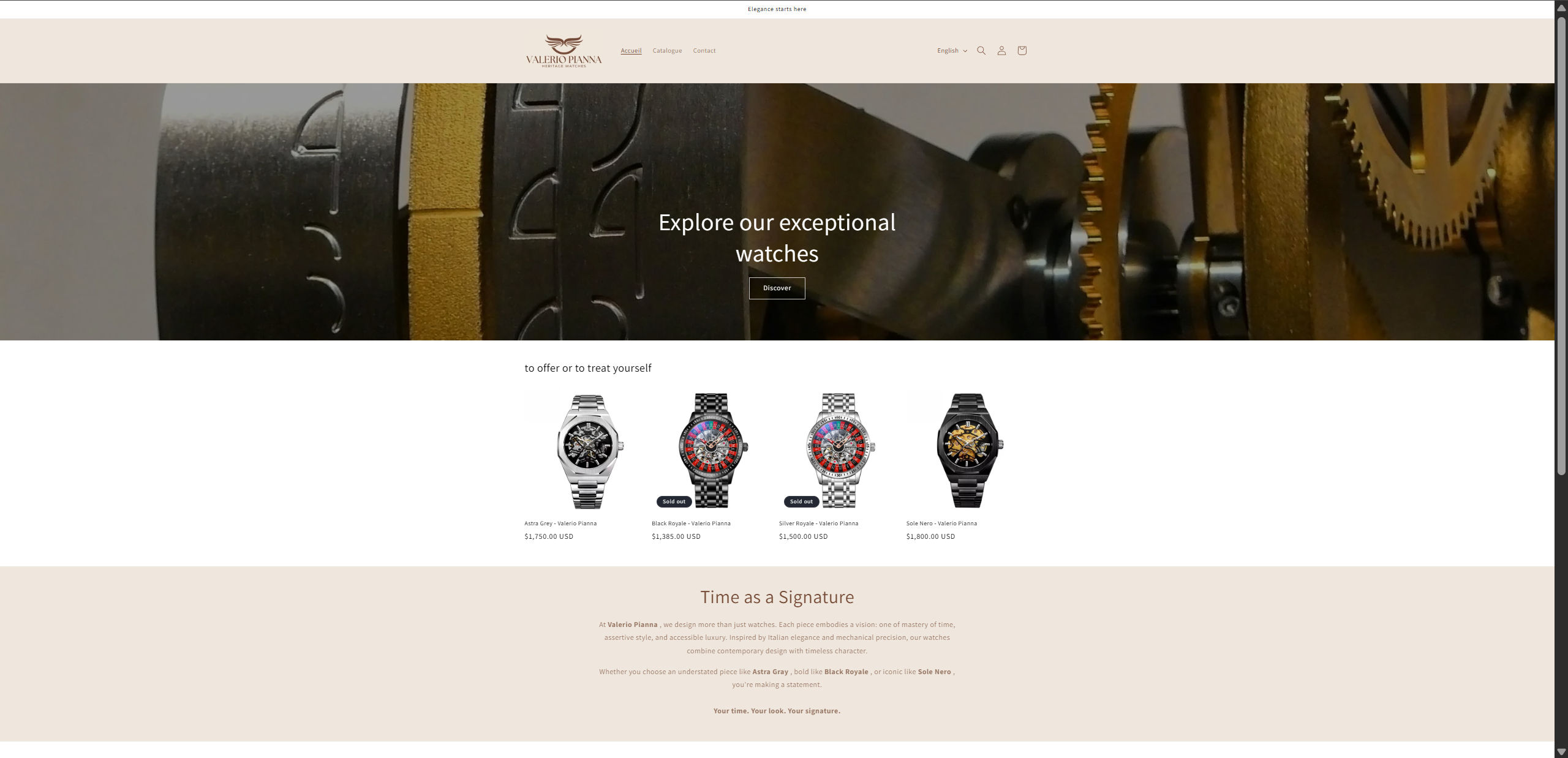
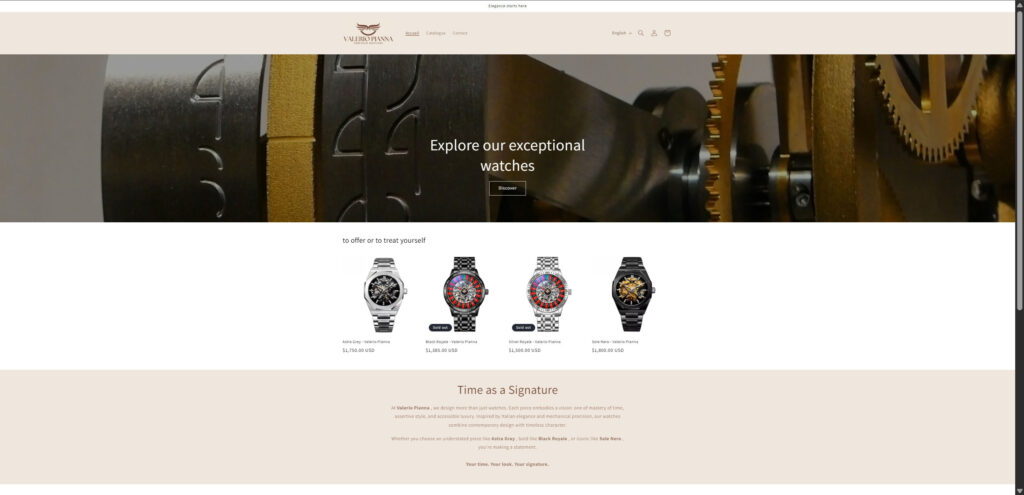
Valerio Pianna’s website looks elegant at first glance. It features:
- Minimalist design with high-contrast product photography
- Clean typography and luxury-style branding
- A story about “hand-drawn watch designs”
- Product names like Astra Gray, Black Royale, and Sole Nero
- Watches listed at $1,750+ USD with fake “sold out” tags to create scarcity
But a quick background check reveals a completely different reality:
- The domain was registered recently, only weeks before the marketing campaign began.
- There is no real company history, founder, or brand registration in Italy or Switzerland.
- Identical watches can be found on Chinese wholesale platforms for $20–$30 per piece.
- There are no legitimate reviews, press mentions, or any trace of a brand history.
This isn’t a heritage luxury watch brand.
It’s a fake luxury storefront built to look expensive, designed to inflate perceived value and extract quick sales from impulse buyers.
The Viral “Leaked Staff Code” Trap
The primary hook used in their ads is the “leaked staff discount” narrative:
- “Luxury watches normally $1,800, now $90 with leaked employee code.”
- “Staff code works for a limited time only.”
- “Exclusive access to insiders.”
This is pure manipulation.
The “staff code” is not real. It’s simply a coupon automatically applied to every customer to create the illusion of an exclusive deal.
In reality, this is just the regular selling price — for a cheap watch worth less than a fast-food meal.
Fake Artisanal Backstory
The website makes bold claims about:
- “Every watch begins as a hand-drawn vision.”
- “Inspired by Italian elegance and mechanical precision.”
- “Each piece embodies a vision of mastery of time.”
But:
- There is no workshop, no founder biography, and no verifiable address.
- The images of hand-drawn designs are generic and appear on multiple unrelated websites.
- No real artisan or designer named Valerio Pianna exists in the watchmaking world.
This fabricated origin story is a classic scam tactic: building emotional trust before asking for payment.
Massive Markups on Cheap Watches
One of the easiest ways to identify this scam is by reverse image searching the watch photos.
The same exact watches are sold on:
- AliExpress
- Alibaba
- DHgate
- Temu
…for $20 to $30, often under generic names with no branding.
Valerio Pianna inflates these prices to $1,385 – $1,800 USD and uses:
- “Sold out” tags for fake urgency
- “Exclusive collection” language for perceived rarity
- “Hand-finished” claims with no evidence
This is not luxury. It’s mass-produced low-cost watches rebranded for huge profit margins.
Lack of Transparency and Consumer Protection
The website offers no company address, no phone number, and no real customer service contact.
There are:
- No VAT or company registration numbers
- No real return or refund policies
- No clear shipping terms (or vague terms copied from templates)
Legitimate luxury brands are transparent.
Valerio Pianna hides everything behind slick marketing and checkout funnels.
Identical Scam Websites
This brand isn’t unique. It’s part of a larger scam network running identical sites under different names, rotating logos and brand stories.
Common patterns include:
- Recently registered domains
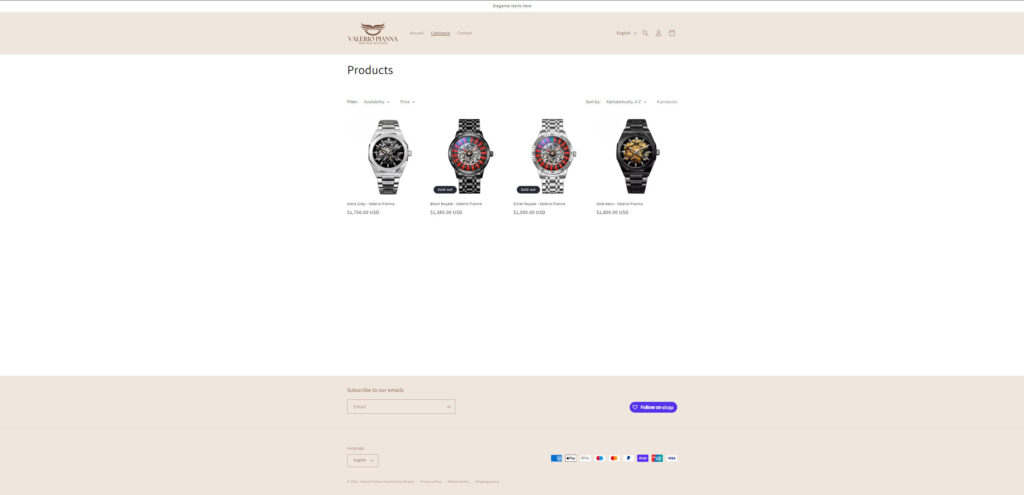
- Minimal product catalog (4–6 watches)
- Identical layouts and fonts
- Copy-pasted product descriptions
- Fake “about” sections about artistic design and craftsmanship
Previous versions of the scam used names like:
- Nicolo Pianna
- Aurelio Timepieces
- Lorenzo Watch Atelier
- Leone Milano
When one site gets flagged or chargebacks pile up, they simply rebrand and start again.
How the Scam Works
Step 1: Launching Viral Ad Campaigns
The scam starts with highly targeted ads on:
- TikTok
- YouTube Shorts
These ads use:
- Emotional hooks (“leaked staff code,” “final clearance,” “exclusive insider deal”)
- Elegant product visuals (often AI-generated or stock photography)
- Fake countdowns (“Only 2 hours left”)
- Engaging comments (often bot-generated)
The goal is to create FOMO (fear of missing out) and push quick purchases.
Step 2: Fake Exclusivity
The fake discount is framed as something “special”:
- “Use STAFF90 for $90 watches.”
- “This code wasn’t supposed to leak.”
- “Only a few watches remain.”
But:
- The code works for everyone.
- The watches were never worth $1,800.
- “Limited stock” is a scripted message in the theme code.
This psychological trick makes buyers feel privileged and act fast without researching.
Step 3: Manipulative Landing Page Design
The landing page is built for conversion, not authenticity:
- Elegant minimalist design mimicking luxury brands like Audemars Piguet or Hublot.
- Hero banner showing intricate gears and watch sketches.
- Fake “time as a signature” storytelling.
- Trust signals like payment icons and SSL.
The design creates false legitimacy — convincing enough for non-experts.
Step 4: Inflated “Original Prices”
The scam uses price anchoring to make fake deals look real:
- “Original Price: $1,800”
- “Today’s Price: $90”
- “You save 95%!”
This isn’t a sale. It’s the actual price, disguised to trigger a purchase impulse.
Luxury brands never offer 90–95% off new releases. That alone is a massive red flag.
Step 5: Dropshipping From China
Once the payment goes through:
- The scammer places a bulk order with a cheap Chinese supplier.
- The watch is shipped in a plain, low-quality box with no certificates.
- The watch may or may not match the listing.
- Shipping can take 3–6 weeks.
This is not an Italian watch. It’s a cheap, mass-produced quartz piece with no craftsmanship.
Step 6: No Refunds or Support
If the customer is unhappy and tries to return the product:
- The support email may go unanswered.
- Refund requests are ignored.
- If answered, buyers are told to ship the item back to China at their own cost, which often exceeds the product value.
- In some cases, the website disappears entirely after a few weeks.
This is intentional — the scam is designed to make refunding impossible or too expensive.
Step 7: Vanishing Act
Once enough complaints or chargebacks accumulate:
- The domain is shut down or abandoned.
- The scammer launches a new domain with a new name.
- The same product photos and layout are reused.
This cycle repeats continuously, trapping new victims every time.
What to Do If You Have Fallen Victim to the Valerio Pianna Scam
If you already made a purchase and suspect you’ve been scammed, act quickly.
1. Contact Your Bank or Credit Card Company
- Request an immediate chargeback.
- Explain that this was a misrepresentation of product value.
- Provide evidence (screenshots, order confirmation, product listing).
- Mention that this brand has no physical address or refund policy.
Most major credit card providers offer fraud protection for these cases.
2. Open a PayPal Dispute (If Applicable)
- If you paid with PayPal, open a dispute under “Item Not as Described”.
- Attach product photos if you received a cheap watch.
- Escalate if the seller ignores you.
PayPal often sides with buyers in dropshipping scams, but acting fast is critical.
3. Document Everything
- Keep records of:
- Website URL
- Order confirmation
- Screenshots of ads
- Emails or chat transcripts
- Delivery tracking
- This documentation will strengthen your chargeback or dispute.
4. Report the Scam Website
- Report to:
- Meta (Facebook/Instagram) if you saw the ad there.
- TikTok Ads if it was promoted on TikTok.
- Google Safe Browsing.
- National consumer protection agencies (e.g., FTC in the U.S., ECC in the EU).
The more reports, the faster these sites get flagged.
5. Block Further Contact
- Block all emails from the domain.
- Do not click any “refund links” they might send — these are sometimes phishing attempts.
- Avoid sharing additional personal or payment information.
6. Monitor Your Account
- Check your card statement regularly.
- Cancel the card if you notice suspicious activity.
- Enable two-factor authentication on your accounts.
Some scam networks attempt additional unauthorized charges later.
7. Warn Others
- Post your experience on:
- Trustpilot
- Reddit (e.g., r/Scams)
- Consumer complaint forums
- Share factual details — not just emotions — to help others identify the same scam.
Why the Valerio Pianna Scam Works So Well
This scam is particularly effective because it combines emotional manipulation, fake exclusivity, and polished branding.
Key psychological triggers they exploit:
- Scarcity – “Only a few left!”
- Authority – “Italian luxury brand with heritage.”
- Social proof – fake comments and likes on ads.
- Price anchoring – fake high MSRP to make $90 look like a steal.
- FOMO – “Leaked code expiring soon.”
Even savvy shoppers can get caught if they don’t take a moment to verify the brand.
How to Spot Fake Luxury Watch Sites Like This
- Check domain age
Use who.is to see when the site was created. Real luxury brands don’t appear overnight. - Look for real company info
No physical address or registration number = red flag. - Reverse image search
Identical product photos often lead to wholesale sites. - Beware of extreme discounts
Real luxury watches do not get 90–95% markdowns. - Check for reviews and press coverage
A brand claiming to be “established” should have third-party verification. - Read refund and shipping policies carefully
If they’re vague, copied, or non-existent — walk away.
Real vs. Fake Luxury Watch Brands: A Comparison
| Feature | Real Luxury Brand | Valerio Pianna Scam |
|---|---|---|
| Domain Age | Established, years old | Weeks old |
| Founder & History | Verifiable, documented | Fabricated |
| Product Value | High, proven craftsmanship | <$30 dropship |
| Discounts | Modest, seasonal | 90–95% off “leaked code” |
| Transparency | Clear info, press coverage | No address, no company data |
| Reviews | Real, across multiple platforms | None or fake |
| Refund Policy | Clear and enforced | Vague or ignored |
| Customer Support | Responsive | Non-existent |
Connection to Other Scam Networks
This scam fits a broader pattern seen with similar “fake luxury” sites:
- One-page Shopify storefronts
- Fake artisanal founder stories
- Viral “secret discount” ads
- Disappearing domains after a few weeks
Previously exposed sites have used names like:
- Henry’s Watches
- Aurelio Atelier
- Lorenzo Milano
- Nicolo Pianna
They are often run by the same group, recycling:
- Website templates
- Product listings
- Discount tactics
Recommended Actions to Protect Yourself Online
- Always research a brand before buying
Look up its domain, history, and reputation. - Use payment methods with buyer protection
Credit cards or PayPal are safer than direct debit. - Trust your instincts
If it seems too good to be true, it probably is. - Use scam reporting platforms
Sites like ScamAdviser or BBB can help verify legitimacy. - Educate others
Share scam patterns with friends and family to reduce victimization.
The Bottom Line
Valerio Pianna Watches is not a real luxury brand.
It’s a highly polished dropshipping scam built to look like an Italian watchmaker, but behind the façade are cheap $20 watches, fake origin stories, and disappearing websites.
The “leaked staff code” narrative is a marketing trick, the hand-drawn sketches are fabricated, and the so-called luxury pieces have no craftsmanship or heritage behind them.
Before you spend money on what looks like an unbelievable deal, take a minute to verify the brand. Scammers rely on impulse. Awareness is your best protection.
Frequently Asked Questions (FAQ)
Is Valerio Pianna a legitimate luxury watch brand?
No. There is no credible evidence that Valerio Pianna is a real luxury watchmaker. The website is newly registered, has no physical address, no founder information, and no verifiable company registration. Real luxury brands typically have years of history, press mentions, and partnerships with retailers. Valerio Pianna shows none of these signs. This strongly indicates that it is not a legitimate watch brand but part of a larger dropshipping scam network.
Why are Valerio Pianna watches so cheap after the “leaked staff code”?
The “leaked staff code” is a manipulative marketing tactic. It creates the illusion of an exclusive insider discount, but in reality, the code works for everyone. The supposed retail price of $1,800 is fake. The actual cost of these watches is often less than $30 from Chinese wholesale marketplaces. There was never a real discount, just artificial price inflation designed to make buyers believe they’re getting a luxury product at a massive bargain.
Are the Valerio Pianna watches really handmade or hand-drawn as advertised?
No. The claims about hand-drawn designs and artisanal craftsmanship are not supported by any verifiable evidence. The images on the website are either stock photos or reused visuals found on multiple scam sites. The watches themselves are mass-produced, inexpensive quartz pieces commonly available on AliExpress, Alibaba, and similar platforms.
Why can’t I find any reviews or information about this brand online?
Valerio Pianna is a newly launched website that appears to have been created specifically for a short-term scam campaign. Unlike legitimate luxury brands, it has no customer reviews, no Trustpilot presence, no social media history, and no third-party articles or coverage. Scam websites typically appear, run ads aggressively for a few weeks, then disappear once enough complaints accumulate.
How can I get my money back if I already placed an order?
The best option is to act quickly. If you paid by credit card, contact your bank immediately and request a chargeback, citing fraud or misrepresentation. If you used PayPal, open a dispute under “Item Not as Described.” Include screenshots of the product page, your order confirmation, and any emails. Acting fast increases your chances of getting your money back before the scammers close their accounts.
What should I do if the website does not respond to my emails?
This is common with scam websites. They often ignore refund requests or use delaying tactics until the chargeback window expires. Do not waste time waiting for a reply. Go directly to your payment provider and file a dispute. Document all communication attempts so you can include them in your claim.
How can I verify if a luxury watch website is real or fake?
There are several key checks:
- Look up the domain’s age using a WHOIS lookup. Real brands are not days or weeks old.
- Search for the company name in official business registries.
- Check for a physical address and customer service phone number.
- Look for real reviews on independent platforms like Trustpilot or Reddit.
- Reverse image search the watch photos to see if they appear on wholesale sites.
- Be skeptical of extreme discounts on high-value products.
Are other similar scams using the same tactics?
Yes. Valerio Pianna is part of a broader trend of fake luxury watch scams that use the same structure:
- A fake artisanal founder story
- AI-generated or stock imagery
- A viral “leaked discount” narrative
- Inflated original prices
- Dropshipping cheap watches from China
- Abandoning the website once flagged
Other similar names have included Henry’s Watches, Nicolo Pianna, and Aurelio Timepieces. All follow nearly identical patterns.
How long does it take for the watches to arrive?
Victims often report waiting weeks or months for delivery. Some never receive anything at all. Those who do typically receive cheap, low-quality watches in plain packaging with no authenticity cards or branding. This slow shipping is a sign that the watches are being dropshipped directly from overseas suppliers, not from a luxury atelier.
What are the red flags that indicate Valerio Pianna is a scam?
Some of the biggest red flags include:
- Extremely new domain with no business history
- No founder biography or company registration
- Lack of real reviews or third-party mentions
- Unrealistic discounts (90–95% off)
- Fake exclusivity through “leaked staff codes”
- Identical website layout and products to other scams
- No physical address or proper contact information
- Watches identical to those on Chinese marketplaces
Why do so many people fall for this scam?
Scammers use psychological triggers to manipulate buyers. The combination of elegant branding, fake scarcity, “exclusive” discounts, and emotional storytelling lowers skepticism. Even savvy buyers can get caught up in the sense of urgency created by the fake staff code and countdown timers. These tactics are designed to make people act fast and skip verification steps.
How can I report the Valerio Pianna website?
You can report the scam to several platforms:
- Facebook Ads or Instagram if you saw the ad there
- TikTok Ads if it appeared on TikTok
- Google Safe Browsing to flag the domain
- Your national consumer protection agency
- Trustpilot or ScamAdviser to warn others
Reporting helps bring the site down faster and protects other potential victims.
What can I do to avoid scams like this in the future?
Always research before you buy. Check the domain age, verify the company, and look for third-party reviews. Be cautious of luxury products being sold at suspiciously low prices. Use payment methods that offer buyer protection like PayPal or credit cards. If something feels off or seems too good to be true, it probably is. Educating yourself on common scam tactics can save you from costly mistakes.
Disclaimer: This article is based on independent research and user reports. It is provided for informational purposes only. If you suspect fraud, contact your payment provider and local consumer protection agency immediately.