If you’ve ever stumbled upon a webpage warning you about a “Warning: System Resource Leak”, claiming your browser is draining memory or slowing down your computer, you might have encountered one of the latest online scam trends. These pages often mimic system alerts, display alarming messages, and pressure users to download certain software to “fix” the problem. One of the most common versions of this scam promotes the Opera GX browser, a legitimate browser, but the scam itself is not affiliated with Opera GX in any way.
These deceptive sites use fear tactics to manipulate users into clicking links and downloading programs through affiliate schemes. In this detailed guide, we will uncover everything about the “Warning: System Resource Leak” scam, how it works, how scammers profit from it, and most importantly, how you can protect yourself.
Scam Overview
The “Warning: System Resource Leak” scam is a fraudulent online campaign that uses fake warnings to manipulate users into installing software, often through misleading affiliate links. The scam usually appears when users visit questionable or high-risk websites such as pornographic platforms, torrent sites, or illegal streaming services. These websites are notorious for hosting third-party advertising networks, which sometimes allow deceptive ads to slip through.
What the Scam Looks Like
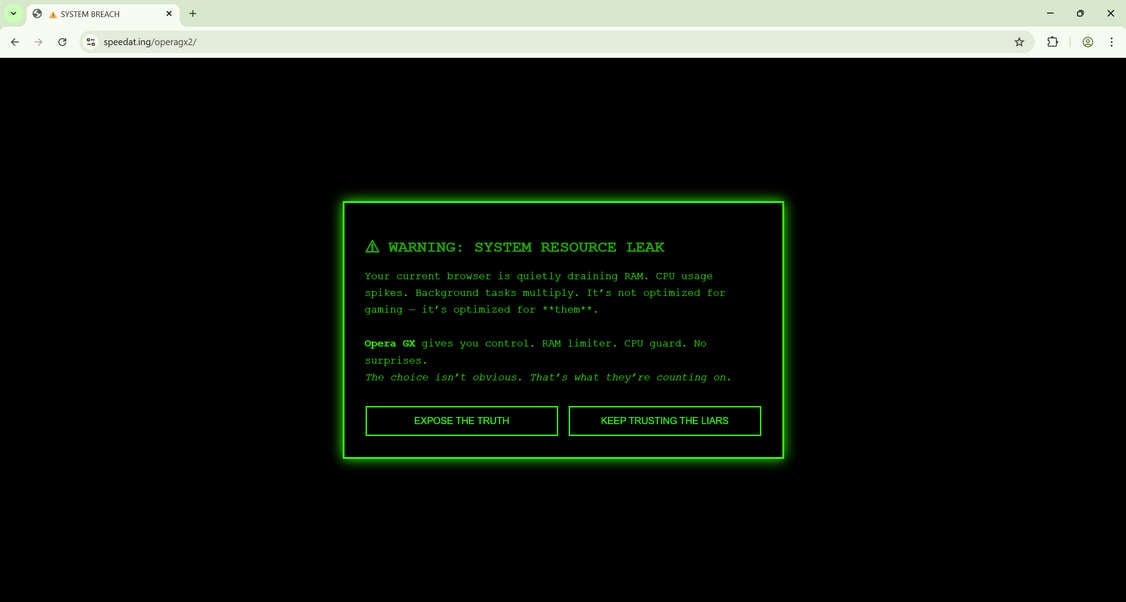
The fake alert is designed to imitate a system or browser warning. It typically displays text like:
WARNING: SYSTEM RESOURCE LEAK Your current browser is quietly draining RAM. CPU usage spikes. Background tasks multiply. It’s not optimized for gaming – it’s optimized for them. Opera GX gives you control. RAM limiter. CPU guard. No surprises. The choice isn’t obvious. That’s what they’re counting on.
Users are then presented with two buttons:
EXPOSE THE TRUTH
KEEP TRUSTING THE LIARS
This manipulative phrasing is intentionally designed to create urgency and fear, making users feel as if they are making a critical decision about their computer’s safety. The scam relies on emotional triggers, exploiting the fear of performance loss or malware infection.
Why It Works
These scams are remarkably effective because they imitate legitimate warning messages. The average internet user often cannot distinguish between a genuine system alert and a fake one embedded on a webpage. The visual design mimics the aesthetic of a tech terminal, complete with neon green text and system-like fonts, giving it a falsely authoritative appearance.
Moreover, the psychological impact of fear-based messaging amplifies the scam’s effectiveness. Users are made to feel responsible for fixing an urgent problem, which reduces their ability to think critically before clicking.
The Connection to Opera GX
The scam often uses the Opera GX browser as bait. Opera GX is a real web browser developed by Opera Software, specifically designed for gamers. It includes unique features such as CPU and RAM limiters, background music, and gaming integrations. However, Opera GX is not involved in or responsible for these scams.
Instead, scammers use Opera GX’s reputation to lend legitimacy to their fake alert pages. These pages often contain affiliate links that track installations. When someone downloads Opera GX through their unique link, the scammer earns a small commission from the affiliate program. This means the scam’s true purpose is not to harm your device directly, but to generate revenue through affiliate marketing abuse.
Where These Ads Come From
The majority of these scam ads originate from malicious ad networks or redirect chains embedded within unsafe websites. When a user clicks on a link or banner on such sites, they are often redirected through several tracking domains before landing on the fake “System Resource Leak” warning page.
This entire process happens in milliseconds and is invisible to most users. Scammers take advantage of this to deliver their message in a way that appears spontaneous and authentic. Since these pages often appear as overlays or pop-ups, users believe the warning came from their browser or operating system.
Technical Behavior
While most of these scam pages are just scareware (scare-based advertisements) and don’t install malware directly, some versions can be more dangerous. Variations of the same campaign have been reported to:
Trigger fake download prompts.
Redirect users to phishing websites.
Install browser extensions that collect browsing data.
Push potentially unwanted programs (PUPs).
Even if no malware is immediately installed, clicking or interacting with these pages increases the risk of future exposure to malicious software.
Why Users Should Be Concerned
Although Opera GX itself is safe, the method used to promote it through deception damages user trust and puts people at risk of installing unwanted software or exposing personal data. Scammers take advantage of affiliate marketing systems, turning legitimate business models into fraudulent revenue schemes.
Every time a user clicks a link, fills in a form, or downloads a program from one of these scam pages, they provide potential access to data, including IP addresses, device information, and browsing behavior. This information can later be used for targeted advertising, malvertising, or even identity theft in more advanced scams.
Understanding how this scam operates is the first step toward defending against it.
How the Scam Works
The “Warning: System Resource Leak” scam follows a calculated, step-by-step process designed to exploit user trust and fear. Below is a detailed breakdown of each stage:
Step 1: The Bait – Visiting Risky Websites
Most victims encounter the scam when they visit questionable websites, including:
Free movie streaming platforms
Torrent download pages
Adult content sites
Illegal software or crack download portals
These sites often contain advertising networks with low-quality control, meaning they serve ads from sources that don’t always follow legitimate practices. Once a user clicks on an ad or even interacts with the page, a redirect sequence is triggered.
Step 2: The Redirect Chain
After clicking, users are sent through a series of hidden redirects. Each redirect URL tracks the click and passes it through affiliate or tracking networks. This ensures that if the user eventually installs Opera GX (or another promoted program), the scammer gets paid.
The redirect chain may include domains like:
Ad tracking URLs
Cloaked domains to mask origin
Shortened links to hide final destination
This chain is the foundation of the affiliate marketing abuse that drives these scams.
Step 3: The Fake Warning Page Appears
After the redirects, users arrive at the scam page displaying a visually alarming warning. It typically includes green text on a black background, emulating a command-line interface. The headline reads:
⚠️ WARNING: SYSTEM RESOURCE LEAK
This is followed by a paragraph implying that the user’s current browser is overusing RAM or CPU resources. The text falsely claims that the current browser is inefficient or compromised, suggesting that Opera GX offers protection or optimization.
Step 4: Emotional Manipulation
The scammers use psychological manipulation to push the user into taking immediate action. The message is worded to:
Instill fear (“Your system is being drained!”)
Create urgency (“Fix it now before it gets worse!”)
Offer a simple solution (“Download Opera GX”)
The two-button choice reinforces the illusion of urgency:
EXPOSE THE TRUTH (positive action)
KEEP TRUSTING THE LIARS (negative action)
This binary framing tricks users into believing that not clicking means making the wrong choice.
Step 5: The Download Link
When the user clicks either button, they are redirected to an affiliate link for Opera GX or sometimes a third-party installer site. In legitimate cases, it redirects to the real Opera GX download page, but with an affiliate ID attached to track who initiated the installation.
In other cases, users may be sent to fake installer pages that bundle Opera GX with unwanted software or even malware. This depends on how the scam is set up and which affiliate or ad network is involved.
Step 6: Affiliate Tracking and Profit
Each download through the scammer’s affiliate link generates a small commission, often between a few cents to a few dollars per installation. This encourages scammers to spread their campaigns aggressively across multiple websites, forums, and pop-up networks.
The scam’s success depends on volume, not quality. Even if a tiny percentage of users fall for it, the scammers still make significant profit from the sheer number of impressions.
Step 7: Continuous Evolution
These scams evolve constantly to avoid detection. New domains, new messages, and new variations appear daily. Some replace Opera GX with other software, such as cleaning tools, VPNs, or system optimizers. The underlying structure remains the same: fake alert + fear + affiliate link.
Scammers may also experiment with different visual styles, such as:
Mimicking antivirus software interfaces.
Using fake progress bars or loading screens.
Displaying fake system diagnostics.
Each variant aims to appear authentic enough to make users believe their system is in danger.
What To Do If You Have Fallen Victim to the Scam
If you have clicked on one of these scam ads or installed a program from such a page, there are several steps you should take immediately to protect your system and data.
1. Do Not Panic
First and foremost, understand that the Opera GX browser itself is not malware. However, if you installed it through a suspicious link, you should remove it and reinstall it from the official Opera GX website to ensure it’s authentic.
2. Disconnect from the Internet Temporarily
If you suspect any unauthorized downloads or installations, disconnect from your network. This prevents potential malware from communicating with external servers or downloading additional files.
3. Uninstall Unwanted Programs
Go to your system’s control panel or settings and look for any software installed on the same date as your encounter with the scam page. Uninstall anything unfamiliar, especially system optimizers or browser extensions you did not intentionally install.
4. Run a Full System Scan
Use a reputable antivirus or anti-malware tool such as Malwarebytes, Bitdefender, or Windows Defender. Run a full system scan to detect and remove any potential threats or unwanted software.
5. Reset Your Browser
If your browser has started showing unusual pop-ups or redirects after visiting the scam page, reset it to its default settings:
Clear cookies, cache, and site data.
Remove suspicious extensions.
Restore default homepage and search engine settings.
6. Install Browser Security Extensions
Consider adding reliable browser security tools such as:
NoScript or ScriptSafe (for controlling JavaScript execution)
These extensions reduce the risk of future exposure to similar scams.
7. Update Your System and Software
Make sure your operating system, browsers, and security software are up to date. Outdated software can be more vulnerable to malicious redirects and exploits.
8. Reinstall Opera GX from the Official Source (Optional)
If you still want to try Opera GX, download it directly from Opera’s official website. Never use links from third-party pages or pop-ups.
9. Educate Yourself and Others
Scams like these rely on user ignorance. By understanding how affiliate scams and fake alerts work, you can help others avoid falling into the same trap. Share this information with friends or family who may browse risky sites.
Reporting helps reduce the spread of these scams and alerts legitimate companies about the misuse of their brand names.
Is Your Device Infected? Scan for Malware
If your computer or phone is slow, showing unwanted pop-ups, or acting strangely, malware could be the cause. Running a scan with Malwarebytes Anti-Malware Free is one of the most reliable ways to detect and remove harmful software. The free version can identify and clean common infections such as adware, browser hijackers, trojans, and other unwanted programs.
Malwarebytes works on Windows, Mac, and Android devices. Choose your operating system below and follow the steps to scan your device and remove any malware that might be slowing it down.
Malwarebytes for WindowsMalwarebytes for MacMalwarebytes for Android
Run a Malware Scan with Malwarebytes for Windows
Malwarebytes stands out as one of the leading and widely-used anti-malware solutions for Windows, and for good reason. It effectively eradicates various types of malware that other programs often overlook, all at no cost to you. When it comes to disinfecting an infected device, Malwarebytes has consistently been a free and indispensable tool in the battle against malware. We highly recommend it for maintaining a clean and secure system.
Download Malwarebytes
Download the latest version of Malwarebytes for Windows using the official link below. Malwarebytes will scan your computer and remove adware, browser hijackers, and other malicious software for free.
(The above link will open a new page from where you can download Malwarebytes)
Install Malwarebytes
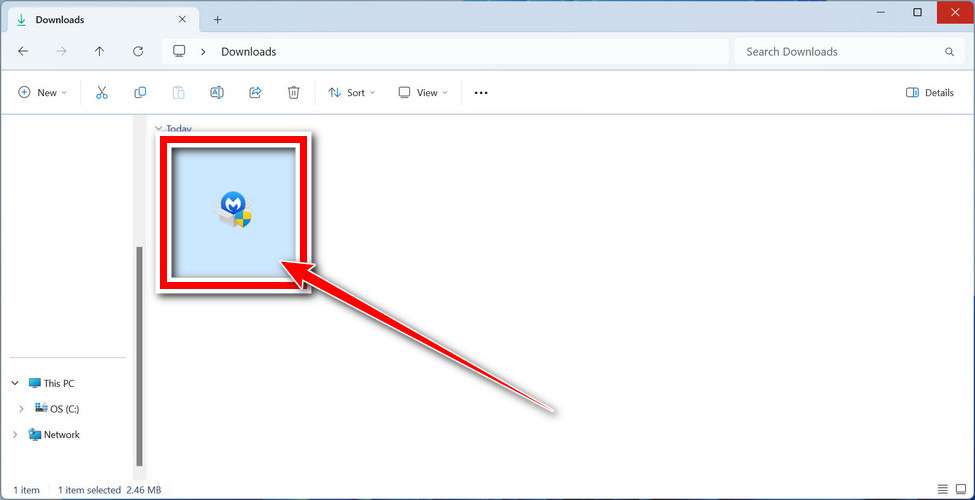
After the download is complete, locate the MBSetup file, typically found in your Downloads folder. Double-click on the MBSetup file to begin the installation of Malwarebytes on your computer. If a User Account Control pop-up appears, click “Yes” to continue the Malwarebytes installation.
Follow the On-Screen Prompts to Install Malwarebytes
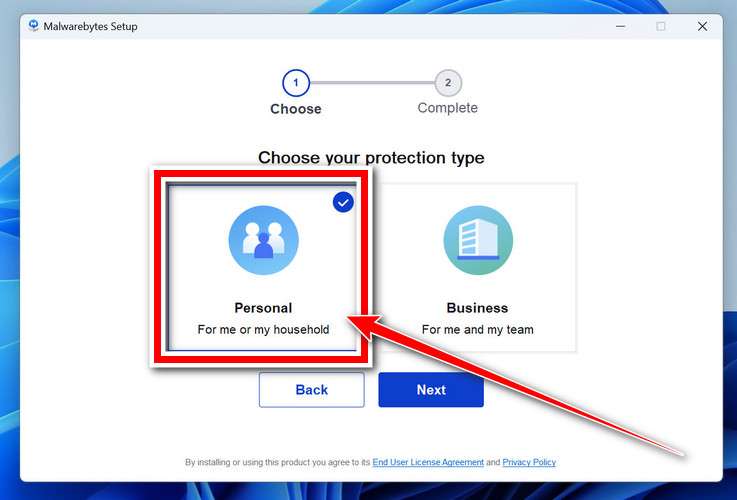
When the Malwarebytes installation begins, the setup wizard will guide you through the process.
You’ll first be prompted to choose the type of computer you’re installing the program on—select either “Personal Computer” or “Work Computer” as appropriate, then click on Next.
Malwarebytes will now begin the installation process on your device.
When the Malwarebytes installation is complete, the program will automatically open to the “Welcome to Malwarebytes” screen.
On the final screen, simply click on the Open Malwarebytes option to start the program.
Enable “Rootkit scanning”.
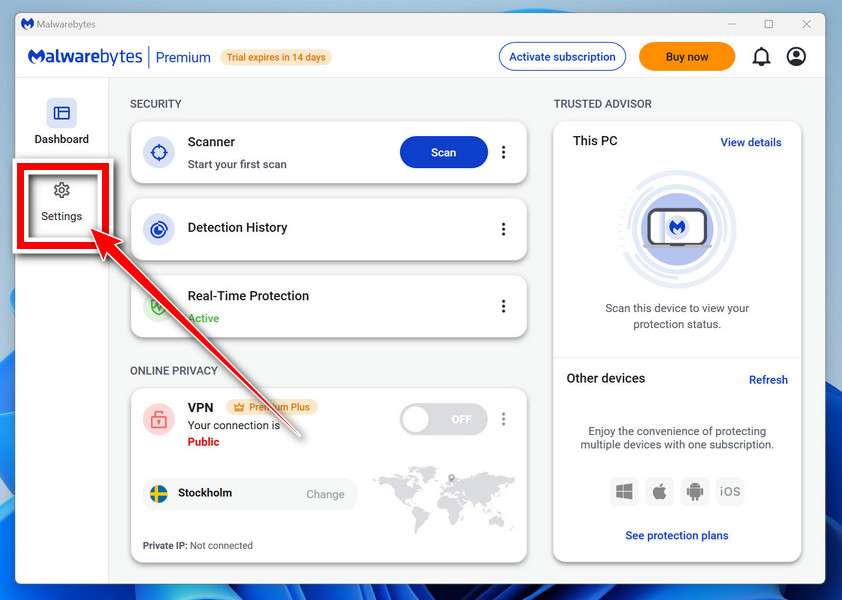
Malwarebytes Anti-Malware will now start, and you will see the main screen as shown below. To maximize Malwarebytes’ ability to detect malware and unwanted programs, we need to enable rootkit scanning. Click on the “Settings” gear icon located on the left of the screen to access the general settings section.
In the settings menu, enable the “Scan for rootkits” option by clicking the toggle switch until it turns blue.
Now that you have enabled rootkit scanning, click on the “Dashboard” button in the left pane to get back to the main screen.
Perform a Scan with Malwarebytes.
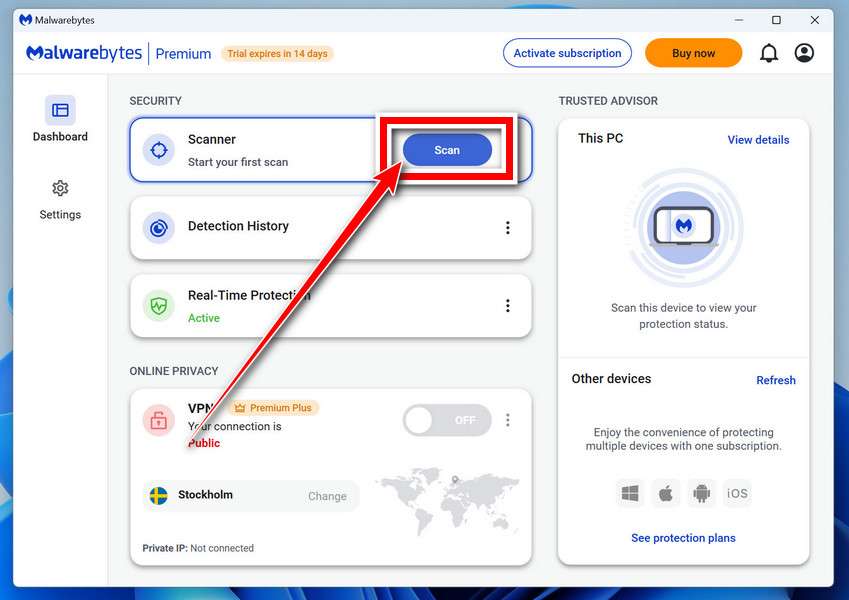
To start a scan, click the Scan button. Malwarebytes will automatically update its antivirus database and begin scanning your computer for malicious programs.
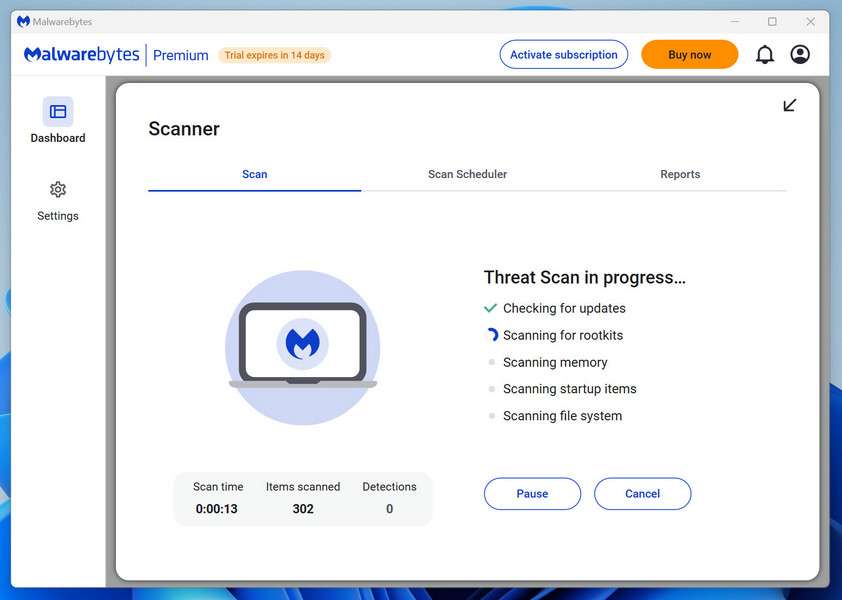
Wait for the Malwarebytes scan to complete.
Malwarebytes will now scan your computer for browser hijackers and other malicious programs. This process can take a few minutes, so we suggest you do something else and periodically check the status of the scan to see when it is finished.
Quarantine detected malware
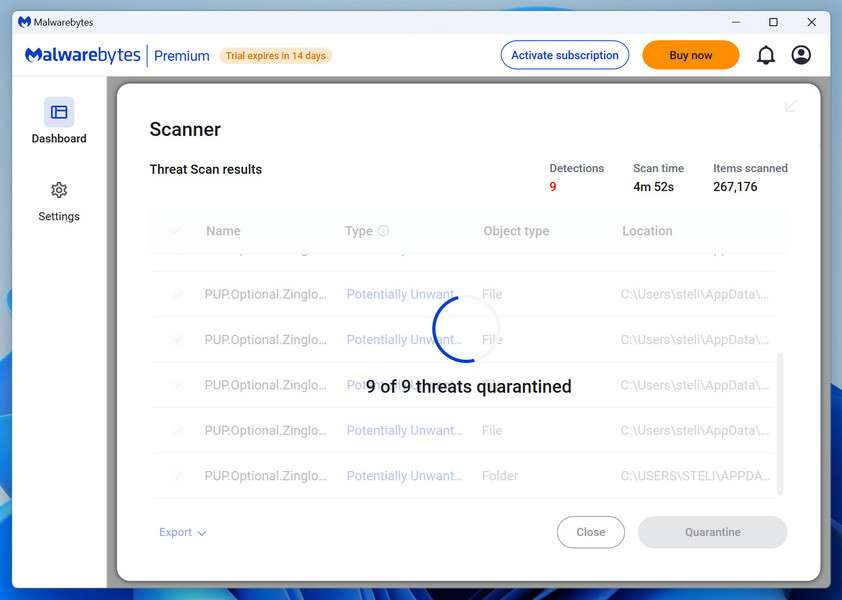
Once the Malwarebytes scan is complete, it will display a list of detected malware, adware, and potentially unwanted programs. To effectively remove these threats, click the “Quarantine” button.
Malwarebytes will now delete all of the files and registry keys and add them to the program’s quarantine.
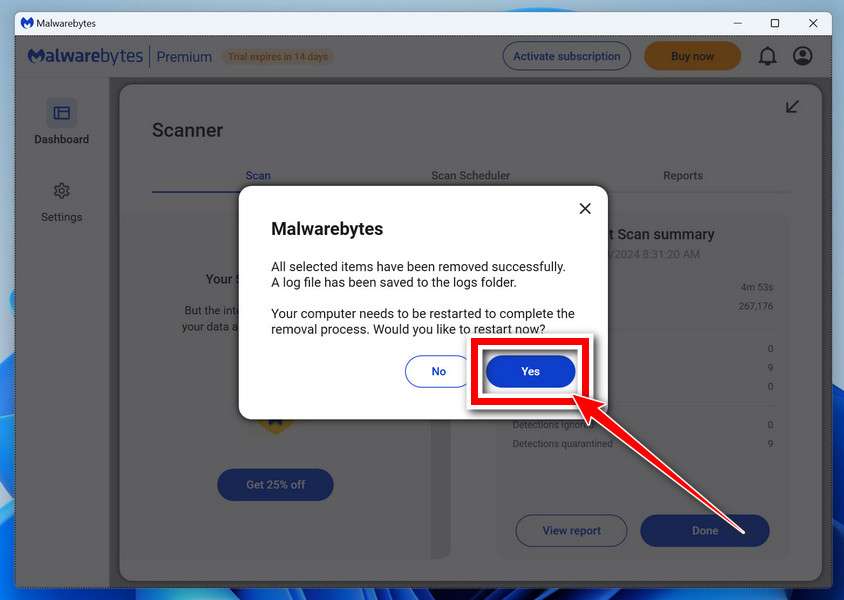
Restart your computer.
When removing files, Malwarebytes may require a reboot to fully eliminate some threats. If you see a message indicating that a reboot is needed, please allow it. Once your computer has restarted and you are logged back in, you can continue with the remaining steps.
Once the scan completes, remove all detected threats. Your Windows computer should now be clean and running smoothly again, free of trojans, adware, and other malware.
If your current antivirus allowed this malicious program on your computer, you may want to consider purchasing Malwarebytes Premium to protect against these types of threats in the future. If you are still having problems with your computer after completing these instructions, then please follow one of the steps:
Malwarebytes for Mac is an on-demand scanner that can destroy many types of malware that other software tends to miss without costing you absolutely anything. When it comes to cleaning up an infected device, Malwarebytes has always been free, and we recommend it as an essential tool in the fight against malware.
Download Malwarebytes for Mac.
You can download Malwarebytes for Mac by clicking the link below.
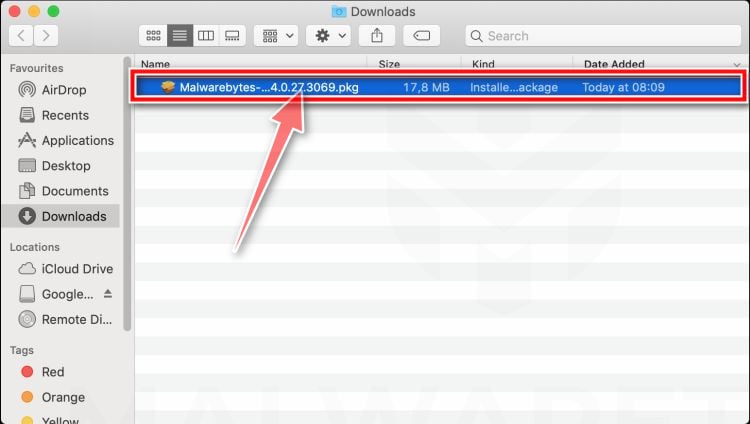
When Malwarebytes has finished downloading, double-click on the setup file to install Malwarebytes on your computer. In most cases, downloaded files are saved to the Downloads folder.
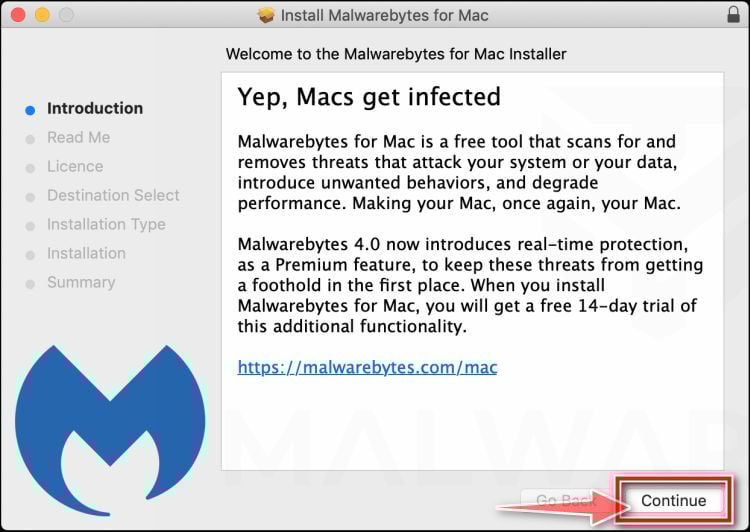
Follow the on-screen prompts to install Malwarebytes.
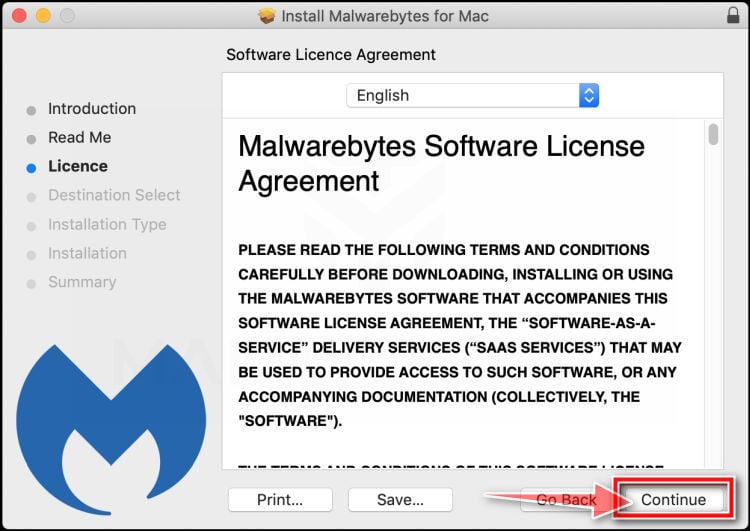
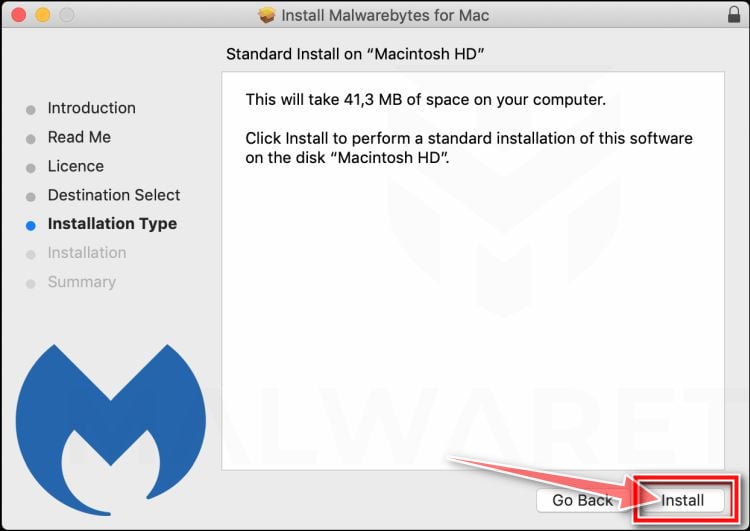
When the Malwarebytes installation begins, you will see the Malwarebytes for Mac Installer which will guide you through the installation process. Click “Continue“, then keep following the prompts to continue with the installation process.
When your Malwarebytes installation completes, the program opens to the Welcome to Malwarebytes screen. Click the “Get started” button.
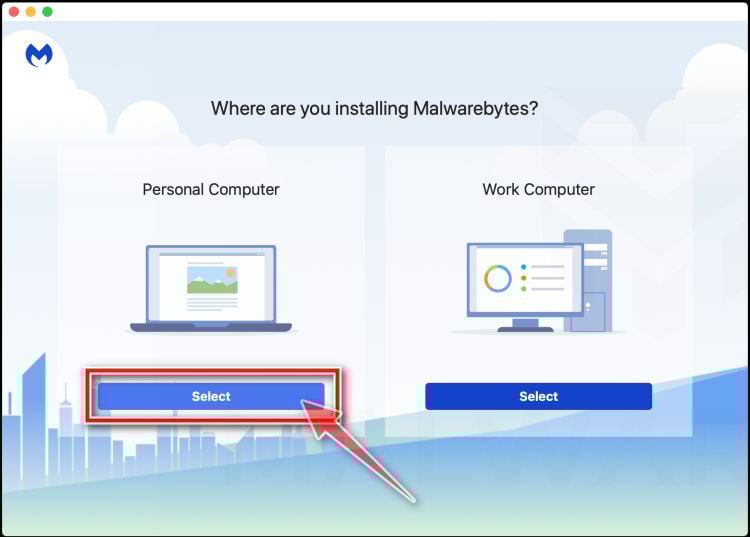
Select “Personal Computer” or “Work Computer”.
The Malwarebytes Welcome screen will first ask you what type of computer are you installing this program, click either Personal Computer or Work Computer.
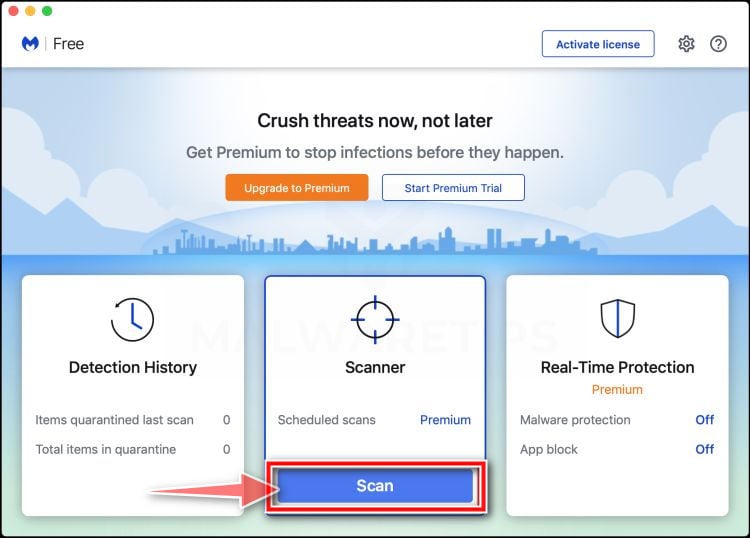
Click on “Scan”.
To scan your computer with Malwarebytes, click on the “Scan” button. Malwarebytes for Mac will automatically update the antivirus database and start scanning your computer for malware.
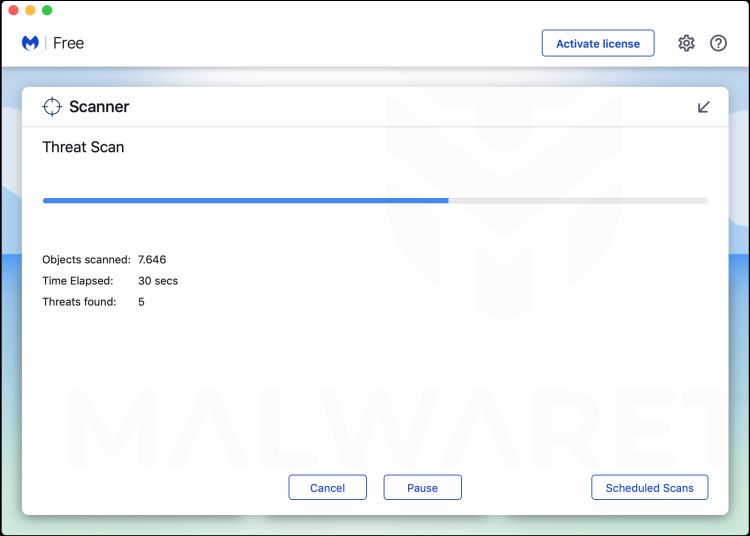
Wait for the Malwarebytes scan to complete.
Malwarebytes will scan your computer for adware, browser hijackers, and other malicious programs. This process can take a few minutes, so we suggest you do something else and periodically check on the status of the scan to see when it is finished.
Click on “Quarantine”.
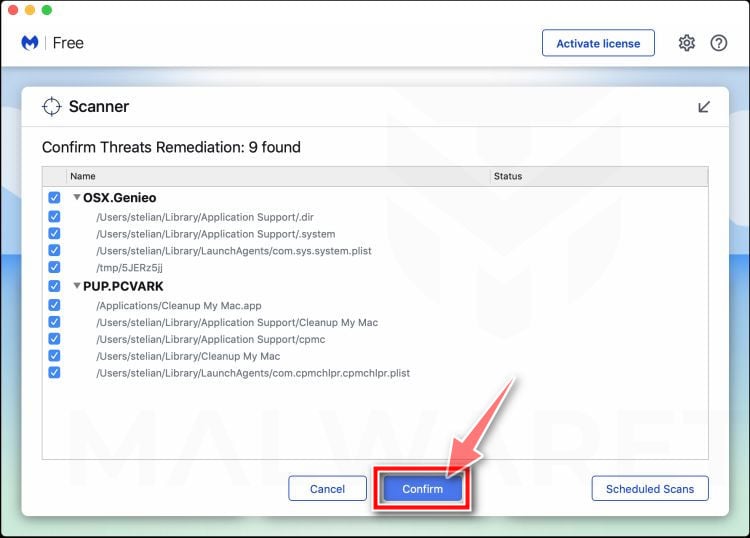
When the scan has been completed, you will be presented with a screen showing the malware infections that Malwarebytes has detected. To remove the malware that Malwarebytes has found, click on the “Quarantine” button.
Restart computer.
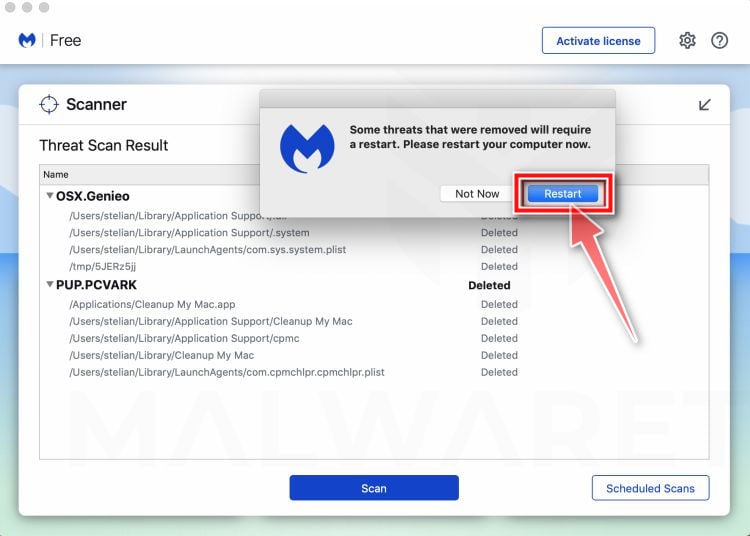
Malwarebytes will now remove all the malicious files that it has found. To complete the malware removal process, Malwarebytes may ask you to restart your computer.
After scanning, delete any detected threats. Your Mac should now be free from adware, unwanted extensions, and other potentially harmful software.
If your current antivirus allowed a malicious program on your computer, you might want to consider purchasing the full-featured version of Malwarebytes Anti-Malware to protect against these types of threats in the future. If you are still experiencing problems while trying to remove a malicious program from your computer, please ask for help in our Mac Malware Removal Help & Support forum.
Run a Malware Scan with Malwarebytes for Android
Malwarebytes for Android automatically detects and removes dangerous threats like malware and ransomware so you don’t have to worry about your most-used device being compromised. Aggressive detection of adware and potentially unwanted programs keeps your Android phone or tablet running smooth.
Download Malwarebytes for Android.
You can download Malwarebytes for Android by clicking the link below.
In the Google Play Store, tap “Install” to install Malwarebytes for Android on your device.
When the installation process has finished, tap “Open” to begin using Malwarebytes for Android. You can also open Malwarebytes by tapping on its icon in your phone menu or home screen.
Follow the on-screen prompts to complete the setup process
When Malwarebytes will open, you will see the Malwarebytes Setup Wizard which will guide you through a series of permissions and other setup options. This is the first of two screens that explain the difference between the Premium and Free versions. Swipe this screen to continue. Tap on “Got it” to proceed to the next step. Malwarebytes for Android will now ask for a set of permissions that are required to scan your device and protect it from malware. Tap on “Give permission” to continue. Tap on “Allow” to permit Malwarebytes to access the files on your phone.
Update database and run a scan with Malwarebytes for Android
You will now be prompted to update the Malwarebytes database and run a full system scan.
Click on “Update database” to update the Malwarebytes for Android definitions to the latest version, then click on “Run full scan” to perform a system scan.
Wait for the Malwarebytes scan to complete.
Malwarebytes will now start scanning your phone for adware and other malicious apps. This process can take a few minutes, so we suggest you do something else and periodically check on the status of the scan to see when it is finished.
Click on “Remove Selected”.
When the scan has been completed, you will be presented with a screen showing the malware infections that Malwarebytes for Android has detected. To remove the malicious apps that Malwarebytes has found, tap on the “Remove Selected” button.
Restart your phone.
Malwarebytes for Android will now remove all the malicious apps that it has found. To complete the malware removal process, Malwarebytes may ask you to restart your device.
When the scan is finished, remove all detected threats. Your Android phone should now be free of malicious apps, adware, and unwanted browser redirects.
If your current antivirus allowed a malicious app on your phone, you may want to consider purchasing the full-featured version of Malwarebytes to protect against these types of threats in the future. If you are still having problems with your phone after completing these instructions, then please follow one of the steps:
Restore your phone to factory settings by going to Settings > General management > Reset > Factory data reset.
After cleaning your device, it’s important to protect it from future infections and annoying pop-ups. We recommend installing an ad blocker such as AdGuard. AdGuard blocks malicious ads, prevents phishing attempts, and stops dangerous redirects, helping you stay safe while browsing online.
The Bottom Line
The “Warning: System Resource Leak” scam is a sophisticated form of digital deception that uses fear-based messaging to drive users toward affiliate downloads. Although the Opera GX browser promoted in these scams is legitimate, the campaigns themselves are unauthorized, manipulative, and misleading.
Always remember: real browsers or operating systems never issue warnings through websites. Genuine system alerts come from your device’s notification center, not a pop-up within your browser.
Thomas is an expert at uncovering scams and providing in-depth reporting on cyber threats and online fraud. As an editor, he is dedicated to keeping readers informed on the latest developments in cybersecurity and tech.