If you opened your inbox today and found a surprise $5 Wawa settlement eGift card, you’re not alone. Thousands of customers are receiving the same message, complete with Wawa logos, legal references, and a tempting link to “Claim Your Card.” But in a time when phishing attempts are everywhere, one question immediately comes to mind: is this settlement payout real, or is it a scam cleverly designed to trick you?
- Understanding the Background of the Wawa Data Breach Settlement
- What the Email Claims to Offer
- Major Concerns and Red Flags Reported by Recipients
- What Users Found When Investigating Online
- How to Safely Redeem the Card
- Why Some Settlement Payments Arrive Years Later
- Is the Email Actually Dangerous?
- How to Confirm Whether Your Exact Email Is Real
- What Makes This Case Confusing
- Should You Redeem Your $5 Wawa eGift Card?
- Final Verdict on the $5 Wawa Settlement Email
This guide takes a detailed look at where the email comes from, why it’s appearing now, what the real Wawa settlement involved, and how to verify the legitimacy of any claim link. With so many scams circulating, understanding how to analyze messages like this is more important than ever. Below, you’ll find everything you need to make an informed and safe decision.
Understanding the Background of the Wawa Data Breach Settlement
What Happened During the Wawa Data Breach
In December 2019, Wawa disclosed a significant data breach involving malware that infected payment systems in every store and fuel pump across the chain. Customers who used their debit or credit cards between March 4, 2019 and December 12, 2019 were at risk of having their card information stolen. The breach reportedly exposed millions of payment card numbers, expiration dates, and possibly additional card track data.
Consumers quickly filed a class action lawsuit, leading to a case officially known as In re: Wawa, Inc. Data Security Litigation, No. 19-cv-6019 in the Eastern District of Pennsylvania. Lawsuits claimed that Wawa failed to protect sensitive customer data and did not implement adequate cybersecurity measures to prevent malware infiltration.
What the Settlement Included
By 2021, Wawa agreed to a settlement to resolve the litigation. The settlement included:
- Up to $9 million in cash reimbursements and gift cards.
- $5 Wawa gift cards for individuals who used debit or credit cards during the affected period and submitted a valid claim.
- $15 Wawa gift cards for customers who experienced fraudulent charges that were later reversed.
- Up to $500 in cash reimbursement for those who suffered out-of-pocket losses due to the breach.
- A requirement that Wawa invest at least $35 million to improve its data security infrastructure.
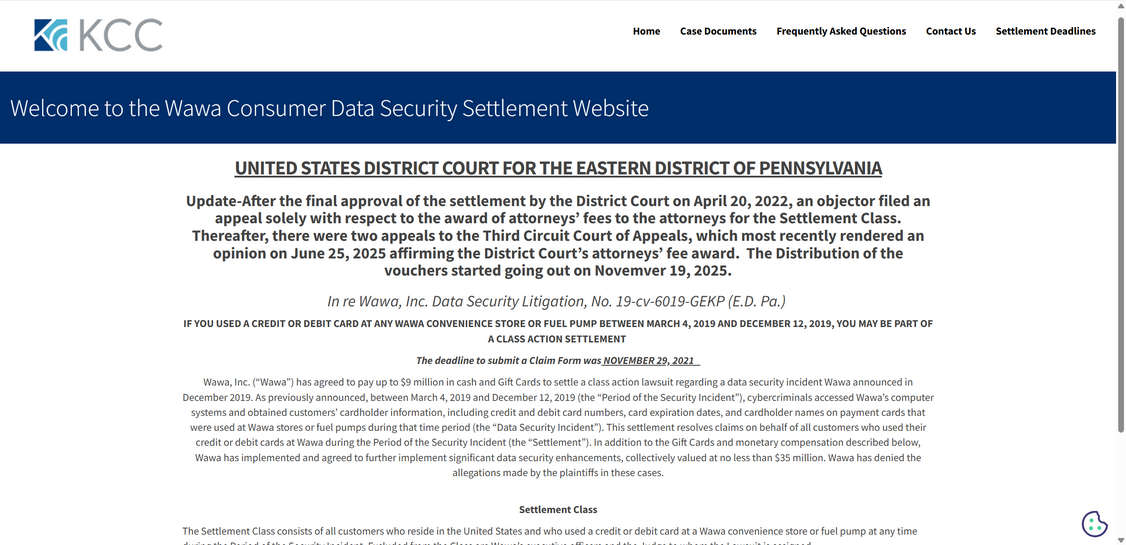
The settlement claims period closed in late 2021, and payments have continued to process over time depending on each class member’s situation and the claims administrator’s schedule.
Why Emails Are Appearing Now
Even though the settlement was approved years ago, some claimants have received communications recently because:
- Class action fund distribution sometimes occurs in waves.
- Some claims required additional verification or processing.
- Digital eGift cards are being sent as the final stage of settlement distribution.
In other words, late distribution is not uncommon. Large settlements often take years to finalize due to appeals, administrative reviews, disputes regarding claims, or delays in issuing digital incentives.
This timing explains why some people are only now receiving a $5 eGift card email.
What the Email Claims to Offer
The Sender Address
The emails typically come from WawaeGiftCards@cashstar.com, a domain associated with CashStar, a company that provides digital gift card fulfillment services for major retailers.
CashStar has worked with well-known companies including:
- Starbucks
- Uber
- Home Depot
- Sephora
- Airbnb
Wawa is among these companies, so seeing CashStar involved does not automatically mean a scam. However, scammers can impersonate legitimate companies, so additional verification is essential.
What the Email Says
The message claims the recipient is eligible for a $5 Wawa settlement eGift card as part of the Wawa data breach litigation. It includes:
- Settlement language referencing the 2019 data breach.
- Wawa branding and colors.
- A link to “Claim Your eGift Card.”
- A timeline or brief mention of prior claim submission.
- An expiration date for redeeming the offer.
To someone who remembers the breach and may have filed a claim years ago, the email can seem both plausible and confusing.
Why It Looks Suspicious
Although the email references real information, several formatting issues are raising eyebrows:
- Blurry or low-resolution images.
- Odd spacing or unpolished layouts.
- Design elements that don’t match Wawa’s usual branding.
- A generic template that doesn’t resemble official customer communications.
These inconsistencies have led many recipients to wonder whether the email is legitimate or a phishing attempt disguised as a settlement payout.
Major Concerns and Red Flags Reported by Recipients
Design Quality Issues
One of the first things recipients noticed is that the email feels unprofessional:
- The logo appears pixelated.
- The colors look slightly off.
- The formatting feels inconsistent with modern corporate emails.
While aesthetics alone cannot determine legitimacy, scammers often use low-quality assets, making these design concerns difficult to ignore.
Unexpected Gift Card Emails Are a Common Scam Format
Phishing emails offering rewards, rebates, reimbursements, or class-action payments are extremely common. They lure users with:
- Small incentive amounts.
- Familiar brands.
- Official-sounding legal references.
Many scams are built around the concept of urgency, encouraging users to click a link without investigating.
Random Email Timing
For some people, the email arrived several years after the breach. Because older events tend to fade from memory, scammers use this to their advantage. When recipients barely remember whether they filed a claim, they are more likely to click without question.
What Users Found When Investigating Online
Reports from Reddit
Reddit contained several threads discussing the email. Users mentioned:
- Many people who used Wawa stores in 2019 received the same message.
- Those who confirmed they filed a claim years ago said the $5 offer matched the expected settlement payout.
- Some users posted that they redeemed the card successfully through the official Wawa app.
- A few users who worked for Wawa or CashStar confirmed that CashStar handles Wawa’s digital gift card distribution.
These comments, while anecdotal, strongly suggest that the email itself may indeed be part of the real settlement distribution.
Consumer Protection Forums
Consumer watchdog sites and online discussions highlighted that:
- Similar class action settlements have distributed final digital payments years after the initial claims period.
- Companies like CashStar often send gift cards that look visually different from the brand’s typical email formats.
- Customers should not assume poor formatting automatically indicates fraud.
These points reinforce the idea that the email might be legitimate even if it looks strange.
How to Safely Redeem the Card
Step 1: Do Not Click the Email Link Immediately
Even if the email is legitimate, always avoid clicking unsolicited links. It is best to use safe verification methods before engaging.
Step 2: Visit Wawa or the Settlement Website Manually
Instead of following a link inside an email:
- Go to Wawa’s official website.
- Check the customer service or gift card section.
- Search for the settlement details.
This ensures you do not land on a cloned or malicious page.
Step 3: Search for Official Settlement Details
You can manually search terms like:
- Wawa Data Breach Settlement
- Wawa Class Action Gift Card
- Wawa CashStar eGift Card Settlement
By verifying through official sources, you eliminate guesswork.
Step 4: Redeem Through Wawa’s Official App
If the email contains a code, sometimes you can redeem a gift card through the Wawa app without clicking the link. Doing this ensures that you interact only with official Wawa systems.
Step 5: Never Enter Sensitive Information
A legitimate settlement redemption will not ask for:
- Full Social Security numbers
- Bank account information
- Credit card details
- Passwords
- Date of birth
- Security questions
- Unusual personal data
If a website asks for any of the above, it is not legitimate.
Step 6: Inspect the URL
If you choose to open the link, inspect the domain carefully. It should match the official CashStar domain used by Wawa. Many fraudulent domains attempt to look similar by using:
- Extra characters
- Alternative spellings
- Hyphens
- Non-standard TLDs
If anything feels off about the address, close the page immediately.
Why Some Settlement Payments Arrive Years Later
Administrative Delays
Large class action settlements often encounter:
- Slow claim processing
- High claim volume
- Challenges verifying eligibility
- Multiple appeals and legal disputes
- Payout adjustments after attorney fee rulings
These issues can extend payment timelines significantly.
The Wawa Case Had Appeals
In the Wawa case, there were appeals involving attorney fees and aspects of the settlement distribution. These disputes can delay final payouts by months or even years.
Claims Administrator Workload
CashStar and other class-action fulfillment companies handle many large cases. When multiple settlements overlap, delays are common.
These factors explain why a $5 card might be sent well after someone filed their claim.
Is the Email Actually Dangerous?
Why Scammers Target Settlement Recipients
Hackers know that class-action settlement emails are often:
- Unexpected
- Overly generic
- Poorly formatted
- Easy to imitate
This makes them ideal for impersonation. Using a legitimate settlement as bait is a known tactic.
Signs That Your Specific Email Might Be a Scam
Even though legitimate settlement emails exist, any individual message could still be fraudulent.
Warning signs include:
- The email comes from a domain that looks similar but not identical to CashStar’s real domain.
- The link redirects through multiple tracking URLs.
- The gift card amount differs from the official settlement details.
- The email asks for sensitive information.
If any of these apply, you should proceed with extreme caution.
How to Confirm Whether Your Exact Email Is Real
Check Your Claim History
If you do not remember filing a claim, this could be a red flag. The legitimate settlement required claim submission by the end of 2021.
Compare Your Email to Known Legitimate Notices
Users have posted legitimate samples online. You can compare elements like:
- Formatting
- Tone
- Domain names
- Footer language
- Privacy policy links
Contact Wawa Customer Support
You can contact Wawa directly through their verified support channels and ask whether CashStar has distributed $5 eGift cards during the current period.
Contact CashStar
CashStar customer service can confirm whether an eGift card email was issued to your address.
This added verification step is extremely helpful.
What Makes This Case Confusing
The Email Looks Suspicious
Although it may be legitimate, the low-quality design is confusing. Many official emails from large companies look polished, so anything that appears outdated or inconsistent creates skepticism.
The Timing Is Odd
Receiving a claim payout years after the settlement can feel suspicious to customers who have forgotten about the case.
The Dollar Amount Is Small
Scams often rely on small rewards because:
- They require minimal justification
- Victims are less likely to question the value
- Small payouts attract quick clicks
- People are more likely to act impulsively for small rewards than large ones
This psychological aspect increases confusion.
CashStar’s Branding Differs from Wawa
CashStar emails often use generic branding templates that do not match the retailer’s usual style. This inconsistency adds to the doubt.
Should You Redeem Your $5 Wawa eGift Card?
If You Filed a Claim
If you know you filed a claim during the official claims period and the email’s domain checks out, it is very likely legitimate. Many verified claimants have successfully redeemed their cards.
If You Did Not File a Claim
If you never submitted a claim, it becomes far more suspicious. The real settlement does not send random payments to people who did not file claims.
If You Are Unsure
Follow the verification steps outlined earlier:
- Check your records
- Visit the settlement website
- Contact Wawa or CashStar
- Inspect the URL
- Avoid clicking email links
Taking a few minutes to verify the email can prevent fraud and protect your data.
Final Verdict on the $5 Wawa Settlement Email
The Wawa $5 settlement eGift card is real, but not every email claiming to offer one is legitimate.
The underlying class action settlement is genuine. CashStar does handle digital gift card distribution for Wawa. And several verified customers have already redeemed their gift cards successfully.
However, because the email design looks unprofessional and because scammers often exploit real settlements, recipients must approach each individual message carefully. Verification is essential.
The safest approach is simple:
- Do not click the email link immediately.
- Confirm through official channels.
- Redeem only through Wawa’s verified website or app.
With the right precautions, you can safely claim legitimate settlement benefits while avoiding increasingly sophisticated phishing tactics.