

If your computer is locked, and you are seeing a “Your computer has been blocked” notification,then your computer is infected with a piece of malware known as Trojan Reveton.
The “Your computer has been blocked” notification is a computer virus, which will display a bogus notification, that pretends to be from the official law enforcement agency and states that your computer has been blocked due to it being involved with the distribution of pornographic material, SPAM and copyrighted content.
The “Your computer has been blocked” virus will lock you out of your computer and applications, so whenever you’ll try to log on into your Windows operating system or Safe Mode with Networking, it will display instead a lock screen asking you to pay a non-existing fine of 300$ in the form of a Ukash,MoneyPak orPaySafeCard code.
Furthermore, to make its alert seem more authentic, this virus also has the ability to access your installed webcam ,so that the bogus “Your computer has been blocked” notification shows what is happening in the room.
The “Your computer has been blocked” notification is used by cyber criminals alongside the name of known international law enforcement agencies like Federal Bureau of Investigation (FBI),Europol and Central Intelligence Agency (CIA), or local law enforcement agencies like: West Yorkshire Police,Metropolitan Police and The United States Department of Justice.
![[Image: Your computer has been blocked virus]](https://malwaretips.com/blogs/wp-content/uploads/2013/01/YOUR-COMPUTER-HAS-BEEN-BLOCKED.jpg "Remove \"Your computer has been blocked\" virus (MoneyPak Scam) 1")
![[Image: Your computer has been locked Moneypak Virus]](https://malwaretips.com/blogs/wp-content/uploads/2013/01/your-computer-has-been-locked-moneypak-scam.jpg "Remove \"Your computer has been blocked\" virus (MoneyPak Scam) 2")
![[Image: Your computer has been locked virus]](https://malwaretips.com/blogs/wp-content/uploads/2013/01/your-computer-has-been-locked-virus.jpg "Remove \"Your computer has been blocked\" virus (MoneyPak Scam) 3")
The “Your computer has been blocked” Ransom is a scam and you should ignore any alert that this malicious software might generate.
Under no circumstance should you send any money to these cyber criminals,as this could lead to identity theft,and if you have, you should contact your credit card company and dispute the charge stating that the program is a scam and a computer virus.
“Your computer has been blocked” – Virus Removal Instructions
STEP 1: Remove “Your computer has been blocked” lock screen from your computer
“Your computer has been blocked” Ukash Ransom has modified your Windows registry and added its malicious files to run at start-up, so whenever you’re trying to boot your computer it will launch instead its bogus notification.To remove these malicious changes, we can use any of the below methods :
Method 1: Start your computer in Safe Mode with Networking and scan for malware
Some variants of “Your computer has been blocked” virus will allow the users to start the infected computer in Safe Mode with Networking without displaying the bogus lock screen. In this first method, we will try to start the computer in Safe Mode with Networking and then scan for malware to remove the malicious files.
- Remove all floppy disks, CDs, and DVDs from your computer, and then restart your computer.
- Press and hold the F8 key as your computer restarts.Please keep in mind that you need to press the F8 key before the Windows start-up logo appears.
Note: With some computers, if you press and hold a key as the computer is booting you will get a stuck key message. If this occurs, instead of pressing and holding the “F8 key”, tap the “F8 key” continuously until you get the Advanced Boot Options screen. - On the Advanced Boot Options screen, use the arrow keys to highlight Safe Mode with Networking , and then press ENTER.
![[Image: Safe Mode with Networking]](https://malwaretips.com/blogs/wp-content/uploads/mwt-media/64/643bc8414681b9681a44bc5e4bcc1f262450adeb64e97cbe54283b2262685c25/ae66c9197205f3f8f621e96a0c6df6c869aef5cadff6897bb6645b9d1e24ca16-539.webp "Remove \"Your computer has been blocked\" virus (MoneyPak Scam) 4")
- If your computer has started in Safe Mode with Networking, you’ll need to perform a system scan (as seen on STEP 2) with Malwarebytes Anti-Malware and HitmanPro to remove the malicious files from your machine.
IF the “Your computer has been blocked” virus didn’t allow you to start the computer in Safe Mode with Networking,you’ll need to follow Method 2 to get rid of its lock screen.
Method 2: Restore Windows to a previous state using System Restore
System Restore can return your computer system files and programs to a time when everything was working fine, so we will try to use this Windows feature to get rid of “Your computer has been blocked” lock screen.
- Restart your computer, and then press and hold F8 during the initial startup to start your computer in safe mode with a Command prompt.
Note: With some computers, if you press and hold a key as the computer is booting you will get a stuck key message. If this occurs, instead of pressing and holding the “F8 key”, tap the “F8 key” continuously until you get the Advanced Boot Options screen. - Use the arrow keys to select the Safe mode with a Command prompt option.
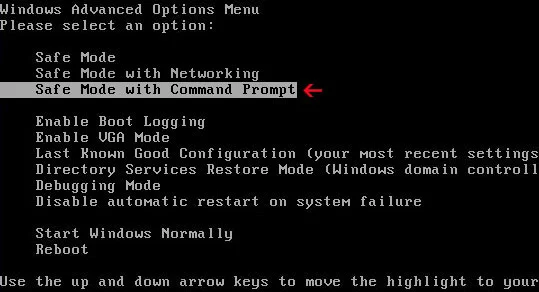
- At the command prompt, if you are using Windows Vista, 7 or 8 type C:\windows\system32\rstrui.exe , and then press ENTER.
If you are using Windows XP, you will need to type C:\windows\system32\restore\rstrui.exe, and then press ENTER.
![[Image: Start System Restore from Safe Mode with Command Prompt]](https://malwaretips.com/blogs/wp-content/uploads/mwt-media/4b/4b459e95ff64e5e60a51146d76eee61998018036f96976df391283e3cf8e4f7a/52006ea4f0ed49577678af21fc0384f59dc3a0a14b22cf1fc354decc075e05a8-677.webp "Start System Restore from Safe Mode with Command Prompt")
- The System Restore utility will start, and you’ll need to select a restore point previous to this infection.
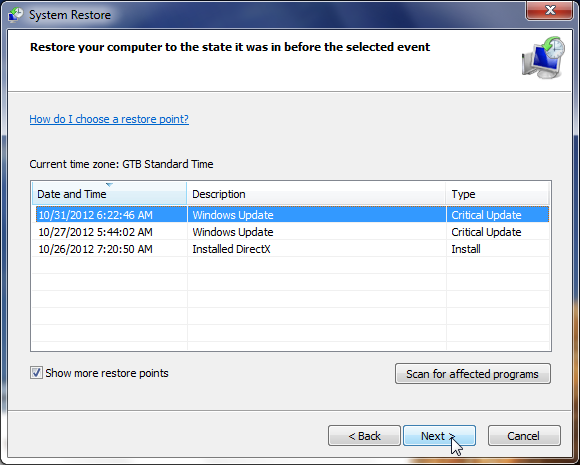
- After System Restore has completed its task, you should be able to boot in Windows normal mode, and perform a system scan (as seen on STEP 2) with Malwarebytes Anti-Malware and HitmanPro to remove the malicious files from your machine.
IF the “Your computer has been blocked” virus didn’t allow you to restore your computer to a previous point, you’ll need to follow Method 3 to get rid of its screen lock.
Method 3: Remove “Your computer has been blocked” lock screen with msconfig utility
When your computer was infected with the “Your computer has been blocked” virus, this trojan has set a its malicious files to start whenever your computer is booting. IF you didn’t have a restore point, we can use msconfig to remove it’s malicious start-up entry.
- While your computer is in Safe Mode with Command Prompt, type msconfig to start the Windows System Configuration utility.
![[Image: Type msconfig in the Command prompt]](https://malwaretips.com/blogs/wp-content/uploads/mwt-media/cf/cfa69649fa1a100e6c4848d30d1914045feff8d4eb1ebd1f6a94b388ce1ef9d2/1c774d036732cb183c40cd6f1a2e24c8722eb9f532e9199392fda96d7c644b55-677.webp "Type msconfig in the Command prompt")
- Click on the Startup tab, then search for any suspicious or unknonw entries (random numbers or letters, ctfmon.exe, and other suspicious or unknown entries), and unckech them from startup, then click on OK.
This will stop the “Your computer has been blocked” virus from starting with Windows, however it won’t remove the malicious files from your computer.
![[Image: Uncheck any suspicious entries from start-up]](https://malwaretips.com/blogs/wp-content/uploads/mwt-media/42/42e80e2e02cba641df06cfc70df3f3af26ed11ee260e5443ba6419177bcecae9/182d7ef2eb258180f578d042962df2999e396dc90e29e77974cf73db670b0fe3-585.webp "Uncheck any suspicious entries from start-up")
- Type shutdown /r in the command prompt to restart your computer, then perform a scan with Malwarebytes Anti-Malware and HitmanPro as seen on STEP 2.
IF the “Your computer has been blocked” virus didn’t allow you to start the computer in Safe Mode with Command Prompt you’ll need to follow Method 4 to get rid of its screen lock.
Method 4: Remove “Your computer has been blocked” virus with HitmanPro Kickstart
IF you couldn’t boot into Safe Mode with Command Prompt or didn’t have a System Restore point on your machine, we can use HitmanPro Kickstart to bypass this infection, and access your computer to scan it for malware.
- We will need to create a HitmanPro Kickstart USB flash drive,so while you are using a “clean” (non-infected) computer, download HitmanPro from the below link.
Download HitmanProOfficial Sophos download. Free scan, free 30-day trial to remove threats. - Insert your USB flash drive into your computer and follow the instructions from the below video:
- After you have create the HitmanPro Kickstart USB flash drive, you can insert this USB drive into the infected machine and start your computer.
- Once the computer starts, repeatedly tap the F11 key (on some machines its F10 or F2),which should bring up the Boot Menu, from there you can select to boot from your USB.
Next,you’ll need to perform a system scan with HitmanPro as see in the below video:
- After HitmanPro Kickstart has completed its task,you should be able to boot in Windows normal mode,from there you’ll need to perform a system scan (as seen on STEP 2) with Malwarebytes Anti-Malware and HitmanPro to remove the malicious files from your machine.
STEP 2: Remove “Your computer has been blocked” malicious files from your computer
Run a computer scan with Malwarebytes Anti-Malware Free
- You can download Malwarebytes Anti-Malware Free from the below link,then double click on it to install this program.
Download MalwarebytesFree official installer. Your download starts right away. - When the installation begins, keep following the prompts in order to continue with the setup process.
DO NOT make any changes to default settings and when the program has finished installing, make sure you leave both the Update Malwarebytes’ Anti-Malware and Launch Malwarebytes’ Anti-Malware checked,then click on the Finish button.
![[Image: Malwarebytes Anti-Malware final installation screen]](https://malwaretips.com/blogs/wp-content/uploads/mwt-media/47/471448d4dd5aa1d55ea545effccf0ac9c8ccb5a29622da4e38ac677b5d8c37b5/9f473303c15a00262451cc5a56b904de929157b59e19e3cfb2c03ec88f643390-402.webp "Malwarebytes Anti-Malware final installation screen")
- On the Scanner tab,select Perform quick scan and then click on the Scan button to start scanning your computer.
![[Image: Malwarebytes Anti-Malware Quick Scan]](https://malwaretips.com/blogs/wp-content/uploads/mwt-media/1e/1eb209597ca2f06e596fd060345ac7e3100355f1ec8fc8ea2d9dec7abbb05ea0/3afba9b0b97b56945ffc33817ac48f7433c799241a22e422966180b76473a906-521.webp "Run a Quick Scan with Malwarebytes Anti-Malware")
- Malwarebytes’ Anti-Malware will now start scanning your computer for “Your computer has been blocked” virus as shown below.
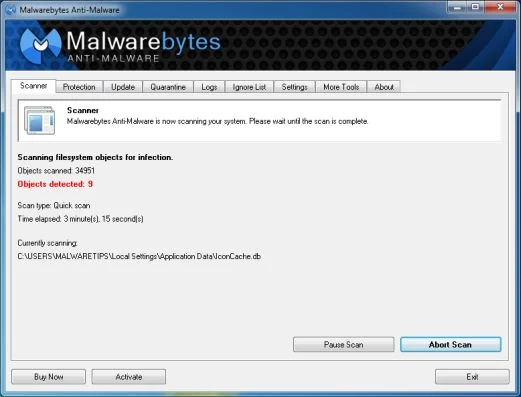
- When the Malwarebytes scan will be completed,click on Show Result.
![[Image: Malwarebytes Anti-Malware scan results]](https://malwaretips.com/blogs/wp-content/uploads/mwt-media/84/84c62dd46289424dbc686abc53672cb0810111920c8c0bbd69e973844d0a9ab0/a4c04aa700e641f47afec9965f79ff346740668e5952955ccbe5b4c3658b5897-521.webp "Malwarebytes when the system scan has completed")
- You will now be presented with a screen showing you the malware infections that Malwarebytes’ Anti-Malware has detected.Please note that the infections found may be different than what is shown in the image.Make sure that everything is Checked (ticked) and click on the Remove Selected button.
![[Image:Malwarebytes removing virus]](https://malwaretips.com/blogs/wp-content/uploads/mwt-media/d8/d86b6a8bac0e4ece9fd2d259a83db71487943f6b04b567edb0e9adcc3200f492/4eb94651b0e34cc99689c56dc71cd0a49444498ed05c5803ea55fda1cfee1b1f-521.webp "Click on Remove Selected to get rid of")
- After your computer will restart in Normal mode, open Malwarebytes Anti-Malware and perform a Full System scan to verify that there are no remaining threats
Run a computer scan with HitmanPro
- Download HitmanPro from the below link,then double click on it to start this program.
Download HitmanProOfficial Sophos download. Free scan, free 30-day trial to remove threats.
IF you are experiencing problems while trying to start HitmanPro, you can use the Force Breach mode.To start HitmanPro in Force Breach mode, hold down the left CTRL-key when you start HitmanPro and all non-essential processes are terminated, including the malware process. (How to start HitmanPro in Force Breach mode – Video) - HitmanPro will start and you’ll need to follow the prompts (by clicking on the Next button) to start a system scan with this program.
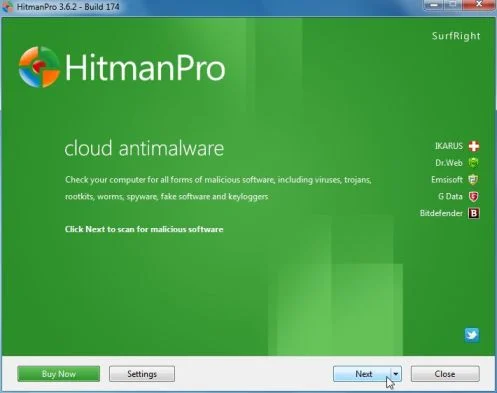
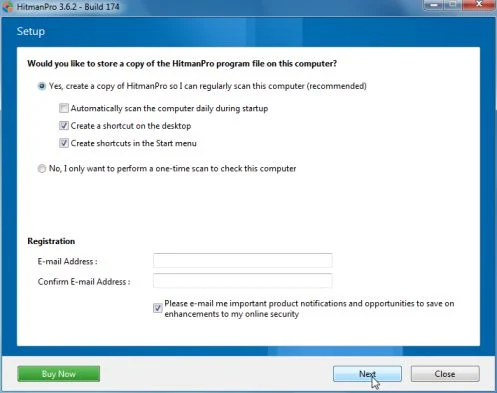
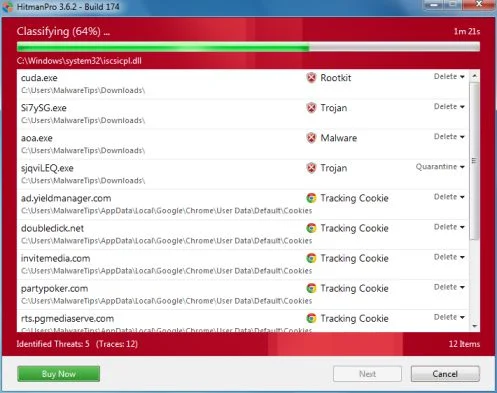
- HitmanPro will start scanning your computer for “Your computer has been blocked” malicious files as seen in the image below.
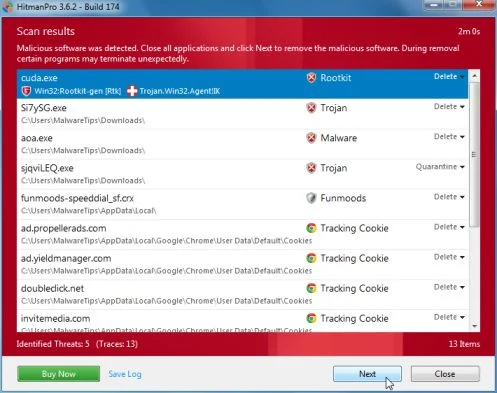
- Once the scan is complete,you’ll see a screen which will display all the infected files that this utility has detected, and you’ll need to click on Next to remove these malicious files.
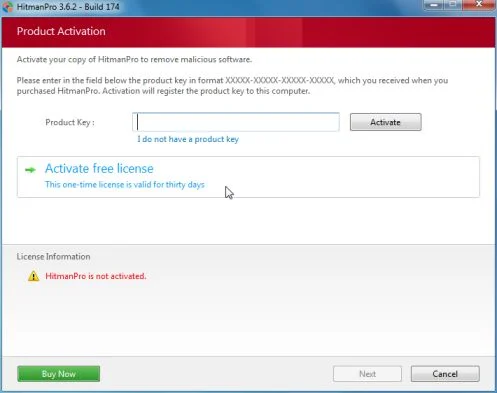
- Click Activate free license to start the free 30 days trial and remove all the malicious files from your computer.

Join the discussion
20 commentsShare your experience or ask a question about this article.
Your progress
Did these steps help?
Let us know how the guide worked for you.
Describe what you see and the step you reached. Keep passwords and other private information out.
Discussion
Thank you you are the greatest person on the very planet thank youuuuuuuuu
You are a life saver. I was so worried whether it was real or not and then I saw the exact same Page in an image here. Method 2 worked perfectly. Thankyou
you are the man !!!! keep up the great work !!!!
Ditto all the happy folks – I am very impressed with your careful instructions that actually worked! Thanks very much!
Hello Scot,
Please create a bootable Kaspersky Rescue Disk as seen here: http://malwaretips.com/blogs/remove-police-trojan/#kaspersky
Stay safe!
Thank you so much! This saved me completely :) You’re an amazing human being!
thank you i seem to have got m pc work thanx to you
this site was so helpfull thanx
If I could find you I would kiss you!!!! Thank you do much for your help I was so worried that my computer was going to be ruined and that I was gonna have to pay someone $400 to fix it. Can’t say it enough thank you ,thank you ,thank you!!!!!
So thankful I found this blog! Easy instructions to follow…my computer is running good as new! Thank you so much!
Thank goodness. I knew it was fake from the start but it sure wasn’t good that I couldn’t access my computer. Besides that, do I have to run both Malware bytes and hitman pro, or can I just run Malware bytes?
Thank you ver much. I have used Method 2 for VistaX32 and it worked.
Thanks dude. U save my life.
OMG!
Thank you so much. It just appeared on my screen and I thought it was real.
I’ve never had a virus before and I’ve never had any anti virus software. I need to be more careful know. I was so worried when it came up because I thought I was gonna get arrested. LOL.
Thanks so much for this! Had to use Method 4 but it appears to have worked! And to Henry, I didn’t have to buy a thing! The trial license worked just fine.
Thanks again!
Used method 3, and it worked great. Removed the ransomware with no problem. Only thing you need to be aware of is that HitmanPro will not remove the malware without buying an Activation key.
In reply to Henry
Hello Henry,
Is this your personal computer/ laptop or from work? Please note that HitmanPro doesn’t not offer the 30 days trial for corporate machines, however if this is your personal computer, you should be able to activate this product key.
Anyway,lets see if we can get rid of some of malware by using the below software:
STEP 1: Run a scan with RogueKiller
RogueKiller Download Link (This link will automatically download RogueKiller on your computer)
STEP 2: Run a scan with Emsisoft Emergency Kit.
EMSISOFT EMERGENCY KIT DOWNLOAD LINK (This link will open a download page in a new window from where you can download Emsisoft Emergency Kit)
STEP 3: Run a scan with Eset Online Scanner.
ESET Online Scanner Download Link (This link will automatically download ESET Online Scanner on your computer.)
NEXT,please re-run a scan with HitmanPro and click on “Save log” and post that here so I can take a look at what it has found.Then, I’ll give you instructions on how to remove the left over files.
Good luck!
Thank you so much! I was freaking out for a good minute before I figured it was probably a virus.
I was able to successfully use Method 1 and the Malwarebytes download
Thank you … i used method 3, took a while but was able to remove the malware. Thank you very much for the instructions – very clear and easy to follow.
Thank you! I have used Method 2 for my Windows 7 x64 and it worked! :)