

Safe Saver is an adware program that displays coupons, advertisements and sponsored links via a pop-up box on Ebay, Amazon, Walmart and other shopping websites that you are visiting.
Safe Saver pop-up ads will be shown as boxes containing various coupons that are available or as underlined keywords, which when clicked will display an advertisement that states it is brought to you by Safe Saver.
![[Image: Safe Saver popup ads]](http://malwaretips.com/blogs/wp-content/uploads/2013/07/safe-saver-popup.jpg "Safe Saver popup ads")
This infection is designed specifically to make money. It generates web traffic, collects sales leads for other dubious sites, and will display advertisements and sponsored links within your web browser.
Safe Saver it’s technically not a virus, but it does exhibit plenty of malicious traits, such as rootkit capabilities to hook deep into the operating system, browser hijacking, and in general just interfering with the user experience. The industry generally refers to it as a “PUP,” or potentially unwanted program.
Safe Saver is an extension for Internet Explorer, Firefox and Chrome that is typically added when you install another free software (video recording/streaming, download-managers or PDF creators) that had bundled into their installation this adware program. When you install these free programs, they will also install Safe Saver as well. Some of the programs that are known to bundle Safe Saver include 1ClickDownload, Superfish, Yontoo and FBPhotoZoom.
Once installed, whenever you will visit Expedia, Best Buy, Facebook or any other similar websites, Safe Saver will display on product images a See Similar button, which when clicked will show you ads by Safe Saver.
Safe Saver may also display advertising banners on the webpages that you are visiting, and as you browse Internet, it will show coupons and other deals available on different websites.

You should always pay attention when installing software because often, a software installer includes optional installs, such as this Safe Saver adware. Be very careful what you agree to install.
Always opt for the custom installation and deselect anything that is not familiar, especially optional software that you never wanted to download and install in the first place. It goes without saying that you should not install software that you don’t trust.
Safe Saver Overview:
- Safe Saver will inject pop-up ads, advertising banners and in-text ads within your web browser
- Adware detected in the Safe Saver program
- Integrates into the web browser via the Safe Saver browser extension
- Typically distributed through a pay-per-install bundle or with third-party software (example: CNET installer, Softonic Installer, InstallRex installer and many more)
- Safe Saver has a poor reputation within the MalwareTips Community
How to remove “Safe Saver” (Virus Removal Guide)
This page is a comprehensive guide, which will remove “Safe Saver” virus from your computer, and any other adware program that may have been installed during the setup process.
Please perform all the steps in the correct order. If you have any questions or doubt at any point, STOP and ask for our assistance.
STEP 1: Uninstall Safe Saver program from your computer
STEP 2: Remove “Ads by Safe Saver” virus from Internet Explorer, Firefox and Google Chrome
STEP 3: Remove Safe Saver adware from Internet Explorer, Firefox and Google Chrome with AdwCleaner
STEP 4: Remove “Ads by Safe Saver” virus with Malwarebytes Anti-Malware Free
STEP 5: Double-check for the “Safe Saver” malware with HitmanPro
STEP 1 : Uninstall Safe Saver program from your computer
In this first step, we will try to identify and remove any malicious program that might be installed on your computer.
- To uninstall the Safe Saver program from Windows XP, Windows Vista or Windows 7, click the “Start” button, then click on the “Control Panel” menu option.
![[Image: Control Panel in Windows Start Menu]](data:image/svg+xml,%3Csvg%20xmlns='http://www.w3.org/2000/svg'%20viewBox='0%200%20433%20552'%3E%3C/svg%3E "Control Panel in Windows Start Menu")
If you are using Windows 8, simply drag your mouse pointer to the right edge of the screen, select Search from the list and search for “control panel” .Or you can right-click on a bottom left hot corner (formerly known as the Start button) and select Control Panel from there.
![[Image: Type Control Panel in Windows 8 search box]](data:image/svg+xml,%3Csvg%20xmlns='http://www.w3.org/2000/svg'%20viewBox='0%200%20668%20359'%3E%3C/svg%3E "Type Control Panel in Windows 8 search box")
- When the “Control Panel” window opens click on the “Uninstall a program” option under “Programs” category. This option is shown by the arrow in the image below. If you are using the “Classic View” of the Control Panel, then you would double-click on the “Programs and Features” icon instead.
![[Image: Uninstall a program]](data:image/svg+xml,%3Csvg%20xmlns='http://www.w3.org/2000/svg'%20viewBox='0%200%20557%20298'%3E%3C/svg%3E "Click on Uninstall a program")
- When the “Programs and Features” or the “Uninstall a Program” screen is displayed, scroll through the list of currently installed programs and uninstall Safe Saver, Discount Cow, V-bates, PriceMeter, Supra Savings, weDownload Manager, PureLead, Search Assist, Re-Markable, Zombie Alert, Wajam, Coupon Server, Lollipop, HD-Total-Plus, BlockAndSurf, Safe Saver, SupTab, Search Protect, Lollipop, Software Updated Version, DP1815, Video Player, Convert Files for Free, Plus-HD 1.3, BetterSurf, Trusted Web, PassShow, LyricsBuddy-1, PureLeads, Media Player 1.1, RRSavings, Feven Pro 1.2, Websteroids, Savings Bull, TidyNetwork, Search Snacks, MyPC Backup, Re-markit and any other recently installed unknown program from your computer.
To view the most recently installed programs, you can click on the “Installed On” column to sort your program by the installation date. Scroll though the list, and uninstall any unwanted or unknown programs.
![[Image: Uninstall Safe Saver from Windows]](data:image/svg+xml,%3Csvg%20xmlns='http://www.w3.org/2000/svg'%20viewBox='0%200%20963%20593'%3E%3C/svg%3E "Uninstall Safe Saver from Windows")
Depending on what program has installed the Safe Saver adware infection, the above program may have a different name or not be installed on your computer. If you cannot find any unwanted or unknown programs on your machine, then you can proceed with the next step.
![[Image: Control Panel in Windows Start Menu]](http://malwaretips.com/blogs/wp-content/uploads/2014/01/windows-start-menu-control-panel.jpg "Control Panel in Windows Start Menu")
![[Image: Type Control Panel in Windows 8 search box]](http://malwaretips.com/blogs/wp-content/uploads/2014/06/windows-8-uninstall.jpg "Type Control Panel in Windows 8 search box")
![[Image: Uninstall a program]](http://malwaretips.com/blogs/wp-content/uploads/2013/03/uninstall-a-program-windows.jpg "Click on Uninstall a program")
![[Image: Uninstall Safe Saver from Windows]](http://malwaretips.com/blogs/wp-content/uploads/2014/06/uninstall-malicious-program.jpg "Uninstall Safe Saver from Windows")
If you are having issues while trying to uninstall the Safe Saver program, you can use Revo Uninstaller to completely remove this unwanted program from your machine.
STEP 2: Remove “Safe Saver” Ads from Internet Explorer, Firefox and Google Chrome
Remove “Ads by Safe Saver” virus from Internet Explorer
You can reset Internet Explorer settings to return them to the state they were in when Internet Explorer was first installed on your PC.
- Open Internet Explorer, click on the “gear icon”
![[Image: icongear.jpg]](data:image/svg+xml,%3Csvg%20xmlns='http://www.w3.org/2000/svg'%20viewBox='0%200%2016%2016'%3E%3C/svg%3E "Remove Safe Saver virus (Removal Guide) 1") in the upper right part of your browser, then click again on Internet Options.
in the upper right part of your browser, then click again on Internet Options.
![[Image: Internet Options in Internet Explorer]](data:image/svg+xml,%3Csvg%20xmlns='http://www.w3.org/2000/svg'%20viewBox='0%200%20625%20261'%3E%3C/svg%3E "Click on the Gear Icon then on Internet Options")
- In the “Internet Options” dialog box, click on the “Advanced” tab, then click on the “Reset” button.
![[Image: Reset Internet Explorer]](data:image/svg+xml,%3Csvg%20xmlns='http://www.w3.org/2000/svg'%20viewBox='0%200%20613%20415'%3E%3C/svg%3E "In the Advanced tab click on the Reset button")
- In the “Reset Internet Explorer settings” section, select the “Delete personal settings” check box, then click on “Reset” button.
![[Image: Reset Internet Explorer to its default settings to remove Safe Saver]](data:image/svg+xml,%3Csvg%20xmlns='http://www.w3.org/2000/svg'%20viewBox='0%200%20626%20472'%3E%3C/svg%3E "Click on the Reset button to revert IE to its default settings")
- When Internet Explorer has completed its task, click on the “Close” button in the confirmation dialogue box. You will now need to close your browser, and then you can open Internet Explorer again.
![[Image Reset Internet Explorer settings]](data:image/svg+xml,%3Csvg%20xmlns='http://www.w3.org/2000/svg'%20viewBox='0%200%20621%20514'%3E%3C/svg%3E "Click on the Close button")
![[Image: icongear.jpg]](http://malwaretips.com/images/removalguide/icongear.jpg "Remove Safe Saver virus (Removal Guide) 1") in the upper right part of your browser, then click again on Internet Options.
in the upper right part of your browser, then click again on Internet Options.![[Image: Internet Options in Internet Explorer]](http://malwaretips.com/blogs/wp-content/uploads/2014/03/Internet-Options-Internet-Explorer.jpg "Click on the Gear Icon then on Internet Options")
![[Image: Reset Internet Explorer]](http://malwaretips.com/blogs/wp-content/uploads/2014/03/Reset-Internet-Explorer.jpg "In the Advanced tab click on the Reset button")
![[Image: Reset Internet Explorer to its default settings to remove Safe Saver]](http://malwaretips.com/blogs/wp-content/uploads/2014/03/reset-button-Internet-Explorer.jpg "Click on the Reset button to revert IE to its default settings")
![[Image Reset Internet Explorer settings]](http://malwaretips.com/blogs/wp-content/uploads/2014/03/Close-button-Reset.jpg "Click on the Close button")
Remove “Ads by Safe Saver” virus from Mozilla Firefox
If you’re having problems with Firefox, resetting it can help. The reset feature fixes many issues by restoring Firefox to its factory default state while saving your essential information like bookmarks, passwords, web form auto-fill information, browsing history and open tabs.
- In the upper-right corner of the Firefox window, click the Firefox menu button (), the click on the “Help” () button.
![[Image: Click on the Menu button then Help]](data:image/svg+xml,%3Csvg%20xmlns='http://www.w3.org/2000/svg'%20viewBox='0%200%20639%20404'%3E%3C/svg%3E "Click on the Menu button then question mark button")
- From the Help menu, choose Troubleshooting Information.
![[Image: Troubleshooting Information in Firefox]](data:image/svg+xml,%3Csvg%20xmlns='http://www.w3.org/2000/svg'%20viewBox='0%200%20635%20406'%3E%3C/svg%3E "Troubleshooting Information in Firefox")
- Click the “Reset Firefox” button in the upper-right corner of the “Troubleshooting Information” page.
![[Image: Reset Firefox to its default settings to remove Safe Saver]](data:image/svg+xml,%3Csvg%20xmlns='http://www.w3.org/2000/svg'%20viewBox='0%200%20642%20404'%3E%3C/svg%3E "Reset Firefox to its default settings")
- To continue, click on the “Reset Firefox” button in the new confirmation window that opens.
![[Image: Click on the Reset Firefox button]](data:image/svg+xml,%3Csvg%20xmlns='http://www.w3.org/2000/svg'%20viewBox='0%200%20637%20407'%3E%3C/svg%3E "Click on the Reset Firefox button")
- Firefox will close itself and will revert to its default settings. When it’s done, a window will list the information that was imported. Click on the “Finish“.
![[Image: Firefox Menu button]](http://malwaretips.com/blogs/wp-content/uploads/2014/04/Firefox-menu-button.png "Firefox Menu button") ), the click on the “Help” (
), the click on the “Help” (![[Image: Firefox Help button]](http://malwaretips.com/blogs/wp-content/uploads/2014/04/Firefox-Help.png "Firefox Help button") ) button.
) button.![[Image: Click on the Menu button then Help]](http://malwaretips.com/blogs/wp-content/uploads/2014/04/Firefox-Help-button.jpg "Click on the Menu button then question mark button")
![[Image: Troubleshooting Information in Firefox]](http://malwaretips.com/blogs/wp-content/uploads/2014/04/Firefox-Troubleshooting-Information.jpg "Troubleshooting Information in Firefox")
![[Image: Reset Firefox to its default settings to remove Safe Saver]](http://malwaretips.com/blogs/wp-content/uploads/2014/04/Reset-Firefox-button.jpg "Reset Firefox to its default settings")
![[Image: Click on the Reset Firefox button]](http://malwaretips.com/blogs/wp-content/uploads/2014/04/Reset-Firefox-to-default-settings.jpg "Click on the Reset Firefox button")
Note: Your old Firefox profile will be placed on your desktop in a folder named “Old Firefox Data“. If the reset didn’t fix your problem you can restore some of the information not saved by copying files to the new profile that was created. If you don’t need this folder any longer, you should delete it as it contains sensitive information.
Remove “Ads by Safe Saver” virus from Google Chrome
- Click on the “Chrome menu button” (
 ) on the browser toolbar, select “Tools“, and then click on “Extensions“.
![[Image: Extensions menu in Chrome]](data:image/svg+xml,%3Csvg%20xmlns='http://www.w3.org/2000/svg'%20viewBox='0%200%20647%20405'%3E%3C/svg%3E "Extensions menu in Chrome")
- In the “Extensions” tab, remove the Safe Saver any other unknown extensions by clicking the trash can
![[Image: Remove an extension from Chrome]](data:image/svg+xml,%3Csvg%20xmlns='http://www.w3.org/2000/svg'%20viewBox='0%200%2020%2020'%3E%3C/svg%3E "Remove an extension from Chrome") icon.
icon.
Basically, if you have not installed an extensions then you should remove it from your web browser.
If you cannot remove the Safe Saver extension, and under the trash can you can see the “Installed by enterprise policy” text, then you will need to follow our “Remove Installed by enterprise policy extension from Chrome” guide.
![[Image: Remove Safe Saver Chrome extensions]](data:image/svg+xml,%3Csvg%20xmlns='http://www.w3.org/2000/svg'%20viewBox='0%200%201159%20826'%3E%3C/svg%3E "Remove Safe Saver Chrome extensions")
 ) on the browser toolbar, select “Tools“, and then click on “Extensions“.
![[Image: Extensions menu in Chrome]](http://malwaretips.com/blogs/wp-content/uploads/2014/03/Google-Chrome-extensions.jpg "Extensions menu in Chrome")
![[Image: Remove an extension from Chrome]](http://malwaretips.com/blogs/wp-content/uploads/2013/07/Trash-Can-Chrome.png "Remove an extension from Chrome") icon.
icon.![[Image: Remove Safe Saver Chrome extensions]](http://malwaretips.com/blogs/wp-content/uploads/2014/06/remove-chrome-extension.jpg "Remove Safe Saver Chrome extensions")
STEP 3: Remove Safe Saver adware from Internet Explorer, Firefox and Google Chrome with AdwCleaner
The AdwCleaner utility will scan your computer and web browser for the “Safe Saver” malicious files, browser extensions and registry keys, that may have been installed on your computer without your knowledge.
- You can download AdwCleaner utility from the below link.
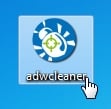
ADWCLEANER DOWNLOAD LINK (This link will open a new web page from where you can download “AdwCleaner”) - Before starting AdwCleaner, close all open programs and internet browsers, then double-click on the AdwCleaner icon.

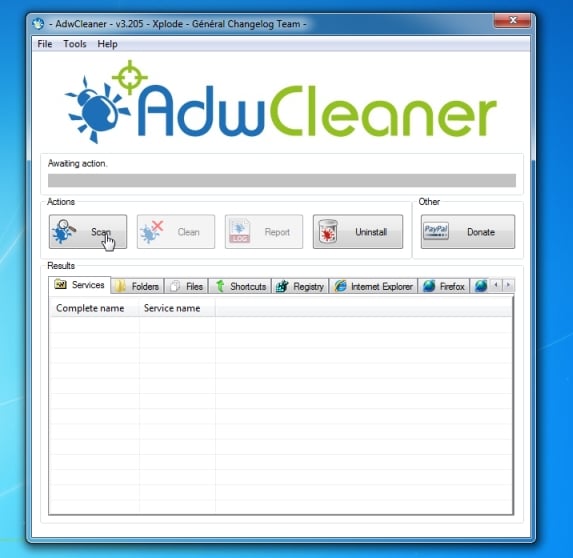
If Windows prompts you as to whether or not you wish to run AdwCleaner, please allow it to run. - When the AdwCleaner program will open, click on the “Scan” button as shown below.

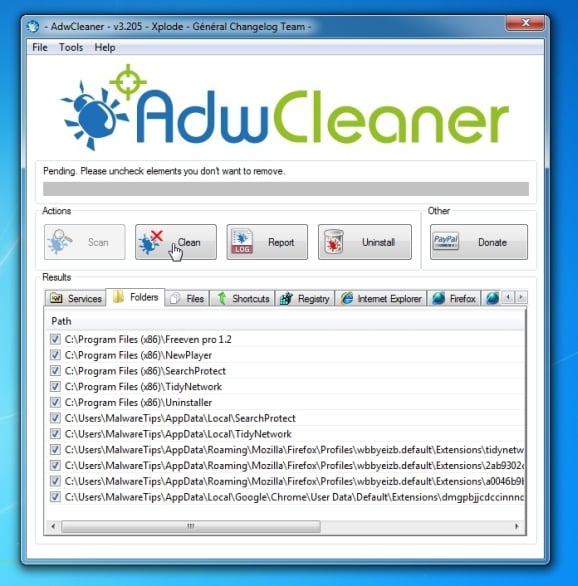
AdwCleaner will now start to search for the “Safe Saver” malicious files that may be installed on your computer. - To remove the “Safe Saver” malicious files that were detected in the previous step, please click on the “Clean” button.

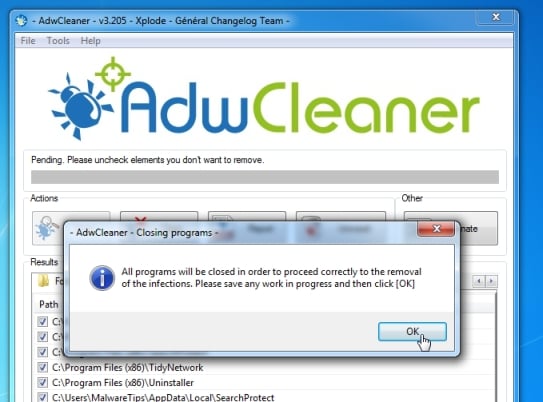
- AdwCleaner will now prompt you to save any open files or documents, as the program will need to reboot the computer. Please do so and then click on the OK button.

STEP 4: Remove “Safe Saver” virus with Malwarebytes Anti-Malware Free
Malwarebytes Anti-Malware Free uses industry-leading technology to detect and remove all traces of malware, including worms, Trojans, rootkits, rogues, dialers, spyware, and more.
It is important to note that Malwarebytes Anti-Malware works well and should run alongside antivirus software without conflicts.
- You can download download Malwarebytes Anti-Malware from the below link.
MALWAREBYTES ANTI-MALWARE DOWNLOAD LINK (This link will open a new web page from where you can download “Malwarebytes Anti-Malware Free”) - Once downloaded, close all programs, then double-click on the icon on your desktop named “mbam-setup-consumer-2.00.xx” to start the installation of Malwarebytes Anti-Malware.
![[Image: Malwarebytes Anti-Malware setup program]](data:image/svg+xml,%3Csvg%20xmlns='http://www.w3.org/2000/svg'%20viewBox='0%200%20107%20107'%3E%3C/svg%3E "Malwarebytes Anti-Malware setup program")
 You may be presented with a User Account Control dialog asking you if you want to run this file. If this happens, you should click “Yes” to continue with the installation.
 - When the installation begins, you will see the Malwarebytes Anti-Malware Setup Wizard which will guide you through the installation process.
![[Image: Malwarebytes Anti-Malware Setup Wizard]](data:image/svg+xml,%3Csvg%20xmlns='http://www.w3.org/2000/svg'%20viewBox='0%200%20538%20419'%3E%3C/svg%3E "Malwarebytes Anti-Malware Setup Wizard")
To install Malwarebytes Anti-Malware on your machine, keep following the prompts by clicking the “Next” button.
![[Image: Malwarebytes Anti-Malware Final Setup Screen]](data:image/svg+xml,%3Csvg%20xmlns='http://www.w3.org/2000/svg'%20viewBox='0%200%20528%20412'%3E%3C/svg%3E "Malwarebytes Anti-Malware Final Setup Screen")
- Once installed, Malwarebytes Anti-Malware will automatically start and you will see a message stating that you should update the program, and that a scan has never been run on your system. To start a system scan you can click on the “Fix Now” button.
![[Image: Click on the Fix Now button to start a scan]](data:image/svg+xml,%3Csvg%20xmlns='http://www.w3.org/2000/svg'%20viewBox='0%200%20669%20496'%3E%3C/svg%3E "Remove Safe Saver virus (Removal Guide) 2")
Alternatively, you can click on the “Scan” tab and select “Threat Scan“, then click on the “Scan Now” button.
![[Image: Malwarebytes Anti-Malware Threat Scan]](data:image/svg+xml,%3Csvg%20xmlns='http://www.w3.org/2000/svg'%20viewBox='0%200%20645%20423'%3E%3C/svg%3E "Malwarebytes Anti-Malware Threat Scan")
- Malwarebytes Anti-Malware will now check for updates, and if there are any, you will need to click on the “Update Now” button.
![[Image: Click on Update Now to update Malwarebytes Anti-Malware]](data:image/svg+xml,%3Csvg%20xmlns='http://www.w3.org/2000/svg'%20viewBox='0%200%20650%20419'%3E%3C/svg%3E "Click on Update Now to update Malwarebytes Anti-Malware")
- Malwarebytes Anti-Malware will now start scanning your computer for the Safe Saver virus. When Malwarebytes Anti-Malware is scanning it will look like the image below.
![[Image: Malwarebytes Anti-Malware while performing a scan]](data:image/svg+xml,%3Csvg%20xmlns='http://www.w3.org/2000/svg'%20viewBox='0%200%20642%20421'%3E%3C/svg%3E "Malwarebytes Anti-Malware while performing a scan")
- When the scan has completed, you will now be presented with a screen showing you the malware infections that Malwarebytes’ Anti-Malware has detected. To remove the malicious programs that Malwarebytes Anti-malware has found, click on the “Quarantine All” button, and then click on the “Apply Now” button.
![[Image: Remove Safe Saver with Malwarebytes Anti-Malware]](data:image/svg+xml,%3Csvg%20xmlns='http://www.w3.org/2000/svg'%20viewBox='0%200%20804%20654'%3E%3C/svg%3E "Remove the malware that Malwarebytes Anti-Malware has detected")
Please note that the infections found may be different than what is shown in the image. - Malwarebytes Anti-Malware will now quarantine all the malicious files and registry keys that it has found. When removing the files, Malwarebytes Anti-Malware may require a reboot in order to remove some of them. If it displays a message stating that it needs to reboot your computer, please allow it to do so.
![[Image: Malwarebytes Anti-Malware removing Safe Saver]](data:image/svg+xml,%3Csvg%20xmlns='http://www.w3.org/2000/svg'%20viewBox='0%200%20651%20427'%3E%3C/svg%3E "Malwarebytes Anti-Malware asking to reboot your computer")
After your computer will restart, you should open Malwarebytes Anti-Malware and perform another “Threat Scan” scan to verify that there are no remaining threats
![[Image: Malwarebytes Anti-Malware setup program]](http://malwaretips.com/blogs/wp-content/uploads/2014/02/Malwarebytes-Anti-Malware-Setup.jpg "Malwarebytes Anti-Malware setup program")
 You may be presented with a User Account Control dialog asking you if you want to run this file. If this happens, you should click “Yes” to continue with the installation.
![[Image: Malwarebytes Anti-Malware Setup Wizard]](http://malwaretips.com/blogs/wp-content/uploads/2014/02/malwarebytes-anti-malware-2-0-installation.jpg "Malwarebytes Anti-Malware Setup Wizard")
![[Image: Malwarebytes Anti-Malware Final Setup Screen]](http://malwaretips.com/blogs/wp-content/uploads/2014/02/malwarebytes-anti-malware-2-0-final-screen.jpg "Malwarebytes Anti-Malware Final Setup Screen")
![[Image: Click on the Fix Now button to start a scan]](http://malwaretips.com/blogs/wp-content/uploads/2014/02/malwarebytes-anti-malware-fix-now.jpg "Remove Safe Saver virus (Removal Guide) 2")
![[Image: Malwarebytes Anti-Malware Threat Scan]](http://malwaretips.com/blogs/wp-content/uploads/2014/02/malwarebytes-anti-malware-threat-scan-option.jpg "Malwarebytes Anti-Malware Threat Scan")
![[Image: Click on Update Now to update Malwarebytes Anti-Malware]](http://malwaretips.com/blogs/wp-content/uploads/2014/02/malwarebytes-anti-malware-2-0-update-now.jpg "Click on Update Now to update Malwarebytes Anti-Malware")
![[Image: Malwarebytes Anti-Malware while performing a scan]](http://malwaretips.com/blogs/wp-content/uploads/2014/02/malwarebytes-anti-malware-scan.jpg "Malwarebytes Anti-Malware while performing a scan")
![[Image: Remove Safe Saver with Malwarebytes Anti-Malware]](http://malwaretips.com/blogs/wp-content/uploads/2014/02/malwarebytes-anti-malware-potential-threat-detected.jpg "Remove the malware that Malwarebytes Anti-Malware has detected")
![[Image: Malwarebytes Anti-Malware removing Safe Saver]](http://malwaretips.com/blogs/wp-content/uploads/2014/02/malwarebytes-anti-malware-remove-virus.jpg "Malwarebytes Anti-Malware asking to reboot your computer")
STEP 5: Double-check for the “Safe Saver” malware infection with HitmanPro
HitmanPro is a second opinion scanner, designed to rescue your computer from malware (viruses, trojans, rootkits, etc.) that have infected your computer despite all the security measures you have taken (such as anti-virus software, firewalls, etc.). HitmanPro is designed to work alongside existing security programs without any conflicts. It scans the computer quickly (less than 5 minutes) and does not slow down the computer.
- You can download HitmanPro from the below link:
HITMANPRO DOWNLOAD LINK (This link will open a new web page from where you can download “HitmanPro”) - Double-click on the file named “HitmanPro.exe” (for 32-bit versions of Windows) or “HitmanPro_x64.exe” (for 64-bit versions of Windows). When the program starts you will be presented with the start screen as shown below.
![[Image: HitmanPro start-up screen]](data:image/svg+xml,%3Csvg%20xmlns='http://www.w3.org/2000/svg'%20viewBox='0%200%20598%20480'%3E%3C/svg%3E "HitmanPro startup screen (Click Next)")
Click on the “Next” button, to install HitmanPro on your computer.
![[Image: HitmanPro setup options]](data:image/svg+xml,%3Csvg%20xmlns='http://www.w3.org/2000/svg'%20viewBox='0%200%20594%20475'%3E%3C/svg%3E "HitmanPro installation options (Click Next)")
- HitmanPro will now begin to scan your computer for Safe Saver malicious files.
![[Image: HitmanPro scanning for malware]](data:image/svg+xml,%3Csvg%20xmlns='http://www.w3.org/2000/svg'%20viewBox='0%200%20594%20471'%3E%3C/svg%3E "HitmanPro scanning for Safe Saver pop-up virus")
- When it has finished it will display a list of all the malware that the program found as shown in the image below. Click on the “Next” button, to remove Safe Saver virus.
![[Image: HitmanPro scan results]](data:image/svg+xml,%3Csvg%20xmlns='http://www.w3.org/2000/svg'%20viewBox='0%200%20591%20471'%3E%3C/svg%3E "HitmanPro scan results (Click Next)")
- Click on the “Activate free license” button to begin the free 30 days trial, and remove all the malicious files from your computer.
![[Image: HitmanPro Activate Free License]](data:image/svg+xml,%3Csvg%20xmlns='http://www.w3.org/2000/svg'%20viewBox='0%200%20594%20477'%3E%3C/svg%3E "Click on the Activate free license button")
![[Image: HitmanPro start-up screen]](http://malwaretips.com/blogs/wp-content/uploads/2014/03/hitmanpro-install.jpg "HitmanPro startup screen (Click Next)")
![[Image: HitmanPro setup options]](http://malwaretips.com/blogs/wp-content/uploads/2014/03/hitmapro-start-scan.jpg "HitmanPro installation options (Click Next)")
![[Image: HitmanPro scanning for malware]](http://malwaretips.com/blogs/wp-content/uploads/2014/03/hitmanpro-scanning.jpg "HitmanPro scanning for Safe Saver pop-up virus")
![[Image: HitmanPro scan results]](http://malwaretips.com/blogs/wp-content/uploads/2014/03/hitmanpro-scan-results.jpg "HitmanPro scan results (Click Next)")
![[Image: HitmanPro Activate Free License]](http://malwaretips.com/blogs/wp-content/uploads/2014/03/hitmanpro-activation.jpg "Click on the Activate free license button")
Your computer should now be free of the Safe Saver adware infection. If your current anti-virus solution let this infection through, you may want to consider purchasing the Premium version of Malwarebytes Anti-Malware to protect against these types of threats in the future, and perform regular computer scans with HitmanPro.
If you are still experiencing problems while trying to remove Safe Saver adware from your machine, please start a new thread in our Malware Removal Assistance forum.









How do you do this from andriod phones please
Hello,
When it comes to Android, the most likely cause it’s a malicious app. You should remove any newly suspicious app installed. We have this guide to help you: http://malwaretips.com/blogs/remove-android-virus/
I finally got rid off the bugs that were driving me crazy.i cant thank u enough,, ur a life saver
OMG!!! Thank you! Thank You! Thank you! I have been fighting with the safe saver people for almost a month and they kept saying there was nothing there. I was about to factory reset my computer which would have sucked really bad. Thanks to you and you walk through I no longer have to lose everything! You are amazing!
Thank you for such a detailed explaination
Thank you so so much ! Saved my laptop from getting smashed against the wall.
Hello,
What browser are you using?
I literally did every step aswell, and i still have safesaver. I’m using google chrome
Hello,
Please follow these steps:
1. Click the Chrome menu (those 3 lines on the right top part) on the browser toolbar.
2.Select Settings.
3. Click Show advanced settings and find the “Reset browser settings” section.
4. Click Reset browser settings.
In the dialog that appears, click Reset.
This did not work for me either. Is there another way? I use Google Chrome.
Hello,
Can you please go to C:ProgramData and there you should see a file called Safe Saver, which you will need to delete.
Thanks for the advice. For me it was the advice given below by Sean Mulligan and the advice given to Danielle by Stelian Pilici that helped me.
To find the folder C:ProgramData you do have to make the hidden folder visible in your display settings of windows explorer.
Hi folks. I got rid of the virus by going to ****C:ProgramData**** and delteing the folders of the malware. For example mine was saved as *****JIJFHDDHSDGH**** After deleting the folders of suspiucious looking malware I got rid of the virus. You can find the location of the virus by going to google chrome extensions and running developer mode, it should show you the plugin directory beside the extension.
Thanks, That actually worked!
Make sure you run the steps to remove it from any browsers you have installed, even if you don’t use them. I use Forefox on a Windows 7 OS
I ran all these steps and the ” In the Reset Internet Explorer settings section, check the Delete personal settings box, then click on Reset.” is the one that I haven’t seen elsewhere.
So far so good, ScorpionSaver is a nasty adware and very hard to remove. I think I got it downloading and trying programs that make bootable USB drives.
I’ve been trying to uninstall Safe Save from the control panel, but every time I select it and click “uninstall”, nothing pops up to uninstall it / nothing happens!
I can uninstall the other unwanted programs on my computer like that, but when I try and do it with Safe Saver, it’s as if I’m not even clicking the “uninstall” button. It’s very frustrating.
Do you know how to fix this so I can get rid of it? :S
Hello,
Did you run the Adwcleaner scan?
You can try to remove this program with Revo Uninstaller:
Download : http://www.revouninstaller.com/revo_uninstaller_free_download.html
How to use Revo Uninstaller : http://www.revouninstaller.com/revo_uninstaller_how_to.html
Stay safe!
this was time consuming but it worked. thank you so much what a relief!
Thanks for the advice Was really helpful
Hello,
Here is there contact form: http://safe-saver. com/contact.html
Usually these type of companies cannot be traced, and disappear as quickly as they appear.
Stay safe!
Dude I can’t believe it :D No Safe Saver in my pc !! Thanks !!