

As the holiday season approaches, a new scam has emerged involving social media ads promoting beautiful Christmas trees available for an unbelievable price of just $19.99. Sadly, these ads are too good to be true and designed to defraud shoppers.
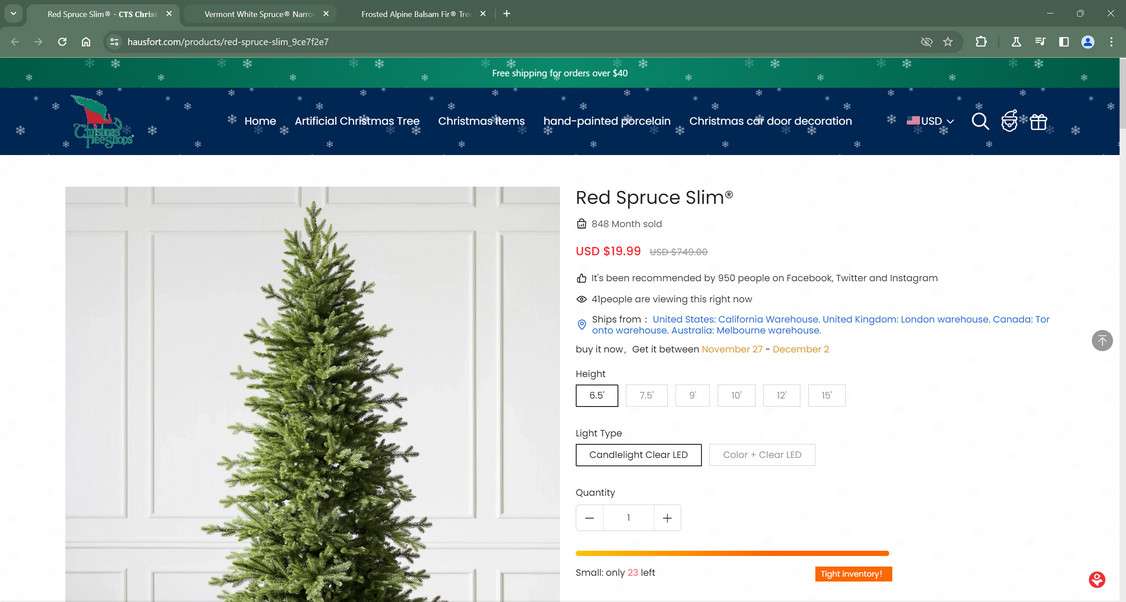
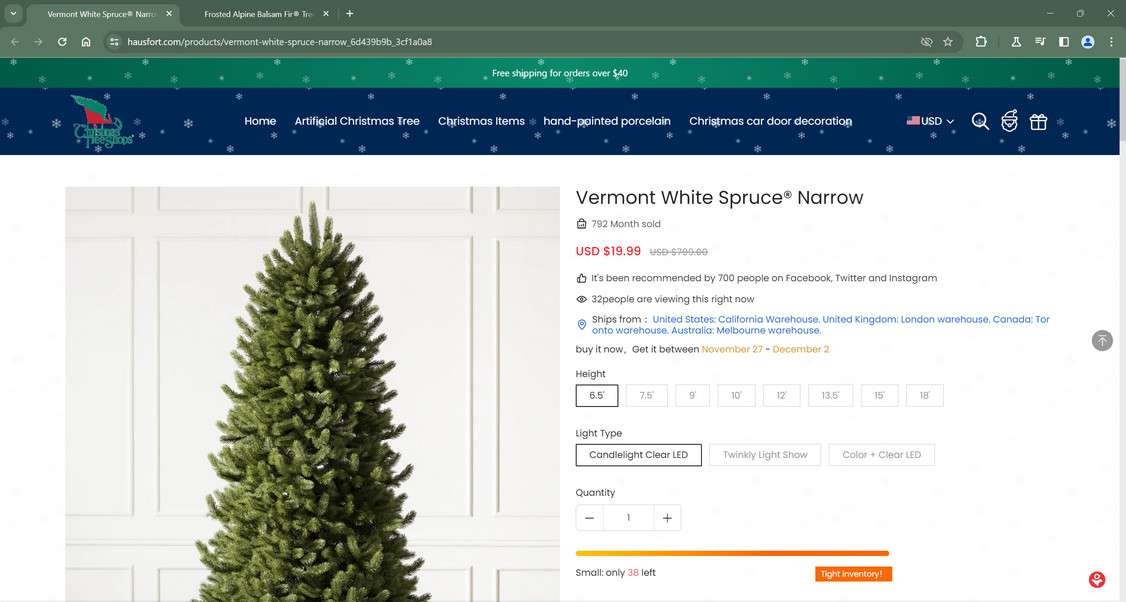
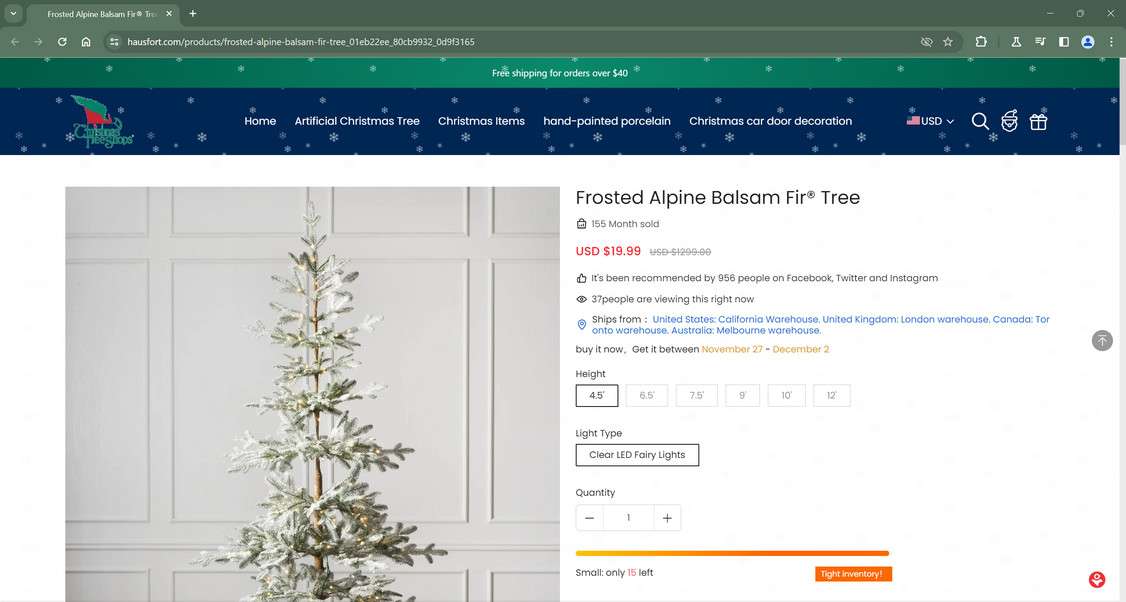
Overview of the $19.99 Christmas Tree Social Media Scam
The $19.99 Christmas tree scam takes advantage of the heightened excitement and spending around the holiday season by promoting fake deals for premium trees at an absurdly low price point.
These scams typically begin with sponsored social media ads on platforms like Facebook, Instagram, and TikTok showcasing beautiful, full-sized Christmas trees available for just $19.99 – an unbelievable steal.
The ads incorporate holiday imagery and promotions like “Christmas Blowout Sale! Trees Now Only $19.99!” to grab attention. Major retailer logos like Balsam Hill are also used to lend legitimacy.
Intrigued shoppers who click on these social ads are then redirected to elaborate fake ecommerce websites impersonating large online Christmas tree sellers.
These sophisticated scam sites have meticulously copied the webpage design, logos, product listings, and images of real retailers. To an unsuspecting visitor, these sites appear to be a legitimate online store offering an incredible markdown on holiday trees.
In reality, these websites have no actual relationship with the retailers they are impersonating. They are simply leveraging a major brand’s name, reputation, and assets.
The scam sites prominently promote the eye-catching $19.99 price for premium Fraser firs, Balsam firs, and pine trees typically priced at $100 to $300. This asks customers to believe an unlikely 75-90% discount.
To further build trust at checkout time, these fraudulent sites utilize other misleading techniques like fake customer reviews, certificates, security seals, satisfaction guarantees, and even stolen content from real retailer websites.
Unfortunately, any shopper who takes the bait ends up disappointed. After submitting payment and personal information, the websites take the money and disappear. No Christmas trees or products are ever shipped.
The $19.99 pricing scam simply enables the fraudsters to commit financial theft and identity fraud using stolen credit card and personal data provided at checkout.
These elaborate fake Christmas tree websites have been carefully engineered to play into shoppers’ seasonal excitement around holiday deals. But the absurdly discounted trees are just bait concealing a trap set by scammers ultimately seeking to profit off stolen payment details and the personal data entered by victims.
Research indicates these $19.99 Christmas tree scam ads and websites originate from an interconnected network of fraudsters likely operating out of China. Their only goal is to profit from defrauding holiday shoppers.
How the $19.99 Christmas Tree Social Media Scam Works
This scam operates by taking advantage of excitement around the holiday season and utilizing convincing social media ads:
Step 1: Hook Shoppers with Social Media Ads
The scam begins with sponsored video and image ads on platforms like Facebook, Instagram, and TikTok that advertise premium full-sized Christmas trees available for only $19.99. These compelling ads incorporate holiday imagery, promotions like “90% off plus free shipping”, and logos of top retailers like Balsam Hill to appear legitimate. Intrigued shoppers click on these ads.
Step 2: Redirect to Elaborate Fake Ecommerce Stores
The social media ads redirect users to sophisticated fake ecommerce websites designed to precisely mimic large online Christmas tree seller stores. These scam sites use stolen logos, web layouts, product listings, and images to impersonate real retailers. To users, these sites appear to be a legitimate store offering an incredible sale price on holiday trees.
Step 3: Entice Customers with Unbelievable $19.99 Price
The scam websites prominently promote huge markdowns on expensive Christmas trees now available for only $19.99, an unbelievable 90%+ discount compared to normal prices. These absurd prices are intended to get shoppers excited about a deal seemingly too good to pass up.
Step 4: Build Trust Through Fake Policies, Awards, Reviews
The scam sites utilize other misleading techniques to appear trustworthy. These include posting fake customer reviews, return policies, security seals, awards, and certifications. Some even steal content and images directly from real retailers. This fosters confidence in the unbelievable $19.99 deal.
Step 5: Get Credit Card and Personal Information
During checkout, customers are prompted to enter their full name, physical address, phone number, email address, and detailed credit card payment information. The scammers harvest this data to engage in financial fraud and identity theft or sell it on dark web marketplaces.
Step 6: Never Ship Ordered Trees
After submitting payment and personal information, victims never receive the deeply discounted premium Christmas trees displayed online. The fake websites simply take the money and disappear once enough payments are processed. No trees or other products are ever shipped.
This leaves shoppers empty-handed and frustrated after believing they snagged an incredible holiday deal. Meanwhile, the scammers profit from the scam using stolen payment details and personal info.
Red Flags to Recognize These Christmas Tree Scam Sites
While these fraudulent websites promoting $19.99 Christmas trees do a good job masquerading as real online retailers, some telltale signs can reveal their scam nature:
- Too Good to Be True Pricing – Premium 7-9 foot trees for $19.99 is an unrealistic bargain unlikely from a real retailer. Massive discounts over 75% off should raise major red flags.
- Generic Images and Product Descriptions – Low-quality or stock product photos instead of unique official images. Details are vague and copied across products.
- Missing Contact Info – No phone number, physical address, email or live chat provided other than a basic web form.
- No Verified Company Details – About Us page is vague with no identifiable executives, company history, locations.
- Poor Spelling and Grammar – Scam sites often have spelling, grammar and formatting errors.
- Disabled Cookie Notifications – Scam stores insist on cookies to track users while legitimate merchants don’t.
- Inability to Verify SSL Certificate – Browsers display security warnings when scam sites have invalid SSL certificates.
- Newly Registered Domain – Scam sites use recently registered domains instead of established retail sites. Watch for domains less than a year old.
If a purported online Christmas tree retailer raises several red flags, shoppers should trust their instincts and avoid providing payment or personal information to complete any purchases. Only buy directly from reputable national sellers you recognize.
How to Identify the $19.99 Christmas Tree Scam on Facebook
Facebook is a prime platform used to promote this scam through targeted sponsored posts and ads. Watch for these signs:
- Ads boasting premium full-size Christmas trees available for only $19.99 – an unrealistic price unlikely to be real.
- The ads use holiday imagery and promotions like “Christmas Super Sale!” to entice shoppers.
- Major retailer logos like Balsam Hill are used without permission to add legitimacy.
- Clicking the ad leads to an unfamiliar website rather than the real retailer’s site.
- The Facebook Page behind the ad has no history and was only recently created, signs of a scam account.
- The advertised website is missing real contact info, physical addresses, and customer service channels.
- The site’s domain was registered recently under a Chinese registrar, not the featured retailer.
Refrain from engaging with unrealistic Facebook ads for $19.99 trees. Only buy directly from known major retailers.
How to Detect the $19.99 Christmas Tree Scam on Instagram
Instagram is inundated with sponsored video ads and posts promoting this pricing scam. Here are red flags:
- Video or photo ads on Instagram showcasing $19.99 sales for expensive Christmas trees.
- The Instagram accounts running the ads have no previous posts or followers, clear scam warning signs.
- Clicking the account’s profile link goes to a suspicious ecommerce domain unrelated to major retailers.
- Too good to be true discounts of 75%+ off are being touted.
- No real contact info, help pages, or customer service support on the advertised website.
- The site’s domain was only recently registered under an entity in China with no ties to featured brands.
Use extreme caution with Instagram ads from accounts you don’t recognize. Only purchase trees from reputable national sellers.
What to Look For to Spot This Scam on TikTok
As on Facebook and Instagram, compelling video ads on TikTok also promote this pricing scam:
- Flashy TikTok ads promise premium Christmas trees available for only $19.99, a supposed massive discount.
- Clicking the ad’s link goes to a dubious website unaffiliated with major American tree retailers.
- The website lacks any identifiable company information or customer service contacts.
- The domain registration details don’t match the featured retailer and instead trace back to China.
- The TikTok account that posted the ad has zero previous posts or engagement, a huge red flag.
Carefully scrutinize unrealistic TikTok ads and investigate unfamiliar sites before providing payment or personal data. Avoid potential holiday scams.
What to Do if You Are Victimized By This Christmas Tree Scam
If you already placed an order and submitted payment information to one of these $19.99 Christmas tree scam websites, take the following steps to limit resulting damage:
Step 1: Contact Your Credit Card Provider Immediately
Alert your credit card issuer that you shared your information on a fraudulent website and believe your account is at risk. Request them to void any pending transactions, block future unauthorized charges, and issue a new card number.
Step 2: Report the Incident to the FTC
File a scam complaint with the Federal Trade Commission detailing how you were deceived so they can potentially take action against the fraudsters. Provide website and payment details.
Step 3: Monitor Your Accounts Closely
Carefully review all financial accounts and credit reports over the coming weeks and months to check for any signs of fraudulent activity indicating misuse of your personal information. Report any suspicious transactions.
Step 4: Adjust Account Security Settings
Update account passwords, enable two-factor authentication where possible, and tighten security settings to better protect your data. Avoid oversharing personal information online or clicking suspicious links.
Step 5: Warn Others About the Scam
Post details about the $19.99 Christmas tree scam website on social media and fraud reporting sites to make others aware of the con and prevent additional victims. Share how the scam works and red flags to look for.
Frequently Asked Questions About the $19.99 Christmas Tree Scam
Have you seen ads for beautiful Christmas trees available for just $19.99? Unfortunately these are likely scams aimed at defrauding excited holiday shoppers. Here are answers to frequently asked questions about this seasonal social media scam:
What is the $19.99 Christmas Tree Scam I Keep Seeing Online?
This scam involves fake social media ads and websites promoting premium 7-9 ft Christmas trees at the highly unlikely price of only $19.99. The ads claim huge savings off expensive trees to lure victims. However, no products will be shipped and payment info is stolen.
Where Are These $19.99 Christmas Tree Scam Ads Being Advertised?
These ads are promoted through sponsored posts and video ads on Facebook, Instagram, TikTok and other platforms. They incorporate holiday imagery, fake retailer logos, and promotions like “90% off” to better entice consumers.
How Do Scammers Profit Through the $19.99 Christmas Tree Scam?
The scam websites collect victim’s payment details and personal information during checkout but never fulfill any orders. Scammers profit by stealing this sensitive data to commit financial fraud or resell on the dark web.
What Techniques Do These Scam Sites Use to Appear Legitimate?
These fraudulent sites utilize fake customer reviews, security badges, certifications, return policies, and even stolen content from major retailers to appear credible. However, huge price discrepancies and missing contact info reveal their scam nature.
What Red Flags Should I Watch Out For?
Massive sitewide discounts over 75% off, recently registered domains, use of stock imagery, lack of contact information, invalid security certificates, spelling errors, and disabled cookie consents indicate a likely scam site.
What Should I Do If I Already Entered Payment Information?
Immediately contact your credit card company to block any pending charges and have a new card reissued. Monitor statements closely for fraud and report the scam website to the FTC to help warn others.
Can I Recover Any Lost Funds Or Purchased Products?
Unfortunately recovery options are limited since these scams operate overseas. Reporting fraudulent charges quickly provides the best chance of reversing damages through fraud protections or chargebacks. But no products will be received.
How Can I Avoid These Christmas Tree Scams?
Be very wary of unbelievable deals, scrutinize unfamiliar websites, look for scam site red flags, and stick to shopping directly with national retailers you recognize. Protect payment information and avoid entering it on dubious sites.
Stay vigilant this holiday season and don’t let scam artists steal Christmas cheer or hard-earned money with their deceptive $19.99 Christmas tree ads. Only provide information to reputable sellers.
The Bottom Line
Skillful scammers are promoting tantalizing but fake offers of premium Christmas trees for just $19.99 through social media ads and convincing fake websites. However, the unbelievable deals are simply intended to deceive excited holiday shoppers into providing payment and personal data to shady fraudsters, not actually ship decorative evergreens.
Consumers can protect themselves by acting cautiously when unbelievable bargains appear online, taking time to verify seller legitimacy, watching for scam site red flags, and only providing information to reputable national retailers they recognize. Those unfortunate enough to get hooked by this seasonal scam should immediately contact their financial institutions to limit resulting identity theft and account fraud damage.








