

The holiday season is a joyous time filled with gift giving and celebrations with loved ones. However, it unfortunately also brings out scammers looking to take advantage of busy shoppers. One prevalent scam making the rounds on social media this year involves discounted Sephora Advent Calendars selling for $29.
Overview of the Sephora Advent Calendar Scam
The Sephora Advent Calendar is an extremely popular holiday gift item. It contains 24 mini beauty products from top brands like Tarte, Olaplex, Rare Beauty and more behind each door. The 2022 version retailed for $90 on the Sephora website.
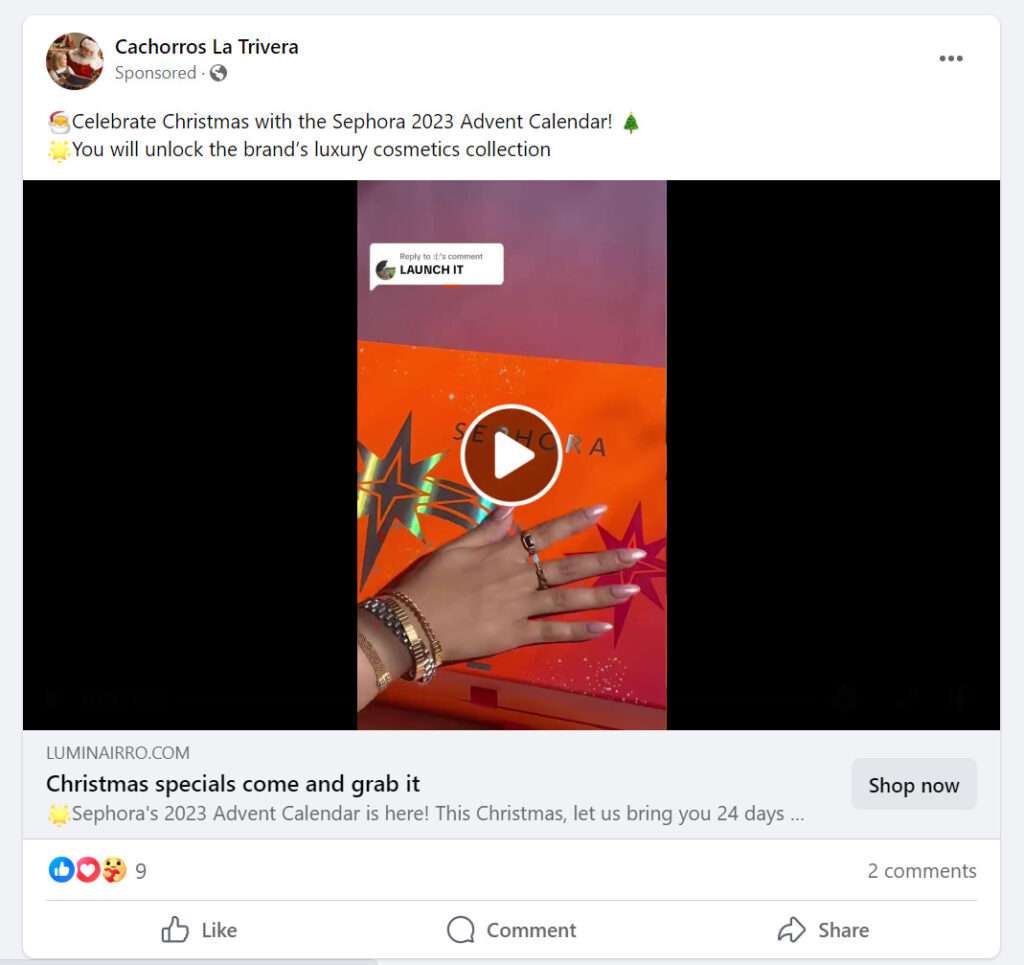
Scammers have created fake advertisements on social media, especially Facebook and Instagram, promoting the 2022 Sephora Advent Calendar for only $29. The ads use the real product photos and convincing language like “50% off!” and “Limited quantities!” to lure in deal seekers.
However, the $29 Sephora Advent Calendar deal is a complete scam. Victims who order through the links in these ads receive nothing at all, cheap counterfeit products, or completely random low-value items like phone cases.
This scam network ensnares victims by:
- Posting convincing fake offers on social platforms using video ads and sponsored posts.
- Driving traffic to scam websites hosted on recently created domains.
- Collecting credit card and personal information at checkout.
- Never delivering the actual advent calendar ordered.
These sham websites have no intention of fulfilling customers’ orders. They take shoppers’ money and disappear once payments are processed.
How the Sephora Advent Calendar Scam Works Step-By-Step
Here is a step-by-step breakdown of how this scam operates to cheat holiday shoppers:
1. Scam Ads Posted on Social Media
The scammers set the trap by running targeted ads on Facebook, Instagram and other platforms promoting the 50-70% discounted Sephora Advent Calendar. For example:
“Hurry! Sephora Advent Calendars ON SALE for $29 Only! Over 50% Off! Limited Quantities!”
The ads include photos and videos of the real $90 Advent Calendar to look authentic. Links in the ads lead to the fake scam websites.
2. Victims Click on the Ads to Visit Scam Websites
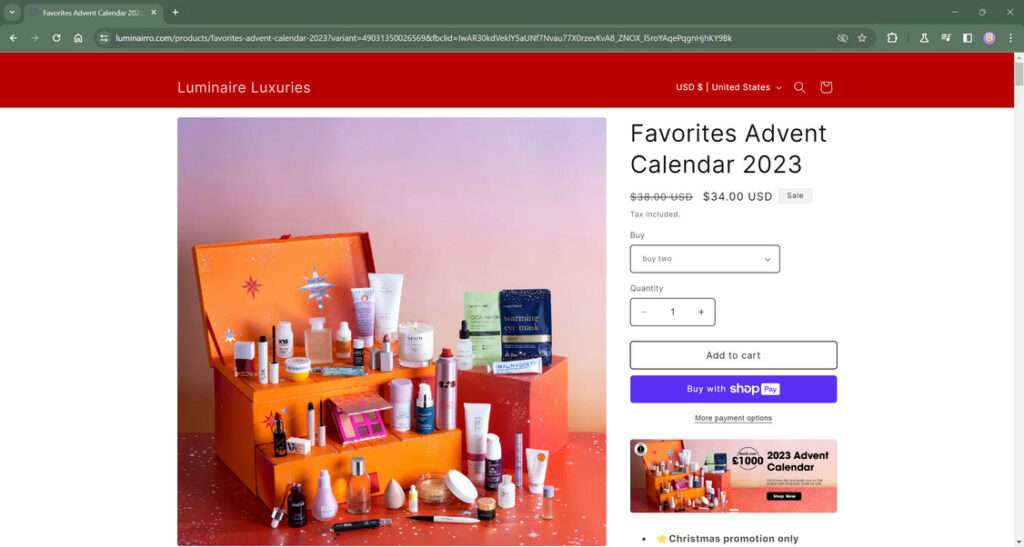
When social media users see the tempting low prices in the ads, they click the links, assuming it will take them to Sephora. Instead, the links go to elaborate scam sites designed specifically to trick victims into believing they are on a legitimate online shop.
These scam sites use stolen images, logos, web design templates and content to look like convincing retail stores. They have fake storefronts, categories, products, branding elements, security seals, etc.
3. Scam Sites Encourage Victims to Buy the Discounted Product
The scam websites reinforce the phony discounts like “Only $29 Today!” and “70% Off Advent Calendars!” to keep victims’ interest.
They provide options to select the Sephora Advent Calendar in order add it to the cart. Some even offer fake reviews, comparisons to original prices, limited quantity warnings and other tactics to pressure shoppers into purchasing quickly.
4. Scammers Collect Credit Cards and Personal Info at Checkout
When customers go to purchase the $29 calendars in their carts, the scam sites redirect them to a sophisticated checkout process.
Here they are prompted to enter their full name, home address, email, phone number and credit card details. This is all the personal information the scammers need.
5. No Products Are Delivered After Payments Are Processed
With victims’ names, addresses and payment info stolen, the scam websites have no need to actually ship anything. In fact, most victims who paid never receive any advent calendar or products at all.
In other cases, victims received random, cheap items clearly not worth the $29 paid, demonstrating no actual retail order process exists. It is all an elaborate ploy to steal money and PII.
6. Scam Sites Disappear or Become Unreachable
Shortly after scamming a batch of victims, the fake website domains are often taken down before legal action can be taken. The scam ads may still run, directing to error pages.
Some scam sites keep running but become unreachable via email or phone once enough payments are processed. Customer service is non-existent.
The scammers behind the sites have the credit card details they wanted, so responding to complaints is not a priority. They simply move on to the next scam website.
How to Identify the Sephora Advent Calendar Scam Websites
When shopping online, it is crucial to be able to recognize fraudulent websites designed to scam victims out of money and personal information. Here are clear signs to look out for to avoid the fake Sephora Advent Calendar deals:
Use of Stolen Images and Content
The scam sites use stolen product images, logos, and text from the real Sephora website. However, inspection reveals low-quality versions of images with watermarks cropped out. Site content appears copied and pasted, with broken formatting, spelling errors, and repeated text across multiple pages.
Fake Reviews and Testimonials
Scam websites lure in trusting customers with seemingly positive reviews praising the products and site. But the reviews use fake names, stock photos, and read like sales copy, not real experiences. Question testimonials that seem overly polished.
Limited Quantity Claims
Scam sites use messages like “Only 2 left!” to create false urgency and scarcity. This pressures customers to purchase quickly before they do proper vetting. Legitimate retailers do not engage in this manipulation.
Missing Contact Information
No phone number, physical address, or live chat options can be found on the sites. At most, an email address is provided, but responses are infrequent if at all. Lack of legitimate contact details is a major red flag.
Mismatched Domain Age
The domain registration dates on scam sites are often very recent, like within the past 1-6 months. Genuine online shops have domains registered for multiple years. Cross reference the URL on WHOIS domain lookup sites.
Cookie Cutter Website Templates
While the sites look slick, their designs are copied from common retail website templates. They lack unique branding, custom graphics, human touches, or any personality compared to authentic storefronts.
By carefully scrutinizing for these telltale signs, shoppers can recognize the scam Sephora offers and avoid having their personal and financial data stolen through fake checkout processes. Only order from sephora.com directly or verified authorized retailers.
How to Spot the Scam on Social Media
The discounted Sephora Advent Calendar scam runs rampant on major social platforms trying to reach the maximum amount of potential victims. Here is how to recognize the fraudulent ads on each:
On Facebook, the scam ads typically appear as “Sponsored” posts in feeds or stories.
Warning signs include:
- Prices like “$29 Only!” well below Sephora’s $90 retail price
- Stock images and videos of the real Advent Calendar
- Urgency tactics like “Today Only!” and “Limited Quantities!”
- Links to domains with no relation to Sephora
- Comment sections turned off
- Brand new Facebook pages as the advertisers
The scam shows up both in Instagram feeds and on Instagram Stories.
Be suspicious of:
- Too-good-to-be-true discounts in the image or caption
- Redirect links in bios to unrelated domain names
- Hidden or disabled comments to avoid questions
- High amounts of follows/followers disproportionate to engagement
- Accounts with no other content besides Advent Calendar ads
TikTok
On TikTok, scammers make video ads focused on the amazing low prices.
Watch for these giveaways:
- Prices flashed in text on video or mentioned in voiceovers
- Links leading to shady sites in captions or account bios
- Stock unboxing videos not filmed by the poster
- Comments turned off
- Brand new accounts with only Advent Calendar content
Stay vigilant for these scam characteristics on social channels. Shop Sephora safely by only purchasing through their official accounts and website.
What to Do If You Are a Victim of the Sephora Advent Calendar Scam
If you unfortunately fell for the $29 Sephora Advent Calendar scam, here are important steps to take right away:
- Report the Scam Ad: If the scam ad is still active on social media, report it as fraudulent so the platform can remove it and avoid more victims. Provide screenshots and details.
- Contact Your Credit Card Provider: Call your credit card company/bank immediately to report the charge as fraudulent. Ask to dispute the charge and potentially receive a refund. Cancel your card to prevent future unauthorized charges.
- Change Your Passwords: Update passwords on all online accounts, especially if you reused passwords across multiple sites. Enable two-factor authentication where possible.
- Beware of Fraudulent Charges: Closely monitor all accounts used to purchase from the scam website for any signs of identity theft or fraudulent charges over the next few months.
- Freeze Your Credit: Consider placing a freeze on your credit file with Equifax, Experian and TransUnion to block thieves from opening new accounts in your name after stealing your info via the scam.
- Report the Website: Look up the domain registry of the scam site and report it as a scam, providing any screenshots and order details. This can potentially get the site shut down to prevent future victims.
- Leave Online Reviews: Leave 1-star scam alerts about your experience on consumer review sites like Trustpilot and the Better Business Bureau to make others aware. Include the site URL in your reviews.
- Seek Legal Counsel: If the costs involved are high enough, consider consulting a lawyer to review options for recovering lost money, holding scammers accountable, and protecting your identity.
By reporting the scam ad, fraudulent charges and website, you can help protect other shoppers from falling for these traps. But most importantly, act fast after any scam to minimize your own losses and identity theft risk.
Frequently Asked Questions About the Sephora Advent Calendar Scam
Many consumers have questions about the proliferating Sephora Advent Calendar scam ads and websites. Here are answers to some of the most frequently asked questions:
Are the $29 Sephora Advent Calendars sold on social media real?
No. The $29 Advent Calendars advertised on Facebook, Instagram, and other platforms are a scam. Sephora sells the real calendar for $90 retail, not deeply discounted.
What’s the purpose of the Sephora Advent Calendar scam?
The scam’s sole purpose is to steal victims’ money and personal information through fake websites. No products are ever shipped, despite collecting payment and address details.
What happens when I order the $29 Advent Calendar?
In most cases, absolutely nothing is shipped after the order. If products do arrive, it will be cheap, random items not matching the description.
How do I get my money back if I placed an order?
Immediately call your credit card company to report fraudulent charges so the transactions can be reversed. Also change passwords and monitor statements for any sign of identity theft.
Can I report the scam Facebook/Instagram ads?
Yes. Report fraudulent Sephora Advent Calendar ads as “Misleading or Scam” by clicking the three dots in the corner of the ad. Provide as many details as possible.
How can I identify the scam websites?
Scam sites have very recent domain registration dates, stolen Sephora images, fake reviews, limited quantities, missing contact info, and no social media presence.
Are there real Advent Calendars being sold for 50% off?
No. There are zero authorized sellers offering authentic Sephora Advent Calendars for $29, or even 50% off. Only purchase directly from Sephora at the $90 retail price.
Is this Sephora’s fault or are they affiliated?
No. Scammers operate these cons without Sephora’s authorization or involvement. Sephora is also being victimized by these counterfeit products using their brand name.
Who should I contact about this scam?
Report it to social platforms, credit card companies, cybercrime authorities, domain registrars, and the FTC to get scam ads, sites and accounts shut down.
The Bottom Line
Scams involving fraudulent deals on popular holiday gifts like the Sephora Advent Calendar are rampant every season. With just a few compelling social ads and convincing fake websites, scammers can steal hundreds or thousands of dollars as well as personal data from unsuspecting shoppers.
The bottom line is only order Sephora products directly from Sephora. Be extremely cautious of social media ads promoting hard-to-believe discounts on sought after items before major holidays. If it seems too good to be true, it always is. Protect yourself and your identity by avoiding these seasonal scams altogether.

Join the discussion
0 commentsShare your experience or ask a question about this article.
Discussion
Start the conversation
Have a question or something useful to share? Add the first comment.