


The pitch for 30 Day Success Formula offered two ways out: make money by bringing other people in, or get your entry payment back.
The names on the materials changed over the years. A federal case in Wisconsin shows why those different names belong in the same story.
Overview
What 30 Day Success Formula promised
Buy into the program, recruit more people, and receive money from them. If it didn’t work, the offer said, your original payment was protected by a refund guarantee.
Those promises worked together. The recruiting money made the offer attractive. The guarantee made it sound as though there was no real downside to trying.
What the federal case established
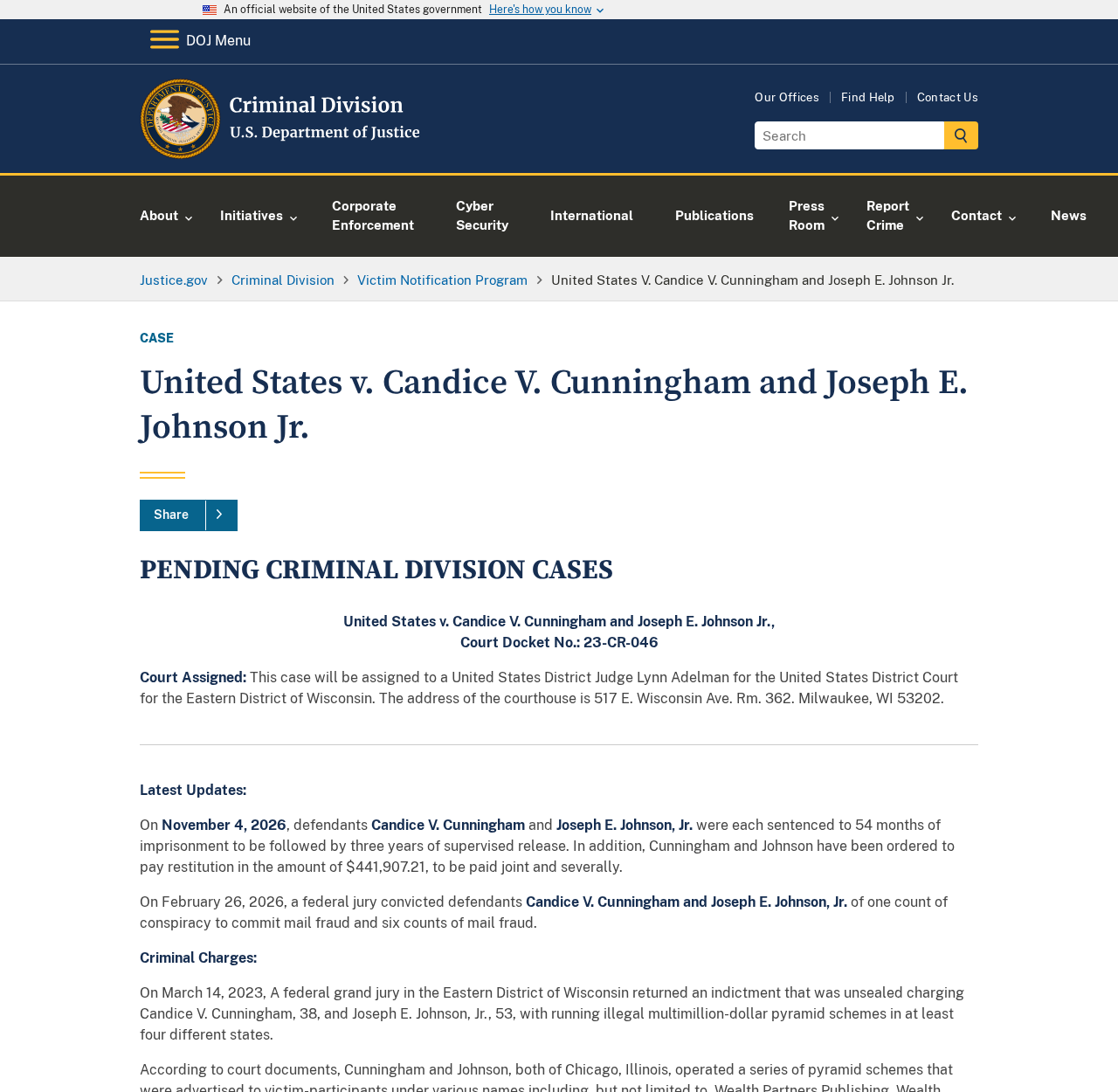
On February 26, 2026, a federal jury convicted Candice V. Cunningham and Joseph E. Johnson Jr. of conspiracy to commit mail fraud and six counts of mail fraud.
On November 4, 2026, each received a 54-month prison sentence, followed by three years of supervised release. The court also ordered $441,907.21 in restitution, jointly and severally.
Where former participants should start
The official case page identifies the proceeding as 23-CR-046. Use that docket number and the government’s own contact route, especially if your paperwork uses a different program name.
- Look for the name on the payment: 30 Day Success Formula was only one of the names the Justice Department identified.
- Keep the refund promise: the language on your original offer helps explain why you paid, even if you never recruited anyone.
- Keep restitution separate from refunds: a court order is not a promise that every participant will be repaid in full.
How the 30 Day Success Formula Scam Works
Step 1: A business offer arrives by mail or online
The pitch didn’t start with an anonymous demand for cash. It presented the payment as the cost of joining a program that supposedly showed people how to earn.
The federal indictment describes online solicitations and mass mailings. Those mailings gave the offer a physical presence: a form you could fill out and a destination for your payment.
The indictment is the charging document. Where it describes the mechanics below, those details come from prosecutors’ allegations, not a claim that we obtained every version of the offer.
Step 2: The entry package is sold as an earnings decision
Prosecutors described order forms that often offered several levels. The more expensive option was presented as a way to qualify for more money from people you brought in.
That structure makes comparing prices misleading. You aren’t simply deciding whether a higher-priced product is better. You’re buying access to a larger promised payout conditional on more people paying.
To understand the risk, separate the two decisions. What do you receive the day you pay? What else has to happen before you receive any money back?
In this case, the second answer was recruiting. A package label did nothing to remove that dependency.
Step 3: Recruiting becomes your job
The charging document says participants could send their own mailings or pay a company to send invitations on their behalf. Either way, the pitch depended on attracting new participants.
Paying to outsource a mailing changes who prepares the envelopes. It doesn’t turn the invitees into customers buying a product they want for its own sake.
It can also add a second expense to the entry price. When working out your loss, keep records of any separate mailing payments rather than folding them into one estimate.
The person who invited you may have believed the promise too. You can document their role without publicly accusing them of knowing how the operation worked.
Step 4: The refund promise answers the obvious objection
What if you can’t find anyone else to sign up? The offer’s guarantee appeared to take that risk away. The government said the guarantee was false.
The Justice Department’s verdict announcement explains that most participants did not receive recruiting payments and most were denied their initial investment back.
That’s why the refund line matters as much as the earnings claim. It wasn’t an ordinary disagreement about returning a product. It was part of getting people to pay.
Step 5: Another name appears without a different business model
The indictment alleges that when one version collapsed or drew scrutiny, the operation changed names and locations. The method continued under a different name.
A new letterhead can make it harder to connect your records to someone else’s. It can also make yesterday’s warning look irrelevant when the payment request has barely changed.
For an old payment, preserve the name you actually see. It may be the evidence that explains why a transaction you didn’t recognize belongs in this case.
Tracing the Names on the Forms and Receipts
The program name and the company name were not identical
The indictment identifies 30 Day Success Formula as a name used by Online Biz Development LLC. It says Johnson had signing authority on that company’s bank accounts.
If your records name that LLC rather than the headline brand, retain both names. Include the name printed on the order form exactly as it appears.
Zero to Profit appears in more than one entity description
Prosecutors say Wealth Wise LLC used Zero to Profit and Lav Label. The indictment also associates Zero to Profit and DTR Group with Group Twenty17 LLC.
One label can therefore point to more than one set of paperwork. An exact date, amount, payee and payment route tell investigators more than a name by itself.
A mailing destination was part of the payment route
The indictment identifies mailboxes in Wisconsin and describes payments going to mailboxes in several states. Those destinations matter if you’re matching a canceled check to an entry form.
Don’t send a new letter with account details or payment to an old mailbox as a recovery attempt. Keep the address as evidence and use the official case contact instead.
The related names are specific to this federal case
The government also lists Wealth Partners Publishing, Beckett Group and Dreams To Reality Group. This list is a way to match old records, not an accusation against unrelated businesses.
If you encounter a current company with similar words in its name, check the people, dates and payment details before connecting it to Cunningham and Johnson.
What the Verdict and Restitution Order Mean
The February verdict was a finding of guilt at trial. The November sentences are a separate event. Neither is merely an investor warning or a private complaint.
The official DOJ case page reports that each defendant received 54 months and three years of supervised release. It gives the case number and a victim assistance route.
The restitution figure is the obligation the department reports for this case. Joint and several liability doesn’t double the reported total simply because two people were sentenced.
That figure also isn’t a new calculation of everything participants put into the schemes. Keep the court-ordered amount separate from the wider losses described by the government.
Behind every restitution figure is a collection question. The fact that money has been ordered does not tell you that it has already been collected or distributed.
The DOJ’s explanation of federal restitution describes how financial loss information is gathered and how payment depends on collection. It doesn’t guarantee payment to each person who files a report.
Check the agency’s live update when you act. Court proceedings and distribution information can change. This article does not establish a new claim deadline or a public sign-up window.
Someone might repeat the right names and restitution amount in an unsolicited message. These facts are public. Matching them doesn’t authenticate the sender or a link asking for payment.
Three ways to tell what a court notice is asking you to do
An impact statement describes how the offense affected you. The official case page links to the form. Sending it to the listed office isn’t the same as requesting a chargeback.
A case notification lets you follow developments. Check whether you are reading an update about sentencing, instructions for submitting records, or a later announcement about payments.
A distribution is money actually sent to eligible recipients. Follow the instructions from the administering office rather than assuming a notice about the judgment means a check is coming.
Save an unexpected message separately from your case paperwork. If the sender asks for banking access, a gift card, or a fee to confirm your identity, stop the exchange.
Take the docket number straight to the DOJ case page instead. You can compare the current contacts without opening the link or attachment that arrived in the message.
What to Do if You Have Fallen Victim to This Scam
- Gather records under every name you used. Start with the sales letter, order form, payment proof, envelope, recruitment instructions and any refund correspondence.
- Make a payment timeline. List amounts you sent and amounts actually received. Include dates and recipients. Note which numbers come from records and which are estimates.
- Use the case’s listed Victim Assistance contact. Give the docket number and ask what documentation the unit needs. Find the contact yourself on the DOJ case page.
- Contact the payment provider promptly for a recent payment. Explain whether you authorized it and how you were misled. Ask which options and deadlines apply.
- Decline paid recovery offers. Do not send a fee to a stranger claiming to release court funds. Check any claimed restitution notice independently with the official office.
If another participant sent you money, record it too. The clearest statement is a ledger of what actually happened, rather than the advertised return or the amount you expected.
If you were asked to pay for mailing help, label that payment separately. The original offer, a canceled check and an email often answer different questions about the same transaction.
Don’t send original documents or sensitive bank information to an address supplied in a reply to an online post. Ask the official contact what secure submission method they accept.
For a new copycat solicitation, the FTC’s payment recovery guidance breaks down first steps by payment method. Old checks and recent card charges don’t offer the same options.
Warn anyone you invited without forwarding active payment instructions. Tell them which name appeared on your offer, that the case is real, and where the official page can be found.
How to Test a New Offer That Sounds Like This One
A similar pitch might call the entry payment a package, training bundle or marketing expense. Don’t start by deciding whether that label sounds respectable. Follow the money instead.
Ask what someone outside the program would buy without wanting to join it. If the only strong reason to pay is eligibility to recruit other payers, stop there.
Then ask whether a participant can recover costs by selling to those outside customers alone. Leave recruitment awards out of that calculation. Include required spending and ongoing fees.
If the recruiter answers with their own earnings, ask what people entering at your level typically keep after costs. A successful person’s story isn’t the answer to that question.
The FTC’s guide to MLMs and pyramid schemes explains how to distinguish retail sales from income that depends on recruiting. The difference is more useful than the program’s branding.
Look just as closely at refund terms. Identify who pays, which fee is covered, what proof is required and whether the deadline starts at payment or at another event.
Written conditions still aren’t a reason to fund an offer that depends on recruiting. In 30 Day Success Formula, the refund promise was one of the reasons people sent money.
Frequently Asked Questions
Was 30 Day Success Formula a pyramid scheme?
Yes. The Justice Department identified it as one of several names used in the operation behind the federal mail fraud and conspiracy convictions of Cunningham and Johnson.
Did both defendants receive the same prison sentence?
Yes. The DOJ reports 54 months for each defendant, followed by three years of supervised release. Both were sentenced on November 4, 2026.
Is the $441,907.21 in restitution a payment already made?
No. It’s the amount the court ordered, jointly and severally. The government’s case update is not a notice that every affected participant has received money.
What if I remember Wealth Wise but not 30 Day Success Formula?
Wealth Wise appears in the same federal case. Gather the documents that show which entity you dealt with and ask Victim Assistance whether your transaction is relevant.
Can I use my old refund letter as evidence?
Yes. Keep the original promise and any response rejecting or delaying it. Add your payment proof and note whether you received any money back.
Should I pay someone who offers to file for restitution for me?
Don’t pay a stranger to unlock a court payment. Use the official case page to verify any request, and ask the DOJ which process applies to your situation.
The Bottom Line
Don’t pay into 30 Day Success Formula or another offer that depends on the same recruiting payments. The promise to refund your entry fee was part of the deception.
If you already paid, match your original paperwork to case 23-CR-046. Preserve the records and contact Victim Assistance through the DOJ page, not through a recovery pitch.

Join the discussion
0 commentsShare your experience or ask a question about this article.
Discussion
Start the conversation
Have a question or something useful to share? Add the first comment.