Common Cyber Scams: Avoid Phishing, Malware, Fraud
Written by: Stelian
Published on:
The internet brings immense convenience to our lives, allowing us to shop, bank, work, and connect online. However, it has also enabled cybercriminals to proliferate scams aimed at stealing money and sensitive personal data from unsuspecting internet users. As we spend more of our daily lives online, the risk of falling victim to one of these increasingly sophisticated cyber scams grows. Being aware of the most common online frauds can help you identify and avoid them. In this comprehensive guide, we will outline the most prevalent cyber scams to watch out for right now in 2023, look at how they work with examples, and provide recommendations to help safeguard yourself so you can use the internet securely.
Phishing Scams
Phishing is one of the most prevalent online scams, affecting millions of internet users every year. Phishing involves attackers sending fraudulent emails made to look like they are from a legitimate company in order to trick recipients into giving out sensitive information. Emails can mimic banks, online payment services, social networks, online retailers, government agencies, and more.
The email will typically contain a link to a phony login page where users are prompted to enter usernames, passwords, credit card numbers, or other personal details that scammers can then steal. Phishing emails often convey a sense of urgency, threatening account suspension or legal action if the victim does not provide the requested info immediately. Some red flags that signal a phishing attempt include poor grammar or spelling errors, generic greetings like “Dear customer”, and suspicious web addresses you are directed to click on.
A common recent phishing scam is for attackers to impersonate well-known brands like Amazon, Apple, or PayPal. They will send convincing-looking emails claiming there is a problem with your account and that you must log in to resolve it. The email contains a link to a fake website impersonating the real brand, down to using corporate logos and web design elements. If you enter your login credentials, the hackers will steal this sensitive information. Always check that web addresses lead to legitimate sites before inputting any data.
To avoid falling victim to phishing, be wary of unsolicited emails asking for personal information. Do not click on any embedded links or attachments from senders you do not know. If you have any doubts about an email’s authenticity, go directly to the company’s website by typing the web address into your browser. Use malware scanning software like Malwarebytes Free to detect phishing attempts and block dangerous sites. Enable two-factor authentication wherever possible for an added layer of login security on important accounts.
Tech Support Scams
Tech support scams typically involve a criminal posing as an employee from a well-known tech company like Microsoft or Apple. They will call claiming that your computer has been compromised by malware or has other technical problems that require immediate attention. The fake “tech support” will request remote access to your computer and say they need to diagnose the problem.
Once granted access, the scammers can install malware or spyware to steal personal data. They may also try to charge exorbitant fees for unnecessary services and fake software to fix non-existent issues. Some variants involve pop-up warnings on your computer saying malware has been detected and that you must call a listed support number for removal.
Red flags of tech support scams include unsolicited calls, urgency to allow remote computer access, requests for payment with gift cards, threats about account suspensions, unfamiliar remote access programs being pushed, and asked for sensitive login credentials.
Avoid becoming a victim by being wary of any unexpected calls claiming computer problems. Never give control of your device to an unsolicited caller. Only allow official IT support staff that you can verify access to your system. Use a robust antivirus program like Malwarebytes Free to block malware infections or access by remote scammers. Do not call numbers listed on suspicious pop-ups and never provide your login information to unverified parties.
Romance Scams
Perpetrators of romance scams connect with victims online via social networks or dating sites to form a relationship, which they then try to exploit for financial gain. Often the scammer will pretend to be someone they are not by using a fake identity and stolen photos. They try to establish trust and an emotional bond, which can develop into a online romantic relationship over weeks or months.
Once they have built strong affection, the criminal will begin asking their victim for money to help cover claimed financial emergencies – medical bills, travel costs, legal fees, etc. Or they may say they want to finally meet in person and ask the victim to pay for their travel and visa expenses. They may also try to gain access to bank accounts and credit cards. Victims in romantic scams often lose tens or hundreds of thousands of dollars before realizing the person was a fraud.
Warning signs of romance scams include unwillingness to meet in person or engage in video chats, inconsistencies in backstory, requests for money, and talk of future plans together but reluctance to share personal details. To avoid becoming a victim, do thorough background checks on online romantic interests. Go slow with building relationships and sharing personal information. Be wary of overseas individuals you have never met in person asking for money. A reverse image search can help uncover if profile photos are stolen. Share minimal details if asked for financial help by someone you only know online.
Employment Scams
Job-related scams often involve a criminal posing as an employer and posting listings for fake job opportunities that don’t actually exist. Common work-from-home gigs pitched are assistant, secretary, envelope stuffing, or re-shipping positions. They may impersonate well-known Fortune 500 companies to seem legit.
Interested job seekers will be “interviewed” and offered the position, then asked to hand over money for training materials, software, uniforms, or be required to pay a deposit or taxes to secure the job. Of course, there will be no job after paying and the scammer disappears with your money.
Some red flags with employment scams are poor grammar or spelling in job posts, interviews conducted only via email or messaging apps, claimed affiliations with real companies, requests for upfront payment for materials, overpayment with requests to wire back the difference, or jobs that seem too simple or good to be true.
Avoid job scams by thoroughly researching any companies hiring and verifying their domains. Conduct interviews via phone or video chat, not just online messaging. Never pay upfront fees for jobs – legitimate employers do not operate this way. Watch for fake checks being mailed and requests to return payments. If it seems sketchy or unrealistic, it very likely is a scam.
Rental Listing Scams
Finding affordable housing is extremely challenging in many parts of the country. Scammers capitalize on this by posting listings for properties at temptingly below market rental prices. Interested applicants are then encouraged to quickly complete the rental application and submit a security deposit or first month’s rent to secure the unit.
In reality, the property is not for rent at all, and the supposed owner is simply pocketing the upfront fees. Victims usually realize they have been scammed when they are unable to reach the fake landlord and have lost their submitted payment.
Warning signs of rental scams include listings well below comparable rentals in the area, requests to complete the transaction entirely online or via mail, limited photos or virtual tours, urgency to submit a deposit before verifying legitimacy, refused or ignored requests to see the property in person, contact information that doesn’t match public records, and calls or emails from overseas.
Avoid rental scams by doing careful research on listings that seem too good to be true. Try to meet the landlord or property manager in person and tour the rental before submitting any payment. Verify ownership records through public databases. Drive by the property to confirm it is not occupied or listed for sale. Never send money to someone you have not verified as the legitimate owner.
Fake Invoice Scams
Scammers will sometimes send invoices demanding payment for directory listings, website services, search engine optimization, office supplies, and other business-related orders that were never placed. The invoices look official and convincing, with corporate branding, company details, payment instructions, and due dates.
Unsuspecting recipients may believe the bill is valid and pay it without realizing they have been scammed. Businesses are common targets of fake invoice scams, but individuals may also receive them if public records indicate they own a company.
Signs of fraudulent invoices include goods or services you never requested, companies you have no prior relationship with, requests for fast payment via unconventional methods like gift cards, urgent threats about actions if unpaid, and contact details that don’t match the company website.
Scrutinize any invoices received carefully before providing payment or sensitive data. Do research on the company sending the bill to confirm legitimacy. Reach out to the business through official channels to inquire about the charges if you have any concerns. Keep records of all placed orders and services enlisted to recognize any invoices for unrequested items.
Malware Infections
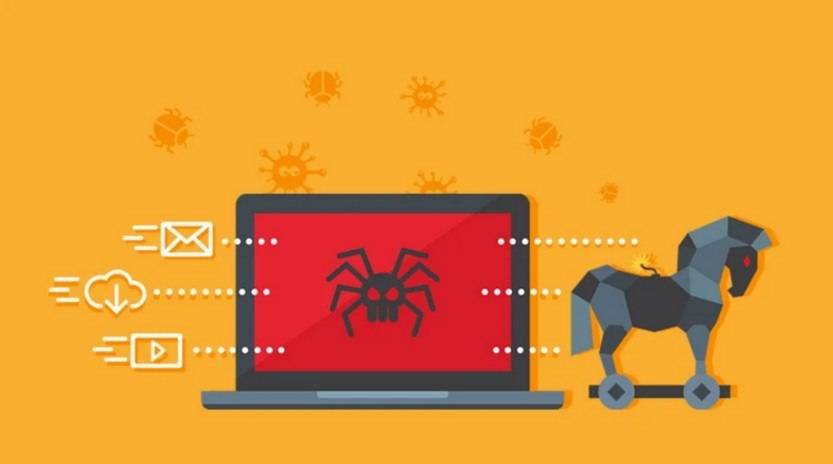
Malware refers to malicious software and code installed on a device without your consent to cause harm, gather sensitive data, or gain unauthorized access to systems. Malware comes in many forms, including viruses, worms, trojans, spyware, adware, ransomware, bots, and more. Infection often occurs through phishing attempts, compromised websites, or deceptive downloads.
Once installed on a computer or mobile device, malware can wreck havoc in many damaging ways. It can steal login credentials, personal files, and financial information. It can encrypt data and hold it ransom until payment is made. It can monitor all device activity and internet usage. It can gain complete administrative control to install more malware. It can mine cryptocurrency using your systems. It can even disable security tools to prevent removal.
Prevent malware infections by avoiding suspicious emails, texts, apps, websites, and downloads. Use comprehensive antivirus software like Malwarebytes Free to block threats. Keep all software updated with the latest security patches. Make regular backups of critical data in case of encryption by ransomware. Never enable macros in documents from Unknown senders. Use strong passwords and enable multi-factor authentication where possible.
Protect Yourself from Cyber Scams
As these examples illustrate, online scammers employ incredibly cunning and convincing techniques to try to steal your money, data, or identity. Staying vigilant is crucial when using the internet to avoid becoming their next victim. Here are some best practices to implement for better protection:
Keep security software like Malwarebytes Premium up to date on all devices to block the latest threats
Be extremely cautious of any unsolicited contact asking for money or account information
Verify legitimacy directly through official channels before providing sensitive data
Avoid clicking links or attachments in unverified emails
Use strong, unique passwords with multi-factor authentication on important accounts
Monitor financial statements routinely for any unauthorized activity
Be wary of online romantic interests asking for money or financial favors
Research companies and job offers thoroughly before submitting payment or applications
Confirm rental listings and real estate ownership before sending any funds
Carefully scrutinize invoices for validity before paying unknown companies
Make regular backups of critical files in case of malware encryption or data loss
As cybercrime becomes increasingly common, we must be extra vigilant about protecting ourselves online. Following these tips and using tools like Malwarebytes Free can help minimize your risk of becoming the victim of a scam. Be careful and stay safe as you browse, shop, work, and engage across the internet. With greater awareness and proactive precautions taken, you can continue to enjoy the online world while avoiding the criminal element looking to take advantage.
Is Your Device Infected? Run a Free Malware Scan
Slow performance, constant pop-ups, or strange behavior? These are classic signs of a malware infection. The fastest way to find out is to scan your device with Malwarebytes Anti-Malware Free — one of the most trusted malware removal tools available.
The free version detects and removes the most common threats, including:
Adware — the cause of those annoying pop-ups
Browser hijackers — unwanted redirects and changed homepages
Trojans and spyware — hidden programs stealing your data
Potentially unwanted programs (PUPs) — software you never asked for
👉 Select your device below — Windows, Mac, or Android — then follow the simple steps to download Malwarebytes, scan your system, and remove any threats it finds. The whole process takes about 5 minutes.
Malwarebytes for WindowsMalwarebytes for MacMalwarebytes for Android
Run a Malware Scan with Malwarebytes for Windows
Malwarebytes is one of the most popular and trusted anti-malware tools for Windows — and it’s completely free for removing infections. It catches threats that many antivirus programs miss, including adware, browser hijackers, and trojans. Follow the steps below to scan and clean your PC in just a few minutes.
Download Malwarebytes
Click the button below to download the latest version of Malwarebytes for Windows from the official source. The free version is all you need — it will scan your computer and remove adware, browser hijackers, and other malicious software at no cost.
(The link opens in a new page where your download will start)
Install Malwarebytes
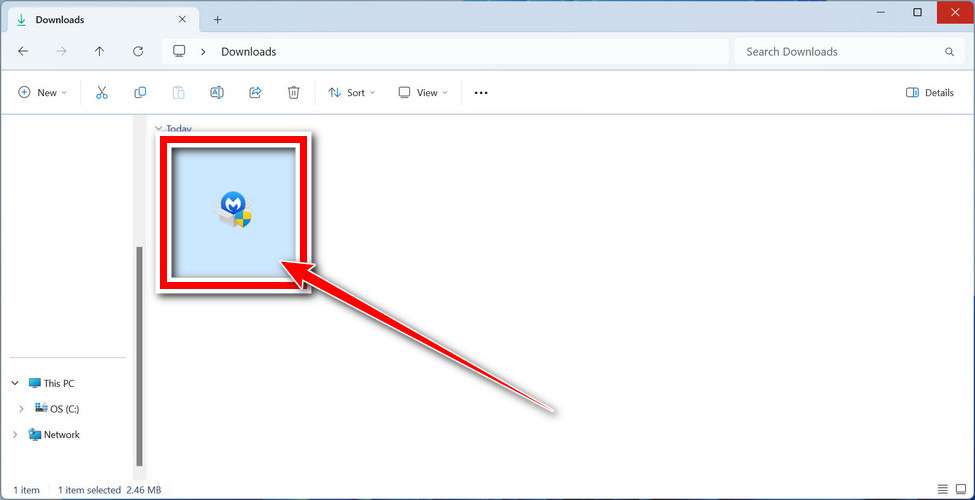
When the download finishes, open your Downloads folder and double-click the MBSetup file. If Windows shows a User Account Control pop-up, click “Yes” to allow the installation.
Follow the On-Screen Prompts to Install Malwarebytes
The setup wizard will walk you through a few quick screens:
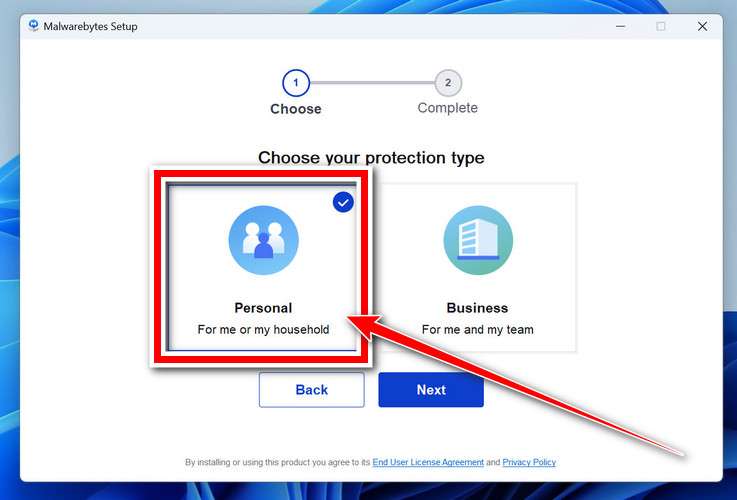
Choose where you’re installing the program — “Personal Computer” or “Work Computer” — then click Next.
Malwarebytes will now install on your device. This usually takes under a minute.
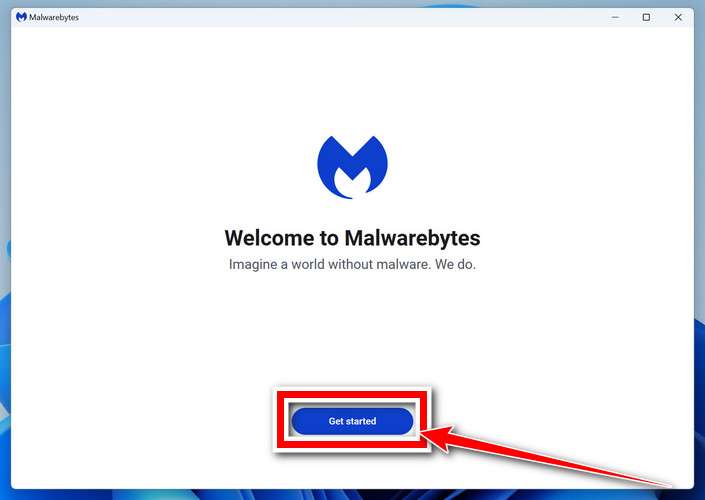
When installation is complete, the “Welcome to Malwarebytes” screen will open automatically.
On the final screen, click Open Malwarebytes to launch the program.
Enable “Scan for Rootkits”
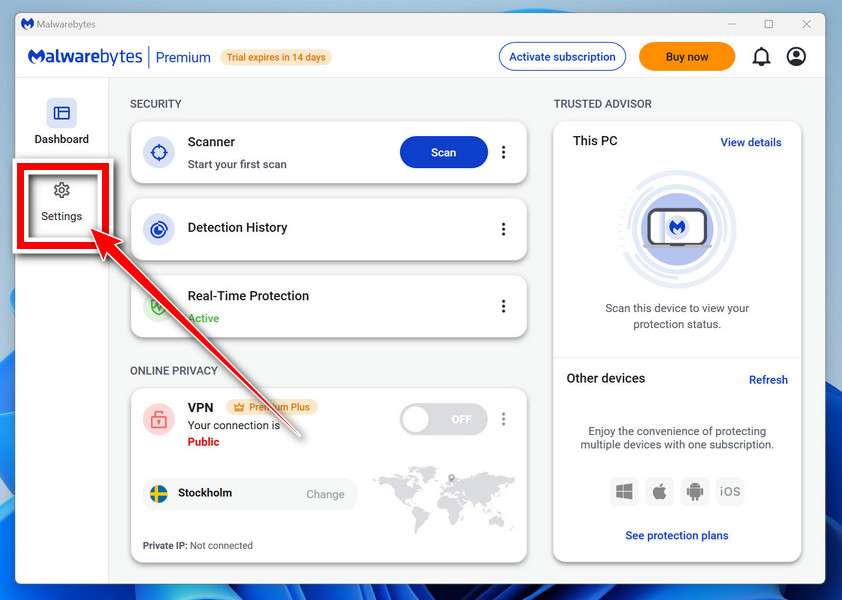
Before scanning, turn on rootkit detection so Malwarebytes can find even the most hidden threats. Click the Settings gear icon on the left side of the screen.
In the settings menu, find “Scan for rootkits” and click the toggle so it turns blue.
Done? Click “Dashboard” in the left pane to return to the main screen.
Start the Scan
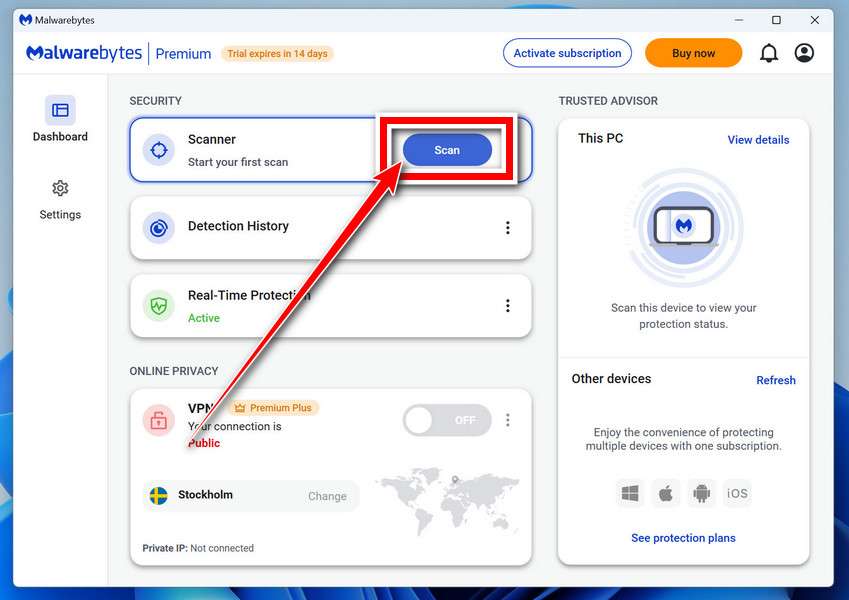
Click the blue Scan button. Malwarebytes will automatically update its virus database and start checking your computer for malware.
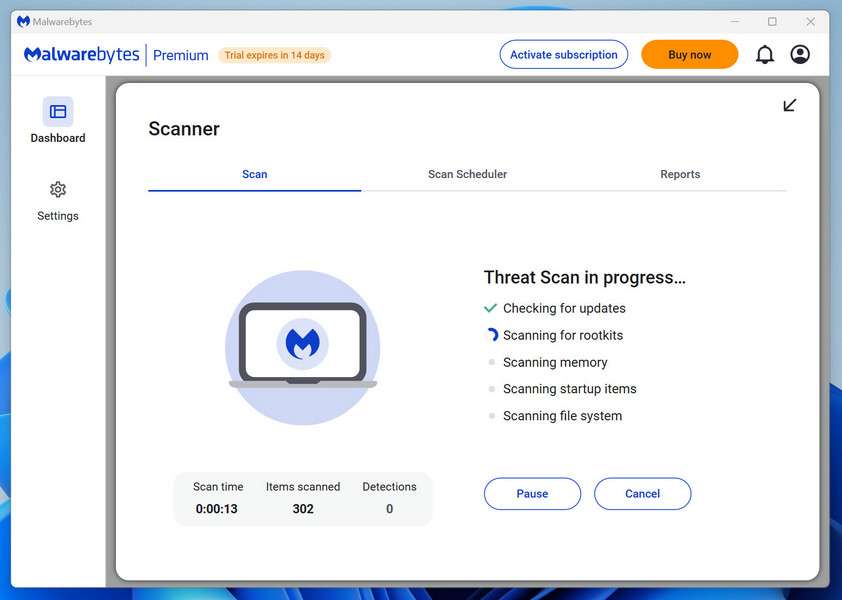
Wait for the Scan to Finish
The scan checks your entire system for browser hijackers and other malicious programs, so it can take several minutes. Feel free to do something else — just check back occasionally to see the progress.
Quarantine the Detected Threats
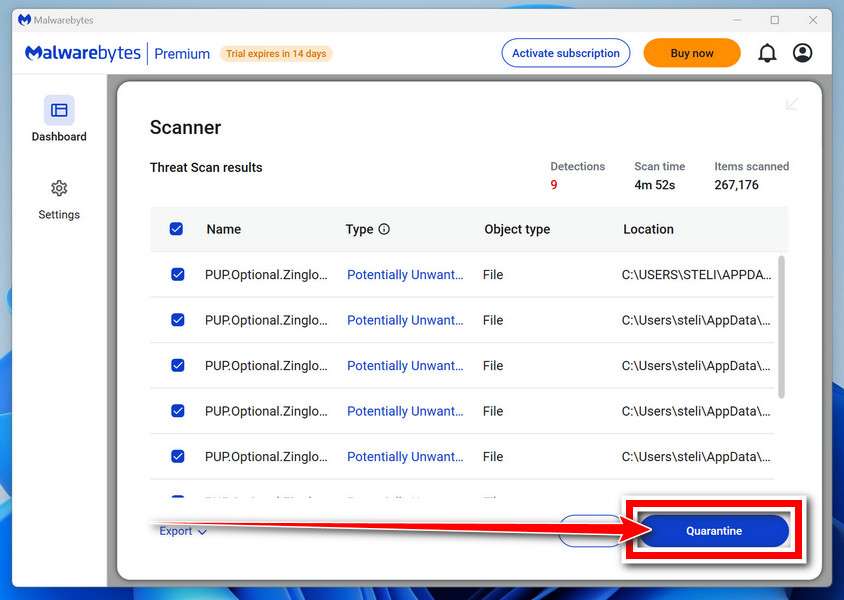
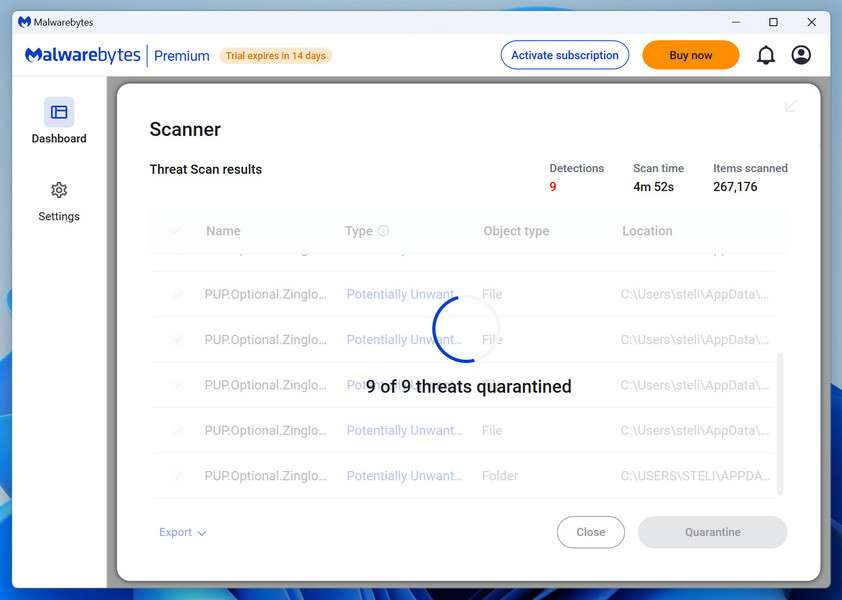
When the scan is done, you’ll see a list of everything Malwarebytes found — malware, adware, and potentially unwanted programs. Click the “Quarantine” button to remove all of them at once.
Malwarebytes will now remove the malicious files and registry entries and move them safely into quarantine.
Restart Your Computer
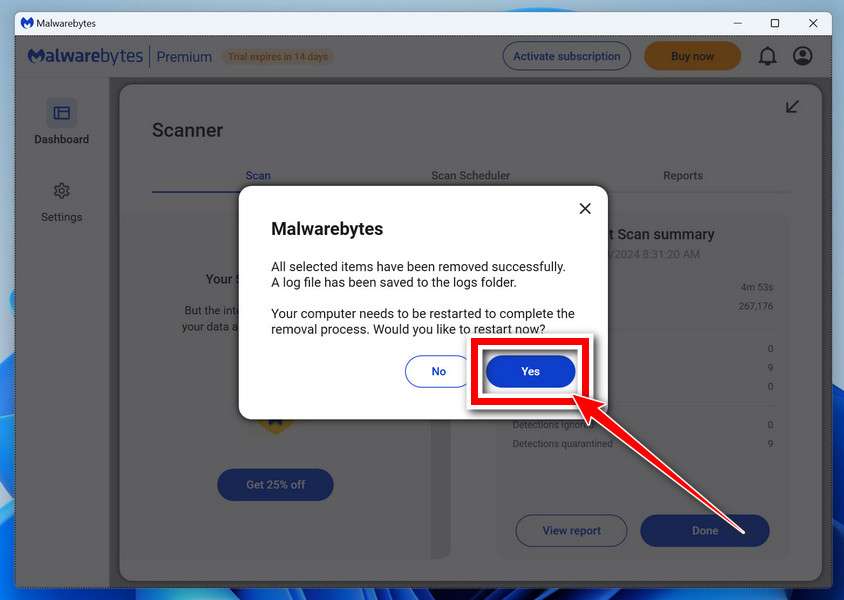
Some threats can only be fully removed after a reboot. If Malwarebytes asks you to restart, click Yes. Once you’re logged back in, your PC is clean and you can continue with the next steps in this guide.
When the scan finishes, click Quarantine to remove everything Malwarebytes found. That’s it — your Windows PC is now clean of trojans, adware, and other malware, and should be back to running smoothly.
If your current antivirus allowed this malicious program on your computer, you may want to consider purchasing Malwarebytes Premium to protect against these types of threats in the future. If you are still having problems with your computer after completing these instructions, then please follow one of the steps:
Malwarebytes for Mac is a free on-demand scanner that removes the malware other security software tends to miss — adware, browser hijackers, and unwanted programs included. Cleaning an infected Mac with Malwarebytes has always been completely free, and it’s our go-to recommendation. Follow the steps below to scan and clean your Mac in just a few minutes.
Download Malwarebytes for Mac
Click the button below to download the latest version of Malwarebytes for Mac.
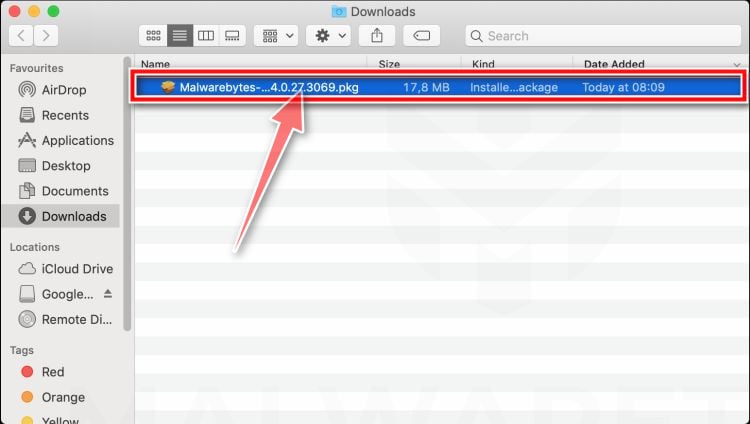
When the download finishes, open your Downloads folder and double-click the setup file to begin the installation.
Follow the On-Screen Prompts to Install Malwarebytes
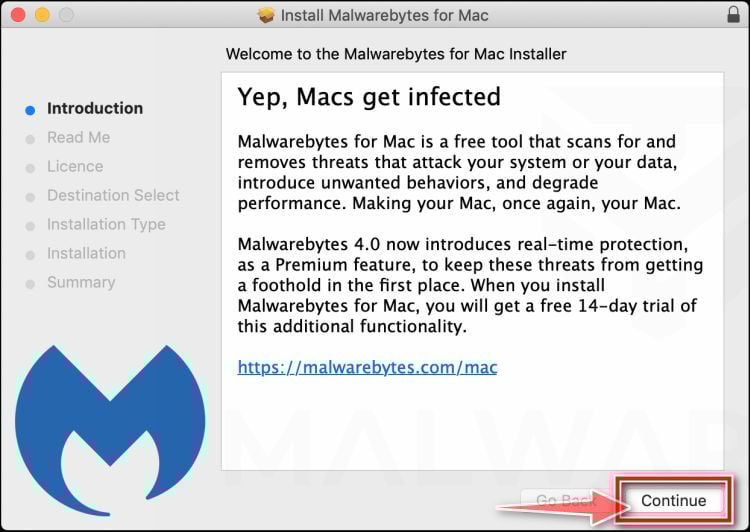
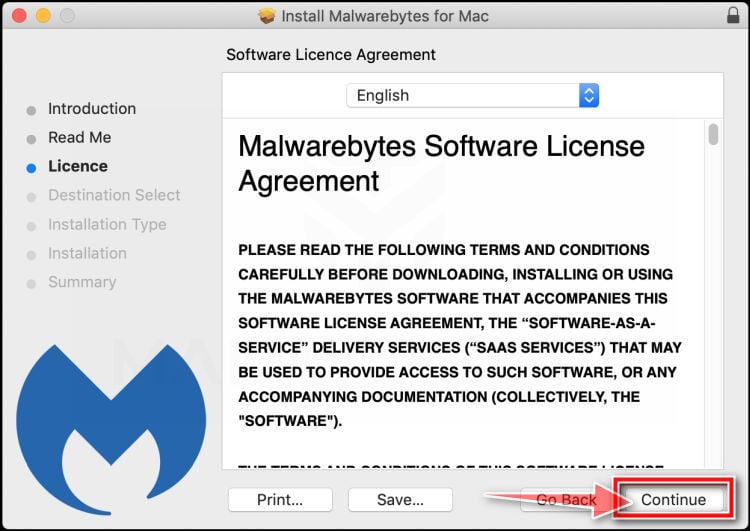
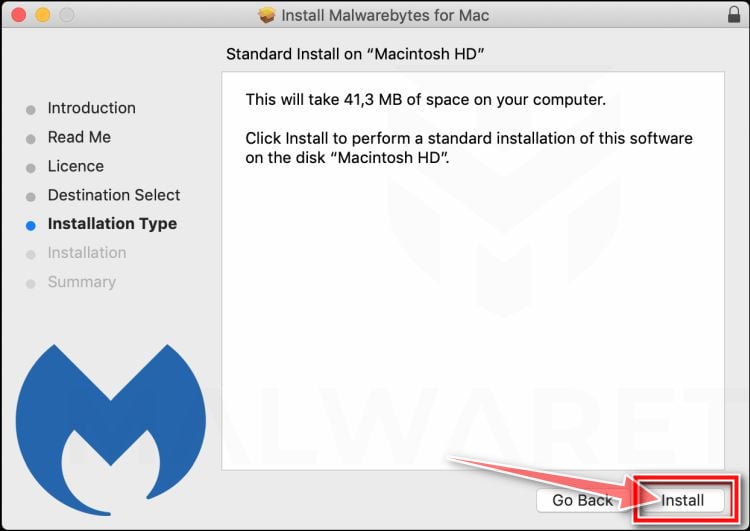
The Malwarebytes for Mac Installer will guide you through a few quick screens. Click “Continue” and keep following the prompts until the installation completes.
When the installation is complete, Malwarebytes opens to the Welcome to Malwarebytes screen. Click “Get started“.
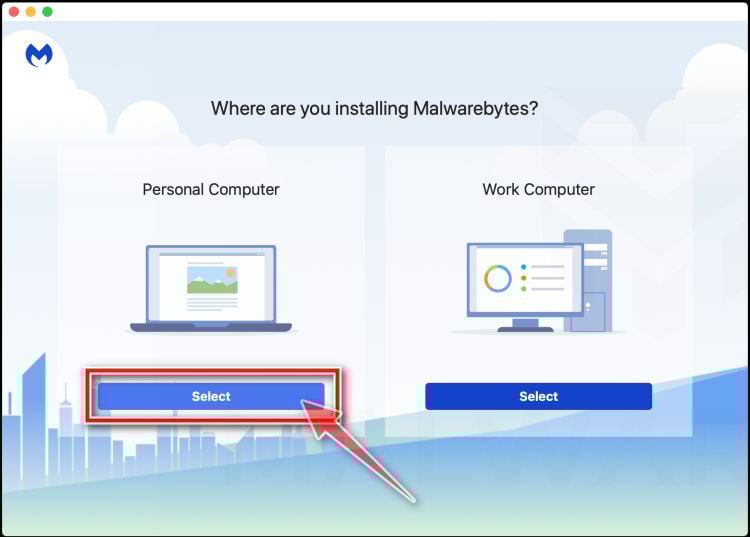
Select “Personal Computer” or “Work Computer”
Malwarebytes will ask what type of computer you’re installing it on. Click either Personal Computer or Work Computer, whichever applies.
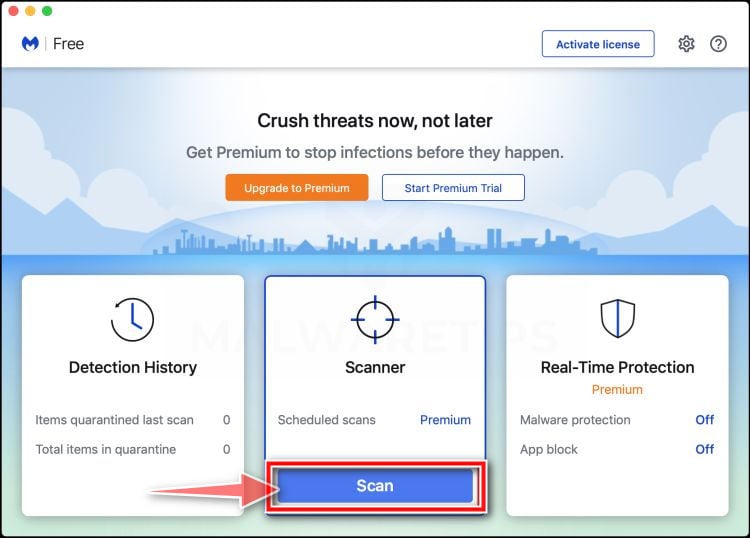
Start the Scan
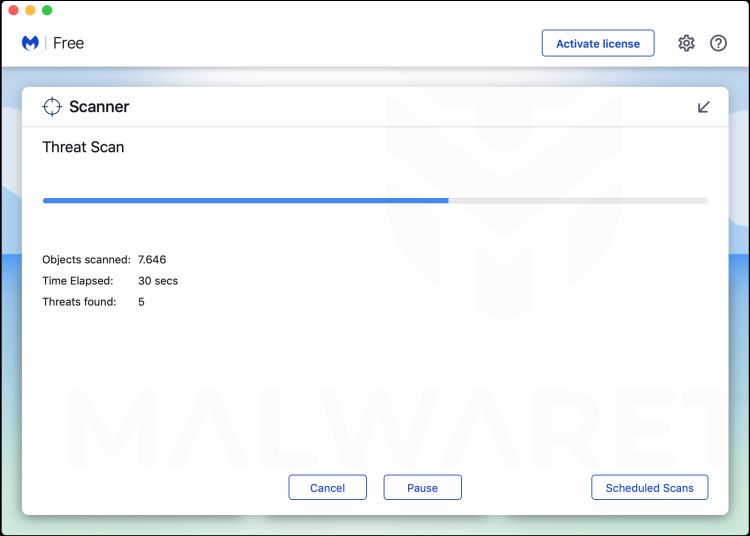
Click the “Scan” button. Malwarebytes will automatically update its detection database and begin checking your Mac for malware.
Wait for the Scan to Finish
Malwarebytes will scan your Mac for adware, browser hijackers, and other malicious programs. This can take a few minutes, so feel free to do something else — just check back occasionally to see the progress.
Quarantine the Detected Threats
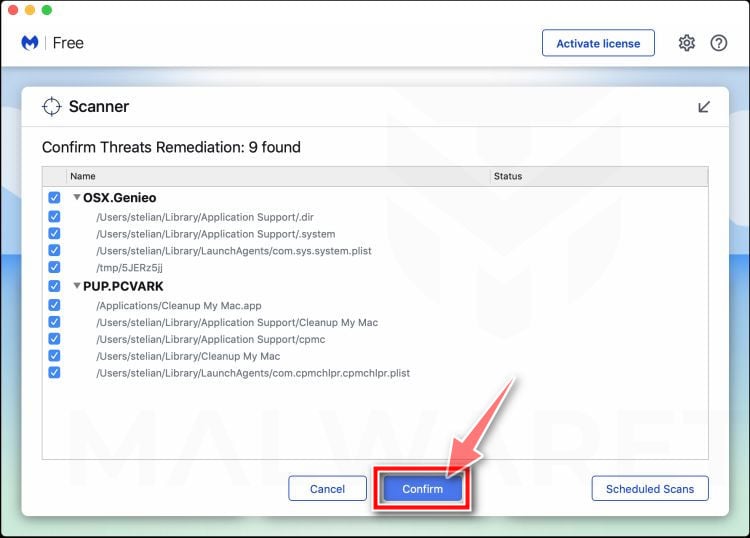
When the scan is done, you’ll see a list of everything Malwarebytes found. Click the “Quarantine” button to remove all the threats at once.
Restart Your Mac
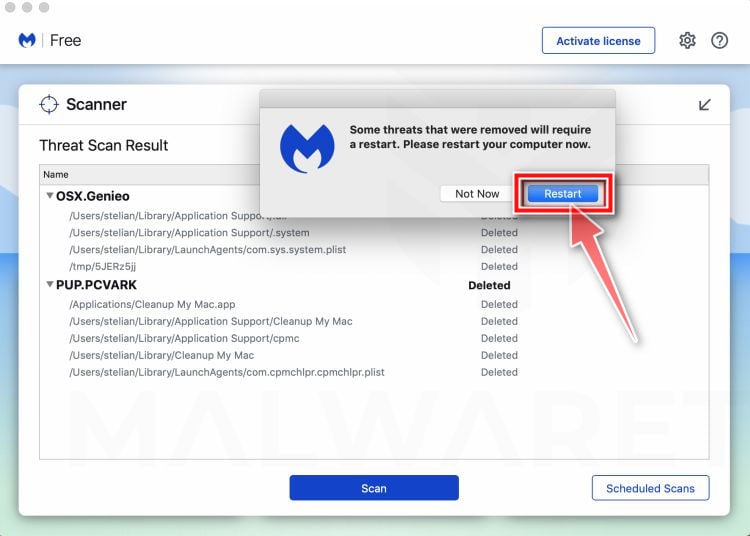
Malwarebytes will now remove all the malicious files it found. Some threats can only be fully removed after a reboot — if Malwarebytes asks you to restart, allow it. Once you’re logged back in, your Mac is clean.
Once the scan is done, remove every threat it detected. Your Mac is now free of adware, rogue browser extensions, and other potentially harmful software.
If your current antivirus allowed a malicious program on your computer, you might want to consider purchasing the full-featured version of Malwarebytes Anti-Malware to protect against these types of threats in the future. If you are still experiencing problems while trying to remove a malicious program from your computer, please ask for help in our Mac Malware Removal Help & Support forum.
Run a Malware Scan with Malwarebytes for Android
Malwarebytes for Android automatically detects and removes dangerous threats like malware and ransomware so you don’t have to worry about your most-used device being compromised. Aggressive detection of adware and potentially unwanted programs keeps your Android phone or tablet running smooth.
Download Malwarebytes for Android.
You can download Malwarebytes for Android by clicking the link below.
In the Google Play Store, tap “Install” to install Malwarebytes for Android on your device.
When the installation process has finished, tap “Open” to begin using Malwarebytes for Android. You can also open Malwarebytes by tapping on its icon in your phone menu or home screen.
Follow the on-screen prompts to complete the setup process
When Malwarebytes will open, you will see the Malwarebytes Setup Wizard which will guide you through a series of permissions and other setup options. This is the first of two screens that explain the difference between the Premium and Free versions. Swipe this screen to continue. Tap on “Got it” to proceed to the next step. Malwarebytes for Android will now ask for a set of permissions that are required to scan your device and protect it from malware. Tap on “Give permission” to continue. Tap on “Allow” to permit Malwarebytes to access the files on your phone.
Update database and run a scan with Malwarebytes for Android
You will now be prompted to update the Malwarebytes database and run a full system scan.
Click on “Update database” to update the Malwarebytes for Android definitions to the latest version, then click on “Run full scan” to perform a system scan.
Wait for the Malwarebytes scan to complete.
Malwarebytes will now start scanning your phone for adware and other malicious apps. This process can take a few minutes, so we suggest you do something else and periodically check on the status of the scan to see when it is finished.
Click on “Remove Selected”.
When the scan has been completed, you will be presented with a screen showing the malware infections that Malwarebytes for Android has detected. To remove the malicious apps that Malwarebytes has found, tap on the “Remove Selected” button.
Restart your phone.
Malwarebytes for Android will now remove all the malicious apps that it has found. To complete the malware removal process, Malwarebytes may ask you to restart your device.
After the scan, tap Remove Selected to delete all detected threats. Your Android phone is now clean — no more malicious apps, adware, or browser redirects.
If your current antivirus allowed a malicious app on your phone, you may want to consider purchasing the full-featured version of Malwarebytes to protect against these types of threats in the future. If you are still having problems with your phone after completing these instructions, then please follow one of the steps:
Restore your phone to factory settings by going to Settings > General management > Reset > Factory data reset.
Now that your device is clean, keep it that way. Most infections start with a malicious ad or a fake download button — so blocking them at the source is your best defense.
We recommend AdGuard, which blocks malicious ads, phishing pages, and dangerous redirects before they can reach you.
Stelian leverages over a decade of cybersecurity expertise to lead malware analysis and removal, uncover scams, and educate people. His experience provides insightful analysis and valuable perspective.