

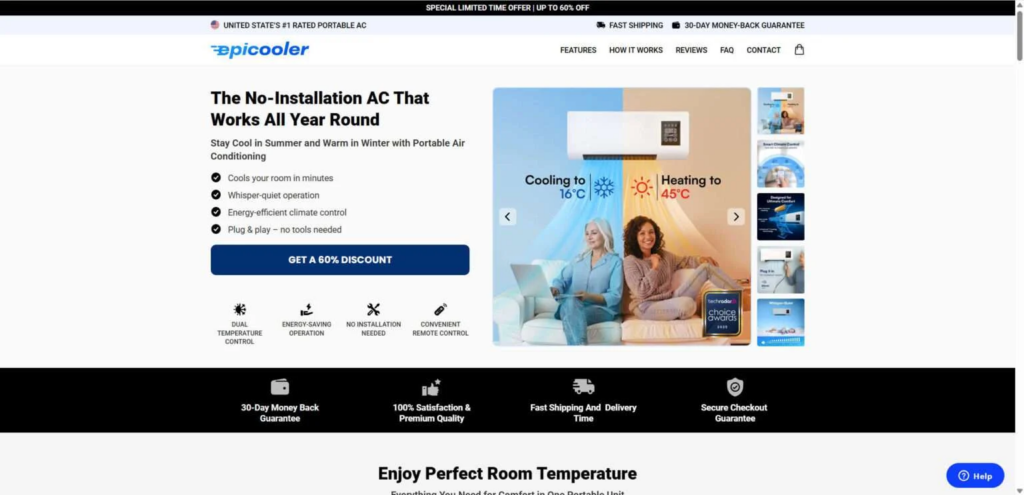
EpiCooler AC is being promoted as a compact portable air conditioner that can cool, humidify, and purify the air without installation, hoses, or expensive energy bills. The ads make it look like a simple solution for hot bedrooms, home offices, apartments, and summer heat.
But the more you look at the product, the less convincing it becomes. EpiCooler appears to follow the same pattern as many viral “mini AC” offers: strong cooling claims, fake urgency, affiliate landing pages, generic product positioning, confusing checkout paths, and customer complaints that the device is basically a weak fan or evaporative cooler, not a real air conditioner.
This article explains how the EpiCooler AC offer works, why the claims are misleading, what buyers are actually receiving, and what to do if you already ordered.
What Is EpiCooler AC?
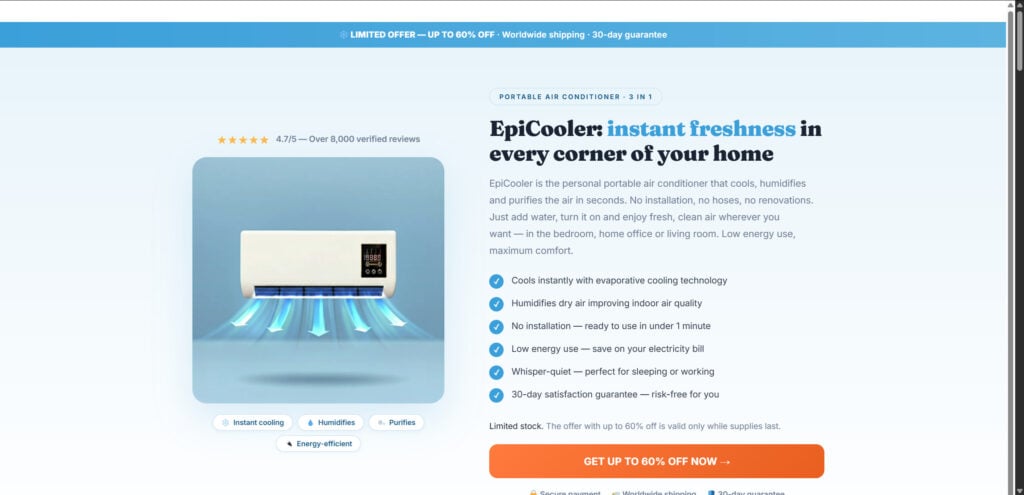
EpiCooler is marketed as a portable cooling device that supposedly delivers instant freshness in any room. The official-looking site describes it as a “Portable Air Conditioner · 3 in 1” that can cool, humidify, and purify air.
The main claims include:
- Instant cooling
- Evaporative cooling technology
- Humidifies dry air
- Purifies air with a built-in filter
- No installation
- No hoses
- Low energy use
- Whisper-quiet operation
- USB or mains power
- Several hours of water-tank runtime
- Worldwide shipping
- 30-day satisfaction guarantee
- Up to 60% off
- Over 8,000 verified reviews
- More than 10,000 satisfied customers
At first glance, the product sounds useful. A small personal cooler can make a desk, bedside area, or workspace feel more comfortable when pointed directly at you.
The problem is the way EpiCooler is marketed. The site repeatedly uses “portable air conditioner” language, which creates the impression that it can cool a room like a real AC unit. In reality, the product description itself says it works through evaporative cooling. That means it is not a compressor-based air conditioner.
A fan with water evaporation can create a cooler-feeling breeze in some conditions. It cannot remove heat from a room the way a real AC does.
The Big Problem: EpiCooler Is Not a Real Air Conditioner
A real air conditioner does not simply blow air. It removes heat from inside a room and transfers that heat outside.
That requires a real cooling system, usually involving:
- refrigerant
- compressor
- evaporator coil
- condenser coil
- heat exchange
- electrical cooling capacity
- BTU rating
- exhaust or outdoor heat rejection
EpiCooler does not appear to have those features. It does not show a compressor, refrigerant system, BTU cooling rating, exhaust hose, condenser, or any serious technical specification that would allow it to function like a real air conditioner.
Instead, it appears to be a small evaporative personal cooler. That is a different product category.
A personal evaporative cooler may help slightly if:
- the air is dry
- the device is close to your body
- the water tank is filled
- airflow is aimed directly at you
- the room is not too humid
- you expect personal comfort, not room cooling
It will likely disappoint if you expect it to:
- cool an entire bedroom
- replace a window AC
- lower room temperature dramatically
- work well in humid climates
- cool multiple people
- perform like a portable AC with a compressor
That difference matters. Calling a small evaporative fan a “portable air conditioner” can mislead buyers into expecting performance the product cannot deliver.
Why the Marketing Looks Misleading
EpiCooler’s sales pages use a familiar formula seen in many viral gadget campaigns.
The product is framed as a cheaper, easier alternative to expensive air conditioning. The site focuses on hot nights, home office comfort, energy bills, portability, and instant cooling. Then it adds urgency with discount banners, limited-stock warnings, and large customer-review claims.
The result is a sales page that makes the product feel more powerful than it likely is.
The strongest red flags include:
- “Portable air conditioner” wording
- “Instant freshness” claims
- “Cools in seconds” language
- “Every corner of your home” style wording
- Low energy use compared with traditional AC
- Over 8,000 verified reviews claim
- 10,000+ satisfied customers claim
- Up to 60% discount
- Limited-stock warnings
- 30-day “no questions” refund language
- Affiliate disclosure distancing the page from the manufacturer
This does not prove that EpiCooler never ships. It may ship a real device. The issue is whether that device matches the expectations created by the advertising.
The Affiliate Page Problem
One of the most important details appears near the bottom of the EpiCooler website. The page says it is an official affiliate partner that connects customers with the original manufacturer. It also says responsibility for product information, warranty, and product quality belongs to the manufacturer or distributor.
That is a major trust issue.
The landing page is doing the selling. It displays the claims, reviews, guarantee, discount, and product benefits. But the fine print suggests the page may not be the entity actually responsible for the product.
That can create confusion if something goes wrong.
A buyer may not know:
- who actually sold the product
- who processed the payment
- who handles the refund
- where the product ships from
- where the return must be sent
- whether the landing page or manufacturer is responsible
- which warranty terms apply
- whether the “guarantee” is handled by the affiliate page or another company
This is common in direct-response gadget funnels. The front page pushes the sale, but responsibility becomes unclear after purchase.
What Buyers Actually Receive
Based on the product description, customer complaints, and similar campaigns, buyers should expect a small personal cooling device, not a real AC.
What EpiCooler may do:
- blow air
- add moisture to the air
- feel slightly cooler at close range
- work as a desktop or bedside fan
- provide personal comfort in dry conditions
- use less electricity than a real AC
What EpiCooler likely will not do:
- cool a full room effectively
- replace a window AC
- replace a split AC
- replace a real portable AC
- lower room temperature significantly
- work well in humid weather
- cool multiple people across a room
- perform like the ads imply
This distinction is the core of the issue. A small water-based personal cooler is not automatically a scam. But marketing it like a portable air conditioner creates unrealistic expectations.
Evaporative Cooling Has Real Limits
Evaporative cooling is a real principle. Water evaporation can reduce air temperature under the right conditions. Large swamp coolers can work well in dry climates.
But small portable evaporative coolers have serious limitations.
They depend on humidity. In dry air, evaporation works better. In humid air, the air is already holding moisture, so evaporation is weaker. That means the device may do very little in muggy summer conditions.
They also add humidity to the room. That may feel pleasant in dry air, but in humid climates it can make the room feel more uncomfortable.
They do not remove heat from the room. A real AC moves heat outside. EpiCooler-style devices do not appear to do that. They move air and evaporate water near the device.
That is why a mini evaporative cooler should be judged as a personal comfort gadget, not a room air conditioner.
Customer Complaints Raise More Concerns
Public review sources show a mixed to negative pattern around EpiCooler.
Common complaints include:
- the device does not cool as advertised
- it is basically a fan
- it does not lower room temperature
- pricing was unclear
- extra charges or add-ons appeared
- the final cost was higher than expected
- refunds were difficult
- returns were confusing
- support was slow or unhelpful
- delivery took longer than expected
- buyers felt misled by “AC” language
Some customers may like the product as a small fan. But many complaints focus on the same central problem: it does not perform like an air conditioner.
That is the expected outcome when a small evaporative fan is sold with AC-style messaging.
The Pricing and Discount Tactics
EpiCooler pages use heavy discount messaging such as “up to 60% off,” limited stock, and special offers.
These tactics are designed to create urgency. They make buyers feel they need to order quickly before the deal disappears.
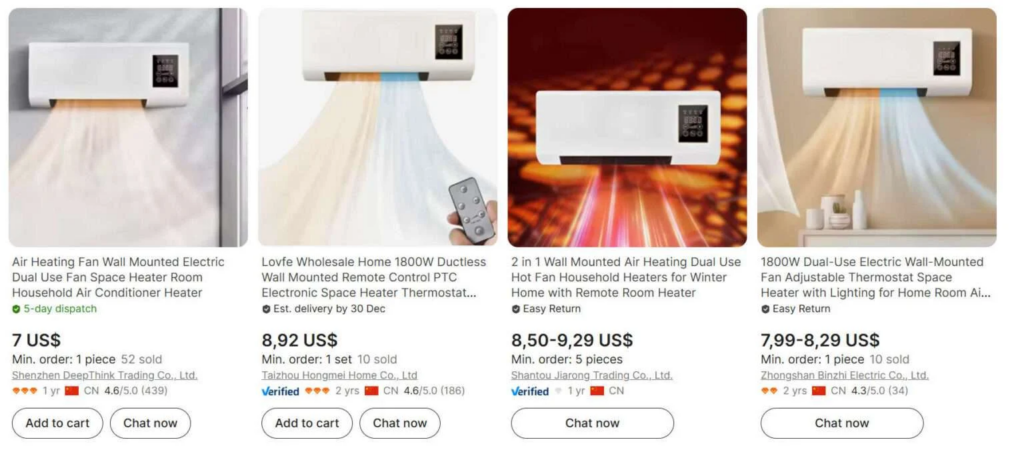
But in many direct-response gadget campaigns, the discount is part of the funnel. The “sale” may be ongoing, and the crossed-out price may not reflect the real market value of the product.
Before buying any product like this, compare similar devices on major retailers and wholesale marketplaces. Look for:
- mini evaporative cooler
- personal air cooler
- USB air cooler
- desktop evaporative fan
- water tank fan cooler
- portable cooling fan
If similar products are available for much less, the “discount” may be mostly marketing.
Hidden Charges and Checkout Risks
Another concern is the checkout process. Customer complaints mention unexpected charges, add-ons, and pricing confusion.
With these funnels, buyers should watch for:
- shipping fees added after the first price
- warranty add-ons
- priority processing fees
- extra filters
- multi-unit bundles
- “buy more and save” offers
- post-purchase one-click upsells
- taxes or international fees
- currency conversion issues
- unclear final totals
Always inspect the final checkout screen before clicking pay. Do not rely only on the advertised product price.
If the order page does not clearly show the final cost, quantity, shipping, currency, and merchant name, do not proceed.
Risk of Receiving Multiple Units
EpiCooler-style sales funnels may push multi-unit packages. Buyers may see options such as one unit, two units, three units, or family packs.
This creates a risk that people may accidentally order more units than intended. Sometimes the larger bundle is preselected or presented as the “best value.”
This matters because if the product disappoints, returning multiple units can be expensive and frustrating.
Before paying, check:
- selected quantity
- selected package
- final total
- shipping cost
- currency
- add-ons
- warranty fees
- recurring terms
- merchant name
Take a screenshot of the final checkout page. That screenshot may help if you later need to dispute the charge.
Why Refunds May Be Difficult
The EpiCooler site advertises a 30-day satisfaction guarantee and says buyers can get a refund if they are not satisfied.
But customer complaints suggest the refund process may not always be simple. Buyers report difficulty returning items, receiving money back, and dealing with support.
Possible refund problems include:
- support delays
- unclear return instructions
- buyer-paid return shipping
- overseas return address
- no refund for shipping fees
- partial refund offers
- product must be returned first
- return window measured from purchase date instead of delivery date
- affiliate page not responsible for manufacturer issues
- confusion over which email or company handles refunds
This is why “30-day guarantee” should not be treated as risk-free. The real question is whether the seller actually honors refunds quickly and without excessive friction.
EpiCooler vs. Real Portable AC
A real portable AC usually has:
- BTU rating
- compressor
- refrigerant
- exhaust hose
- drain system or condensation management
- power rating
- energy efficiency details
- manufacturer warranty
- clear model number
- safety certifications
- measurable cooling capacity
EpiCooler-style devices usually have:
- water tank
- fan
- filter or sponge
- USB power
- LED light
- small airflow output
- personal cooling zone
- no exhaust hose
- no BTU rating
- no compressor
- no true heat removal
That does not mean the product is useless. It means it is not an air conditioner in the normal sense.
If you need real room cooling, buy a window AC, split AC, or true portable AC from a recognized retailer.
Main Red Flags
- Marketed as a portable air conditioner, but described as evaporative cooling.
- No visible compressor, refrigerant, exhaust hose, or BTU rating.
- Claims instant cooling and room comfort without real AC hardware.
- Up to 60% discount and limited-stock urgency.
- Over 8,000 verified reviews claim is difficult to verify independently.
- The site describes itself as an affiliate partner.
- The site says product quality and warranty responsibility belong to the manufacturer or distributor.
- Customer complaints say the device is essentially a fan.
- Complaints mention unclear pricing, hidden charges, and refund difficulty.
- Evaporative cooling works poorly in humid conditions.
- Buyers may receive a small personal cooler, not a room AC.
- Multi-unit and add-on risks may increase the final charge.
Is EpiCooler AC a Scam?
EpiCooler may ship a physical product, so this may not be a simple “pay and receive nothing” scam.
The scam concern is the marketing.
EpiCooler appears to be a high-risk portable AC offer because it uses air-conditioner-style language to sell what looks like a small evaporative cooling fan. It may provide a cool breeze at close range, but it should not be expected to cool a room like a real AC.
A fair conclusion is this:
EpiCooler is likely an overhyped personal evaporative cooler marketed as a portable air conditioner. Buyers should be cautious, especially if they expect real room cooling, easy refunds, or performance comparable to a compressor-based AC.
Who Might Find EpiCooler Useful?
EpiCooler may be acceptable for someone who understands exactly what it is: a small personal cooler.
It may be useful if:
- you sit close to it
- you live in a dry climate
- you want a small desk fan with water cooling
- you do not expect room cooling
- you understand it adds humidity
- you are buying from a seller with clear returns
- you accept that performance will be limited
It is not a good choice if:
- you need to cool a bedroom
- you live in a humid climate
- you expect AC-level cooling
- you want measurable room-temperature reduction
- you need relief during dangerous heat
- you want a reliable appliance
- you want easy local returns
For serious heat, this product is not a substitute for proper air conditioning.
What To Do Before Buying
1. Check whether it has real AC specifications
Look for:
- BTU rating
- compressor
- refrigerant
- exhaust hose
- energy rating
- model number
- manufacturer identity
- safety certifications
- warranty terms
- return address
If these are missing, treat it as a fan or evaporative cooler.
2. Compare similar products
Search for:
- personal evaporative cooler
- mini air cooler
- desktop swamp cooler
- USB water tank fan
- portable evaporative fan
- personal cooling fan
Compare pricing, reviews, shipping time, and return policy.
3. Avoid multi-unit bundles
Do not order two, three, or four units before testing one. If the product disappoints, returning multiple devices will be harder.
4. Screenshot the checkout page
Save proof of:
- final price
- currency
- shipping cost
- quantity
- add-ons
- warranty fees
- merchant name
- refund terms
- delivery estimate
5. Use a payment method with buyer protection
Use a credit card or PayPal. Avoid payment methods that make disputes difficult.
What To Do If You Already Ordered EpiCooler
1. Check your order confirmation
Confirm:
- how many units were ordered
- total amount charged
- currency
- shipping fee
- warranty fee
- merchant name
- delivery estimate
- support email
2. Save all evidence
Save screenshots of:
- product page
- cooling claims
- 30-day guarantee
- checkout page
- order confirmation
- refund terms
- support emails
- tracking page
- bank statement
3. Test the device properly
Use a thermometer if possible. Measure room temperature before and after running the device.
Test whether it actually lowers room temperature or only blows air near the unit.
Document results with photos or video.
4. Request a refund quickly
If the product does not perform as advertised, contact support immediately.
Use direct wording:
“The product was advertised as a portable air conditioner, but it does not cool the room and functions only as a fan or evaporative cooler. I am requesting a full refund under the advertised guarantee.”
5. Do not accept vague delays
If support stalls, repeats generic instructions, or offers only partial refunds, escalate quickly.
6. Dispute the charge if needed
Contact your bank, credit card company, or PayPal if:
- the product never arrives
- the product is not as advertised
- the seller refuses the refund
- the return process is unreasonable
- you were charged more than expected
- extra units were added
- support does not respond
Use clear wording such as:
- “item not as described”
- “misleading advertising”
- “merchant refuses advertised refund”
- “unauthorized quantity charged”
- “hidden charges”
- “product advertised as AC but is only a fan”
How to Avoid Similar Mini AC Scams
Be cautious of any small gadget that claims to replace real air conditioning without showing real cooling specs.
Red flags include:
- “portable AC” with no hose
- no BTU rating
- no compressor details
- no refrigerant information
- no manufacturer address
- no clear model number
- “cools in seconds”
- “save huge on electricity”
- countdown timers
- low-stock warnings
- thousands of unverifiable reviews
- affiliate-page disclaimers
- unclear refund process
- aggressive multi-pack offers
A real AC unit has measurable cooling capacity. If a product does not list that, it should not be treated as an air conditioner.
FAQ
What is EpiCooler AC?
EpiCooler is a small portable cooling device marketed as a 3-in-1 portable air conditioner that cools, humidifies, and purifies air.
Is EpiCooler a real air conditioner?
Based on the visible product description, it appears to be an evaporative personal cooler, not a true compressor-based air conditioner.
Can EpiCooler cool a room?
It may create a cooler-feeling breeze near the device, especially in dry air. It should not be expected to cool an entire room like a real AC.
Why is evaporative cooling different from air conditioning?
Evaporative cooling uses water evaporation to cool air slightly. Real air conditioning removes heat from the room and transfers it outside through a refrigerant system.
Does EpiCooler work in humid climates?
Evaporative coolers are much less effective in humid conditions because the air is already holding moisture.
Is EpiCooler a scam?
EpiCooler may ship a real device, but the offer has several red flags: AC-style marketing, limited technical specs, affiliate-page disclaimers, customer complaints, refund issues, and possible hidden charges.
Why do buyers complain that it is just a fan?
Because a small evaporative cooler mainly blows air and adds moisture. It does not remove heat like a real AC.
Are refunds easy?
Not necessarily. Although the site advertises a 30-day guarantee, public complaints mention difficulty with refunds and returns.
Can buyers be charged more than expected?
Yes, that appears to be a risk based on complaints about pricing, add-ons, and unclear final charges. Always check the final checkout screen.
Should I buy EpiCooler?
Be cautious. If you need real room cooling, buy a real AC from a reputable retailer. If you only want a small personal evaporative fan, compare cheaper alternatives first.
The Bottom Line
EpiCooler AC is marketed as a compact portable air conditioner that can cool, humidify, and purify the air without installation or high energy use. The offer sounds convenient, but the product appears to be a small evaporative personal cooler, not a real air conditioner.
The biggest concerns are the AC-style marketing, lack of real cooling specifications, affiliate-page disclaimers, heavy discount tactics, customer complaints about poor performance, and refund difficulties.
EpiCooler may blow cool-feeling air at close range in dry conditions. It should not be expected to cool a room, replace an AC, or perform like the advertising suggests. Buyers should compare alternatives, avoid rushed purchases, document the checkout, and use payment methods with buyer protection.









Excellent, specifics-informative article! It should go viral!
It should come up at the very top of searches!
Unfortunately, finding this required digging w/ numerous searches words.
Thank you for posting it!!
Fake AC (aka: evaporative coolers) have become a bad joke, very like the toilet paper shortage announced at start of the shutdown.
They’ve even suckered big box chain stores into trying to sell them in humid climate regions.
THAT is marketing usury, because so many folks are ignorant of how things work, & trust brand stores & the internet would not cause them harm.
They spend their hard earned money, & get rooked.
This has gotten far worse over the last 20 or so years.
It got exponentially worse flooding social medial, & again jumped w/AI “help”, & infected big brand store website offerings.
It’s now pervasive.
It’s caused loss of trust in just about everything marketed, & worse as epic inflation jacked-up prices on fairly decent brand products.
Not even discussing good name brands—those are marketed only to the filthy rich or rich-wannabes—stratospherically overpriced.
Public needs to know.
This kind of information needs to start correcting the path of politics, & economics!
I get SO disgusted w/the constantly escalating, pervasive scammery!!
Billions of humans industrially-coerced into doing that kind of “business”, trying to survive.
The only thing that really “trickles down”, are unethical, industrial capitalistic models & the creeping entrenched poverty those generate.
Trickle-down only ever helped the already filthy-rich get filthier-rich.
Thank you, that is very kind – and your point about having to dig for it is the frustrating part. Search results for anything with a product name in it are dominated by affiliate pages, because there is money in writing a positive review and none in writing an accurate one, so the honest article tends to sit below the paid ones. Sharing it where the ads are appearing genuinely does more than we can do ourselves.
And yes, the little evaporative units are the clearest example of the category: they are sold as air conditioners, they cannot lower the temperature of a room, and in humid weather they make it feel worse. The physics is not in dispute; only the marketing is.