

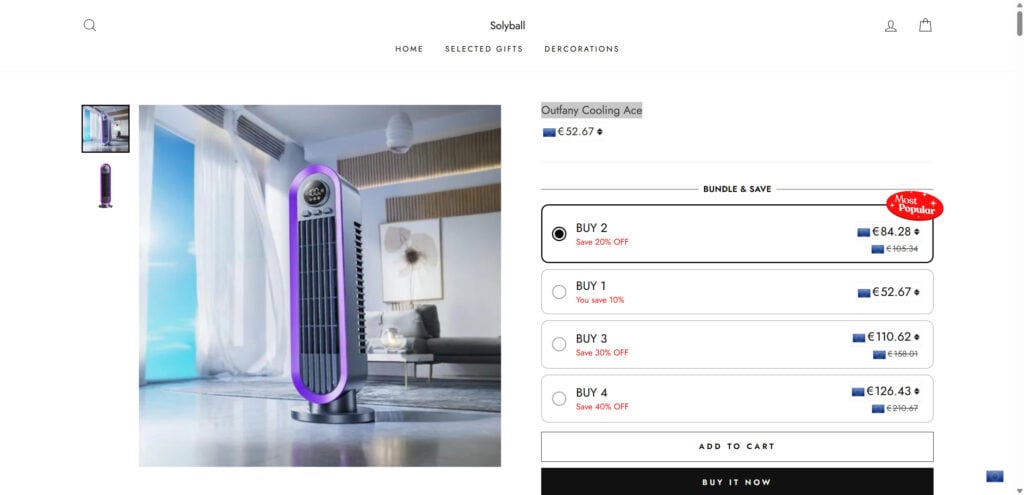
Outfany Cooling Ace is being pushed online as a powerful cooling device for summer heat.
The ads make it look like a mini air conditioner.
It is not.
Outfany Cooling Ace appears to be a cheap personal fan sold under different names, promoted with exaggerated claims, AI-style videos, fake-looking reviews, and risky checkout tactics.
What Is Outfany Cooling Ace?
Outfany Cooling Ace is marketed as a compact cooling fan that can make hot rooms feel cooler fast.
The product usually appears in social media ads showing people sweating, then instantly relaxing once the fan is turned on.
The message is clear:
You do not need expensive AC.
You do not need installation.
You do not need high electricity bills.
Just buy this small device.
But that is where the problem starts.
Outfany Cooling Ace is not a real air conditioner. It looks like a small bladeless desk fan. Similar-looking fans are sold by Chinese suppliers for low bulk prices, often around $10 to $13 per unit.
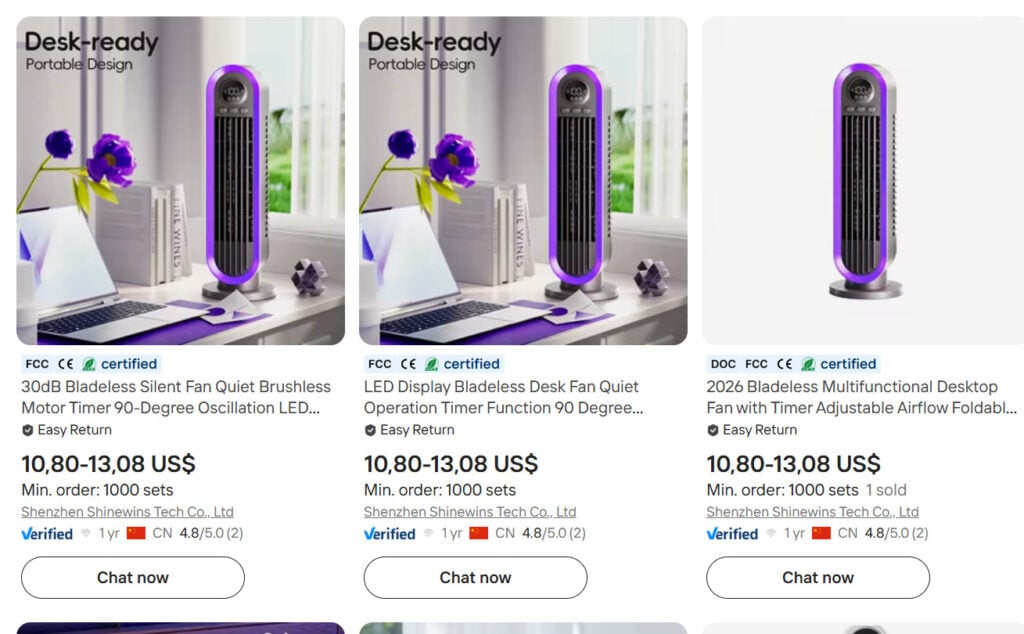
That means buyers may be paying a premium price for a basic fan dressed up with aggressive marketing.
The Big Problem: It Cannot Cool a Room
This is the most important point.
Outfany Cooling Ace cannot cool a room like an AC.
A real air conditioner removes heat from the air. It uses a compressor, refrigerant, coils, and a system that sends hot air outside.
A small fan does not do that.
A fan only moves air.
If the room is hot, the fan is moving hot air.
It may feel better when pointed directly at your face or body, but the room temperature will not drop in any serious way.
That is not air conditioning.
That is personal airflow.
So if you buy Outfany Cooling Ace expecting a desk fan, fine. If you buy it expecting a room cooler, you will likely be disappointed.
Same Product, Different Names
One major red flag is that this type of fan appears to be sold under many names.
The branding changes, but the product often looks the same.
You may see it promoted as:
- Outfany Cooling Ace
- Solyball Cooling Fan
- Mini portable AC
- Bladeless cooling fan
- Personal air cooler
- Desk cooling tower
- Summer cooling device
This is common with viral gadget campaigns.
A cheap generic product is sourced from China. A new name is added. A polished website is built. Then social media ads push it as a breakthrough product.
The product is basic.
The marketing makes it look special.
AI-Generated Ads Make It Look More Powerful
Many ads for products like Outfany Cooling Ace look heavily edited or AI-generated.
They may show:
- Strong cold airflow
- Icy visual effects
- A hot room becoming cool instantly
- People acting shocked by the results
- Fake demonstration clips
- Before-and-after style scenes
These ads are not real proof.
They are designed to make a small fan look like a powerful cooling machine.
A real test would show actual room temperature before and after using the fan. It would show room size, humidity, distance from the fan, and how long the device was running.
The viral ads usually do not show that.
They sell the feeling.
Not the facts.
Fake-Looking Reviews Are Part of the Trap
Many websites selling Outfany Cooling Ace show glowing reviews.
The reviews usually say the same things:
It cools fast.
It is quiet.
It saves money.
It works better than expected.
It is perfect for summer.
But these reviews often appear only on the seller’s own website.
That means they are not reliable.
A seller can choose which reviews to show. They can hide complaints. They can use stock photos. They can publish generic testimonials. In some cases, reviews may be fake or AI-written.
Real reviews usually include mixed opinions.
Some people like the product. Some complain. Some post real photos. Some mention shipping issues, weak airflow, or refund problems.
If every review sounds perfect, be careful.
The Price Markup Is the Real Game
The fan itself appears cheap.
The marketing is what creates the price.
A similar product may cost around $10 to $13 from suppliers in bulk. But viral websites can sell it for much more by calling it a “cooling device,” “mini AC,” or “summer breakthrough.”
That is the business model.
Buy cheap.
Rebrand.
Advertise heavily.
Sell high.
Make refunds difficult.
Then repeat under a new name.
The fan may work as a fan. That is not the issue.
The issue is selling a basic fan like it is a powerful cooling solution.
Risk of Receiving More Units Than You Ordered
Another common problem with these viral gadget sites is the checkout.
You may think you are buying one unit.
Then the page pushes:
- Buy 2 and save
- Buy 3 for the best deal
- Family pack
- Summer bundle
- One-time offer
- Post-purchase upgrade
Some buyers click too fast and end up with more units than they wanted.
Others only notice the problem when they check their bank statement.
Before ordering anything like Outfany Cooling Ace, check the final checkout page carefully.
Look at the quantity.
Look at the total price.
Look at shipping fees.
Look at add-ons.
Do not trust the first price you see in the ad.
Returns May Be Almost Impossible
Many of these websites advertise easy refunds.
In reality, returns can be painful.
You may have to:
- Contact support and wait
- Send photos or videos
- Pay return shipping
- Ship the product overseas
- Return it unused
- Accept a small partial refund
- Wait weeks for a reply
For a cheap fan, return shipping may cost too much to be worth it.
That is why many buyers feel trapped.
The return policy may exist on paper, but in practice, getting your money back can be difficult.
How the Outfany Cooling Ace Scam Works
1. They take a cheap fan and give it a “cooling” name
The product starts as a basic bladeless desk fan.
Similar fans are sold by Chinese suppliers for low prices, often around $10 to $13 in bulk.
Then the same fan gets a new name like Outfany Cooling Ace.
Suddenly, it is no longer shown as a simple desk fan. It is marketed as a “portable cooling device,” “mini AC,” or “summer cooling solution.”
That is the trick.
The product is still just a fan.
2. AI-style ads make it look like an air conditioner
The ads do the heavy lifting.
They show hot rooms, sweaty people, cold airflow effects, and instant relief. Some videos look AI-generated or heavily edited.
The goal is to make you believe this small fan can cool a room.
But it cannot.
A fan only moves air. It does not remove heat from the room like a real air conditioner.
So the ad sells the dream.
The product delivers basic airflow.
3. Fake-looking reviews build trust fast
The sales pages often show glowing reviews.
People supposedly say it cools fast, saves money, works quietly, and replaces expensive AC.
But many of these reviews appear only on the seller’s own website.
That means they are easy to control, hide, edit, or fake.
The reviews are there to stop you from questioning the product.
They are part of the sales funnel.
4. Big discounts push you to buy quickly
The page usually shows a fake-looking “limited time” deal.
You may see:
- 50% off
- Today only
- Low stock
- Summer sale
- Best deal ending soon
This creates pressure.
They do not want you to search the product image and find the same fan cheaper elsewhere.
They want you to buy before you think.
5. Bundle offers can make you order more than planned
The checkout may push multi-pack deals.
Buy 2.
Buy 3.
Get the family pack.
Some buyers think they ordered one fan, then later notice they were charged for multiple units.
This is a common risk with viral gadget funnels.
Always check the final quantity before paying.
6. Returns become difficult after delivery
Once the fan arrives, many buyers realize it does not cool a room.
Then the refund problems begin.
The seller may delay replies, ask for videos, offer a tiny partial refund, or require return shipping at your cost.
If the return address is overseas, sending it back may cost too much.
That is how many buyers get stuck.
7. The same fan appears again under a new name
When complaints start building, the product can be renamed.
New website.
New logo.
New ads.
Same cheap fan.
That is why you may see the same product sold by many sites under different names. The scam is not just one brand. It is the whole marketing system around the product.
Red Flags
Watch out for these warning signs:
- Sold under many different names
- Similar fans found on Chinese supplier sites
- Claims that it cools rooms
- AI-generated social media videos
- Fake-looking reviews
- Huge discounts
- Countdown timers
- “Limited stock” messages
- Bundle offers
- Risk of extra units
- Weak or unclear return policy
- No real proof of room cooling
- No compressor, refrigerant, or exhaust system
The biggest red flag is simple.
It is a fan being marketed like an AC.
What To Do If You Already Bought It
- Take screenshots
Save the product page, ad, checkout page, refund policy, and all cooling claims.
- Photograph the product
Take pictures of the fan, box, manual, plug, label, and shipping package.
- Check your bank statement
Make sure you were not charged for extra units, warranties, shipping insurance, or unknown fees.
- Contact the seller in writing
Ask for a full refund. Keep the message short and factual.
Say the product was advertised as a cooling device, but it is only a personal fan and does not cool a room.
- Do not accept a tiny refund too quickly
Some sellers offer a small refund so you give up. Think before accepting it.
- Contact your bank or card provider
If the seller refuses to help, open a dispute or chargeback.
Send screenshots, product photos, and support messages.
- Report the ad
Report the ad on Facebook, Instagram, TikTok, YouTube, or wherever you saw it.
Final Verdict
Outfany Cooling Ace is not a real air conditioner.
It appears to be a cheap personal fan sold with big cooling claims.
It may blow air.
It may help if you sit close to it.
But it will not cool a room.
The danger is not that the fan exists. The danger is the marketing.
AI-style videos, fake-looking reviews, fake urgency, multiple product names, and risky checkout funnels can make a basic fan look like a cooling miracle.
It is not.
If you need real cooling, buy a proper air conditioner.
If you just want airflow, buy a normal fan from a trusted store. It will probably be cheaper, safer, and more honest.








