

A voicemail from United Tax Consultants, U.S. Tax Consultants or a similarly named tax resolution team says your file has unresolved returns, growing penalties or a limited settlement opportunity. You are urged to call before a final review closes.
Treat this contact as a scam. The name is deliberately generic and official-sounding, while the robocall uses false IRS urgency to collect sensitive information, upfront fees or direct payments. A legitimate tax professional does not cold-call strangers with a secret government program.
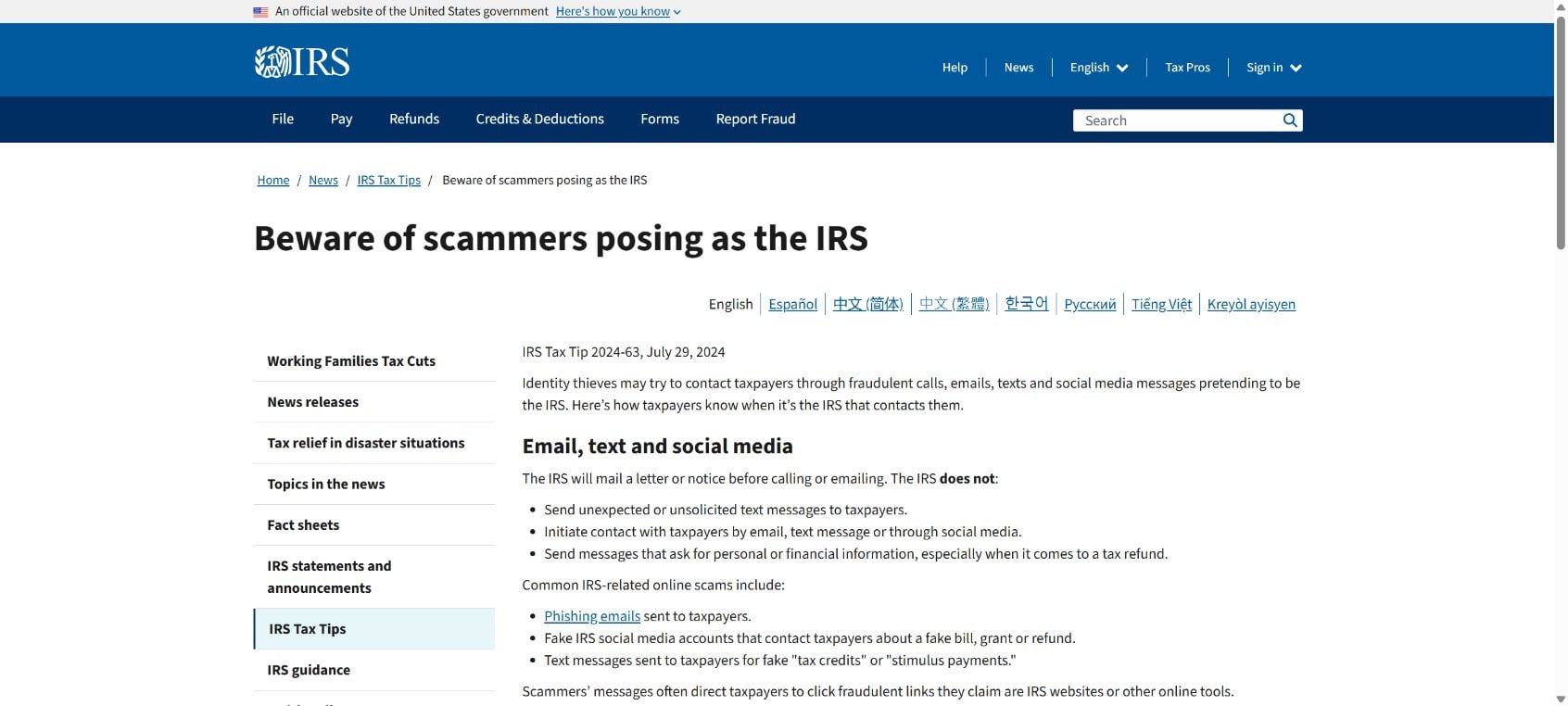
United Tax Consultants Scam Calls Overview
The robocall invents a tax problem and a private solution
The message may claim that missed filings, back taxes or growing penalties have placed the recipient in danger of enforcement. Another version says a review found eligibility for a Fresh Start or hardship program. The caller rarely identifies the exact tax year, notice number, balance or government letter because the same recording is sent to thousands of people.
The name United Tax Consultants sounds established but does not authenticate the call. Fraud operations routinely rotate among labels such as U.S. Tax Consultants, Tax Resolution Team, Tax Mediation Department and Filing Compliance Office. The objective is to sound connected to tax administration without making a verifiable statement about who is calling.
The qualification interview collects more than tax information
When a person calls back, a representative asks about income, filing status, tax debt, bank accounts and Social Security number. These questions are presented as a free eligibility review. In reality, they can support identity theft, future targeting or a high-pressure sales demand for more than $1,000 in advance.
Some operators promise to stop liens, garnishment or collection activity immediately after a retainer is paid. Others demand gift cards, cryptocurrency or a wire while pretending to represent the IRS. Immediate payment threats and guaranteed reductions are not legitimate tax-resolution practices.
- The contact: an unsolicited robocall or voicemail using a vague tax-consulting name.
- The pressure: penalties are growing, enforcement is near or a relief window is closing.
- The collection: the callback interview requests tax, identity and banking details.
- The demand: an upfront fee or unusual payment is required before any verifiable work.
The IRS generally begins tax matters by mail and does not leave urgent prerecorded threats, demand payment by gift card or promise a special settlement through a random caller. Verify any claimed balance through an IRS Online Account, a known tax professional or the official number printed on a genuine IRS notice.
Warning Signs of the United Tax Consultants Robocall
The caller knows the script but not your actual tax record
A mass robocall needs the recipient to supply the details that make the story personal. Notice how the message sounds specific about consequences but remains vague about the tax year, balance, notice and agency handling the matter.
Do not provide information so the caller can complete the accusation. A real tax issue should already exist in official records and can be verified without returning the suspicious call.
Red Flags at a Glance
- The contact was completely unsolicited. You never asked this business to review a tax case.
- The company name is generic. The message uses authority-sounding words but provides no verifiable legal identity.
- The voicemail says final attempt. A manufactured deadline pressures the recipient to call before checking records.
- No notice number or tax year is provided. The recording describes risk without account-specific evidence.
- Relief is guaranteed before review. No honest professional can promise a settlement without examining the case.
- Sensitive data is requested immediately. The caller asks for a Social Security number, bank details or IRS login information.
- Payment must happen now. Gift cards, crypto, wires and rushed retainers are used to prevent reconsideration.
What the United Tax Consultants Caller May Claim
Your file was flagged for manual review
The phrase suggests that a government database identified the recipient. In reality, the caller may know nothing beyond a telephone number. The victim is invited to reveal whether they have missing returns or tax debt.
Once the person confirms a concern, the representative repeats it as if it came from the original review. This circular conversation can make a guess feel like official knowledge.
A limited relief program can erase most of the debt
The caller may mention Fresh Start, hardship status, penalty abatement or an offer in compromise. Real IRS options exist, but eligibility depends on financial facts and formal applications. Their names can be copied into any sales script.
A program name is not proof that the caller is authorized, qualified or capable of delivering it. Verify credentials, fees and the exact service before signing anything.
Enforcement begins unless you pay a retainer
A representative may warn of liens, wage garnishment, bank levies or arrest. The threat is paired with a retainer that supposedly places an immediate hold on enforcement.
The IRS does not authorize a random caller to suspend a case in exchange for an instant payment. Arrest threats and alternative payment methods make the scam even clearer.
A callback number proves the office is real
A toll-free or local number can be obtained cheaply, forwarded internationally and abandoned after complaints. Professional hold music, a receptionist and multiple departments can all be part of the same operation.
The useful evidence is a verifiable business registration, physical office, written engagement agreement and credentialed professional whose status can be checked independently.
How the United Tax Consultants Scam Call Works
Step 1: A mass robocall reaches potential taxpayers
An automated message says a tax file requires attention or qualifies for relief. It uses a broad name such as United Tax Consultants so many recipients will find the story plausible.
The recording supplies a callback number and a short deadline but little case-specific information.
Step 2: Fear or hope drives the callback
Recipients with old tax concerns fear penalties, while recipients expecting refunds may focus on a promised benefit. Both emotions reduce the urge to verify first.
Returning the call also confirms that the number reaches someone willing to discuss taxes.
Step 3: A representative performs an eligibility interview
The caller asks about unfiled years, estimated debt, income, dependents, bank accounts and property. Personal identity details may be requested to locate the supposed file.
The victim supplies the facts that the original robocall never possessed.
Step 4: The caller presents a severe consequence
The representative says penalties are increasing or enforcement may reach wages, property or bank accounts. The timeline is shortened to create urgency.
The victim is discouraged from contacting the IRS or another professional because delay supposedly harms eligibility.
Step 5: A relief package is presented as guaranteed
The caller claims a program can reduce the balance, stop collection or restore compliance. The promised savings are used to make a large fee seem small.
No written analysis or official acceptance exists when the guarantee is made.
Step 6: Money and documents are collected upfront
The victim pays a retainer or sends money through an unusual channel. Tax returns, identity documents and account records may also be uploaded to an unverified portal.
The operation now controls both the payment and enough data for further fraud.
Step 7: Progress becomes difficult to verify
Calls may go unanswered, new fees may appear or the victim may receive only vague updates. The claimed IRS result never arrives through official records.
Stolen details can later fuel more tax, loan, debt-relief or recovery scams.
How To Check a United Tax Consultants Call
Confirm the tax issue before investigating the caller
Start with the alleged debt or filing problem. Sign in to the IRS Online Account by typing irs.gov yourself, review genuine letters or contact the IRS using information from an official notice.
If professional help is needed, locate a credentialed CPA, enrolled agent or tax attorney independently. Verify credentials and disciplinary history rather than relying on names and licenses supplied by the caller.
A Safer Verification Sequence
- Check the IRS Online Account. Look for balances, notices and filed-return information.
- Review physical mail. A genuine tax matter normally has written documentation before collection calls.
- Search the exact legal business name. A trade label alone is not enough.
- Verify the professional credential. Confirm the CPA, enrolled-agent or attorney status independently.
- Demand a written engagement agreement. It should identify services, fees, refunds and the responsible professional.
- Get another opinion. Do not pay during the first unsolicited call.
What To Do If You Paid United Tax Consultants
Separate the payment problem from any real tax problem
Stop further payments and contact the bank, card issuer or payment provider. Describe the transaction as an unsolicited tax-relief scam and ask about chargebacks, recalls or blocking future debits.
Preserve the voicemail, callback number, company names, agreements, receipts, portal addresses and every document submitted. A changing business name or disconnected number makes early documentation especially important.
Then verify the real tax status through irs.gov, a genuine notice or a credentialed professional you selected independently. Paying a scammer does not resolve an actual filing requirement or balance.
Recovery Checklist
- Cancel recurring card or bank authorizations connected to the caller.
- Request a payment dispute or wire recall as soon as possible.
- Change any IRS, email or financial password shared or reused with the portal.
- Contact the IRS if tax transcripts, identity documents or an IP PIN may be exposed.
- Review credit reports and consider a freeze if a Social Security number was disclosed.
- Save voicemail audio, telephone numbers, agreements, receipts and representative names.
- Report suspicious tax-relief calls to the FTC, FCC and TIGTA.
- Reject recovery services that demand another upfront fee.
Watch for tax identity theft and repeat relief calls
A stolen Social Security number and tax history can be used to file a fraudulent return or build a more convincing follow-up pitch. Monitor the IRS account and respond quickly to unexpected notices.
Expect new callers to use different company names while referring to the same balance. The details may come from the first interview, not from government records.
Frequently Asked Questions
Is United Tax Consultants connected to the IRS?
The unsolicited robocall provides no proof of an IRS connection. The IRS does not outsource secret relief offers to random callers or demand immediate payment through them.
Can tax consultants legitimately charge upfront fees?
Some legitimate professionals charge retainers, but they provide verified identities, credentials, written terms and realistic assessments. An urgent cold call and guaranteed outcome are major warnings.
Does the IRS ever call taxpayers?
Calls can occur in limited circumstances, usually after written contact. The IRS does not leave urgent prerecorded threats, demand gift cards or threaten immediate arrest.
What if I really owe back taxes?
Verify the balance through irs.gov or an official notice, then choose a credentialed professional independently. A real tax issue does not make the unsolicited caller trustworthy.
The Bottom Line
United Tax Consultants scam calls are built from vague authority, false urgency and information supplied by the victim. The robocall is not evidence that anyone reviewed a tax file.
Do not return the number, disclose tax records or pay during the call. Verify the IRS account first and select professional help on your own terms.








