

Vital Cooling Breeze is advertised as a compact answer to expensive air conditioning, with dramatic claims about fast relief, lower electricity bills and a discount that appears too good to miss. The sales page even compares the device with traditional AC.
The comparison is misleading. Vital Cooling Breeze is not an air conditioner. It is a small water-based evaporative cooler and fan, similar to generic units sold under many names. It may blow cool mist across a desk at close range, but it cannot replace a compressor-based AC or cool an entire room as the advertising implies.
Overview
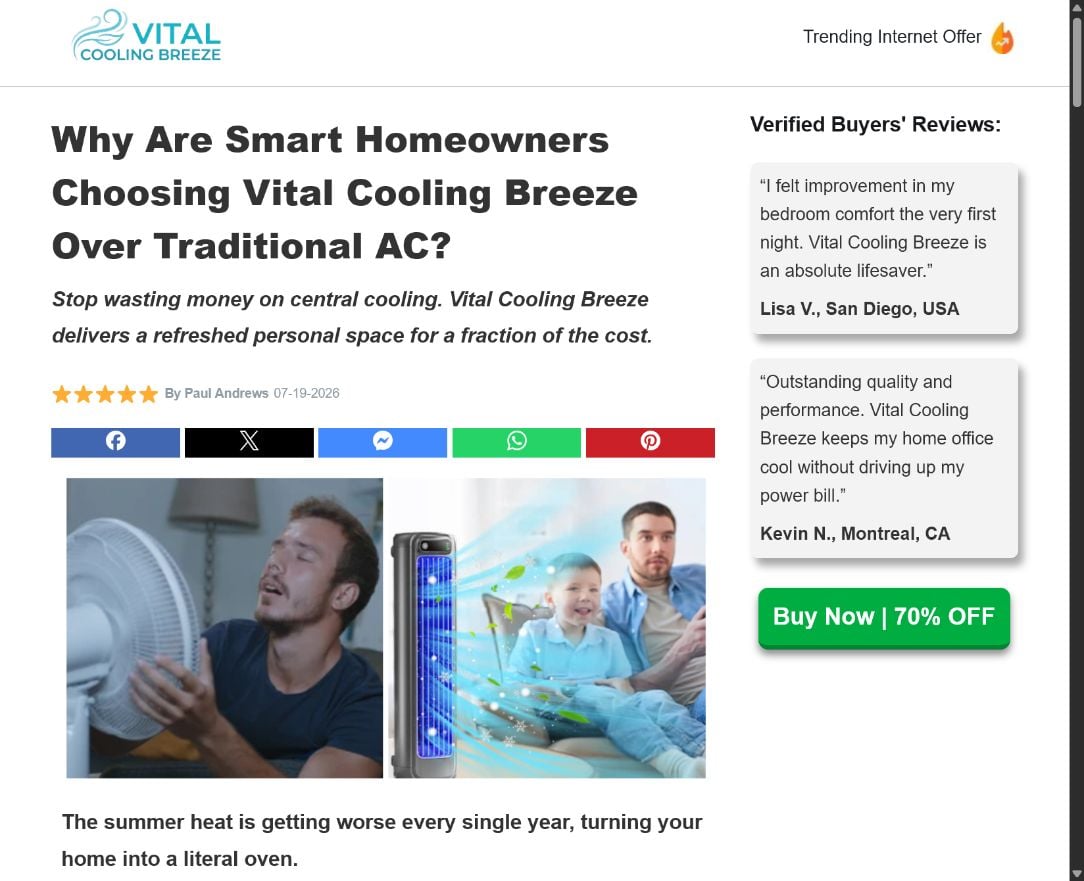
Vital Cooling Breeze is promoted through advertorial-style pages that resemble an independent product review. The page uses a named author, star ratings, buyer testimonials, urgent discounts and headlines asking why smart homeowners are choosing it over traditional AC. This presentation is designed to make the recommendation feel researched even though the page primarily funnels visitors to the seller’s checkout.
The underlying device uses a fan, water tank and wet filter or misting element. Air moving across water can feel cooler directly in front of the unit, especially in a dry climate. What it does not have is a refrigeration circuit, compressor, condenser or exhaust system. Those components are what allow a real air conditioner to remove heat from a room. Without them, the product cannot deliver the same result.
That technical difference makes the central marketing claim deceptive. A small evaporative cooler can provide personal comfort within a limited area, but it does not stop the rest of the room from remaining hot. In a humid environment, evaporation becomes less effective and the extra moisture can make the room feel more uncomfortable. Calling the device an alternative to central or window AC creates an expectation it cannot meet.
The website also relies on familiar high-pressure tactics: a large 70% discount, favorable testimonials presented as verified, warnings about rising heat and repeated buy buttons. Generic versions of the same type of cooler are commonly sold at much lower prices. Buyers may receive a physical product, but receiving something does not make exaggerated performance claims legitimate.
Consumer reports about similar campaigns frequently describe a lightweight fan arriving from China, costly multi-unit orders, slow shipping and difficult returns. One recent scam report connected to the Vital Cooling Breeze offer described a $172 loss after the customer expected a mini air conditioner and received what they considered a cheap fan. That is one complaint, not proof of every transaction, but it matches the gap visible between the advertising and the device design.
Our verdict
The Vital Cooling Breeze offer is misleading and should be avoided. The product is not a portable air conditioner, and the marketing substantially overstates what a tiny evaporative fan can do. It may produce a cool breeze at arm’s length, but it will not cool a bedroom, living room or home like real AC.
What the device can and cannot do
- It can move air like a small desk fan.
- It may add cool mist or slightly lower the air temperature immediately in front of it.
- It may feel more useful in very dry conditions than in humid weather.
- It cannot remove room heat through refrigeration.
- It cannot provide the rated cooling capacity of a real portable, window or central air conditioner.
- It cannot reliably cool a whole room in 90 seconds or replace a home AC system.
- Adding water can increase indoor humidity, which may reduce comfort in already humid areas.
How the Vital Cooling Breeze Sales Funnel Works
Step 1: A dramatic ad targets people suffering in the heat
The ad appears during hot weather and focuses on discomfort and electricity costs. It promises a simple device that will create cool air without installation, hoses or high power use. The emotional appeal is strongest for older adults, renters and anyone worried about an expensive utility bill.
Step 2: An advertorial imitates an independent review
The visitor lands on a page with a headline, author name, star rating and customer stories. The layout looks like an article, but nearly every important link leads to the same sales offer. The page does not perform a measured temperature test or compare cooling capacity in BTUs because that would expose the difference between the device and a real AC.
Step 3: The product is redefined with vague cooling language
The copy describes refreshed personal space, cool mist and air moving through a wet filter. Those phrases may be technically possible, but they are placed beside comparisons with traditional AC. The reader is encouraged to interpret a close-range evaporative effect as room cooling.
Step 4: A large discount creates urgency
The price is framed as a 70% reduction or limited internet offer. Countdown timers, stock warnings and seasonal pressure can make the shopper feel that waiting means losing the deal. Such discounts are less meaningful when the seller controls both the supposed regular price and the sale price.
Step 5: Quantity upgrades increase the order total
Checkout funnels often encourage two, three or four units for different rooms. A product that first appears inexpensive can become a three-figure order after bundles, shipping, warranties or accessories. Buyers should inspect the final quantity and total before authorizing payment.
Step 6: Returns become harder than the purchase
If the fan does not meet expectations, the customer may face slow support, a return address outside the country, shipping costs or conditions that reduce the practical value of the guarantee. A 30-day promise is not the same as a simple prepaid return to a local retailer.
Red Flags in the Vital Cooling Breeze Advertising
- It compares a small USB-style cooler with traditional air conditioning.
- The page uses an article format while directing every path toward a purchase.
- The author and reviews are not supported by verifiable testing details.
- The device is shown cooling an entire family or room without measured evidence.
- A permanent-looking 70% discount creates artificial urgency.
- The same generic product design appears under other brand names online.
- The sales copy avoids BTU ratings, compressor specifications and room-size test results.
- The return promise is prominent, while the real return steps are harder to find.
How to Tell a Real Portable AC From a Mini Air Cooler
Look for an exhaust hose and BTU rating
A real portable air conditioner removes heat and usually vents that heat outdoors through a hose. It lists a cooling capacity in BTUs and a recommended room size. A small water tank and fan without an exhaust path indicate an evaporative cooler, not refrigeration-based AC.
Check the power requirement and product weight
Cooling a room requires far more energy than running a desk fan. A tiny device powered by USB cannot perform like a several-thousand-BTU air conditioner. If the claimed result ignores this basic energy difference, the advertising is not credible.
Compare the design, not just the brand name
Reverse-image search the product photo or look at major marketplaces for visually identical units. White-label devices are often renamed and sold through different advertorials. A large markup may be paying for advertising, not better hardware or support.
What to Do If You Ordered Vital Cooling Breeze
If the order has not shipped
Contact the merchant immediately in writing and request cancellation. Save the order page, confirmation, advertised guarantee and cancellation message. Do not accept a discount or additional unit if your goal is to cancel the transaction.
If the product arrived
Photograph the unopened package, shipping label, device and model information. Test only as much as necessary to confirm what it is, then request written return instructions. Ask whether the merchant provides a prepaid label and whether any restocking or international shipping cost will be deducted.
If the seller refuses a refund
Send one clear message explaining that the product was materially misrepresented as an alternative to air conditioning. Include screenshots of the claims and the device specifications. If the merchant does not resolve the issue, contact the card issuer promptly and ask about a merchandise dispute.
If you see recurring or extra charges
Review the checkout receipt for added units, warranties or subscriptions. Contact the card issuer about any charge you did not authorize and ask whether future charges from the merchant can be blocked. Replace the card if the issuer believes the payment details are at risk.
Better Ways to Cool a Room
- Use a properly sized window or portable AC with a published BTU rating.
- Choose a fan when you only need air movement and understand that it will not lower room temperature.
- Use an evaporative cooler only in a dry climate and for a suitable small area.
- Close blinds during direct sun and seal obvious air leaks.
- Check local energy-assistance or cooling-center programs during dangerous heat.
- Buy from a retailer with a clear local return policy and independently verified specifications.
The Bottom Line
Vital Cooling Breeze may arrive as a working mini fan, but that does not validate the advertising. It lacks the refrigeration system required to replace an air conditioner, and the sales page uses exaggerated comparisons and high-pressure discounts to sell a generic personal cooler.
Do not buy it expecting room-wide cooling. If you need air conditioning, choose a properly rated unit from a retailer with transparent specifications and a return process you can verify before paying.








