

Wellaray Coffee Booster is marketed as an effortless upgrade to a habit millions of people already have. Tear open a sachet, stir the powder into coffee, and the familiar drink supposedly becomes a metabolism-supporting tool that helps control cravings, improve energy and make weight management feel easier.
That pitch is clever because it removes the friction normally attached to diet products. There is no new meal plan, complicated schedule or unpleasant shake. The product slips into breakfast, while polished social-media ads and large discounts make the first order feel low-risk.
The concern begins at checkout. A substantial number of recent customer complaints describe quantities being increased, extra packages being charged, subscriptions that were not expected, and cancellation requests rejected because the order was allegedly already processed. The company does ship products and has an active support center, but the buying experience has generated enough consistent complaints to deserve serious caution.
Our verdict: avoid Wellaray Coffee Booster. The powder is a real supplement, but its modest ingredient profile does not justify the dramatic weight-loss expectations created by the advertising. The checkout, subscription and refund complaints make this a high-risk way to buy an otherwise ordinary blend.
Overview
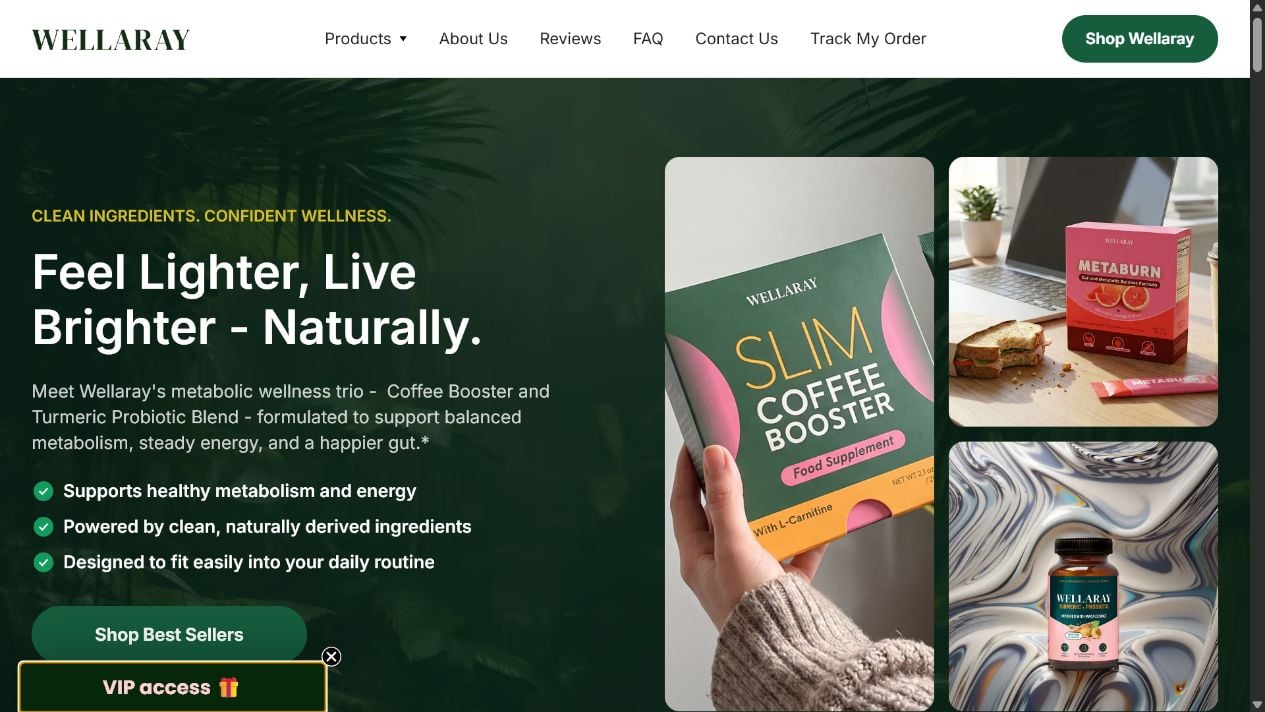
Wellaray sells Coffee Booster in pre-portioned sachets designed to dissolve in coffee, tea, water or a smoothie without significantly changing the taste. Its current product page lists L-Carnitine, green coffee bean extract, chromium and Camellia sinensis extract, which is another name for tea extract.
The official storefront currently prices Coffee Booster at $25.95 and presents it as part of a broader metabolic wellness routine. The page uses phrases such as “feel lighter,” “support healthy metabolism” and “steady energy,” while the advertising around the brand is often much more focused on appetite, cravings and weight loss.
Wellaray is not a disposable fake store with no support infrastructure. It operates a branded storefront, maintains a Zendesk help center and responds to many public reviews. That distinction matters. The problem is that a real operation can still use a confusing, high-pressure sales funnel that leaves buyers with more products and recurring charges than they intended to purchase.
What shoppers should understand before ordering
- A real product is not the same as a proven result: Wellaray sells an identifiable supplement, but that does not establish the dramatic weight-loss outcome suggested by the advertising.
- The formula does not make the promise predictable: ingredients associated with metabolism research cannot tell an individual buyer how many pounds they will lose—or whether they will lose any.
- The checkout deserves as much scrutiny as the label: quantity selection, recurring-delivery language and the final total should be reviewed before payment.
- Customer experiences are sharply divided: the large share of positive ratings sits beside a substantial group of one-star complaints involving orders, renewals, cancellation and refunds.
That combination makes Wellaray different from a simple fake storefront. A parcel may arrive and contain the advertised sachets, yet the buyer can still be disappointed by unsupported expectations or an order arrangement they did not fully understand. The safest decision is to judge the offer by the evidence and final checkout terms—not by the before-and-after story wrapped around the product.
What Wellaray Coffee Booster Actually Contains
L-Carnitine
L-Carnitine helps transport fatty acids inside cells, which makes it sound ideal for a fat-burning advertisement. However, a biological role does not automatically translate into meaningful weight loss from a sachet. Research on supplementation shows mixed and generally modest effects, not the effortless body transformation implied by aggressive ads.
Green coffee bean extract
Green coffee bean extract contains chlorogenic acids and has appeared in weight-loss supplements for years. Some small trials have reported changes, but study quality, dosing and publication problems limit how confidently the results can be applied. Wellaray does not present a rigorous clinical trial on its finished Coffee Booster formula.
Chromium
Chromium contributes to normal macronutrient metabolism, but that regulated nutrition statement is much narrower than saying a product will suppress cravings or cause substantial fat loss. For most people without a deficiency, chromium supplements have not demonstrated the kind of dramatic weight reduction that direct-response marketing encourages buyers to imagine.
Tea extract
Tea extracts contain caffeine and polyphenols in varying amounts. They may have small effects on energy expenditure, but concentrated extracts can also cause side effects and interact with medication. The exact dose matters, and ingredient recognition is not a substitute for evidence on the complete product.
Why the Ordering Process Is the Bigger Red Flag
Unexpected quantities and upsells
Recent reviewers repeatedly describe selecting a smaller package and discovering a larger quantity or an additional bundle on the final charge. Other buyers say they stopped before completing checkout but later received an order confirmation. Individual reviews are allegations, not court findings, yet the repeated pattern is too specific to dismiss as ordinary dissatisfaction.
Subscription confusion
Wellaray’s own support center includes a “Manage My Subscription” category, confirming that recurring plans form part of the business. A subscription is not automatically deceptive, but it must be clearly presented before payment. Complaints from buyers who did not expect repeat billing suggest that the disclosure or checkout design is not working well enough.
Cancellation resistance
Several customers report contacting support within minutes of ordering and being told that cancellation was impossible because the package had already been processed or dispatched. When a seller moves from checkout to “too late to cancel” almost instantly, the advertised money-back protection becomes much less comforting.
A polarized review record
Wellaray’s Trustpilot profile currently shows an overall score around 3.9 from more than 1,200 reviews, but the distribution is sharply divided: approximately 49% are five-star reviews while about 25% are one-star reviews. The negative reviews concentrate heavily on checkout totals, delivery, cancellation and refunds rather than simply saying the supplement did not work.
What the Marketing Does Not Prove
A polished website, a U.S. customer-service address and a long ingredient list can establish that a seller is operating, but they do not establish effectiveness. Likewise, a positive review written shortly after delivery may describe taste or convenience rather than verified weight loss. The relevant question is whether the exact formula produced a meaningful benefit in a controlled, independently reviewed trial.
The “natural” label also does not remove risk. Green tea and green coffee extracts can contain active compounds, chromium can interact with medical conditions and other ingredients may not suit every buyer. Anyone taking medication for blood sugar, blood pressure or another chronic condition should have the full label reviewed before use. The safest decision is not to treat a checkout page as medical guidance.
How the Wellaray Sales Funnel Works
Step 1: A simple coffee ritual lowers skepticism
The advertisement does not ask the buyer to begin a difficult diet. It frames the product as a tiny improvement to something they already enjoy, making the decision feel easier and more familiar than purchasing a conventional weight-loss supplement.
Step 2: Wellness language implies broader results
Phrases about metabolism, energy and cravings are flexible enough to sound scientific without promising one measurable outcome. Buyers can mentally translate those phrases into weight loss even when the product page uses cautious disclaimers.
Step 3: Discounts push a larger commitment
The funnel presents multi-box deals, limited discounts and post-purchase upsells. A buyer who intended to test one package can be guided toward several months of product before learning whether it suits them.
Step 4: Subscription options create recurring revenue
Recurring deliveries are valuable to the seller because they turn one advertising click into multiple charges. If the subscription choice is easy to miss, the buyer may only notice when a renewal email or card transaction appears.
Step 5: Rapid fulfillment blocks cancellation
Support can point to immediate processing as the reason an order cannot be changed. The customer must then wait for delivery, obtain return instructions and pay attention to deadlines instead of stopping the transaction before shipping.
Step 6: The refund becomes a paperwork problem
The buyer may need an authorization, return address, tracking proof and confirmation that the warehouse received the parcel. Delays or unanswered messages can push the request closer to the end of the guarantee period, increasing the chance that the customer gives up.
Red Flags to Consider Before Ordering
- No finished-product trial: ingredient studies are not proof that Coffee Booster causes meaningful weight loss.
- Checkout complaints: buyers repeatedly allege unexpected quantities and additional charges.
- Subscription complaints: some customers say recurring delivery was not sufficiently clear.
- Fast refusal to cancel: reports describe orders becoming untouchable within minutes.
- Large one-star share: roughly one quarter of current Trustpilot ratings are one star.
- Marketing-review mismatch: the polished “easy wellness” story does not prepare buyers for the billing and return friction described publicly.
- Ordinary ingredients: nothing in the disclosed formula establishes a unique or powerful fat-loss mechanism.
Is Wellaray Coffee Booster a Scam or Legit?
Wellaray is a functioning supplement seller and many customers report receiving and using the powder. Calling it a fake product would overstate the evidence. The more accurate conclusion is that the company sells a real, ordinary supplement through a checkout and recurring-order system that has produced a troubling volume of consistent complaints.
For consumers, that distinction does not make the purchase safe. A real package arriving does not cure an inflated total, an unwanted subscription or a refund that becomes difficult to obtain. The benefit case is weak enough that accepting those financial risks makes little sense.
Our recommendation is to skip Wellaray Coffee Booster. If you want coffee, drink coffee. If you want evidence-based weight management, discuss realistic nutrition, activity and medical options with a qualified professional instead of paying a premium for an unproven sachet and a complicated sales funnel.
What to Do If You Already Ordered Wellaray
1. Save the checkout evidence
Keep screenshots of the package you selected, advertised discount, final total, guarantee and order confirmation. If the charged quantity differs from what you intended, the comparison is much stronger than relying on memory.
2. Check for a subscription immediately
Open the confirmation email and Wellaray account area. Look for subscription, recurring delivery, renewal date or delivery frequency. Use the official subscription-management option and save the cancellation confirmation.
3. Send a written cancellation request
Contact support in writing even if a representative says the parcel is already moving. State the order number, exact items you intended to purchase and the resolution you want. Ask for the applicable return instructions and deadline.
4. Refuse to rely on a verbal promise
Keep emails, chat transcripts, tracking numbers and photographs of the unopened parcel. If support authorizes a return, obtain the return address and refundable amount in writing before mailing anything.
5. Monitor the payment account
Watch for additional charges through at least the next expected renewal date. If a documented cancellation is ignored or an unauthorized amount remains unresolved, contact the card issuer or payment provider promptly and provide the evidence.
6. Stop using the product if you react badly
Discontinue the supplement and seek medical advice for a concerning reaction. Bring the ingredient label and lot number. Report serious supplement-related problems through the appropriate health authority in your country.
The Bottom Line
Wellaray turns an ordinary supplement into an appealing lifestyle story: keep drinking the coffee you love, add one invisible sachet and let metabolism support happen in the background. The convenience is real. The promised scale of benefit is not established.
More importantly, repeated complaints about quantities, subscriptions, cancellations and refunds show that the financial risk begins before the first sachet is opened. A supplement with uncertain benefits should not require this much vigilance at checkout. Avoid Wellaray Coffee Booster and choose options whose evidence, price and cancellation terms are clear before payment.









TOTAL SCAM I GOT CHARGED FOR 6 BOXES ONLY ORDERED 3 AND THEY TOOK FOREVER TO ARRIVE THEN THEY TOLD ME I WOULD GET A FREE REPLACEMENT THAT NEVER HAPPENED AN SO FAR I DONT FEEL ONE BIT OF DIFFERENCE
I am sorry this happened, Louise. Being charged for six boxes when you ordered three, followed by slow delivery and an unfulfilled replacement promise, should be documented carefully. Contact the merchant in writing for a refund or billing correction, save the receipt and all messages, and ask your card issuer or payment provider to dispute the incorrect quantity if the seller does not resolve it.