

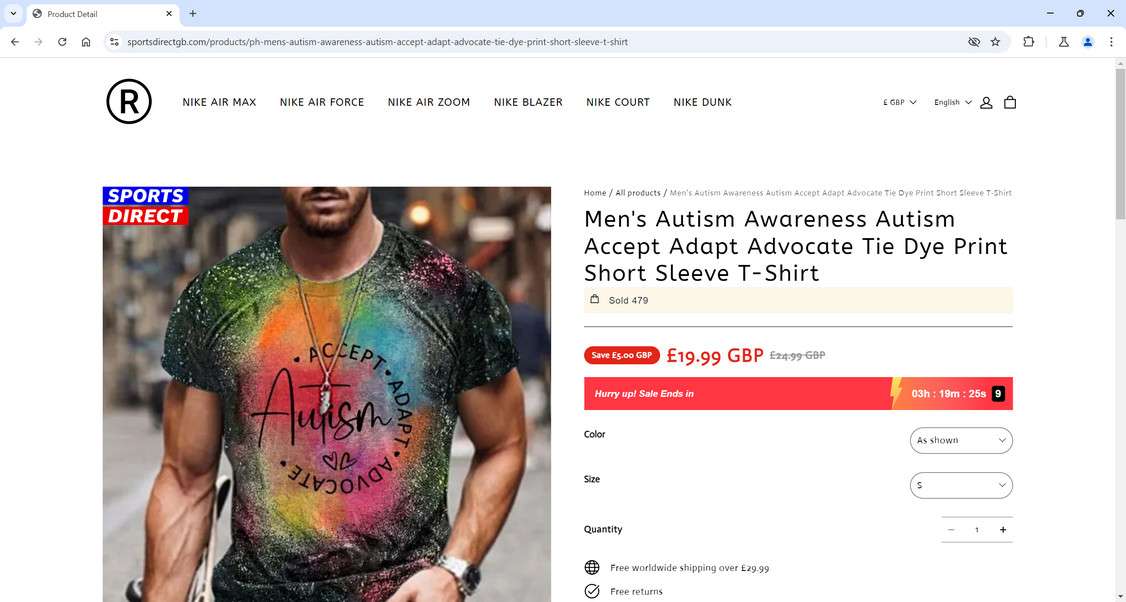
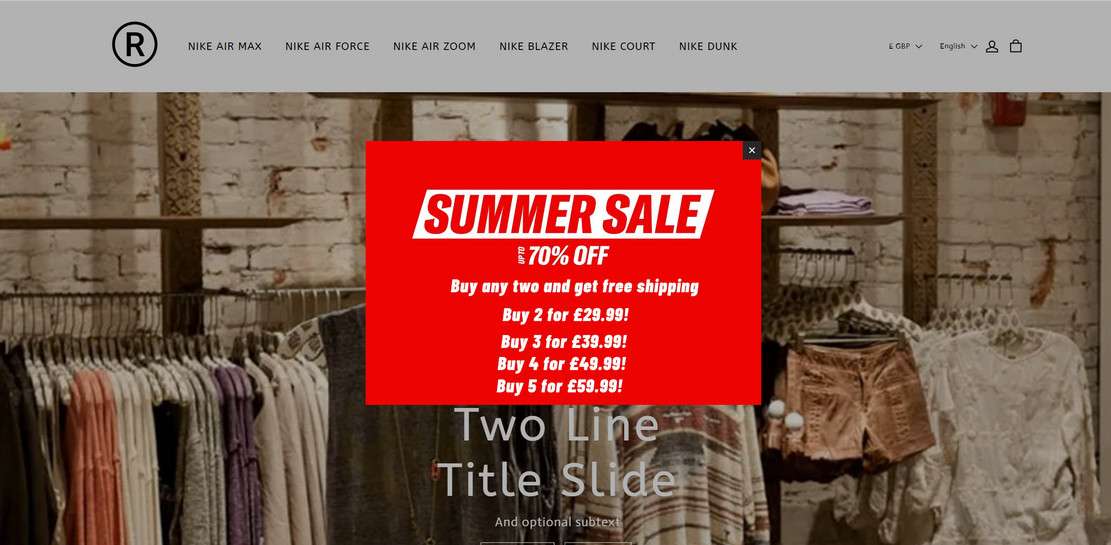
Sports Direct is a legitimate retailer. The scam begins when an unrelated website copies its name, logo and sale graphics, then pretends to offer branded shoes and clothing at impossible prices.
These copycat stores are not harmless imitations. Many follow the same China-linked shopping-scam model: they take payment through a disposable storefront, ship a cheap product that looks nothing like the advertisement, and make a meaningful return almost impossible.
If the web address is not an official Sports Direct domain, do not assume the familiar logo protects you. The store in front of you may have no connection to Sports Direct at all.
Overview of the Fake Sports Direct Website Scam
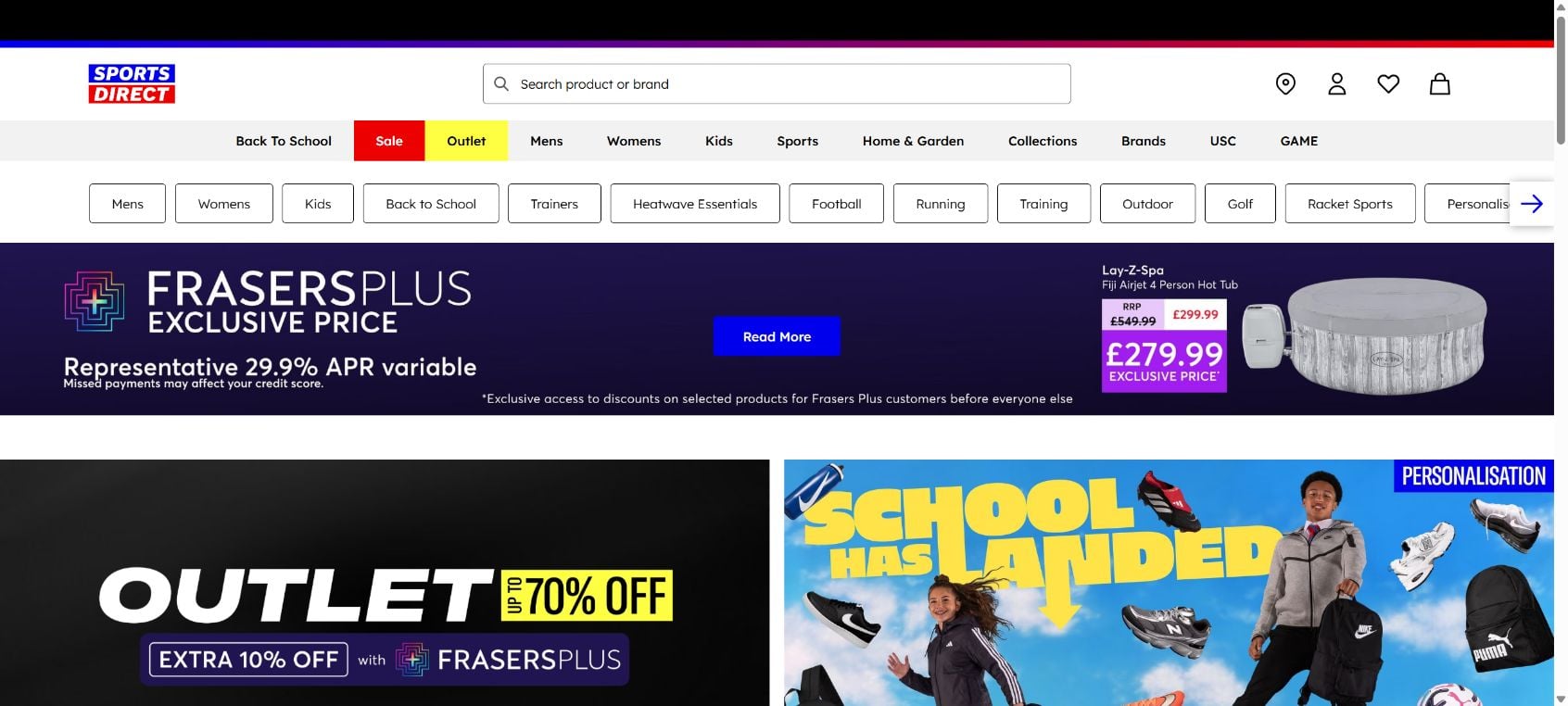
The real Sports Direct is a well-established British retailer owned by Frasers Group. It has physical stores, recognized regional websites, published company details and ordinary customer-service channels. It sells real sportswear and equipment. The official business is not the scam described here.
The danger comes from copycat domains with names such as “Sports Direct Outlet,” “Sports Direct GB,” “Nike Sports Direct” or other combinations of the brand, a country code and words like sale, clearance or shop. The address can look convincing at a glance, especially inside a social-media browser that hides most of the URL.
Operators build these stores from reusable ecommerce templates. They copy the Sports Direct logo, borrow photographs from real retailers and fill the catalog with popular Nike, Adidas and designer products. A site can be created quickly, advertised aggressively and replaced under another domain after complaints begin to spread.
The most common outcome is not an empty mailbox. The seller may ship a small, low-quality item from China so tracking shows that something was delivered. Buyers expecting branded trainers, football kits or premium clothing instead receive a thin imitation, an unrelated product, the wrong size or an item worth almost nothing.
That delivery is part of the scam model. It gives the merchant evidence to challenge a card dispute and allows the operator to claim that the order was completed. When the buyer asks for a refund, support offers a small partial refund or demands an expensive tracked return to China. Many customers abandon the claim because returning the parcel can cost more than the product is worth.
The key distinction is simple: Sports Direct is legitimate, but a site using its branding on an unrelated domain can be a fraudulent clone. Judge the exact website, not the logo displayed on the page.
Verdict: Sports Direct Is Legit, but the Copycat Stores Are Scams
The official Sports Direct business is legitimate. The fake stores impersonating it are scams. They use the retailer’s reputation to sell products they do not possess in the quality shown. Their purpose is to convert trust in a familiar brand into rushed payments.
What belongs to the real retailer
- An established Sports Direct regional domain reached independently.
- Consistent branding, navigation and company information across the site.
- Published help pages covering delivery, returns and complaints.
- Normal product ranges and prices that can be compared with other major retailers.
- Payment processing that remains connected to the recognized store.
What belongs to the scam network
- A recently promoted domain containing the brand plus words such as outlet, GB, clearance or sale.
- Site-wide discounts of 70% to 90% on products that rarely receive those reductions.
- A generic storefront that mixes copied logos with unrelated products and unfinished template text.
- No verifiable company behind the website and no realistic domestic return address.
- Orders fulfilled with cheap substitutes from overseas suppliers or not fulfilled as advertised.
How the Fake Sports Direct Store Scam Works
Step 1: A social-media ad announces an extreme clearance
The advertisement claims that Sports Direct is closing a warehouse, clearing old stock or offering a private outlet sale. Familiar products are shown at prices low enough to trigger fear of missing out. The ad may use stolen comments and reactions to look popular.
Step 2: The link opens a cloned storefront
The landing page displays Sports Direct colors, logos and product photographs. Criminals do not need to reproduce the real website perfectly. On a phone, a convincing banner and familiar checkout icons are often enough to stop a shopper from examining the domain.
Step 3: Fake urgency prevents comparison shopping
A countdown timer says the promotion ends in minutes. Stock counters claim that only one or two items remain. Pop-ups announce purchases by other shoppers. These elements usually reset when the page is reopened because they are scripted pressure tactics, not live inventory information.
Step 4: The checkout collects payment and identity details
The form asks for a name, address, email, phone number and card information. The charge may appear under an unrelated merchant descriptor. Some checkouts reject the first payment and ask the victim to use another card, potentially exposing several accounts.
Step 5: A cheap parcel is shipped from China
Instead of the branded item shown in the advertisement, the buyer receives a cheaply manufactured substitute or something completely unrelated. The material, stitching, size and packaging can be drastically different from the photographs. A small tracked parcel allows the seller to claim that the order was delivered.
Step 6: Support offers a token refund
When challenged, the seller may apologize for a “warehouse mistake” and offer 10% or 20% back if the customer keeps the item. Repeated complaints can produce slightly higher offers, but the operator avoids the full refund promised on the website.
Step 7: The return requirement ends the dispute
To receive a full refund, the buyer is told to mail the product to a warehouse in China using tracked international postage. The cost can approach or exceed the original order. Even if the parcel is sent, the seller may claim it never arrived or that the return failed an undisclosed condition.
What Buyers Commonly Receive
These operations often deliver just enough merchandise to complicate a payment dispute. The parcel is not proof that the sale was honest. What matters is whether the product matches the brand, model, materials, quantity and quality promised at checkout.
- Unbranded trainers instead of genuine Nike or Adidas shoes.
- A thin printed shirt instead of the licensed football kit shown in the ad.
- The wrong size, color or model with no practical exchange process.
- A lightweight accessory instead of the more expensive product ordered.
- Counterfeit-looking packaging, missing labels and poor construction.
- A tracking number for a small parcel that does not match the order value.
In some cases, no parcel arrives at all. However, the cheap-substitute version can be more profitable because the seller can answer complaints with tracking and argue that the buyer simply dislikes the product.
Why the “Money-Back Guarantee” Is Usually Worthless
A fake Sports Direct store may promise free returns, 30-day refunds and satisfaction guarantees. Those promises are easy to place in a template and difficult to enforce against an anonymous overseas seller.
The return address appears only after payment
The website may suggest that it is British while support later supplies an address in China. The domestic identity exists only in the branding; the fulfillment and return burden are overseas.
International postage makes the refund uneconomic
Tracked postage can consume most of the disputed amount. The merchant knows that many buyers will accept a small refund rather than risk paying more to return a cheap product.
Support delays until dispute windows shrink
Messages repeat the same apology, ask for more photographs or promise that a manager is reviewing the case. The delays are designed to exhaust the customer and may consume time available for a card dispute.
The domain can disappear
Once complaints and chargebacks accumulate, the storefront can be abandoned. The same template, products and support scripts then reappear under a new domain, leaving previous customers with no functioning contact page.
How to Spot a Fake Sports Direct Website
- Read the complete domain before browsing the catalog. A copied logo does not make an address official.
- Open Sports Direct independently rather than through a Facebook, Instagram or TikTok advertisement.
- Question site-wide 70% to 90% discounts on current Nike, Adidas and designer products.
- Look for unrelated merchandise, inconsistent fonts, grammar mistakes and unfinished template text.
- Check whether the company name, registration details and return address identify the same business.
- Search the domain itself, not only the words “Sports Direct reviews.”
- Do not trust countdowns or stock notices that reset after a refresh.
- Leave if checkout moves to an unrelated domain or requests bank transfer, cryptocurrency or another unusual method.
A padlock is not a legitimacy badge. It only means the browser encrypted the connection to that particular domain. Scam stores can obtain HTTPS certificates as easily as legitimate websites.
What to Do If You Ordered From a Fake Site
Save evidence before the website disappears
Capture the domain, advertisement, product page, checkout confirmation, return promise and all support messages. Photograph the parcel label, packaging and item received. Keep the tracking record and the merchant name shown on the card statement.
Contact the payment provider quickly
Explain that the merchant impersonated a known retailer and supplied goods materially different from the advertisement. “Not as described” is more accurate than “not received” when a cheap substitute arrived. Ask what evidence and deadlines apply to a chargeback.
Do not let the seller control the deadline
You can continue communicating while protecting your dispute rights. Do not allow repeated 10% refund offers or promises of a future response to push you beyond the card issuer’s filing window.
Evaluate any return demand carefully
Ask the payment provider whether international return postage is required when the seller misrepresented its identity and product. Do not spend more money automatically. If a return is necessary, use tracked shipping and preserve photographs of the sealed parcel.
Protect the card and reused passwords
If the checkout behaved strangely or produced unauthorized charges, ask whether the card should be replaced. Change any password reused on the fake store, beginning with the email account connected to the order.
If You Bought From the Real Sports Direct Website
A problem with an order from the genuine retailer is a customer-service dispute, not evidence that the official company is fake. Use the help centre linked from the verified regional site and follow the policy for faulty, incorrect or unwanted goods.
Real Sports Direct return conditions can still include postage costs for change-of-mind online returns, and policies vary by region or Brand Partner. Save the order page and contact support through the genuine website. Do not send order details to a lookalike “support” account found in social-media comments.
The Bottom Line
Sports Direct is legitimate. The scam is the network of copycat websites that borrows its logo, advertises impossible discounts and uses overseas fulfillment to send cheap products that cannot be returned economically.
Do not judge a store by the branding at the top of the page. Check the full domain before paying. If the address is unrelated to the official retailer, leave—even when the site looks polished, accepts cards and promises a money-back guarantee.








