

The “Honey Trick Diabetes Recipe” continues to appear across social media under different names, different websites, and different supplement brands.
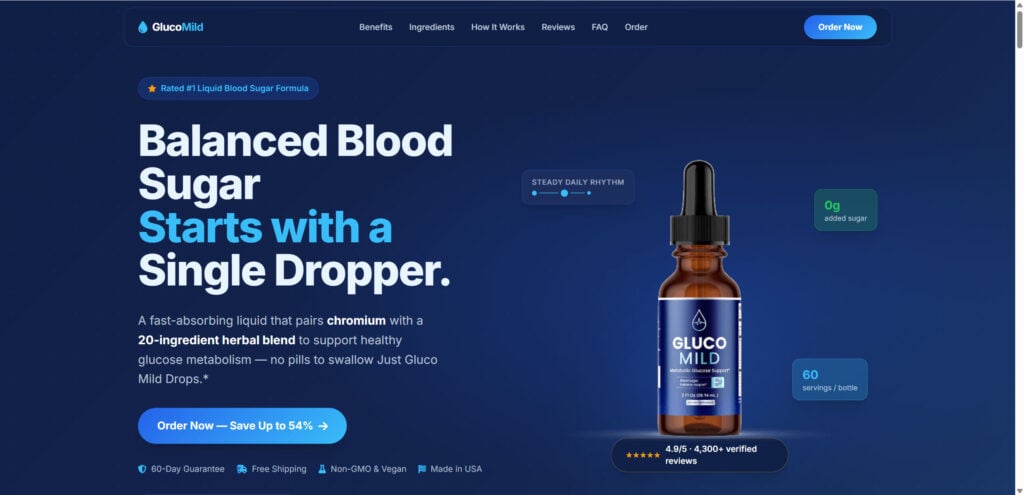
One advertisement may lead to Glyco Reset, another to Gluco Mild, Sugar Harmony, Renu Glyco, or an entirely new bottle that did not exist a few weeks earlier. What remains remarkably consistent is the story surrounding them: a supposedly hidden natural discovery, a famous doctor or celebrity, dramatic claims about diabetes, and an urgent invitation to buy before the information disappears.
The Honey Trick Is Not One Product — It Is a Reusable Sales Funnel
The most important thing to understand about the Honey Trick is that there is no single product behind it.
The name of the supplement can change while almost everything else remains familiar.
One campaign promotes Glyco Reset.
Another promotes Gluco Mild Drops.
Another sells Sugar Harmony.
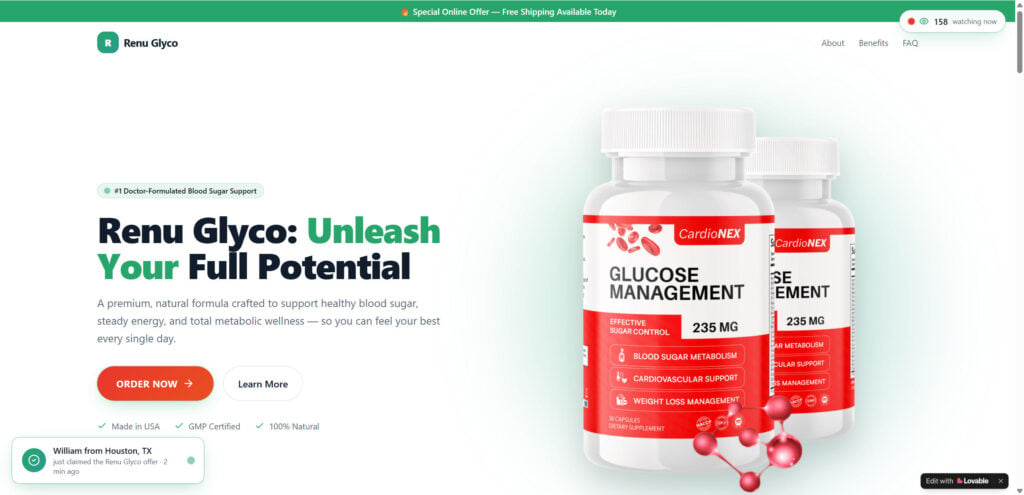
Another leads to Renu Glyco.
Other campaigns use similarly generic names involving “Glyco,” “Glucose,” “Sugar,” “Reset,” “Balance,” or “Support,” often accompanied by bottles designed to look like ordinary American dietary supplements.
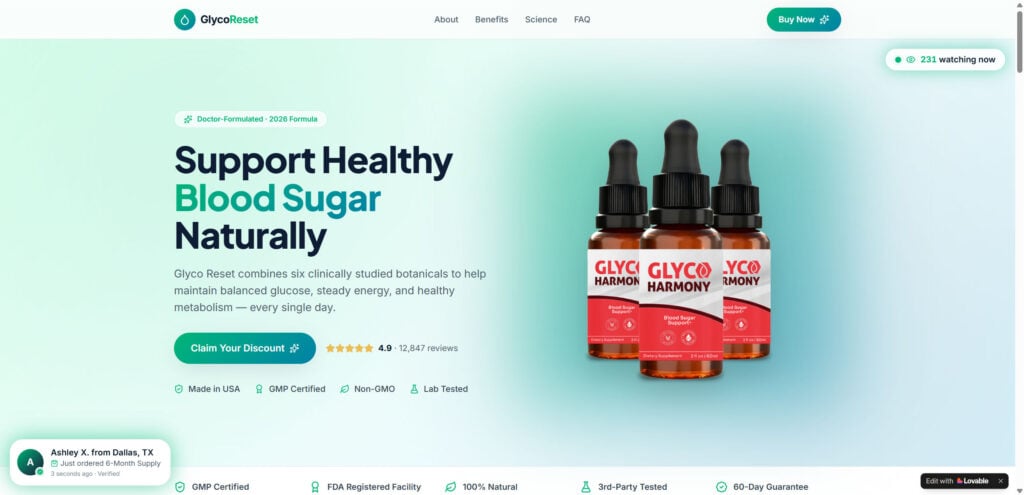
The Honey Trick itself functions as the bait that gets consumers into the funnel.
This is why trying to identify the “official Honey Trick supplement” misses the point. There may be no permanent official product because the advertising concept is far more valuable than the bottle attached to it.
When one product develops bad reviews, advertising accounts are blocked, a domain stops converting, or consumers begin searching the brand name alongside the word “scam,” another product can take its place.
The story survives because the story is what generates the sale.
An investigation into the wider Honey Trick supplement ecosystem found the same basic narrative being reused across blood-sugar products, memory supplements, weight-loss offers, circulation formulas, and other health niches. The product category may change, but the campaign continues to rely on familiar honey-based “secret recipe” stories and celebrity-style authority.
Glyco Reset Is a Perfect Example
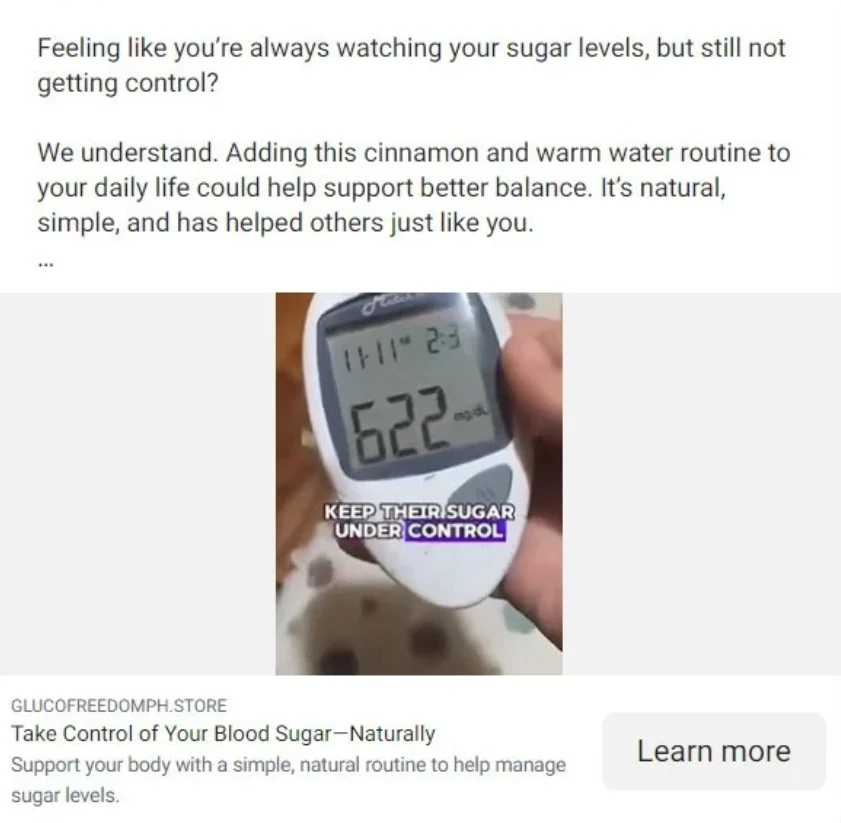
Consider Glyco Reset, one of the more recent products appearing inside this ecosystem.
Its current website looks polished and conventional. The page describes Glyco Reset as a “doctor-formulated” supplement combining botanicals to support healthy blood sugar, metabolism, and energy. It displays claims including “Made in USA,” “GMP Certified,” “FDA Registered Facility,” “Lab Tested,” and a 60-day guarantee, while also displaying a 4.9 rating supposedly based on 12,847 reviews.
Yet the language becomes much more cautious when you reach the product’s actual disclaimer.
Glyco Reset says it is intended to support glucose levels already within a healthy range and explicitly states that it is not intended to diagnose, treat, cure, or prevent disease.
That is an ordinary dietary-supplement position.
The advertisements consumers report seeing before reaching that page can tell a dramatically different story.
Trustpilot reviewers have described promotional videos claiming that high A1C was caused by parasites in the pancreas and that Glyco Reset could eliminate them. Other reviewers describe videos that appeared to feature Dr. William Li recommending the product. These are individual consumer reports and not independently adjudicated findings, but the consistency of the complaints is noteworthy.
Dr. William Li himself has publicly warned that scammers are creating AI-generated videos using his face and voice without authorization.
The difference between those two messages could hardly be larger.
The front-end story can suggest a major discovery capable of addressing the hidden cause of diabetes, while the actual product page ultimately sells a wellness supplement that legally limits itself to supporting blood sugar that is already within the normal range.
That gap is central to the Honey Trick operation.
Even the Glyco Reset Website Is Only One Layer of the Funnel
The glycoreset.lovable.app page does not appear to process the purchase itself.
Its Buy Now and Claim Your Discount buttons send visitors away from the Glyco Reset website to a different domain, premierdiscountlink.com.
That is a familiar affiliate/direct-response structure.
The consumer may begin with a social-media advertisement, move to a long-form video, arrive at a branded landing page, and then be sent through another domain when it is finally time to pay.
Each layer has a different purpose.
The ad captures attention.
The video builds belief.
The product page provides reassurance.
The checkout collects the payment.
When everything works smoothly, most consumers never care how many companies or domains were involved.
When something goes wrong, however, the structure can become extremely confusing. A buyer trying to cancel may discover that the social-media advertiser, product website, checkout processor, customer-service operation, and merchant appearing on the credit-card statement are not obviously the same company.
The Product Can Change Overnight Without Breaking the Scam
Glyco Reset is only one example.
The video associated with Gluco Mild Drops documents another Honey Trick-style campaign using apparent Dr. Oz and Dr. Phil endorsements to push a blood-sugar supplement.
Sugar Harmony has appeared in another version of the same scheme, promoted through a supposed Honey Ritual or “glucose reset” story involving Dr. Phil and Dr. Oz.
Then there is Renu Glyco, where the script reportedly becomes even more elaborate. An analysis of its video-sales presentation found a voice presented as Morgan Freeman telling viewers that a Honey Trick had balanced his blood sugar, improved his eyesight, and restored pancreatic function. The same presentation claimed type 2 diabetes was actually connected with a microscopic parasite and that the advertised method could remove it.
These are substantially different supplement names.
Yet the psychological structure is almost identical.
The viewer is shown a trusted personality, introduced to a hidden explanation for diabetes, told that mainstream medicine has misunderstood the problem, promised access to a simple natural secret, and eventually directed toward a supplement checkout.
Once you recognize that structure, the brand name becomes almost irrelevant.
The AI Celebrity Is the First Part of the Trick
Artificial intelligence has made this type of health scam much easier to scale.
A supplement seller no longer needs to persuade an actual physician, billionaire, television personality, or celebrity to endorse the product.
They can manufacture the appearance of an endorsement.
The FTC has warned consumers that scammers are using doctored audio and video to create fake celebrity and influencer endorsements that can look and sound genuine.
That warning is particularly relevant to Honey Trick advertisements because the campaigns repeatedly borrow credibility from people consumers already recognize.
Dr. Oz.
Dr. Phil.
Dr. William Li.
Bill Gates.
Morgan Freeman.
Other doctors, television hosts, scientists, and public personalities can be inserted into the same format whenever marketers believe a different face will perform better with a particular audience.
The FTC has also made clear that falsely claiming a famous person uses or recommends a product is deceptive, as is designing an advertisement to make consumers believe they are reading independent editorial or news content
For consumers, this means the old method of judging an endorsement by whether the video “looks real” is no longer adequate.
A convincing face and familiar voice prove almost nothing.
The endorsement needs to be independently verifiable outside the advertisement.
Why the Honey Trick Works So Well
Honey is nearly perfect bait for a health-marketing funnel.
It is familiar, inexpensive, natural, and already associated with traditional home remedies. A person who would immediately scroll past an advertisement for an unfamiliar supplement may stop to learn about a simple kitchen recipe.
That gives the marketer an opening.
The consumer does not initially believe they are shopping.
They believe they are learning something.
The advertisement may mention Manuka honey, cinnamon, a biblical drink, an Okinawan recipe, a bedtime ritual, or a two-ingredient trick that supposedly has an unusual effect on blood sugar.
The exact recipe is less important than the curiosity it creates.
Once the consumer enters the longer presentation, the original honey recipe can gradually become secondary to a much larger medical narrative. Glyco Reset, for example, has been promoted through a “biblical drink” angle alongside questions about a pancreas-and-parasite story, while other Honey Trick campaigns use Okinawan, Manuka, or secret-doctor variations of essentially the same concept.
The recipe creates the click.
The story creates the belief.
The supplement produces the transaction.
The “Parasite in Your Pancreas” Story Is One of the Biggest Red Flags
One of the most extreme versions of the Honey Trick claims that type 2 diabetes is not really caused by insulin resistance and metabolic dysfunction.
Instead, viewers are told about a hidden parasite supposedly living in or around the pancreas.
The Renu Glyco presentation reportedly describes a microscopic parasite that becomes activated, interferes with insulin production, and causes the problems associated with type 2 diabetes. Its Honey Trick supposedly attacks the organism and allows normal glucose control to return.
Glyco Reset consumers have reported seeing similar parasite claims in promotional videos. One Trustpilot reviewer said the video claimed three ingredients would help remove parasites from the pancreas, while another described an advertisement blaming high A1C on pancreatic parasites.
This is not how major medical authorities explain ordinary type 2 diabetes.
The CDC explains that type 2 diabetes develops when cells stop responding normally to insulin, producing insulin resistance. The pancreas initially attempts to compensate by making more insulin, but blood glucose rises as the body becomes unable to maintain normal regulation.
The parasite story is therefore not simply an easier way of explaining established diabetes biology.
It replaces established biology with a completely different cause that conveniently makes the advertised product appear revolutionary.
That should immediately raise skepticism.
“Doctors Don’t Want You to Know” Solves a Marketing Problem
A miraculous diabetes cure creates an obvious question.
If it really works, why isn’t my doctor recommending it?
The Honey Trick funnel often addresses that problem before the viewer has a chance to ask.
The information has supposedly been suppressed.
Pharmaceutical companies are making too much money.
Doctors only treat symptoms.
The government does not want the discovery spreading.
The video may disappear soon.
Someone tried to silence the researcher.
This conspiracy framing is useful because it converts the lack of legitimate evidence into part of the sales pitch.
If respected diabetes organizations have never heard of the treatment, that supposedly proves it is being hidden.
If doctors reject the parasite theory, that supposedly proves mainstream medicine does not understand the real cause.
If there are no independent clinical trials showing that the supplement reverses diabetes, the viewer may be told that powerful interests would never allow such research to become widely known.
It is an elegant marketing device because every contradiction can be reframed as evidence of suppression.
Medical science does not work that way.
The Supplement Page Quietly Retreats From the Big Claims
One of the easiest ways to understand these campaigns is to compare the advertisement with the final disclaimer.
Glyco Reset’s marketing site says its capsules support healthy blood sugar and metabolism but ultimately specifies that the product supports glucose levels already within a healthy range. The footer states that the supplement does not diagnose, treat, cure, or prevent any disease.
This kind of disclaimer is common because dietary supplements cannot simply be marketed as unapproved diabetes treatments.
The FDA and FTC have previously issued warning letters to companies selling supplements with claims that they could cure, treat, mitigate, or prevent diabetes.
The FDA separately warns consumers about illegally sold diabetes products marketed online as supplements or other remedies, noting that such products have not necessarily been evaluated as safe and effective for treating diabetes. (U.S. Food and Drug Administration)
That is why the difference between the advertisement and the product page matters.
A social-media video can make the consumer believe they are buying a way to reverse diabetes.
The bottle page can later say it simply supports normal blood sugar.
Those are completely different propositions.
The FDA-Registered Facility Language Creates More Borrowed Credibility
Glyco Reset’s current site prominently displays “FDA Registered Facility” alongside terms such as GMP Certified, Lab Tested, USA Made, and pharmaceutical-grade standards.
Those statements can create the impression of official medical validation.
They do not mean the FDA has approved Glyco Reset as a diabetes treatment.
The FDA does not generally pre-approve dietary supplements for safety and effectiveness in the same manner as prescription medications.
This distinction is easy for consumers to miss when FDA-related language appears beside laboratory imagery, certification badges, and doctor-formulated claims.
A facility can be registered while the finished supplement remains completely unproven for the extraordinary disease claims that brought the consumer to the website.
Seller-Displayed Reviews Are Another Layer of Persuasion
The Glyco Reset website currently displays a 4.9 rating based on 12,847 reviews and describes its testimonials as coming from verified buyers.
Those numbers look impressive.
An independently accessible Trustpilot profile associated with glycoreset.lovable.app, however, currently presents a very different picture, with a TrustScore around 1.7 and dozens of reviews rather than more than twelve thousand publicly accessible testimonials. Trustpilot also makes clear that its reviews are individual consumer opinions and that the profile’s reviews may not necessarily be representative of every customer.
The difference does not by itself prove that the seller’s displayed rating is fabricated. A company can collect feedback through other channels.
It does mean the seller’s own review count should not be mistaken for independent verification.
That is especially important when the seller-controlled testimonials are being used to build trust for a health product.
Complaints Show How Quickly One Order Can Become Many Bottles
The payment stage is where these funnels can become especially expensive.
A Trustpilot reviewer describing a Glyco Reset purchase said they initially selected six bottles to obtain a discounted price. After the first purchase, the funnel offered another twelve bottles at an even lower unit price. The consumer said they clicked believing the larger package would replace the first order, only to discover that they had immediately been charged for an additional twelve bottles.
That illustrates a classic direct-response upsell problem.
A customer thinks they are improving or modifying the transaction they already made.
The system treats the click as another purchase.
The result can be eighteen bottles instead of twelve.
Other reviewers have similarly alleged that bottles were added to orders beyond what they intended to purchase.
These are consumer allegations rather than court findings, but they are exactly the kind of complaint buyers should know about before entering a funnel designed around large bottle bundles.
Then Comes the Subscription Problem
Recurring billing is another recurring complaint across some Honey Trick-style product funnels.
Again, it is important not to claim that every Honey Trick seller automatically enrolls every customer.
The products and checkouts change.
The terms change.
But consumer complaints demonstrate why buyers need to inspect the billing terms carefully.
Glyco Reset reviewers have alleged being placed into subscriptions they did not knowingly request. One reviewer said they had never signed up for a subscription but later discovered recurring billing, while another described being told they needed to provide new card information when trying to cancel.
The Trustpilot summary for Renu Glyco similarly notes that reviewers frequently reported unexpected charges and alleged enrollment in subscriptions for products they did not explicitly order
These reports do not establish that every purchase through these brands will produce recurring charges.
They establish that subscription and continuity billing is a risk worth checking explicitly whenever a consumer enters this kind of supplement funnel.
Search the checkout for terms such as autoship, continuity, recurring shipment, monthly delivery, membership, refill, Subscribe & Save, or replenishment.
If the consumer intends to purchase once, the checkout should clearly show a one-time transaction.
Cancellation Can Become the Hardest Part of the Transaction
Buying through a direct-response supplement funnel can take only a few minutes.
Undoing the purchase can be much more difficult.
Glyco Reset reviewers have reported failed email addresses, difficulty reaching customer service, unwanted additional bottles, cancellation problems, and disputes over transactions. One reviewer claimed an email address provided for customer service repeatedly failed to deliver, while another said customer service would not initially cancel the purchase.
Again, these are individual consumer reports and should not be interpreted as proof that every customer will encounter the same problem.
But they demonstrate why documentation matters.
Consumers should save the advertisement, product page, checkout total, order confirmation, merchant descriptor, refund policy, and every communication with customer service.
A seller may change domains.
An advertisement may disappear.
The Facebook account running the promotion may vanish.
Your screenshots do not.
How the Honey Trick Diabetes Supplement Funnel Works
Step 1: A Familiar Face Creates Trust
The consumer sees a video that appears to feature a respected doctor, television personality, billionaire, actor, or other recognizable public figure.
The person may seem to be revealing an extraordinary discovery about type 2 diabetes.
Step 2: The Honey Recipe Makes the Claim Feel Harmless
Instead of asking viewers to buy an unfamiliar supplement immediately, the video promises a simple Honey Trick.
It may involve Manuka honey, cinnamon, a biblical recipe, an Okinawan ritual, or another inexpensive household ingredient.
The consumer keeps watching because they believe the solution might be something they can make at home.
Step 3: Diabetes Is Given a Secret New Cause
The presentation then changes the medical story.
High blood sugar may supposedly be caused by pancreatic parasites, sludge, toxins, hidden inflammation, a blocked glucose pathway, or another previously unknown mechanism.
The exact explanation changes between campaigns because the goal is not consistency.
The goal is novelty.
Step 4: Conventional Medicine Becomes the Villain
Medication, insulin, doctors, pharmaceutical companies, and mainstream diabetes treatment are presented as incomplete or misguided because they supposedly fail to attack the hidden cause.
This makes the viewer more receptive to the alternative solution that will appear later.
Step 5: The Video Creates Urgency
The presentation may warn that it is being removed, censored, hidden, or suppressed.
Countdown timers and scarcity messages can reinforce that urgency later in the checkout.
The consumer is encouraged to act before researching.
Step 6: The Honey Recipe Quietly Becomes a Supplement
After a lengthy presentation, the real commercial purpose becomes obvious.
The viewer is not simply told to buy honey.
They are introduced to Glyco Reset, Gluco Mild, Sugar Harmony, Renu Glyco, or another supplement brand.
The alleged free discovery has become a product funnel.
Step 7: The Product Website Looks Much More Conventional
Once the consumer reaches the actual supplement page, the language often becomes safer.
The disease-reversal story may disappear.
Instead, the bottle supports “healthy glucose,” “metabolic wellness,” “energy,” or blood sugar “already within the normal range.”
Legal disclaimers state that the product does not treat disease.
This allows the dramatic front-end advertisement and conservative back-end product page to perform different roles.
Step 8: Multi-Bottle Packages Increase the Order
The consumer is then encouraged to purchase several bottles.
The largest package typically carries the lowest displayed per-bottle price, making a transaction of several hundred dollars look like the most economical decision.
The customer who clicked to learn a free Honey Trick can end up purchasing six months of supplements.
Step 9: Another Offer Can Appear After Payment
The checkout may continue after the first transaction.
More bottles can be offered at an even deeper discount.
The Glyco Reset complaint described earlier shows exactly how a consumer can interpret this as changing the existing package while the system treats it as a second order.
Step 10: Subscription or Refill Terms May Appear
Depending on the product and checkout, recurring billing may also be introduced.
Not every funnel uses it, but consumer reports involving Glyco Reset and Renu Glyco demonstrate that buyers should check for it rather than assuming the transaction ends after the initial shipment.
Step 11: When Complaints Accumulate, the Product Name Can Change
This is the advantage of the entire model.
The marketer does not need to abandon the successful Honey Trick campaign simply because one supplement brand develops a poor reputation.
A new domain can be registered.
A new bottle can be designed.
A new product name can replace the previous one.
The celebrity can change.
The “secret cause” can be slightly rewritten.
The same basic funnel can then return to Facebook, YouTube, Instagram, or another advertising platform.
That is why learning the product name is less useful than learning the pattern.
Honey Does Not Reverse Type 2 Diabetes
There is legitimate scientific interest in honey and metabolic health, but that is very different from the claims made in Honey Trick advertisements.
Research has explored whether replacing certain refined sugars with some forms of honey may affect cardiometabolic markers, but the evidence does not establish a viral honey recipe as a cure for diabetes. Some studies have produced mixed findings, and honey remains a source of carbohydrate and sugar.
More importantly, no ordinary honey ritual overturns the established biology of type 2 diabetes.
The CDC describes type 2 diabetes as a condition involving insulin resistance and the body’s declining ability to keep blood glucose within a normal range.
A Honey Trick advertisement claiming that the real cause is a parasite in the pancreas is therefore making a radically different claim that requires strong evidence.
A long AI-generated video is not that evidence.
Why This Scam Is Particularly Dangerous
A deceptive supplement advertisement becomes far more serious when it targets a chronic disease.
People with diabetes may already be worried about neuropathy, kidney disease, vision loss, cardiovascular complications, amputation, medication costs, or worsening laboratory results.
Those fears create an ideal environment for manipulative marketing.
A person who has struggled for years with A1C levels can be extremely receptive to a story explaining that the real problem was something their doctors never detected.
The FDA warns that illegally marketed diabetes treatments can be dangerous because consumers may use them instead of treatments that have established safety and effectiveness.
That is why the most dangerous part of the Honey Trick is not necessarily the price of the bottle.
It is the possibility that someone begins treating a fabricated advertisement as medical advice.
What to Do If You Already Bought a Honey Trick Supplement
1. Identify the Actual Product
Do not write down “Honey Trick” as the merchant.
Find the precise supplement name, domain, order number, and merchant descriptor.
You may have purchased Glyco Reset, Gluco Mild, Sugar Harmony, Renu Glyco, or another brand entirely.
2. Check Every Transaction
Review your credit-card or bank account rather than relying only on the order confirmation.
Look for more than one charge from the day of purchase.
Post-checkout upsells can generate separate transactions.
3. Count the Bottles
Check exactly how many bottles were ordered.
If you intended to buy six but the confirmation shows eighteen, contact the seller immediately.
4. Look for Subscription Terms
Search your email and checkout screenshots for subscription, autoship, continuity, membership, recurring, refill, monthly shipment, or Subscribe & Save language.
If the order is recurring and you did not want that arrangement, request cancellation immediately in writing.
5. Save the AI Advertisement
Preserve the video if possible.
If it appeared to feature Dr. William Li, Dr. Oz, Dr. Phil, Bill Gates, Morgan Freeman, or another recognizable person, keep screenshots and the advertisement URL.
6. Save Every Piece of the Funnel
Keep the landing page, bottle page, checkout, order confirmation, refund guarantee, bank transaction, and customer-service messages.
The advertising domain may disappear later.
7. Request Cancellation Clearly
Do not send a vague message asking about your account.
State exactly what you want: cancellation of the order, cancellation of every recurring program, no additional shipments, and no future charges.
Ask for written confirmation.
8. Contact Your Card Issuer if Necessary
If you receive charges you did not authorize or the merchant refuses to resolve a billing problem, contact your card issuer and explain the circumstances.
Your screenshots and correspondence can become important evidence.
9. Do Not Stop Diabetes Treatment Because of the Honey Trick
Do not discontinue metformin, insulin, GLP-1 medication, or another prescribed diabetes treatment because a social-media video says doctors have misunderstood the disease.
Discuss treatment changes with an appropriate healthcare professional.
The Bottom Line
The Honey Trick Diabetes Recipe is much bigger than Glyco Reset, Gluco Mild, Sugar Harmony, or Renu Glyco.
Those are product names.
The Honey Trick is the sales machine.
The pattern works because it does not depend on one permanent brand. A marketer can use an AI-generated doctor or celebrity to introduce a supposedly hidden diabetes discovery, present honey as the natural key, invent a dramatic new explanation for high blood sugar, suggest that pharmaceutical companies or doctors have suppressed the truth, and then direct the viewer toward whichever supplement happens to be attached to the campaign that week.
Glyco Reset illustrates the contradiction particularly well.
Its own website says the supplement supports glucose levels already within a healthy range and explicitly states that it does not diagnose, treat, cure, or prevent disease.
Yet consumers describe arriving there after watching videos about parasites in the pancreas and apparent Dr. William Li endorsements. The independently accessible Trustpilot profile also contains allegations of AI-generated endorsements, bottles being added beyond the intended quantity, subscription problems, unsuccessful cancellation attempts, and unexpectedly large orders.
Meanwhile, other Honey Trick campaigns simply swap Glyco Reset for another bottle.
Renu Glyco uses a story reportedly presented in the voice of Morgan Freeman and involving a microscopic pancreatic parasite. Sugar Harmony has circulated through Dr. Phil and Dr. Oz-style Honey Ritual promotions. Gluco Mild has appeared in another fake-celebrity diabetes campaign.
That is why searching only for “Is Glyco Reset a scam?” or “Is Sugar Harmony legitimate?” addresses only one version of the problem.
The more useful question is whether you recognize the funnel.
When an AI celebrity appears in your feed claiming that a simple honey recipe can reverse diabetes, eliminate a hidden parasite, restore the pancreas, or expose a secret pharmaceutical companies do not want you to know, assume nothing.
Verify the endorsement independently.
Compare the dramatic advertisement with the product’s actual disclaimer.
Check the final price rather than the advertised per-bottle figure.
Read the subscription terms.
Watch for post-purchase upsells.
And never allow a viral video to replace legitimate diabetes care.
The product name may change tomorrow.
The scam does not need to.
FAQ
What is the Honey Trick Diabetes Recipe?
The Honey Trick is a recurring online marketing concept that presents honey, often combined with cinnamon or another ingredient, as part of a supposedly hidden method for controlling or reversing diabetes. It is not a recognized medical treatment.
Is there one official Honey Trick supplement?
No. Multiple products have been attached to Honey Trick-style diabetes campaigns, including Glyco Reset, Gluco Mild, Sugar Harmony, and Renu Glyco.
Why does the product keep changing?
The Honey Trick is a reusable advertising concept. Different marketers can attach new product names, domains, bottles, and checkout funnels to essentially the same story.
Is Glyco Reset part of the Honey Trick scam?
Glyco Reset has been associated with promotional stories involving a “biblical drink,” pancreatic parasites, and apparent Dr. William Li endorsements. The product’s own website, however, only claims support for healthy blood sugar and says it does not treat or cure disease.
Does Dr. William Li endorse Glyco Reset?
Dr. William Li has publicly warned that scammers use AI-generated versions of his face and voice in unauthorized promotions. Consumers have also reported seeing Glyco Reset videos appearing to feature him.
Does Dr. Oz endorse Honey Trick diabetes supplements?
Dr. Oz’s name and likeness have appeared in Honey Trick-style promotions, including Gluco Mild and Sugar Harmony campaigns. A social-media advertisement alone should not be treated as proof of a genuine endorsement.
Does Dr. Phil endorse them?
Dr. Phil has also appeared in Honey Trick and Sugar Harmony-style promotional material. Consumers should independently verify any supposed endorsement rather than trusting the video itself.
Does Morgan Freeman promote the Honey Trick?
A Renu Glyco sales presentation has been documented using a voice presented as Morgan Freeman while telling a dramatic diabetes and Honey Trick story. That presentation should not be interpreted as proof of a genuine Morgan Freeman endorsement.
Is diabetes caused by a parasite in the pancreas?
Major medical authorities do not describe ordinary type 2 diabetes as a disease caused by a hidden pancreatic parasite. The CDC explains type 2 diabetes primarily through insulin resistance and the body’s inability to maintain normal glucose regulation. (CDC)
Can honey reverse type 2 diabetes?
Current evidence does not establish a Honey Trick as a method for reversing type 2 diabetes. Honey can affect blood glucose and should be considered within a person’s overall carbohydrate intake and medical management.
Why do the advertisements say doctors are hiding the cure?
Suppression stories create urgency and provide marketers with an explanation for why the extraordinary claims cannot be verified through mainstream medical sources. There is no credible evidence that doctors or the government are hiding a proven Honey Trick cure for type 2 diabetes.
Is Glyco Reset FDA approved?
Its website says it is produced in an FDA-registered facility. That does not mean the finished supplement is FDA approved as a treatment for diabetes.
Can Honey Trick supplements enroll buyers in subscriptions?
Terms vary by seller, so it would be inaccurate to say every product automatically creates a subscription. However, Glyco Reset and Renu Glyco reviewers have reported unwanted recurring billing or subscriptions, making this something buyers should specifically check before paying.
Can buyers receive more bottles than expected?
Yes, consumers have reported confusing upsell experiences. One Glyco Reset reviewer said an initial six-bottle purchase was followed by an offer for twelve more bottles and that accepting the offer resulted in a second immediate charge rather than replacing the original order.
Why do Honey Trick supplements usually sell several bottles?
Multi-bottle packages increase the value of each customer and allow sellers to advertise a lower per-bottle price. Consumers should always check the full transaction rather than focusing solely on the unit discount.
What should I do if I accidentally signed up for recurring shipments?
Contact the merchant in writing, cancel any subscription or autoship program, ask for written confirmation that future charges have been stopped, and monitor your card account. If unauthorized billing continues, contact your card issuer.
What is the biggest Honey Trick red flag?
The clearest warning sign is the repeatable structure: AI celebrity endorsement, miracle diabetes claim, secret honey recipe, invented hidden cause, suppression story, supplement reveal, multi-bottle checkout, upsells, and potentially recurring billing.
Once that pattern is recognized, the name printed on the next bottle becomes much less important.
Glyco Reset today can become another “Glyco” or “Sugar” supplement tomorrow. The bottle changes because it is disposable. The funnel is what the scammers are really selling.








