

HiddenPowerLoss promises an easy answer to painful electricity bills. Plug a small device into a wall socket, the advertising suggests, and hidden waste throughout the home will suddenly disappear.
Our investigation found something very different. HiddenPowerLoss is using the same product image, sales script, fake video presentation, and affiliate funnel associated with the long-running StopWatt-style electricity saver scheme. The name is new, but the device and the playbook are not.
Overview
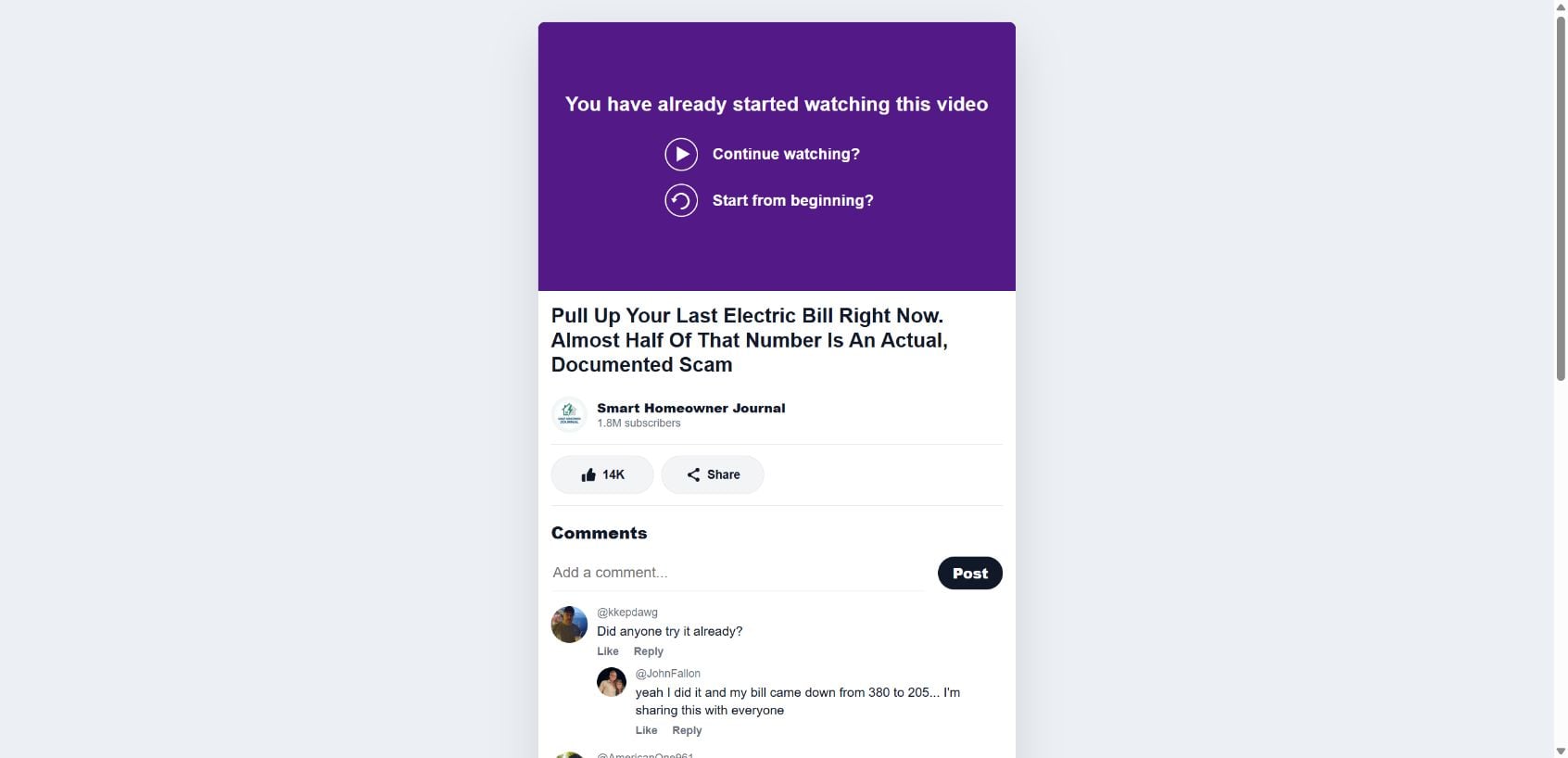
HiddenPowerLoss.com does not open like a normal electronics store. Visitors see a page designed to resemble a social video platform. It presents a supposed channel called “Smart Homeowner Journal,” claims that it has 1.8 million subscribers, displays 14,000 likes, and surrounds the video with enthusiastic comments.
The main headline tells visitors to pull up their latest electricity bill because almost half of the amount is supposedly an “actual, documented scam.” This wording is designed to make the homeowner feel angry, cheated, and ready to act before the technical claims have been examined.
The comments continue the story. One account claims a bill fell from $380 to $205. Another says a bill dropped from $340 to $185 during the first month. A third claims a reduction from $410 to $235.
These comments are not independent YouTube reviews. They are elements written directly into the HiddenPowerLoss sales page. The page only looks like YouTube. It is hosted entirely on HiddenPowerLoss.com, and the apparent comments are part of the advertisement.
The product offer is initially hidden. The page code reveals that the purchase section appears at the 890-second point in the video, which is approximately 14 minutes and 50 seconds. Only after the viewer has spent considerable time absorbing the story does the $49 offer appear.
That offer is framed as an official manufacturer promotion. A supposed regular price of $99 is crossed out and replaced with $49. The page says stock is low, promises delivery in three to five days, and presents the gadget as a completely plug-and-play solution that needs no electrician.
There is no meaningful technical documentation beside these claims. The page does not identify a model number, rated load, tested power-factor range, safety certification, independent laboratory, patent, manufacturer, or verified company behind the device.
At the time of our review, the landing page also did not provide accessible links to a privacy policy, refund policy, terms of sale, warranty document, physical business address, or identifiable customer-service department. The only links led toward the purchase funnel.
One detail exposes the rebranding operation especially clearly. HiddenPowerLoss uses a picture of a small white box with a green illuminated strip. In the website’s own image markup, this product is labeled “StopWatt device.” It is not even identified as a unique HiddenPowerLoss product.
StopWatt is one of many names previously used to sell essentially the same generic electricity-saving box. MalwareTips has investigated this product category under names including StopWatt, Eco Power, ESaver Watt, Pro Power Save, Electricity Saving Box, and other temporary brands.
The names change because branding is cheap. A seller can register a new domain, replace a logo, modify a few words, and begin advertising the same wholesale gadget again. When complaints and negative search results catch up with one name, another can take its place.
HiddenPowerLoss is part of a wider network pattern. During our research, pages on GripperLust.info, EnergySavingReport.site, and DudeTest.info displayed the same headline, the same Smart Homeowner Journal identity, the same 1.8 million subscriber count, the same $49 StopWatt offer, and the same supposed customer comments.
This is not how an independent product manufacturer behaves. It is how an affiliate campaign is duplicated across disposable landing pages so advertising can continue even when one domain disappears or develops a bad reputation.
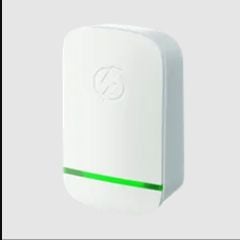
The gadget itself is part of a familiar product category. Teardowns and laboratory tests of visually similar electricity-saving boxes commonly reveal only a small circuit board, a capacitor, an LED indicator, and a few inexpensive components inside a plastic case.
The light turns on because the device is consuming a small amount of electricity. It does not prove that the box is reducing the energy used by a refrigerator, air conditioner, water heater, television, oven, or any other appliance.
Power-factor correction is the fragment of real electrical theory used to make the pitch sound credible. Motors and other inductive loads can cause current and voltage to move out of phase. Properly designed capacitor banks can improve power factor in industrial facilities where utilities may bill or penalize large customers for reactive demand.
That does not mean a tiny generic capacitor plugged into one household outlet can reduce the real work performed by every appliance in a home. Typical residential bills are based primarily on kilowatt-hours of real energy. If a heater still produces the same heat and a refrigerator still performs the same cooling cycle, the underlying energy requirement remains.
A capacitor may slightly change current characteristics in a limited circuit. It cannot identify every load in a home, selectively control those loads, eliminate normal consumption, or make the meter ignore energy that was genuinely used.
Independent safety findings make this category more concerning than an ordinary overpriced novelty. Electrical Safety First commissioned laboratory tests on plug-in energy saver devices and reported that none produced savings in a typical domestic installation. The organization also found hazardous safety failures and a small overall increase in consumption caused by losses inside the devices.
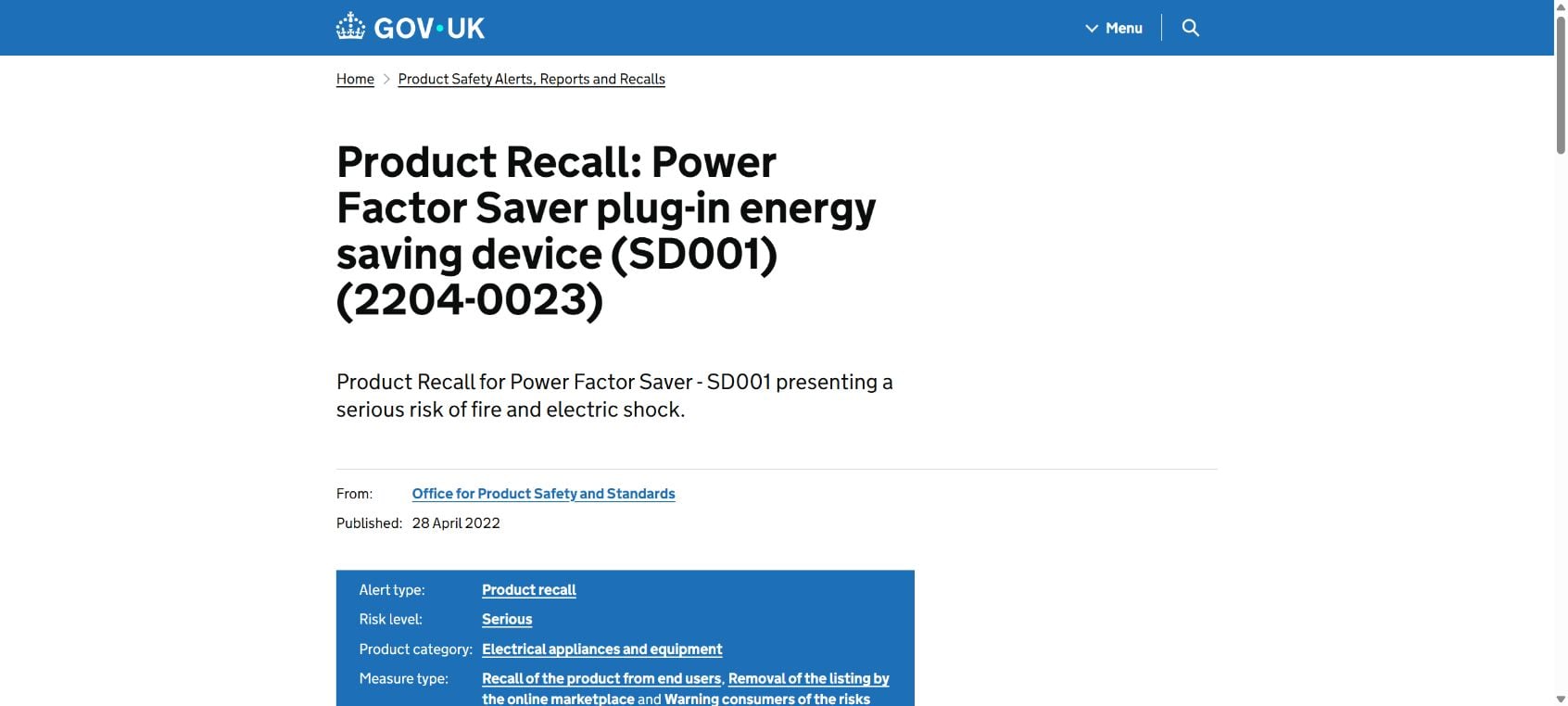
The United Kingdom’s Office for Product Safety and Standards has recalled plug-in power-factor saver products because of serious fire and electric-shock risks. One reported white model with a bright green strip, visually similar to the HiddenPowerLoss image, contained a large unmarked capacitor and incorrectly specified protection components.
This does not prove that the individual HiddenPowerLoss unit came from the exact batch tested by the UK authority. HiddenPowerLoss has not supplied a unit for independent testing or published enough manufacturing information to make that connection. It does show why an anonymous plug-in electrical product should never be assumed safe merely because its LED illuminates.
How The Operation Works
1. An alarming social media advertisement gets the first click
The operation begins with an advertisement aimed at people who are worried about higher utility bills. The message suggests that households are being overcharged because energy companies hide a simple technical secret.
This framing is effective because it transforms a complicated subject into a villain-and-solution story. The utility company becomes the villain, the viewer becomes the victim, and a $49 plug becomes the quick solution.
Ads may appear on Facebook, Instagram, TikTok, YouTube, news-style recommendation widgets, or websites filled with aggressive pop-ups. The brand name can change from campaign to campaign, while the central promise remains the same.
2. The visitor lands on a fake video community
HiddenPowerLoss does not immediately show a checkout. It first creates the impression that the visitor has discovered a popular consumer investigation watched by a large audience.
The invented Smart Homeowner Journal identity, subscriber count, like count, profile pictures, and comment thread all help manufacture consensus. A viewer who sees several people reporting major bill reductions may assume the product has already been tested by others.
Nothing on the page proves that these profiles are real customers. The comments are embedded in the landing page and repeat unusually dramatic savings without providing bill copies, meter data, usage comparisons, weather adjustments, or independent verification.
3. A long video builds frustration before revealing the product
The purchase offer is deliberately delayed. HiddenPowerLoss waits until roughly 14 minutes and 50 seconds before revealing the promotion.
This delay gives the video time to describe a hidden problem, undermine trust in power companies, repeat scientific-sounding terms, answer objections, and make the viewer emotionally committed to finding a solution.
By the time the price appears, leaving the page can feel like wasting the time already invested. This psychological effect is known as the sunk-cost tendency, and long video sales letters frequently take advantage of it.
4. A $49 limited-time offer creates urgency
The page then reveals a supposed 50% discount, reducing the device from $99 to $49. It also says availability is low and orders will arrive within three to five days.
No inventory evidence is provided. Scarcity messages are commonly used to stop people from opening another tab, searching the product name, reading independent reviews, or asking an electrician.
The $49 price is also high enough to generate a large markup but low enough to feel like an affordable gamble. Similar generic boxes have appeared on wholesale marketplaces for only a few dollars per unit.
5. An affiliate redirect separates the advertisement from the seller
The HiddenPowerLoss purchase buttons do not lead directly to a transparent store operated under the same identity. They first pass through an unrelated tracking domain containing campaign and affiliate identifiers.
This structure allows marketers to measure clicks, video progress, and purchases. It also creates distance between the disposable advertising page and the final merchant processing the payment.
That distance matters when a customer later wants a refund. The name on the advertisement, the name in the confirmation email, the descriptor on the card statement, and the company receiving a return may all be different.
6. Bundle pricing pushes buyers toward several units
Electricity-saver funnels frequently offer packages of two, three, four, or five devices. A single unit is made to look like the least attractive choice, while a larger bundle receives a “best value,” “whole home,” or “most popular” label.
The technical story is adjusted to justify the bundle. Buyers may be told that they need one unit for each floor, room, major appliance group, or section of the electrical system, even though the original advertisement implies one simple device can fix the entire home.
This is why some customers in this product category discover that four or five lightweight boxes are being shipped. In other cases, the buyer may misunderstand a quantity selector or focus on the per-unit price instead of the complete order total.
Before approving any payment, the customer should verify the exact quantity, total merchandise price, shipping, warranty add-ons, and taxes. The amount beside a large bundle is sometimes a per-unit figure rather than the final charge.
7. The delivered product lights up but does not change the bill
When the package arrives, the boxes are commonly light and simple. The buyer plugs one into a socket, a green LED turns on, and the device appears to be operating.
The LED is an indicator, not a measurement. It does not show kilowatt-hours saved, voltage corrected, harmonics removed, appliances protected, or money returned to the household.
A genuine energy-saving claim should be supported by repeatable before-and-after tests under controlled conditions. The test must measure real energy consumption over a meaningful period while accounting for weather, occupancy, appliance use, billing days, and tariff changes.
Comparing two ordinary monthly bills is not enough. A warmer month, fewer laundry loads, a vacation, a different thermostat setting, or a shorter billing period can produce a change that has nothing to do with the plug-in box.
8. The device cannot reduce the real work performed by appliances
Electricity bills measure energy over time. A 1,500-watt heater operated for one hour uses approximately 1.5 kilowatt-hours. A small box plugged into another outlet cannot make that heater generate the same amount of heat while removing half of the required real energy.
The same principle applies throughout the home. Refrigerators move heat, pumps move water, dryers evaporate moisture, ovens create heat, and electronics perform computation. These tasks require energy.
Power-factor terminology does not repeal those physical requirements. Correcting reactive current for a particular load can benefit an electrical distribution system in the right industrial context, but that is different from reducing residential kilowatt-hour consumption by 30%, 50%, or more.
9. The brand disappears and returns under another name
The most revealing feature of this operation is repetition. The same casing, green light, video structure, testimonials, and technical promises have survived while the domain names and product names keep changing.
HiddenPowerLoss is simply the latest surface. Its own page still calls the product StopWatt, and identical landing-page content is already distributed across other domains.
This network model is resilient. Closing one page does not end the campaign because ads can be redirected to a clone. That is why researching only the latest name is not enough. Consumers need to recognize the overall electricity-saver box pattern.
10. Refund friction protects the markup
A customer who receives multiple inexpensive boxes may be asked to pay return postage, obtain authorization, use a foreign warehouse, or return every item unopened. Delays can push the request beyond a card-dispute or advertised return window.
The absence of clear policies on the initial HiddenPowerLoss page makes advance evaluation difficult. A buyer should not assume that a discount badge, secure-checkout phrase, or general satisfaction promise guarantees a practical refund.
If You Have Bought This
If you ordered HiddenPowerLoss, StopWatt, or a similar electricity saver, do not blame yourself. These pages are carefully designed to imitate trusted platforms and exploit legitimate concern about rising bills. Take the following steps calmly and promptly.
- Check the exact order quantity. Read the confirmation email and receipt carefully. Look for four or five units, duplicate products, expedited shipping, protection plans, warranties, or other add-ons you did not intend to select.
- Compare the receipt with your card statement. Record the transaction date, total amount, merchant descriptor, and any separate charges. The statement name may not say HiddenPowerLoss.
- Save the evidence now. Keep screenshots of the advertisement, fake video page, $49 offer, checkout, order confirmation, tracking messages, and any refund promise. Websites in this network can change or disappear quickly.
- Do not plug in a suspicious unit merely to test it. Similar products have failed electrical safety tests. If the packaging lacks recognizable certification, manufacturer details, instructions, model information, or voltage specifications, leave the device unplugged.
- Unplug it immediately if it becomes warm or behaves strangely. Stop using any unit that buzzes, smells like hot plastic, discolors, sparks, or fits loosely in the socket. Do not open a mains-powered device unless you are qualified to work safely with electrical equipment.
- Request a return authorization in writing. Contact the seller shown in the confirmation email. State the order number, quantity, amount paid, and that you want to return the products for a full refund. Ask for the complete return address and deadline.
- Do not pay an unexpected refund or restocking fee without reviewing the policy. Ask the seller to identify the term you accepted that authorizes the fee. Keep every response.
- Contact your payment provider if support stalls. Explain that the product was promoted with unsubstantiated energy-saving claims or that the quantity and charge differed from what you knowingly approved. Provide your documentation and ask about the dispute deadline.
- Report unauthorized extra units or charges immediately. If the order contains products you did not select or the amount is higher than the confirmed total, tell the card issuer clearly which portion you dispute.
- Monitor for repeat billing. Check statements for several months and enable transaction alerts. Ask the bank whether replacing the card is appropriate if you see further unrecognized activity.
- Report the advertisement. Use the reporting tools on Facebook, Instagram, TikTok, YouTube, or the advertising network where you saw it. U.S. consumers can also report deceptive marketing to the Federal Trade Commission at ReportFraud.ftc.gov.
- Use proven methods to reduce your bill. The U.S. Department of Energy recommends measures such as home energy assessments, air sealing, insulation, efficient lighting, thermostat adjustments, efficient appliances, and controlling standby loads with appropriate power strips.
If you already plugged in the device and it appears normal, that still does not prove it is safe or useful. An LED can operate while internal protection, insulation, capacitor quality, or plug construction remains inadequate.
Do not wait several billing cycles hoping to see the advertised result if doing so would cause you to miss a return or card-dispute deadline. The marketing claim can be evaluated against established testing of the category without risking your refund rights.
The Bottom Line
HiddenPowerLoss is not a new electricity breakthrough. It is a renamed StopWatt-style affiliate campaign selling a generic plug-in box for $49 through a fake video page, fabricated social proof, delayed sales reveal, scarcity language, and a tracking redirect.
The website itself labels the product image “StopWatt device,” while identical pages are already operating on other domains. That is compelling evidence of a reusable network, not an independent manufacturer introducing unique technology.
At best, buyers are likely to receive one or several inexpensive boxes whose green LED shows only that the box is drawing power. Similar devices tested by independent laboratories did not lower domestic energy consumption, and government safety authorities have recalled examples for serious fire and electric-shock hazards.
Do not order HiddenPowerLoss. If you already bought it, verify whether the order contains four or five units, keep the product unplugged if its safety cannot be established, request a refund promptly, and use your payment protections before their deadlines expire.








