

An email account you already use should not suddenly need “activation.” Yet a polished notice can make that contradiction easy to miss, especially when it says the mailbox will be disabled first and deleted permanently soon afterward.
The You Need to Activate Your Account email scam creates that false deadline to steal webmail credentials. The activation button does not protect the account. It opens a counterfeit login designed to collect the password.
Overview
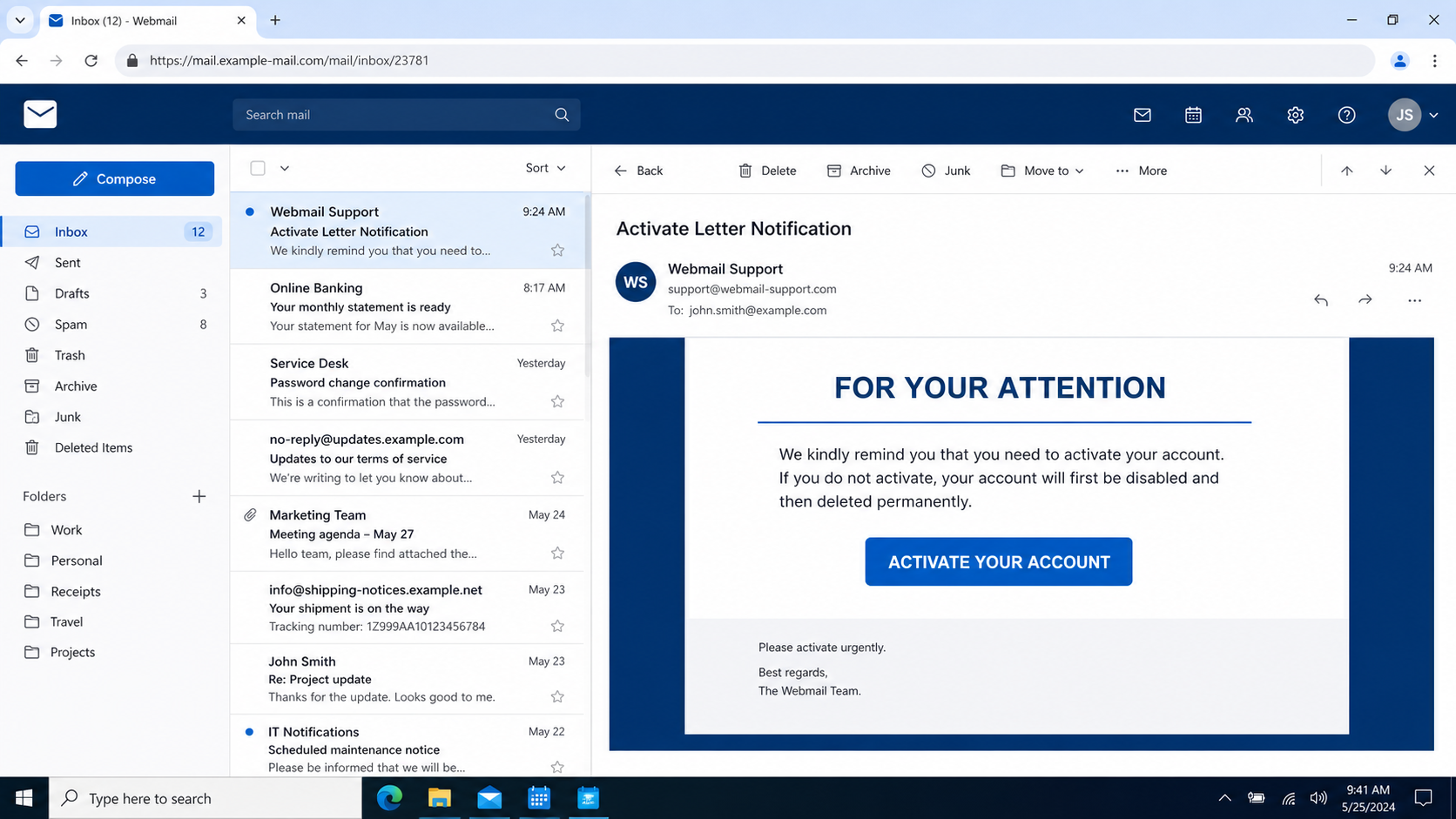
This phishing campaign pretends to be a routine service message from the recipient’s email provider. An observed version uses the subject “Activate Letter Notification,” addresses the recipient by first name, and places “FOR YOUR ATTENTION” above the warning.
The message says the account must be activated urgently. If the recipient does nothing, it claims the account will be disabled and then deleted permanently.
The activation claim does not fit an existing mailbox
Account activation normally happens immediately after registration, before full access is granted. A mailbox that already receives everyday messages is not awaiting the same first-time confirmation.
Some providers may ask users to accept new terms or confirm recovery details. Those actions can be checked inside the official account without relying on an unexpected link.
The link opens a fake webmail page
In the observed campaign, the activation link led to a generic “Welcome to Webmail” login hosted through cloud infrastructure. It requested a username and password rather than performing a genuine activation.
The page may look professional and use HTTPS. Neither quality proves ownership. The important question is whether the domain belongs to the provider you intentionally opened.
The password unlocks much more than email
- Private correspondence and stored attachments
- Password reset links for connected services
- Cloud documents, calendars, and contacts
- Business conversations and payment instructions
- A trusted identity for sending further phishing
The email is not linked to a legitimate provider. Receiving it does not mean the account is scheduled for deletion, and reading it alone does not activate malware or surrender a password.
Why the Deletion Warning Gets Attention
Email often holds years of irreplaceable information
A mailbox may contain family messages, receipts, travel records, tax documents, photographs, and access to nearly every other online account. The thought of permanent deletion feels more serious than an ordinary temporary error.
The message gives the victim one simple escape
The button promises that a frightening problem can be solved immediately. This is deliberate. The scammer wants the recipient to choose the obvious action before asking why an active account needs activation.
Personalization creates false confidence
A first name or full email address can come from a data breach, mailing list, public profile, or the address itself. It does not prove that the sender has access to the provider’s account records.
Personalized phishing is still phishing. Verify the event inside the account and inspect the full sender and destination domains.
How the You Need to Activate Your Account Scam Works
Step 1: The attacker sends a generic provider notice
The message uses a neutral display name such as “Webmail Support” or “Account Team.” Avoiding a specific provider lets the same email target people using many hosting companies and workplace mail systems.
The sender address may contain technical words such as support, admin, notification, or mail. Those words can be registered by anyone and are not proof of authority.
Step 2: The email says activation is overdue
The body describes the task as a reminder, implying earlier notices were sent. This can make the recipient blame themselves for overlooking an important administrative request.
No account creation date, provider policy, or verifiable ticket is supplied. The message relies on repetition and urgency instead of evidence.
Step 3: The account is threatened with deletion
The warning usually describes two stages: disabled first, permanently deleted later. That sequence sounds like a formal enforcement process and makes the victim believe there is still a narrow chance to prevent loss.
The threat is fabricated. Criminals cannot delete a mailbox merely because their phishing email is ignored.
Step 4: The activation link hides the destination
A button labeled “Activate Your Account” replaces a visible address. The underlying link can point to cloud storage, a compromised website, a URL shortener, or a domain created specifically for phishing.
On desktop, hover without clicking. On mobile, avoid pressing and instead open the provider independently.
Step 5: A fake webmail login requests credentials
The landing page may display a generic envelope icon and “Welcome to Webmail.” It can prefill the email address and ask for the current password to continue.
This is not activation. It is a form controlled by the attacker. Submitting it transfers the credentials out of the victim’s control.
Step 6: The attacker attempts a real login
Stolen credentials can be tested immediately against common providers and the victim’s workplace domain. If the same password is reused, criminals may also try shopping, social media, and cloud accounts.
An unexpected verification code or push notification at this moment is a warning. Deny it and begin account recovery from a clean device.
Step 7: Security settings may be changed
Once inside, an attacker can add forwarding rules, connect a third-party application, create an app password, or replace recovery details. These changes help maintain access and hide evidence.
Some criminals delete alerts and sent messages. The absence of obvious mail does not prove the account is clean.
Step 8: The compromised address becomes a new lure
Messages from a real account are more persuasive than messages from a random address. Criminals may send fake documents, invoices, payment changes, or activation notices to contacts.
In a workplace, one stolen mailbox can become the starting point for business email compromise, payroll changes, and access to shared systems.
How to Check Whether an Account Really Needs Action
Open the account through your normal route
Use the official app, a trusted bookmark, or the provider address supplied by your employer or hosting company. Do not use the activation button.
Look for an in-account notification
Legitimate administrative actions should normally appear after you sign in. Check account messages, security settings, billing notices, and provider status information.
Contact support using known details
For work or school email, contact the internal help desk through the directory. For hosted mail, use the provider’s official support page or control panel.
Ask why an active mailbox needs activation
A real support representative should explain the account state and direct you through an established process. They should not need your password, one-time code, gift cards, or remote device access.
Warning Signs in the Activation Email
- The mailbox is already active and receiving messages.
- The provider is not clearly named.
- The subject uses awkward wording such as “Activate Letter Notification.”
- Permanent deletion is threatened without an account-specific explanation.
- The button opens a domain unrelated to the provider.
- The page asks for the existing password to “activate” access.
- The message suggests trying another browser or device if the phishing page fails.
Grammar mistakes can reveal some campaigns, but a perfectly written email can still be fraudulent. Treat the workflow, domain, and request as stronger evidence than presentation quality.
What Criminals Can Do With a Stolen Email Password
Email is commonly used as a recovery channel. An intruder can request password resets at other services and intercept the messages before the owner sees them.
They can search the inbox for statements, identity documents, card details, contracts, or cryptocurrency records. They may identify which bank, employer, insurer, or shopping sites the victim uses.
They can impersonate the owner in existing conversations. A request sent from a familiar address and attached to a real thread can overcome many recipients’ normal caution.
For organizations, the attacker may use the account to enter cloud applications through single sign-on. That can expand a mailbox compromise into a broader data incident.
Why the Fake Page May Ask You to Try Again
The first password may already be stolen
A message saying “incorrect password” does not mean the phishing form rejected or forgot the entry. The operator can record the password before displaying any response they choose.
Victims sometimes submit a second password because they assume the first was an old one. That gives criminals more credentials to test across other services.
Another browser request keeps you inside the trap
The activation email may say to try a newer browser or another device if the page fails. This unusual instruction helps the attacker work around browser warnings, network filters, or a device that blocks the site.
Do not troubleshoot an unsolicited activation link. A failure is a reason to stop and verify through the provider, not to weaken your protection.
A harmless redirect can conceal the theft
After collecting credentials, a phishing page may send the victim to the real provider’s home page. The sudden appearance of a legitimate site can make the user believe the activation completed.
Look at the browsing history and the domain where the password was actually entered. Ending on a real site does not make the previous page genuine.
How to Make Email Account Recovery Stronger
Use a unique password stored in a reputable password manager. The manager can also help detect a fake domain because it will not automatically fill credentials on a site it does not recognize.
Enable a passkey or hardware security key when available. These methods are tied to the legitimate site and provide stronger phishing resistance than a reusable password.
Keep recovery information current, but avoid using the same mailbox as the only recovery route for every important account. A separate secured recovery address can limit the effect of one compromise.
Review account activity regularly rather than waiting for an alarming email. Familiarity with the provider’s real security dashboard makes fake notices easier to recognize.
Special Considerations for Workplace Accounts
Employees should report the message even if they did not click. Other coworkers may have received the same campaign, and the security team can block the sender and destination.
If credentials were entered, provide the approximate time and device used. Those details help administrators find the attacker’s sign-in, revoke sessions, and determine what data was accessed.
Do not hide the mistake out of embarrassment. Rapid reporting can stop a mailbox compromise before it becomes payroll fraud, invoice redirection, or a wider cloud intrusion.
What to Do if You Have Fallen Victim to This Scam
- Leave the fake page. Do not retry the password or follow any instructions to use another device or browser.
- Change the email password immediately. Reach the provider through the official app or address, ideally from a clean device.
- Replace reused credentials. Give priority to financial, workplace, cloud, social, and shopping accounts linked to the same email.
- Revoke active sessions and tokens. Sign out all devices, remove unknown connected apps, and cancel application passwords you did not create.
- Restore recovery information. Confirm the phone number, alternate email, passkeys, security keys, and authentication methods belong to you.
- Inspect mailbox rules. Delete unfamiliar forwarding addresses, inbox rules, filters, delegates, and automatic replies.
- Review recent activity. Look for unknown logins, sent mail, deleted security messages, password resets, and changes to other services.
- Enable multi-factor authentication. Prefer a passkey, security key, or authenticator app. Never approve a prompt you did not initiate.
- Contact your IT team for a managed account. They can revoke sessions centrally, review logs, preserve evidence, and assess exposure.
- Tell contacts if fraudulent mail was sent. Ask recipients to delete recent links or attachments and to verify unusual requests through another channel.
- Scan any device that downloaded content. Malwarebytes can check for stealers and unwanted remote tools if the campaign delivered more than a login page.
- Reduce future exposure. AdGuard can block many known phishing pages, malicious ads, and redirect chains, while good account practices provide the essential protection.
Is Your Device Infected? Run a Free Malware Scan
Slow performance, constant pop-ups, or strange behavior? These are classic signs of a malware infection. The fastest way to find out is to scan your device with Malwarebytes Free — one of the most trusted malware removal tools available.
The free version detects and removes the most common threats, including:
- Adware — the cause of those annoying pop-ups
- Browser hijackers — unwanted redirects and changed homepages
- Trojans and spyware — hidden programs stealing your data
- Potentially unwanted programs (PUPs) — software you never asked for
👉 Select your device below — Windows, Mac, or Android — then follow the simple steps to download Malwarebytes, scan your system, and remove any threats it finds. The scan usually takes 5 to 20 minutes.
Run a Malware Scan with Malwarebytes for Windows
Malwarebytes is one of the most popular and trusted anti-malware tools for Windows — and it’s completely free for removing infections. It catches threats that many antivirus programs miss, including adware, browser hijackers, and trojans. Follow the steps below to scan and clean your PC in just a few minutes.
Download Malwarebytes
Click the button below to download the latest version of Malwarebytes for Windows from the official source. The free version is all you need — it will scan your computer and remove adware, browser hijackers, and other malicious software at no cost.
Download MalwarebytesOfficial installer for Windows 11 and 10. Your download starts right away.Want real-time protection? See Malwarebytes Premium Malwarebytes Free for WindowsScans and removes malware at no cost
-
Install Malwarebytes
When the download finishes, open your Downloads folder and double-click the MBSetup file. If Windows shows a User Account Control pop-up, click “Yes” to allow the installation.
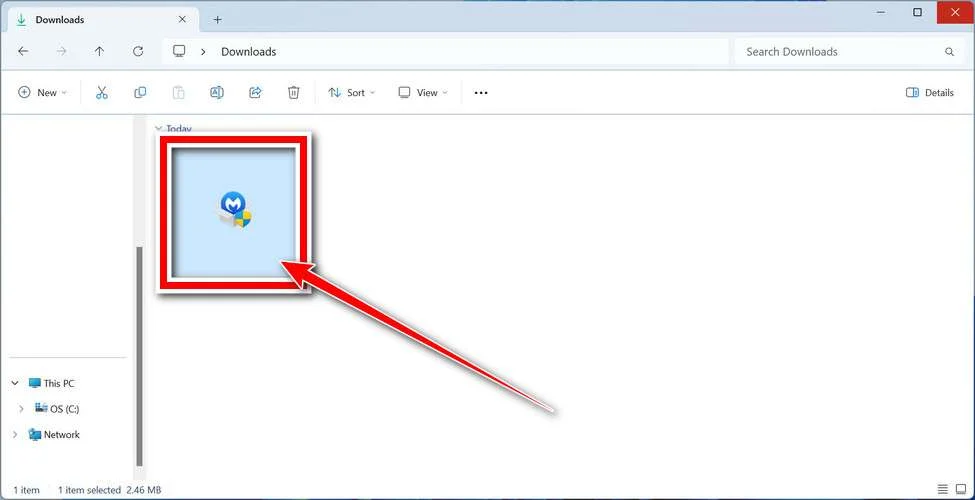
Follow the On-Screen Prompts to Install Malwarebytes
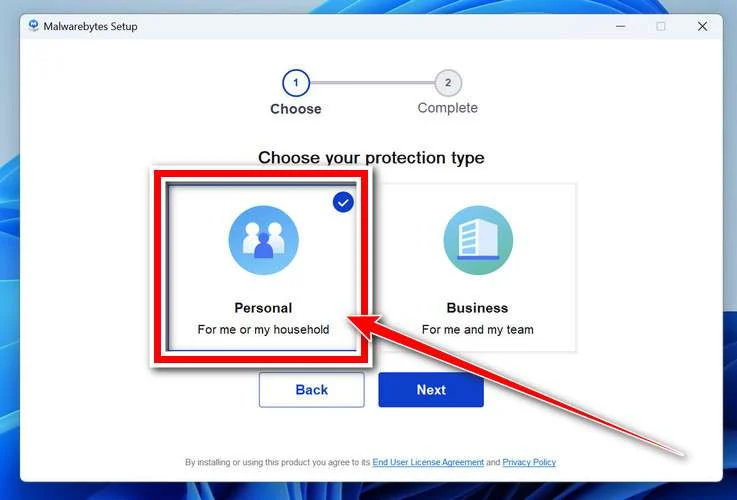
The setup wizard will walk you through a few quick screens:
-
Choose where you’re installing the program — “Personal Computer” or “Work Computer” — then click Next.
-
Malwarebytes will now install on your device. This usually takes under a minute.

-
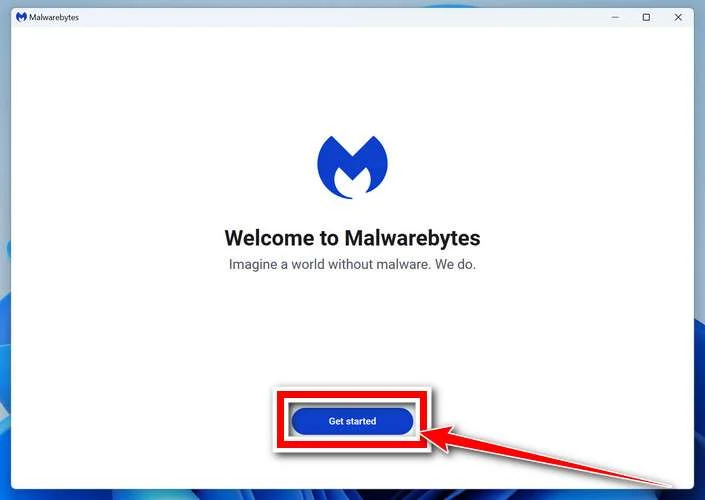
When installation is complete, the “Welcome to Malwarebytes” screen will open automatically.
-
On the final screen, click Open Malwarebytes to launch the program.

-
Enable “Scan for Rootkits”
Before scanning, turn on rootkit detection so Malwarebytes can find even the most hidden threats. Click the Settings gear icon on the left side of the screen.
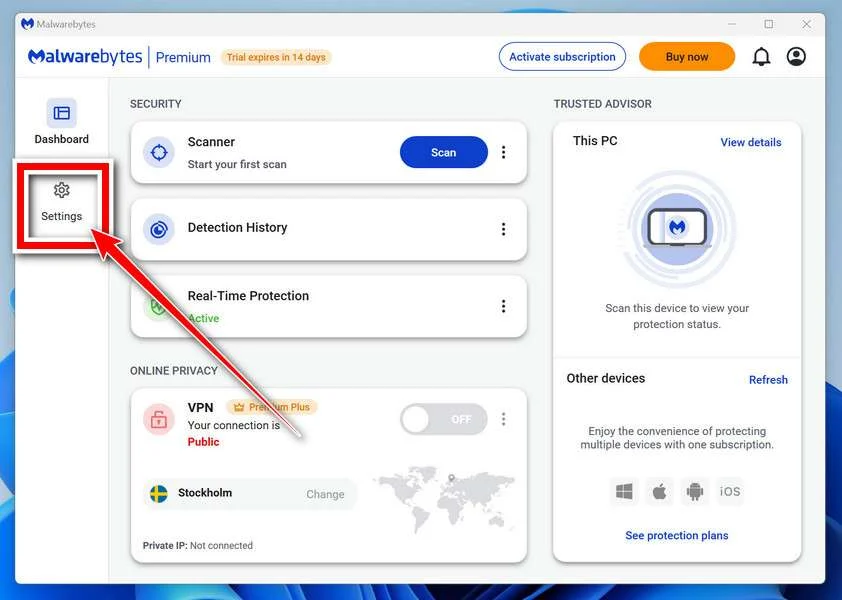
In the settings menu, find “Scan for rootkits” and click the toggle so it turns blue.

Done? Click “Dashboard” in the left pane to return to the main screen.
Start the Scan
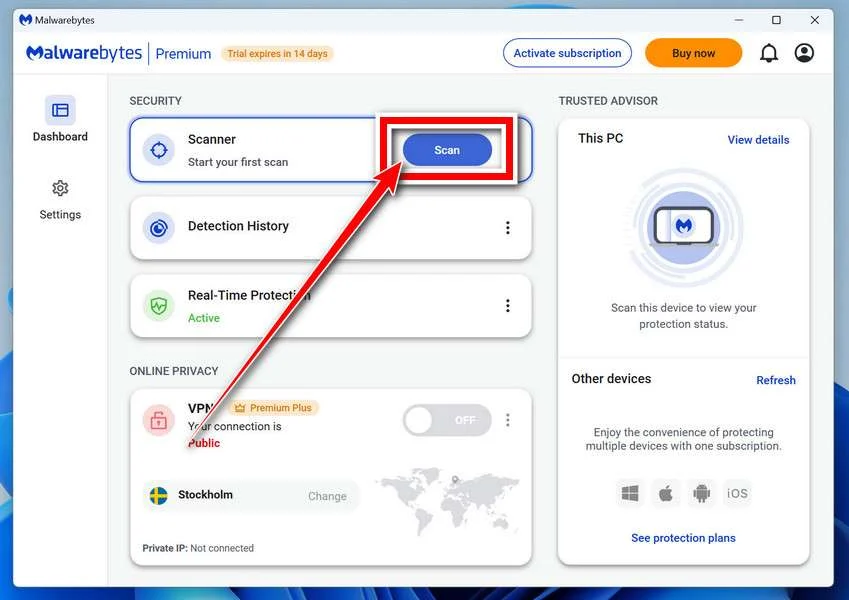
Click the blue Scan button. Malwarebytes will automatically update its virus database and start checking your computer for malware.
-
Wait for the Scan to Finish
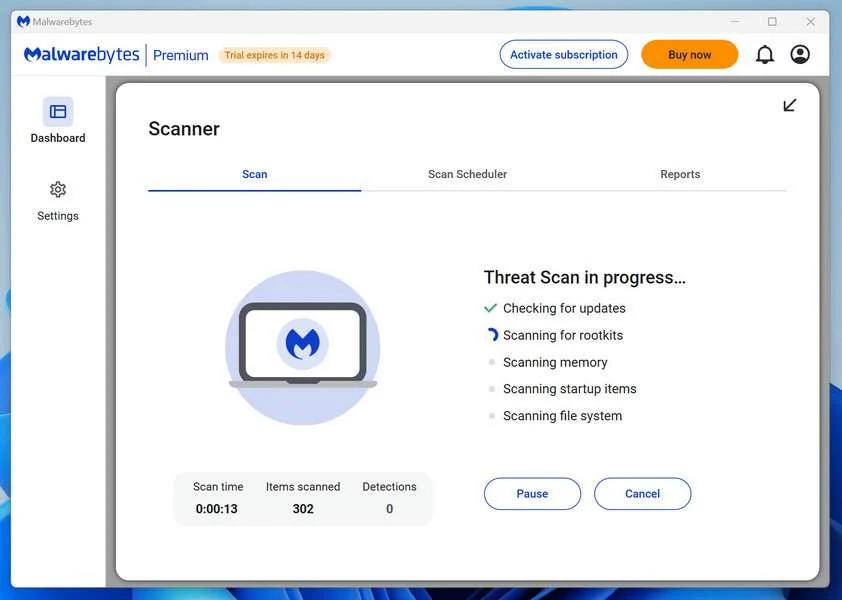
The scan checks your entire system for browser hijackers and other malicious programs, so it can take 5 to 20 minutes depending on your computer. Feel free to do something else — just check back occasionally to see the progress.
-
Quarantine the Detected Threats
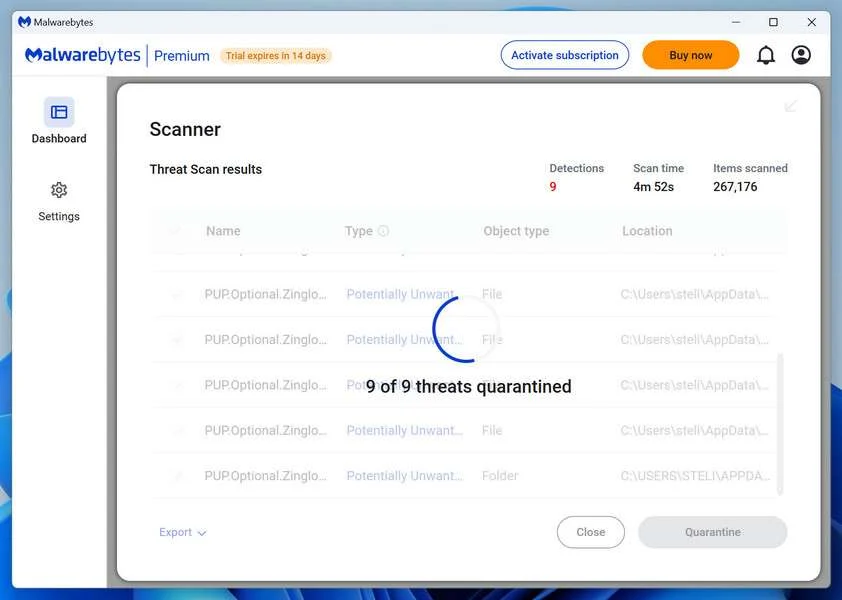
When the scan is done, you’ll see a list of everything Malwarebytes found — malware, adware, and potentially unwanted programs. Click the “Quarantine” button to remove all of them at once.
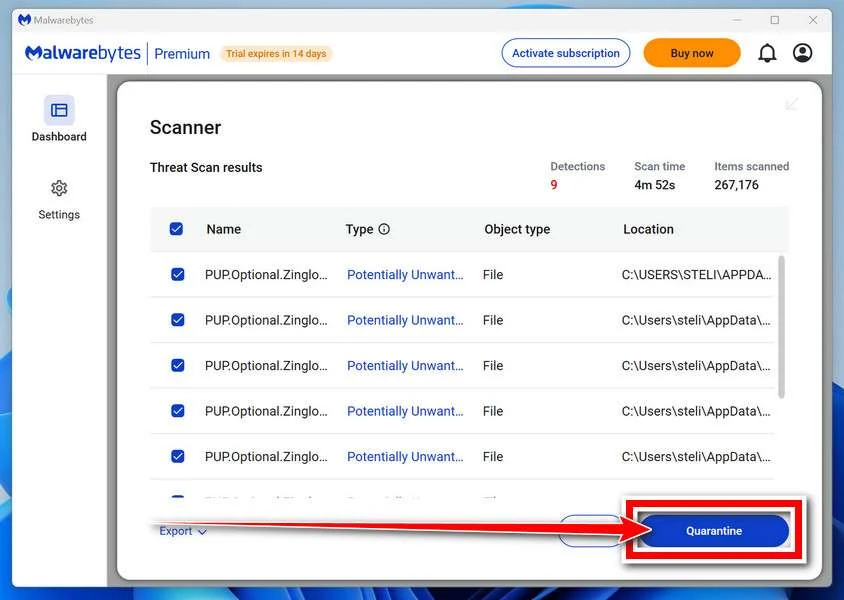
Malwarebytes will now remove the malicious files and registry entries and move them safely into quarantine.
-
Restart Your Computer
Some threats can only be fully removed after a reboot. If Malwarebytes asks you to restart, click Yes. Once you’re logged back in, Malwarebytes has finished removing the threats it found.
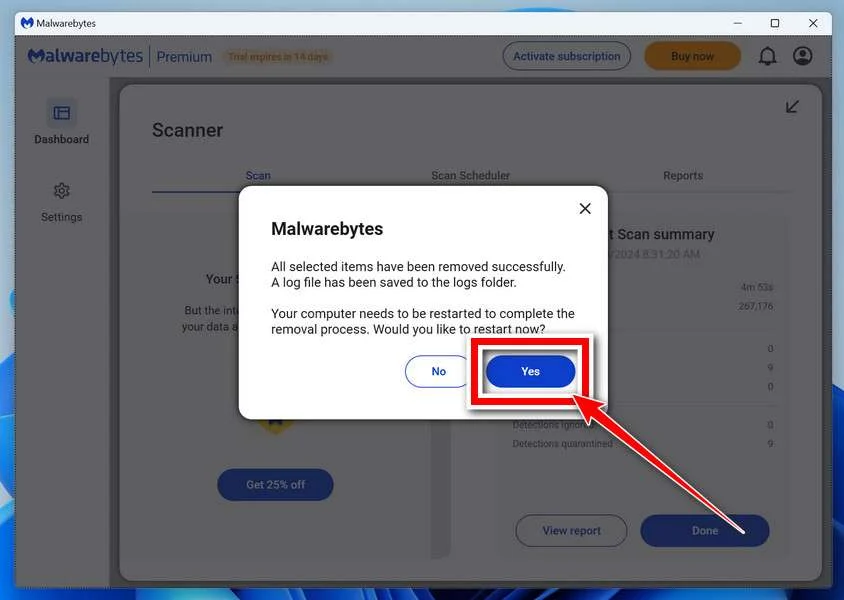
That’s it — your Windows PC is now clean of trojans, adware, and other malware, and should be back to running smoothly.
If you are still having problems with your computer after completing these instructions, then please follow one of the steps:
- Run a computer scan with ESET Online Scanner
- Ask for help in our Windows Malware Removal Help & Support forum.
Run a Malware Scan with Malwarebytes for Mac
Malwarebytes for Mac is a free on-demand scanner that removes the malware other security software tends to miss — adware, browser hijackers, and unwanted programs included. Cleaning an infected Mac with Malwarebytes has always been completely free, and it’s our go-to recommendation. Follow the steps below to scan and clean your Mac in just a few minutes.
-
Download Malwarebytes for Mac
Click the button below to download the latest version of Malwarebytes for Mac.
Download MalwarebytesOfficial installer for macOS. Your download starts right away.Want real-time protection? See Malwarebytes PremiumMalwarebytes Free for MacScans and removes malware at no cost -
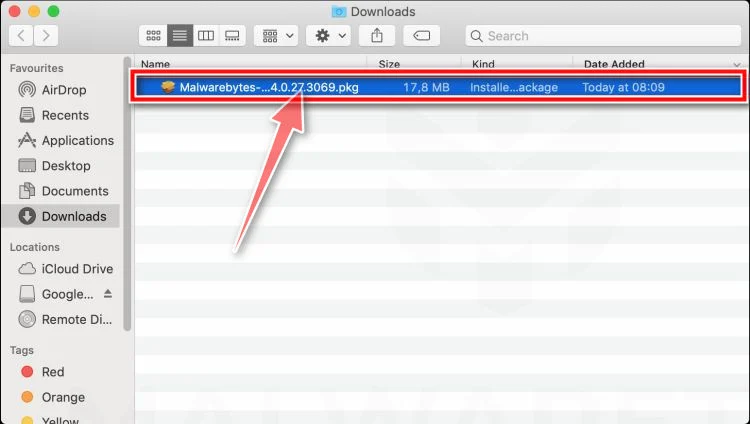
Open the Malwarebytes setup file
When the download finishes, open your Downloads folder and double-click the setup file to begin the installation.
-
Follow the On-Screen Prompts to Install Malwarebytes
The Malwarebytes for Mac Installer will guide you through a few quick screens. Click “Continue” and keep following the prompts until the installation completes.
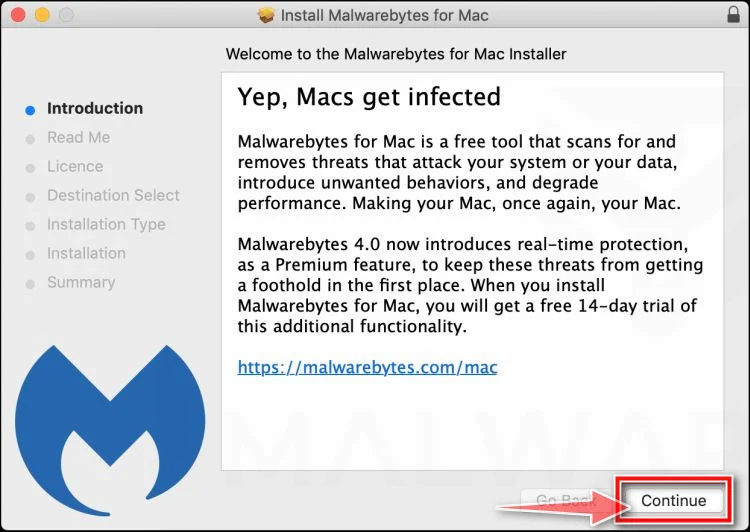
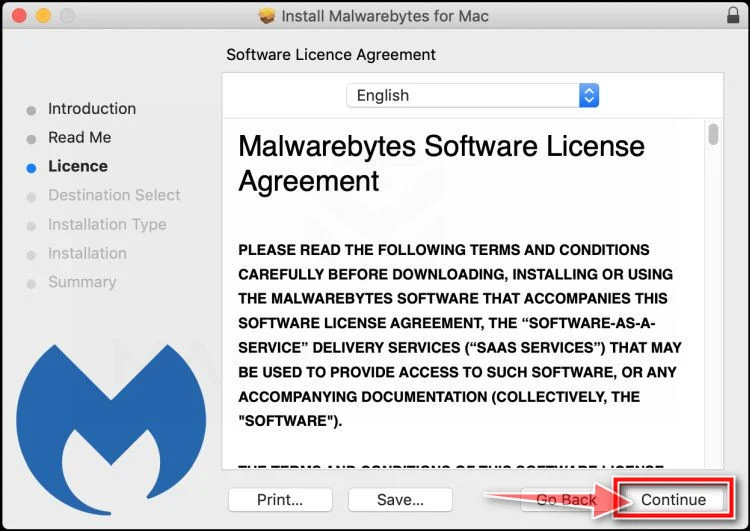
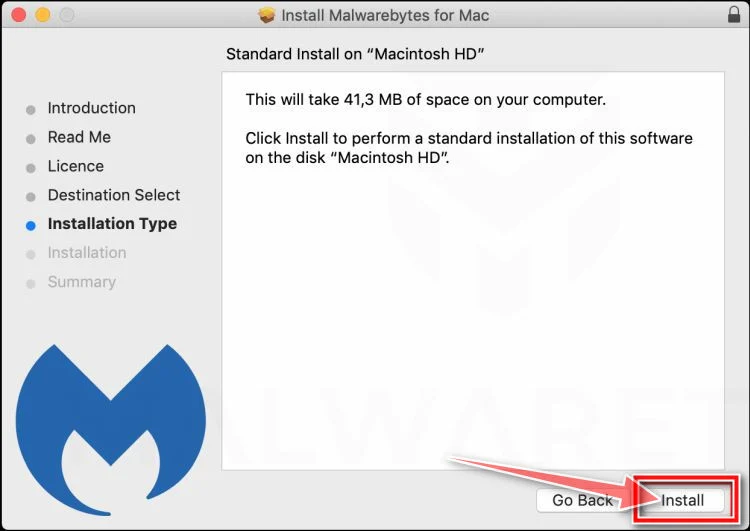
When the installation is complete, Malwarebytes opens to the Welcome to Malwarebytes screen. Click “Get started“.
-
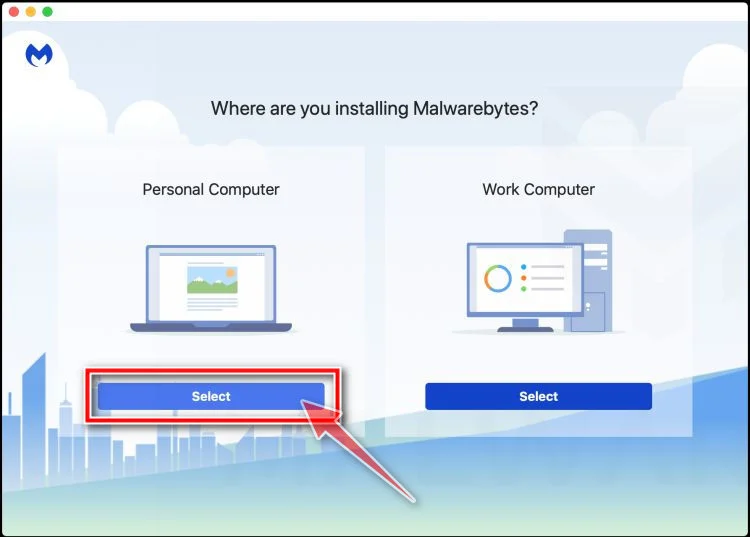
Select “Personal Computer” or “Work Computer”
Malwarebytes will ask what type of computer you’re installing it on. Click either Personal Computer or Work Computer, whichever applies.
-
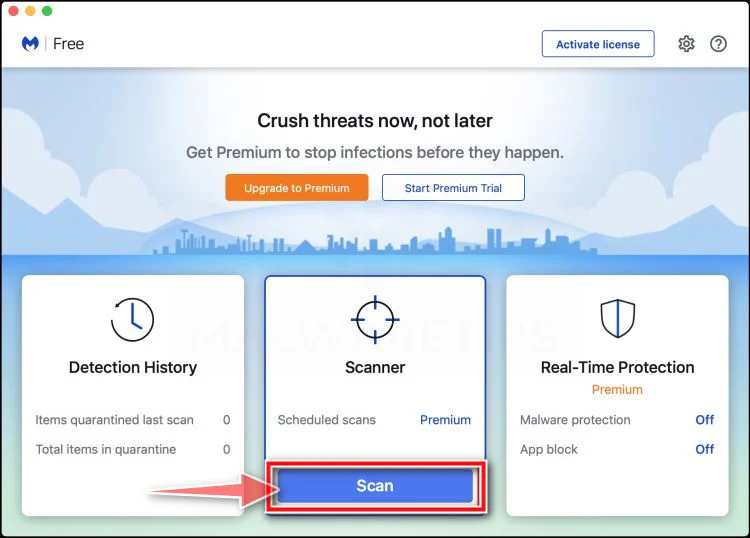
Start the Scan
Click the “Scan” button. Malwarebytes will automatically update its detection database and begin checking your Mac for malware.
-
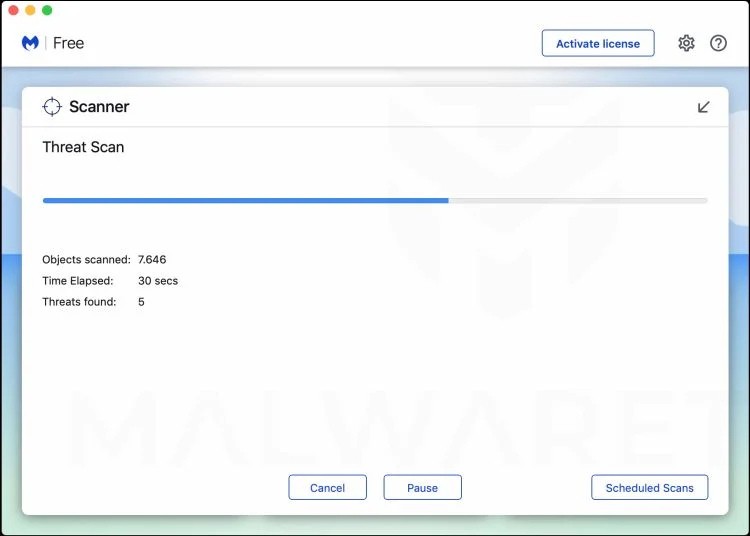
Wait for the Scan to Finish
Malwarebytes will scan your Mac for adware, browser hijackers, and other malicious programs. This can take a few minutes, so feel free to do something else — just check back occasionally to see the progress.
-
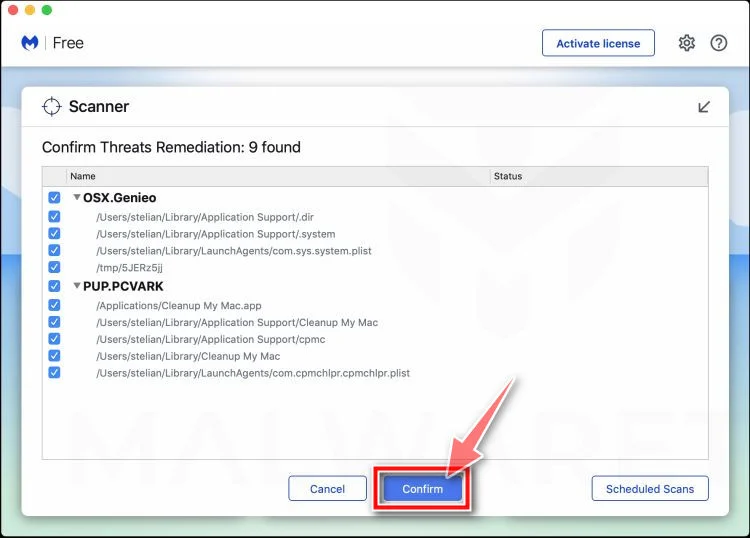
Quarantine the Detected Threats
When the scan is done, you’ll see a list of everything Malwarebytes found. Click the “Quarantine” button to remove all the threats at once.
-
Restart Your Mac
Malwarebytes will now remove all the malicious files it found. Some threats can only be fully removed after a reboot — if Malwarebytes asks you to restart, allow it. Once you’re logged back in, your Mac is clean.
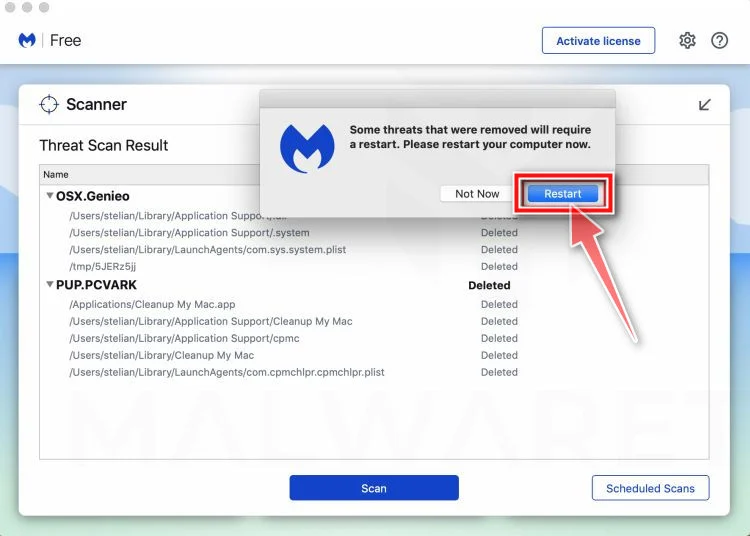
That’s it — your Mac is now free of adware, rogue browser extensions, and other potentially harmful software.
If you are still experiencing problems while trying to remove a malicious program from your computer, please ask for help in our Mac Malware Removal Help & Support forum.
Run a Malware Scan with Malwarebytes for Android
Malwarebytes for Android automatically detects and removes dangerous threats like malware and ransomware so you don’t have to worry about your most-used device being compromised. Aggressive detection of adware and potentially unwanted programs keeps your Android phone or tablet running smooth.
-
Download Malwarebytes for Android.
You can download Malwarebytes for Android by clicking the link below.
Get Malwarebytes for AndroidOpens Google Play in a new tab.Want real-time protection? See Malwarebytes Premium for AndroidMalwarebytes for AndroidScans your phone and removes malware at no cost -
Install Malwarebytes for Android on your phone.
In the Google Play Store, tap “Install” to install Malwarebytes for Android on your device.

When the installation process has finished, tap “Open” to begin using Malwarebytes for Android. You can also open Malwarebytes by tapping on its icon in your phone menu or home screen.

-
Follow the on-screen prompts to complete the setup process
When Malwarebytes will open, you will see the Malwarebytes Setup Wizard which will guide you through a series of permissions and other setup options.
This is the first of two screens that explain the difference between the Premium and Free versions. Swipe this screen to continue.
Tap on “Got it” to proceed to the next step.
Malwarebytes for Android will now ask for a set of permissions that are required to scan your device and protect it from malware. Tap on “Give permission” to continue.
Tap on “Allow” to permit Malwarebytes to access the files on your phone.
-
Update database and run a scan with Malwarebytes for Android
You will now be prompted to update the Malwarebytes database and run a full system scan.

Click on “Update database” to update the Malwarebytes for Android definitions to the latest version, then click on “Run full scan” to perform a system scan.

-
Wait for the Malwarebytes scan to complete.
Malwarebytes will now start scanning your phone for adware and other malicious apps. This process can take a few minutes, so we suggest you do something else and periodically check on the status of the scan to see when it is finished.

-
Click on “Remove Selected”.
When the scan has been completed, you will be presented with a screen showing the malware infections that Malwarebytes for Android has detected. To remove the malicious apps that Malwarebytes has found, tap on the “Remove Selected” button.

-
Restart your phone.
Malwarebytes for Android will now remove all the malicious apps that it has found. To complete the malware removal process, Malwarebytes may ask you to restart your device.
That’s it — your Android phone is now clean — no more malicious apps, adware, or browser redirects.
If you are still having problems with your phone after completing these instructions, then please follow one of the steps:
- Restore your phone to factory settings by going to Settings > General management > Reset > Factory data reset.
- Ask for help in our Mobile Malware Removal Help & Support forum.
Stay Protected: Block Ads and Malicious Sites
Now that your device is clean, keep it that way. Most infections start with a malicious ad or a fake download button — so blocking them at the source is your best defense.
We recommend AdGuard, which blocks malicious ads, phishing pages, and dangerous redirects before they can reach you.
👉 Download AdGuard and browse safely
Frequently Asked Questions
Can an email provider delete my account?
Providers have inactivity and policy rules, but a genuine notice should be verifiable through the official account and published terms. This message’s unexpected login button is a phishing mechanism.
Why did the email use my first name?
Names and addresses can come from breaches, mailing lists, public profiles, and previous messages. Personalization does not prove the sender has access to provider records.
What if the page looked exactly like my webmail?
Attackers can copy logos, styles, and login forms. The domain and the route used to reach the page are more reliable than its appearance.
Is my device infected if I only entered a password?
Credential theft does not automatically install malware. Change the password and secure the account. Run a scan if a file downloaded, software was installed, or the browser behaved unexpectedly.
What if the fake page rejected my password?
Assume it was captured anyway. Fake pages often show an error to collect another password or make the process seem authentic.
Will two-factor authentication protect me?
It reduces risk, but you must reject unexpected prompts and never give codes to a phishing page. Passkeys and hardware security keys offer stronger resistance to many credential phishing attacks.
The Bottom Line
The You Need to Activate Your Account email scam threatens an existing mailbox with deletion so the victim will sign in through a fraudulent webmail page.
Ignore the button and check the account through its official service. If you entered a password, change it quickly, revoke sessions, inspect recovery settings and forwarding rules, and secure every account where that password was reused.

Join the discussion
0 commentsShare your experience or ask a question about this article.
Discussion
Start the conversation
Have a question or something useful to share? Add the first comment.