

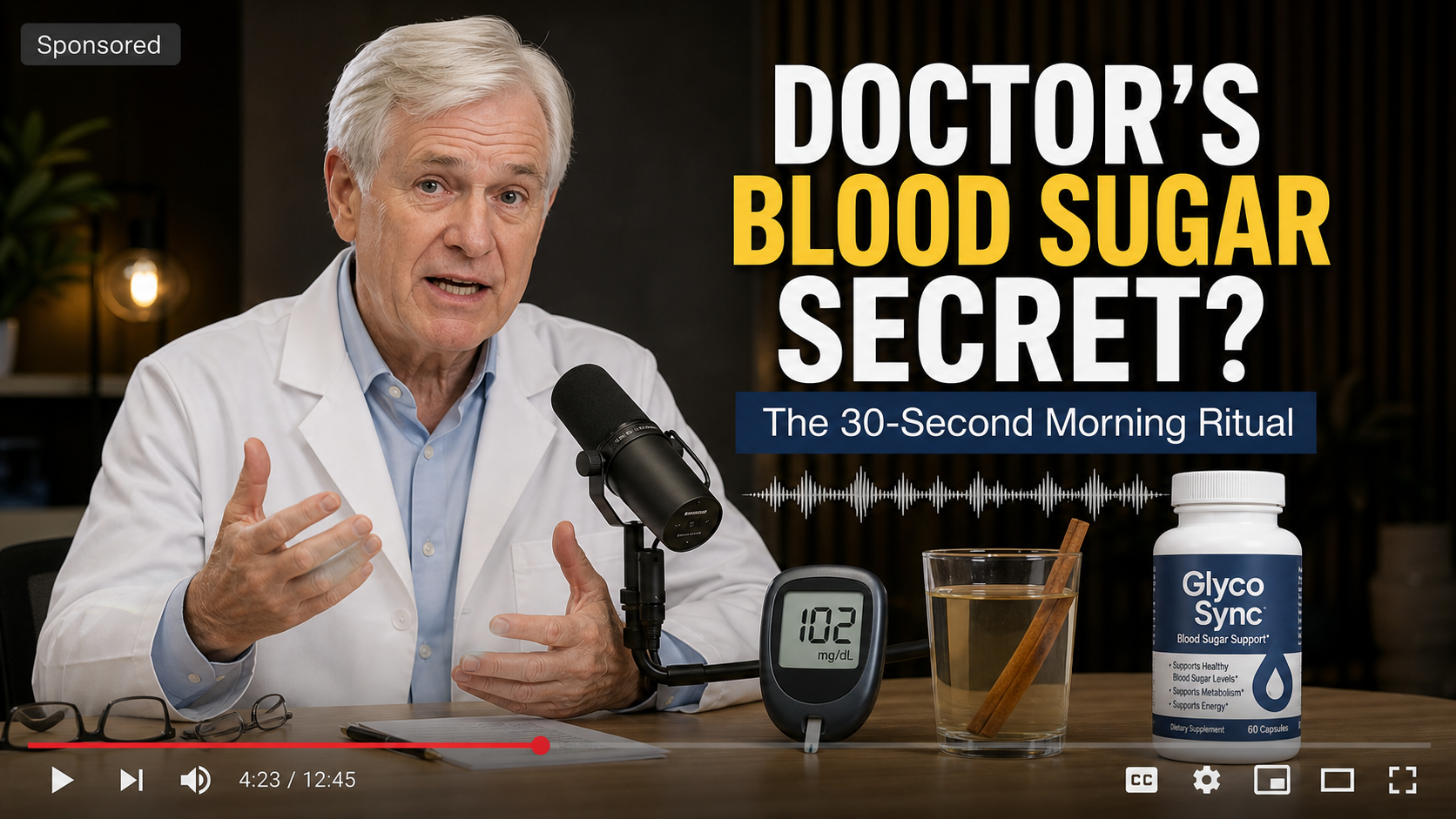
A respected-looking doctor leans toward a podcast microphone and says one morning ingredient can solve the blood sugar problem other physicians missed. The clip may sound like Dr. Steven Gundry, but the words do not come from him.
The Dr. Steven Gundry blood sugar secret scam uses AI imitation and fake journalism to move viewers from a simple recipe into a rotating supplement checkout. Glyco Sync is one bottle linked to the story, not the story’s permanent identity.
Overview
The endorsement is fabricated
Advertisements have used a manipulated voice and image to make Dr. Steven Gundry appear to support Glyco Sync and extraordinary diabetes claims. Other versions pull in Sean Hannity, Robert F. Kennedy Jr., Morgan Freeman, and fake network reporting.
No verified evidence shows that Dr. Gundry endorsed Glyco Sync or said it reverses type 2 diabetes. A voice that resembles a public figure is now cheap to manufacture and cannot be accepted without an official source.
The secret is built from familiar health language
The presentation talks about balancing blood sugar, fixing insulin resistance, and waking up a pathway doctors supposedly ignore. Cinnamon or another common ingredient gives the sales story a concrete and harmless-looking visual.
Real metabolic terminology is used as decoration rather than proof. The campaign does not show a credible clinical trial in which the exact finished supplement produced the promised results in people with diagnosed diabetes.
Glyco Sync can be replaced without changing the scam
Glyco Sync appears after the fake doctor has established trust. The campaign can redirect the same video to Glyco Boost, GlycoSynced, or another blood-sugar formula when one name becomes associated with complaints.
A durable warning must therefore focus on the fake endorsement, counterfeit publisher, unsupported disease claim, package design, and billing terms. Those features survive a label change.
- A social ad impersonates a recognizable doctor.
- A fake Fox or CNN-style page confirms the claim.
- A common ingredient is teased as the suppressed answer.
- A long video repeats a diabetes reversal story.
- A rotating supplement becomes the paid solution.
- Optional continuity terms and multi-bottle offers raise the financial risk.
Why the Doctor Impersonation Is Effective
A doctor’s image carries years of accumulated credibility. Viewers may have seen genuine books, interviews, or health discussions and assume a short sponsored clip is simply another appearance.
AI voice cloning weakens the old rule that hearing someone say something proves they said it. Scammers can now combine a real face, unrelated footage, synthetic speech, and captions into a persuasive new message.
The script also flatters the viewer. It suggests that clicking reveals knowledge hidden from the public, while skepticism means siding with a medical establishment that failed them.
A legitimate doctor-backed recommendation should be available through the doctor’s verified website or channel and should describe limitations, risks, evidence, and alternatives. The scam funnel provides certainty because certainty sells bottles.
See our Glyco Sync product review for bottle-level details. The warning here follows the fake doctor endorsement used to create the sale.
Why the Diabetes Reversal Claim Fails
Type 2 diabetes can sometimes enter remission through substantial and sustained changes under medical supervision, but a supplement ad cannot promise that outcome to every viewer. Type 1 diabetes requires insulin and is not reversed by a pantry ritual.
The phrase supports healthy blood sugar is not equivalent to treats diabetes. The first is common supplement language. The second is a disease claim that requires a level of evidence the advertorial does not provide.
Ingredients that may influence glucose can also interact with insulin or other glucose-lowering medication. Combining them without supervision may contribute to unexpected high or low readings.
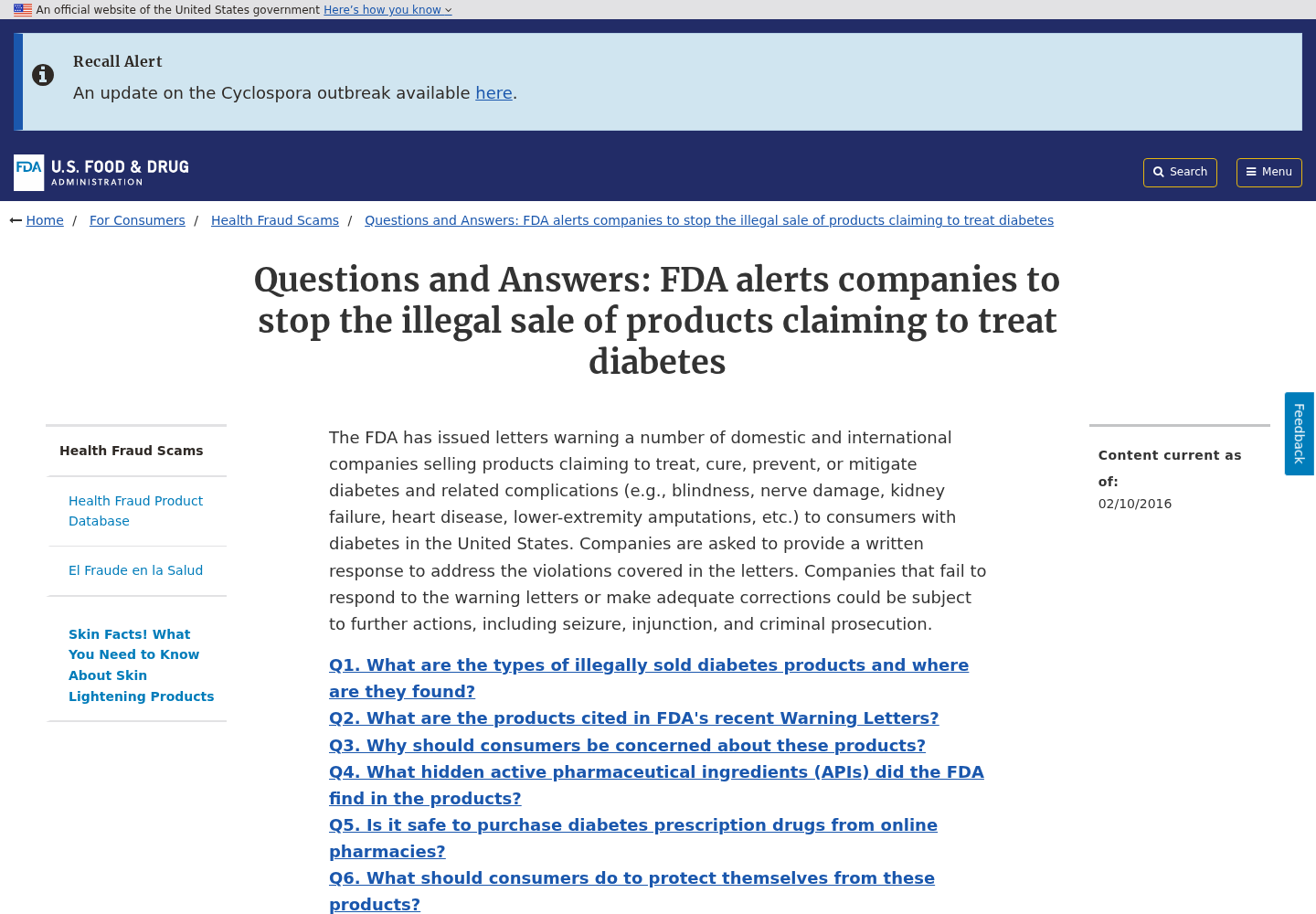
The FDA warns that unapproved products claiming to treat diabetes can delay effective care. The risk is not limited to losing money; it includes preventable eye, kidney, nerve, cardiovascular, and emergency complications.
A glucose reading shown in a testimonial is only one moment. Meals, medication timing, illness, stress, sleep, and meter accuracy all affect the number. A seller cannot turn one attractive reading into proof that its formula treated the underlying condition.
How the Dr. Steven Gundry Blood Sugar Secret Scam Works
Step 1: A doctor-style video stops the scroll
A sponsored post opens with a recognizable face or a close imitation. Captions promise a simple morning secret for stubborn blood sugar and say the information may soon be removed.
The video is optimized for silent viewing, with bold subtitles and a glucose meter. The apparent doctor reaches the claim before the viewer has time to check the account that paid for the ad.
Step 2: AI makes the endorsement sound personal
Synthetic audio can reproduce cadence and accent while lip-sync software changes mouth movement. The result sounds like a candid warning that conventional advice missed the real problem.
Search for the exact quote on the doctor’s verified properties. If the only copies are sponsored posts, affiliate pages, and anonymous video hosts, the endorsement is not established.
Step 3: A counterfeit news page supplies social proof
The click may lead to a Fox News or CNN Health imitation with a dramatic headline about Big Pharma trying to suppress the discovery. The actual domain has no relationship with either network.
Fake comments and testimonials beneath the video make it appear that thousands of ordinary viewers confirmed the result. Names, portraits, and praise on a seller-controlled page are not verified reviews.
Step 4: The recipe is delayed inside a long video
Cinnamon, a morning drink, or a blood sugar ritual is promised early. The narrator then spends much of the video describing symptoms, pharmaceutical costs, and miraculous recoveries.
A deceptive progress bar can create the impression that the recipe is seconds away. The longer a viewer waits, the harder it becomes to leave before the commercial reveal.
Step 5: One pathway is blamed for every problem
The presentation reduces diabetes to one blocked hormone, toxin, or deficiency. Diagrams look scientific, but they do not demonstrate that the advertised bottle safely changes patient outcomes.
Ingredient citations may be real while the conclusion is false. Evidence about cinnamon or one plant cannot be transferred automatically to a proprietary multi-ingredient formula.
Step 6: Glyco Sync replaces the free secret
The narrator says ordinary ingredients vary in strength or require impossible preparation. Glyco Sync then appears as the measured, convenient version that viewers can purchase immediately.
The package grid may advertise a low per-bottle figure while preselecting 3 or 6 bottles. Calculate the full amount, shipping, tax, and every checkbox before authorizing payment.
Step 7: Private labels and continuity can extend the charge
Glyco Sync terms have described an optional VIP program that sends another 1, 3, or 6-month supply at 30, 90, or 180-day intervals. A buyer must specifically verify whether that option was selected at the checkout used.
The same terms also reserve the ability to ship a different private label. That clause demonstrates why a product name cannot be the only identifier when disputing a charge or tracking a campaign.
Company, Address, and Fulfillment Red Flags
The terms contain unfinished placeholders
A current GlucoSynq terms page repeatedly displays {domain} where the business or product should appear. It also names Elite White Ltd in an arbitration clause without clearly explaining how that entity relates to the advertised brand.
A company asking for payment should present a consistent legal name, jurisdiction, address, support channel, and billing descriptor. Template placeholders are a serious quality and accountability warning.
The Pinellas Park address does not identify a factory
The terms list 7780 49th St North, PO Box 513, Pinellas Park, Florida. A post-office box can receive correspondence, but it does not prove that the brand has offices, laboratory staff, or manufacturing at that location.
The seller also says third-party shipping may be used. Consumers should distinguish the legal merchant, payment processor, fulfillment provider, private-label owner, and actual manufacturer.
The support and autoship details must match the receipt
The page lists +1-888-704-1133 and template-style support language. It says VIP shipments can recur after an opt-in and that cancellation may require contacting support.
Before buying, ask support to identify the merchant descriptor and confirm in writing whether the order is one-time. After buying, use the number and email on the confirmation and card statement, not a contact copied from an affiliate review.
Private-label flexibility weakens traceability
The terms say customers may receive the same claimed product under different labeling. That creates obvious problems when a consumer tries to compare ingredients, identify complaints, or prove which bottle was ordered.
Mass-produced supplements may come from domestic or overseas contract factories, including China. The concern is the absence of a verified lot, manufacturer, importer, certificate of analysis, and responsible company, not a blanket assumption about one country.
Warning Signs to Check Before You Order
- The endorsement is absent from Dr. Gundry’s verified channels.
- The network logo appears on a domain unrelated to the network.
- The page promises reversal while the bottle uses support language.
- A progress bar slows before the order button appears.
- The terms contain {domain} placeholders.
- A PO box is presented without a verifiable headquarters or factory.
- The seller may substitute another private label.
- An optional VIP program can create recurring shipments if selected.
The fake doctor is only the entrance. Template errors, private-label substitution, and optional continuity terms reveal the commercial system waiting behind the medical performance. None of those details validates the advertised treatment claim.
What to Do if You Have Fallen Victim to This Scam
- Cancel both the order and any VIP enrollment. Contact the seller in writing and ask whether the checkout activated the optional continuity program described in the terms. Cancel unshipped bottles, future deliveries, and marketing consent, then request a cancellation number.
- Ask the bank to review the exact authorization. Call the issuer using the number on the card. Explain that a fake Dr. Steven Gundry endorsement led to the purchase and distinguish the expected one-time amount from any larger bundle, upsell, or recurring charge.
- Document the product name ordered and the label received. Save the ad, fake news page, checkout boxes, terms, receipt, parcel, and every side of the bottle. This matters because the seller’s policy allows another private label to be shipped.
- Track the refill schedule as well as the statement. Look for emails mentioning 30, 90, or 180-day shipments and review the account for an unfamiliar descriptor. Challenge an unauthorized transaction promptly and keep a record of every cancellation attempt.
- Keep diabetes treatment safe and continuous. Contact the clinician managing your diabetes and disclose the supplement and dose. Continue glucose checks as directed, do not stop insulin or medication because of the video, and seek urgent care for severe symptoms or dangerous readings.
- Clean up the device if the funnel installed anything. Remove unexpected downloads, browser extensions, or site-notification permissions. Run Malwarebytes with a full scan to identify malicious or unwanted software associated with the advertising path.
- Reduce the chance of seeing the impersonation again. AdGuard can block many known scam domains, intrusive advertisements, and redirects. It cannot validate a doctor endorsement, so always compare future clips with the doctor’s verified channels.
- Report the medical impersonation. Give the platform the advertiser account and video URL, and file a report with the FTC at ReportFraud.ftc.gov using the seller and billing details. Send a serious product reaction to FDA MedWatch.
- Ignore paid chargeback or recovery promises. A genuine bank does not require an outside recovery agent to release a refund. Do not send an upfront fee, card image, or one-time banking code to someone who claims to recover supplement losses.
Frequently Asked Questions
Did Dr. Steven Gundry endorse Glyco Sync?
No verified endorsement was found. The ads use manipulated media to make him appear connected to a blood sugar formula he did not publicly endorse.
Can a morning cinnamon drink reverse type 2 diabetes?
No pantry drink is a universal diabetes reversal treatment. Any change to medication, insulin, diet, or supplements should be discussed with the clinician managing the condition.
Is Glyco Sync always an automatic subscription?
No. The terms describe an optional VIP continuity program that requires an opt-in. The exact checkout, confirmation, and subsequent charges determine whether a buyer joined it.
Why might a different bottle arrive?
The seller’s terms reserve the right to use another private label. Photograph the package, seal, label, lot, and invoice before opening it.
What is Elite White Ltd?
The name appears in an arbitration clause, but the template does not clearly explain its role relative to Glyco Sync. That lack of clarity is a company-transparency concern.
Is an FDA-registered facility proof the formula works?
No. Facility registration does not mean the FDA approved the supplement or verified a claim that it treats or reverses diabetes.
The Bottom Line
The Dr. Steven Gundry blood sugar secret scam borrows a doctor’s credibility, invents a suppressed discovery, and uses a fake publisher to hide the moment when education becomes a sale.
Glyco Sync is one commercial destination. The seller’s own private-label language shows how easily the bottle can change while the AI endorsement and long video remain in circulation.
Do not let a familiar voice replace verification. Find the original statement, inspect the real domain, demand finished-product evidence, identify the legal merchant, and read every continuity term before giving a supplement funnel your card.

Join the discussion
0 commentsShare your experience or ask a question about this article.
Discussion
Start the conversation
Have a question or something useful to share? Add the first comment.