

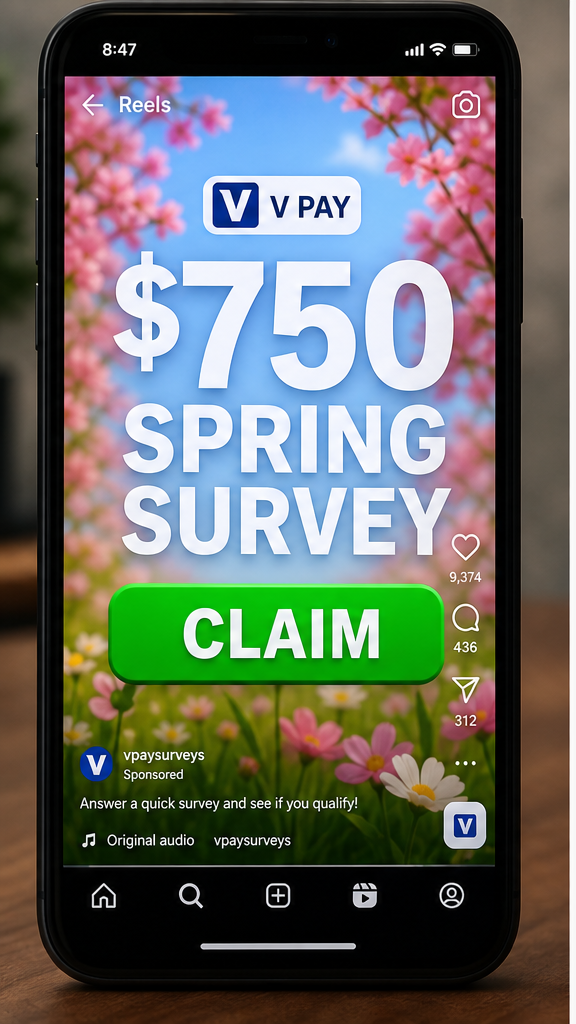
A bright spring video appears between ordinary posts. It says a few survey answers can unlock $750 through Venmo, and the claim button looks too simple to be dangerous.
The questions really are simple. What comes after them is not. The $750 Venmo Spring Survey scam turns a familiar payment brand into the front door of a long reward funnel built around personal data, third-party offers, and carefully buried conditions.
Overview
The ad presents a reward as an official seasonal event
The social post is framed as a limited Venmo promotion for spring. Some versions use an edited influencer clip, a fake employee confession, or comments claiming that the money arrived instantly after a short survey.
Venmo does not run the offer shown in these ads. Its own safety guidance warns that scammers may send links claiming a user won money, then ask for login or account information. The brand name creates trust, but the destination belongs to a separate marketing network.
A three-question survey hides a much larger bargain
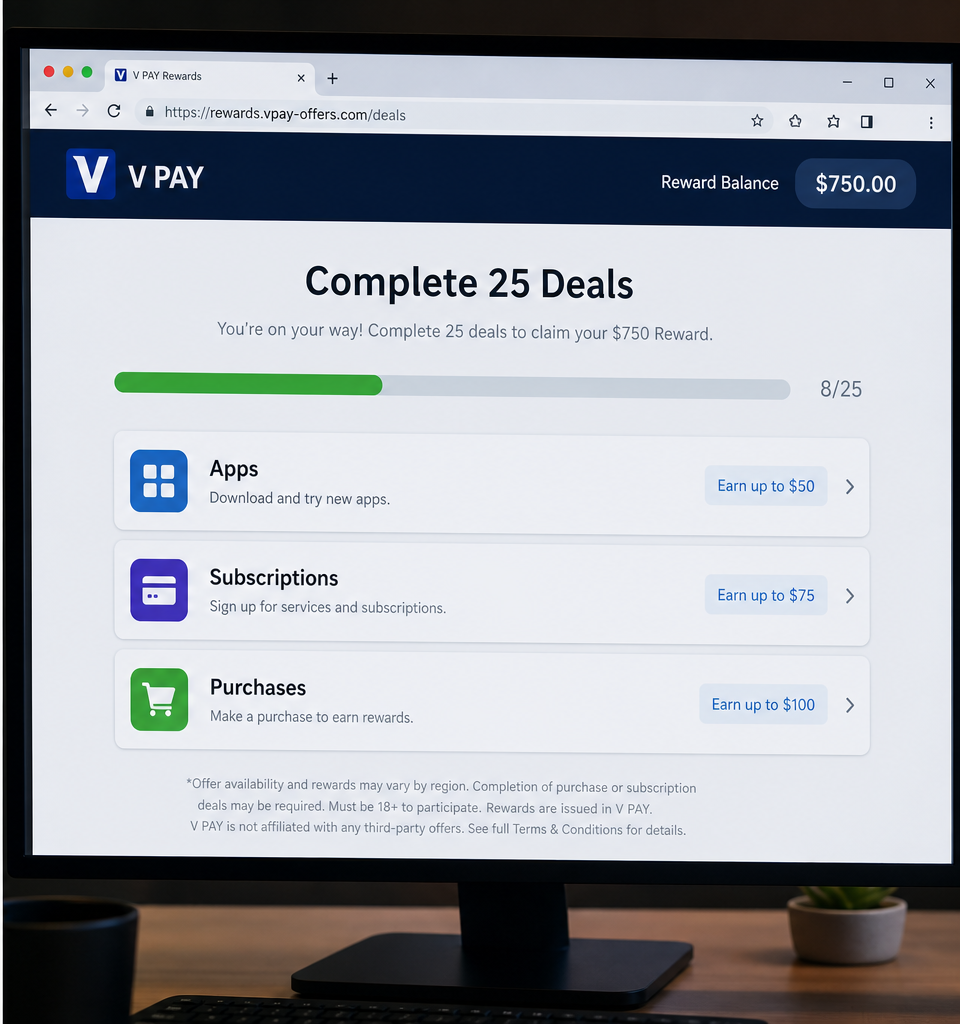
The first page may ask about shopping habits, age, or how the reward would be used. After those harmless questions, the visitor is told to register and complete a specific number of deals before becoming eligible for the advertised amount.
Deals can include downloading apps, starting trial subscriptions, joining services, or making purchases. Some users may qualify under the formal rules, so the problem is not that every reward program is imaginary. The deception is the suggestion that Venmo is giving away easy money for a quick survey.
The funnel is valuable even when no reward is issued
A completed registration can generate marketing value immediately. Names, email addresses, phone numbers, demographic answers, and consent selections may be shared with advertisers long before the participant reaches the highest reward tier.
The same infrastructure can replace Venmo with Cash App, PayPal, Walmart, Shein, DoorDash, or another popular brand. That is why the enduring warning is the seasonal survey story, not the temporary name printed on the first screen.
- A viral short video promises $750 for a quick spring survey.
- The click leaves Venmo and enters an unrelated reward domain.
- Simple questions lead to registration and marketing consent.
- The reward requires multiple third-party deals at different levels.
- Some deals involve purchases or trials that can renew automatically.
- The promotion can change brands while the deal wall remains the same.
Why the Venmo Name Makes the Offer Feel Safe
Venmo is familiar, casual, and closely associated with small payments between people who know each other. Seeing its name beside a reward can feel less risky than seeing an unknown sweepstakes company asking for the same information.
The ad also uses seasonal language to make the campaign sound temporary and plausible. Retailers genuinely run spring promotions, so a viewer may assume the video is one more marketing event rather than a lead-generation funnel.
Social proof does the rest. A video can show thousands of likes, excited comments, and a creator apparently demonstrating a successful payout. Engagement can be bought, copied, filtered, or generated by accounts connected with the campaign.
The decisive test is the destination. An authentic Venmo account action should be visible inside the official Venmo app or on Venmo.com. A reward page on a separate domain is not made official by colors, logos, or a payment-app selection screen.
The safest response is to close the social link and open Venmo independently. If there is no matching offer in the official app, help center, or verified accounts, the promotion should not receive login details, card data, or marketing consent.
What the Reward Terms and FTC Record Reveal
Federal records describe a reward structure in which consumers were required to complete deals across several levels. The FTC complaint against Fluent, RewardZone USA, and related entities said a $1,000 reward could require 25 deals, including 15 at the highest level.
The complaint also alleged that many deals involved trials that later billed monthly and that important costs were not clearly displayed on the deal wall. One example began as a $1 trial and could renew at $26.89 each month after seven days.
A 2023 stipulated order imposed requirements concerning reward disclosures, deal tracking, consumer consent, and other practices. That official record is stronger evidence than either an affiliate claiming everyone gets paid or a commenter insisting nobody ever does.
The relevant conclusion is precise: the social ad can radically understate the effort, cost, privacy exposure, and eligibility rules attached to the headline reward. Completing the initial survey does not place $750 in a Venmo balance.
A visitor must calculate the total cost of every required deal, the renewal dates, the time limit, the identity-verification process, and the chance of disqualification. If those facts are not clear before registration, the word free is doing work the terms do not support.
How the $750 Venmo Spring Survey Scam Works
Step 1: A viral video promises an easy seasonal payout
The campaign begins on TikTok, Instagram, Facebook, or another short-video feed. A creator points at a caption saying Venmo is paying selected users $750 for answering a few spring questions.
Some ads imply the promotion is secret, newly released, or available only while a timer is running. That urgency discourages viewers from opening the real Venmo app and checking whether the event exists.
Step 2: The link passes through tracking and affiliate pages
The button does not normally open Venmo. It can pass through one or more tracking domains that identify the referring advertisement, device, location, and campaign before loading a reward registration page.
This matters because the promoter may be paid for a lead or registration. The person making the exciting video and the company operating the reward program may be different businesses with different incentives.
Step 3: Three harmless questions lower resistance
The landing page asks easy questions such as whether the visitor uses Venmo, shops online, or is over 18. Almost every answer moves forward, which creates the impression that the person has already qualified.
The survey does not award $750. It prepares the visitor to enter contact details and accept terms. A progress indicator can make the process look nearly complete before the difficult conditions appear.
Step 4: Registration opens the marketing consent funnel
The next page asks for a name, email, phone number, address, or date of birth. Consent language may authorize communications from the operator and a long list of marketing partners.
Read every checkbox and linked disclosure. A brightly colored Continue button can visually dominate language about calls, texts, data sharing, and eligibility that has more practical importance than the survey answers.
Step 5: The $750 reward becomes a multi-level deal wall
Only after registration does the participant learn that the desired reward requires multiple deals. Lower levels may be simple, while higher levels can require paid services, purchases, deposits, or trials.
The program may prevent users from viewing later deals until earlier ones are complete. That makes the final cost difficult to know at the beginning and encourages continued spending after time and money have already been invested.
Step 6: Trial prices can turn into recurring charges
A deal advertised with a small initial amount may become a monthly subscription if it is not cancelled within a short window. Each deal can have its own merchant, terms, support channel, and renewal date.
The reward operator is not necessarily the company collecting those later fees. Participants may need to cancel several merchants separately, which is why one unsubscribe request may not stop all billing.
Step 7: Verification, tracking, and disqualification create friction
After the deals, the participant may need to submit identification, prove completion, wait for tracking to update, and meet a deadline. An app that failed to credit or a duplicate household entry can derail the claim.
Even if a reward is eventually available to some qualified users, the social promise remains misleading when it presents this process as a quick official Venmo survey. The advertiser can then recycle the same funnel under a new brand or season.
Company, Address, and Fulfillment Red Flags
Venmo is the borrowed brand, not the reward operator
The initial creative uses Venmo to attract attention, but the registration and deal wall may be operated by a marketing company such as RewardZone USA or another rewards network. The affiliate that posted the video can be a third entity.
Compare the legal name in the terms with the domain, privacy notice, consent list, reward status page, and every merchant charging a deal. One recognizable logo does not make those businesses part of Venmo.
A privacy-service address does not identify the operator
Domain records for some reward sites use privacy services such as Domains By Proxy at 100 S. Mill Avenue in Tempe, Arizona. That address protects registration data and should not be mistaken for the reward company's operating office.
An accountable program should provide a legal entity and usable dispute route in its own policies. A registrar contact, virtual mailbox, or generic office suite cannot explain who collected the lead or who controls a specific reward claim.
Support is fragmented across the reward and every deal
A participant may need the reward operator for tracking, one provider for an app trial, another for a membership, and the bank for a card dispute. Generic replies from one company do not cancel a separate merchant's renewal.
Before completing a deal, locate a real cancellation route and ask whether the trial renews, under what descriptor, and on what date. If support cannot answer those questions before payment, do not expect the reward deadline to make it easier later.
The real product is data and recurring customer value
This campaign does not ship a supplement, but traceability still matters. The supply chain consists of affiliates, tracking platforms, lead buyers, reward operators, and third-party merchants that can each receive information or money.
Write down which company performs each role. If the page does not clearly disclose who gets the data, who validates deals, who issues the reward, and who bills a subscription, the consumer cannot give informed consent.
Warning Signs to Check Before You Act
- The promotion exists in a social video but not inside the official Venmo app.
- The button opens a reward domain unrelated to Venmo.
- Nearly every survey answer appears to qualify.
- The page asks for contact data before showing all requirements.
- A large reward is displayed more clearly than the number of paid deals.
- Trial renewal prices are separated from the deal-selection screen.
- Different companies handle the ad, reward, deal, and charge.
- A timer pressures the user before the total cost can be calculated.
The clearest warning is the jump from an official-looking Venmo survey to an unrelated deal wall. Stop at that handoff. A payment brand does not sponsor a promotion merely because an affiliate placed its name above the button.
What to Do if You Have Fallen Victim to This Scam
- Stop completing offers and cancel every trial. Do not finish more deals just because the page says you are close. Open each confirmation email, identify every app, trial, membership, or purchase you started, and cancel it with the actual provider. Save the cancellation page and confirmation number.
- Contact the card issuer from a trusted number. Use the number printed on the card or inside the bank's official app. Explain which charges came from reward deals, which ones you knowingly approved, and which renewals were not expected. Ask about disputes, merchant blocks, and whether the card should be replaced.
- Secure the Venmo account separately. Open the official Venmo app directly, review recent activity, change the password if it was entered anywhere else, and enable available security protections. Venmo says login details should only be entered on Venmo.com or in the official app.
- Preserve the entire reward path. Save the sponsored video, profile name, redirect domains, advertised $750 amount, deal wall, eligibility rules, receipts, confirmation emails, and statement descriptors. A screenshot of the first ad alone does not show the subscriptions and data-sharing permissions that followed.
- Withdraw marketing permission where possible. Use the privacy and unsubscribe tools on the exact reward site you visited. Request deletion of personal data and revocation of permission for calls, texts, and emails. Continue blocking unknown senders because information may already have reached multiple advertising partners.
- Inspect the device used for the offers. Remove unfamiliar apps, browser extensions, notification permissions, and configuration profiles. Run a full Malwarebytes scan to detect malicious or potentially unwanted software that may have arrived through an offer, download, or redirect.
- Reduce repeat exposure to the same network. AdGuard can block many known malicious advertising domains, pop-ups, and tracking redirects used to distribute reward funnels. It cannot decide whether a promotion is genuine, so still verify future offers through the brand's official app or website.
- Report the deceptive promotion. Report the ad to the social platform, send impersonation evidence to Venmo, and submit the redirect chain and transaction details to the FTC at ReportFraud.ftc.gov. If a specific deal provider billed you, report that merchant separately as well.
- Ignore anyone promising a guaranteed reward recovery. A new caller may claim to release the $750 or recover subscription charges for an advance fee. Do not send money, identification, or one-time codes. Work with the bank, the actual merchant, Venmo, and official regulators.
Frequently Asked Questions
Is the $750 Venmo Spring Survey an official Venmo promotion?
No. The viral offer described here is not an official Venmo survey. Venmo warns about fake prize or cash-reward links and says account details should be entered only in its app or on Venmo.com.
Can anyone receive a reward after completing the deals?
Some formal reward programs may issue rewards to people who satisfy every rule. That does not make the social ad honest about sponsorship, effort, cost, tracking, or the likelihood of qualification.
Why does the page require 25 deals?
Higher reward tiers can require multiple deals across several levels. The number and type vary by program, so read the current requirements before starting any offer.
Will one cancellation stop all subscriptions?
Usually not. Each third-party deal can create a separate merchant relationship. Cancel with every provider and keep individual confirmation records.
What if I entered my Venmo password on the reward page?
Change it immediately through the official app or Venmo.com, review account activity, secure the linked email, and contact Venmo support if anything looks unfamiliar.
Why does the same survey sometimes show another brand?
The payment or retail brand is an interchangeable hook. Affiliate systems can use the same registration and deal wall behind Cash App, PayPal, DoorDash, Walmart, and other themes.
The Bottom Line
The $750 Venmo Spring Survey scam compresses a complicated commercial exchange into one cheerful sentence: answer a few questions and collect money. The real path can involve marketing consent, 25 deals, paid trials, recurring charges, tracking rules, and identity verification.
Do not judge the offer by the first three questions. Judge it by the full cost, every renewal, the companies receiving your data, and whether the supposed sponsor confirms the promotion on an official channel.
If Venmo is not hosting the offer and the requirements appear only after registration, close the page. A genuine promotion should become clearer as you read, not more expensive and harder to identify.

Join the discussion
0 commentsShare your experience or ask a question about this article.
Discussion
Start the conversation
Have a question or something useful to share? Add the first comment.