

A calm expert appears in a short social video and describes a simple Japanese discovery for burning feet, numb toes, and stabbing nerve pain. The story sounds unusually specific, which is exactly why the Japanese neuropathy cocktail scam can feel more believable than an ordinary supplement ad.
Before mixing anything or entering a card number, slow the story down. The authority, medical certainty, and urgency are doing most of the selling, while the product waiting at the end is far more ordinary than the video suggests.
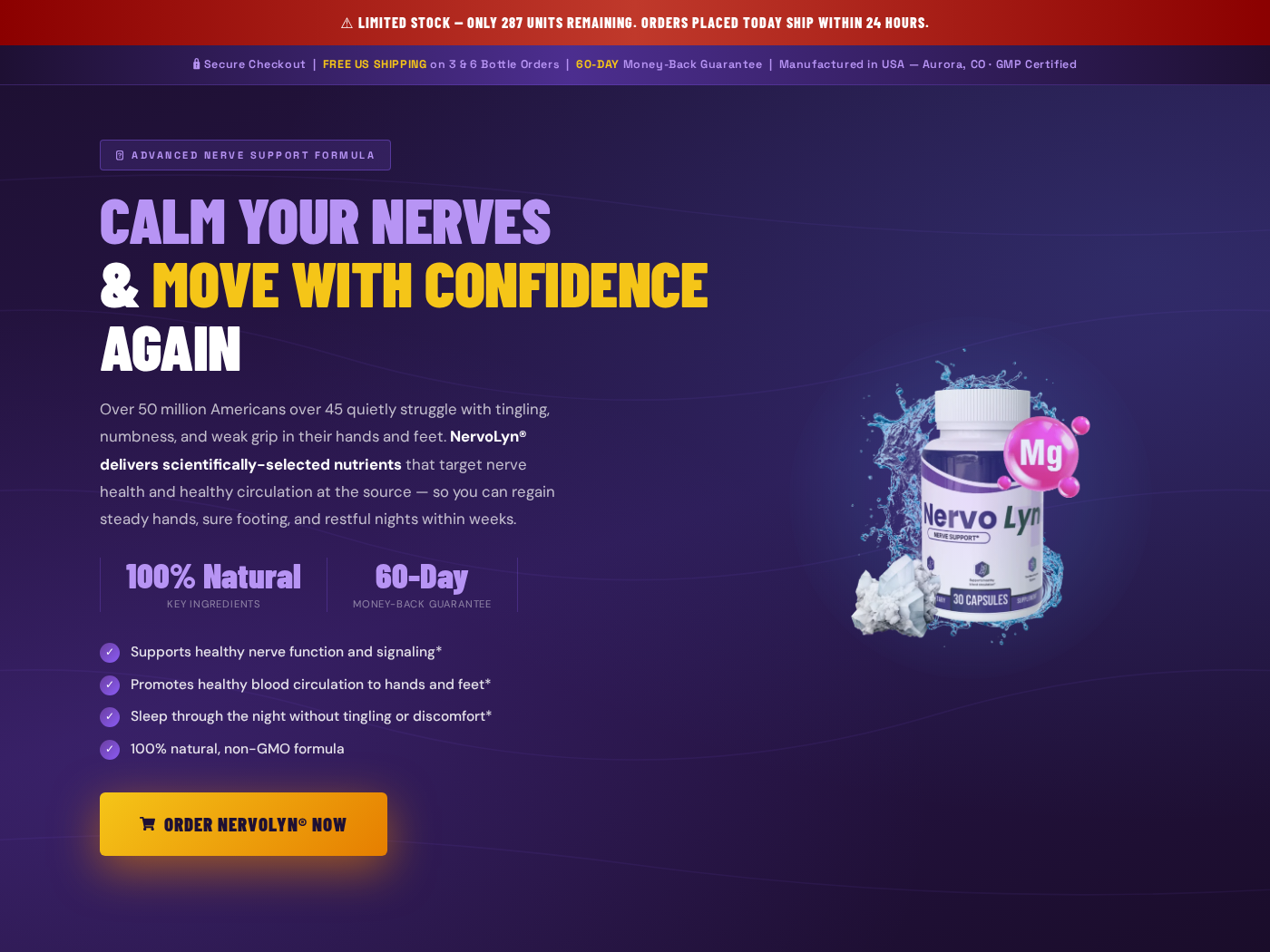
The page reached from these promotions may present a bottle such as NervoLyn as the answer to a complicated nerve problem. It uses clinical-looking language about supporting nerve health, healthy circulation, comfort, and blood sugar, then surrounds those statements with testimonials and large bundle discounts.
That presentation matters. A visitor who arrived after watching an apparent expert explain a hidden remedy does not evaluate the bottle like a normal dietary supplement. The visitor has already been primed to see it as the missing treatment that doctors supposedly overlooked.
NervoLyn is one current product example, not the permanent identity of the scheme. The same Japanese remedy story can lead to a different bottle next month while preserving the same video format, symptom list, advertorial, bundle ladder, and checkout pressure.
Overview
The medical story is the real product
The campaign begins with familiar neuropathy symptoms and turns them into a dramatic origin story. It may describe a two-ingredient cocktail, a discovery from Japan, or a specialist who found the root cause that the medical establishment ignores. These details make the pitch feel like education before any bottle appears.
Peripheral neuropathy is not one condition with one universal fix. It can have many causes, including diabetes, injury, infection, autoimmune disease, medication effects, vitamin problems, and other disorders. Treatment depends on the type, location, cause, and symptoms, so a universal kitchen recipe is a warning sign rather than a medical breakthrough.
AI provides borrowed authority
Modern versions use synthetic voices, altered interview clips, or a presenter designed to resemble a doctor or television guest. The video may be smooth enough to survive a quick glance, but watch the mouth, blinking, lighting, and sentence rhythm. Small inconsistencies often appear when the clip is slowed or viewed with sound off.
The endorsement is valuable because it transfers trust from medicine or television to an unknown seller. The FTC has warned that scammers use fake celebrity endorsements and altered media to sell products. A recognizable face is not proof that the person recorded the message, tested the product, or knows the brand exists.
The bottle is an interchangeable endpoint
On the NervoLyn page, current bundles were displayed at $178 for two bottles, $216 for three, and $294 for six. The page says the purchase is one-time and not a subscription. That is important because a careful analysis should not invent recurring billing when the visible offer denies it.
The larger concern is the gap between the ad story and the actual transaction. The checkout sells a dietary supplement, not a proven cure or a personalized diagnosis.
The FDA does not approve dietary supplements for effectiveness before they are marketed, and natural ingredients can still interact with medicines or be inappropriate for an individual condition.
- A fake or altered expert video introduces a secret Japanese nerve remedy.
- The story promises a simple answer to symptoms that can have many causes.
- A fake news-style page or long advertorial delays the product reveal.
- The visitor is moved toward a costly multi-bottle supplement bundle.
- Contact and address checks reveal a shared fulfillment operation, not a specialist clinic.
Why Neuropathy Sufferers Are Easy to Target
Nerve pain can be exhausting, unpredictable, and difficult to explain. Some people spend months trying to control burning, tingling, numbness, or electric sensations while worrying that the problem is becoming permanent. That frustration creates an opening for anyone promising certainty.
The scam does not begin by asking the viewer to trust an unfamiliar supplement brand. It first tells the viewer that common medical advice has failed because doctors treat symptoms instead of a hidden cause. Once that frame is accepted, skepticism toward the seller can feel like skepticism toward recovery itself.
The Japanese setting is also deliberate. It borrows associations with longevity, traditional knowledge, and disciplined health routines without providing a named study, a verifiable medical institution, or a recipe that can be evaluated independently. Geography becomes a substitute for evidence.
Real neuropathy care starts with the cause. A clinician may review blood sugar, medications, vitamin status, injuries, alcohol use, family history, and other factors. A sales video that diagnoses every viewer from a list of broad symptoms cannot do that work, no matter how confident the narrator sounds.
This is why the safest question is not whether one ingredient has ever been studied. Ask whether the specific advertisement accurately identifies the speaker, the condition, the dose, the evidence, the risks, and the seller. In these funnels, that chain usually breaks long before checkout.
What the NervoLyn Pages Reveal
NervoLyn's current sales page uses familiar wellness phrases such as supporting nerve health, healthy circulation, blood sugar, and comfort. These are softer than the sweeping cure language that may appear in an upstream ad. That difference allows a dramatic promotion to create expectations that the final bottle page never clearly accepts.
The official contact page lists support@nervolyn.com and +1 (720) 619-8477. Its address is 19655 E 35th Drive, Suite 100, Aurora, Colorado.
That address is publicly identified by ShipOffers as one of its fulfillment locations, which means it is a place that stores and ships products for brands rather than proof of a neurological clinic, research laboratory, or manufacturer.
The terms page adds another layer of inconsistency. It refers generically to the company and includes a mobile messaging clause naming Nature's Formulas. It also provides +1 720 513 2923 for cancellation or refund matters, which differs from the number on the contact page.
One mismatch can have an innocent explanation, but buyers deserve a clear legal entity and one reliable support path before paying.
The support number shown on the NervoLyn contact page also appears on pages for several unrelated supplements. Shared support infrastructure is not automatically fraudulent, yet it undermines the impression of a dedicated specialist brand. It suggests a templated direct-response operation where branding can change more quickly than the call center behind it.
Several similarly named NervoLyn domains have appeared with different company and address details. A shopper should not assume that every look-alike domain belongs to the same operator.
The clutter itself is a risk because it makes it harder to know which policy governs the order, where a return must go, and which business will appear on the statement.
How the Japanese Neuropathy Cocktail Scam Works
Step 1: A symptom-heavy AI video finds the right audience
The first clip lists burning feet, pins and needles, numb toes, nighttime pain, poor balance, or sensitivity to touch. Social platforms can deliver it to people who have engaged with health content, so the message arrives when it feels personally relevant.
The presenter may look like a doctor, a television guest, or a patient with a remarkable recovery. The video moves quickly from empathy to certainty and claims the answer is a simple Japanese cocktail rather than a complicated medical process.
Step 2: The viewer is sent to a fake editorial page
The click rarely opens a plain product listing. It leads to a long article or video page styled like a health report, interview, or trusted news segment. Familiar colors, studio graphics, and logos make paid advertising feel independent.
The page often says the information may be removed, that a discovery threatened an industry, or that supplies are limited. Those claims discourage the viewer from leaving to verify the speaker, recipe, or publication.
Step 3: A dramatic mechanism makes the promise sound scientific
The advertorial describes toxins, inflammation, damaged nerve insulation, poor circulation, or a hidden deficiency as the single root cause. A simple animation may show nerves being repaired, even though no examination has established what is causing the viewer's symptoms.
Scientific vocabulary is mixed with vague phrases such as clinically inspired or doctor formulated. The effect is precision without accountability. There may be no study for the exact formula, no trial matching the advertised outcome, and no evidence that the presenter used it.
Step 4: The secret recipe becomes a branded supplement
After a long build-up, the promised kitchen solution turns into a bottle available only through the linked page. NervoLyn is one example, but the destination can change while the opening video remains almost identical.
This switch is easy to miss because the story has already framed the bottle as the convenient form of the discovery. The visitor is no longer comparing supplements. The visitor believes they are securing access to a suppressed treatment.
Step 5: Bundle pricing raises the order value
The page makes the smallest package look poor value and highlights three or six bottles as the sensible choice. Per-bottle prices, crossed-out totals, free shipping, bonus guides, and countdowns create the impression that waiting costs money.
Read the final quantity and total, not only the large per-bottle number. Check whether shipping, warranties, digital extras, or another product have been added. Take a screenshot before pressing the last purchase button.
Step 6: Soft disclaimers sit far below the strong promise
The sales language may imply relief or restored function, while the footer says the statements were not evaluated by the FDA and the product is not intended to diagnose, treat, cure, or prevent disease. The legal disclaimer does not erase the impression created by the video.
A legitimate supplement still needs careful consideration, especially with diabetes medicines, blood thinners, kidney problems, allergies, or multiple prescriptions. The seller's marketing page is not a substitute for a pharmacist or clinician who knows the buyer's history.
Step 7: The campaign rotates when attention turns negative
Ad accounts, presenters, domains, and bottle labels can be replaced independently. Complaints or fact checks may attach to one name while the next promotion uses a new product and a slightly different Japanese origin story.
That is why the story deserves a durable warning. Search the narrative, the phone number, the address, and exact sentences from the policy. Searching only the newest bottle name catches the smallest and most disposable part of the operation.
Company, Address, and Fulfillment Checks
A warehouse is not a medical company
The listed Aurora address belongs to ShipOffers, a fulfillment provider. A fulfillment center can legally receive inventory and send parcels for many brands, but it does not establish who developed the formula, who reviewed the claims, or where the seller's decision-makers are located.
If a polished medical story ends at a shared shipping warehouse, the buyer should demand clearer answers. Ask for the legal entity accepting payment, its state of registration, and the manufacturer shown on the bottle. A return address alone is not a corporate identity.
Changing phone numbers create friction
NervoLyn's contact and terms pages present different phone numbers. The contact number also appears with unrelated supplement brands. That pattern looks more like centralized campaign support than a dedicated nerve-health practice.
Call before buying. Ask the agent to name the legal seller, confirm the exact product, state whether any renewal exists, and provide the return process. If the answers are vague or the number cannot be reached, do not assume support will improve after a large order.
Domain clutter weakens accountability
Multiple similar domains can show different addresses, policies, or business names while appearing to sell the same brand. A buyer may save one page, order through another, and later receive return instructions from a third. That confusion benefits the seller during a dispute.
Record the exact domain used at checkout and download its policies. Do not rely on a search result titled official website. Anyone can write that phrase, and search engines do not certify ownership or product quality.
Unknown manufacturing is a health risk
A warehouse label does not reveal where the capsules were made, whether the facility follows appropriate controls, or whether the finished batch matches the label. Without a complete Supplement Facts panel, lot details, warnings, and a traceable manufacturer, the buyer cannot meaningfully assess quality.
Do not assume a supplement was made in China merely because the marketing looks generic. The honest conclusion is that origin is unclear until the seller documents it. That uncertainty matters when a product is being pitched to people with diabetes, nerve disease, or other conditions that may already require medication.
Why the Pitch Fails a Basic Credibility Test
The strongest claim comes from the least verifiable part of the funnel. The AI video supplies the expert, the Japanese discovery, and the near-universal answer. The actual sales page retreats to general support language and a standard supplement disclaimer.
The business trail does not match the medical authority projected by the advertisement. A shared fulfillment center, reused support number, generic company wording, and multiple similar domains may all be operationally convenient, but together they make accountability harder for the customer.
None of this proves that every capsule is counterfeit or that no buyer can like the product. It does show that the dramatic remedy story should not be treated as reliable medical evidence. A physical bottle can exist while the endorsement and therapeutic narrative used to sell it are deceptive.
The sensible response is to separate symptom care from online shopping. Seek a real evaluation for new, worsening, one-sided, or balance-affecting nerve symptoms. If you still consider a supplement, review its exact ingredients and doses with a qualified professional rather than with the page collecting your card details.
Warning Signs to Watch For
- An unnamed Japanese recipe is presented as a universal answer to neuropathy.
- A doctor-like presenter cannot be verified outside the advertisement.
- The page resembles a news report but every route leads to the same checkout.
- The product appears only after a long medical story has built fear and hope.
- Different pages show different phone numbers, business names, or policy wording.
- The listed address is a third-party fulfillment center rather than a clinic or disclosed headquarters.
- The smallest bundle is made to look unreasonable beside a heavily promoted six-bottle option.
- The page uses cure-like implications while the footer disclaims treatment of disease.
One warning sign can be a mistake. Several working together show a sales system designed to make the story feel more certain than the evidence and the business identity really are.
What to Do if You Have Fallen Victim to This Scam
- Save the ad, order page, and receipt. Take screenshots of the Japanese neuropathy cocktail advertisement, the page that made the promise, every price shown at checkout, the confirmation email, and the package label. Save the page address and the date. These records help your bank understand what was represented before the seller changes or removes the funnel.
- Check the exact amount and merchant name. Compare the final card charge with the total you knowingly approved. Write down the merchant descriptor exactly as it appears, because it may not match the brand in the advertisement. Check pending and posted transactions for extra bundles, add-ons, foreign fees, or a second charge you did not expect.
- Contact the seller in writing. Ask the seller listed on your receipt to cancel any unshipped order, recurring plan, or future renewal and request a refund under the policy that applied on the purchase date. Email is better than relying only on a call because it creates a timestamped record. Keep the full conversation, case number, and any return authorization.
- Do not mail a return to an unverified address. A package sent to the wrong warehouse may be rejected and the seller may claim it was never received. Ask for the authorized return location in writing, use tracked shipping, photograph the contents and label, and retain the delivery record. Follow the stated deadline while also documenting any delay caused by support.
- Call your card issuer if the charge is wrong. Explain whether the problem is an unauthorized charge, an amount different from the checkout, goods not delivered, goods materially different from the advertisement, or a canceled renewal that continued. Ask about the dispute deadline and whether the issuer should block future charges from the same merchant descriptor.
- Watch for follow-up billing. Review statements for several months. A canceled card does not always cancel an underlying agreement, so send a written cancellation as well and ask the issuer how recurring payment updates are handled. Report every unfamiliar charge promptly instead of waiting for several renewals to accumulate.
- Secure accounts if you reused a password. Change any reused password, beginning with your email and payment accounts, and enable multi-factor authentication. If you downloaded a file, browser extension, or remote-support tool during the purchase, remove it and run a full scan with Malwarebytes. A normal product checkout should not require remote access to your device.
- Reduce exposure to the same advertising network. Report the ad to the social platform and use AdGuard to reduce malicious advertising, trackers, pop-ups, and repeat redirects. An ad blocker is not a substitute for judgment, but it can remove part of the infrastructure that repeatedly pushes deceptive advertorials to the same audience.
- Report the campaign. File a report with the FTC at ReportFraud.ftc.gov and with your state attorney general or national consumer-protection authority. Include the ad account, website, merchant descriptor, support details, amounts, and dates. Reports are more useful when they describe the path from the first ad to the final charge.
Frequently Asked Questions
Is the Japanese neuropathy cocktail a proven treatment?
No universal two-ingredient Japanese cocktail is established as a treatment for every form of peripheral neuropathy. Neuropathy has many possible causes, and treatment depends on identifying the cause and the pattern of nerve damage. A social video cannot diagnose that. Ask a clinician about persistent burning, numbness, weakness, balance changes, or rapidly worsening symptoms.
Did a real doctor endorse the product?
Do not assume so from the clip. Synthetic speech, face replacement, edited interviews, and look-alike presenters can produce convincing endorsements. Search for the full interview on the person's official website or verified account. If the only versions are ads that lead to a checkout, treat the endorsement as unverified.
Is NervoLyn automatically a subscription?
The NervoLyn page reviewed for this report explicitly described its current offer as a one-time purchase with no subscriptions. That should be recorded, not contradicted. Buyers should still inspect the final checkout and receipt because offers and domains can change, and they should monitor the merchant descriptor for charges they did not authorize.
Does the Aurora address prove NervoLyn is fake?
No. The address is associated with ShipOffers, a real fulfillment provider that ships products for brands. The issue is what the address does not prove. It does not identify a clinic, a research facility, the formula developer, or the legal headquarters. Buyers still need the entity taking payment and the manufacturer on the label.
Can a dietary supplement repair damaged nerves?
Some deficiencies and medical conditions may involve nutrients, but that does not validate a particular online formula or cure claim. Supplements can interact with medicine, contain doses inappropriate for an individual, or delay diagnosis. Discuss the exact label with a clinician or pharmacist and avoid stopping prescribed treatment because of an advertisement.
How can I verify a neuropathy product before buying?
Search the exact domain, phone number, address, merchant name, and sentences from the return policy. Confirm the Supplement Facts panel, ingredient amounts, warnings, manufacturer, lot information, renewal terms, and return destination. Then verify any named expert through an official source that does not link back to the seller.
The Bottom Line
The Japanese neuropathy cocktail scam succeeds by turning real pain into a simple secret, borrowing an expert's authority through AI, and revealing an ordinary supplement only after the viewer has accepted the story. The emotional journey is sophisticated even when the business trail is not.
Do not let a dramatic video diagnose you or hurry you into a multi-bottle order. Verify the speaker, follow the company and address trail, read the exact checkout, and get medical guidance for the cause of the symptoms. A careful pause protects both your health and your money.

Join the discussion
0 commentsShare your experience or ask a question about this article.
Discussion
Start the conversation
Have a question or something useful to share? Add the first comment.