

A former therapist appears to explain why ordinary stretching never reaches the true source of back pain. The solution is a triple-fusion back massager that seems to combine several treatments in one neat device, offered at a steep discount for a limited time.
The relief story is carefully constructed, but the more important investigation begins after the Buy Now button. Company identity, checkout additions, recurring-charge complaints, and return handling reveal risks that the soothing demonstration does not mention.
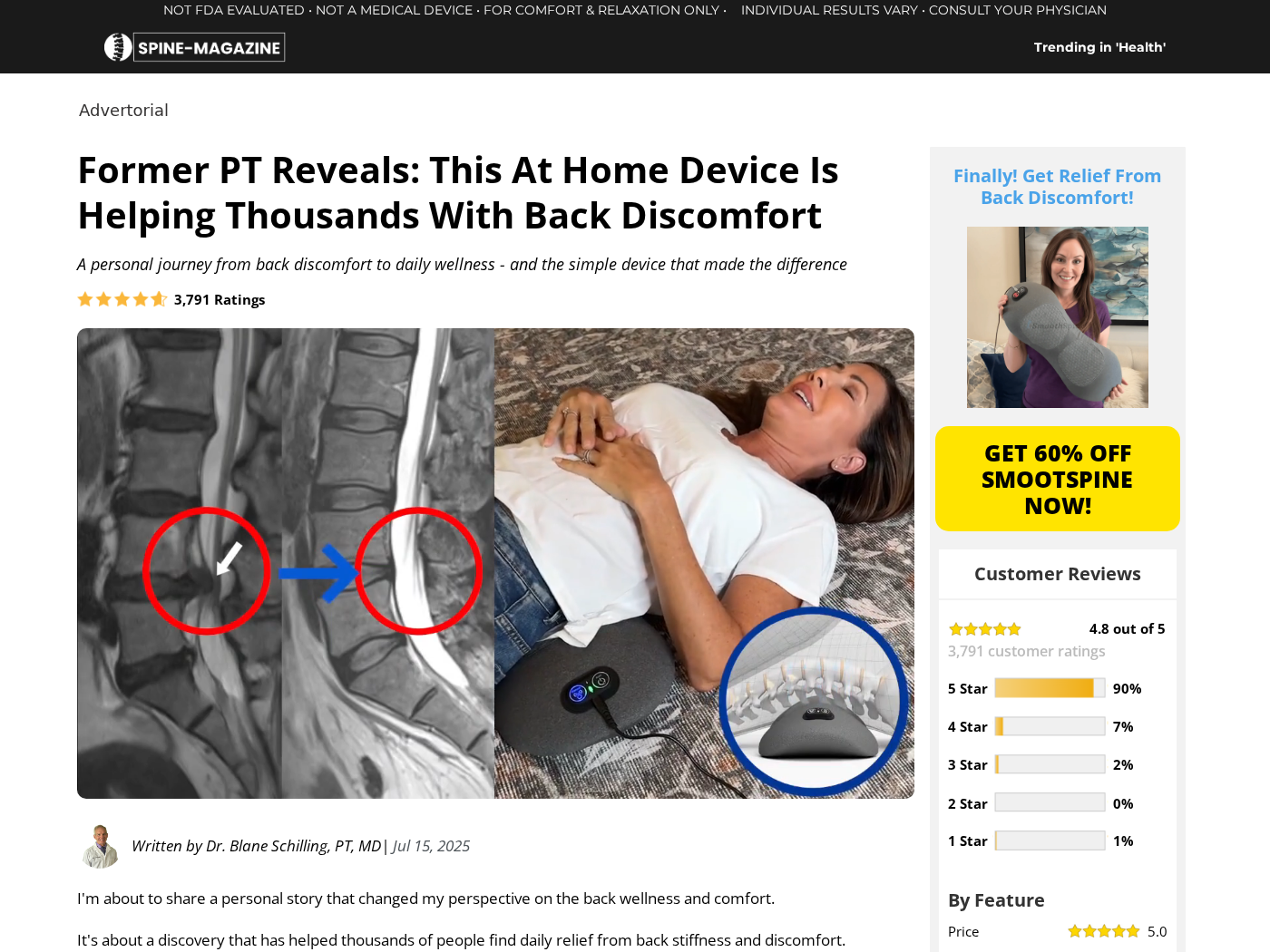
SmoothSpine's advertorial says a former physical therapist revealed a three-in-one device and displays thousands of ratings beside a 60% discount. The page frames the product as an answer for people who feel trapped between pain, expensive appointments, and disappointing home remedies.
At the bottom, the language becomes more cautious. The statements are not evaluated by the FDA, the device is not presented as a medical device, and it is described for comfort and relaxation. That gap between the therapeutic story and the disclaimer deserves attention.
The physical item may exist and some customers may enjoy its massage, heat, or electrical stimulation features. The core concern is whether the advertising sets a medical expectation the device cannot support and whether the transaction is as simple to cancel, return, and refund as the page implies.
Overview
The advertorial diagnoses before it sells
The page looks like a personal health article rather than a catalog listing. It explains why pain returns, presents a former professional, and gives the device a proprietary-sounding triple-fusion mechanism. By the time the price appears, the reader has been led through a diagnosis and solution narrative.
A consumer massager can offer temporary comfort without treating the cause of back pain. Persistent or severe pain can involve muscle strain, joints, discs, nerves, osteoporosis, infection, or other conditions. An advertisement cannot determine which one applies to the viewer.
Independent records show a billing and refund pattern
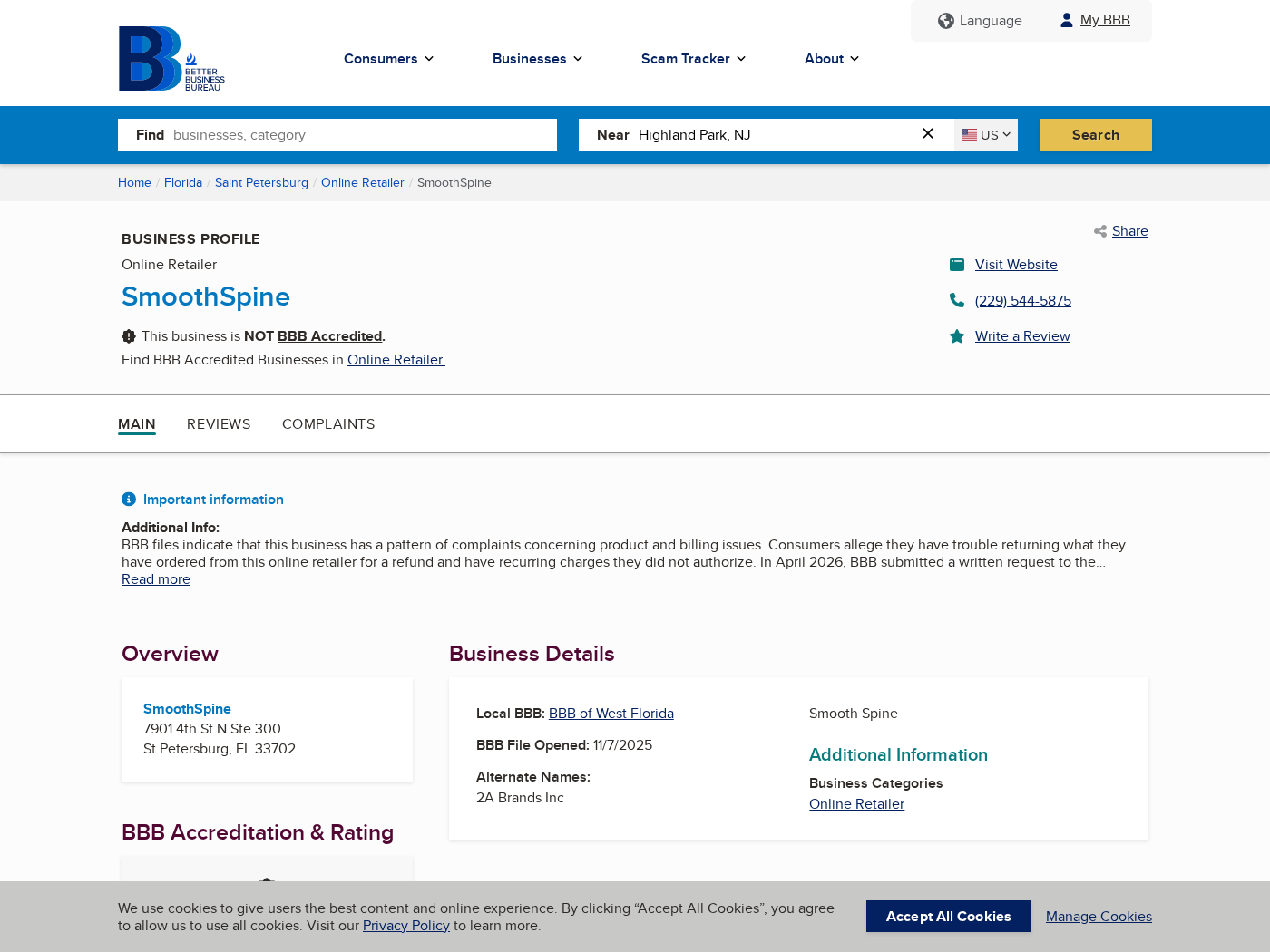
The Better Business Bureau page for SmoothSpine displayed an F rating and more than 100 complaints at the time reviewed. BBB described a pattern involving products and billing, trouble returning items or receiving refunds, and allegations of unauthorized recurring charges.
BBB also reported that the business was not located at the address displayed on the website, that the Florida address was associated with a registered agent, and that it could not find a Florida filing under the reviewed business identity.
The company responded that rapid demand and support growth caused service problems and said it had taken corrective steps.
Review scores need context
SmoothSpine's Trustpilot profile showed a much stronger 4.4 score from more than 5,900 reviews. The profile was claimed and used a paid Trustpilot subscription. A high overall score does not erase specific complaints, and a complaint page does not prove every customer had the same experience.
The conflict is itself useful. Buyers should read recent positive, neutral, and negative reports, then compare repeated details with the written checkout and policy. Ratings are context, not a substitute for identifying the seller and understanding every charge.
- A medical-style advertorial makes a comfort device sound like a therapeutic breakthrough.
- A large discount and thousands of ratings push the visitor toward immediate purchase.
- Checkout upsells or plan language can make the final charge larger than expected.
- BBB documents a pattern of product, billing, return, refund, and recurring-charge complaints.
- Addresses and business names do not provide a simple, consistent accountability trail.
Why Back Pain Advertising Creates Fast Decisions
Back pain affects sleep, work, driving, and ordinary movement. When appointments are expensive or previous treatments have not helped, a home device promising several therapies at once can feel like a sensible compromise rather than an impulse purchase.
The phrase triple fusion adds technical weight without defining a recognized treatment standard. It can refer to a seller's combination of massage, heat, electrical stimulation, traction, vibration, or other features. The important questions are which functions the exact model has, their safe settings, and what evidence supports the claimed outcome.
The advertorial uses a former therapist character because professional authority helps bridge the gap. Readers may assume the device was designed, tested, and recommended through clinical practice even when the page provides no independently verifiable biography, trial, or medical-device clearance.
The discount then reframes caution as loss. A 60% reduction, countdown, limited stock message, and satisfaction badge imply that the risk of missing the deal is greater than the risk of misunderstanding the product or checkout.
People in pain deserve clearer marketing, not less scrutiny. A seller should explain contraindications, electrical and heat safety, expected limitations, warranty service, subscription status, and return costs before collecting payment.
The SmoothSpine Business Trail
The SmoothSpine advertorial lists support@smoothspine.com, two US phone numbers, and 312 West 2nd Street, Unit A2299, Casper, Wyoming. A unit-style mailing address can receive correspondence, but it does not by itself establish where management, inventory, or customer support operates.
BBB identifies an alternate business name, 2A Brands Inc, and a St. Petersburg, Florida address. BBB says that location is associated with a registered agent and that the business was not found at the website address it reviewed. Buyers should compare those names with the terms, receipt, package, and card descriptor.
The BBB complaint pattern is unusually relevant because it is not limited to disappointment with massage strength. It includes allegations about charges consumers did not expect, difficulty obtaining return instructions, delayed refunds, and recurring amounts consumers said they had not authorized.
The company told BBB that demand outpaced its support infrastructure and that it changed its processes. That response should be included because it is part of the record. It does not remove the need for a buyer to document checkout consent and test whether current support works before ordering.
Trustpilot offers a different view, with a high average and many positive accounts. Look beyond the headline score. Read the distribution, dates, invitation method, company replies, and detailed low-star reviews. Repeated billing specifics are more informative than short praise or anger with no order facts.
How the Triple-Fusion Back Massager Billing Trap Works
Step 1: A pain-focused social ad finds a vulnerable moment
The video opens with stiffness, sciatica-like sensations, poor sleep, or pain that returns after stretching. It presents the viewer's experience accurately enough to earn trust, then suggests conventional care misses the true mechanism.
The ad may use a therapist-like presenter, influencer demonstration, or dramatic animation. Verify whether the person has disclosed a paid relationship and whether the clip appears on an official professional account.
Step 2: An advertorial makes the device feel medically selected
Instead of opening a normal product page, the click leads to a long story explaining a breakthrough and comparing the device with appointments, medication, or several separate machines. The article format reduces the feeling that the visitor is reading advertising.
Check the footer and disclaimer. If the main text sounds like treatment while the bottom says comfort only and not a medical device, the expectation has changed before checkout.
Step 3: The price is framed as temporary relief
A large crossed-out price and 60% discount make the current offer feel unusually safe. Ratings, recent purchases, and guarantee badges add the impression that thousands of buyers already resolved the uncertainty.
Search the exact model image and feature set elsewhere. Generic massage devices may be available through major marketplaces with clearer return options and a longer independent review history.
Step 4: Upsells complicate the checkout
Warranty plans, extra units, accessories, digital programs, priority shipping, or membership offers can appear between the initial choice and final confirmation. Consumers focused on pain relief may click quickly and notice the full amount only in the bank alert.
Read each line of the final order summary and remove preselected items. Confirm whether any charge repeats and which merchant name will appear. Save a screenshot before authorizing the transaction.
Step 5: A recurring charge may appear later
BBB says consumers have alleged unauthorized recurring charges in the complaint pattern. An allegation is not proof that every order creates a subscription, but it is a concrete reason to inspect plan language and monitor statements.
If a renewal is selected, the frequency, amount, cancellation method, and timing should be displayed clearly before consent. A vague wellness club or benefits program should not be treated as a harmless free bonus.
Step 6: Product expectations collide with reality
The device may provide massage, heat, or stimulation yet feel weaker, smaller, more uncomfortable, or less therapeutic than the advertorial implied. A comfort product does not diagnose or correct every cause of chronic back pain.
Stop use if it increases pain, causes skin irritation, numbness, weakness, dizziness, or electrical problems. People with implanted devices, pregnancy, reduced sensation, circulation problems, or other conditions should follow professional and manufacturer safety guidance.
Step 7: Returns and refunds test the real company
Customers may need an authorization number, specific warehouse, photographs, original packaging, tracked postage, or repeated support contacts. A guarantee headline is less important than the process a buyer can actually complete.
Document every attempt and deadline. If support delays until the return period is nearly over, state in writing that the request was made on the original date and attach the earlier messages.
Company, Address, and Fulfillment Checks
The address trail does not form one clear headquarters
The website's Casper mailing unit, the alternate 2A Brands identity, and the Florida registered-agent address identified by BBB do not create a simple picture of where the business operates. Mailing and agent services can be lawful, but they are not fulfillment, engineering, or customer support facilities.
Ask the seller to identify the legal entity accepting the order and the physical return location. Compare that answer with the receipt and statement before the dispute window closes.
Two phone numbers are useful only if they answer
The advertorial lists more than one support number. Call before buying and ask whether the representative handles SmoothSpine, whether a membership or renewal can be added, and where a return goes.
Record the date and result without exposing payment details. If the numbers route to generic scripts, cannot identify the legal seller, or never answer, the polished health story has no reliable support behind it.
Fulfillment and management are different
A parcel can be shipped by a third party while the brand is managed elsewhere. That is common in ecommerce, but the buyer needs to know who is responsible when the device is defective or the charge is disputed.
A return warehouse may accept boxes without having authority to issue refunds. Never send a parcel merely because an address appeared on the original label. Obtain written authorization and keep tracked proof.
Electrical and heat devices need traceable manufacturing
The exact model should show a manufacturer or responsible importer, electrical ratings, warnings, and instructions. If it uses adhesive pads, heat, or electrical stimulation, the safety information matters as much as the massage claim.
Do not assume the product is made in China without evidence. Do recognize that unclear origin and missing accountability make defects harder to address. Stop using any unit with damaged wiring, excessive heat, burning odor, skin injury, or instructions that do not match the controls.
How to Separate Comfort From Medical Treatment
A back massager can feel pleasant and still be oversold. Temporary relaxation, warmth, or stimulation does not prove that a disc, nerve, joint, or chronic pain condition has been corrected. Honest advertising should explain that boundary clearly.
The strongest SmoothSpine language appears in the therapist-style story, while the footer narrows the device to comfort and relaxation. That does not make the product automatically worthless. It means the buyer should evaluate it as a consumer massager, not as the medical solution implied by the narrative.
The transaction deserves equal weight. BBB's documented complaint pattern, address concerns, alternate company identity, and recurring-charge allegations make checkout evidence essential. Trustpilot's high score is useful counter-context, but it cannot answer what one buyer consented to or how one refund was handled.
For persistent pain, weakness, bowel or bladder changes, fever, unexplained weight loss, significant trauma, or numbness around the groin, seek prompt medical care rather than relying on a device. A safe purchase decision begins by not allowing an advertorial to decide what the pain means.
Warning Signs to Watch For
- A therapist-style article presents one device as the answer to many causes of back pain.
- The triple-fusion mechanism sounds proprietary but lacks independent clinical evidence.
- The main story implies treatment while the footer limits the device to comfort and relaxation.
- Upsells, warranties, clubs, or extra units appear during checkout.
- The business uses mailing or registered-agent addresses that do not identify operating headquarters.
- BBB documents a pattern involving billing, returns, refunds, and recurring-charge allegations.
- A high review average is presented without the context of complaint records.
- Return authorization and destination are unclear before purchase.
The warning is not that no one can enjoy a massager. It is that a comfort device, medical advertorial, complicated business identity, and disputed billing practices create a much riskier purchase than the soothing video suggests.
What to Do if You Have Fallen Victim to This Scam
- Save the ad, order page, and receipt. Take screenshots of the triple-fusion back massager advertisement, the page that made the promise, every price shown at checkout, the confirmation email, and the package label. Save the page address and the date. These records help your bank understand what was represented before the seller changes or removes the funnel.
- Check the exact amount and merchant name. Compare the final card charge with the total you knowingly approved. Write down the merchant descriptor exactly as it appears, because it may not match the brand in the advertisement. Check pending and posted transactions for extra bundles, add-ons, foreign fees, or a second charge you did not expect.
- Contact the seller in writing. Ask SmoothSpine or the merchant named on the charge to cancel any unshipped order, recurring plan, or future renewal and request a refund under the policy that applied on the purchase date. Email is better than relying only on a call because it creates a timestamped record. Keep the full conversation, case number, and any return authorization.
- Do not mail a return to an unverified address. A package sent to the wrong warehouse may be rejected and the seller may claim it was never received. Ask for the authorized return location in writing, use tracked shipping, photograph the contents and label, and retain the delivery record. Follow the stated deadline while also documenting any delay caused by support.
- Call your card issuer if the charge is wrong. Explain whether the problem is an unauthorized charge, an amount different from the checkout, goods not delivered, goods materially different from the advertisement, or a canceled renewal that continued. Ask about the dispute deadline and whether the issuer should block future charges from the same merchant descriptor.
- Watch for follow-up billing. Review statements for several months. A canceled card does not always cancel an underlying agreement, so send a written cancellation as well and ask the issuer how recurring payment updates are handled. Report every unfamiliar charge promptly instead of waiting for several renewals to accumulate.
- Secure accounts if you reused a password. Change any reused password, beginning with your email and payment accounts, and enable multi-factor authentication. If you downloaded a file, browser extension, or remote-support tool during the purchase, remove it and run a full scan with Malwarebytes. A normal product checkout should not require remote access to your device.
- Reduce exposure to the same advertising network. Report the ad to the social platform and use AdGuard to reduce malicious advertising, trackers, pop-ups, and repeat redirects. An ad blocker is not a substitute for judgment, but it can remove part of the infrastructure that repeatedly pushes deceptive advertorials to the same audience.
- Report the campaign. File a report with the FTC at ReportFraud.ftc.gov and with your state attorney general or national consumer-protection authority. Include the ad account, website, merchant descriptor, support details, amounts, and dates. Reports are more useful when they describe the path from the first ad to the final charge.
Frequently Asked Questions
Is SmoothSpine a medical device?
The reviewed advertorial's disclaimer says the product is not a medical device and is intended for comfort and relaxation rather than diagnosis or treatment. Buyers should not carry stronger therapeutic implications from the sales story into their expectations. Check the exact label and regulatory status for the model being sold.
Does the triple-fusion technology cure back pain?
There is no reason to treat a proprietary marketing phrase as proof of a cure. Massage, heat, vibration, or electrical stimulation may offer temporary comfort for some people. They do not identify or correct every cause of back pain, and they may be unsuitable for certain conditions.
What did BBB report about SmoothSpine?
BBB displayed an F rating and described a complaint pattern involving products and billing, difficulty with returns or refunds, and allegations of unauthorized recurring charges. BBB also raised business-location concerns. The company attributed problems to rapid demand and said it implemented corrective measures.
Why is the Trustpilot score much higher?
Different platforms collect different audiences and use different moderation and invitation systems. SmoothSpine's Trustpilot profile showed many positive reviews and a high average, while BBB concentrated on unresolved or escalated complaints. Read detailed recent reports on both and compare them with the written terms rather than choosing one headline score.
How do I stop an unexpected recurring charge?
Send a written cancellation to the seller, request confirmation, and save it. Contact the card issuer promptly, identify the exact merchant descriptor, and explain which charge you did not authorize or which renewal continued after cancellation. Ask whether future recurring transactions from that merchant can be blocked.
When should back pain be evaluated by a clinician?
Seek medical advice for persistent or worsening pain and prompt care for weakness, loss of bladder or bowel control, groin numbness, fever, serious trauma, unexplained weight loss, or pain accompanied by other concerning symptoms. A social-media advertorial cannot determine whether home massage is appropriate.
The Bottom Line
The triple-fusion back massager funnel blends a therapeutic story with an ordinary comfort device, then asks the buyer to trust ratings and discounts before examining billing, company identity, and return handling.
A massager may provide temporary relief, but that does not validate the medical narrative or every charge. Read the final checkout, verify the seller, save the policies, monitor statements, and treat recurring billing or refund friction as seriously as the product claims themselves.

Join the discussion
0 commentsShare your experience or ask a question about this article.
Discussion
Start the conversation
Have a question or something useful to share? Add the first comment.