

A doctor on a familiar-looking talk show says two pantry ingredients can reverse the condition families fear most. The story sounds hopeful, personal, and almost too important to ignore.
The Oprah Alzheimer Cure Scam uses fabricated Dr. Bruce Perry and Dick Van Dyke connections to keep viewers watching. The promised recipe eventually gives way to Harm Brain capsules and claims no supplement has proved it can deliver.
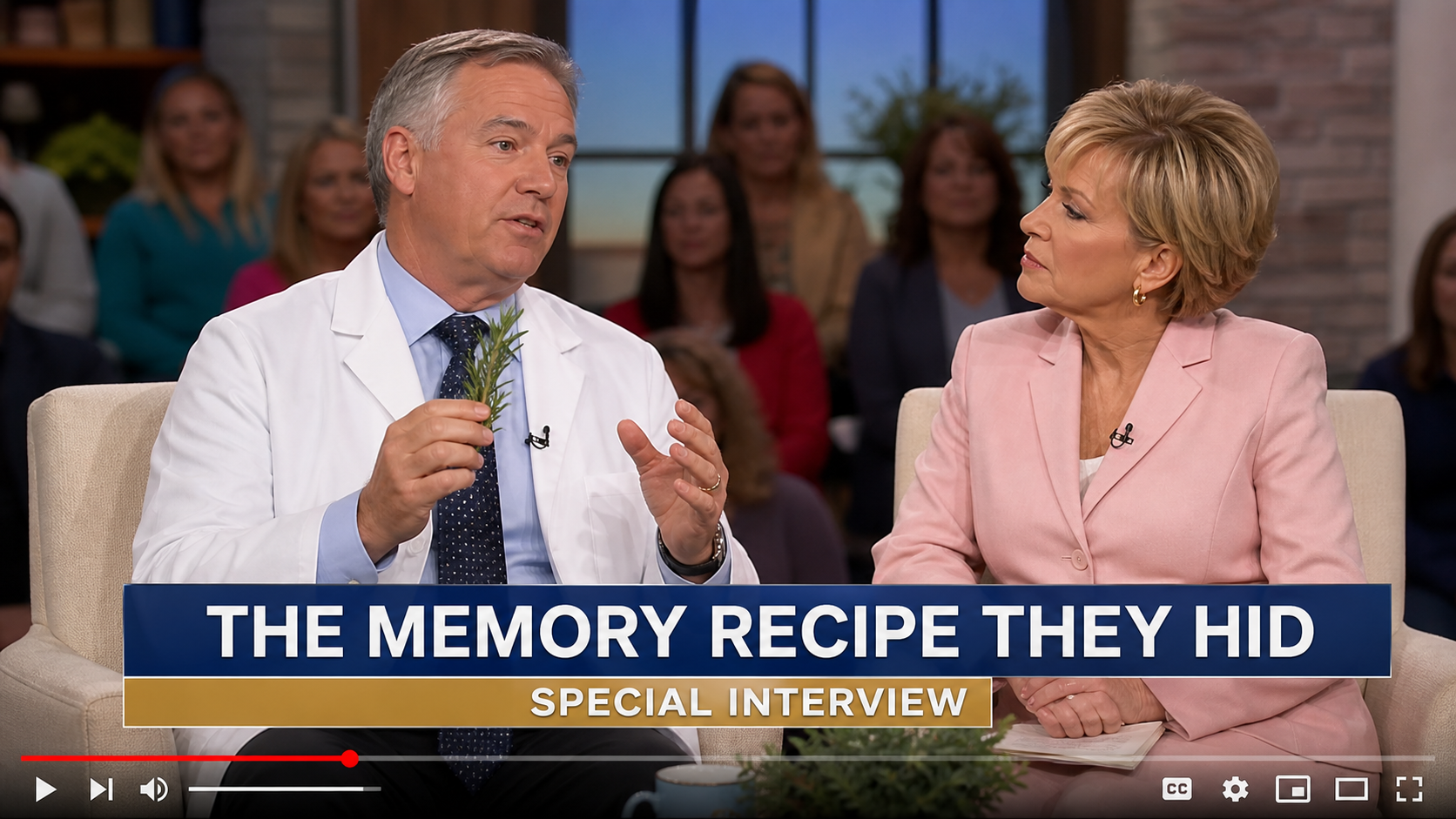
The first scene is built to feel like a lost interview rather than an advertisement. A respected host, an experienced doctor, and an admired older performer appear to place an extraordinary discovery inside a believable public conversation.
The narrator then introduces scientific language about BDNF, neurons, and a research team in southern India. Real biological terms make the conclusion sound researched even though no completed clinical evidence for the finished product is supplied.
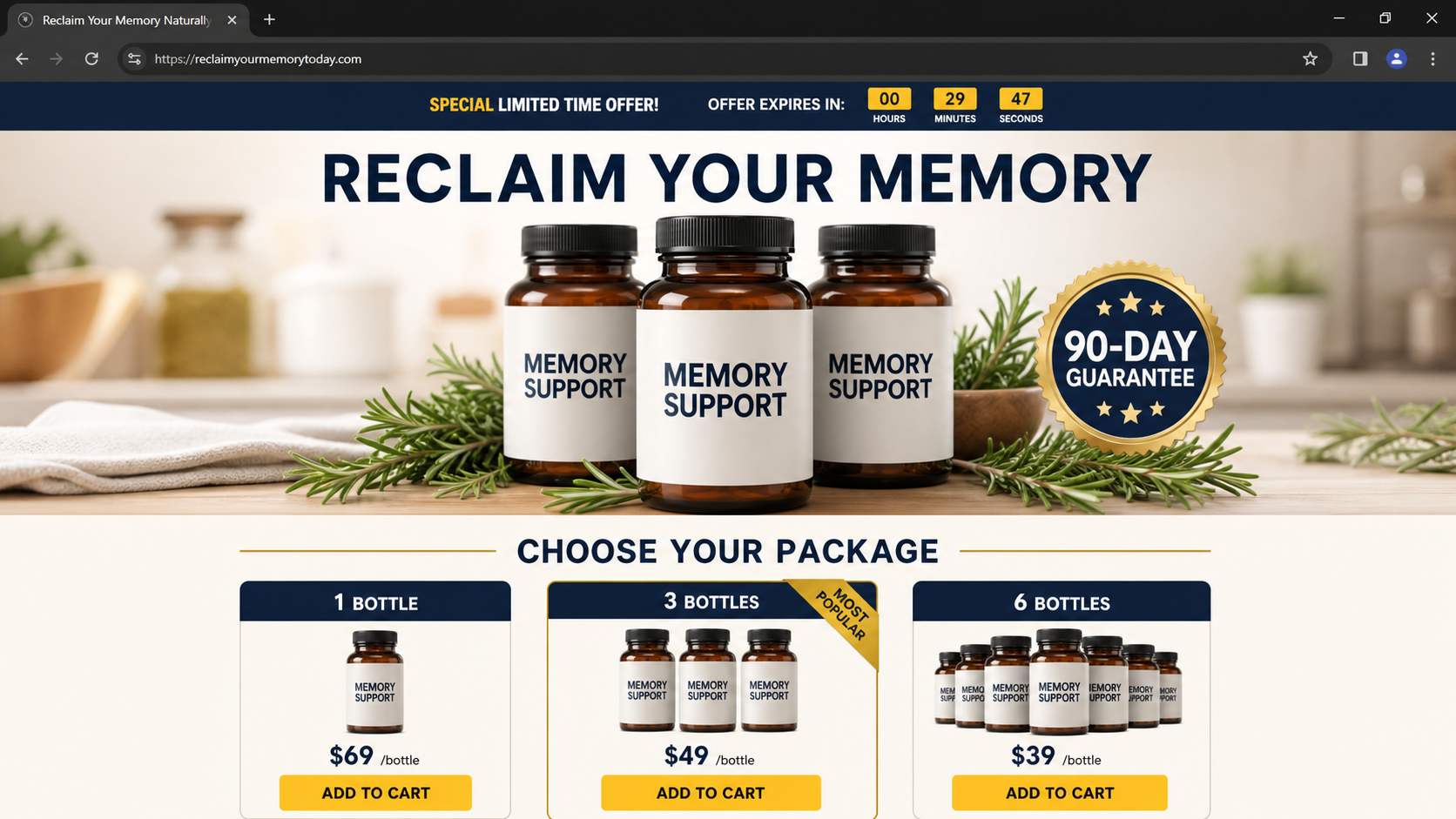
Only after the emotional story has done its work does the funnel reveal the commercial goal. Instead of a transparent recipe, the viewer is pushed toward multi-bottle memory supplements such as Harm Brain.
Overview
The celebrity and doctor story is fabricated
The documented campaign falsely links Oprah Winfrey, Dr. Bruce Perry, and Dick Van Dyke to a breakthrough Alzheimer’s narrative. We found no reliable evidence that any of them recorded the sales presentation, approved Harm Brain, or endorsed a pantry cure for dementia.
Dr. Perry is a real clinician known for work on childhood trauma and brain development. That background does not make him the inventor of a supplement sold through an unrelated video funnel. A real professional identity is being used as raw material for an invented commercial story.
BDNF is real, but the advertised conclusion is not
Brain-derived neurotrophic factor, usually shortened to BDNF, is a real protein involved in nervous-system function. Mentioning it does not prove that two unnamed pantry ingredients reverse Alzheimer’s disease or that Harm Brain raises BDNF in a clinically meaningful way.
The National Institute on Aging says no vitamin or supplement has been proven to prevent Alzheimer’s in people, and no supplement is recommended for preventing Alzheimer’s or cognitive decline. Evidence about an ingredient cannot be transferred automatically to a branded finished formula.
The recipe is a bridge to a supplement sale
Viewers are encouraged to wait for a simple home method. The recipe remains vague while the video adds testimonials, conspiracy language, and dramatic patient stories. Near the end, the supposed discovery is packaged as capsules.
Harm Brain appears in marketplace listings at widely different prices and through different sellers. That fragmented market does not verify the Alzheimer’s claims. A June 2026 BBB complaint about BuyGoods also describes a customer receiving Harm Brain after ordering a differently named product, which raises separate fulfillment questions.
- The campaign falsely connects Oprah Winfrey to the sales story.
- Dr. Bruce Perry is presented as an authority without verified approval.
- Dick Van Dyke is used as emotional proof of healthy aging.
- A hidden pantry recipe keeps viewers inside a long video.
- BDNF terminology is used to make the pitch sound scientific.
- The final destination is Harm Brain or similar memory capsules.
- No reliable finished-product trial proves an Alzheimer's cure.
- Marketplace and fulfillment details do not form one clear seller trail.
Why Dementia Cure Videos Are So Persuasive
Memory loss is not an abstract wellness concern. Families can spend years watching a parent or partner lose independence, recognition, and confidence. A simple cure story reaches people when uncertainty and exhaustion are already high.
The campaign opens with hope rather than price. It says mainstream medicine missed a hidden cause, an independent doctor found an answer, and familiar public figures witnessed the result. That narrative lets the viewer imagine relief before asking whether the interview happened.
A pantry ingredient is an effective hook because it feels safe, cheap, and accessible. Rosemary, honey, salt, or another familiar item creates the impression that the solution belongs in a kitchen, not in an aggressive supplement checkout.
The video delays the reveal. Each story adds a reason to keep watching: a suffering patient, a suppressed study, a laboratory discovery, an older celebrity, or a promise that the recipe is coming after one more explanation.
By the time bottles appear, the viewer has mentally connected them with all the earlier claims. The product benefits from the doctor, host, science, and testimonials even if the checkout avoids repeating the most legally dangerous cure language.
That separation is intentional. An advertisement can make the emotional promise in a video, then present a conventional dietary supplement label at checkout. Buyers must judge the entire funnel, not only the careful wording printed next to the bottle.
What Our Oprah Alzheimer Cure Scam Investigation Found
The campaign uses a lengthy AI-voiced or edited presentation that resembles a documentary or podcast segment. It connects a supposed medical discovery with Oprah Winfrey, Dr. Bruce Perry, and Dick Van Dyke without providing a verifiable original broadcast.
The story mentions researchers in southern India and says two ingredients can activate BDNF strongly enough to reverse cognitive decline. It does not provide a complete paper, trial registration, participant data, dose, safety analysis, or independent replication for Harm Brain.
Searches of the named public figures’ authenticated channels did not establish an endorsement of the supplement or the advertised Alzheimer’s cure. A real interview of this magnitude would be easy to locate outside a disposable sales page.
The National Institute on Aging states that no vitamin or supplement has been proven to prevent Alzheimer’s disease in people. Its guidance also says no vitamin or supplement is currently recommended for preventing Alzheimer’s or cognitive decline.
Harm Brain appears in ordinary marketplace listings, including low-priced single bottles and larger multi-bottle packages. Other promotional pages advertise much higher per-bottle totals. Price variation and availability do not establish who manufactured the pills used in the video funnel.
One current Walmart marketplace listing identifies Apollo Wholesale LLC as a seller and shows a $19.95 single bottle. Other listings use different seller names. A marketplace seller is not automatically the creator of the deepfake campaign and should not be accused without a traceable transaction.
A June 2026 complaint on BuyGoods’ BBB profile says a customer ordered a differently named product but received Harm Brain. The response acknowledged confusion about the product received and return options. This is a complaint record, not proof that every Harm Brain order follows that route.
We did not find a stable official sales page that clearly tied the deepfake presentation, a complete Supplement Facts panel, legal manufacturer, headquarters, phone number, and exact refill terms into one accountable record. That missing chain prevents meaningful verification of the product sold in the ad.
How the Oprah Alzheimer Cure Scam Works
Step 1: A fake interview appears in a social media ad
The video is formatted like television, a podcast, or a serious health documentary. Familiar faces and professional lighting encourage viewers to accept the setting before checking the source account or destination domain.
AI voice cloning and lip synchronization can create statements that were never made. Short clips, subtitles, and reaction shots hide transitions where the audio does not match the original footage.
Step 2: A frightening hidden cause is introduced
The narrator claims doctors have misunderstood Alzheimer’s disease or ignored a trigger that can be corrected at home. Mainstream treatment is portrayed as incomplete, expensive, or deliberately resistant to the discovery.
This framing makes ordinary medical caution look like suppression. The lack of acceptance becomes part of the story rather than evidence that the extraordinary claim has not been proved.
Step 3: BDNF gives the story a scientific anchor
A real biological term is repeated alongside brain graphics, laboratory footage, and confident explanations. The viewer is not shown enough information to evaluate whether the specific ingredients affect patients or the advertised disease.
The funnel moves from BDNF exists to this recipe activates it and then to these pills reverse decline. Each step requires separate evidence, but the presentation treats them as one continuous fact.
Step 4: The pantry recipe is delayed
The viewer expects a practical combination available at home. Instead, the presentation adds personal stories, supposed obstacles, and warnings that the video may be removed.
Delay creates investment. Someone who has watched for 30 minutes is more likely to continue to the offer than someone shown an unfamiliar bottle in the first 10 seconds.
Step 5: Harm Brain replaces the promised home solution
The commercial reveal says the correct ingredients, dose, or purity are difficult to obtain without a prepared formula. Multi-bottle bundles are positioned as the easiest way to reproduce the discovery.
A dietary supplement cannot inherit the claims made by a fictional interview. The finished bottle would need accurate labeling, safety information, transparent manufacturing, and reliable evidence for every disease claim.
Step 6: Bundle pricing and guarantees reduce hesitation
The checkout may emphasize a low per-bottle figure while charging for several bottles at once. A guarantee seal suggests that trying the product is risk free, but return postage, deadlines, authorization requirements, and used-bottle rules may complicate a refund.
Some campaign observers warn about possible recurring billing, but we did not preserve exact refill consent from this specific funnel. Buyers should inspect the final checkout and receipt rather than assume either a subscription or a one-time order.
Step 7: The story can continue under another bottle name
When complaints or ad removals accumulate, the operator can replace Harm Brain with another memory formula while keeping the fake interview, BDNF explanation, and pantry hook nearly unchanged.
That is why the story belongs in the title of the warning. The public figures and supposed discovery are the durable deception, while the bottle, domain, price, and fulfillment company can rotate.
Company, Address, and Fulfillment Checks
The legal company is not clearly attached to the deepfake funnel
The ad should identify who created the presentation, who accepts payment, and who stands behind the health representations. Instead, buyers encounter public figures who did not authorize the pitch and a product name sold through several channels.
A privacy-policy company, checkout merchant, marketplace seller, and card descriptor may all differ. Record each one, but do not assume they are the same organization without matching order evidence.
Addresses may lead only to a warehouse or mailbox
Supplement sellers often use fulfillment centers to store and ship bottles. A returns address can be real while revealing nothing about the brand owner, formula designer, contract manufacturer, or advertising affiliate.
Search an address before ordering. If it belongs to many unrelated supplements, a virtual office, a residential property, or a logistics building, do not present it as a research laboratory or headquarters.
Phones and email must match the exact product
Call support before paying and ask whether the agent handles Harm Brain, who the legal seller is, whether refills are automatic, and where returns go. A vague agent who cannot find the product is not meaningful support.
Keep written proof. Consumers in aggressive funnels often report unanswered messages, partial-refund offers, or instructions to pay return postage for an item they say was not what they expected.
Mass-produced pills are not clinical breakthroughs
Harm Brain bottles sold through multiple marketplace sellers resemble a broad ecosystem of generic supplements. We did not find evidence proving that all units share one source, so claims about a specific country of manufacture would be speculation.
The safety question remains serious. A complete Supplement Facts panel, lot number, manufacturer contact, allergen warnings, dose, and interaction guidance are basic requirements. People taking medication should ask a clinician or pharmacist before using an unknown formula.
Why the Medical Claims Fail Even Before the Checkout
A claim to reverse Alzheimer’s disease is not an ordinary wellness promise. It would require rigorous clinical evidence, clear diagnostic criteria, meaningful patient outcomes, adverse-event reporting, and replication. The video supplies none of that for Harm Brain.
BDNF does not rescue the argument. Many biological pathways are involved in memory and neurodegeneration. Showing that a pathway exists is not the same as proving that a supplement safely changes the course of a complex disease in humans.
The false endorsement is independently disqualifying. If a seller must fabricate Oprah, Dr. Perry, or Dick Van Dyke to get attention, the presentation cannot be trusted to summarize the science, price, or refund terms accurately.
Families should also be cautious about delay. Replacing medical assessment with an online capsule can postpone evaluation of medication effects, depression, sleep disorders, thyroid problems, vitamin deficiencies, strokes, or other conditions that may contribute to memory symptoms.
Someone already diagnosed with dementia still deserves evidence-based care and support. A clinician can discuss approved treatments, safety, planning, caregiver resources, and participation in legitimate trials without promising a pantry cure.
The humane response to fear is not a miracle claim. It is clear information, honest uncertainty, accountable care, and a refusal to let fabricated celebrity footage turn a family’s crisis into a bulk supplement order.
Warning Signs to Watch For
- A talk-show clip cannot be found on the host's official channels.
- The doctor's speech has unnatural timing or lip movement.
- The video claims Alzheimer's has one hidden reversible cause.
- A pantry recipe is promised but repeatedly delayed.
- BDNF is mentioned without a complete human clinical trial.
- A serious disease is said to improve with two simple ingredients.
- The recipe becomes a multi-bottle supplement package.
- The manufacturer and advertiser are difficult to identify.
- Guarantee language is clearer than the return procedure.
- The same story can be paired with several bottle names.
A cure for Alzheimer's would not need a fabricated talk show, a delayed kitchen secret, and a hidden supplement seller. The fake authority is not a harmless decoration. It is the mechanism used to overcome the caution this medical claim deserves.
What to Do if You Have Fallen Victim to This Scam
- Do not stop prescribed care. Contact the clinician treating the memory problem before changing medication or relying on Harm Brain. Bring the bottle and ingredient panel so interactions, duplicate ingredients, and adverse effects can be assessed.
- Call the payment provider. Identify the order total, every later charge, and the merchant descriptor. Explain that the purchase followed a fabricated medical endorsement and ask about blocking future transactions or replacing the card if details remain exposed.
- Request cancellation and a return authorization. Write to the exact seller on the receipt. Ask whether any refill is active, obtain the returns address and authorization number, and demand a written refund decision before paying to ship bottles back.
- Preserve the full health claim. Save the video, Oprah and Dr. Perry references, recipe promise, BDNF statements, bottle page, Supplement Facts, checkout, guarantee, receipt, package label, and every support response. The funnel may change quickly.
- Report new symptoms promptly. Stop guessing about side effects. If the buyer develops concerning symptoms, contact a clinician, pharmacist, or poison-control service as appropriate and provide the exact product, dose, lot number, and timing.
- Report the deceptive advertising. Submit the campaign to the FTC and report the social advertisement. Health claims and impersonated public figures can also be reported to the platform, while product problems can be described to the relevant regulator.
- Scan suspicious devices with Malwarebytes. If the page installed a player, extension, or file, run a complete Malwarebytes scan and remove unfamiliar browser permissions. Buying ordinary capsules should never require remote access or special viewing software.
- Use AdGuard to block repeat ads. AdGuard can reduce malicious ad networks, tracking pages, pop-ups, and rotating domains that retarget people interested in memory care. It cannot evaluate medical evidence, so continue to verify claims with qualified professionals.
Frequently Asked Questions
Did Oprah Winfrey endorse the Alzheimer's cure in this video?
We found no reliable evidence that Oprah approved the sales presentation or Harm Brain. The campaign uses a fabricated talk-show-style connection to create trust.
Is Dr. Bruce Perry connected to Harm Brain?
We found no verified endorsement. Dr. Perry’s real work in brain development does not authorize an unrelated supplement seller to use his identity in a dementia cure story.
Can two pantry ingredients reverse Alzheimer's disease?
No credible evidence supplied by the funnel proves that claim. Alzheimer’s is a complex disease, and the National Institute on Aging says no vitamin or supplement has been proven to prevent it.
Does BDNF prove Harm Brain works?
No. BDNF is real, but a biological mechanism does not prove that a finished supplement produces a safe clinical benefit or reverses dementia in people.
Is every Harm Brain listing sold by the same company?
We could not establish that. The name appears through multiple sellers and price points. Use the exact receipt, package label, and card descriptor to identify the merchant in a particular order.
What should I do with unopened bottles?
Keep them sealed while requesting written return instructions. Photograph the package and lot details, do not pay an unexpected restocking fee without checking the terms, and involve the card issuer if the offer was misrepresented.
The Bottom Line
The Oprah Alzheimer Cure Scam is not a medical discovery. It is a fabricated story that borrows Oprah Winfrey, Dr. Bruce Perry, Dick Van Dyke, and real BDNF terminology to move frightened families toward Harm Brain capsules.
No reliable finished-product evidence shows that the pills cure or reverse Alzheimer’s disease. The unclear advertising, fragmented seller trail, and reported fulfillment confusion make the commercial side difficult to trust as well.
Do not let an AI interview replace medical care. Preserve the evidence, contact the seller and card issuer if you purchased, and take the bottle to a qualified clinician before using it.








