

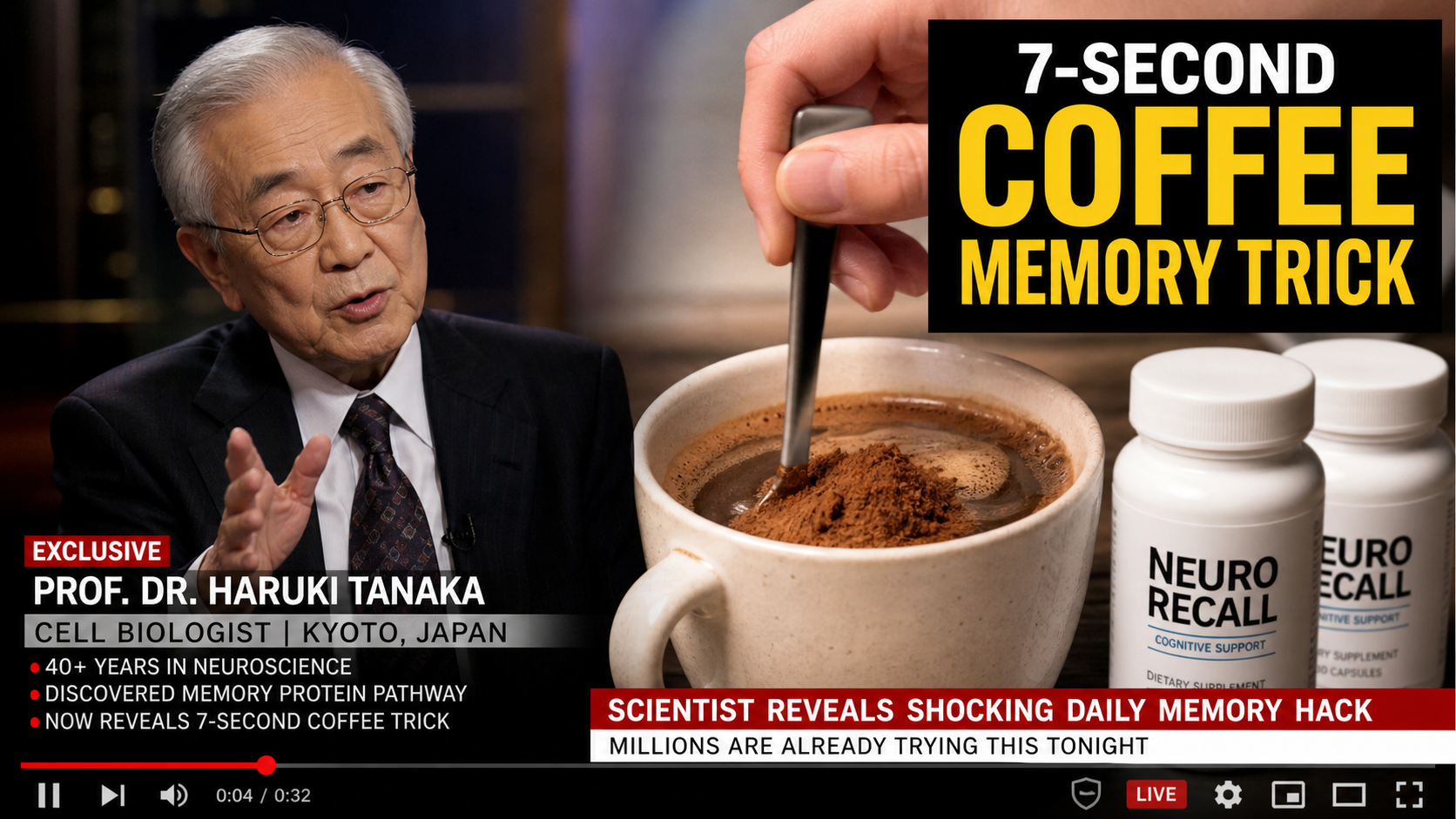
A breaking television report appears to reveal that a Nobel Prize-winning scientist discovered a seven-second coffee trick that restores memory. The video may mention 60 Minutes, use a familiar news set, and show older celebrities or doctors reacting to the discovery.
The authority is manufactured. The Dr. Ohsumi coffee trick scam misstates a real Nobel laureate’s identity and research, then uses AI video and a fake CBS-style story to lead worried viewers toward a memory supplement checkout.
Overview
A real Nobel Prize is attached to a discovery that was never made
Yoshinori Ohsumi is a real Japanese cell biologist who received the 2016 Nobel Prize in Physiology or Medicine. His award recognized discoveries about autophagy, the way cells recycle components. The official Nobel record concerns fundamental cellular mechanisms studied through yeast and related biology.
It does not say Ohsumi discovered a coffee recipe that reverses dementia. Scam versions may rename him Dr. Yuto Ohsumi, call him a memory specialist, or imply that his Nobel work produced an instant Alzheimer’s cure. Those changes turn a real credential into a fictional endorsement.
The false story works because most viewers recognize the phrase Nobel Prize but do not know the subject of the research. Checking the official Nobel biography quickly breaks the connection that the ad wants people to assume.
The fake CBS or 60 Minutes setting makes the story feel verified
The campaign may imitate a CBS report or a 60 Minutes investigation. Some versions add AI depictions of public figures or a doctor such as Daniel Amen. A studio background, network-style graphics, and a confident narrator create the feeling that several trusted people confirmed the same cure.
A television logo inside a video is not proof that a segment aired. Search the official network archive in a new tab and compare the complete clip, title, date, and URL. If the only copy lives on an advertising domain, it has not been independently verified.
Scammers also claim the report is being removed, censored, or available only today. This explains why viewers cannot find it while pressuring them to watch before checking.
The coffee recipe eventually becomes a rotating memory supplement
Coffee is the ideal hook because millions of people already drink it. The ad promises a tiny addition or seven-second preparation that activates acetylcholine, clears plaques, or restores a so-called memory messenger. It sounds easier than seeking an evaluation or changing treatment.
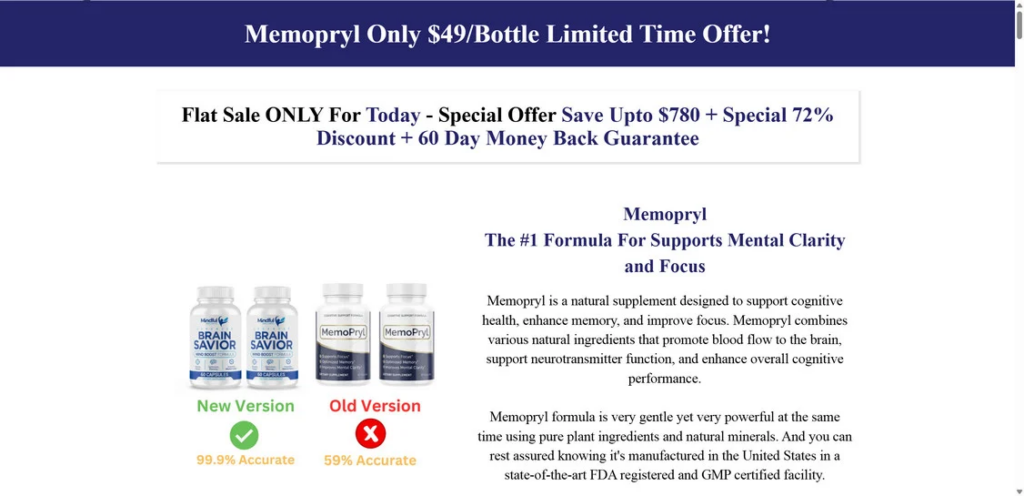
The recipe does not remain a recipe. The narrator says ordinary ingredients lack a rare extract or correct concentration, then introduces a ready-made product. MemoPryl is one supplement used in a version we reviewed, but another brand can replace it without changing the Nobel or CBS story.
A reported complaint in the BBB Scam Tracker described a $294 loss after a related Ohsumi and 60 Minutes memory pitch for a six-month supply. That report does not prove every campaign or product is operated by the same seller, but it shows the financial harm this narrative can produce.
Why the Seven-Second Coffee Story Fails Basic Checks
Ohsumi’s actual research does not establish a memory cure
Autophagy is a real and important cellular process. That does not mean any food, drink, or supplement that mentions cellular cleanup reverses Alzheimer’s disease. The ad borrows a respected field of science, skips clinical testing, and inserts a product at the end.
A mechanism in cells is not the same as a safe, effective treatment in people. Evidence must connect the exact intervention, dose, population, and outcome. The campaign does not earn that conclusion by repeating Nobel terminology.
The scientist’s changed first name is not a harmless typo
Calling Yoshinori Ohsumi Yuto Ohsumi makes verification harder and may help the page avoid matching warnings about earlier versions. Other details can change as well, including his specialty, institution, age, and the date of the supposed interview.
A credible medical report gets the central expert’s identity right. When the name and achievement are rewritten to support the sales narrative, the entire presentation becomes unreliable.
The dramatic memory claims exceed what supplements can promise
The National Institute on Aging says no medicine or supplement is known to cure Alzheimer’s disease. Phrases such as reverses memory loss, works in seven seconds, or restores recognition within days should trigger caution, not excitement.
Memory symptoms can result from dementia, medication effects, infection, depression, sleep disorders, thyroid problems, vitamin deficiencies, or other causes. A generic coffee video cannot identify which situation a viewer has.
The checkout, not the recipe, is the real destination
A public scientific discovery could be explained clearly without forcing a bundle decision. This campaign withholds the practical detail, creates escalating emotion, and eventually presents an order form as the only path to the promised result.
The long video is therefore not a neutral documentary. It is a sales presentation disguised as journalism. Every claim must be evaluated independently of its network-style design.
How the Scam Works
Step 1: A short social ad promises recovered memory
The first clip shows a worried family, an older adult, a scientist, or a television host. Text claims that one coffee step can stop forgetting and that the discovery has shocked doctors.
The ad does not reveal enough to verify. It asks viewers to click for the recipe, creating curiosity around an emotionally urgent subject.
Step 2: AI builds a television event that never happened
Cloned voices, face animation, manipulated interviews, and fabricated studio scenes make the claim appear broadcast. Different public figures can be inserted for different audiences without recording a real interview.
Minor lip or lighting errors may appear, but a polished clip can still be fake. The decisive check is whether the segment exists in the official network archive and the speaker’s verified channels.
Step 3: The click opens a counterfeit CBS-style advertorial
The landing page copies colors, typography, lower thirds, article layouts, or video framing associated with a trusted network. Its domain, however, belongs to a marketer or disposable campaign rather than CBS.
Menus may be decorative, comments may repeat across versions, and the date may always look current. Search the real outlet independently instead of relying on links inside the page.
Step 4: The real Nobel research is rewritten as a dementia breakthrough
The script explains autophagy as cellular cleaning, then claims coffee can activate it in the brain and remove the cause of memory loss. It may add acetylcholine, toxins, plaques, or inflammation to sound comprehensive.
These words do not supply the missing human evidence. A Nobel Prize for fundamental biology is not an endorsement of the promoted ritual, product, or checkout company.
Step 5: The free coffee trick becomes MemoPryl or another bottle
When the viewer expects a recipe, the presentation says regular coffee cannot provide the precise ingredients. MemoPryl appears as the standardized version, often beside a per-bottle price, a large discount, and a money-back guarantee.
Our MemoPryl supplement investigation examines that specific offer. The product can change, while the fake Ohsumi, Nobel Prize, and CBS narrative continues directing traffic to a new checkout.
Step 6: Urgency turns a medical decision into an impulse purchase
The page may claim that supplies are limited, the broadcast will be removed, or a discount expires when the timer reaches zero. The largest package receives a best value or most popular badge.
Stop and calculate the total. A highlighted $49 price may apply to each bottle in a six-bottle package. Confirm quantity, shipping, tax, and every selected option before submitting a card.
Step 7: Bundles, upsells, and recurring terms can increase the charge
After the first order button, buyers may encounter extra products, more bottles, or digital offers. Preselected options and faint decline links can be especially confusing on a small screen.
Do not assume every buyer is enrolled in a subscription, but do not assume a one-time order either. Search the live checkout, policies, and confirmation for subscription, autoship, continuity, monthly, rebill, and next shipment language.
Step 8: The merchant becomes difficult to trace after payment
The statement descriptor may not match MemoPryl, support may serve several brands, and returns may go to a fulfillment warehouse. A buyer who believed CBS or a Nobel laureate stood behind the offer discovers an unfamiliar direct-response seller instead.
That is why screenshots and timing matter. Contact the seller quickly and keep written proof. If the amount or recurring terms were not knowingly authorized, ask the card issuer about its dispute process before the deadline passes.
Company, Address, and Fulfillment Checks
The brand name may hide the entity taking your money
Compare the company named in the checkout with the terms, privacy policy, receipt, and card statement. A trustworthy seller should clearly identify who owns the offer, handles billing, provides support, and stands behind the guarantee.
Different names are not automatically fraudulent, but unexplained layers make accountability harder. Search each entity in corporate records and complaint databases before buying.
The return address may be only a package warehouse
Scam-style offers sometimes use virtual mailboxes, residential addresses, unrelated offices, or third-party fulfillment centers. A warehouse can accept returns for many products without being the headquarters or manufacturer of any of them.
Look up the address on a map and confirm instructions in writing. Ask whether a return authorization is required and whether the refund covers unopened, opened, or partially used bottles.
Phone numbers and email should work before the sale
Call support and ask the agent to name the product, legal seller, full package price, automatic refill status, and return destination. Repeated voicemail, a full inbox, evasive answers, or an agent who cannot identify the brand are reasons not to order.
Send a pre-sale email and save the reply. A company that ignores a simple question before payment is unlikely to become easier to reach during a refund dispute.
An untraceable supplement can create more than a billing problem
Generic supplements are often made by contract manufacturers in the United States or abroad, including facilities in China. We could not confirm MemoPryl’s exact origin from the ad alone, so a specific country should not be stated as fact. Missing traceability is the sharper issue.
Look for a complete Supplement Facts panel, ingredient amounts, warnings, lot and expiration information, responsible manufacturer, and batch-specific testing. Natural, doctor formulated, and FDA registered do not prove that a supplement is effective, safe, or FDA approved.
Older adults frequently take several medicines. Ingredients marketed for focus or energy may interact with anticoagulants, blood-pressure drugs, diabetes medicines, antidepressants, sedatives, and other products. A pharmacist should review the exact label before use.
What to Do If You Fell Victim
- Capture everything now. Save the social ad, fake CBS page, AI video, checkout, package selection, receipt, terms, support information, and statement descriptor. Record the URL and date before the campaign disappears.
- Check the actual transaction. Compare the displayed total with the posted charge. Look for extra bottles, shipping, upsells, membership wording, autoship, or a future shipment date.
- Cancel in writing. Tell the seller to cancel the order and every recurring or continuity plan. State that no future charges are authorized and request written confirmation and a cancellation number.
- Contact the card issuer promptly. Explain what you believed you authorized and what happened instead. Ask about dispute deadlines, blocking future merchant charges, and whether a card replacement is appropriate.
- Return only with proof. Obtain any required authorization, photograph the bottles and parcel, use tracked shipping, and keep proof of delivery. Do not rely only on a phone promise.
- Protect the device used for the purchase. If the page triggered downloads, fake alerts, notification prompts, or suspicious redirects, scan with Malwarebytes. AdGuard can help reduce deceptive advertising and redirect chains in future browsing.
- Protect the person’s health. Do not stop prescribed medicine or delay a memory assessment because of the advertisement. Ask a pharmacist about the ingredients. Sudden confusion, new weakness, severe headache, or rapid change can require urgent medical care.
- Report the campaign. Report impersonation to the social platform, consumer fraud to the FTC at ReportFraud.ftc.gov, and suspected supplement safety problems through FDA reporting channels. A BBB Scam Tracker report can also help warn other buyers.
Frequently Asked Questions
Did Yoshinori Ohsumi discover a coffee cure for memory loss?
No reliable evidence supports that claim. Ohsumi’s 2016 Nobel Prize concerned cellular autophagy, not a seven-second coffee recipe or a supplement that reverses dementia.
Is Dr. Yuto Ohsumi a Nobel Prize-winning memory doctor?
The Nobel laureate’s name is Yoshinori Ohsumi. Changing it to Yuto and presenting him as the inventor of a memory cure is a major factual warning sign in the campaign.
Did CBS or 60 Minutes broadcast the advertised report?
We found no reliable official-network source for the sales story reviewed. Verify any segment in the real CBS or 60 Minutes archive, reached independently. A logo on an advertising domain is not proof of broadcast.
Is MemoPryl the only supplement used in this scam?
No. MemoPryl is one product connected to a version of the funnel. Sellers can change brands, labels, domains, and prices while retaining the fake Nobel and coffee story.
Can coffee reverse Alzheimer’s disease?
No evidence shows that a seven-second coffee trick reverses Alzheimer’s disease. Research on coffee, caffeine, or cellular processes does not establish an instant cure. Memory symptoms need proper assessment.
What should I do if I paid around $294 for a bundle?
Save the order evidence, check the exact bottle count and billing terms, cancel in writing, and contact the card issuer promptly if the transaction differed from what you authorized. Keep tracked return proof.
The Bottom Line
The Dr. Ohsumi coffee trick scam turns a real Nobel Prize into a fictional memory breakthrough, stages a fake CBS-style report, and redirects viewers to supplements such as MemoPryl. Ohsumi’s actual work on autophagy does not validate the recipe or product.
Verify the scientist, broadcast, evidence, seller, total, and recurring terms outside the funnel. Families facing memory loss deserve accurate medical guidance, not an AI television event built to produce a rushed bundle order.

Join the discussion
0 commentsShare your experience or ask a question about this article.
Discussion
Start the conversation
Have a question or something useful to share? Add the first comment.