

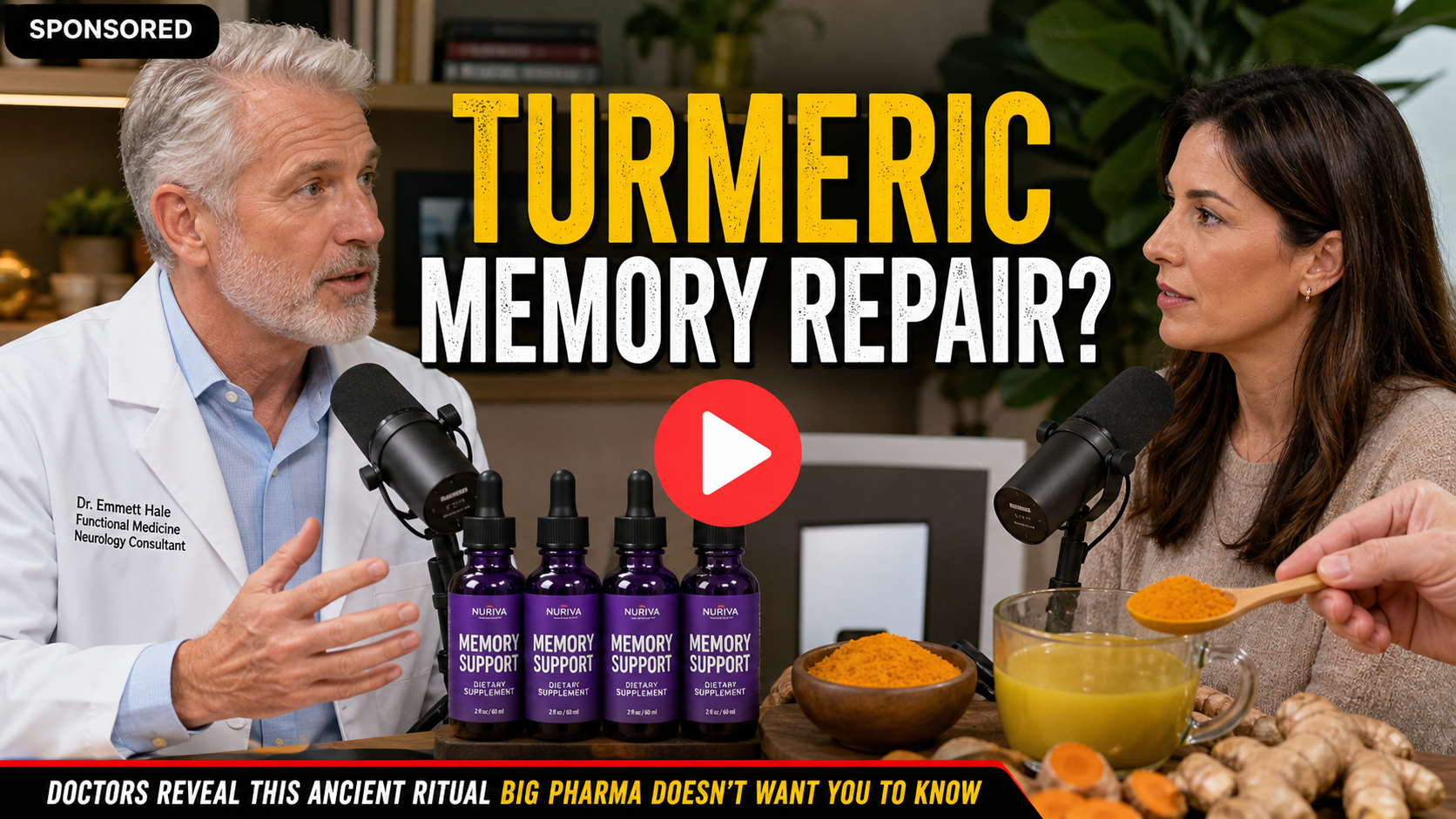
A calm video appears to show Dr. Mark Hyman explaining that a turmeric ritual can repair memory and reverse dementia. The voice is confident, the medical language sounds modern, and the comments are filled with families who seem grateful for the discovery.
There is one decisive problem. Hyman has publicly warned that scammers use AI-generated versions of his face and cloned voice to promote products he never endorsed. The Dr. Mark Hyman dementia cure scam is another version of that impersonation playbook.
Overview
The false endorsement has been warned about at the source
Dr. Mark Hyman is a real physician, author, and public speaker with a large online audience. In July 2025, his official website warned that scammers were creating fake advertisements with AI-generated video, cloned voices, and manipulated images to sell supplements he did not endorse.
That warning describes a pattern, not automatic proof about every individual product. It does, however, remove the idea that a realistic-looking Hyman clip should be trusted at face value. The official warning says product names and websites rotate, while the unauthorized identity remains the hook.
We found no reliable evidence that Hyman endorsed the Neo Memory offer associated with the campaign reviewed. A seller must prove authorization and evidence independently. The burden should not fall on a frightened family to disprove a deepfake.
Turmeric makes an extraordinary promise feel familiar
Turmeric is a common spice with a long history of culinary use and a large amount of health-related marketing. That familiarity gives the ad a believable starting point. Viewers may know that researchers study inflammation and curcumin, then assume the claimed dementia cure is simply a stronger version of accepted science.
The script skips the necessary evidence. It may claim that a turmeric ritual clears brain plaques, restores neural connections, or switches memory back on in days. Studying an ingredient does not prove that a household recipe or proprietary bottle reverses Alzheimer’s disease.
The National Institute on Aging warns consumers to be cautious of pills and supplements advertised as Alzheimer’s cures. No known supplement cures the disease. Claims of rapid, guaranteed reversal are therefore not bold medical advice. They are a serious warning sign.
The turmeric story is a bridge to a rotating product
The ad rarely ends by telling viewers to add ordinary turmeric to dinner. Instead, it claims that grocery-store spice is weak, poorly absorbed, or missing a special combination. The narrator introduces a ready-made formula as the only reliable way to reproduce the discovery.
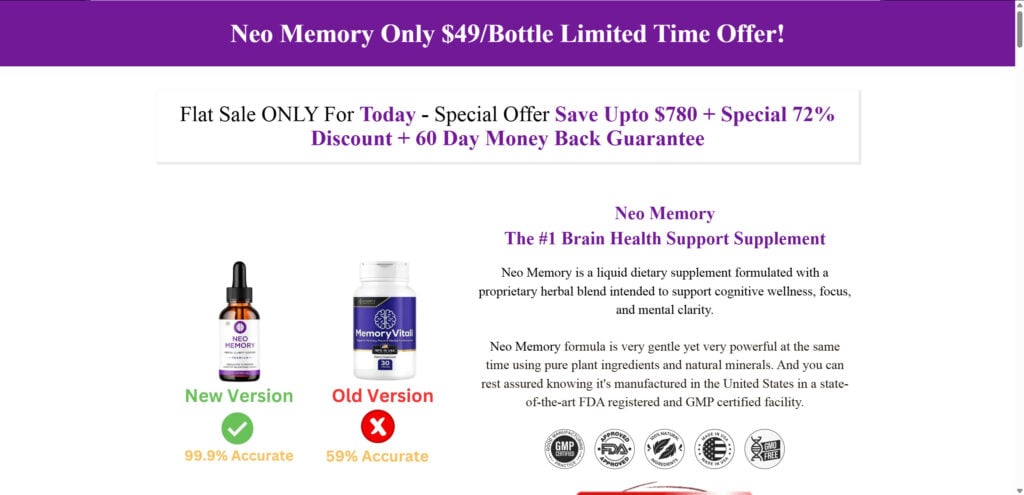
Neo Memory Drops appears in one version of this sales route. Its product page uses a low per-bottle price, a large savings claim, and package incentives. Those retail elements do not demonstrate that the fake interview is real or that the drops treat dementia.
When a product name becomes unprofitable, a new label can take its place. A story-first investigation remains useful because the false Dr. Hyman turmeric cure can continue long after Neo Memory disappears.
How to Recognize the Fake Dr. Hyman Dementia Ads
The speaker’s mouth and voice are not the strongest evidence
People often look for obvious deepfake flaws, such as unnatural blinking, smeared teeth, stiff facial movement, or a robotic voice. Those clues can help, but improved tools can produce clips without glaring errors.
The more reliable question is whether the complete statement exists on Hyman’s verified website, podcast, social accounts, or the real media outlet named in the clip. An endorsement that appears only inside an advertiser’s funnel is not independently confirmed.
The headline promises what the medical system cannot
Common phrases include reverses dementia, restores memory in days, works at any age, and doctors are furious. These absolutes are incompatible with the uncertainty and individual evaluation involved in cognitive disease.
Dementia is not one simple condition. Alzheimer’s disease, vascular changes, Lewy body disease, medication effects, depression, infection, sleep disorders, and other causes require different assessment and care. A video advertisement cannot diagnose the viewer.
Fake social proof makes the cure appear accepted
The page may show thousands of reactions, recent comments, and moving testimonials from adult children who say a parent recognized them again. Names, photographs, dates, and verified buyer badges can be generated or copied.
Even genuine reviews cannot establish a cure. Look for independent studies of the exact finished formula, clear ingredient doses, safety monitoring, and conclusions that match the advertisement’s language.
The conspiracy story blocks healthy skepticism
The narrator claims that pharmaceutical companies or medical organizations tried to silence the discovery. This explains why the viewer has not heard about it and frames every skeptical response as evidence of suppression.
It is a closed loop. No proof becomes proof of a cover-up. Responsible science works differently. Methods, data, limitations, and conflicts are open to review rather than hidden behind a countdown and order button.
How the Scam Works
Step 1: A social ad targets fear about forgetting
The ad opens with a recognizable symptom, such as losing words, forgetting appointments, or failing to recognize a family member. It then says the problem is not normal aging and can be stopped with one overlooked ritual.
This creates urgency before the viewer knows the source. Families worried about cognitive decline are offered hope and a villain within seconds.
Step 2: AI makes Dr. Hyman deliver the invented message
The advertiser clones Hyman’s voice, alters a video, or assembles genuine footage around fabricated narration. Captions make the strongest promises and encourage silent autoplay viewers to believe the doctor is speaking.
His official warning confirms that this impersonation method is real and that scammers change product names. That is why the clip must be traced to an official original before any health claim is considered.
Step 3: A fake health-news page creates borrowed credibility
The click opens a page designed like a news article, podcast transcript, or television segment. Logos and familiar page colors may suggest CNN, Fox News, CBS, or another trusted publisher, even though the domain belongs to a marketer.
Menus may not work, publication dates may refresh automatically, and unrelated links may return to the order page. Search the real publisher’s site independently rather than clicking around inside the advertorial.
Step 4: Turmeric is wrapped in a dramatic scientific story
The video discusses inflammation, insulin, amyloid, blood flow, mitochondria, or neuroplasticity. Some terms belong to legitimate research. The presentation then jumps from that complexity to a simple promise that one spice combination repairs the brain.
The missing piece is clinical evidence connecting the exact ritual or product to the claimed human outcome. References to isolated ingredients, laboratory cells, or animals do not fill that gap.
Step 5: The free ritual becomes Neo Memory Drops or another supplement
Just before the recipe should be revealed, the narrator says ordinary turmeric cannot reach the brain effectively. Neo Memory Drops is introduced as a concentrated solution, already measured and ready to use.
Our Neo Memory Drops investigation looks more closely at the product-specific offer. A different bottle can occupy the same position in a later version of the Dr. Hyman dementia cure funnel.
Step 6: Discounts and countdowns shut down comparison
The page claims that the current batch is almost gone, the video has been removed elsewhere, or only today’s visitors qualify for a major discount. Package cards make the largest order look safest and most popular.
Pause and calculate the total. A highlighted $49 figure may be a per-bottle price multiplied across several bottles. Read shipping and tax information before submitting payment.
Step 7: Checkout design can create accidental extras
Preselected packages, post-purchase offers, faint decline links, and one-click add-ons can increase the order. On a phone, the buyer may not see the complete terms near the button.
Do not declare every offer a subscription without evidence. Instead, inspect the live terms and confirmation for autoship, continuity, monthly, membership, rebill, and next shipment. Save screenshots showing what was selected.
Step 8: The buyer discovers a different company after payment
The card descriptor may not say Neo Memory. Support could operate under a processing company, while returns go to a separate warehouse. This fragmentation makes the brand’s attractive guarantee harder to enforce.
Contact the seller promptly if anything differs from the order. Keep written records, and use the payment provider’s dispute process when charges or recurring terms were not knowingly authorized.
Company, Address, and Fulfillment Checks
Follow the money past the bottle label
Identify the legal entity in the checkout and compare it with the terms, receipt, privacy policy, and statement descriptor. A trustworthy seller should explain the relationship among its brand, payment processor, support operator, and manufacturer.
Conflicting names or a legal identity revealed only after payment deserve investigation. Search company records and complaint history before buying. A new supplement brand should not be presented as a decades-old medical authority without records to support that history.
Search the address, because it may lead nowhere useful
A listed address may belong to a virtual mailbox, residential property, unrelated company, or fulfillment center. A warehouse can receive returns without being the supplement’s headquarters or manufacturer.
Map the location and confirm return instructions in writing. Do not assume that sending bottles to the first address you find will produce a refund. Ask whether a return authorization number must appear on the parcel.
Make phone and email support prove they exist
Call before ordering. Ask the representative to identify the exact product, legal seller, package total, recurring status, refund conditions, and return address. Voicemail loops, generic scripts, and agents who cannot name the brand are sharp warnings.
Email a question and keep the response. If no one answers during the sale, the guarantee should not be trusted to solve a problem later. A working order form is not a substitute for accountable customer service.
Do not swallow an untraceable formula
Contract manufacturers can mass-produce generic supplements domestically or overseas, including in China. The ad alone does not establish where Neo Memory was made, so an origin should not be invented. Lack of traceable facts is the real concern.
Look for a complete Supplement Facts panel, ingredient quantities, lot number, expiration, warnings, manufacturer, and batch-specific testing. Natural, doctor formulated, and FDA registered do not mean the product is FDA approved or clinically proven.
Memory supplement customers are often older adults taking several prescriptions. Concentrated extracts can cause side effects or interact with anticoagulants, diabetes medicines, blood-pressure drugs, sedatives, and other products. Ask a pharmacist to review the exact label.
What to Do If You Fell Victim
- Save the full funnel. Capture the social ad, AI video, fake article, product page, package choice, checkout, receipt, terms, and support details. Record URLs and dates before content disappears.
- Compare the promise with the transaction. Check quantity, per-bottle versus total price, shipping, add-ons, recurring language, and card descriptor. Highlight anything different from what you knowingly selected.
- Cancel in writing. Tell the seller to cancel the order and any subscription, autoship, or continuity plan. Revoke permission for future charges and request written confirmation.
- Call the card issuer promptly. Explain unauthorized amounts, repeat billing, or material deception. Ask about dispute deadlines, merchant blocks, and whether replacing the card is appropriate.
- Document any return. Obtain required authorization, photograph the package, use tracked shipping, and keep delivery proof. Read whether opened bottles qualify and when the guarantee period begins.
- Secure your browser and device. If the page prompted a download, extension, notification permission, or suspicious redirect, scan with Malwarebytes. AdGuard can reduce exposure to malicious ad chains in the future.
- Put health before the purchase. Do not stop prescribed medication or delay evaluation because of the ad. Ask a clinician about new cognitive symptoms and a pharmacist about supplement interactions. Sudden confusion can require urgent care.
- Report the impersonation. Report the ad to the platform, file consumer fraud information at ReportFraud.ftc.gov, and use FDA reporting channels for suspected health-product problems. Include the product lot when available.
Frequently Asked Questions
Did Dr. Mark Hyman endorse Neo Memory Drops?
We found no reliable evidence that he endorsed the offer reviewed. His official website has warned that scammers use AI versions of his face and voice to promote rotating products he did not endorse.
Can turmeric reverse dementia?
No reliable clinical evidence shows that a turmeric ritual reverses dementia. Research into ingredients and inflammation does not establish a cure. Cognitive changes require individualized medical evaluation.
How can I find Dr. Hyman’s real warning?
Use his official website or verified social channels, reached independently rather than through an ad. Genuine warnings and content should have a traceable original source and consistent domain.
Is Neo Memory always the product behind these ads?
No. It is one example. Scammers can rotate to other drops, capsules, or gummies while retaining the same AI doctor, turmeric ritual, fake news page, and checkout structure.
Does FDA registered mean the supplement is approved?
No. Facility registration or other FDA-related wording is not FDA approval of a dietary supplement’s safety or effectiveness. Treat an unqualified FDA approved supplement claim as a red flag.
What should a family do about worsening memory?
Arrange a medical evaluation and bring a medication list. Sudden confusion can be urgent, while gradual changes still deserve assessment for treatable causes, diagnosis, safety, and evidence-based support.
The Bottom Line
The Dr. Mark Hyman dementia cure scam is not a brave doctor revealing a suppressed turmeric treatment. It is an AI impersonation funnel that borrows medical trust and redirects frightened families to products such as Neo Memory Drops.
Hyman’s own warning confirms that scammers rotate products and clone his identity. Verify every endorsement at the original source, ignore countdowns, and choose qualified medical care over a cure story built around a checkout.

Join the discussion
0 commentsShare your experience or ask a question about this article.
Discussion
Start the conversation
Have a question or something useful to share? Add the first comment.