

A familiar face appears on screen, a respected news brand frames the story, and a worried family finally hears the answer it has been hoping for.
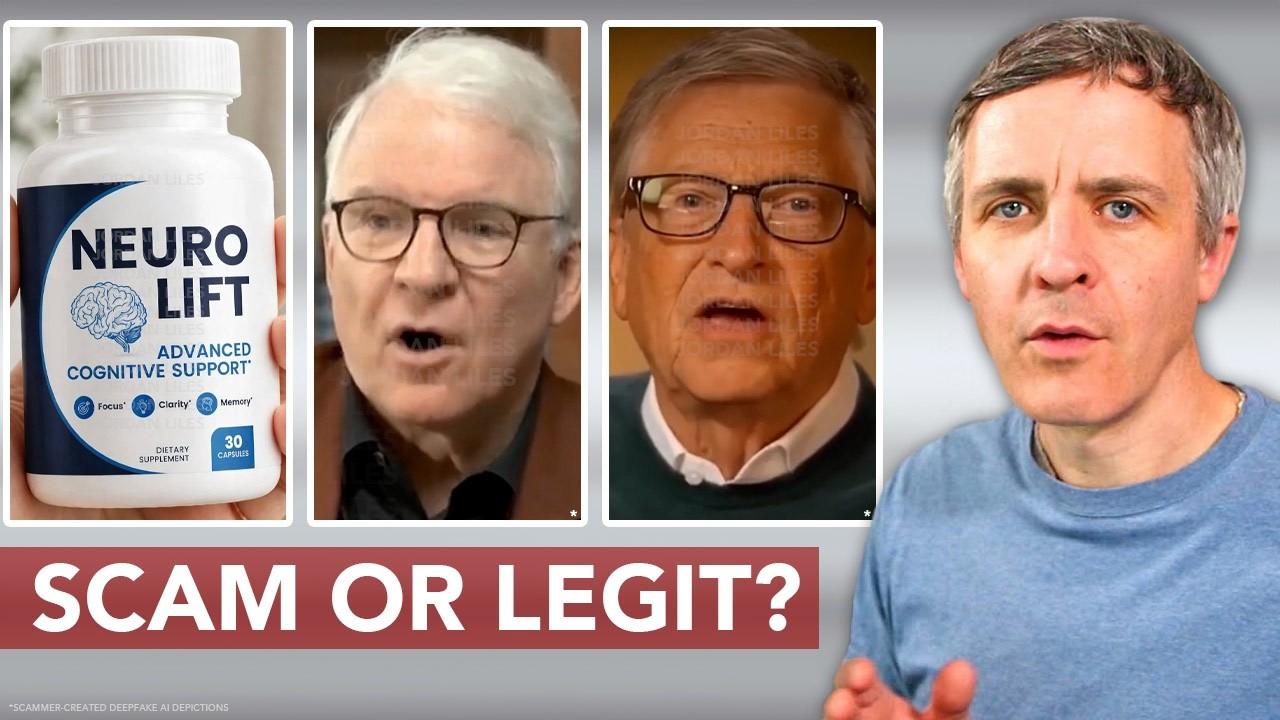
The NeuroLift promotion looks polished enough to deserve a second glance. That is precisely why its details need to be checked before anyone reaches the order page.
Overview
The advertisement is not a genuine CNN health report
The NeuroLift campaign copies the visual language of television news. It uses a studio-style presentation, familiar public figures, dramatic medical claims, and a supposedly urgent discovery.
A BBB Scam Tracker report dated September 10, 2026 describes a cloned CNN interface, fabricated Facebook comments, and AI-generated celebrity material connected with the promotion.
The reported campaign used the business name “NeuroLift Research” and directed visitors toward tpw.getwellvio.com. BBB lists the operator’s location and email as unknown.
A cinnamon and honey story leads to a bottle
The pitch does not begin like an ordinary supplement advertisement. It introduces a home remedy that supposedly reverses memory loss, dementia, or Alzheimer’s disease within weeks.
Bill Gates, Steve Martin, Jane Pauley, and Dr. Sanjay Gupta have appeared in versions of this narrative. No reliable evidence shows that they endorsed this NeuroLift campaign.
The kitchen recipe creates curiosity. The long presentation then shifts from free information toward a proprietary cognitive-support product that viewers must purchase.
Several unrelated products share the NeuroLift name
NeuroLift is not a unique trademark identifying one transparent operation. Searches reveal separate supplements, clinics, and services using identical or similar wording.
That makes careless reviews especially dangerous. Ingredients, guarantees, addresses, and customer experiences from one seller can be wrongly attributed to a completely different NeuroLift offer.
- The campaign examined here uses fake-news styling and GetWellVio-related pages.
- Other NeuroLift websites advertise different formulas and different companies.
- A matching name does not prove shared ownership, manufacturing, or policies.
- The exact checkout and card-statement descriptor matter more than the bottle name.
What the NeuroLift Promotion Actually Claims
Versions of the campaign promise an unusually rapid transformation. Viewers are told that an overlooked ingredient can clear damaging material from the brain and restore normal memory.
The story may describe an ancient honey remedy, a cinnamon ritual, or research secretly funded by a famous billionaire. The scientific language changes between versions.
What remains constant is the emotional destination. The viewer is encouraged to believe a serious neurodegenerative disease has a simple answer that doctors failed to provide.
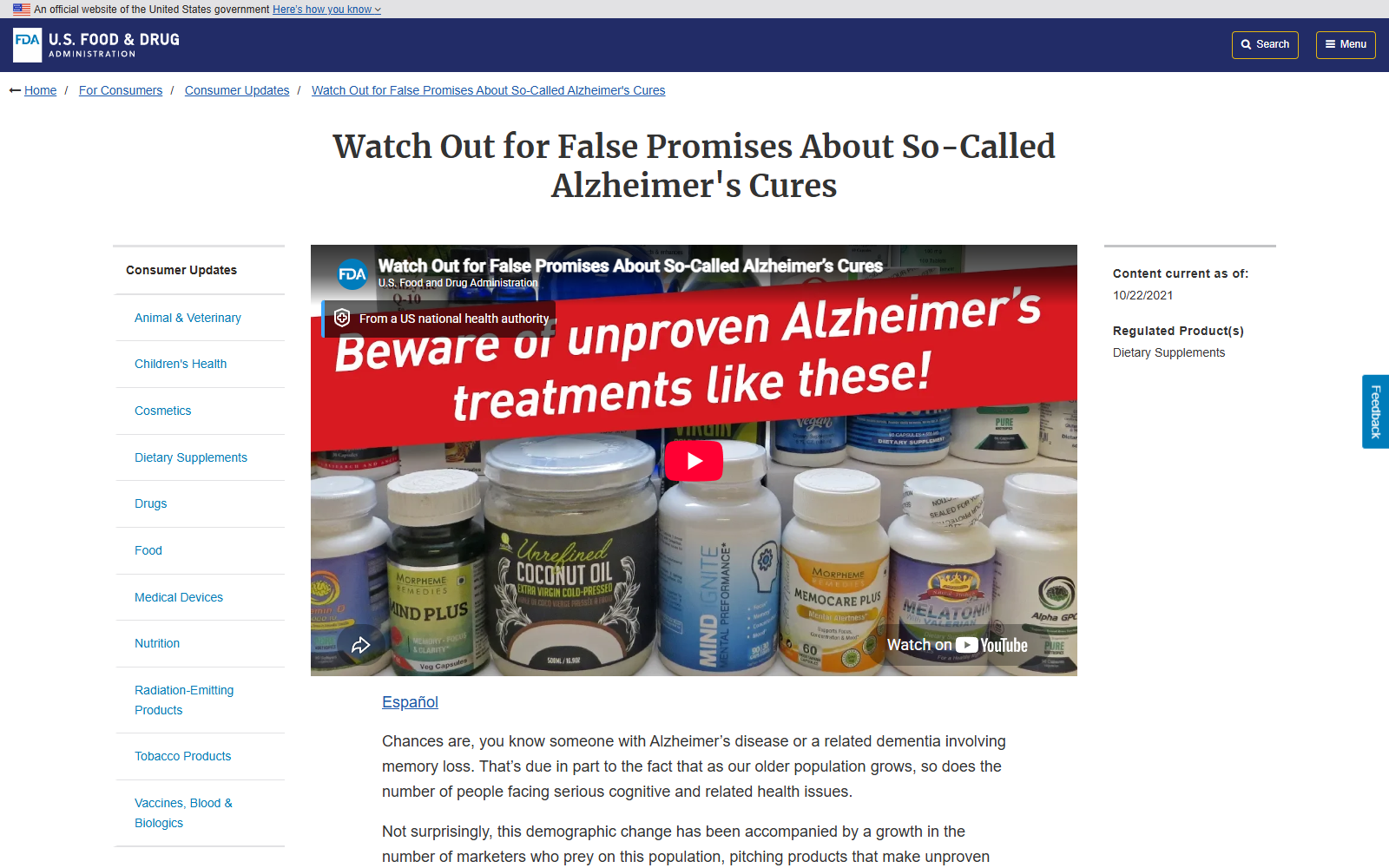
The FDA warns that products claiming to prevent, treat, or cure Alzheimer’s disease may be unapproved, ineffective, unsafe, and capable of delaying appropriate diagnosis and care.
The agency also explains that dietary supplements are not tested before sale in the same manner as approved prescription drugs. A facility badge does not prove treatment effectiveness.
No reliable product-level clinical evidence was located showing that this NeuroLift formula reverses Alzheimer’s disease, dementia, or meaningful cognitive decline within 45 days.
Why the Celebrity Footage Is So Convincing
Modern voice cloning can reproduce tone, rhythm, and familiar speech patterns. Lip movement can be adjusted so borrowed footage appears to match an entirely new script.
The result does not always look perfect. Yet it only needs to feel believable during a fast social-media scroll, especially when captions reinforce the fabricated message.
The FTC specifically warns that scammers use doctored celebrity video and audio to manufacture endorsements. Looking and sounding familiar is no longer proof of participation.
Search for the supposed interview on the celebrity’s verified accounts and the broadcaster’s real website. A major medical announcement would not exist only inside an affiliate funnel.
Pay attention to abrupt cuts, mismatched mouth shapes, unnatural blinking, repeated background movement, flattened emotion, and voices that sound unusually clean or evenly paced.
Those clues help, but they are not decisive. The strongest test is independent confirmation from the person, network, medical institution, and named research team.
How the NeuroLift Scam Works
Step 1: A social-media video borrows instant authority
The campaign starts with a sponsored clip on Facebook, Instagram, YouTube, or another feed. It resembles a breaking health segment instead of a direct-response advertisement.
A recognizable celebrity discusses memory loss, while a presenter or doctor appears to confirm the discovery. The identities are used before the product is properly introduced.
This order matters. Viewers first accept the authority, then evaluate everything else through that borrowed trust.
Step 2: A counterfeit news page makes the story feel verified
Clicking the ad opens a page styled like CNN or another trusted publisher. Colors, typography, navigation, and comment boxes create the impression of independent reporting.
The web address tells a different story. It is not a genuine network domain, and menus may be decorative, broken, or designed to keep visitors inside the sales path.
Fabricated social comments provide reassurance. They describe recovered memories, happier families, and fast results, but visitors cannot post an independent reply.
Step 3: Fear and hope keep the viewer watching
The narrator describes forgetting names, losing independence, and becoming a burden. These are painful fears for people already watching a loved one struggle.
Then the mood changes. A hidden cause is supposedly identified, a family finds hope, and mainstream medicine is portrayed as slow, expensive, or deliberately dismissive.
The presentation delays the promised recipe. Each new segment suggests the crucial detail is coming next, making viewers feel invested in finishing the video.
Step 4: The free ritual quietly becomes NeuroLift
Someone who clicked for cinnamon and honey eventually learns that ordinary kitchen ingredients are inconvenient, incomplete, or unable to deliver the required concentration.
NeuroLift is then presented as the practical version of the discovery. The bottle inherits credibility from the fictional broadcast even though it was never independently validated.
The product page may switch to softer wording such as focus, clarity, and memory support. That retreat conflicts with the dramatic disease claims that generated the sale.
Step 5: Package pricing increases the transaction
The checkout may emphasize a low per-bottle amount while steering buyers toward several bottles. The largest package can appear cheapest even when its total is substantial.
Upsells may appear after payment details are entered. A second formula, faster activation product, or extra supply can be offered before the original purchase feels complete.
Every screen should be read separately. Confirm the bottle count, total charge, shipping, recurring language, and merchant name before pressing the final button.
Step 6: The product name changes while the story survives
Once a bottle attracts warnings, the advertiser can substitute another label. The fake newsroom, honey narrative, celebrity footage, and checkout architecture remain useful.
This explains why searching only “NeuroLift reviews” is not enough. The campaign must be identified by its advertisement, destination domain, seller, payment processor, and statement descriptor.
A future version may promote a different memory supplement. The same verification rules still apply.
Company, Address, and Fulfillment Checks
The company identity is not cleanly established
The BBB report names NeuroLift Research but lists no verified location or email. A generic footer name does not show legal registration, ownership, or accountability.
GetWellVio-related pages appear in the reported funnel, but that connection alone does not identify who created the ads, formulated the capsules, processed payments, or shipped orders.
The phone number is a support clue, not proof
The report lists (833) 327-3603. A working number can belong to outsourced customer service handling many unrelated products and does not establish the manufacturer’s identity.
Before ordering, ask the agent to name the legal seller, return address, statement descriptor, renewal terms, and product manufacturer. Save the written answers.
A warehouse address is not a headquarters
If a return address appears after purchase, search it independently. Supplement operations often use fulfillment centers that receive packages for many labels.
A warehouse can prove where returns travel without revealing where the business is managed or where the capsules were produced and tested.
Untraceable manufacturing creates a health risk
Do not assume a supplement was mass-produced in China, the United States, or anywhere else without documentation. Country-of-origin claims require actual evidence.
The sharper question is whether the bottle identifies a responsible company, manufacturer or distributor, lot number, complete Supplement Facts panel, warnings, and adverse-event contact.
When that chain is missing, buyers cannot verify ingredient amounts, contamination controls, allergens, or who approved the finished batch. That is more serious than poor customer service.
Warning Signs That Should Stop the Purchase
- The “news” page is hosted outside the broadcaster’s real domain.
- A celebrity discusses a product that never appears on verified accounts.
- The video promises to reverse Alzheimer’s disease within a fixed deadline.
- A kitchen recipe is teased but never provided in usable form.
- Static comments replace independent reviews and open discussion.
- The formula appears only after a long emotional presentation.
- Company, manufacturing, and return details remain vague before checkout.
- The cheapest-looking price requires buying the largest package.
One warning sign may have an innocent explanation. This combination points to a sales environment that should not be trusted with health decisions or payment details.
What a Genuine Memory-Treatment Breakthrough Would Look Like
A real medical breakthrough begins with named researchers, a defined intervention, transparent methods, measurable outcomes, safety monitoring, and results that other specialists can examine.
The study would identify who participated, how people were selected, what comparison group was used, how long follow-up lasted, and which outcomes changed.
Researchers would discuss limitations instead of guaranteeing recovery. They would explain who might benefit, who should avoid treatment, and what side effects occurred.
A regulatory decision would be traceable through an official agency database. The evidence would not exist only in an unskippable video hosted on an unrelated domain.
Legitimate clinicians would not diagnose millions of viewers from a symptom checklist. Forgetfulness can involve sleep, medication, mood, nutrition, thyroid problems, infection, or neurological disease.
Some contributors are reversible, while others require long-term management. That complexity is exactly why a professional evaluation matters.
NeuroLift’s campaign replaces this careful process with certainty. A celebrity story promises one cause, one ritual, one bottle, and one rapid timeline.
Certainty is emotionally attractive, especially when a family feels frightened. It is also a warning sign when the supporting evidence remains hidden.
Ask for the exact trial registration, published paper, formula, dose, adverse-event data, and independent replication. Marketing phrases cannot answer those questions.
If the seller responds with more testimonials, another countdown, or accusations against medicine, it is avoiding verification rather than supplying it.
What to Do if You Have Fallen Victim to This Scam
- Save the entire evidence trail. Keep the advertisement, landing-page address, checkout screens, order confirmation, bottle photographs, emails, shipping label, and card-statement descriptor.
- Check every transaction. Compare the amount charged with the package selected. Look for separate upsells, duplicate charges, and later payments from unfamiliar descriptors.
- Contact the actual merchant in writing. Use the receipt and statement details, not only the ad page. Request cancellation, return instructions, and a refund deadline.
- Speak with your card issuer promptly. Explain which charges were unauthorized or materially misrepresented. Ask about blocking future payments connected with the merchant.
- Do not consume an uncertain product. Show the sealed bottle and ingredient panel to a pharmacist or clinician, especially if you take prescriptions or manage chronic conditions.
- Report adverse effects. Seek medical help when needed and submit serious supplement reactions through FDA MedWatch. Keep the bottle, lot code, and packaging.
- Secure the exposed accounts. Change reused passwords and enable multifactor authentication if the funnel collected login credentials or redirected through suspicious pages.
- Check the device. Run Malwarebytes if the page triggered downloads, extensions, notifications, or unusual redirects. Remove anything you did not intentionally install.
- Reduce repeated malicious advertising. AdGuard can block many deceptive ad and tracking requests, although it cannot replace careful verification.
- Report the impersonation. Notify the advertising platform, FTC, BBB Scam Tracker, FDA health-fraud program, and the copied broadcaster.
Do not pay anyone who promises to recover the money for an upfront fee. Recovery scammers often contact people after the original purchase.
Never provide remote computer access, gift-card numbers, cryptocurrency, or another card to “verify” a refund. Start with the bank and written merchant contact.
Frequently Asked Questions
Is NeuroLift a legitimate Alzheimer’s cure?
No credible evidence shows that the NeuroLift product in this campaign cures or reverses Alzheimer’s disease. The FDA warns against unapproved products making those promises.
Did CNN investigate or endorse NeuroLift?
The documented promotion used a cloned CNN-style interface. A copied logo and newsroom layout do not make the page a genuine CNN report.
Did Bill Gates or Steve Martin recommend NeuroLift?
No verified endorsement was found. The campaign has been reported for using AI-generated celebrity material, and the FTC warns about precisely this tactic.
Is every product named NeuroLift part of this campaign?
No. Multiple unrelated products and services use similar names. This investigation concerns the fake-news, celebrity, honey, and GetWellVio-linked promotion.
Does NeuroLift automatically create a subscription?
The BBB report characterizes the promotion as a subscription trap, but buyers must verify their own checkout and receipt. Terms can change between funnels and packages.
What is the safest response to memory problems?
Arrange an evaluation with a licensed healthcare professional. Memory changes can have different causes, and an advertisement cannot diagnose them or provide accountable follow-up care.
The Bottom Line
The NeuroLift campaign is not trustworthy. It combines a counterfeit news presentation, fabricated celebrity authority, unsupported Alzheimer’s claims, and an unclear commercial chain.
The bottle name may change, but the test remains simple. Verify the broadcast, medical evidence, seller, final total, and return terms before sharing health or payment information.

Join the discussion
0 commentsShare your experience or ask a question about this article.
Discussion
Start the conversation
Have a question or something useful to share? Add the first comment.