

If you’ve been online recently, you’ve probably come across flashy ads claiming there’s a natural cure for Type 2 Diabetes. The pitch is usually the same: a so-called “secret recipe” hidden from the public that can supposedly reverse diabetes in days. These ads often lead to suspicious websites like mindbodyrevive.online and promote a product called Gluco Delete Drops.
At first, the ads seem convincing. They feature celebrity endorsements, dramatic testimonials, and long videos promising to finally reveal the truth. But once you dig deeper, it becomes clear: this is not a medical breakthrough. It’s a textbook health scam designed to exploit fear, hope, and trust.
This article will break down exactly how the Natural Diabetes Cure & Secret Recipe Scam works, the dangers it poses, and what to do if you’ve already been targeted.
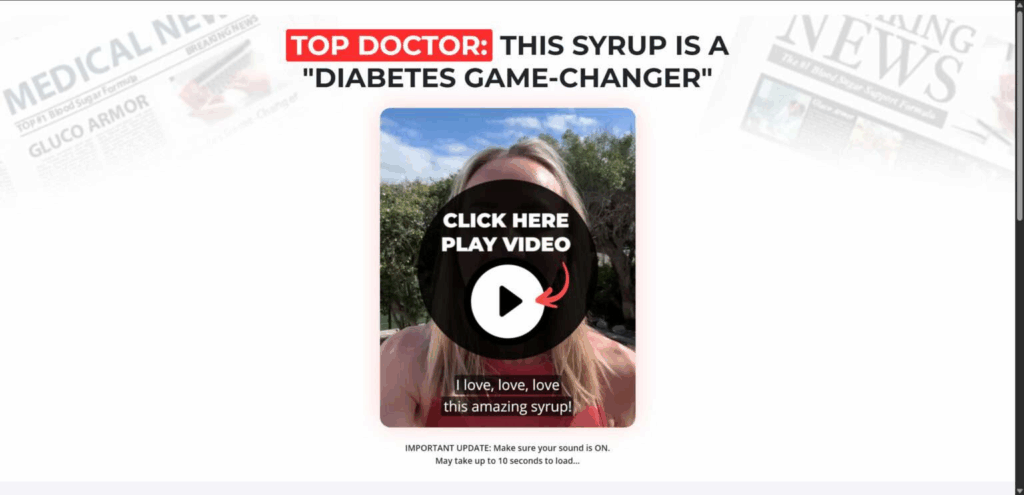
Why the Natural Diabetes Cure Pitch Works
The Gluco Delete Drops scam thrives on psychological manipulation. It takes a real problem — the daily struggles of managing diabetes — and offers an easy solution that simply doesn’t exist.
The Promise of a “Secret Recipe”
The ads claim to reveal a natural formula that can:
- Reverse Type 2 diabetes without medication
- Stabilize blood sugar in days
- Act as a “natural alternative to Mounjaro” or Ozempic
- Work for anyone, regardless of lifestyle
These promises are designed to sound too good to resist. But here’s the truth: no peer-reviewed medical research supports such claims. Diabetes is a chronic condition that requires ongoing management — not a one-bottle miracle cure.
The Long Video Trap
The entire sales funnel hinges on a lengthy video presentation, often over an hour long. Viewers are told:
- “Stay until the end to learn the 3-step antidote.”
- “Doctors don’t want you to know this secret.”
- “Pharma companies are hiding the cure.”
But the “reveal” never comes. Instead, the video drags viewers through emotional stories, ominous background music, and fear-based messaging. Only at the very end is the so-called solution revealed: a bottle of Gluco Delete Drops.
This is a classic scam tactic. By keeping you watching, they increase the odds that you’ll feel emotionally invested and more likely to buy impulsively.
Deepfake Endorsements
One of the most shocking elements of the scam is the use of deepfakes. The ads feature a fabricated video of Bill Gates, claiming these drops are a “natural Mounjaro” that can cure diabetes.
Let’s be clear:
- Bill Gates has never endorsed Gluco Delete Drops.
- There is no such thing as a natural replacement for Mounjaro or Ozempic.
- Diabetes cannot be reversed overnight by a “secret vegetable” or drop formula.
Other AI-generated endorsements include fabricated clips of doctors, scientists, and even wellness influencers. None of these are real.
Emotional Storytelling
The ads lean heavily on emotional manipulation. They often feature:
- A patient who nearly lost their life to diabetes but was “saved” by the drops
- Tearful testimonials from supposed family members
- Narratives blaming the medical establishment for “hiding” the cure
This strategy preys on vulnerability. People struggling with diabetes want hope, and scammers weaponize that hope to sell unproven products.
Fake Authority and Urgency
The websites selling Gluco Delete Drops also employ:
- Medical jargon to sound scientific (“pancreatic reset,” “glucose detox”)
- Scarcity tactics (“only 5 bottles left in stock”)
- Countdown timers to push immediate purchases
- Money-back guarantees that are rarely honored
How the Natural Diabetes Cure Scam Works
Step 1: The Hook — A Viral Ad
It starts with aggressive ads on Facebook, Instagram, TikTok, or YouTube. These ads use shocking headlines like:
- “Doctors stunned by a natural diabetes cure”
- “Bill Gates reveals the truth about Type 2 Diabetes”
- “One drop a day reverses diabetes”
The goal is simple: get you to click.
Step 2: The Long-Form Video Funnel
Clicking the ad leads to a long video. The structure is deliberate:
- Introduce fear: highlight the dangers of diabetes and conventional medicine.
- Create doubt: suggest that Big Pharma is hiding the truth.
- Offer hope: promise a breakthrough natural cure.
- Tease the solution: tell viewers to “watch until the end.”
The video often lasts 45–90 minutes, preventing viewers from skipping ahead.
Step 3: The Fake Authority
Midway through, a doctor or expert is introduced. This is often a deepfake or paid actor. They claim to have discovered the “secret recipe” after years of research. Sometimes they reference supposed studies at Harvard or the Mayo Clinic — studies that do not exist.
Step 4: The Secret Ingredient
Toward the end, the “secret recipe” is revealed — but never in detail. Instead, the video shifts to selling Gluco Delete Drops, supposedly containing all the miracle ingredients.
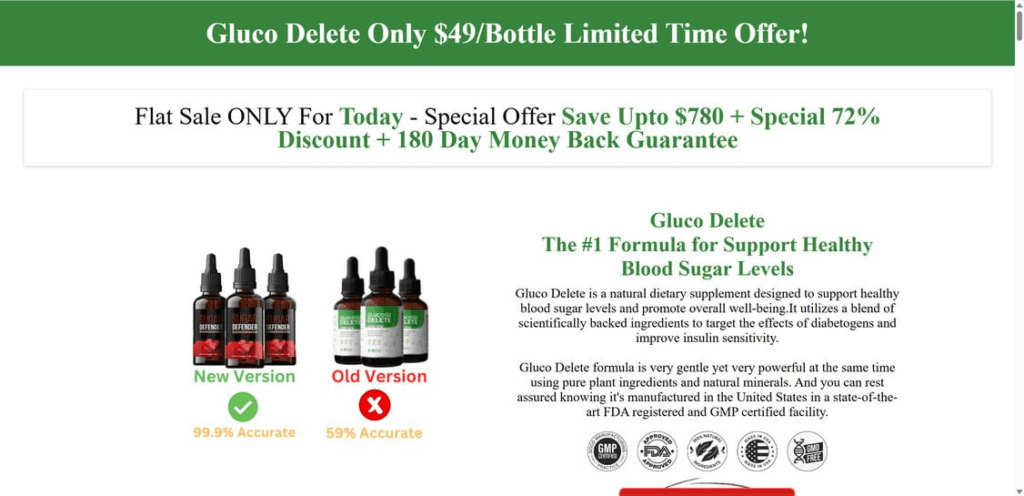
Step 5: Scarcity and Urgency
On the checkout page, buyers are hit with:
- “Only available today” offers
- Discounted bundles (“Buy 3, get 2 free”)
- Scarcity warnings (“Only 9 bottles left”)
These psychological tricks push viewers to buy immediately before skepticism sets in.
Step 6: The Checkout Trap
The drops are overpriced — usually $59–$79 per bottle. Buyers often find themselves auto-enrolled in monthly subscriptions without clear consent.
Step 7: The Aftermath
After payment:
- Some buyers receive the product, though it’s often a generic herbal formula with no special properties.
- Others receive nothing.
- Refunds are nearly impossible to get.
- Customer service numbers don’t work, or emails go unanswered.
What to Do if You’ve Fallen Victim
- Stop Further Charges
- Call your bank or credit card company immediately.
- Request a chargeback and explain that the product was sold under false pretenses.
- Cancel Subscriptions
- Check your billing for recurring charges.
- Ask your bank to block future withdrawals.
- Report the Scam
- Federal Trade Commission (FTC): reportfraud.ftc.gov
- Better Business Bureau (BBB): bbb.org
- FDA MedWatch: report unapproved medical products
- Save Documentation
- Keep receipts, order confirmations, and screenshots of ads.
- These may help with disputes or investigations.
- Monitor Accounts
- Watch for unusual charges on your bank and credit cards.
- Consider placing a fraud alert with credit bureaus.
- Warn Others
- Report scam ads to Facebook, Instagram, or YouTube.
- Share your experience online to protect others.
- Avoid Follow-Up Scams
- Be wary of anyone offering to “help you get a refund” for a fee.
- Scammers often target victims again with fake recovery services.
FAQ: Natural Diabetes Cure & Secret Recipe Scam
What is the Natural Diabetes Cure & Secret Recipe scam?
The Natural Diabetes Cure & Secret Recipe scam is a deceptive marketing scheme that promotes products like Gluco Delete Drops as miracle cures for Type 2 Diabetes. Ads claim to reveal a hidden “secret recipe” that can reverse diabetes naturally. In reality, the drops are overpriced, unproven supplements sold through manipulative sales tactics. No legitimate scientific research supports these claims.
Does Gluco Delete Drops really reverse Type 2 Diabetes?
No. There is no scientific or medical evidence that Gluco Delete Drops — or any supplement marketed as a “secret diabetes cure” — can reverse Type 2 Diabetes. At best, these drops may contain common herbal extracts or vitamins, but they cannot replace prescription medications, insulin therapy, or lifestyle management strategies recommended by real doctors.
Why do scammers use the term “secret recipe”?
The phrase “secret recipe” is a psychological hook. It suggests hidden knowledge and exclusivity, making people feel they’re gaining access to something powerful that others don’t know about. In reality, there is no secret. It’s simply a marketing ploy to sell bottles of drops at inflated prices.
Are celebrity endorsements in these ads real?
No. Many Natural Diabetes Cure scam ads feature deepfakes or AI-generated videos of celebrities like Bill Gates, claiming they support the product. None of these endorsements are real. Bill Gates has never endorsed Gluco Delete Drops, and no credible doctor or scientist has promoted them either.
What are the common red flags of this scam?
Signs that you’re dealing with a scam include:
- Long video presentations that never reveal the full solution until the end
- Fake doctors or experts who can’t be verified in medical registries
- Over-the-top promises like “reverse diabetes in 3 days”
- Scarcity tactics such as “only 5 bottles left” or countdown timers
- A vague or hidden ingredient list
- Suspicious websites like mindbodyrevive.online with no real contact details
Is Gluco Delete Drops FDA-approved?
No. Gluco Delete Drops are not FDA-approved. The FDA has strict regulations for diabetes medications, and no supplement like this has been approved to treat, cure, or reverse diabetes. Any product claiming otherwise is misleading and potentially dangerous.
How much do these drops cost?
Scam websites usually price Gluco Delete Drops between $59–$79 per bottle, often pushing bulk packages like “Buy 3, Get 2 Free.” Many buyers later discover they’ve been auto-enrolled into recurring billing plans, leading to unexpected monthly charges.
Is the Natural Diabetes Cure scam dangerous?
Yes. The danger comes in multiple forms:
- Financial harm: victims are tricked into spending hundreds on worthless supplements.
- Health risks: people may delay or stop real medical treatment while relying on fake drops.
- Data risks: scammers may sell customer information to other fraudulent networks.
What should I do if I already bought Gluco Delete Drops?
If you’ve purchased these drops:
- Contact your bank or card provider immediately and request a chargeback.
- Cancel any hidden subscriptions linked to your card.
- Save receipts, order confirmations, and screenshots of the ads as proof.
- Report the scam to the FTC at reportfraud.ftc.gov and the BBB at bbb.org.
- Monitor your financial accounts for further fraudulent charges.
Why do scams like this keep coming back with new names?
Once exposed, scammers simply rebrand. They launch the same formula under a new name, create another “secret recipe” video, and start advertising again. This cycle makes it hard for consumers to keep track, which is why awareness is crucial.
How can I protect myself from diabetes cure scams?
- Be skeptical of miracle claims, especially those that promise fast, effortless results.
- Search the product name plus “scam” before buying.
- Verify any celebrity or doctor endorsements.
- Only trust diabetes treatments recommended by licensed healthcare professionals.
- Avoid long video presentations and websites with no verifiable company information.
The Bottom Line
The Natural Diabetes Cure & Secret Recipe Scam is nothing more than a carefully packaged deception. Products like Gluco Delete Drops prey on vulnerable people living with diabetes by promising impossible results through fake science, deepfake endorsements, and manipulative sales tactics.
The truth is simple: there is no miracle drop or secret recipe that can reverse Type 2 Diabetes overnight. Managing diabetes requires evidence-based care, healthy lifestyle changes, and guidance from qualified healthcare professionals.
If you come across ads promoting secret recipes, miracle drops, or celebrity-endorsed diabetes cures, treat them as red flags. Protect your health, your money, and your trust by staying informed and skeptical.

Join the discussion
0 commentsShare your experience or ask a question about this article.
Discussion
Start the conversation
Have a question or something useful to share? Add the first comment.