

The Castor Oil Detox Pack sold on Vellora-Official.com is advertised as an overnight wellness product that can reduce bloating, clear brain fog, support full-body detoxification, and target “hidden gut invaders.” The product is promoted under the Oris Labs name and uses bold claims that go far beyond a simple castor oil wrap.
While castor oil packs are a real wellness trend, the claims on this sales page raise serious concerns. The marketing relies heavily on detox language, parasite-style claims, dramatic testimonials, and confusing refund promises. Based on the available evidence, buyers should be cautious before ordering.
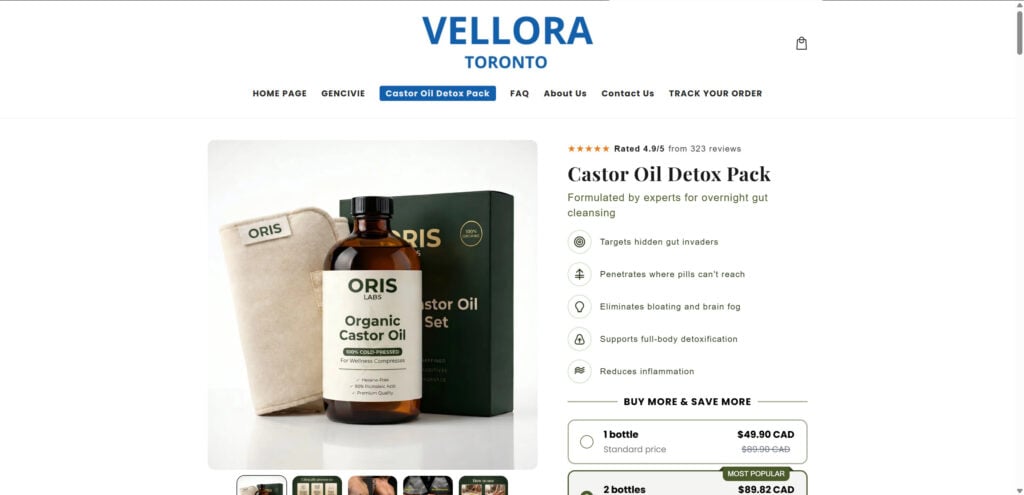
What Is the Castor Oil Detox Pack?
The product is marketed as a reusable abdominal wrap used with castor oil. According to the Vellora product page, buyers are instructed to apply castor oil to the pack, place it on the abdomen, fasten the straps, and sleep with it overnight. The page recommends using it 3 to 5 nights per week for “optimal results.”
The product page claims the pack is “formulated by experts for overnight gut cleansing” and says it can:
- Target hidden gut invaders
- Penetrate where pills cannot reach
- Eliminate bloating and brain fog
- Support full-body detoxification
- Reduce inflammation
Those are not minor cosmetic claims. They suggest the product can affect digestion, inflammation, detoxification, parasites, sleep, and overall health.
Why the Marketing Raises Red Flags
The biggest problem is not that the product is a castor oil pack. The problem is how it is being sold.
Castor oil packs are widely discussed on social media, but many of the claims attached to them are not supported by strong evidence. Cleveland Clinic notes that people claim castor oil packs can aid digestion, clear skin, relieve cramps, and detox the body, but states there is no scientific proof that these practices provide those broad benefits.
That matters because Vellora’s page does not simply advertise the pack as a relaxing self-care product. It frames the product as an overnight “cleanse” that can act through the skin, target gut problems, and produce visible improvements within weeks.
The “Detox” Claim Is Not Well Supported
The word “detox” is one of the most common red flags in questionable wellness marketing. It sounds scientific, but it is often vague. What toxins? From where? Measured how? Verified by what test?
The National Center for Complementary and Integrative Health says detox and cleanse programs are marketed as ways to remove toxins, lose weight, or improve health, but the human research is limited and often low quality. NCCIH also warns that some detox products have been falsely advertised or may be unsafe.
MD Anderson’s experts are even more direct about castor oil detox claims. They state that castor oil does not detoxify the liver and that the body already has natural detoxification systems involving the liver and kidneys.
So when a product claims to support “full-body detoxification” by wearing a castor oil pack overnight, buyers should be skeptical.
The Parasite Language Is Especially Concerning
The Vellora page asks, “Do I actually have parasites?” and claims that studies estimate up to 80% of the population carries gut parasites without knowing it. It then lists common symptoms such as bloating, fatigue, sugar cravings, brain fog, and nighttime wake-ups.
This is a classic fear-based sales tactic.
Many ordinary symptoms can have many causes. Bloating can come from diet, stress, IBS, constipation, food intolerance, medications, hormonal changes, or other digestive issues. Fatigue and brain fog can come from poor sleep, stress, anemia, thyroid problems, depression, blood sugar issues, or dozens of other causes.
Suggesting that these common symptoms may mean hidden parasites can push people toward buying a product without proper medical evaluation.
A castor oil wrap should not be treated as a parasite treatment. If someone genuinely suspects a parasite infection, they need medical testing and appropriate treatment, not a social media detox pack.
“Where Pills Can’t Reach” Is Misleading
The page claims the pack “penetrates where pills can’t reach” and says transdermal absorption lets active compounds bypass digestion and act directly on the liver, intestines, and lymphatic system while the user sleeps.
That sounds advanced, but it is not the same as clinical proof.
For a health-related claim like this to be reliable, the seller should provide strong evidence showing that this exact product, used exactly as instructed, produces the claimed results in humans. The FTC states that health-related advertising must be truthful, not misleading, and supported by competent and reliable scientific evidence.
The product page relies heavily on testimonials and marketing language. That is not the same as controlled clinical evidence.
The Testimonials Look Too Convenient
The sales page includes many dramatic customer stories. Some claim bloating disappeared, sleep improved, brain fog lifted, digestion became regular, cravings stopped, and energy returned. One testimonial says years of supplements and naturopath visits did not work, but the pack gave real results.
Testimonials can be persuasive, but they are weak evidence.
A customer story does not prove that the product caused the result. Symptoms like bloating, sleep quality, and energy can fluctuate naturally. People may also change their diet, hydration, stress levels, or routine at the same time they start using a product.
For a product making health-related claims, testimonials should not replace solid clinical data.
The Page Claims “No Side Effects,” Then Lists Possible Reactions
Another concern is inconsistency.
The product page says “No side effects” in its comparison/benefit section. But the FAQ discusses “die-off” and says it may temporarily cause headaches, fatigue, or mild digestive symptoms. The same FAQ also says the pack should not be used during pregnancy, over open wounds on the abdomen, or by people with an IUD.
That is a red flag.
A product should not be marketed as having “no side effects” while also warning that some users may experience symptoms or should avoid it in certain situations.
The Guarantee Language Is Confusing
The refund messaging is another major issue.
In the cart area, the site says, “Try it risk-free for 90 days.” The product page also says there is a “90-day money-back guarantee.”
But the FAQ section later says the company offers a “60-day satisfaction guarantee.”
Then the separate return policy says the store has a 30-day return policy. It also says the item must be unused, with tags, and in its original packaging.
That creates three different expectations:
- 90-day risk-free guarantee
- 60-day satisfaction guarantee
- 30-day return policy with conditions
This kind of inconsistency is a serious buyer protection concern. A “risk-free” guarantee sounds simple in advertising, but the actual refund process may be much harder once the customer tries to use it.
The Return Policy May Make Refunds Difficult
The return policy says customers must contact support first and wait for instructions on where to send the package. It also says items sent back without approval will not be accepted.
That is not automatically suspicious on its own. Many legitimate stores require return authorization.
However, it becomes concerning when combined with exaggerated health claims, inconsistent guarantee language, and vague supplier-based shipping. Buyers do not know before ordering where returns will need to be sent, how much return shipping will cost, or whether used products qualify for the advertised “risk-free” guarantee.
For personal-care or wellness items, this matters. If the product must be unused to qualify for a return, then the “try it risk-free” language becomes questionable.
Shipping Language Suggests Supplier-Based Fulfillment
The shipping policy says products are shipped directly from suppliers to the customer’s doorstep.
That type of wording is common in dropshipping-style stores. It does not prove the product is a scam by itself, but it raises questions:
- Who is the actual manufacturer?
- Where is the product shipped from?
- Where must returns be sent?
- Is Vellora the brand, the reseller, or only a storefront?
- Why is the product page branded as Oris Labs while the store is Vellora?
When a wellness product makes strong health claims, the seller should be transparent about the company, fulfillment, manufacturer, testing, and refund process.
Is the Castor Oil Detox Pack a Scam or Legit?
The safest conclusion is that the Castor Oil Detox Pack is a highly questionable wellness product sold with exaggerated claims.
It may be a real physical product. A buyer may receive a castor oil wrap and oil. But that does not make the marketing reliable.
The red flags are significant:
- Claims about detoxification are not supported by strong medical evidence.
- The page uses parasite-related fear messaging.
- It claims to eliminate bloating, brain fog, cravings, and sleep problems.
- It suggests transdermal absorption can target internal organs and gut invaders.
- The page relies heavily on testimonials.
- The refund guarantee appears inconsistent.
- The return policy is more restrictive than the “risk-free” messaging suggests.
- The site says products ship directly from suppliers.
- The product branding is unclear between Vellora and Oris Labs.
At best, this is an overpriced castor oil pack promoted with aggressive wellness claims. At worst, it may be part of a dropshipping-style funnel designed to sell cheap products using exaggerated health promises.
How the Sales Funnel Appears to Work
The Castor Oil Detox Pack follows a familiar pattern seen in many viral wellness products.
First, the ad grabs attention with a common health complaint. This may be bloating, fatigue, brain fog, sleep problems, cravings, or digestive issues.
Next, the ad suggests there may be a hidden cause. In this case, the product page leans into “gut invaders” and parasite-style messaging.
Then the product is introduced as a simple overnight solution. Instead of changing diet, seeing a doctor, or investigating symptoms properly, the buyer is told that wearing a castor oil pack while sleeping may help.
After that, testimonials create urgency and social proof. The page shows positive reviews, emotional stories, and claims of fast improvement.
Finally, the buyer sees a guarantee that sounds reassuring. But when they check the actual policies, the refund terms appear inconsistent and more restrictive than the sales copy suggests.
That pattern is why buyers should be careful.
What To Do If You Already Bought It
1. Save all evidence
Take screenshots of the product page, guarantee language, checkout page, order confirmation, refund policy, shipping policy, and any emails from the seller.
2. Check your bank statement
Look for the exact amount charged. Also check whether you were enrolled in any recurring billing, membership, or subscription.
3. Contact the seller in writing
Use email so there is a record. Ask for cancellation, refund instructions, and confirmation that no future charges will occur.
4. Do not rely on vague promises
If support tells you to wait, use the product longer, or accept only a partial refund, keep records. These can help if you file a dispute.
5. Dispute the charge if necessary
If the product was misrepresented, the refund policy is not honored, or you are charged again without consent, contact your credit card company, PayPal, or payment provider.
6. Speak to a healthcare professional
If you bought the product because of persistent bloating, fatigue, digestive changes, sleep issues, or suspected parasites, get proper medical advice. These symptoms should not be diagnosed through an online ad.
The Bottom Line
The Castor Oil Detox Pack sold on Vellora-Official.com raises too many red flags to recommend.
Castor oil packs may feel soothing for some people, but the claims about detoxification, gut invaders, bloating, brain fog, cravings, and overnight cleansing are not backed by strong evidence. The inconsistent guarantee language also makes the offer less trustworthy.
If you want a castor oil pack as a relaxation or self-care item, there are cheaper and more transparent options. If you have digestive symptoms or suspect a medical issue, skip the detox marketing and speak with a qualified healthcare provider.
This product is best avoided.
FAQ
Is the Castor Oil Detox Pack a scam?
It appears to be a real product, but the marketing is highly questionable. The detox, parasite, bloating, brain fog, and overnight cleansing claims raise major red flags.
Does castor oil detox the body?
There is no strong evidence that castor oil packs detox the body. MD Anderson states that castor oil does not detoxify the liver, and the body already has natural detox systems through the liver and kidneys.
Can a castor oil pack remove parasites?
No reliable evidence on the Vellora page proves that this product removes parasites. Suspected parasite infections require medical testing and proper treatment.
Why is the Vellora product page suspicious?
The page uses broad health claims, parasite-style fear messaging, dramatic testimonials, supplier-based shipping language, and inconsistent refund guarantees.
What is the refund problem?
The site shows “90-day” risk-free language, the FAQ mentions a 60-day satisfaction guarantee, and the return policy says there is a 30-day return window with conditions. (VELLORA)
Is Oris Labs the same as Vellora?
The product page is hosted on Vellora-Official.com but labels the product as Oris Labs. That branding confusion is another reason buyers should be cautious.
Can castor oil packs help with bloating?
Some people may feel relaxed or temporarily better, but broad claims about eliminating bloating are not proven. Persistent bloating should be evaluated by a healthcare professional.
Is the product safe?
Topical castor oil may be tolerated by many people, but the product page itself warns against use during pregnancy, over open wounds, or with an IUD. It also mentions possible “die-off” symptoms such as headaches, fatigue, or digestive discomfort.
What should I do if I was charged again?
Contact the seller in writing, request cancellation, and dispute unauthorized charges with your payment provider.
Should I buy the Castor Oil Detox Pack?
Based on the claims and refund concerns, it is safer to avoid it. The product is marketed with exaggerated wellness promises that are not supported by strong evidence.








