

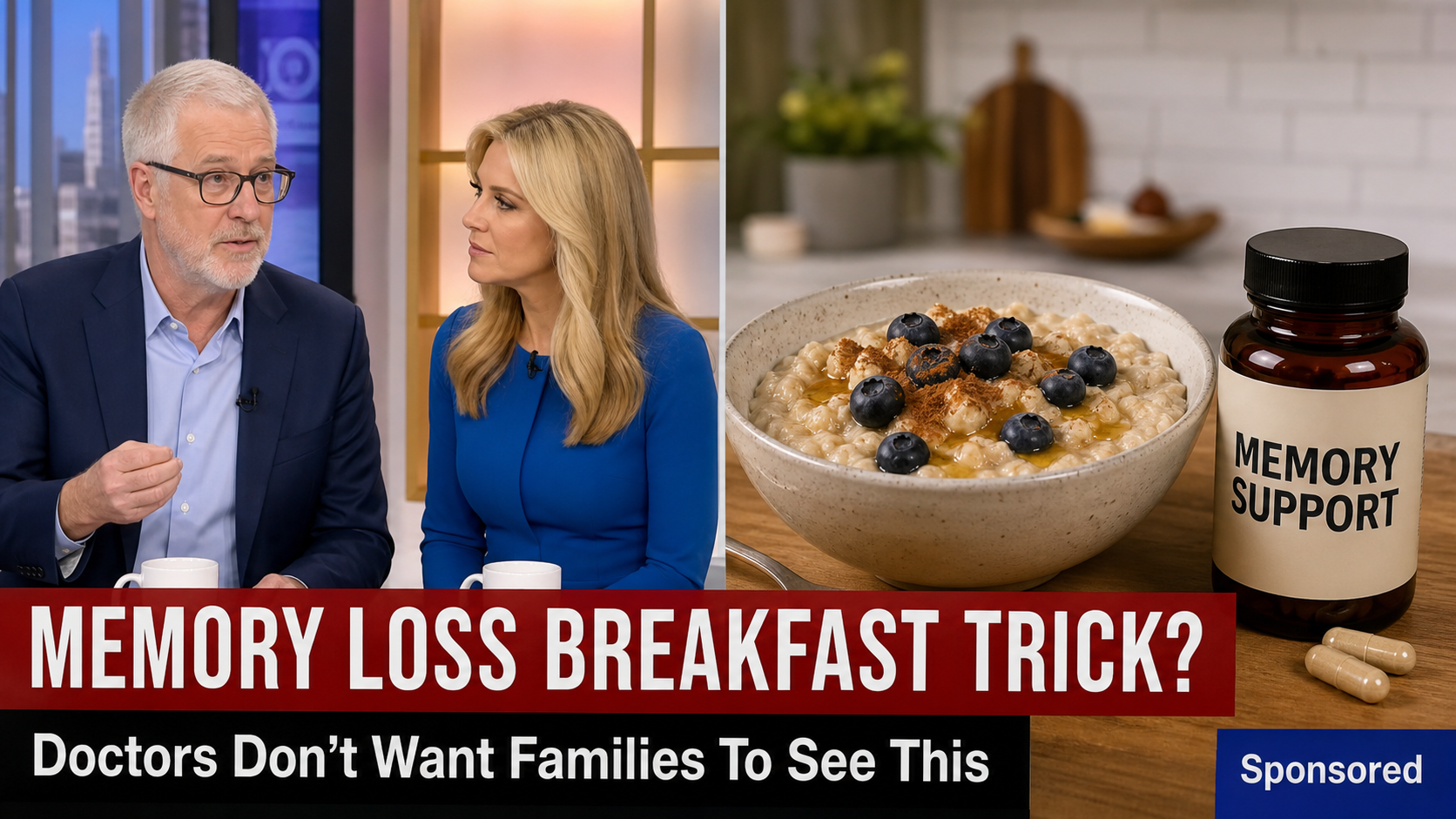
A sponsored video promises that one ordinary breakfast habit can bring back names, dates, and lost memories. A familiar technology billionaire appears to approve, a television host looks amazed, and the answer seems to be sitting in a bowl of honey, cinnamon, or fruit.
The Memory Loss-Reversing Breakfast Trick Scam is built to feel hopeful before it feels commercial. It does not begin with a bottle. It begins with a family fear, a borrowed face, and the suggestion that doctors have hidden a simple discovery.
Keep watching, however, and the promised breakfast never becomes a credible treatment. The story keeps changing shape until a supplement package and payment form take its place.
Overview
The ad promises a breakfast discovery, not a product
The first promise is deliberately simple. A spoonful of honey, a spice, a morning drink, or a seven-second breakfast habit supposedly clears a hidden blockage in the brain. Some versions say the method reverses memory loss. Others go further and claim it can undo dementia or Alzheimer's disease.
Bill Gates is frequently placed at the center of the story because his name is associated with technology, philanthropy, and health research. That connection is exploited to make a fabricated memory treatment sound like an expensive scientific discovery being shared with ordinary families.
The celebrity, interview, and news page are fabricated
The videos and articles reviewed do not establish a genuine Bill Gates endorsement. Scammers and aggressive affiliate marketers can combine synthetic voice, altered footage, misleading captions, and unrelated clips to create an interview that never happened.
The next page may imitate CNN, Fox News, CBS, AARP, or a daytime television program. Its familiar colors and layout are visual props. The address bar usually reveals an unrelated domain, while the page's buttons lead to an affiliate tracker or supplement checkout.
The bottle changes while the story keeps working
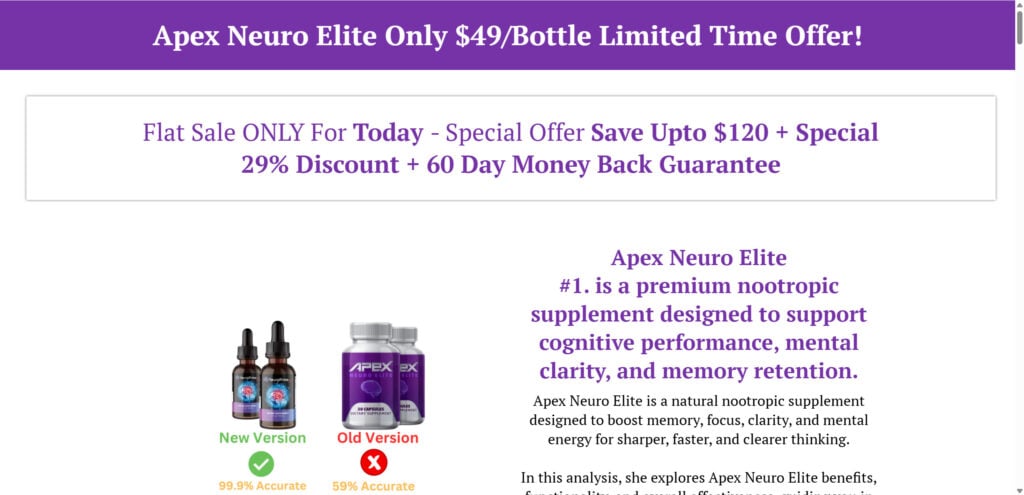
Apex Neuro Elite and NeuroPrime are examples of products found at the end of versions of this funnel. Earlier and parallel campaigns have used other memory-support labels. The product is replaceable because the emotional sales work happens before viewers know what they are expected to buy.
This distinction matters. A warning centered only on one bottle can become obsolete when the advertiser swaps a link. The lasting warning is the complete story pattern:
- A social ad targets fear about forgetfulness or dementia.
- An AI celebrity or fake expert creates instant authority.
- A counterfeit news page promises a hidden breakfast method.
- A long video delays the actual recipe.
- Pseudoscience turns normal ingredients into a miracle claim.
- A supplement appears as the only convenient way to get the supposed benefit.
- A package grid pushes several bottles and may introduce upsells or refill risk.
Why This Story Can Feel So Convincing
Memory loss is frightening because it can affect identity, independence, and family relationships. A person worried about a spouse or parent is not shopping with the same emotional distance they might bring to an ordinary household purchase.
The campaign exploits that urgency. It shows relieved families, dramatic before-and-after stories, and comments from people who supposedly remembered passwords or recognized loved ones again. Those comments normally sit inside the seller-controlled page, not in a verifiable social-media discussion.
The breakfast angle also lowers skepticism. Honey, fruit, cinnamon, coffee, and oatmeal feel familiar and harmless. That familiarity is then used to smuggle in an extraordinary medical conclusion that the ingredients themselves do not prove.
Real memory problems can have many causes, including medication effects, depression, sleep disorders, vitamin deficiencies, thyroid conditions, stroke, and neurodegenerative disease. A breakfast advertisement cannot diagnose the cause, and delaying a medical assessment can matter.
There Is No Verified Bill Gates Memory Cure
Bill Gates has publicly supported research related to Alzheimer's disease, but research funding is not an endorsement of a secret breakfast recipe or commercial supplement. The official Gates Foundation biography and public channels do not verify the claims used in these ads.
A convincing face and voice are no longer proof. Modern tools can clone speech, change lip movement, and place new dialogue over unrelated footage. Even imperfect videos can work when viewers are watching on a phone with the sound low and bold captions doing most of the persuasion.
Check the alleged statement at the original source. A real television interview should exist on the broadcaster's verified website. A genuine scientific announcement should identify the researchers, institution, paper, and trial. A seller's embedded video is not independent confirmation.
How the Memory Loss-Reversing Breakfast Trick Scam Works
Step 1: A sponsored video finds a worried family
The campaign begins on Facebook, Instagram, YouTube, or a native-ad network. The headline may ask whether a loved one repeats questions, forgets names, or loses track of familiar routines.
The advertiser does not need to know a viewer's diagnosis. Interest in caregiving, retirement, memory, health, or supplements can be enough to place the ad in front of someone already searching for answers.
Step 2: AI turns borrowed authority into a false endorsement
A manipulated clip makes Bill Gates, Dr. Oz, a television host, or a supposed neurologist appear to reveal the discovery. One person introduces the breakthrough, another reacts with surprise, and a third supplies a testimonial.
The combination is intentional. A single strange clip may raise suspicion. Several familiar-looking voices repeating the same claim can create the illusion that the story has already been verified by other people.
Step 3: A counterfeit news page makes the ad look reported
The click opens a page styled like a trusted news or health publisher. It may copy a masthead, navigation bar, author box, video player, and Facebook-style comments. The layout encourages readers to trust the page before checking its domain.
Look at the full web address. A page that resembles CNN but runs on an unrelated health, recipe, or tracking domain is not a CNN investigation. Logos and colors can be copied in minutes.
Step 4: The video delays the breakfast trick
The presentation promises that the recipe is coming shortly, then introduces another patient story, another villain, and another reason to keep watching. Viewers are told not to close the page because the video may be removed.
A genuine breakfast recipe could be written in a few lines. Repeated delay is a sales technique. It increases the time and attention already invested before the commercial reveal appears.
Step 5: Pseudoscience invents one hidden cause
The script may blame a toxin, parasite, protein, mineral imbalance, inflammation pathway, or morning food mistake for nearly every form of memory decline. Real biological terms are mixed with unsupported explanations so the conclusion sounds technical.
The page rarely provides a properly identified clinical trial of the exact product and the exact claim. Vague references, invented-looking citations, missing journal details, and studies of isolated ingredients do not prove that a finished supplement reverses memory loss.
Step 6: The free story becomes a rotating supplement checkout
After the long buildup, the page says ordinary ingredients are too weak, difficult to prepare, or missing a special extract. The convenient solution is a proprietary bottle that was not mentioned at the start.
Apex Neuro Elite was one destination documented in this ecosystem. Its former site promoted capsules, but the purchase path led through affiliate tracking to NeuroPrime liquid drops. As of this review, the Apex Neuro Elite domain returned a 404 page while NeuroPrime remained active. That is exactly why the story matters more than one label.
Step 7: The package grid turns curiosity into a larger charge
The checkout emphasizes a per-bottle figure while giving the largest package the strongest visual treatment. NeuroPrime currently displays one bottle at $69, three at $177, and six at $294, while claiming that 97% of customers choose six bottles.
That does not prove every breakfast-trick funnel creates a subscription. The immediate risks vary by checkout and can include a larger multi-bottle total, post-purchase upsells, marketing texts, or separate continuity terms. Read the final order summary and save it before submitting payment.
Company, Address, and Fulfillment Checks
The bottle name is not the company taking responsibility
Do not stop at the brand printed on the label. Compare the legal name in the terms, privacy policy, checkout, receipt, card statement, and shipping label. In this example, the old Apex Neuro Elite page, the NeuroPrime seller, the affiliate tracker, and ClickBank played different roles.
The NeuroPrime footer says ClickBank is the retailer and explicitly says that this role is not an endorsement of the product or its claims. The product-support identity is less clear, with the policies often referring to the website itself rather than naming a clearly described manufacturer.
The listed address is a shipping point, not proof of a factory
NeuroPrime's shipping policy says bundles ship from Jetpack in Tallmadge, Ohio and lists 285 Northeast Ave as the shipping and return address. That establishes a logistics point. It does not by itself identify the headquarters, formula owner, or factory that made the drops.
A fulfillment center can receive returns and send parcels for many unrelated brands. Search an address, compare businesses using it, and ask the seller to name the legal operator before assuming a warehouse is the company behind the health claims.
Support can become harder to identify after payment
The NeuroPrime terms list support@theneuroprime.com for product help and direct order issues to ClickBank. The terms also describe recurring marketing and cart-reminder text messages for people who opt in, with STOP as the stated opt-out method.
Before ordering, ask support to confirm the exact product, package count, total charge, recurring-payment status, cancellation route, refund conditions, and return address in writing. A generic reply or an agent who cannot identify the order is a warning that recovery may be difficult.
An opaque supply chain is a health warning
A label should provide a complete Supplement Facts panel, serving size, ingredient amounts, warnings, lot information, and a responsible company. The seller should be able to identify the manufacturer or importer and provide meaningful quality documentation for the finished batch.
Private-label supplements may be produced in the United States or overseas, including China. Country alone does not prove danger, but an undisclosed factory, importer, testing method, or certificate of analysis leaves buyers unable to verify identity, contamination controls, allergens, or medication interactions.
What Medical Evidence Actually Says
The National Institute on Aging states that there are currently no known interventions that cure Alzheimer's disease. Some approved medicines can manage symptoms, and certain therapies may slow progression for eligible people in the early stages, but those decisions require professional diagnosis and monitoring.
The FDA has repeatedly warned about products sold online with unproven claims to prevent, treat, or cure Alzheimer's disease. Such offers can waste money, expose people to unknown risks, and delay care that could identify a treatable cause of memory change.
Honey, cinnamon, berries, and a balanced breakfast can be ordinary parts of a diet for many people. That does not make a viral ritual a treatment for dementia. Evidence about one ingredient, a laboratory model, or general nutrition cannot be stretched into proof that a proprietary bottle reverses disease.
Anyone experiencing new, worsening, or sudden confusion should speak with a qualified health professional. Sudden confusion can be urgent. Do not stop prescribed medication or replace medical care because a video says the health system is hiding a natural cure.
Warning Signs That Reveal the Story
- A celebrity discusses the discovery only inside sponsored ads.
- The alleged broadcaster's page uses an unrelated domain.
- The promised breakfast recipe is delayed for most of the video.
- One simple cause is blamed for different types of memory loss.
- Research is described without a traceable paper, DOI, or trial record.
- Seller-controlled comments claim dramatic dementia reversals.
- The product appears only after viewers have watched a long presentation.
- The product name, formula, or checkout destination changes.
- A per-bottle price is prominent while the package total is less noticeable.
- The address identifies a return warehouse but not the manufacturer.
What to Do if You Have Fallen Victim to This Scam
- Identify the exact order. Check the receipt and card statement for the product, processor, merchant descriptor, package count, and total. Do not assume the name from the video is the name that processed the payment.
- Save the complete funnel. Capture the sponsored post, advertiser profile, video, fake news page, web addresses, package grid, checkout summary, terms, receipt, emails, and shipping label. Product names and pages can disappear quickly.
- Cancel in writing. Contact the seller and payment processor using details from the receipt and formal policies. State that you cancel any unshipped order, optional marketing program, continuity plan, or refill authorization, then request written confirmation.
- Contact your card issuer promptly. Explain exactly what was advertised, what was charged, what arrived, and whether later charges were authorized. Ask about dispute rights, recurring-payment blocks, and whether a replacement card is appropriate.
- Monitor statements and messages. Watch for new descriptors, smaller test charges, rebills, and marketing texts. Reply STOP to an opted-in marketing stream, but preserve screenshots before deleting anything.
- Protect the device used for payment. If the page triggered downloads, browser alerts, redirects, or extension prompts, run a full scan with Malwarebytes. Use AdGuard to block many malicious ads, trackers, and known scam-page requests before they load.
- Speak with a clinician about health concerns. Bring the bottle, ingredient panel, and order information. Seek prompt advice for side effects, drug interactions, sudden confusion, or any decision to replace prescribed care with the advertised method.
- Report the campaign and avoid recovery scams. Report the ad to the platform and the transaction to the FTC at ReportFraud.ftc.gov. Ignore strangers who promise a guaranteed refund for an upfront fee or request remote access to your device.
Frequently Asked Questions
Is the memory loss-reversing breakfast trick real?
No credible evidence shows that the advertised breakfast ritual reverses dementia or Alzheimer's disease. The phrase is a marketing hook that leads viewers through a fake endorsement and toward a commercial offer.
Did Bill Gates reveal or endorse the breakfast trick?
No verified Bill Gates source supports the claims reviewed. His involvement in health and Alzheimer's research is misused to make generated or edited advertising look credible.
What supplement does the breakfast trick sell?
There is no permanent answer. Apex Neuro Elite and NeuroPrime are documented examples, but the funnel can redirect to a different label when a domain closes or negative coverage catches up.
Does every order include six bottles or a subscription?
No. A six-bottle package is a common high-pressure option, not a guaranteed outcome. Subscription and refill terms depend on the exact checkout. Verify the total and recurring status before paying.
Can cinnamon, honey, or supplements cure Alzheimer's disease?
No household ingredient or over-the-counter supplement has been proven to cure Alzheimer's disease. Discuss memory changes and any supplement with a qualified health professional.
What if the product name on my receipt is different?
Use the receipt and card descriptor to identify the actual merchant and processor. Save the mismatch as evidence, contact both parties in writing, and give the same details to your card issuer if you dispute the transaction.
The Bottom Line
The Memory Loss-Reversing Breakfast Trick Scam is not defined by Apex Neuro Elite, NeuroPrime, or any other bottle. It is a reusable story that turns family fear, AI celebrity authority, fake news design, and delayed promises into a supplement checkout.
The label can change tomorrow. The warning stays the same: if a secret breakfast cure appears only in a sponsored video and ends with a multi-bottle offer, do not pay until the endorsement, medical evidence, merchant, package total, and recurring terms are independently verified.

Join the discussion
0 commentsShare your experience or ask a question about this article.
Discussion
Start the conversation
Have a question or something useful to share? Add the first comment.