

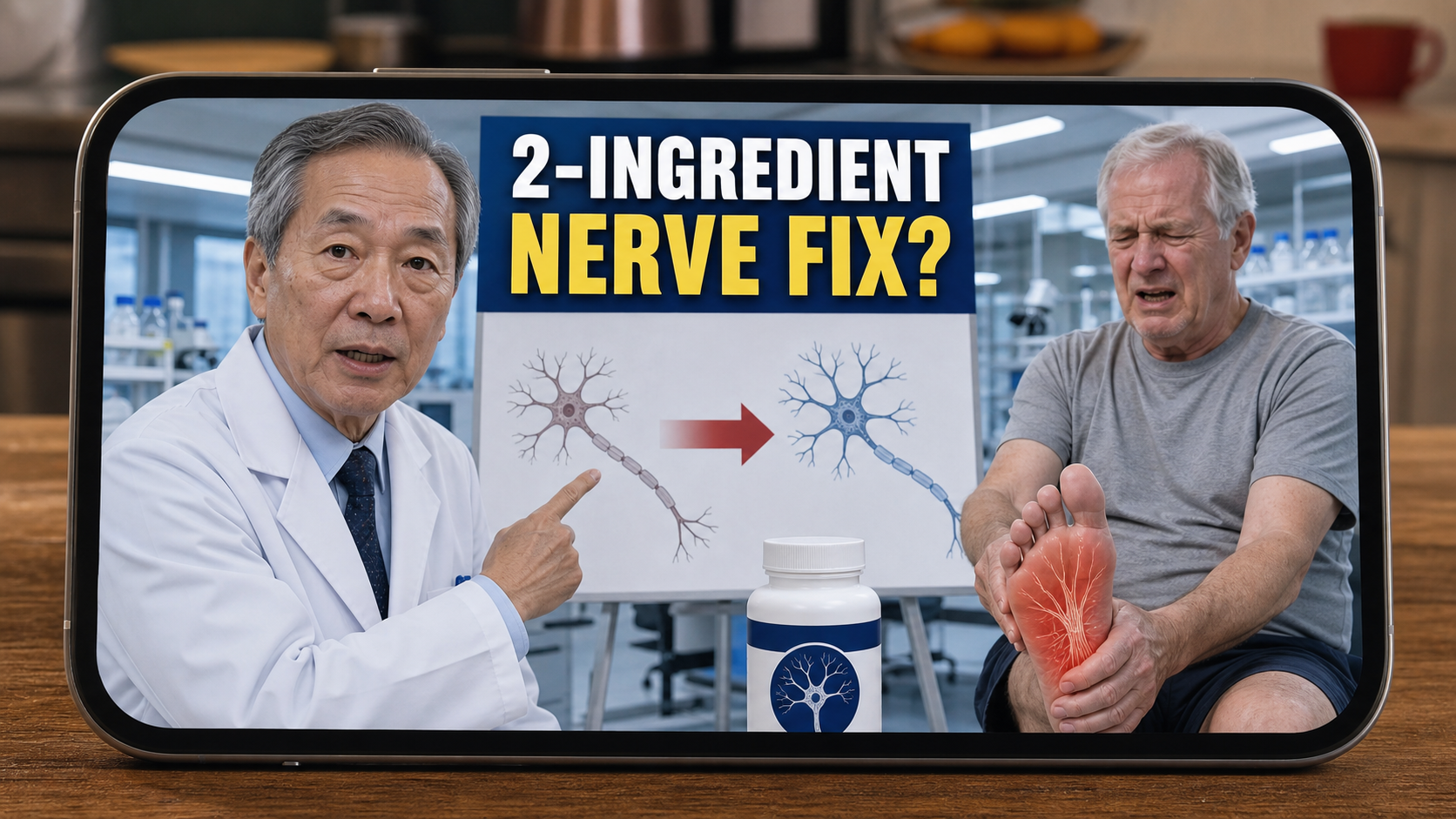
A calm doctor explains that tingling feet are not really a nerve problem. According to the video, the true cause was hidden for years, and a Nobel Prize-winning discovery finally revealed a simple Japanese solution.
The story sounds scientific, personal, and hopeful. It is also designed to move people with real pain from a social media clip into a long sales presentation before they have time to check the medical claims.
This investigation examines the fake autophagy neuropathy cure story, the identities used to sell it, and the nerve supplement offer waiting at the end.
Overview
A legitimate scientific discovery is turned into a cure story
The campaign builds its authority around Yoshinori Ohsumi, the Japanese scientist awarded the 2016 Nobel Prize in Physiology or Medicine for discoveries involving autophagy. Autophagy is a cellular recycling process, and the research is real.
The deceptive leap comes next. The ad suggests that this work uncovered a hidden method for reversing neuropathy with a “two-ingredient Japanese cocktail.” The Nobel recognition did not establish such a home remedy or a cure for peripheral neuropathy.
Familiar faces make the invented story feel personal
Versions of the promotion have used or referenced Dr. Oz, Tom Hanks, and a doctor-like presenter. Their presence encourages viewers to assume the video came from a television interview, medical program, or personal health confession.
We found no credible evidence that these public figures created or endorsed the advertised neuropathy protocol. Artificial voice, edited footage, and fabricated dialogue can make an endorsement appear convincing even when it never happened.
The promised recipe leads to a supplement sale
The video delays the practical answer while repeating stories about damaged nerves, toxins, circulation, cellular cleanup, and a discovery supposedly ignored by conventional medicine. The final solution is not a kitchen recipe. It is a paid supplement offer.
NervoLyn is one product attached to this funnel. The brand can change, which is why the deceptive medical story matters more than the bottle name.
- A real Nobel Prize is used to support a claim the award did not establish.
- Celebrity and doctor imagery creates borrowed trust.
- A vague two-ingredient promise keeps viewers watching.
- The sales video reframes many possible causes of neuropathy as one hidden mechanism.
- The reveal directs viewers to multi-bottle supplement packages.
What the Autophagy Neuropathy Ads Claim
The central claim is that nerve pain, burning, numbness, or pins-and-needles sensations continue because damaged cellular material is not being cleared properly. The ad then presents autophagy as a switch that can be turned on with a simple combination of ingredients.
This explanation is attractive because it turns a complicated medical problem into one cause and one solution. A viewer no longer has to think about diabetes, medication side effects, vitamin deficiencies, thyroid disease, kidney disease, alcohol use, injury, autoimmune conditions, or other possible explanations.
The story may say that conventional treatments only mask symptoms while the advertised method repairs nerves “at the source.” That phrase is powerful marketing, but it does not identify a diagnosis, show clinical evidence for the advertised protocol, or establish that the viewer’s nerves can regenerate in the promised way.
Some versions add a patient story involving a famous person. The emotional arc follows a familiar pattern: unbearable symptoms, disappointing medical care, a secret discovery, rapid improvement, and a desire to share the answer before it is suppressed.
What Yoshinori Ohsumi Actually Discovered
Ohsumi’s Nobel-recognized research clarified mechanisms of autophagy, initially through experiments involving yeast. The work helped scientists understand how cells degrade and recycle components, and it has broad relevance to biology and disease research.
A discovery can be medically important without becoming a consumer cure. Moving from a cellular mechanism to a proven treatment requires specific compounds, doses, safety studies, controlled clinical trials, and evidence for a defined patient group.
The ad skips those steps. It treats “autophagy” as if it were a cleansing button and then implies that buying a supplement will produce the precise nerve-healing outcome shown in the story.
The Nobel Prize website does not describe Ohsumi’s award as a neuropathy treatment endorsement. When an advertisement uses a prestigious scientific honor, ask whether the scientist studied the advertised disease, tested the named product, or endorsed the seller. Here, those links are missing.
Neuropathy Is a Symptom Pattern, Not One Simple Disease
Peripheral neuropathy describes damage to nerves outside the brain and spinal cord. People can experience pain, burning, numbness, unusual sensitivity, muscle weakness, balance problems, or changes in automatic functions such as blood pressure and digestion.
Diabetes is a common cause, but it is not the only one. Vitamin B12 deficiency, thyroid problems, kidney disease, infections, inherited conditions, chemotherapy, alcohol misuse, physical compression, and certain medications can also contribute.
That variety matters. A treatment appropriate for one cause may be useless or harmful for another. Delaying a real evaluation can also allow an underlying condition to progress.
Doctors may use a medical history, neurological examination, blood tests, nerve conduction studies, electromyography, imaging, or other tests depending on the symptoms. The goal is to identify the pattern and, when possible, treat the underlying cause.
Why a testimonial cannot diagnose the viewer
A testimonial describes one person’s claimed experience. It does not show that the person had the same condition as the viewer, used only the advertised product, or improved because of it.
In a fake celebrity story, even that limited evidence disappears. The person may never have said the words, used the product, or experienced the symptoms shown in the video.
Why “natural” does not settle safety or effectiveness
Natural ingredients can have biological effects, side effects, allergies, and interactions. A person taking diabetes medication, blood thinners, blood pressure treatment, or multiple supplements should not assume a new formula is harmless.
Dietary supplements are not approved by the FDA before marketing in the same way prescription drugs are. A facility registration, manufacturing badge, or disclaimer does not mean the agency approved the product as a neuropathy cure.
What NervoLyn Is Actually Selling
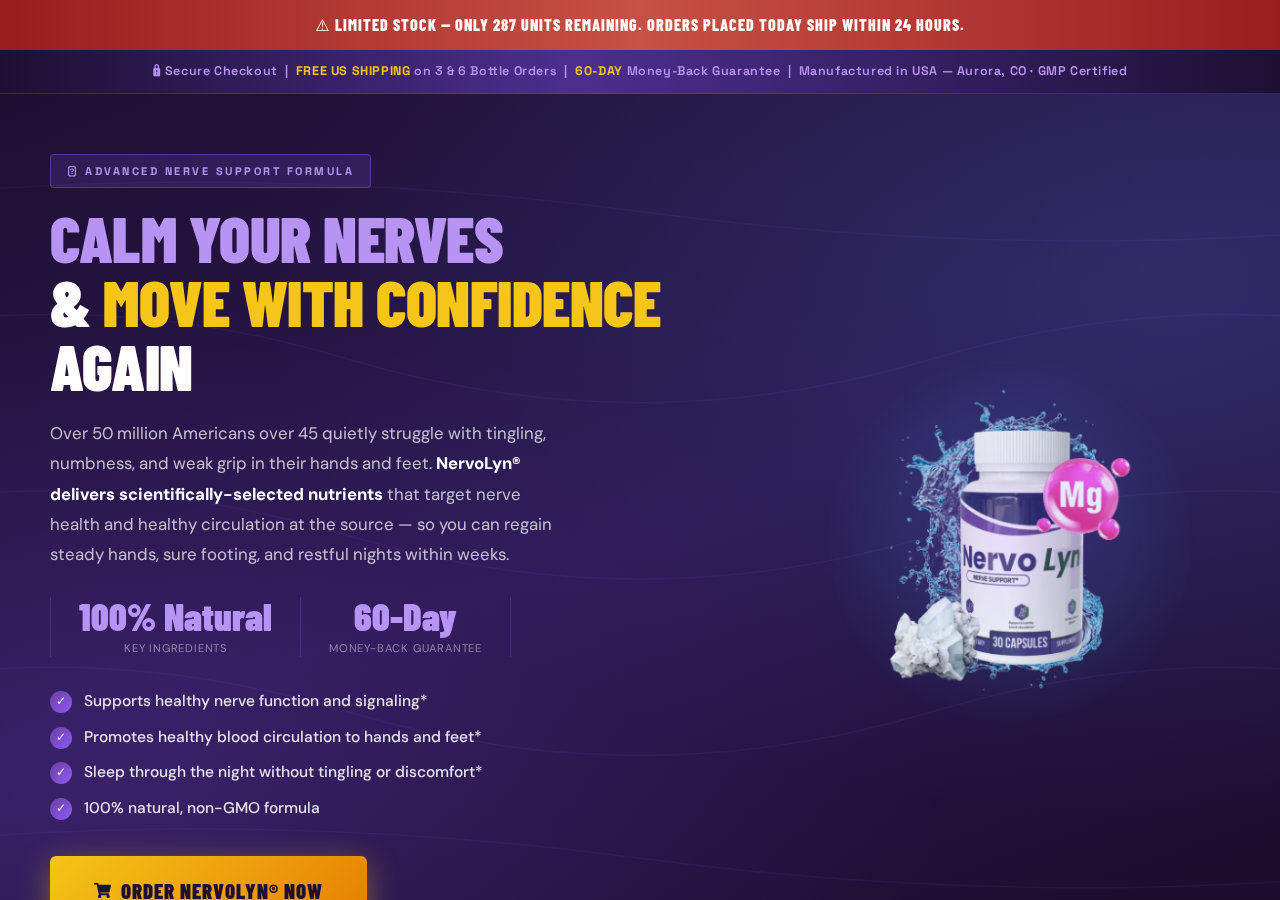
The NervoLyn page we reviewed presented the product as a daily nerve-support supplement, not as a prescription treatment. It claimed support for nerve function, circulation, comfort, and sleep, while displaying a 60-day money-back guarantee.
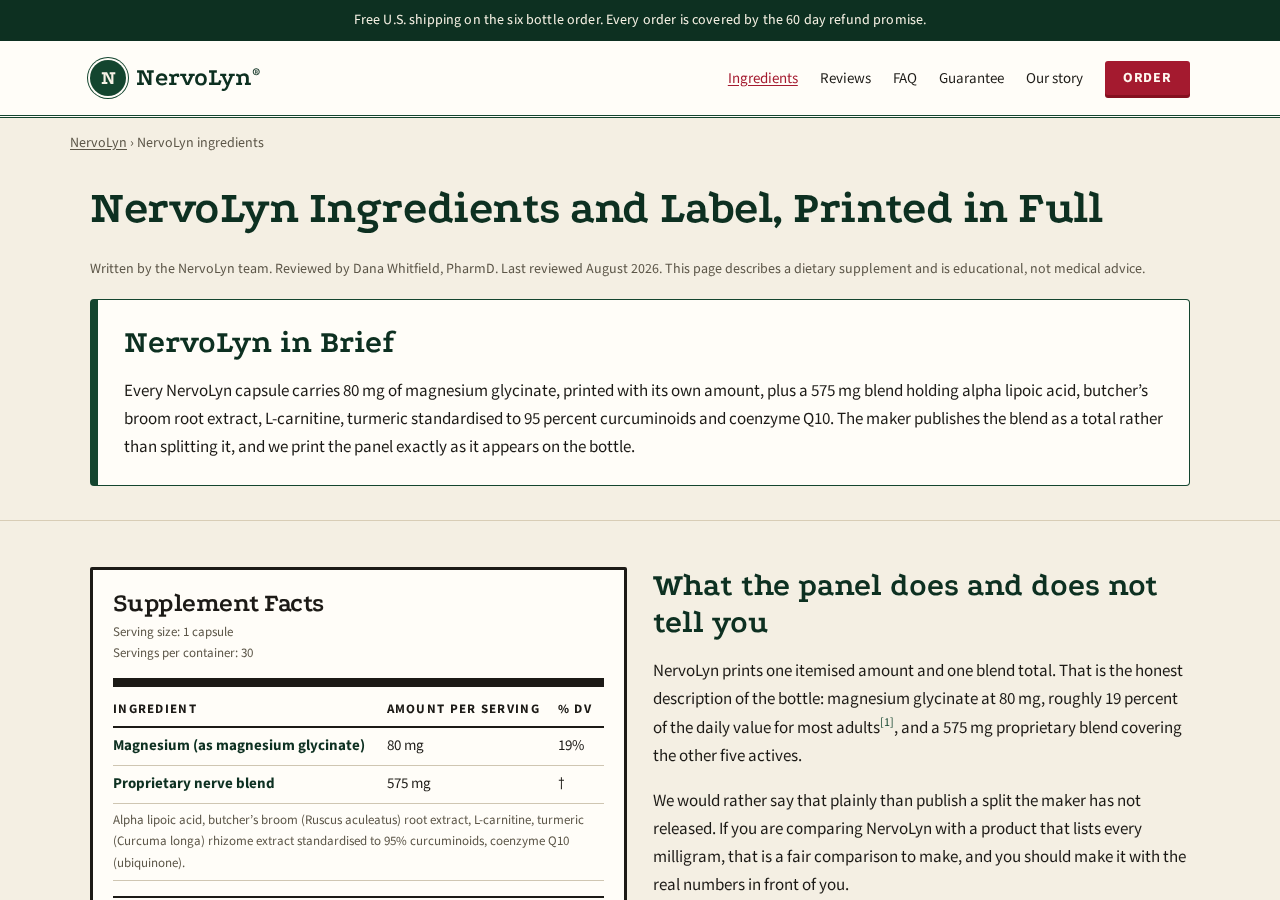
The visible formula listed 80 mg of magnesium glycinate and a 575 mg proprietary blend containing alpha lipoic acid, butcher’s broom, L-carnitine, turmeric, and coenzyme Q10.
A proprietary blend discloses the total amount but not the amount of each ingredient inside it. That makes it difficult for a buyer or clinician to compare the formula with doses studied in research or to evaluate which component caused a side effect.
The package pricing we observed placed the strongest emphasis on volume: two bottles for $178, three for $216, and six for $294. The six-bottle option lowered the displayed per-bottle price to $49, but it also raised the initial commitment.
The primary NervoLyn page said purchases were one-time and did not use automatic billing. We therefore found no basis to label every NervoLyn order a subscription. Buyers should still verify the final checkout because different domains and resellers can present different terms.
We also found multiple NervoLyn-branded websites with different presentation, company information, prices, and policy language. One named BuyGoods as the retailer at 1201 N Orange Street, Suite 7223, Wilmington, Delaware. Another named Rockvale Health Provisions LLC and listed a Springfield, Missouri address.
Multiple sites do not automatically prove fraud. They do make it harder for consumers to know which page is official, which entity is responsible, and which guarantee applies to their order.
How the Scam Works
Step 1: An AI video identifies a frightening symptom
The ad opens with burning feet, numb toes, electric pain, poor sleep, or fear of losing mobility. These symptoms are real and distressing, so viewers have a strong reason to keep watching.
The presenter speaks with confidence and urgency. The goal is to create the feeling that the viewer has finally found someone who understands a problem others dismissed.
Step 2: A famous person supplies instant credibility
Edited or AI-generated footage makes it appear that a celebrity, television doctor, or scientist is sharing the discovery. Familiarity replaces verification. Viewers recognize the face and lower their guard.
Small lip-sync errors, unnatural blinking, changing facial details, odd cadence, or audio that does not match the room can reveal the manipulation. A convincing clip can still be fabricated.
Step 3: Real autophagy research is stretched into a cure claim
The script mentions Ohsumi, cellular cleanup, Nobel Prize research, and nerve repair. Each scientific fragment makes the next claim feel connected even though the ad does not provide clinical evidence for the advertised recipe.
This is the key deception. A real discovery is not the same as proof that the promoted supplement reverses neuropathy.
Step 4: The ad attacks ordinary medical care
The viewer is told that doctors only prescribe pills that hide pain, or that the industry does not want a cheap solution revealed. This isolates the audience from people most able to challenge the story.
Reasonable questions about diagnosis, dosage, interactions, and clinical trials are reframed as evidence of a conspiracy rather than normal medical safeguards.
Step 5: A promised recipe becomes a long sales presentation
The “two ingredients” remain just out of reach while the video repeats the origin story, patient testimonials, and warnings about worsening nerve damage. The delay increases emotional investment.
By the time the product appears, the viewer has spent many minutes accepting the problem narrative. Leaving can feel like abandoning the solution they waited to hear.
Step 6: Multi-bottle pricing turns hope into a larger order
The sales page says meaningful results require continued use and makes the six-bottle package look economical. The buyer may spend $294 instead of testing one bottle.
A money-back guarantee reduces perceived risk, but the real value depends on the written terms, return process, deadline, shipping cost, and responsiveness of support.
Step 7: The brand can change while the script survives
If a domain loses traffic or complaints accumulate, advertisers can attach the same autophagy story to another nerve-support product. The invented breakthrough remains reusable because the bottle appears only near the end.
That is why searching only the current product name is not enough. Search distinctive phrases from the story, the checkout company, support details, and the exact claims.
Company, Address, and Fulfillment Checks
Several “official” pages create immediate confusion
When multiple domains claim to represent the same supplement, identify the one that actually processed the payment. Save the URL, checkout page, receipt, and card-statement descriptor.
Do not assume policies on one NervoLyn website cover an order placed through another. The seller must be tied to the exact transaction.
Addresses may identify retailers, mailboxes, or fulfillment partners
A Wilmington suite used by a payment retailer or a separate Missouri business address does not establish where the supplement was formulated, tested, or manufactured. It may identify only one link in the sales chain.
Search each address and legal name. A transparent seller should explain the relationship among the brand owner, retailer, manufacturer, and returns facility.
Support must answer product-specific questions
Before ordering, ask support for the complete Supplement Facts panel, lot information, manufacturer, return address, and billing terms. Ask whether the agent supports the exact domain you are viewing.
Unanswered emails, a number that serves unrelated products, or an agent who cannot identify the responsible company are strong reasons to stop.
A bottle and a fulfillment center do not prove a medical breakthrough
A real package can be mass-produced and shipped by a third party while the surrounding cure story remains false. Delivery proves that an item was mailed, not that celebrities endorsed it or that it repairs nerves.
Demand a readable label, actual ingredient amounts, warnings, lot details, and evidence for the exact health claim. Marketing terms such as “doctor formulated,” “GMP certified,” or “natural” are not substitutes for clinical proof.
What to Do if You Have Fallen Victim to This Scam
- Do not stop prescribed treatment. Contact the clinician managing your neuropathy or diabetes before replacing medication or changing a care plan. Seek urgent help for sudden weakness, trouble walking, loss of bladder control, chest pain, or other severe symptoms.
- Stop and document the sales funnel. Save the ad, video, landing page, product page, receipt, terms, guarantee, and every celebrity or cure claim. Screen recordings can preserve video statements that later disappear.
- Identify the exact seller. Match the domain, receipt, confirmation email, and card descriptor. Write down the legal entity, support number, address, order number, and guarantee deadline.
- Ask a pharmacist about the ingredients. Show the label and your medication list. If you developed a reaction, stop using the supplement unless a clinician advises otherwise and report serious effects through the appropriate health authority.
- Request cancellation or a refund in writing. State the order number, date, amount, and reason. Ask whether the company requires return authorization and use tracked shipping if a return is required.
- Dispute unresolved or unauthorized charges. Contact the card issuer promptly and provide the misleading claim, receipt, correspondence, and return evidence. Describe the exact issue rather than simply saying the product did not work.
- Secure your online accounts. Change any password reused on the sales site. Run Malwarebytes if you downloaded a supposed medical report, app, browser extension, or video player. A normal product page does not require special software.
- Limit repeat targeting. AdGuard can reduce many malicious ad redirects and tracking requests used to retarget people with related cure stories. It cannot verify medical claims, so continue checking offers independently.
- Report the fake endorsement. Report the ad to the platform, the FTC, and the FDA’s health-fraud reporting channel when appropriate. Include the public figure used, product, domain, and screenshots.
Frequently Asked Questions
Did Yoshinori Ohsumi discover a neuropathy cure?
No. His Nobel-recognized work explained mechanisms of autophagy. It did not validate the advertised two-ingredient neuropathy recipe or endorse NervoLyn.
Did Dr. Oz or Tom Hanks endorse this nerve remedy?
We found no credible evidence that either person endorsed the campaign. Treat social clips as unverified until the same statement appears through an authentic, independent channel controlled by the person or organization shown.
Is autophagy a real biological process?
Yes. Autophagy is a real cellular recycling process studied in many areas of biology. Its existence does not prove that a marketed supplement can activate it in a way that cures peripheral neuropathy.
Is NervoLyn sold as a subscription?
The primary sales page we reviewed said the purchase was one-time and did not include automatic billing. Buyers should still read the final terms for the exact domain and reseller they use.
Can supplements help neuropathy?
Certain nutrients may be relevant when a diagnosed deficiency or specific medical situation is present. That is different from assuming a proprietary blend treats every cause. A clinician can evaluate the cause and potential interactions.
What is the biggest warning sign in this campaign?
The strongest warning is the unsupported bridge from a real Nobel Prize discovery to a celebrity-backed cure story and a specific supplement sale. The ad supplies emotion and authority, but not the clinical evidence needed for that conclusion.
The Bottom Line
The autophagy neuropathy cure scam does not invent every scientific word it uses. It takes legitimate research, combines it with fake or unauthorized endorsements, and stretches it into a treatment claim the evidence does not support.
Neuropathy deserves a real diagnosis, not a one-size-fits-all social media answer. If an ad promises a secret Japanese recipe but ends with a multi-bottle supplement checkout, pause, preserve the claims, and speak with a qualified medical professional before spending money or changing treatment.








