

The conversation begins on Reddit, continues on Kik or Telegram, and becomes more intimate. Just before anything happens, the other person insists that the chat must move one more time.
A new app, private room, or dating site appears to be the final step. In many cases, it is the moment the real commercial or criminal trap begins.
Overview
The repeated app switch is the central warning sign
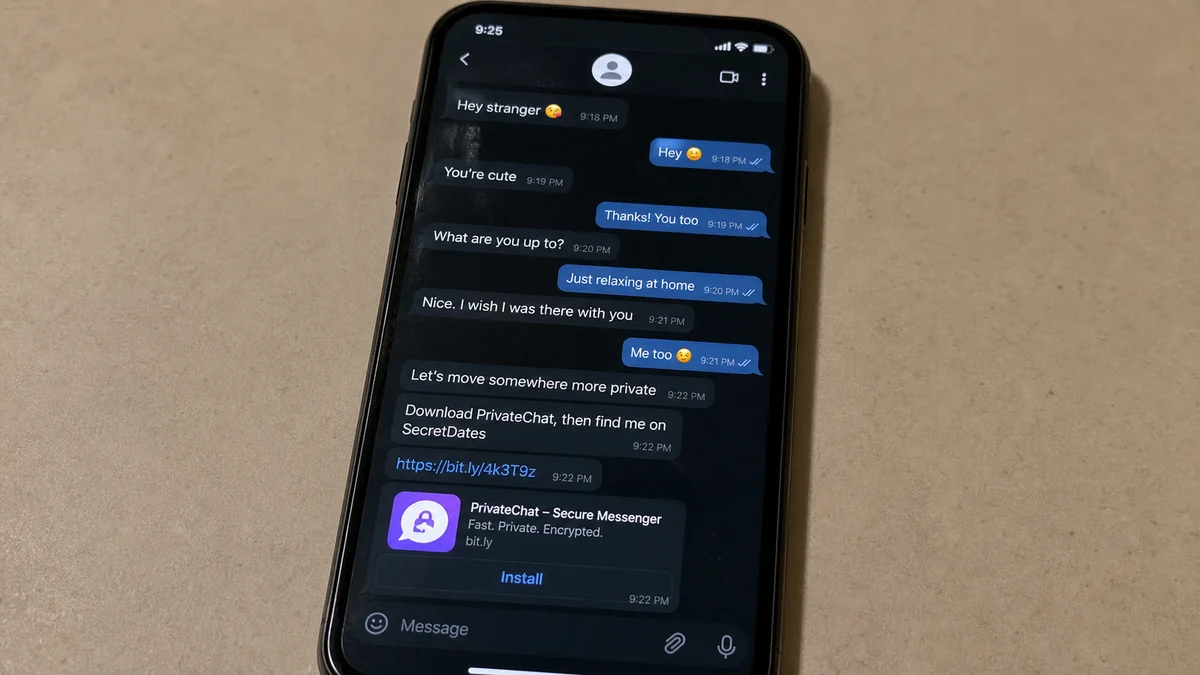
A recent consumer report described a recurring pattern. Someone meets an apparent woman online, moves to Kik or Telegram, exchanges flirtatious messages, and is then asked to download another app or join another dating site.
The request arrives immediately before the conversation would become sexual. That timing matters. Anticipation has increased, the victim has invested time, and refusing the new platform can feel like losing a promising connection.
A real person may prefer another application for ordinary reasons. Repeatedly moving a stranger through several platforms, especially toward a link, checkout, download, or “verification” page, is a different pattern.
There is more than one possible endgame
Without the exact destination, no one can prove which monetization method waits behind the link. Common possibilities include an affiliate signup, recurring dating subscription, fake age-verification charge, credential theft, malicious application, data harvesting, or sextortion setup.
Some operators are paid for every registration, trial, or card submission. The person in the chat may be a bot, paid promoter, stolen identity, or script used by several accounts.
Other campaigns want private images. Once an explicit photo is sent, the conversation can switch from flirtation to threats against family, friends, coworkers, or social-media contacts.
The new platform removes the protection of the old one
Dating sites and social platforms can detect spam patterns, restrict suspicious links, preserve reports, and ban abusive accounts. Moving the victim elsewhere reduces those controls and makes the relationship harder for the original platform to investigate.
The FTC lists an early request to move a dating conversation off-platform as a common romance-scam pattern. The FBI also advises users to be suspicious when someone met on one app quickly requests a move to another.
Before following the invitation, check:
- Why is another app necessary when the current chat already works?
- Is the app available in the official Apple or Google store?
- Who publishes it, and does that company have a real support site and privacy policy?
- Does the dating site require card details for age or identity verification?
- Is a cheap trial tied to automatic renewal?
- Does the other person refuse a normal live video call while pushing a paid platform?
- Would you still install or pay if the flirtatious conversation ended now?
Why the Request Arrives at the Most Emotional Moment
The scam is structured around momentum. A cold link from a stranger is easy to ignore. The same link feels different after dozens of messages, compliments, personal disclosures, and escalating intimacy.
The operator first establishes a low-cost connection. Moving from Reddit to Telegram or Kik makes the interaction feel private and deliberate. Each small agreement prepares the victim for the next one.
Just before explicit content, the other person creates a condition. They may say the current app is unsafe, a roommate can see messages, their account is restricted, or the new site verifies adults.
The condition converts desire into urgency. The victim is no longer evaluating an unknown application. The victim is trying to preserve a conversation that appears moments away from becoming more intimate.
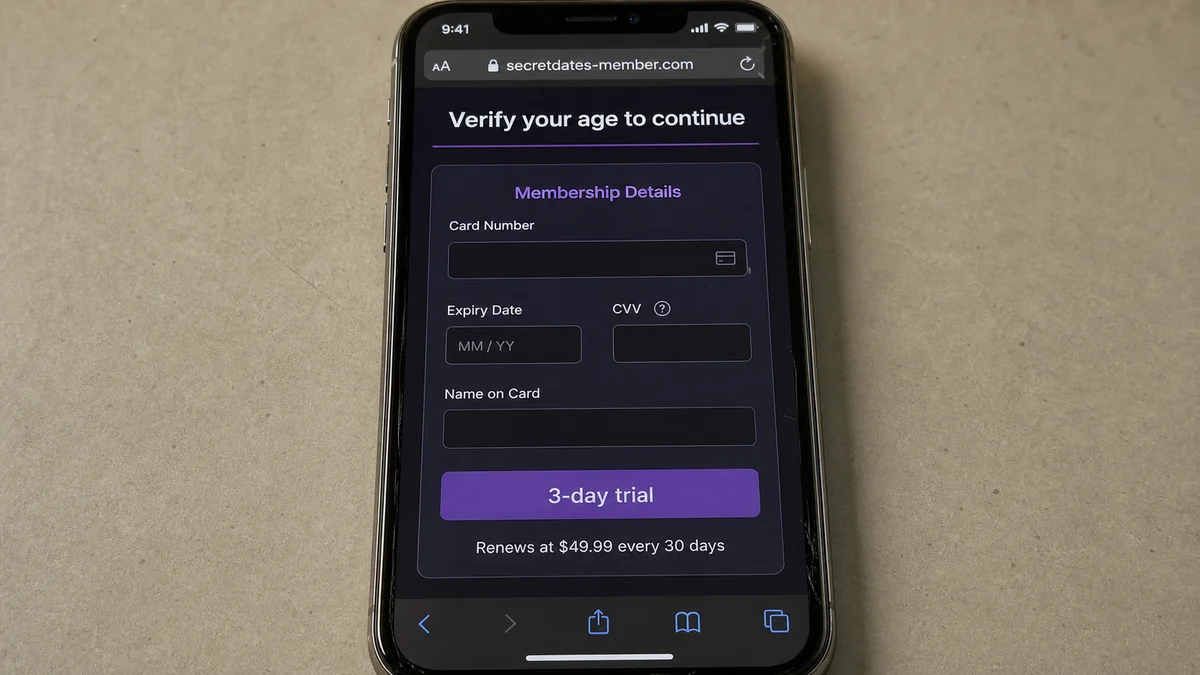
A small trial fee can then feel trivial. Card details are framed as proof of age rather than payment, while renewal terms appear below the button or on a separate page.
If the trap is affiliate-driven, the promoter may disappear after registration because the commission has already been earned. If it is subscription-driven, the card can be billed repeatedly under unfamiliar descriptors.
If the goal is sextortion, the new platform may support easier file exchange, anonymous accounts, disappearing messages, or access to a larger profile. The attacker wants images and identifying information in the same conversation.
How the Dating App Switch Scam Works
Step 1: A profile starts a low-friction conversation
The contact begins on Reddit, a dating application, social network, game, or forum. The profile may use stolen photos, AI-generated images, a sparse history, or content copied from another account.
The first messages are friendly and responsive. The goal is not to ask for money immediately. It is to create enough interest that the victim agrees to leave the original platform.
Step 2: The chat moves to Telegram, Kik, or another messenger
The move is explained as convenience, privacy, or preference. The recipient supplies a username or phone number, revealing another piece of identity.
Off-platform conversation also separates the scam from the account where contact began. If the original profile is banned, the operator can continue the exchange elsewhere.
Step 3: Flirtation creates trust and anticipation
The messages become personal or sexual. The operator mirrors interests, responds quickly, and may send stolen or generated images as proof.
Photos and a short video are not reliable identity checks. Content can be stolen, prerecorded, altered, generated, or played through another device.
Step 4: A second move becomes a condition for continuing
Right before explicit images, a meeting, or a private call, the person introduces a new application or dating site. The recipient is told to create an account and search for the same username.
The link can include an affiliate identifier that credits the promoter. It may also pass through several redirects so the final domain is hidden until after the click.
Step 5: The site requests money, credentials, or software
A paywall may call itself age verification, safety verification, premium messaging, or a refundable identity check. The checkout can request a card for a low-cost trial with recurring renewal in the fine print.
An application download may come from an official store or a direct file. A sideloaded Android package, iPhone configuration profile, browser extension, or desktop installer deserves extreme caution.
Step 6: The conversation changes after conversion
Once the signup, payment, or download is complete, the contact may vanish, request another fee, claim verification failed, or push the victim to a second service.
If explicit content was obtained, threats may begin. The scammer can demand money while showing screenshots of the victim’s followers, workplace, family, or profile.
The Five Common Endgames Behind the Switch
Affiliate registration: the operator earns money when a visitor creates an account, installs an app, starts a trial, or completes an offer. The promised person does not need to exist after the action is credited.
Subscription trap: a small verification or trial charge leads to automatic renewal. The merchant descriptor may differ from the site name, making later charges harder to recognize.
Credential phishing: the new page asks the victim to sign in with Google, Facebook, Apple, Telegram, or email. A copied login form can capture the password and verification code.
Malicious software: the link asks for a direct application, plugin, video codec, or security update. Software outside an official store can request dangerous permissions or install unwanted programs.
Sextortion and identity harvesting: the conversation collects explicit images, phone number, real name, workplace, friends, and social profiles. The operator then threatens exposure.
Several endgames can be combined. A paid signup may still collect credentials, and a subscription site may still lead to sextortion. The visible charge is not necessarily the only risk.
How to Inspect the App, Link, and Checkout Safely
Do not open the supplied link to research it. Copy the app or site name as plain text and search independently. A scammer can use a misleading button label while sending the victim somewhere else.
Check the app-store publisher and support domain. Similar names are easy to create, so compare the developer identity, privacy contact, release history, and other applications from the same account.
Review permissions before installation. A private-chat application should not need accessibility control, device administration, screen recording, SMS access, or permission to install other packages.
On a website, read the checkout before entering a card. Look for preselected boxes, trial duration, recurring amount, billing interval, merchant name, cancellation instructions, and any consent text below the button.
Take a screenshot of the offer and terms before paying. Deceptive pages can change after enrollment, and the original wording may matter during a dispute.
Search the merchant descriptor as well as the brand. Subscription networks sometimes operate many dating names while using one billing company that appears only in fine print.
Do not trust a refund promise made in chat. The person promoting the site may have no relationship with billing support after earning a referral commission.
If the application is legitimate but the contact is not, the safest choice is still to decline. Security of the software does not authenticate the person or the motive for moving the conversation.
A genuine adult does not need a stranger’s card number to prove age. When payment becomes a condition for intimacy, step away from the emotional context and evaluate the transaction as a purchase.
Use a reverse-image search on profile photos, but treat the result carefully. Finding the same face under another name is strong evidence of copying. Finding no match does not prove authenticity because the image may be private, cropped, or generated.
Ask for a brief live video call involving an ordinary, spontaneous action. This is not perfect protection, but repeated excuses combined with pressure to pay or install software are a clear reason to leave.
Never send identification to a dating contact for verification. A passport, driver’s license, or selfie holding an ID can support account takeover and future impersonation.
Keep personal and intimate conversations separate from public follower lists. A scammer who can see relatives, employers, and school contacts has more leverage if the interaction becomes extortion.
Use platform reporting before blocking when safe. Reports help moderators connect the profile, link, payment route, and duplicated script to other victims.
Company, Address, and Fulfillment Checks
Verify the app publisher, not the chat partner
Open the official app store independently and search for the application. Check the developer name, support website, privacy policy, update history, permissions, and volume of credible reviews.
A store listing reduces some risk but does not prove the person recommending the app is genuine. Newly published or lightly reviewed applications still deserve caution.
Read the final domain before creating an account
Ignore the name shown on the button and inspect the address bar. A familiar dating brand placed in a subdomain, path, or logo does not control the registrable domain.
Search the exact domain with words such as scam, complaint, subscription, billing, and cancel. Do this before supplying an email address or card.
Find the legal company and cancellation terms
A paid service should identify the merchant, legal entity, billing currency, renewal interval, total recurring price, cancellation route, contact details, and refund terms before enrollment.
If those facts are hidden below the payment button or spread across several pages, do not treat the checkout as simple age verification.
Fulfillment must exist without endless new steps
A legitimate subscription should deliver the advertised service after one clear purchase. Repeated verification fees, extra apps, new memberships, and promises that access is one step away describe a funnel, not fulfillment.
If the original person disappears after signup, the interaction itself was likely the sales mechanism. Do not pay again to recover the conversation.
Warning Signs Before You Change Apps
- A stranger quickly wants to leave the platform where you met.
- The conversation moves through two or more messaging services.
- Sexual escalation occurs before a normal live identity check.
- The second switch arrives immediately before explicit content.
- The other person insists on one specific link instead of naming a well-known app.
- The link includes a referral code or several redirects.
- A dating site asks for a card to verify age or prove identity.
- A trial price is prominent while renewal terms are small.
- The application must be downloaded outside an official store.
- The installer requests contacts, accessibility, SMS, screen recording, or device-administrator access.
- The profile refuses an ordinary live video call.
- The contact becomes angry or disappears when you decline to pay.
The risk becomes urgent when explicit content is involved. MalwareTips’ sextortion warning covers a different email-based story, but its recovery principle also applies here: do not pay a threat and preserve evidence.
The FTC’s romance scam guidance recommends discussing the relationship with someone trusted and reverse-searching profile images. Isolation makes the script easier to maintain.
What to Do if You Have Fallen Victim to This Scam
- Stop the conversation. Do not argue, pay another fee, or send more images. Block the account after preserving the evidence needed for reporting.
- Do not pay a sextortion demand. Payment does not delete content or end control. It can mark the victim as willing to pay and trigger larger demands.
- Contact the card issuer. Use the number on the card, identify the merchant descriptor and recurring terms, request cancellation, and ask how to dispute deceptive or unauthorized charges.
- Cancel through the real service. Save confirmation of cancellation. Removing an app does not normally cancel a subscription billed by the app store, website, or payment processor.
- Change exposed passwords. Replace any password entered through the link and every reused copy. Enable multifactor authentication and review active sessions.
- Remove suspicious software. Uninstall direct downloads, unknown profiles, extensions, or applications. Revoke dangerous permissions and run a full Malwarebytes scan for common malware and unwanted software.
- Secure social accounts. Hide friend and follower lists, restrict message requests, remove public workplace and family details, and warn close contacts not to accept unexpected files or demands.
- Preserve evidence. Save usernames, profile URLs, chat exports, link destinations, receipts, renewal text, merchant descriptors, threats, payment addresses, and dates. Avoid repeatedly opening dangerous links.
- Report every involved account. Report the original profile, messenger account, app listing, dating site, and payment recipient. Include the preserved evidence where the platform allows it.
- Report sextortion promptly. The FBI advises victims to seek help rather than comply. File at IC3.gov and contact local law enforcement if threats or intimate images are involved.
- Report consumer fraud. Submit the site, payment, and subscription details at ReportFraud.ftc.gov. Tell the store operator if an application was used deceptively.
- Reduce future link exposure. AdGuard can block many known malicious domains, trackers, pop-ups, and redirect chains. It cannot determine whether an online romantic identity is genuine.
- Get support. Sextortion and intimate-image abuse are designed to create shame. Contact a trusted person and a qualified victim-support organization. The crime belongs to the offender, not the victim.
Frequently Asked Questions
Is every request to move from a dating app a scam?
No. People change apps for legitimate reasons. Risk rises when the move is rapid, repeated, linked to payment or downloads, and used as a condition for continuing intimacy.
Why do they move from Reddit to Telegram and then somewhere else?
Each move separates the contact from the original platform’s moderation and brings the victim closer to the operator’s signup, payment, download, or extortion route.
Is a card really needed for age verification?
A site may claim that, but card collection usually creates a payment relationship. Read the merchant identity, exact charge, renewal schedule, and cancellation terms before entering anything.
Can an app from an official store still be risky?
Yes. Store review reduces some threats but does not guarantee honest marketing, safe subscriptions, or a genuine chat partner. Check publisher history, permissions, and billing terms.
What if I sent an explicit photo?
Stop contact, do not pay, preserve evidence, secure social profiles, report the account, and seek help. If threatened, report to the FBI through IC3 and local law enforcement.
What if I only clicked the link?
Close the page and remove unexpected downloads. If no information was entered and nothing was installed, risk is lower. Monitor accounts and change credentials if the page received them.
The Bottom Line
The dating app switch scam uses attraction to turn an unnecessary platform change into a condition for intimacy. The new app or site is often the product being sold, the page collecting data, or the environment needed for a later threat.
If a stranger keeps moving the conversation, stop before the next link. A genuine connection does not require a hidden subscription, unknown download, or surrender of payment details to continue talking.








