

A young creator holds up a blue-labeled bottle and says a few drops finally ended years of reflux. The video feels personal, spontaneous, and far removed from a traditional supplement commercial.
That simple recommendation leaves important questions unanswered. Who sells the drops, what evidence supports the promise, what does the checkout authorize, and what happens if the buyer wants to stop?
We examined NanoRevive EsoRepair, the Soomi version, seller identities, subscription terms, return rules, customer complaints, ingredients, addresses, and the medical promises used to move the bottle.
Overview
What EsoRepair Claims to Do
EsoRepair is a liquid dietary supplement marketed for reflux, throat irritation, digestive comfort, and the esophageal lining. NanoRevive says the product uses nano technology to carry multiple ingredients to damaged tissue.
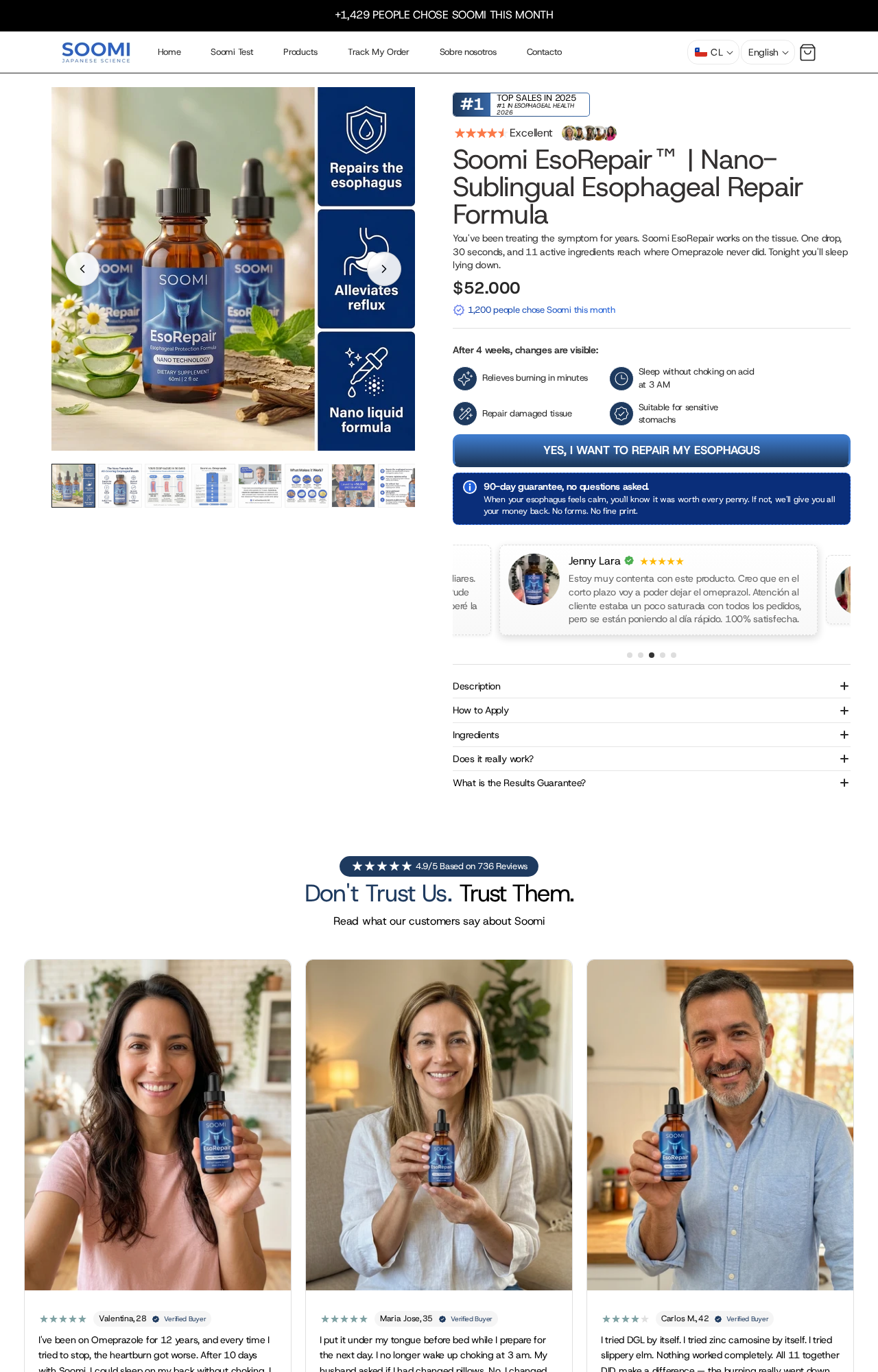
A separate Soomi storefront presents EsoRepair as an 11-ingredient sublingual formula. It claims the drops reach places omeprazole does not, relieve burning within minutes, and help repair tissue over several weeks.
Those are unusually strong claims for a dietary supplement. The formal disclaimers say the product is not intended to diagnose, treat, cure, or prevent disease, which is very different from promising that damaged tissue will be repaired.
What the Billing Terms Actually Show
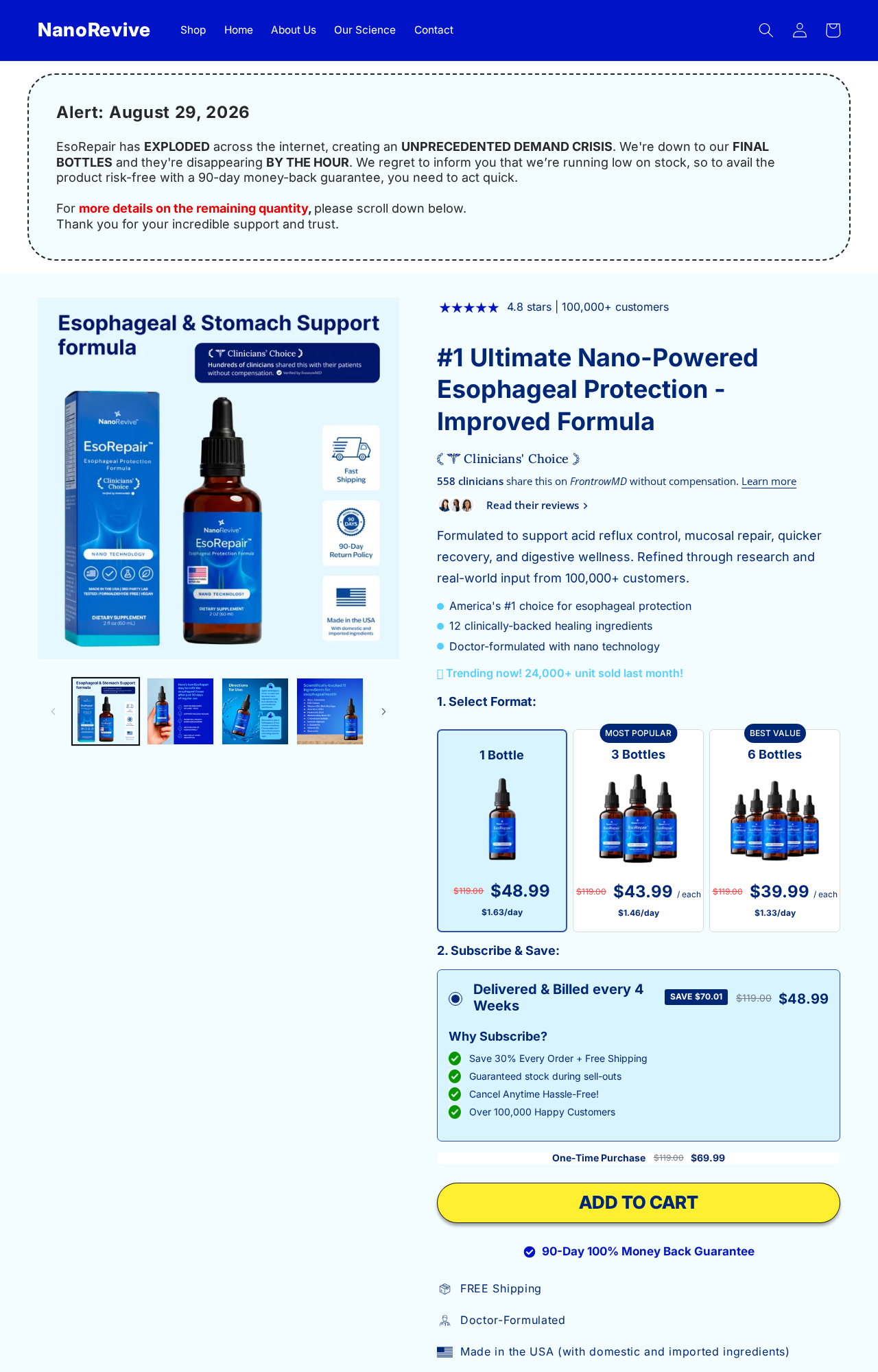
The NanoRevive product page displays a “Subscribe & Save” option delivered and billed every four weeks. On the version we reviewed, the subscription price was highlighted at $48.99, while a one-time purchase appeared below at $69.99.
NanoRevive’s terms say subscription payments are processed automatically at the selected interval until cancellation. The Soomi policies also describe monthly subscriptions and require cancellation at least three days before renewal to avoid the next charge.
This is not a hypothetical continuity risk. The websites explicitly offer recurring billing, and public reviews include complaints from customers who say they did not intend to enroll or had difficulty stopping renewals.
Our EsoRepair Verdict
EsoRepair appears to be a real product sold by identifiable businesses, but its marketing, formula variations, subscription design, and refund complaints create serious reasons for caution.
We would not treat the product as a proven way to repair the esophagus or replace a proton pump inhibitor. Anyone considering it should use the one-time option deliberately, save the checkout, and review the label with a clinician.
The major warning signs are:
- The subscription choice is cheaper and more visually prominent than the one-time purchase.
- Recurring deliveries may be billed every four weeks.
- Customers have reported unwanted renewals and difficult cancellations.
- NanoRevive and Soomi pages describe different ingredient counts and formats.
- The pages make aggressive tissue-repair and absorption claims.
- Influencer-style videos may not clearly disclose a commercial relationship.
- Bundles can require unopened bottles to be returned at the customer’s expense.
- The listed Delaware address is associated with many business registrations.
The EsoRepair Marketing Promise Goes Beyond Ordinary Wellness
“Repair” Is the Central Sales Word
Most supplement pages use soft phrases such as “supports digestive comfort.” EsoRepair repeatedly uses stronger language about rebuilding tissue, repairing the esophageal lining, and reaching damaged cells.
The Soomi page says one drop and 30 seconds allow active ingredients to reach where omeprazole never did. NanoRevive says standard supplements fail because their particles are too large.
These statements can leave a reasonable buyer believing the finished formula has been clinically proven to heal reflux damage. We did not locate a randomized clinical trial of the exact branded formula establishing those outcomes.
Ingredient Studies Are Presented as Product Proof
EsoRepair contains ingredients such as zinc-L-carnosine, deglycyrrhizinated licorice, slippery elm, alginate, aloe, hyaluronic acid, and quercetin. Some have been studied separately for digestive or mucosal uses.
A study of one ingredient at a specific dose does not automatically validate a multi-ingredient liquid. The finished product can differ in dose, absorption, interactions, and quality.
The FTC expects the evidence to match the advertised product and claim. “Clinically backed ingredients” is not the same as a clinical trial showing that EsoRepair repairs an injured esophagus.
The Omeprazole Comparison Can Influence Treatment Decisions
The page repeatedly compares EsoRepair with omeprazole and suggests the medicine only blocks symptoms while the supplement repairs tissue. That framing can make proven treatment seem outdated or incomplete.
The National Institute of Diabetes and Digestive and Kidney Diseases says proton pump inhibitors reduce stomach acid and can heal the esophageal lining in most people with GERD.
Do not stop or reduce a PPI because a sales page promises a more natural repair. Rebound symptoms and untreated disease need medical supervision.
The Formula and Storefront Are Not Consistent
NanoRevive Describes 12 Active Ingredients
The current NanoRevive page calls EsoRepair a 12-ingredient formula. It presents the product as an “improved formula” and uses a 4.8-star rating with more than 100,000 customers.
We did not find a transparent audit supporting those exact customer numbers. The page also promotes subscription savings and a 90-day guarantee.
A buyer should photograph the Supplement Facts panel because a future shipment may not match an older advertisement or review.
Soomi Describes an 11-Ingredient Sublingual Formula
The Soomi page lists 11 ingredients and instructs users to take 2 ml in the morning and 4 ml at night. It says one 60 ml bottle lasts 30 days.
The same page states that nanoparticles are 1,000 times smaller than conventional supplement particles and produce 10 times better absorption. No finished-product study was provided to verify those exact multipliers.
The storefront also uses Spanish and English copy together and serves several countries. That does not make it fraudulent, but it complicates which seller, currency, and consumer law apply to a specific order.
Reviews Describe Formula and Billing Problems
Public reviews include positive experiences, but negative reviews deserve equal attention. Some customers allege that later bottles differed from the first shipment, that support did not answer refund requests, or that a subscription continued unexpectedly.
These are individual reports, not proof that every order has the same problem. NanoRevive also replies to some complaints and states that subscriptions can be managed through an account or email.
The practical lesson is simple: treat the final checkout and the label you receive as evidence. Do not rely on an influencer video or an older product photo.
How the EsoRepair Drops Subscription Trap Works
Step 1: An Influencer-Style Video Feels Like Personal Advice
The promotion often starts with a creator describing reflux, throat pain, coughing, or poor sleep. A casual setting makes the recommendation feel like a friend’s discovery.
If the creator received money, free product, or another benefit, that relationship should be disclosed clearly.
Step 2: The Product Is Positioned Against Familiar Medicine
Omeprazole becomes the symbol of a treatment that supposedly masks symptoms. EsoRepair is presented as the option that reaches tissue and fixes the underlying damage.
This comparison can push a buyer toward a medical decision before a doctor has evaluated the symptoms.
Step 3: Technical Language Makes the Formula Sound Proven
Words such as nano, polaprezinc, clinical doses, mucosal barrier, and cellular absorption make the pitch sound precise.
The presentation may cite ingredient research while leaving the finished EsoRepair formula untested for the exact promised result.
Step 4: Subscribe and Save Gets the Better Price
The recurring option drops the displayed price from $69.99 to $48.99 on the NanoRevive page we examined. It is labeled as the bestseller and includes free shipping.
Price pressure can cause a buyer to select the subscription without absorbing that it renews every four weeks.
Step 5: The Card Is Charged at Each Renewal
The terms authorize automatic payment and shipment at the chosen interval. Cancellation must occur before the next order is processed or shipped.
A buyer who notices the subscription only after the package arrives may already be outside the practical cancellation window for that shipment.
Step 6: Bundles Create a More Complicated Return
Soomi says a single bottle may not need to be returned, but bundles can require unopened bottles to be mailed to an address supplied by support.
The buyer pays return postage, and original shipping may not be refunded.
Step 7: Support and Formula Disputes Consume Time
A customer may need to prove which version was ordered, whether the purchase was one-time, what the page promised, and whether a later formula changed.
Without screenshots and labels, the dispute becomes one person’s memory against the seller’s current records.
Company, Address, and Fulfillment Checks
NanoRevive Is Connected to Seven Trends LLC
NanoRevive’s contact and terms pages identify Seven Trends LLC. Public trademark records also connect Seven Trends LLC with the NanoRevive and EsoRepair names.
This is more transparent than a completely anonymous funnel. It still does not prove that every health claim or influencer promotion is accurate.
The Delaware Address Is a Registration Address, Not a Factory
NanoRevive lists 16192 Coastal Highway, Lewes, Delaware 19958. The same address appears for many unrelated companies and is associated with business registration services.
Do not describe it as the EsoRepair laboratory or fulfillment warehouse without evidence. The company says the product is made in the United States with domestic and imported ingredients, but the named factory is not provided on the pages reviewed.
Support Exists, but Complaints Show Friction
NanoRevive lists support@nano-revive.com and +1 302-313-2459. Soomi lists soporte@trysoomi.com, contacto@trysoomi.com, and an address at Campos Elíseos 188 in Mexico City.
Several public reviewers say they had trouble obtaining responses or stopping unwanted renewals. Others describe helpful service. Keep communication in writing so the cancellation date can be proven.
The Supply Chain and Formula Need Lot-Level Proof
The pages use GMP, FDA-registered facility, and third-party testing language. We did not locate a public certificate of analysis tied to a specific lot number for every formulation being sold.
That gap does not prove contamination or overseas manufacture. It means buyers should request the manufacturer, importer, complete label, allergens, lot code, and matching laboratory report before relying on broad quality badges.
The Refund Guarantee Has Important Conditions
The First Subscription Order Gets the Broadest Protection
Soomi says the 90-day guarantee applies to the first subscription order. Later recurring orders follow a shorter standard return policy.
This makes early cancellation important. A customer should not assume every refill remains covered for 90 days.
Bundles May Require Unopened Bottles
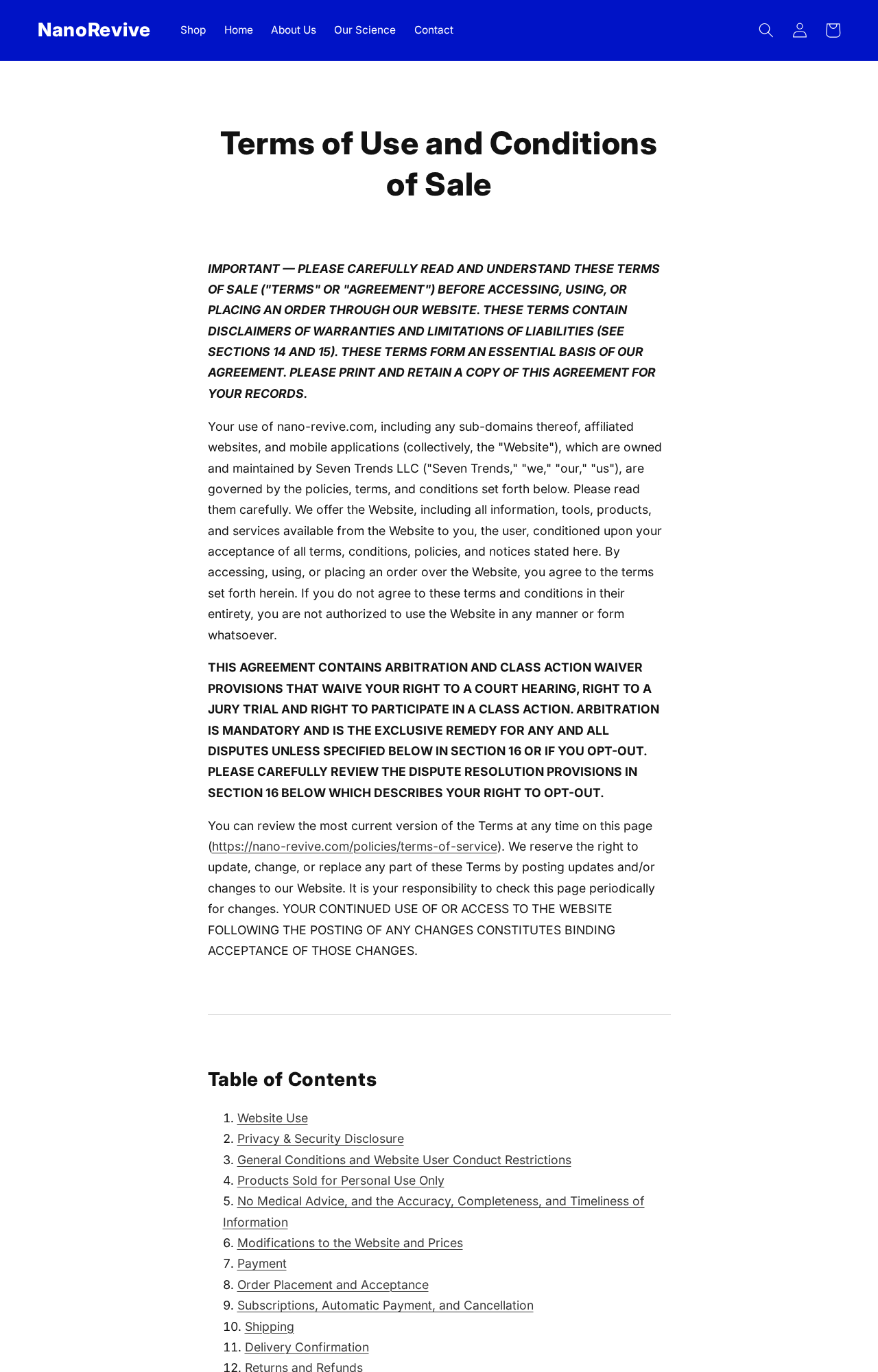
The Soomi policy says orders containing two or more bottles can require unopened units to be returned. Support provides the address after approving the request.
The customer pays return shipping. Use a tracked service and keep photos of the contents and label.
A Chargeback Warning Should Not Stop a Valid Dispute
The refund page asks customers to contact support before filing a chargeback and warns that a dispute can delay the refund.
It is reasonable to give a seller a prompt chance to resolve an error. If a charge was unauthorized, support is unresponsive, or a deadline is approaching, contact the card issuer without surrendering your dispute rights.
What to Do if You Have Fallen Victim to This Scam
- Save the exact checkout. Capture whether “Subscribe & Save” or “One-Time Purchase” was selected, the renewal interval, price, shipping, and guarantee.
- Cancel in writing immediately. Email the seller with the order number and state that all future renewals are canceled. Ask for a confirmation that includes the effective date.
- Use the account portal as well. If a subscription management link exists, cancel there and save the final confirmation screen. Do not rely on an unrecorded phone promise.
- Request return authorization. Ask which bottles must be returned and where. Never ship to the Delaware registration address unless support specifically authorizes it for your order.
- Return with tracking. Photograph the bottles, seals, lot numbers, parcel, and label. Keep the carrier receipt until the refund posts.
- Dispute unauthorized renewals. Give the bank the checkout, cancellation email, policy, card descriptor, and renewal dates. Ask about blocking future merchant-initiated charges.
- Report adverse reactions. Stop using the product and seek medical advice for severe nausea, worsening reflux, allergic symptoms, or another concerning reaction. Report serious events to the FDA.
- Do not stop prescribed medicine. Discuss reflux treatment and any desire to reduce a PPI with the prescribing clinician.
- Report unclear influencer advertising. Send the video to the FTC and platform if a material relationship or paid promotion was not disclosed.
- Check your device. Use Malwarebytes after suspicious downloads or pop-ups. AdGuard can reduce exposure to deceptive ads, trackers, and cloned sales pages.
Frequently Asked Questions
Is EsoRepair a real product?
Yes. EsoRepair is sold as a liquid dietary supplement through NanoRevive and Soomi storefronts. A real product does not automatically validate the strongest repair or absorption claims.
Is EsoRepair a subscription?
It can be. NanoRevive offers a subscription billed every four weeks, and the Soomi policies describe monthly subscriptions. A one-time option may also be available.
Can EsoRepair repair the esophagus?
We found no finished-product clinical trial proving that EsoRepair repairs esophageal damage as advertised. Persistent reflux, swallowing difficulty, bleeding, or chest pain requires medical evaluation.
Who owns NanoRevive?
NanoRevive’s policies identify Seven Trends LLC, and public trademark records connect that company to the NanoRevive and EsoRepair marks.
How do I cancel an EsoRepair subscription?
Use the account portal and send a written cancellation to the support address on your receipt. NanoRevive lists support@nano-revive.com, while Soomi lists soporte@trysoomi.com.
Does the 90-day guarantee cover every refill?
Not necessarily. The Soomi policy says the 90-day guarantee applies to the first subscription order, while recurring orders are governed by the standard policy.
The Bottom Line
EsoRepair is not an imaginary bottle, but the subscription is real too. The cheaper recurring option, aggressive medical language, formula differences, and cancellation complaints deserve careful attention.
Do not buy it as a proven replacement for reflux treatment. If you still consider the product, choose the billing option deliberately, preserve every term, and review the actual label with a qualified health professional.








