

A glossy gummy can look reassuringly simple. The bottle promises confidence, energy, and a return to the version of yourself that felt easier.
Jelly Rock leans heavily into that feeling. Its presentation is polished, but the details behind the offer deserve a slower, more practical examination.
Overview
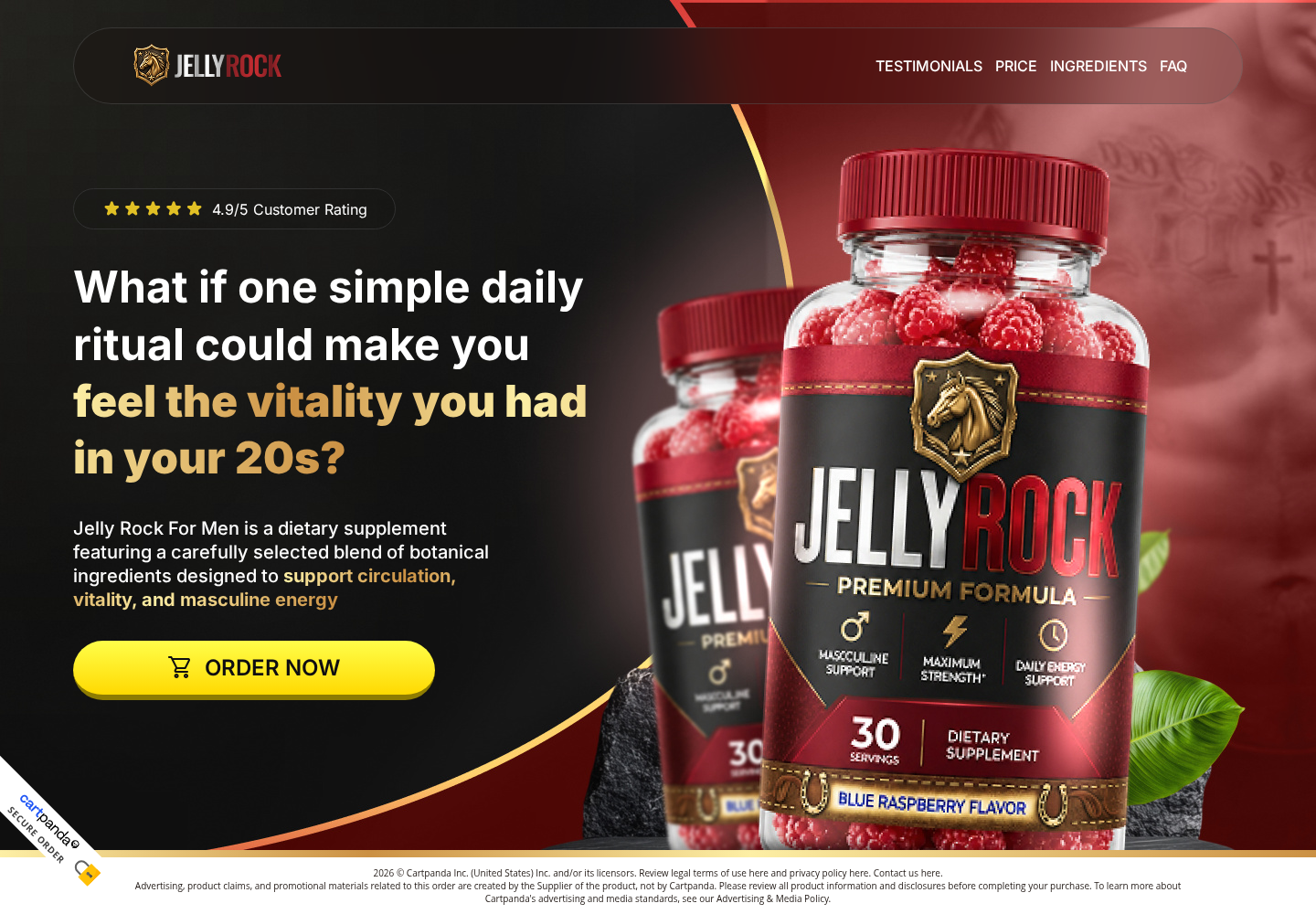
Jelly Rock is marketed as a daily male vitality gummy
Jelly Rock is promoted for circulation, stamina, energy, strength, and masculine vitality. The pitch compresses several sensitive concerns into one convenient daily gummy.
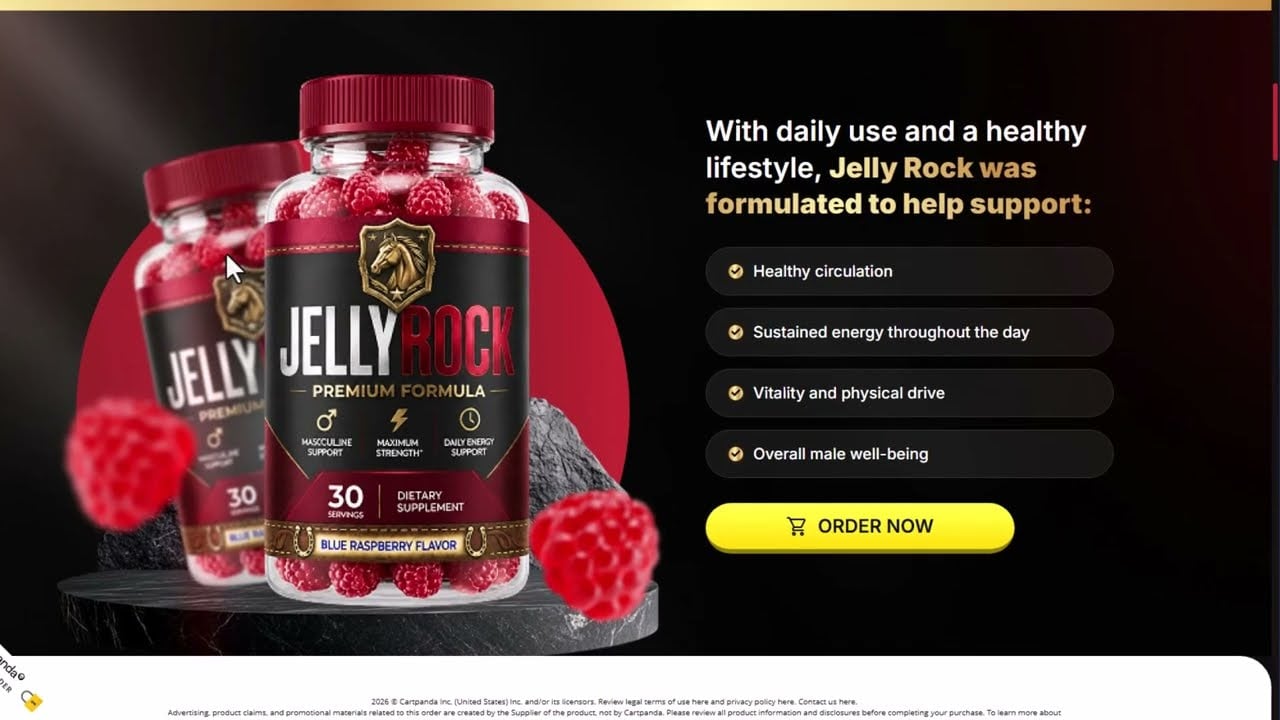
One storefront names ingredients such as L-citrulline, L-carnitine, maca, ginseng, rhodiola, and grape seed. Those ingredients are familiar, which makes the formula sound credible.
Familiar ingredients do not automatically validate a finished product. Dosage, purity, interactions, manufacturing controls, and realistic outcomes still determine whether the promise means anything.
The online sales trail is unusually inconsistent
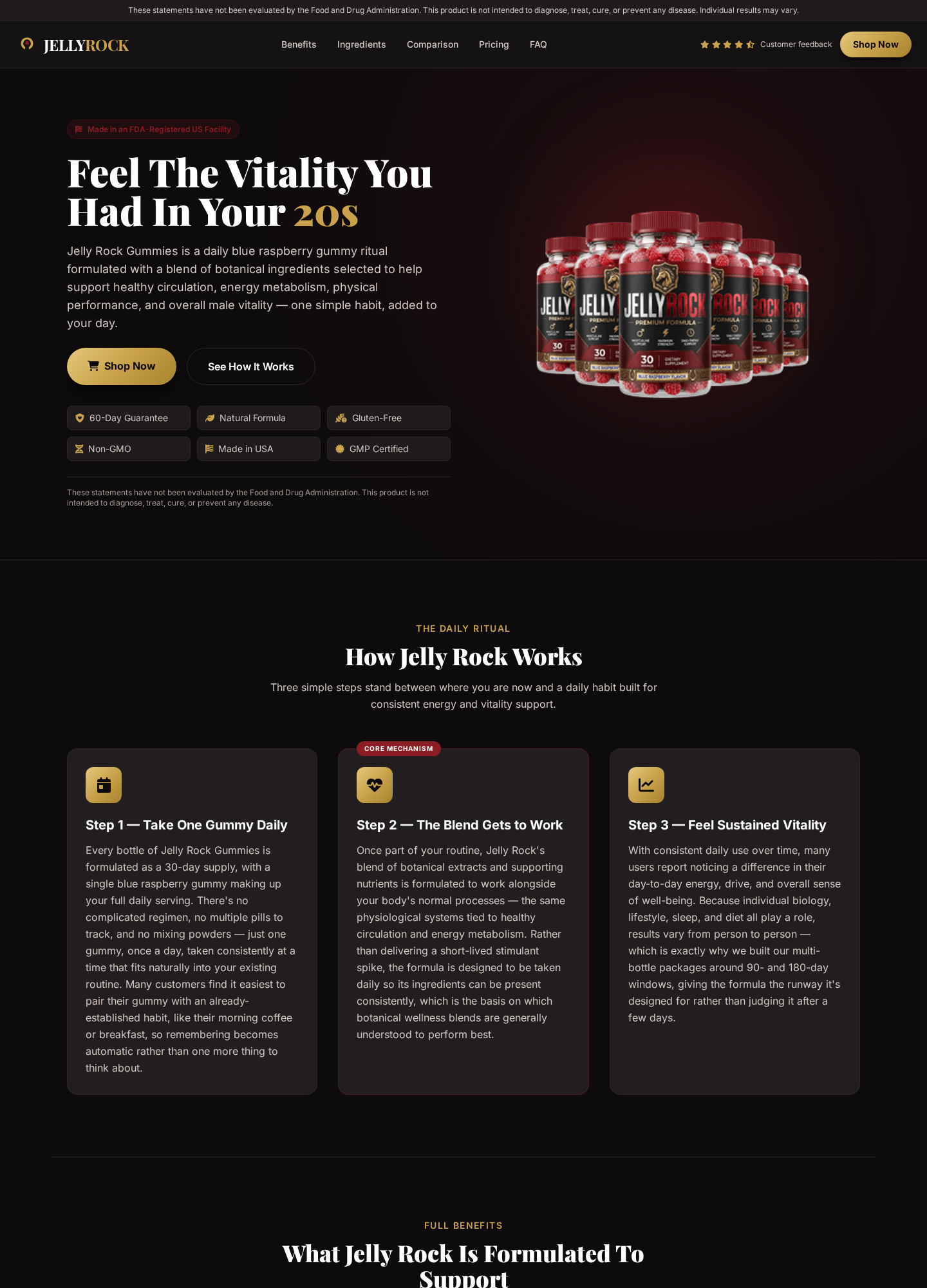
The Jelly Rock name appears across several storefronts with different page designs, contact details, checkout providers, and product presentations.
One page sends buyers to Alikoo. Another uses a CartPanda subdomain. A third mixes Jelly Rock branding with a differently named supplement called EndoPeak.
That fragmentation makes a basic question surprisingly difficult: which business is actually accepting the order and responsible when something goes wrong?
The safest verdict is to avoid buying until the seller becomes verifiable
We found no reliable evidence that Jelly Rock delivers the broad results implied by its advertising. We also found material gaps in seller identification and support.
The concerns are not limited to dramatic copy. They include mismatched product names, checkout-domain changes, an implausible support number, and weak finished-product evidence.
- Several domains use the Jelly Rock name, but they do not present one consistent merchant identity.
- Package buttons can transfer shoppers to unrelated domains or hosted checkout pages.
- One support line uses a number inside the North American fictional 555 range.
- Testimonials and ratings appear prominently, while independent verification remains difficult.
- Ingredient references are presented as support for claims about the complete gummy.
- A sales page says purchases are one-time, yet buyers still need to inspect every checkout term.
These warning signs do not prove every bottle is counterfeit. They do mean a buyer carries more uncertainty than the confident advertising suggests.
What Jelly Rock Claims to Offer
The central promise is restoration. Jelly Rock is framed as a simple routine for men who feel their energy, stamina, circulation, or confidence has declined.
The marketing does not stay within one modest benefit. It moves between physical performance, daily energy, masculine support, endurance, and general vitality.
That breadth is persuasive because almost any improvement can seem like confirmation. Better sleep, a good day, reduced stress, or expectation may feel product-related.
A trustworthy supplement page should define what was tested, who was studied, how long testing lasted, and which exact daily dose produced the reported outcome.
Jelly Rock pages instead rely on ingredient storytelling. They describe what individual components may support, then let the reader connect those facts to the finished gummy.
That connection is not automatic. A cited ingredient study may use a different extract, concentration, delivery method, population, or dose.
The bottle also appears beside strength and vitality language that resembles a guaranteed transformation. Dietary supplements cannot replace an evaluation for persistent sexual or cardiovascular symptoms.
Fatigue and performance changes can have many causes, including medication effects, diabetes, vascular disease, low mood, hormonal issues, poor sleep, or stress.
Prices, Packages, and the Real Cost of the Offer
The main sales page advertises two bottles for $158, three for $207, and six for $294. The apparent unit price falls as the package grows.
This structure nudges a hesitant shopper toward the largest commitment before one bottle has been tried. The six-bottle option is framed as the best value.
A lower unit price is not a saving when the product is unsuitable, ineffective, delayed, or difficult to return. Total exposure matters more than the discount badge.
The page says the purchase is one-time and does not automatically renew. That is useful language, but it should match the final checkout and card authorization.
Buyers should preserve screenshots showing quantity, total, shipping, selected option, guarantee, and renewal status. Advertising can change after a campaign ends.
Read the final order summary rather than trusting the package card. A hosted checkout may use different policies from the page that supplied the sales promise.
Do not assume a 60-day guarantee means a painless refund. Check whether the period begins at ordering, shipping, delivery, or first use.
Also check whether opened bottles qualify, who pays return postage, where returns go, and whether authorization is required before mailing anything.
Why the Ingredient List Does Not Settle the Question
Ingredient recognition is not finished-product proof
L-citrulline participates in nitric-oxide pathways, while ginseng and maca often appear in vitality supplements. That makes the label sound scientifically grounded.
However, an ingredient can appear at a trivial amount. A label may also use a form that differs from the one used in favorable research.
Without a complete Supplement Facts panel, consumers cannot compare the actual serving against studied quantities. A decorative ingredient list is not enough.
Several promised outcomes require different kinds of evidence
Energy, exercise performance, circulation, sexual function, and confidence are not interchangeable endpoints. Each requires careful measurement and appropriate controls.
A trial showing a small exercise effect cannot prove treatment for erectile difficulties. Likewise, a circulation claim does not establish improved testosterone or lasting vitality.
Marketing often blends those categories because the resulting story feels stronger. The science becomes less precise at exactly the moment the sales language becomes bolder.
Safety depends on the buyer, not only the bottle
Botanical and amino-acid supplements can interact with medications or health conditions. Blood-pressure changes are particularly important when circulation is part of the pitch.
Anyone using nitrates, blood-pressure drugs, anticoagulants, diabetes medication, or erectile-dysfunction treatment should ask a qualified clinician before combining products.
Stop using an unknown supplement after severe headache, faintness, chest pain, rash, breathing difficulty, or other alarming symptoms. Seek urgent help when symptoms warrant it.
How the Jelly Rock Gummies Sales Funnel Works
Step 1: A personal insecurity becomes an advertising hook
The first message rarely begins with chemistry. It begins with lost confidence, lower stamina, reduced energy, or the fear that age has taken something important.
That framing discourages comparison shopping. The viewer is invited to solve a private concern immediately, without discussing it with a clinician or partner.
Short videos and dramatic testimonials create emotional momentum. The product appears only after the problem feels urgent and deeply personal.
Step 2: A familiar ingredient story supplies credibility
The promotion introduces plants and amino acids already associated with men’s supplements. Scientific-sounding explanations help the gummy feel researched rather than merely advertised.
Individual ingredient references may be real, yet the sales page does not establish that Jelly Rock itself produced the same outcomes.
The distinction is easy to miss because ingredient evidence and product claims appear close together. Their visual proximity encourages readers to treat them as equivalent.
Step 3: Testimonials make the result feel common
High ratings and first-person success stories reduce uncertainty. They suggest ordinary buyers experienced noticeable changes quickly and consistently.
One Jelly Rock page acknowledges that testimonial wording is illustrative and edited rather than verbatim. That qualification weakens their value as independent evidence.
On-site reviews are controlled by the merchant. Consumers cannot assume the count, selection, or displayed average represents every verified purchaser.
Step 4: Bundle pricing turns doubt into a larger order
The shopper sees the highest per-bottle price beside a much cheaper six-bottle rate. The comparison makes the large package appear financially responsible.
Urgency and limited-time language can shorten the decision further. Instead of verifying the merchant, the buyer worries about losing the discount.
The larger package also increases return friction. Multiple bottles may remain unopened while the buyer negotiates eligibility, authorization, and postage.
Step 5: The buyer leaves the branded page for another checkout
A purchase button may open Alikoo or a CartPanda-hosted page. The domain in the address bar no longer matches the name on the bottle.
Hosted checkouts are not inherently fraudulent. The concern is accountability when sales claims, payment processing, support, and returns appear under different identities.
The buyer should identify the merchant of record before authorizing payment. That name may later appear on the card statement instead of Jelly Rock.
Step 6: Support becomes difficult to authenticate
One page lists 1-800-555-0199. Numbers from 555-0100 through 555-0199 are reserved for fictional entertainment use in North America.
A fictional-range support number is a serious credibility failure. It suggests the page was built with placeholder information or without an operational customer-service line.
Another storefront lists a different SMS number. Multiple contacts are not reassuring when no clearly named legal company ties them together.
Step 7: The campaign can change names while keeping the same machinery
One Jelly Rock page unexpectedly tells visitors to order EndoPeak. That mismatch shows how quickly a supplement template can be reused or partially replaced.
The next bottle name may differ, while the emotional hook, ingredient story, package ladder, testimonial style, and checkout route remain nearly identical.
Recognizing that machinery offers better protection than memorizing one label. A rebrand cannot repair missing merchant identity or weak product evidence.
Company, Address, and Fulfillment Checks
The merchant accepting payment is not clearly identified
A bottle name is not a legal business. Consumers need the company responsible for billing, fulfillment, refunds, privacy, and adverse-event reporting.
The Jelly Rock pages reviewed do not present one consistent legal entity across every stage. Instead, shoppers encounter several domains and commerce platforms.
That makes disputes harder because the name on the advertisement may not match the receipt, package label, return address, or card statement.
The support details do not inspire confidence
The fictional-range telephone number is the sharpest warning. A health-related seller should not place a placeholder-style contact number where buyers expect real assistance.
A support email alone cannot establish a staffed operation. Before ordering, send a specific question and assess whether the answer identifies the company and product.
Ask who manufactures the gummy, where it is made, where returns go, and which merchant name will appear on the charge.
Fulfillment is not the same as ownership
A package may arrive from a third-party warehouse that stores products for many online sellers. That address may have no authority to approve a refund.
Consumers often mail returns to the visible sender, only to learn that the warehouse cannot connect the parcel with the storefront’s return process.
Obtain written authorization and a precise return address first. Use tracked postage and photograph the sealed package, label, and tracking receipt.
The product needs traceable manufacturing information
A responsible supplement label should identify the distributor or manufacturer, serving size, ingredient amounts, warnings, lot number, and a usable contact channel.
Claims such as third-party tested should be supported by a lot-specific certificate, not a generic badge. The certificate should name the laboratory and tested contaminants.
If the bottle received differs from the sales image, do not consume it. Preserve the package and request a written explanation from the merchant.
How to Check a Male Supplement Before Paying
Begin with the address bar, not the testimonials. Write down the sales domain and compare it with the domain that opens after clicking buy.
Search the legal company named in the terms and privacy policy. Confirm that the same entity appears at checkout and on the refund policy.
Look for a complete Supplement Facts image with readable quantities. Vague ingredient graphics cannot show whether the formula uses meaningful doses.
Search the support number separately. A result showing unrelated businesses, complaints, or a fictional number range should end the purchase.
Compare the advertised guarantee with the actual return conditions. Note exclusions for opened containers, shipping charges, authorization, and short notification periods.
Use a credit card when possible. It usually offers stronger dispute options than debit cards, bank transfers, cryptocurrency, prepaid cards, or payment apps.
Do not buy several months merely because the unit price falls. A single verified bottle is a smaller test of both product and seller.
Finally, discuss persistent symptoms with a clinician. Private discomfort can make anonymous online promises feel easier, but delayed diagnosis carries real consequences.
What to Do if You Have Fallen Victim to This Scam
- Save the entire transaction record. Keep the advertisement, product page, checkout, receipt, package, label, guarantee, emails, and card statement. Screenshots preserve claims that may later disappear.
- Contact the merchant in writing. State the order number, requested resolution, and deadline. Ask for return authorization and the correct address before mailing any product.
- Review the final charge carefully. Confirm the amount, merchant descriptor, quantity, shipping fee, and any later charge. Check several future statements for unexpected billing.
- Dispute unauthorized or misrepresented charges. Contact the card issuer promptly, explain the evidence, and follow its deadline. Do not falsely describe a delivered order as unauthorized.
- Do not consume a questionable bottle. Stop if the seal, label, lot information, ingredients, or appearance differs from the listing. Seek medical advice after a concerning reaction.
- Secure accounts used during checkout. Change reused passwords, enable multifactor authentication, and watch for phishing messages that reference the order or promised refund.
- Scan the device if the funnel forced downloads. Malwarebytes can check for unwanted software. AdGuard can reduce malicious ads and block many deceptive redirect chains.
- Report the seller with precise facts. File complaints with the FTC, your state attorney general, the advertising platform, and the payment processor. Include dates and preserved evidence.
Frequently Asked Questions
Is Jelly Rock Gummies a confirmed scam?
We cannot confirm that every order is fraudulent. However, the inconsistent domains, product-name mismatch, fictional-range support number, and limited evidence justify strong caution.
Does Jelly Rock automatically enroll buyers in refills?
The principal page reviewed describes a one-time purchase without automatic renewal. Buyers should still confirm the final checkout selection and monitor later statements.
Are Jelly Rock’s ingredients proven to work?
Some named ingredients have been researched for specific outcomes. That does not prove this exact gummy, dose, combination, or manufacturing batch produces the advertised results.
Why does another product name appear on a Jelly Rock page?
The EndoPeak wording suggests a reused or incompletely updated sales template. It creates confusion about which product and merchant the buyer is actually dealing with.
What is wrong with the listed 555 telephone number?
The listed number falls inside a block reserved for fictional use in North America. It should not be treated as dependable customer support.
Can I get my money back after ordering?
Start with a written refund request and preserve the guarantee. If the seller refuses or disappears, ask your card issuer about a supported dispute.
The Bottom Line
Jelly Rock sells a sensitive promise through confident claims, familiar ingredients, large bundles, and glowing testimonials. The business trail behind that promise is far less reassuring.
Until one accountable merchant provides reliable support, complete labeling, consistent checkout terms, and finished-product evidence, the sensible choice is to keep your money.








