

An unexpected credit letter can turn an ordinary trip to the mailbox into a tense evening. The wording looks official, but the application means nothing to you.
A Spectrum Mobile notice creates an especially confusing question. Is the document fraudulent, or is it warning that somebody used your identity?
Overview
The letter may be real even when you never requested service
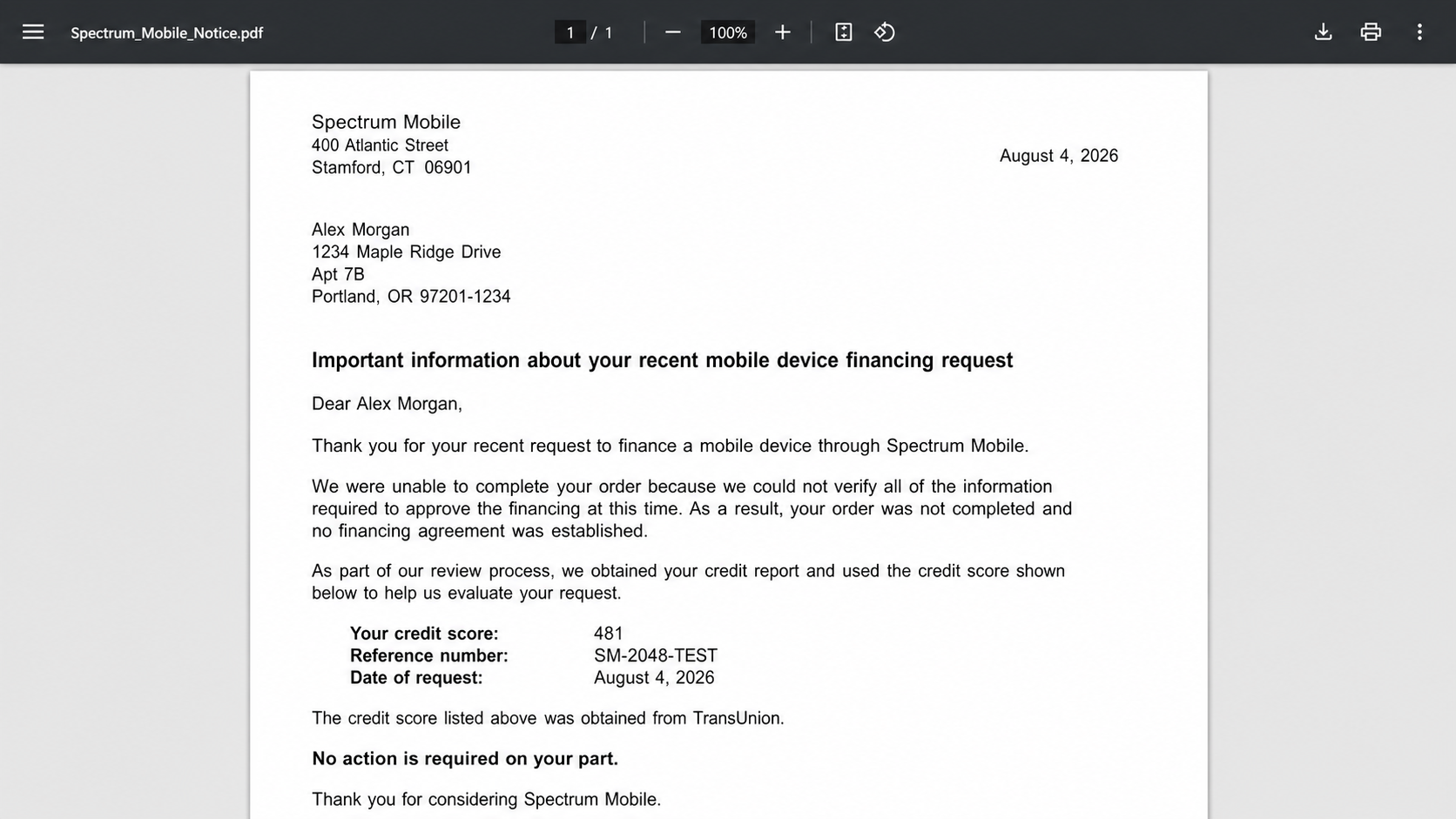
Some recipients report receiving a Spectrum Mobile letter after an attempted device-financing order. The notice may say the order was incomplete or not approved.
It can also mention a credit score, credit-report source, and factors that influenced the decision. These details resemble a legitimate risk-based or adverse-action notice.
Therefore, an unfamiliar letter is not automatically a fake. It may reveal an unauthorized application, a mistaken inquiry, or an order started under your information.
Scammers can exploit the confusion with a follow-up message
A criminal can send a counterfeit version, call after a data leak, or contact people randomly while pretending to resolve the mysterious request.
The fake support agent may ask for a Social Security number, one-time code, card details, remote access, or an immediate account-validation payment.
That second stage is the dangerous one. A frightened recipient may reveal more information while trying to stop an order that never existed.
Verification must begin through independently found channels
Do not use a phone number, link, QR code, or email address simply because it appears in the notice. Locate Spectrum through its official website or statement.
Then inspect your credit reports for an inquiry you do not recognize. The letter’s authenticity and the underlying application are two separate questions.
- A genuine notice can expose attempted identity theft or an unauthorized credit inquiry.
- A counterfeit notice can manufacture panic and direct victims to fake support.
- Real companies do not require gift cards or prepaid cards to cancel device financing.
- One-time security codes should never be read to an incoming caller.
- Credit freezes are free and must be placed separately with each major bureau.
- A low score printed in a letter does not prove the document is accurate.
The correct response is measured verification, not ignoring the document and not obeying it blindly. Treat it as a signal that deserves prompt investigation.
What a Legitimate Credit Notice Usually Contains
When a company uses consumer-report information to make a financing decision, federal rules may require specific disclosures to the applicant.
A legitimate notice may identify the creditor, explain the decision, name the reporting agency, and state that the bureau did not make the lending decision.
It may provide a credit score, score range, date, and key factors that affected the score. It should also explain rights involving the report.
The document may explicitly say no action is required. That sentence is important because scammers prefer urgency, secrecy, and immediate payment.
Authentic formatting is not conclusive. Criminals can copy logos, addresses, legal language, envelopes, and disclosure text from real documents.
Conversely, a genuine automated letter can look generic or poorly personalized. Appearance alone cannot ever reliably settle the document’s authenticity.
The safest test happens outside the document. Contact the company using a trusted source and compare the reported event with your credit file.
Do not publish the letter online without redacting the score, reference numbers, address, account fragments, and any machine-readable code.
Why You Might Receive the Letter Without Applying
Someone may have used your identity
A fraudster may possess enough personal information to attempt a financed phone purchase. Devices are attractive because they can be resold quickly.
The order may fail during identity checks, payment verification, address review, or credit approval. A required notice can still be mailed afterward.
In that scenario, the rejection protected you from one account but confirms that exposed information is being tested.
A store interaction may have created an inquiry
A customer can misunderstand when a sales representative begins an eligibility or financing check. A quote may progress farther than the shopper expected.
Another household member might have explored an upgrade using shared information. Ask calmly before assuming a stranger initiated the request.
Permission still matters. If you did not authorize a hard inquiry, document the circumstances and request an explanation.
Data or address errors can reach the wrong person
Misspelled names, previous residents, mixed credit files, and reused addresses occasionally produce confusing mail. Similar identities can also create matching errors.
Inspect the recipient line carefully without contacting any number printed in a questionable copy. An error should be corrected through authenticated channels.
Discarding the letter may leave the underlying issue unresolved. Even a clerical mistake deserves confirmation when consumer-report information appears involved.
How the Spectrum Mobile Credit Letter Scam Works
Step 1: The criminal creates a believable financing problem
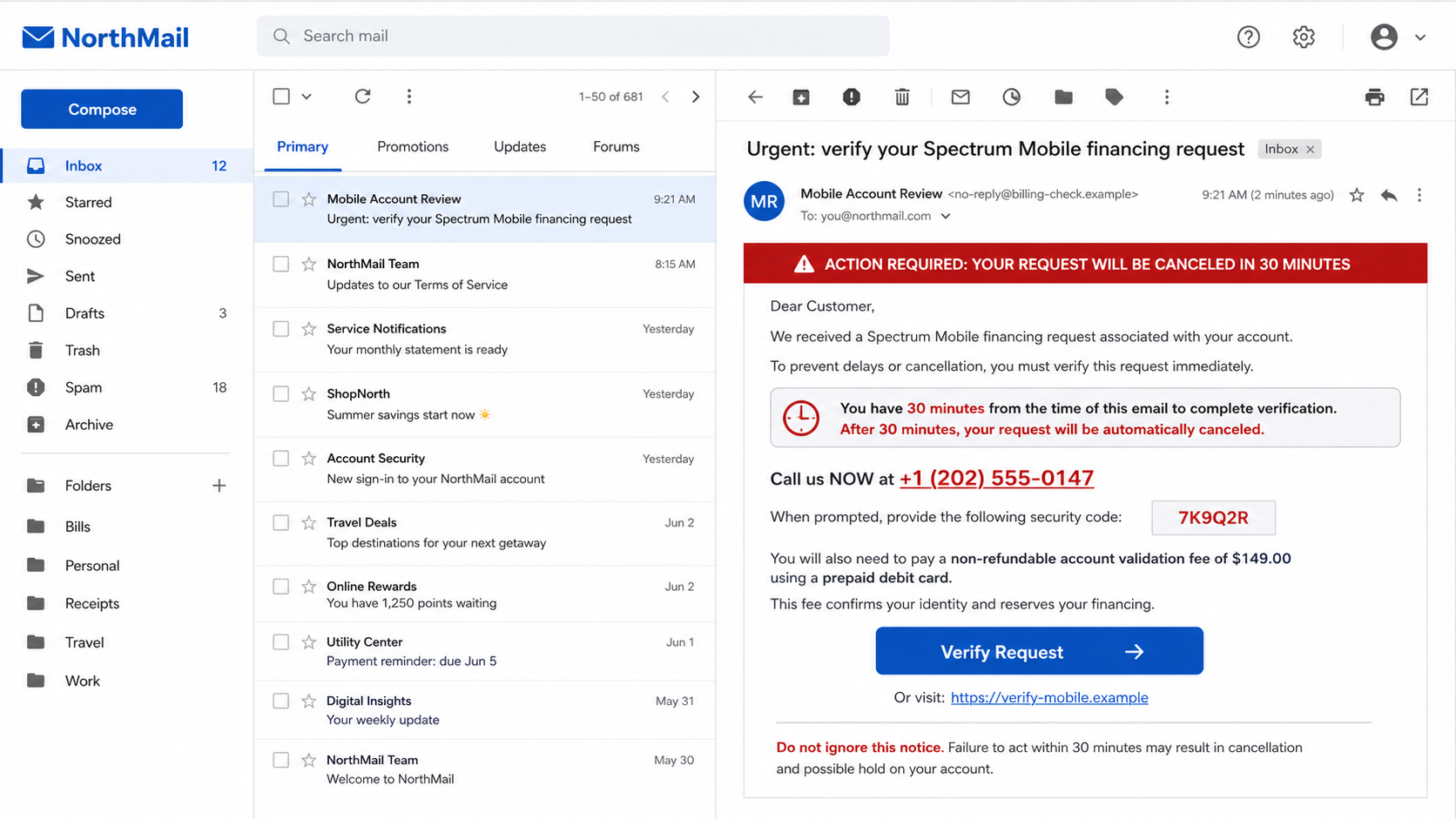
The approach may begin with a mailed notice, email, text, or call. It says a mobile device was ordered, financed, rejected, or placed on hold.
Phones and monthly service create a believable amount. Most adults also know that carriers perform identity and credit checks for financed devices.
The recipient feels two fears at once: an expensive account and possible identity theft. That emotional combination makes immediate action seem necessary.
Step 2: Official details lower the recipient’s guard
The message can copy a real company name, mailing format, credit language, and familiar support vocabulary. A spoofed caller ID may reinforce the impersonation.
Some campaigns include a partial address or old account detail taken from leaked data. Accurate personal information does not prove the caller is legitimate.
A fake document may also include a genuine corporate address while replacing only the telephone number or QR code.
Step 3: Urgency blocks independent verification
The recipient is told the device ships today, financing activates within minutes, or cancellation expires shortly. The deadline is invented to prevent careful checking.
A legitimate credit notice usually explains rights and next steps. It does not need to threaten immediate loss for refusing an unsolicited call.
Scammers may warn that contacting the normal customer-service line will delay the case. That instruction isolates the victim inside the attacker’s channel.
Step 4: Fake support collects identity information
The impersonator asks the victim to confirm a full Social Security number, birth date, address, card number, carrier PIN, or account password.
Questions are framed as verification. In reality, the answers can complete another application, take over an existing account, or defeat recovery checks.
The caller may already know basic details. They ask for the few remaining pieces that unlock more valuable accounts.
Step 5: A one-time code completes the takeover
While speaking, the criminal triggers a real password reset, number transfer, wallet enrollment, or login attempt.
The victim receives a genuine security code and reads it aloud because the caller says it cancels the fraudulent order.
The code actually approves the attacker’s action. Legitimate support should not require you to surrender a code that warns against sharing.
Step 6: The conversation changes into a payment demand
The caller invents an activation reversal fee, refundable security deposit, overdue balance, or account-validation charge. Payment is supposedly necessary before cancellation.
Gift cards, prepaid cards, cryptocurrency, wire transfers, and payment apps are favored because recovery is difficult.
A telecom company does not need retail gift cards to correct unauthorized financing. That request is enough reason to end the call.
Step 7: The attacker returns as another department
If the first attempt succeeds, a second caller may pretend to be a credit bureau, fraud investigator, bank representative, or government officer.
They reference the earlier incident and offer to protect remaining accounts. This continuation can extract more money or convince the victim to install remote-access software.
Every incoming contact should be treated independently. End the conversation and call the organization through a number you locate yourself.
Company and Checkout Checks
Authenticate Spectrum without using the letter
Type the official website address yourself or use the number on an existing Spectrum statement. Do not rely on search advertisements, which impersonators can purchase.
Ask whether an application or device order exists under your identity. Record the case number and the department handling the investigation.
Support may need identity verification, but you should understand the channel and purpose before sharing sensitive information.
Confirm the credit inquiry independently
Obtain your reports through AnnualCreditReport.com, the federally authorized source. Review entries from all three major bureaus because information can differ.
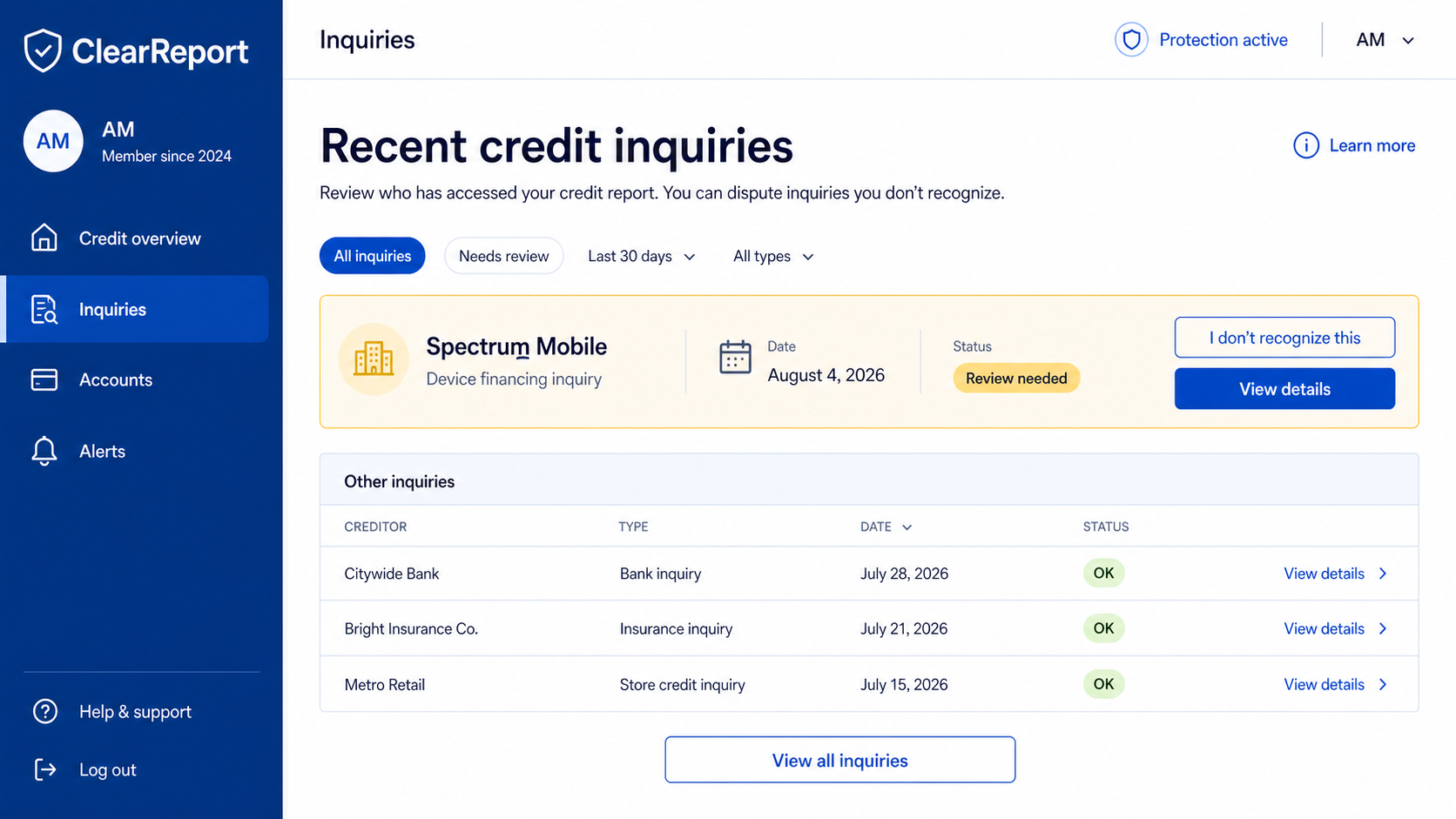
Look for the creditor name, inquiry date, address changes, and unfamiliar accounts. A letter without a corresponding event may be counterfeit or mistaken.
An inquiry without your permission deserves a dispute with both the company and the reporting bureau. Keep copies of every submission.
Inspect addresses and contact details carefully
Fraudsters often combine real corporate addresses with attacker-controlled numbers. Compare every contact detail against the company’s independently located information.
A post-office box is not automatically suspicious, because large companies use centralized mail processing. The question is whether the company confirms it.
Typos, free email accounts, shortened links, and unrelated domains add concern. A polished logo cannot compensate for a mismatched destination.
There is no legitimate checkout for canceling fraud
You should not have to buy prepaid cards, send cryptocurrency, or pay a stranger to prevent an unauthorized mobile order.
Never install screen-sharing software for an unsolicited agent. Remote access can expose banking sessions, saved passwords, documents, and authentication codes.
If a caller directs you to move money “for protection,” hang up. Contact the bank’s fraud department using the number printed on your card.
How to Tell a Real Notice From a Counterfeit
No single clue is perfect. Use several independent checks before deciding that the notice is genuine or fake.
A real notice should not punish you for taking time to verify it. It should explain the event without demanding secret payment methods.
Compare the letter’s date with recent visits, calls, or online shopping. Ask family members whether they discussed a device upgrade.
Examine the envelope and printing, but avoid relying on design. High-quality counterfeits exist, while legitimate automated mail can look plain.
Check your Spectrum account directly for orders, lines, devices, shipping notices, and profile changes. Do not click from the message.
Review credit reports and bank activity. A genuine unauthorized application may leave an inquiry even when no payment occurred.
Call Spectrum and the named credit bureau separately. One organization should not discourage you from contacting the other.
Finally, notice the requested action. Information about consumer rights is normal. Gift cards, remote access, secrecy, and urgent fees are not.
What Not to Do After Receiving the Letter
Do not throw it away before recording the details. An unfamiliar notice may become valuable evidence during a credit dispute or identity-theft report.
Do not call repeatedly until someone confirms your fears. One authenticated conversation is safer than several numbers found through search advertisements or forwarded messages.
Do not post an unredacted photograph in a neighborhood group. Criminals can reuse your address, score, reference number, barcode, or account fragments.
Most importantly, do not pay anyone to make the inquiry disappear. Legitimate disputes and credit freezes do not require secret transfers or prepaid cards.
What to Do if You Have Fallen Victim to This Scam
- End contact with the caller. Do not argue or continue verification. Hang up, close remote-access software, disconnect the affected device from the internet, and preserve the message.
- Call Spectrum through an official channel. Report the unauthorized application or impersonation, secure the account, add a stronger PIN, and ask for written confirmation of the case.
- Freeze your credit with all three bureaus. Contact Equifax, Experian, and TransUnion separately. A freeze is free and blocks most new-credit access until you lift it.
- Review every credit report. Dispute unfamiliar inquiries, addresses, and accounts. Keep confirmation numbers, correspondence, screenshots, and certified-mail receipts where appropriate.
- Protect your mobile number and email. Change compromised passwords, enable strong multifactor authentication, and ask your carrier about port-out or SIM-swap protection.
- Contact financial institutions immediately. Report card details, transfers, prepaid-card numbers, or banking access given to the scammer. Recovery becomes harder as time passes.
- Remove remote-access tools and scan the device. Uninstall the program, review browser extensions, and scan with Malwarebytes. AdGuard can help block malicious advertising and known deceptive destinations.
- Create an identity-theft recovery plan. Report the incident at IdentityTheft.gov and follow the personalized steps. File a local police report when creditors request one.
Frequently Asked Questions
Is every Spectrum Mobile credit letter a scam?
No. A genuine notice may follow an attempted order. If you never applied, investigate possible identity theft or an unauthorized inquiry instead of assuming the letter is fake.
Why does the notice say no action is required?
That wording can appear in a legitimate credit disclosure because the financing decision is complete. You should still investigate when the application was not yours.
Should I call the number printed on the letter?
Use a number independently obtained from Spectrum’s official website, your account, or an existing statement. This avoids attacker-controlled details on counterfeit notices.
Will checking my own credit report lower my score?
Reviewing your own consumer report is a soft inquiry and does not reduce the score. Use the federally authorized AnnualCreditReport.com portal.
Can Spectrum support ask for a security code?
Never share a code that says not to share it. End an unsolicited call and contact Spectrum through an independently verified channel.
Do I need to pay to freeze my credit?
No. Placing, lifting, and removing a security freeze are free. Complete the process separately with Equifax, Experian, and TransUnion.
The Bottom Line
An unexpected Spectrum Mobile credit letter can be authentic, counterfeit, or evidence of an unauthorized application. The paper alone cannot determine which explanation applies.
Verify through trusted channels, inspect your credit, and reject anyone demanding codes, remote access, or payment. Calm independent checks remove the scammer’s greatest advantage.








