

The ad arrives between recipes, outfit haul clips, and soft piano music, promising a slim pink belt that wraps your abdomen and ends period cramps without another pill. Soft lighting makes the plastic look medical, and a calm narrator says heat plus vibration is the missing routine your body has been waiting for.
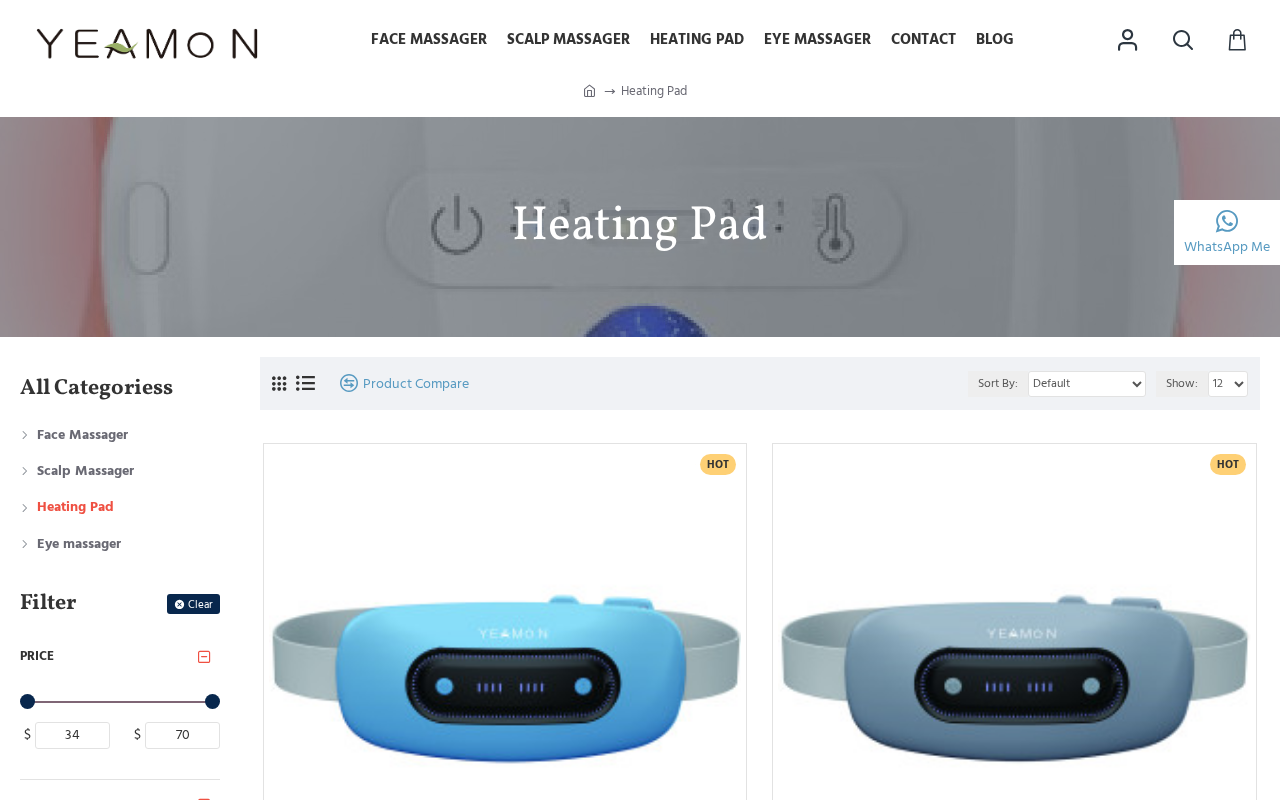
What the feed rarely shows is how many nearly identical belts sit behind those brand names. The same graphene style heating pad appears across Amazon listings, Shopify funnels, and wholesale catalogs, often with new logos, new stock photos, and the same three heat levels plus vibration modes.
Heat can help menstrual pain for many people. The question is whether these viral ads sell clinical breakthroughs or ordinary warm belts marked up through aggressive storytelling.
Overview
Viral menstrual heating pad ads promote a wearable waist belt that warms the lower abdomen and often adds gentle vibration. Sellers describe graphene fabric, warm palace therapy, and drug free cramp relief that supposedly outperforms bulky pads and painkillers.
Localized heat has real clinical support for primary dysmenorrhea. Reviews of heat therapy show meaningful pain relief for many participants when warmth is applied to the abdomen, sometimes with results comparable to common pain medicines in short term settings.
That evidence does not automatically validate every claim on a social advertisement. Vibration massage has far weaker proof as a specific cure for menstrual cramps, and brand specific success rates are usually marketing language rather than published trials on that exact belt.
The commercial pattern is familiar. Factories produce soft lycra style wraps with a USB powered heating plate, three or four temperature settings, and a small vibrating motor. Dropshippers and marketplace sellers relabel the same silhouette as Yeamon, EmberBloom, Lunara, CrampBuddy, COCOCO, Phonery, and dozens of short lived storefronts.
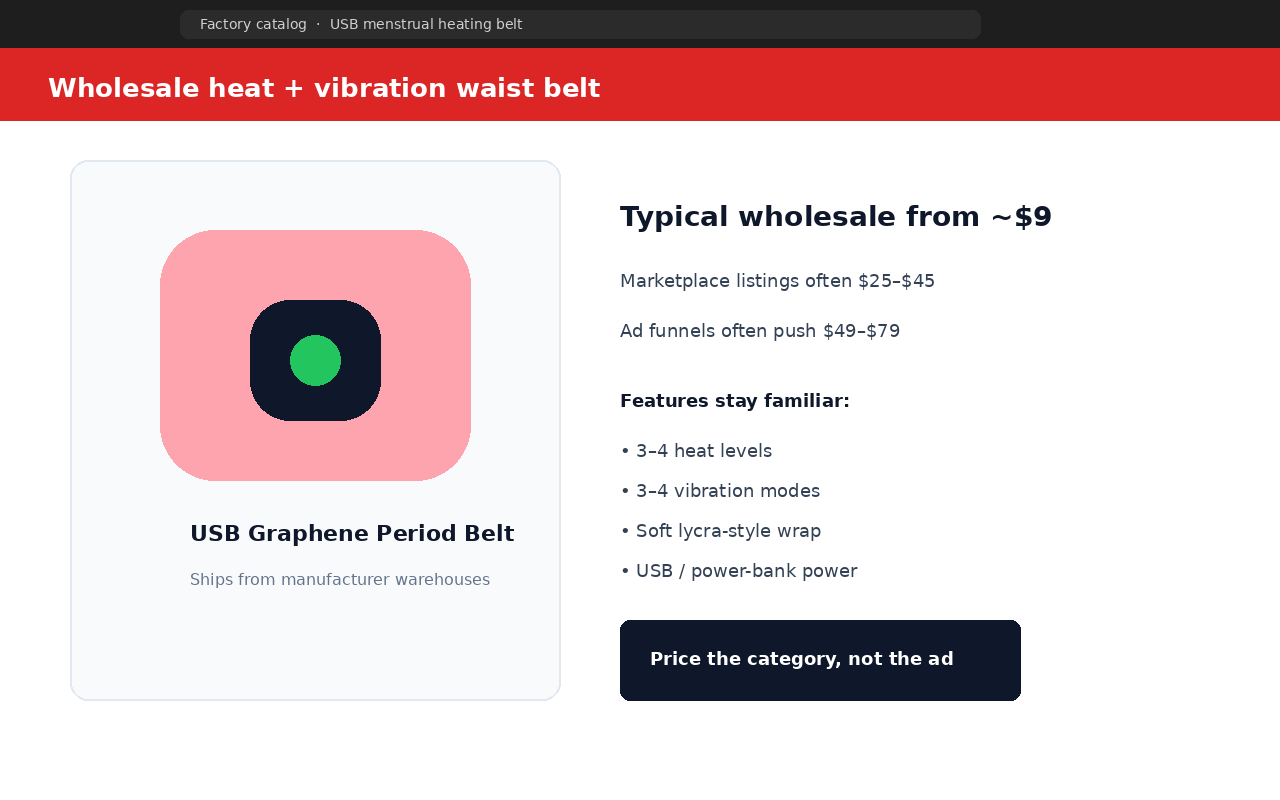
Retail pricing commonly lands between roughly $25 and $80 depending on color, battery claims, and urgency discounts. Near identical wholesale belts frequently appear for well under $15 before shipping, which helps explain why ads invent scarcity, limited drops, and crossed out comparison prices.
This article treats the category as an overhyped product funnel, not a single fake shop. Many buyers receive a working warmer that feels pleasant during cramps. The trap is paying a medical sounding premium for ordinary heat technology dressed as a proprietary breakthrough.
How These Ads Work
1. A soft video turns ordinary cramps into an emergency
The funnel usually begins with a short clip on TikTok, Instagram, Facebook, or YouTube Shorts. A creator curls on a couch, presses a pink belt to her belly, and sighs as if years of misery ended in thirty seconds of warm plastic.
Copywriters load the caption with searchable pain language such as period cramps, endometriosis flare, bloating, lower back ache, and no more ibuprofen. The emotional pitch arrives before any sober discussion of temperature range, battery life, return shipping, or who manufactures the belt.
2. Graphene and warm palace language borrow medical authority
Many listings call the heating element graphene or far infrared and then reach for traditional Chinese medicine phrases like warm palace. Those words sound advanced to a hurried shopper even when the device is a thin resistive heater wrapped in soft fabric.
Warmth can increase local comfort and may ease uterine muscle tension for some people. The problem is packaging that leap from a familiar heating effect into claims of womb healing, toxin clearing, fertility support, or hormone resetting that the product page never proves with product specific trials.
3. Vibration is stacked on heat as if both are equally proven
Ads love to sell a dual system of heat plus massage. Three or four vibration modes appear as premium features, complete with icons suggesting deep tissue therapy or lymphatic movement across the abdomen.
A small motor can feel soothing as a distraction from pain, yet distraction is not the same as a clinically validated treatment pathway. Buyers who already know heat helps them may still overpay because the vibration story makes the belt look like a clinic device instead of a warm wrap with a buzz setting.
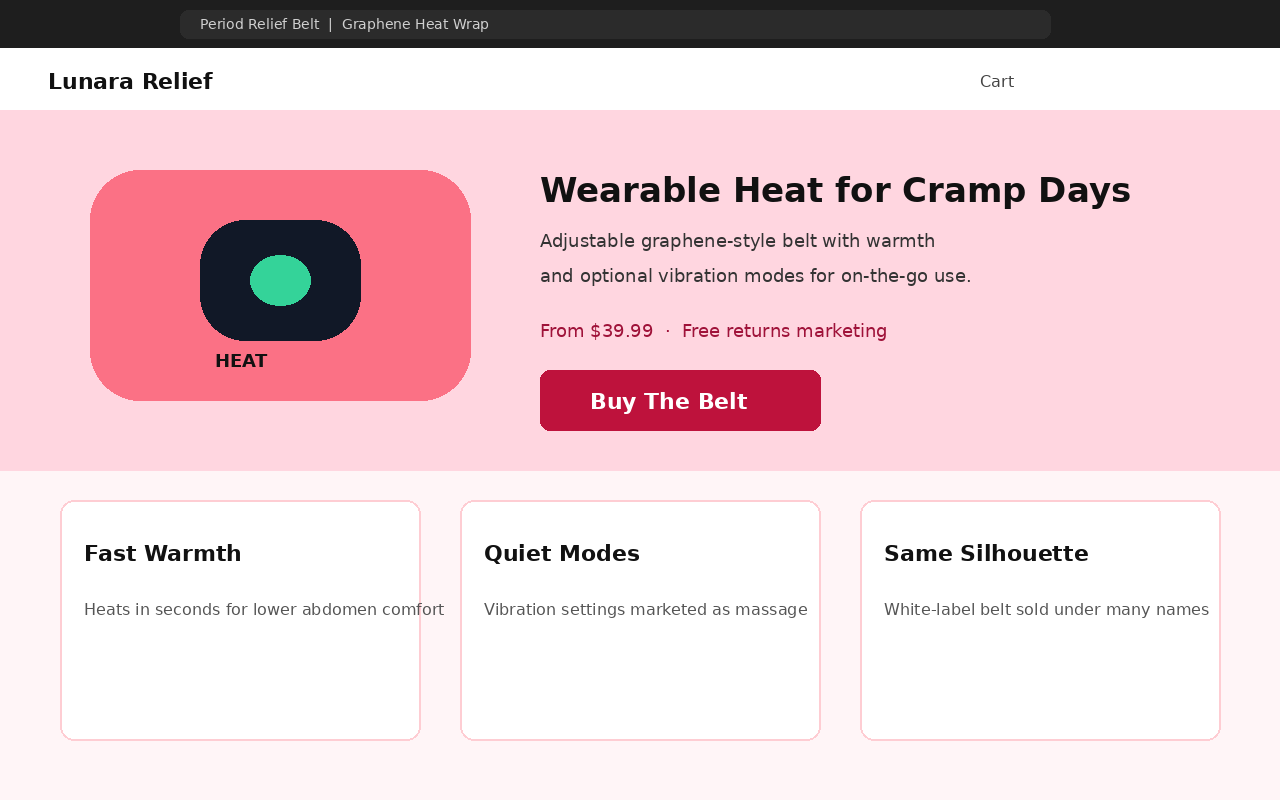
4. One factory silhouette becomes many brand names
Open several marketplace cards side by side and the hardware looks repetitive. You see an oval control pod, an adjustable strap, USB or power bank power, auto shutoff after about thirty minutes, and nearly identical temperature ladders around 40 to 65 degrees Celsius.
Brand names rotate faster than the molds. That is classic white label merchandising, where a seller buys generic stock, uploads new photos, invents a story, and runs paid traffic until complaints or ad account issues force a rename.
5. Pricing theater hides the commodity nature of the belt
Landing pages often show a struck through price near $79 or $99 beside a flash sale near $39 or $49. Timers, low stock banners, and bundle discounts keep the shopper moving toward checkout before they compare alternatives.
Meanwhile, unbranded or lightly branded versions of the same form factor appear on large marketplaces for substantially less, and wholesale catalogs list similar USB menstrual belts at single digit factory prices depending on quantity. Paying more for nicer packaging can be rational when materials and fit improve, yet paying more because an ad invented a medical monopoly is a different kind of mistake.
6. Checkout focuses on relief, not returns and safety limits
The purchase flow emphasizes cramp freedom, overnight shipping promises, and influencer style testimonials. Return windows, buyer paid postage, restocking fees, and international warehouse routes sit deeper in policy pages that few people read while in pain.
Safety details also get soft pedaled. Skin burns remain a known risk with any heating pad used too hot or too long against bare skin, especially for people with reduced sensation or certain medical conditions. Auto shutoff helps, yet it does not erase the need for cautious temperature choices.
7. After delivery, expectations collide with a simple warmer
Many customers receive a belt that heats, holds a charge for a while, and feels comforting during menstruation. That outcome can still feel like a letdown when the ad promised life changing therapy, endometriosis solutions, or hospital grade graphene science.
Others report weak vibration, short battery life, noisy motors, sizing issues, or packaging that looks nothing like the lifestyle photos. A working commodity product plus overstated marketing is still an overhype problem even when the parcel arrives and the card charge is legitimate.
What Heat Can Realistically Do
Heat therapy for primary dysmenorrhea has been studied for years using patches, wraps, far infrared belts, and other local warmers. Meta analyses and randomized trials generally support reduced pain intensity compared with no treatment, and some comparisons with oral analgesics look favorable for short term relief.
Those findings justify considering a heating pad as one non drug option among several. They do not prove that a particular Shopify brand invented a new physiology, nor that vibration modes multiply the clinical effect in a measured way.
People with secondary causes of severe period pain, including endometriosis, fibroids, infection, or unexplained heavy bleeding, need medical evaluation rather than another wearable gadget. A warm belt can sit beside care from a clinician, and it should never delay that care.
Why The Same Belt Keeps Returning Under New Names
Social platforms reward short product stories that feel intimate and solvable. Period pain is intense, recurring, and easy to film, which makes a wearable warmer almost perfectly suited to the attention economy even when the hardware is ordinary.
Once a creative performs, media buyers clone it. They swap the logo, change the colorway from pink to black, rewrite the headline around graphene or warm palace language, and point traffic at a fresh checkout domain that still ships from the same kind of warehouse network.
Marketplace algorithms do similar work. A listing that gains early reviews gets copied by neighboring sellers who reuse photos, bullet points, and temperature charts with only minor edits. Shoppers then encounter what looks like brand competition when they are mostly seeing parallel storefronts around one commodity design.
That pattern is not automatically illegal, and selling a heating pad with clear temperature specs can be a legitimate business. The consumer risk rises when the copy implies exclusive clinical technology, invented success percentages, or disease treatment claims that no finished product study supports.
How To Read A Period Belt Listing Without Getting Swept Up
Start with the mechanism you can verify. Ask what temperature range the belt reaches, how long a charge lasts at each level, whether auto shutoff exists, what the fabric is made of, and whether the seller ships from a returnable location you can actually use.
Treat every dramatic percentage with suspicion. Phrases such as ninety four percent of women felt instant relief rarely identify a peer reviewed trial, a sample size, or an independent lab. If the number cannot be traced to a named study on that exact device, treat it as advertising theater.
Compare at least three sellers before paying from a social ad. Look at major marketplaces where return logistics are clearer, then decide whether a boutique funnel is worth a higher price for packaging and branding alone.
Watch for medical mission creep in the bullet list, because comfort language around warmth is one thing while promises about curing endometriosis, shrinking fibroids, balancing hormones, detoxing the uterus, or replacing prescribed care belong in a different category of claim and deserve a hard stop.
Check power and burn safety with the same seriousness you would give any heating pad. High settings against bare skin, overnight use without supervision, and use on numb skin or broken skin raise ordinary risk even when the product is not a scam in the fake shop sense.
Finally, price the category rather than the countdown. If wholesale and marketplace equivalents sit far below the ad price, you are mostly buying creative production, paid traffic, and brand storytelling. That purchase can still be fine when you choose it knowingly.
Who These Belts May Help And Who Should Pause
A simple heating belt may help people with primary menstrual cramps who already respond to hot water bottles or adhesive warmers and want something wearable during work or travel. For that shopper, the useful question is build quality and return policy, not mystical graphene branding.
People with implanted electronic devices, reduced skin sensation, circulatory disease, pregnancy complications, or unexplained pelvic pain should ask a clinician before relying on any heated wearable. Ads almost never segment those risks with the care a medical device label would require.
Anyone whose pain suddenly changes character, worsens each cycle, or arrives with heavy clotting, fever, or fainting needs evaluation. No viral belt replaces ultrasound, medication review, or specialist referral when red flag symptoms appear.
If your current routine already includes heat, movement, hydration, and clinician guided medication, a belt is an accessory. Buy it like an appliance. Do not buy it like a last chance therapy sold through a thirty second video.
Keep the purchase decision boring on purpose. A belt that warms your abdomen is useful when the temperature is honest, the return path is clear, and the price matches what the hardware actually is.
What To Do If You Bought One of These Belts
1. Keep the evidence pack. Save the advertisement, product page, order confirmation, payment receipt, tracking page, and every support message so you can show what was promised versus what arrived.
2. Test the device safely. Start on the lowest heat setting, keep a fabric layer between plastic and skin if the surface feels too hot, and stop immediately if you notice burning, numbness, or skin irritation.
3. Separate comfort from cure by treating helpful warmth as a useful home remedy rather than proof of a medical recovery. Do not assume the brand story, vibration program, or graphene slogan caused that recovery.
4. Compare the real market. Search the same form factor across major marketplaces and note prices for equivalent heat levels and battery claims before you reorder from an ad only storefront.
5. Use the return window while it is open. Photograph the unit, packaging, and any defects, then follow the seller instructions for authorized returns instead of shipping blindly to an address from a FAQ screenshot.
6. Ask your card issuer when the pitch was materially false. Misrepresentation of medical performance, nondelivery, or bait pricing can support a dispute, especially when you have dated screenshots of the claims.
7. Talk to a clinician about severe pain. Escalating cramps, fainting, fever, or pain that blocks work and school deserve professional assessment rather than another viral accessory.
8. Reduce future ad pressure. Mute the campaign, avoid logging into shopping sites through social ads, and type marketplace names yourself when you decide to buy a simple heating pad.
The Bottom Line
Viral menstrual heating pad ads sell a real category of USB powered warm belts that can make cramps more tolerable for many buyers. Heat has enough clinical backing to explain why the product category exists at all.
The overhype arrives when white label sellers turn that familiar warmer into a proprietary graphene breakthrough, stack unproven vibration mythology on top, and price the belt like exclusive medical hardware. Shop for heat you understand, not for a brand name invented last month.
If the ad disappears tomorrow and another logo replaces it next week, you already know what you bought. It was a warm belt in a loud costume, and that costume was the part that cost extra.

Join the discussion
0 commentsShare your experience or ask a question about this article.
Discussion
Start the conversation
Have a question or something useful to share? Add the first comment.