

The feed ad rarely opens with a quiet camping tip or a measured gear review. It opens with a hard promise that clean water will disappear when the grid fails, and that a pocket straw is the difference between panic and preparedness for your whole family.
That framing is why so many shoppers pause mid-scroll. Real outdoor filters already exist in outdoor shops, yet the survival-straw creative borrows emergency language, virus-sounding percentages, and LifeStraw-style comparisons that make a generic hollow-fiber tube feel like a breakthrough rather than a familiar ultrafiltration product sold through rotating storefronts.
Overview
This story is about overhyped preparedness hardware sold through aggressive social funnels, not about a checkout that never ships a box. Buyers usually receive a light plastic straw with a hollow-fiber membrane, and the disappointment lands later when the claims about viruses, urban disaster water, and LifeStraw-beating superiority do not match what that membrane category can honestly deliver.
Survival theater wrapped around ultrafiltration
Hollow-fiber ultrafiltration straws are a real outdoor category. They can reduce many bacteria and protozoa when used correctly on suitable freshwater, which is why established brands publish pore ratings, care instructions, and clearer limits about viruses, chemicals, and salt water. The Hydra X1 style pitch keeps the familiar straw silhouette while inflating the story into military-grade family insurance that works on puddles, pools, and apocalypse scenarios without slowing down for caveats.
Retail pricing commonly sits around $38 to $56 depending on the wrapper, multi-pack, and countdown offer, which is high enough to feel like serious gear and low enough to impulse-buy during a fear-driven scroll. Wholesale twins of the same form factor appear far cheaper in industrial catalogs, which is a clue that you are paying for creative, urgency chrome, and brand rotation more than for a unique filtration breakthrough.
What the funnel quietly takes from you
The money loss is only part of the trap. More costly is the false readiness: people stock a straw that cannot treat viruses the way the ad implies, cannot fix chemical spills, and cannot replace a plan for stored water, boiling, or a properly rated system. When the next outage ad arrives, the same emotional button gets pressed again under a new lab-sounding brand.
Shoppers who already fear contaminated tap water during disasters are especially vulnerable to percent banners that look like lab proof. A page can shout 99.999999% bacteria removal while still selling a consumer UF straw whose virus story, carbon story, and gallon lifespan deserve slower reading than a thirty-second reel allows.
Why the storefront still feels real
These funnels ship product, show carts, and repeat money-back copy, so classic empty-shop checks miss the point. What you meet instead is a young preparedness boutique, a review-rate claim that may not match a deep review archive, and product photography that sells wilderness authority while the object remains a commodity hollow-fiber straw.
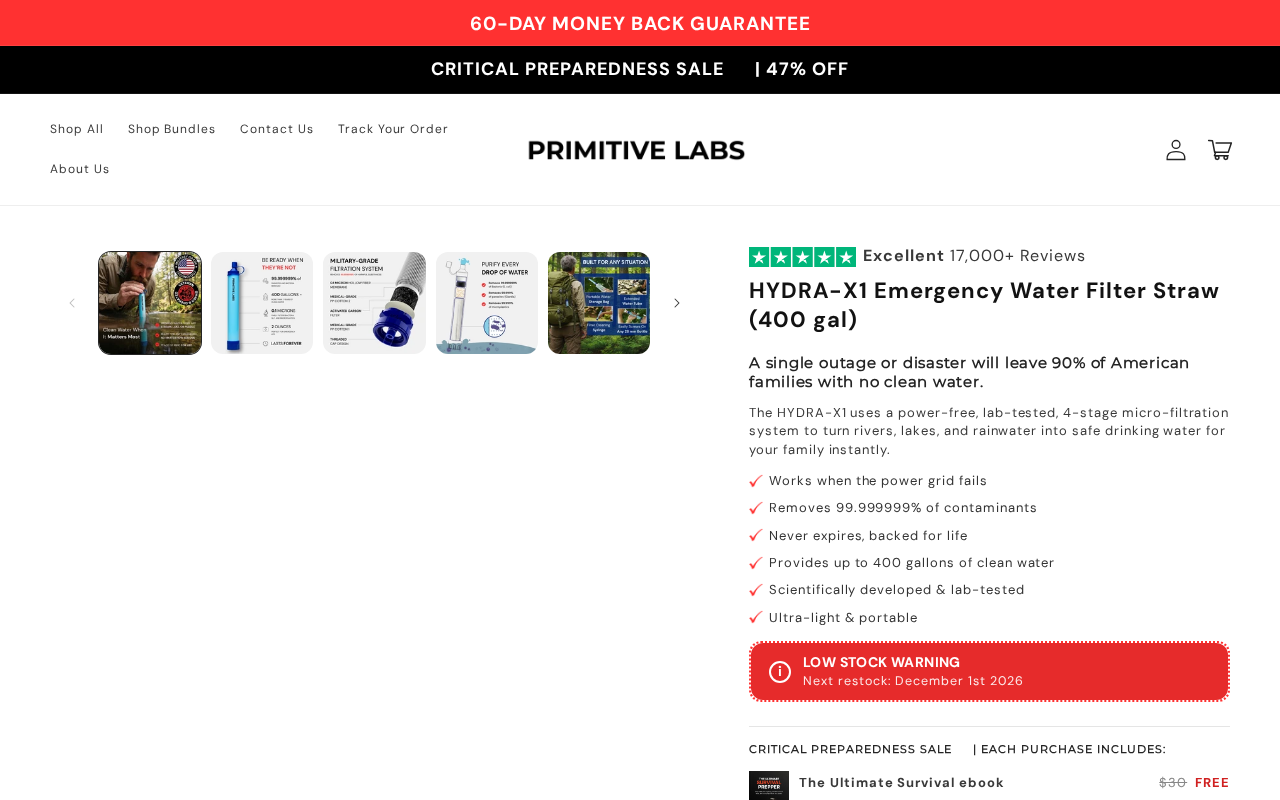
One live wrapper in this lane has used a Primitive Labs style product block with critical-sale banners, low-stock warnings dated far ahead, and ebook bonuses next to the straw. Neighboring hosts re-skin the same story with different lab names while keeping the blue tube, the gallon count, and the disaster hook intact.
How These Ads Work
1. A disaster fear meets a pocket-sized miracle straw
Paid placements lean on outages, storms, travel panic, and the idea that ninety percent of families will have no clean water when something breaks. The creative shows a person drinking from a stream with a slim blue straw, which looks simple enough to believe and dramatic enough to convert.
Because the hook is safety for kids and aging parents, the click feels responsible rather than impulsive. You are not shopping for a novelty gadget in that moment. You are shopping for a backup plan, which is exactly when inflated micron claims and lifetime warranties do more persuasion than a careful read of filtration limits.
2. The landing page reframes a UF straw as multi-stage military filtration
Once you land, the story escalates from a hiking straw into four-stage or five-stage systems, medical-grade membranes, activated carbon add-ons, and gallon capacities that sound like years of family supply. The object in the photo is still a short tube you sip through, yet the surrounding copy talks as if you bought a compact treatment plant.
That mismatch is the engine, because If the ad only said generic hollow-fiber straw for bacteria and protozoa on clear freshwater, fewer panic buyers would convert at premium impulse prices. The conversion depends on keeping survival theater in the foreground while the hardware stays in a familiar ultrafiltration category.
3. Multi-domain brand wrapping keeps the offer disposable
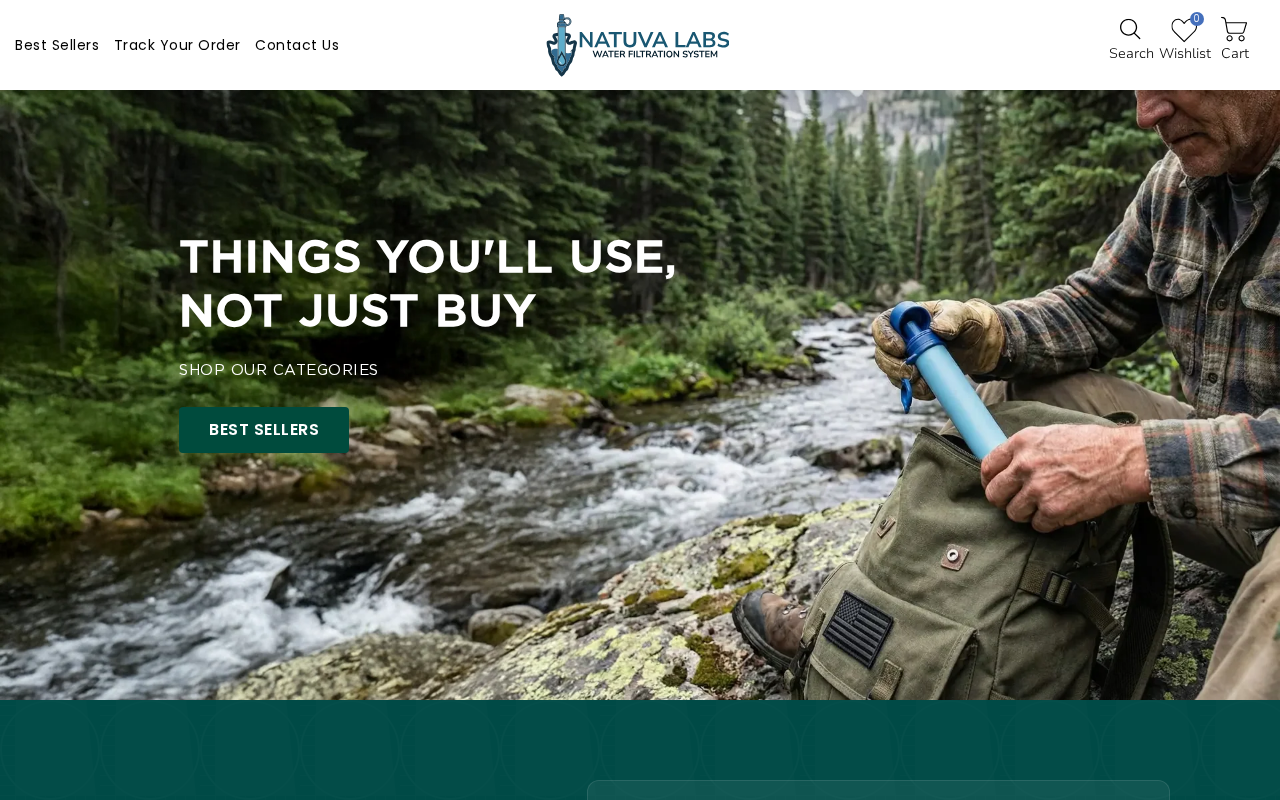
Operators can rotate hostnames and house brands while keeping the same straw photography and claim stack. Mentioning a single example host once is enough for pattern recognition: hydrax1waterfilter.com is one wrapper shape among several that sell overlapping emergency straw kits under lab-sounding names.
The lesson travels better than any disposable hostname, because the next ad may already wear a different logo while showing the same blue tube, the same 400-gallon promise, and the same countdown restock date. Brand confusion is a feature of the funnel, not a bug.
4. LifeStraw comparisons do heavy lifting without proof
Comparison charts often place the straw against LifeStraw and Sawyer style products on pore size, carbon, warranty, and shelf life. Those charts can be useful when they are honest, yet funnel pages frequently treat smaller micron numbers and extra marketing stages as automatic superiority without publishing the same kind of independent certification story established outdoor brands are expected to defend.
LifeStraw is a real product category with its own strengths and limits, including the well-known point that many personal hollow-fiber straws are not virus filters. Using that brand as a foil does not magically transfer lab credibility onto a no-name straw sold through a week-old urgency page.
5. Percent banners blur bacteria claims into virus-sounding safety
Shoppers see long strings of nines next to bacteria, parasites, and microplastics, then mentally upgrade the device into something that makes any freshwater safe. Ultrafiltration can be meaningful against many bacteria and protozoa, yet viruses are smaller, chemical contamination is a different problem, and cloudy or sewage-tainted water is not a demo for a sip straw.
Carbon stages, when present in tiny straw formats, are also easy to oversell. A thin carbon layer may improve taste and reduce some chlorine-related off flavors without becoming a serious treatment for heavy metals, industrial runoff, or the chemical fears the disaster creative planted.
6. Urgency chrome finishes the sale before skepticism catches up
Low-stock warnings, restock dates months away, free survival ebooks, and stacked percentage discounts collapse the research window. By the time a buyer wonders whether the straw is NSF certified for the exact claims on the page, the order confirmation is already in the inbox.
After payment, the experience often looks successful in the narrow sense that a parcel arrives. The disappointment arrives later, when flow is slow, maintenance is unclear, virus limits were never honest, and the family preparedness plan still needs stored water and better tools than a single impulse straw.
7. The same hardware returns under new lab names
Because the underlying straw is cheap to source and easy to photograph, the creative can migrate from camping to earthquake kits to urban bug-out bags without redesigning the membrane. Readers who have watched other daily-deal survival filters will recognize the remix: new lab mark, familiar stream photo, same pocket miracle, same pressure to treat complex water risks with a checkout button.
The product does not need to be a non-shipping ghost store for the pitch to mislead. It only needs emergency language and LifeStraw envy to outrun the quieter truth that you bought a generic hollow-fiber UF straw at funnel pricing.
What To Do If You Bought This Filter
1. Separate the straw you received from the disaster plan you were sold
Open the box and ask what the device can physically do. If it is a pocket hollow-fiber straw, treat it as a limited outdoor microfilter unless the seller provides clear, verifiable documentation for virus reduction, chemical reduction, and the exact water types it can handle. Do not keep using apocalypse language in your own head just because the invoice title still says emergency purification unit.
Write down the claims that convinced you to buy, especially any promises about viruses, pools, puddles, heavy metals, or multi-year family capacity. Those notes help if you request a refund, dispute a charge, or rebuild a real preparedness kit with clearer tools.
2. Learn the real limits before you drink from unknown water
Personal hollow-fiber filters are not magic. They generally need relatively clear freshwater, proper priming or technique, and honest expectations about viruses, salt water, and chemical contamination. If your plan includes floodwater, sewage-adjacent sources, or industrial runoff, a sip straw from a social ad is the wrong foundation.
For household preparedness, prioritize stored drinking water, a method you understand such as boiling where appropriate, and filters or purifiers with documentation you can verify. If outdoor hiking is your use case, compare known brands and published ratings instead of countdown funnels that treat fear as the product.
3. Use the refund window while the evidence is fresh
If the store advertises a multi-day satisfaction path, start that process quickly and keep screenshots of the product claims, the order confirmation, and the unboxing condition. Ask for a full refund when the item was sold as virus-ready family survival gear but arrives as a generic UF straw without the capability the page described.
If the merchant stalls, route the dispute through your card issuer or payment provider with the same evidence packet. Emphasize misrepresentation of filtration capability rather than a vague change of mind, because that framing matches what the ads and landing page actually did.
4. Protect your feed from the sequel preparedness ads
After one conversion, platforms often show neighboring gravity bags, tactical bottles, and new lab-branded straws with identical emotional beats. Mute or report the ads, avoid entering the same email into lookalike survival funnels, and be wary of follow-up messages that claim upgraded military membranes or bonus kits required to activate protection.
If you shared card details on a young storefront, watch statements for unexpected renewals or related charges. Curiosity clicks are cheap for advertisers; your repeated checkouts are the prize.
5. Recalibrate how you read water-filter marketing
Before the next purchase, demand a clean answer to three questions: what particle sizes and contaminant classes the filter addresses, what independent testing supports those exact claims, and what the device cannot do. Military-grade, lab-tested, and never expires are marketing phrases until you can map them to a real test report and a real use case.
Compare the unboxing reality with wholesale hollow-fiber straw listings when the silhouette looks familiar. If industrial pages sell the same tube as a basic outdoor filter while social ads sell it as a virus-proof family lifeline, believe the hardware category that matches the object.
6. Build a boring plan that still works when ads go quiet
Write a short household water plan that does not depend on a single impulse gadget: how many liters you store, how you rotate them, how you treat questionable water if you must, and which trusted filter or purifier you already understand. Share that plan with the people in your home so the next viral straw does not become the entire strategy.
If money stress from stacked preparedness gadgets is part of the fallout, include that in the conversation too. The goal is not to replay every ad you believed. The goal is to stop letting disaster theater steer water-safety choices that deserve slower, evidence-based attention.
Preparedness shoppers who already keep camping filters at home should still pause when a social funnel claims virus-ready family insurance from a pocket straw. The right question is not whether hollow-fiber membranes can help on clear freshwater during a hike. The right question is whether the page you are reading is selling that limited tool honestly or dressing it as a grid-failure cure-all with LifeStraw envy and rotating lab names.
If your household truly needs emergency water capacity, write the boring list first: stored liters, rotation dates, a kettle or other heat source where boiling is appropriate, and a filter or purifier whose documentation you can explain to someone else in under a minute. A blue straw can sit in that kit as a backup for suitable sources, but it should never be the entire story the ad convinced you to buy during a panic scroll.
Readers who catch the pattern early save more than money. They save the next week of retargeted survival ads that try to upsell gravity bags, tactical bottles, and sequel straws under yet another research-lab costume. Pattern recognition is the real filter this category needs.
The Bottom Line
Hydra X1 style survival straws sold through aggressive social ads are often generic hollow-fiber ultrafiltration tubes wearing military preparedness clothing. The storefront may ship a product, display refund copy, and stack gallon claims with LifeStraw comparison charts, yet the mechanism that reaches your mouth is still a limited consumer microfilter category with honest boundaries.
Treat review-rate banners as marketing until real reviews appear, treat virus-sounding safety as a question rather than a promise, and treat $38 to $56 impulse pricing as a reason to slow down rather than a reason to hurry. If emergency water is why you clicked, protect your plan first: store water, learn real treatment limits, and do not let a blue straw postpone a kit that actually matches the risk.
The next ad will probably rename the lab again, yet the tell stays the same. When the copy says family-saving virus-ready filtration from any puddle, and the object in the photo is a pocket hollow-fiber straw sold through a rotating funnel, you are not looking at a breakthrough treatment plant in miniature so much as overhyped hardware sold with borrowed survival gravity.

Reviews & discussion
1 commentShare a firsthand experience, or ask a question.
Community reviews
Hydra X1 Water Filter
Moderated reader experiences, not an editorial verdict.
Why not just have the filtered water analyzed for an irrefutable quality assessment? Supposedly, this thing lasts to 400 gallons of processed product. Run one or two hundred gallons through it, and test again. THIS would be a conclusive test on the unit. Anything less is just wasting our time.