

The ad does not open with a quiet reminder to rinse strawberries under the tap. It opens with cloudy water, frantic before-and-after clips, and the promise that an electrolysis puck can lift pesticides, wax, bacteria, and hidden dirt that ordinary washing supposedly leaves behind.
That promise is why so many health-conscious shoppers pause mid-scroll. Real food-safety advice still starts with clean hands and thorough rinsing, yet the produce-cleaner creative borrows laboratory vocabulary and media-logo wallpaper until a generic countertop bubbler feels like a required kitchen appliance rather than an optional, expensive convenience gadget.
Overview
This story is about overhyped kitchen hardware sold through aggressive direct-response funnels, not about a fake shop that never ships a box. Buyers usually receive a small white disc that sits in a bowl of water and salt, runs a timed cycle, and makes the water look busier. The trap is what the ads claim that fizzing can prove, and what shoppers reasonably expect when they hear pesticide removal next to five-times-longer freshness.
Electrolysis theater around a commodity puck
Electrolysis in salted water is a real chemical process studied in other water-treatment contexts, and hypochlorous acid generation is not imaginary science. The leap these ads make is treating a consumer countertop puck as proof that your berries are now free of pesticides, mold, wax, bugs, and surface bacteria after a five-minute show of bubbles.
Retail pricing commonly lands around $54 to $80 after the staged discount math, while near-identical wholesale discs often appear in the rough $12 to $36 band depending on brandless sourcing and pack size. That gap is the first signal that you are buying creative, fake urgency, and logo wallpaper more than a unique food-safety instrument.
What the pitch quietly takes from you
The money loss sits in a familiar impulse band that feels safer than a medical device yet still expensive for a bowl accessory. More costly than the cart total is the misplaced confidence: families may treat cloudy water as laboratory confirmation and skip the boring habits that still matter, including rinsing under running water and handling high-risk foods carefully.
Parents shopping for baby food prep and allergy-aware kitchens are especially vulnerable to pesticide language that sounds absolute. A page can shout ninety-nine percent removal and five-times freshness while never linking an independent, product-specific lab report that measures pesticide residues the way a careful reader would demand.
Why this is not the same story as PuriBreeze
Malwaretips has already covered a neighboring pitch in the PuriBreeze produce cleaner investigation, which used similar electrolysis, OH-ion, and pesticide-removal language through its own storefront wrappers. PuriProduce is a separate brand stack with its own domains and checkout paths, yet it lives in the same overhyped produce-cleaner lane rather than proving a unique cleaning breakthrough.
Keeping the names distinct matters because shoppers who refunded one puck often meet the sequel under a new fruit logo within days. The shared mechanism is commodity electrolysis hardware plus fear of residues, not a single vanished website.
How These Ads Work
1. Residue anxiety meets a hands-free kitchen miracle
Paid placements lean on soft fears people rarely announce out loud: wax on apples, mystery films on berries, pesticide headlines, and the worry that rinsing is not enough for kids. The creative shows strawberries swirling in cloudy water while a white puck hums, which looks like proof even when cloudiness is a poor stand-in for residue testing.
Because the hook is family health, the click feels responsible rather than frivolous. You are not shopping for a novelty desk toy in that moment. You are shopping for cleaner food, which is exactly when electrolysis buzzwords and media-logo rows do more persuasion than a careful look at wholesale twins.
2. The landing page reframes a bubbler as America’s produce cleaner
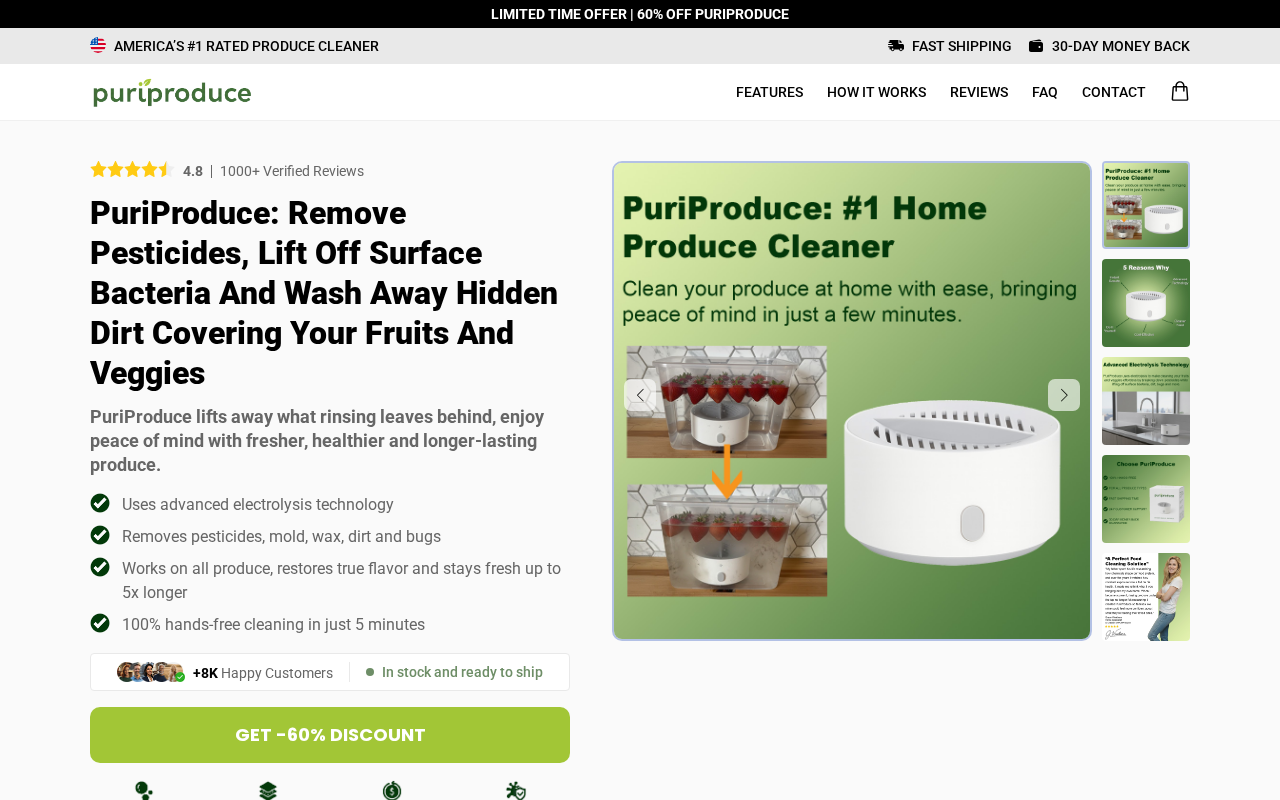
Once you land, the story escalates from a simple soaking aid into advanced electrolysis technology that removes pesticides, mold, wax, dirt, and bugs while restoring flavor and extending freshness. The object in the photo is still a palm-sized white disc with a single button, yet the surrounding text talks as if you purchased a countertop food-safety appliance with clinical authority.
That mismatch is the engine, because If the ad only said optional bubbling soak accessory, far fewer shoppers would convert at fifty-plus dollars. The conversion depends on keeping pesticide theater in the foreground while the hardware stays in a generic electrolysis-cleaner category.
3. Multi-host checkout paths keep the brand coat disposable
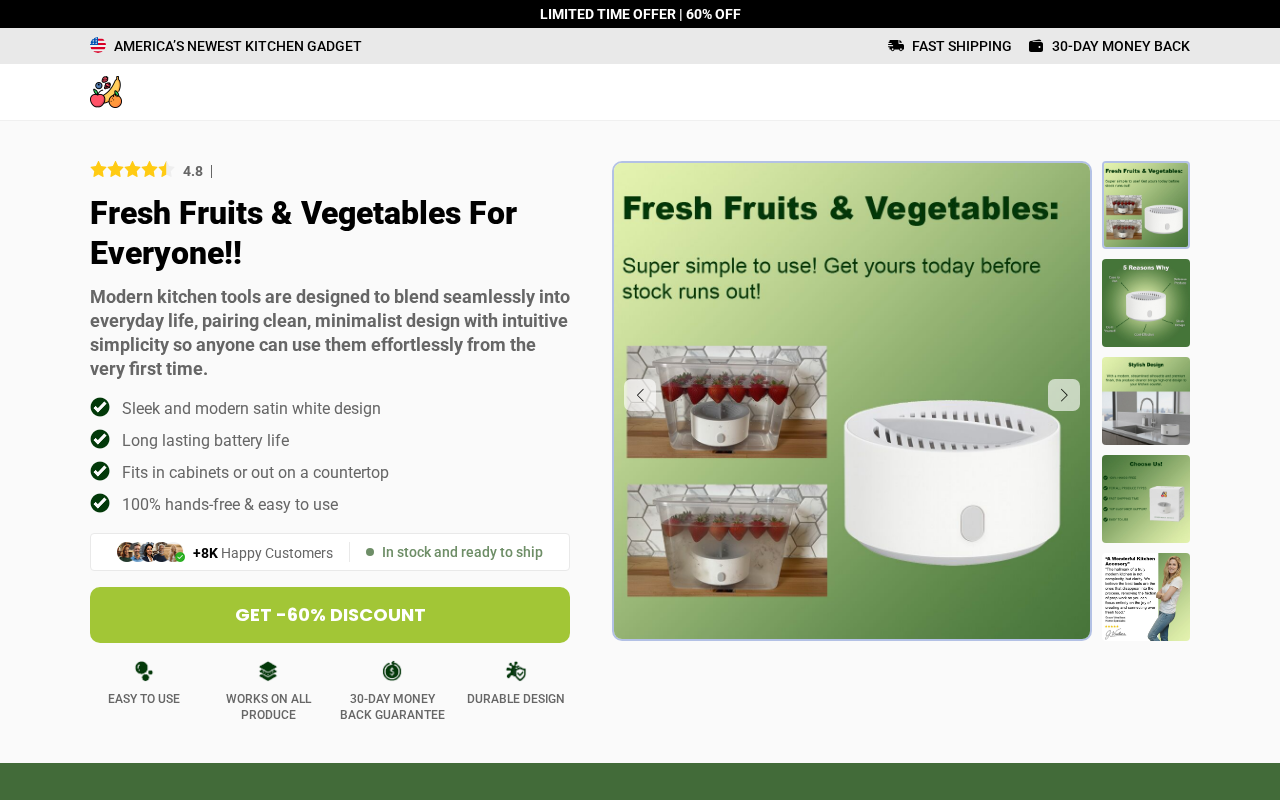
Operators can rotate storefront hostnames while keeping the same puck photography and claim stack. Mentioning a single example host once is enough for pattern recognition: puriproduce.com is one wrapper shape among several overlapping get- and my- style paths that sell the same electrolysis produce story.
Amazon listings and third-party pages can appear in the same lane, which reassures shoppers who distrust unknown boutiques. A marketplace presence does not turn unverified pesticide percentages into independent proof, and it does not erase the wholesale pricing gap that still defines the category.
4. Fake media logos and review-rate banners do the heavy lifting
Above the fold you may see limited-time sixty percent discounts, thousands of verified reviews, and logo strips that imply major outlets covered the gadget as news. Those strips are especially effective because they look like journalism rather than affiliate-style advertorial wallpaper the brand paid to resemble.
Review-rate banners train shoppers to treat marketing chrome as social proof even when the written feedback is thin, recycled, or hard to verify. Happy-customer counters and in-stock badges finish the emotional job before anyone asks for a pesticide residue study tied to this exact SKU.
5. Cloudy water becomes a visual substitute for lab proof
Demo clips love the moment water turns murky, because murk feels like extracted poison leaving the fruit. In reality, agitation, minerals, wax particles, and electrolysis byproducts can change how water looks without proving that regulated pesticide residues fell by the advertised percentage.
Food-safety specialists who have looked at similar fizzing gizmos often return shoppers to a simpler baseline: running water, friction where appropriate, and careful handling still do the core work. A five-minute hands-free cycle can feel premium without outperforming that baseline on the claims that sold the click.
6. Salt, timers, and freshness multipliers widen the fantasy
Instructions that ask for a pinch of salt and a short cycle make the ritual feel scientific. Freshness claims such as produce lasting up to five times longer push the fantasy further by turning a soak accessory into a refrigerator miracle, again without a transparent study design attached to the product page.
Bundle tiers and multi-packs raise the cart total while framing thrift as wisdom. By the time a buyer wonders whether the wholesale twin is the same disc, the discount clock has already done its work and the upsell for a second unit for the office fridge is waiting.
7. Checkout urgency finishes the sale before skepticism can catch up
Sale badges, free-shipping lines, money-back seals, and one-button buy flows collapse the research window. By the time a buyer compares $54 to $80 retail against a $12 to $36 generic electrolysis cleaner, the order confirmation is already in the inbox.
After payment, the experience often looks successful in the narrow sense that a parcel arrives and the puck lights up. The disappointment arrives later, when cloudy water becomes ordinary, produce still spoils on a normal schedule, and the pesticide fear that sold the ad never received the laboratory answer the creative implied.
8. The same puck keeps returning under new fruit-clean brand names
Because the underlying tool is cheap to source and easy to film in a sink, the creative can migrate from Puri-style names to other kitchen-clean brands without redesigning the electronics. Readers who already met PuriBreeze will recognize the remix: new fruit mark, familiar OH-ion adjectives, same five-minute hands-free promise, same pressure to treat residue anxiety with a checkout button.
The product does not need to be a non-shipping ghost store for the pitch to mislead. It only needs pesticide language and media-logo cosplay to outrun the quieter truth that you bought a generic electrolysis disc at funnel pricing.
What To Do If You Bought This Gadget
1. Separate the puck you received from the lab result you were sold
Open the box and ask what the device can physically do in a bowl of water. If it is a battery disc that fizzes for a few minutes, treat it as a consumer soaking accessory unless the seller provides independent residue testing for the exact pesticides and produce types named in the ads. Do not keep treating cloudy water as proof just because the invoice title still says pesticide remover.
Write down the claims that convinced you to buy, especially any promises about ninety-nine percent removal, mold, wax, bugs, or five-times freshness. Those notes help if you request a refund, dispute a charge, or explain to a family member why the gadget did not replace basic rinsing.
2. Return to food-safety basics that still work without a puck
Wash hands, rinse produce under running water, scrub firm items when appropriate, refrigerate perishable foods promptly, and cook high-risk foods to safe temperatures. Those habits remain the backbone of home food safety whether or not an electrolysis accessory sits in the sink.
If pesticide exposure is a specific medical or pregnancy concern in your household, ask a clinician or a cooperative extension resource what evidence-based steps matter for your situation. Do not let a retargeted kitchen ad become the entire risk plan for another month.
3. Use the refund window while evidence is fresh
If the store advertises a thirty-day satisfaction path, start that process quickly and keep screenshots of the product claims, the order confirmation, and the unboxing condition. Ask for a full refund when the item was sold as a pesticide-removing system but arrives as a generic electrolysis puck without verified performance for those claims.
If you bought through Amazon or another marketplace, use that platform’s return path and save the listing language that promised residue removal. Emphasize misrepresentation of function rather than a vague change of mind when you describe why the product did not match the ad.
4. Protect your inbox and feed from the sequel cleaners
After one conversion, platforms often show neighboring produce purifiers, OH-ion discs, and fruit-wash stations with new brand names and identical emotional beats. Mute or report the ads, avoid entering the same email into lookalike kitchen funnels, and be wary of follow-up messages that claim upgraded probes or special salt packs required to claim stronger results.
If you shared card details on a young storefront, watch statements for unexpected renewals or related charges. Curiosity clicks are cheap for advertisers; your repeated checkouts are the prize.
5. Recalibrate how you read kitchen-tech marketing
Before the next purchase, demand a clean answer to three questions: what physical mechanism the device uses, what independent evidence supports the exact pesticide or bacteria claim on the ad, and what any media logo actually represents. As-seen-on wallpaper is not the same thing as a controlled residue study.
Compare the unboxing reality with wholesale electrolysis cleaner listings when the silhouette looks familiar. If industrial pages sell the same disc as a generic fruit washer while social ads sell it as a pesticide breakthrough, believe the hardware category that matches the object.
6. Talk through the purchase if health anxiety drove the click
Many buyers never mention the order because the ad framed residue fear as a private failure that a discreet gadget could fix overnight. Anxiety is useful to marketers and exhausting at home, especially when a $70 disc replaces a calmer conversation about shopping habits, peeling, and rinsing.
If money stress from stacked wellness gadgets is part of the fallout, include that in the conversation too. The goal is not to replay every cloudy-water clip you believed. The goal is to stop letting electrolysis buzzwords steer food-safety choices that deserve slower, evidence-based attention.
Kitchen shoppers who already rinse carefully should still pause when a social funnel treats cloudy soak water as laboratory confirmation. The right question is not whether electrolysis can change water chemistry in a bowl. The right question is whether this exact puck earned the pesticide percentages, mold promises, and five-times freshness claims that justified a fifty-to-eighty-dollar checkout.
If residue anxiety is driving purchases in your home, write a calmer plan that does not depend on a single branded disc: which produce you peel, how you rinse and scrub, how you store leftovers, and when you would ask a clinician about exposures that actually worry you. A bubbling accessory can remain an optional convenience after that plan exists, but it should not become the substitute for habits that still do the core work.
Readers who catch the pattern early also spare themselves the sequel ads that rename the fruit logo and restart the same five-minute miracle. Pattern recognition beats another limited-time sixty percent banner every time, especially when wholesale twins of the same disc are already sitting in industrial catalogs at a fraction of the funnel price.
The Bottom Line
PuriProduce-style produce cleaners sold through aggressive social ads are often generic electrolysis discs wearing food-safety clothing. The storefront may ship a product, display refund copy, and stack pesticide claims with media-logo wallpaper, yet the mechanism that reaches your sink is still a bubbling soak accessory with unverified residue promises.
Treat review-rate banners as marketing until real reviews appear, treat cloudy water as a visual effect rather than a lab report, and treat $54 to $80 pricing as a reason to compare wholesale twins rather than a reason to hurry. If cleaner produce is why you clicked, protect the basics first: rinse well, handle food carefully, and do not let a fizzing puck postpone habits that already match the risk.
The next ad will probably rename the fruit logo again, yet the tell stays the same. When the copy says pesticide removal and five-times freshness from a five-minute hands-free cycle, and the object in the photo is a white wholesale disc sold through a rotating funnel, you are not looking at a kitchen laboratory in miniature so much as overhyped hardware sold with borrowed health gravity.

Reviews & discussion
0 commentsShare a firsthand experience, or ask a question.
Community reviews
PuriProduce
Moderated reader experiences, not an editorial verdict.
Start the conversation
Have a question or something useful to share? Add the first comment.