

PuriBreeze is being promoted as a produce-cleaning gadget that claims to help remove pesticides, wax, dirt, bacteria, and other residues from fruits and vegetables. The ads position it as a smarter alternative to rinsing produce with water.
But before ordering, buyers should look carefully at the claims, the checkout process, the product quality complaints, and whether this is truly a unique cleaning device or another generic kitchen gadget sold through aggressive online advertising.
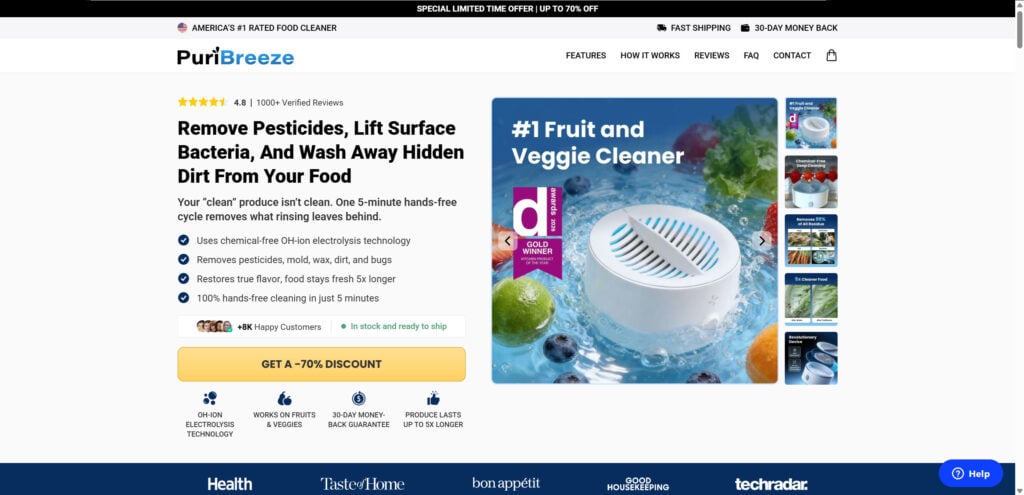
PuriBreeze Overview
PuriBreeze is sold through PuriBreeze.net and Get-PuriBreeze.com as a portable fruit and vegetable cleaner. The sales page claims it uses “chemical-free OH-ion electrolysis technology” and says one 5-minute hands-free cycle can remove pesticides, mold, wax, dirt, bugs, and surface bacteria from produce. It also claims food can stay fresh “5x longer.”
The site uses typical direct-response sales language: “70% off,” “limited-time offer,” “high demand,” “trusted by 129,000+ customers,” and “4.7” rating claims. The page also states that it is an advertisement and not an actual news article or consumer protection update
That does not automatically mean PuriBreeze is fake. However, it does raise concerns about how the product is being promoted.
Produce-cleaning gadgets are widely sold online under different names. Many use similar language around electrolysis, OH ions, pesticide removal, bacteria reduction, and “deeper cleaning.” The concern is that buyers may be paying a premium price for a generic device that looks like cheaper products available elsewhere.
There are also customer complaints. On Trustpilot, PuriBreeze has mixed feedback. One reviewer said they expected one item but found an order had gone through for two. Another said the product received was “nothing like pictured,” came with no instruction manual, and had Chinese print on the box. A separate reviewer claimed they were charged over £140, received two units, and neither worked.
These complaints match a familiar pattern seen with many viral gadget offers: strong advertising claims, bundle/order confusion, generic product delivery, and refund frustration.
How the PuriBreeze Offer Appears to Work
1. The ad creates fear around “dirty” produce
The sales pitch starts with a simple fear: rinsing fruits and vegetables with water may not be enough.
The page says your “clean” produce is not truly clean and claims PuriBreeze removes what rinsing leaves behind in 5 minutes.
This type of messaging is effective because many people worry about pesticides, bacteria, wax coatings, and food safety. The product is framed as an easy solution for protecting your family.
2. The product uses scientific-sounding language
PuriBreeze claims to use “OH-ion electrolysis technology.”
That sounds advanced, but shoppers should be cautious. Scientific-sounding terms do not prove that this specific device removes pesticides, bacteria, wax, and mold as effectively as the ads imply.
For a product making strong cleaning claims, buyers should look for independent lab testing on the exact device being sold, not just broad technology claims.
3. The claims may be exaggerated
The page claims PuriBreeze can remove pesticides, mold, wax, dirt, bugs, and surface bacteria, and that food stays fresh 5x longer.
Those are broad claims. Without clear, independent test results, buyers should not assume the device performs dramatically better than careful washing, peeling, scrubbing, or standard food-safety practices.
4. The product may be generic
One Trustpilot reviewer said the item they received was not like the picture, had no instruction manual, and had Chinese print on the outside box. They also claimed the same product was available on Amazon for $30.
That is a major warning sign. It suggests buyers may receive a generic imported device rather than a unique premium product.
5. The checkout may lead to order confusion
Customer reviews mention quantity confusion. One reviewer said they expected one item but found an order had gone through for two. Another claimed they were charged more than expected and received two units.
This is common with direct-response funnels that use bundles, add-ons, or post-purchase offers. Buyers may accidentally select more units than intended or misunderstand the final total before payment.
6. Returns may be frustrating
Even when a site promotes guarantees, returns can still be difficult. Problems may include:
- slow customer support
- return shipping costs
- unclear return instructions
- disagreement over what was selected at checkout
- refusal to refund add-ons or shipping
- product quality disputes
Main Red Flags
- Strong claims about removing pesticides, bacteria, wax, mold, dirt, and bugs.
- “70% off” and “limited-time” urgency messaging.
- Claims of 129,000+ customers and 4.7 rating without easy verification.
- Advertisement disclosure on the sales page.
- Possible generic imported product.
- Customer complaints about receiving a different-looking item.
- Complaints about receiving two units or being charged more than expected.
- Risk that similar devices are available elsewhere for less.
- Returns may not be as easy as the sales page suggests.
Is PuriBreeze a Scam?
PuriBreeze may ship a real produce-cleaning device, so it may not be a “pay and receive nothing” scam in every case.
The bigger issue is whether the product is being oversold.
Based on the marketing and public complaints, PuriBreeze appears to be a high-risk viral kitchen gadget offer. Buyers may receive a product, but it may be generic, overpriced, different from what they expected, or sold through a checkout process that can lead to unwanted extra units.
The cleaning claims should also be treated cautiously unless the seller provides independent testing for the exact product being sold.
What To Do If You Already Ordered
1. Check your order confirmation
Confirm:
- quantity ordered
- total amount charged
- shipping cost
- add-ons
- any post-purchase upsells
- merchant name on your bank statement
2. Save all screenshots
Save the product page, checkout page, order confirmation, refund policy, tracking page, and support emails.
3. Contact support immediately
If you received extra units or were charged more than expected, ask for cancellation or refund in writing.
4. Do not pay expensive return shipping without checking your options
If the item was not as described or you received the wrong quantity, contact your card provider before paying return shipping.
5. Monitor your card
Watch for additional charges after purchase.
6. Dispute if needed
Contact your bank or credit card company if:
- you were charged more than expected
- you received more units than ordered
- the product was not as advertised
- the product never arrived
- the seller refuses a reasonable refund
FAQ
What is PuriBreeze?
PuriBreeze is a produce-cleaning gadget marketed for cleaning fruits, vegetables, leafy greens, and other fresh foods before eating or cooking.
What does PuriBreeze claim to do?
The sales page claims it helps remove pesticides, mold, wax, dirt, bugs, and surface bacteria using OH-ion electrolysis technology.
Is PuriBreeze a scam?
It may ship a real product, but the offer has several warning signs: exaggerated claims, urgency marketing, possible generic sourcing, and customer complaints about quality and unexpected quantities.
Is PuriBreeze from China?
Some customer complaints say the received product had Chinese print on the box.
Can buyers receive more units than they ordered?
Yes, that appears to be a risk. Trustpilot reviews mention customers expecting one item but receiving or being charged for two
Does PuriBreeze really remove pesticides?
The site claims it supports pesticide and residue removal, but buyers should look for independent lab testing on the exact device before trusting broad claims.
Is PuriBreeze better than washing produce with water?
The site claims it is more effective than water alone, but this should be treated as marketing unless backed by clear independent evidence.
Are returns easy?
Not always. Some reviews mention support help, while others describe product and billing problems. Buyers should read the refund policy carefully before ordering.
The Bottom Line
PuriBreeze is marketed as a smart produce cleaner that can make fruits and vegetables safer in minutes. The idea sounds appealing, but the offer has major warning signs: strong cleaning claims, urgency discounts, possible generic sourcing, order-quantity confusion, and mixed customer complaints.
Compare similar produce cleaners before buying, avoid rushed checkout decisions, and screenshot everything if you place an order.








