

Lunavelle Sleep Patches are being promoted as melatonin-free sleep patches that claim to help users relax, unwind, and get deeper rest without pills, gummies, or next-day grogginess.
But before ordering, buyers should look closely at the claims, the checkout process, the subscription risk, and the public complaints around unexpected charges and unwanted multi-box orders.
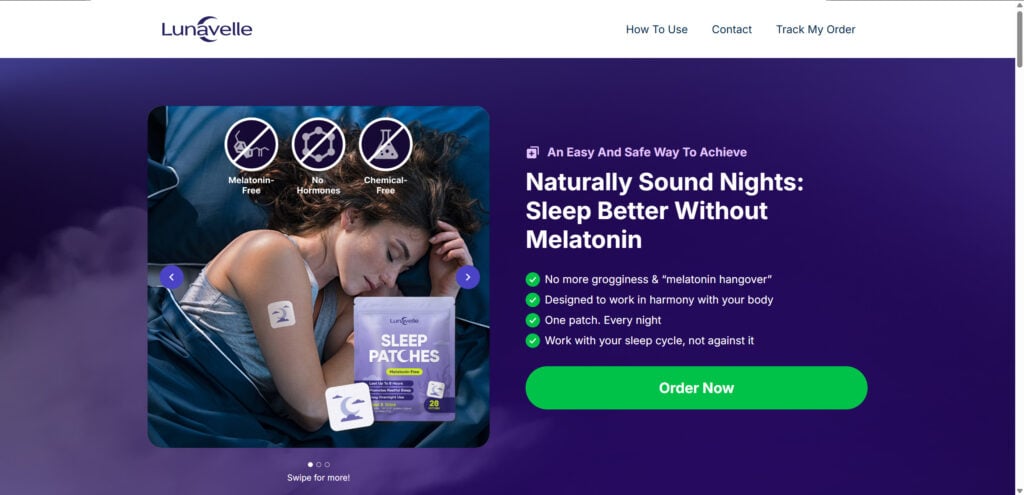
Lunavelle Sleep Patches Overview
Lunavelle Sleep Patches are sold through TryLunavelle.com as a melatonin-free, non-hormonal sleep support patch. The website says the patches are designed to help users relax, unwind, and ease into restful sleep naturally. The product is positioned as a topical alternative to traditional sleep gummies, capsules, or melatonin supplements.
The formula is promoted as a transdermal patch containing ingredients commonly seen in sleep-support products, including magnesium glycinate, L-theanine, GABA, valerian root, hop flower, ashwagandha, tart cherry, lavender oil, passion flower, chamomile, and jujube. A company-published GlobeNewswire release also states that Lunavelle offers a 30-day satisfaction guarantee on qualifying first-time orders placed through the official site.
At first glance, the offer sounds simple: apply a patch, avoid melatonin, and sleep better. But the broader pattern raises concerns.
Sleep patches are a crowded wellness category. Similar patches are sold under many different names, often using the same type of claims: deeper sleep, natural relaxation, no grogginess, no pills, and gradual overnight delivery. These products are easy to market because sleep problems are common, frustrating, and emotionally charged.
The biggest issue with Lunavelle is not only whether a patch arrives. It is whether the product is being oversold and whether the checkout process may lead to unwanted orders or recurring billing.
Public reviews show several serious complaints. On Trustpilot, one reviewer claimed they tried to buy one box of sleep patches for $29.99 but were charged for six boxes. Another claimed they tried to buy a 70% off deal for $11.99 but were charged more than $84 twice and said an automatic PayPal subscription was created without their knowledge. A third reviewer said an order was “doubled up” after a discount offer.
Those complaints are highly relevant because they match a familiar pattern seen with aggressive direct-response supplement and wellness funnels: heavy discounts, confusing checkout flows, multi-pack upsells, and unexpected recurring charges.
How the Lunavelle Sleep Patch Offer Appears to Work
1. The ads target people desperate for better sleep
Sleep problems make people vulnerable to quick-fix marketing. If someone has been lying awake for weeks or waking up exhausted, a patch that promises gentle, natural sleep support can sound appealing.
Lunavelle’s marketing leans into this desire for an easier bedtime routine. The patch is promoted as melatonin-free, non-hormonal, and designed to support calm rest without pills.
That positioning is clever because many people have tried melatonin and disliked the side effects. The “no melatonin” angle makes the product feel safer and more modern.
But “melatonin-free” does not automatically mean effective. It only means the product avoids one ingredient.
2. The product uses familiar wellness ingredients
The promoted ingredient list includes magnesium glycinate, L-theanine, GABA, valerian root, ashwagandha, chamomile, passion flower, lavender, and other sleep-adjacent ingredients.
Some of these ingredients are commonly used in relaxation supplements. But there is a major difference between an ingredient being popular and this specific patch being proven to deliver the advertised results.
For a topical patch, buyers should ask:
- How much of each ingredient is in the patch?
- How much is actually absorbed through the skin?
- Is there independent testing on the finished Lunavelle product?
- Are the results based on real clinical trials or general ingredient marketing?
- Are customer testimonials verified?
Without clear answers, the claims should be treated cautiously.
3. The patch format sounds more advanced than it may be
Transdermal delivery sounds scientific. It suggests steady absorption, slow release, and convenience.
But not every ingredient works well through the skin. Oral supplements, topical patches, and prescription transdermal medications are not automatically equivalent. A patch can contain a long list of ingredients, but that does not prove meaningful absorption or reliable sleep improvement.
The company’s own promotional release includes standard supplement-style disclaimers: the statements have not been evaluated by the FDA, and the product is not intended to diagnose, treat, cure, or prevent disease.
That disclaimer matters. Lunavelle is not an FDA-approved insomnia treatment.
4. Discount offers may lead to order confusion
This is one of the most important buyer risks.
Several reports mention unexpected quantities or charges. One reviewer said they attempted to buy one box but were charged for six. Another said they were charged more than $84 twice after trying to buy a discounted offer.
This type of complaint often happens when a funnel uses:
- preselected bundles
- post-purchase upsells
- “buy more, save more” offers
- subscription checkboxes
- PayPal automatic payments
- confusing discount pages
- one-click add-ons after checkout
Even if the product itself exists, the checkout process can still create serious consumer problems.
5. Subscription or autopay risk is a major concern
The most concerning public complaint claims that an automatic PayPal subscription was created without the buyer’s knowledge.
Recurring billing is one of the biggest risks with sleep supplements and wellness patches. Buyers may think they are placing a one-time trial order, only to later discover repeat charges or automatic shipments.
Before buying Lunavelle or any similar sleep patch, customers should inspect the checkout page for terms such as:
- subscribe
- auto-renew
- recurring
- refill
- VIP plan
- membership
- monthly delivery
- PayPal autopay
- “save more with subscription”
If the checkout uses PayPal, buyers should also check their PayPal automatic payments section after purchase.
6. Promotional “review” articles may not be independent
Search results show promotional-style content describing Lunavelle in highly favorable terms. For example, one article published by The Jerusalem Post labels the product as safe and legit, while a GlobeNewswire release is published under Lunavelle’s name and reads like brand-controlled promotional content.
That does not mean every positive statement is false. But buyers should understand the difference between independent consumer reporting and sponsored or promotional content.
When an article repeats the brand’s claims, links to the official offer, and uses sales-style wording, it should not be treated the same as independent testing.
Main Red Flags
- Sold through a direct-response sleep supplement funnel.
- Strong claims around deeper rest, relaxation, and no next-day grogginess.
- Melatonin-free positioning may make the product sound safer or more proven than it is.
- Patch absorption claims may not be independently proven for the finished product.
- Public complaints mention unexpected multi-box charges.
- Public complaints mention PayPal autopay or subscription concerns.
- Discount offers may lead to order confusion.
- Promotional review content appears in search results.
- The company’s own promotional release includes FDA disclaimer language.
- Similar sleep patches are widely sold under many different brands.
Is Lunavelle Sleep Patches a Scam?
Lunavelle may ship a real product, and some users may like the patches. But that does not remove the risk.
The safer conclusion is this: Lunavelle Sleep Patches appear to be a high-risk wellness patch offer because of exaggerated sleep-support marketing, unclear proof of patch absorption effectiveness, discount-funnel tactics, and public complaints about unexpected charges, multi-box orders, and possible autopay enrollment.
This may not be a simple “fake product” scam where nobody receives anything. The bigger concern is the sales model: buyers may be pulled in by a cheap discount, then end up charged more than expected or enrolled in repeat billing.
What To Do If You Already Ordered Lunavelle
1. Check your order confirmation immediately
Look for:
- number of boxes ordered
- total amount charged
- shipping fees
- discount applied
- subscription wording
- recurring payment terms
- merchant name on your statement
Do not rely only on what you remember selecting.
2. Check PayPal or your card account for autopay
If you paid with PayPal, open your PayPal automatic payments/subscriptions section and cancel any Lunavelle-related autopay agreement you do not recognize.
If you paid by card, monitor your statement for repeat charges.
3. Contact support in writing
Ask the company to confirm:
- your order quantity
- whether you are enrolled in any subscription
- whether any future charges will occur
- cancellation of any recurring billing
- refund for unwanted boxes or duplicate charges
Keep all emails.
4. Save screenshots
Save screenshots of:
- the product page
- discount page
- checkout page
- confirmation email
- PayPal autopay screen
- refund policy
- support messages
These are useful if you need to file a dispute.
5. Dispute the charge if necessary
Contact PayPal, your bank, or your credit card company if:
- you were charged for more boxes than selected
- you were charged twice
- an autopay was created without clear consent
- the seller refuses to cancel
- the seller refuses to refund an unwanted order
- the product never arrives
Use clear phrases such as “unauthorized recurring charge,” “charged for more items than ordered,” or “merchant created autopay without clear authorization.”
FAQ
What are Lunavelle Sleep Patches?
Lunavelle Sleep Patches are melatonin-free topical patches marketed for relaxation and sleep support. The company says they use botanical and mineral ingredients delivered through the skin.
Are Lunavelle Sleep Patches FDA approved?
No. Lunavelle’s promotional disclaimer says the statements have not been evaluated by the FDA and that the product is not intended to diagnose, treat, cure, or prevent disease.
Do Lunavelle Sleep Patches contain melatonin?
The product is marketed as melatonin-free.
What ingredients are advertised?
Promotional material lists magnesium glycinate, L-theanine, GABA, valerian root, hop flower, ashwagandha, tart cherry, lavender oil, passion flower, chamomile, and jujube.
Is Lunavelle a scam?
It may ship a real product, but public complaints about unexpected charges, multi-box orders, and autopay concerns make it a high-risk offer.
Can buyers be charged for more boxes than they ordered?
Yes, that appears to be a reported issue. Reviews mention buyers trying to purchase one box or a discounted offer but being charged for more.
Can Lunavelle create a subscription?
At least one public complaint claims an automatic PayPal subscription was created without the buyer’s knowledge. Buyers should check their PayPal or card account immediately after ordering.
Do sleep patches actually work?
Some users may feel relaxed, but claims vary widely. Buyers should be cautious because patch delivery, ingredient absorption, and real sleep outcomes depend on the specific formula and independent testing.
Should I buy Lunavelle Sleep Patches?
Be cautious. If you still want to try them, avoid multi-box offers, check for subscription terms, use a payment method with buyer protection, and screenshot the checkout page.
The Bottom Line
Lunavelle Sleep Patches are marketed as a melatonin-free, natural way to support better sleep. The concept sounds appealing, but the offer carries major warning signs.
The biggest concerns are not just the sleep claims. They are the checkout and billing risks. Public complaints mention unexpected multi-box charges, duplicate charges, and possible PayPal autopay enrollment. That makes Lunavelle a product buyers should approach carefully.
If you already ordered, check your receipt, cancel any unwanted autopay, contact support in writing, and dispute the charge if you were billed for more than you approved









I tried these patches for 2 nights – really bad night. Feelings of anxiety and elevated heart rate. Will not use any more. I have contacted the copy requesting a refund and to cancel any subscription but have not heard back as yet.
Stopping after two bad nights was the right call, Vicki. If the racing heart or the anxiety has carried on at all since, please do mention it to your GP – with patches like these there is no reliable ingredient disclosure, so a doctor should hear what you took rather than assume it was inert. On the money side, do not wait for their reply, because the silence is part of the process: ring your card issuer, dispute the charge, and ask them specifically to block any future recurring payments from that merchant, since cancelling with the seller alone often fails to stop the billing.
I was scammed by LUNAVELLE! My order was supposed to be $9.99 with free shipping. I got a confirmation email, and it had two bogus orders totaling $214.54! When I said to cancel because I did not order these, they said “too late”, the orders were being processed. Then I got a notification from the post office (the next day) that I would be getting two packages from MACEK LLD. Lunavelle said it wasn’t from them. I found out that this is a scam.
The 9.99 is the bait, Barbara; the 214.54 comes from upsell pages that add items with a single click after payment, which is why you never saw a cart total matching what you were charged. Too late, it is already processing is a script rather than a fact – a merchant can cancel before shipping, and a dispute is open to you either way. Ring your card issuer now, dispute the whole amount as unauthorised, and ask for that merchant to be blocked from billing you again. The different company name on the parcels is normal for these operations, as the fulfilment shell is deliberately kept separate from the brand; it does not mean the packages are unrelated. You can refuse delivery or keep them unopened as evidence for the dispute.