

Are you tired of restless nights, tossing and turning, your mind racing even when your body is exhausted? The DreamWeaver Pro is one of those slick, tempting gadgets that promises to fix everything: better sleep, deeper rest, zero wake-ups, all with a stylish, high-tech eye mask. But as you’ll discover, the reality may be far less glamorous. The marketing is bold, the claims plentiful—and yet the actual proof is thin. In this review, we dig into the product, the site, the claims and the red flags. Because your sleep (and your wallet) deserve better.
Overview
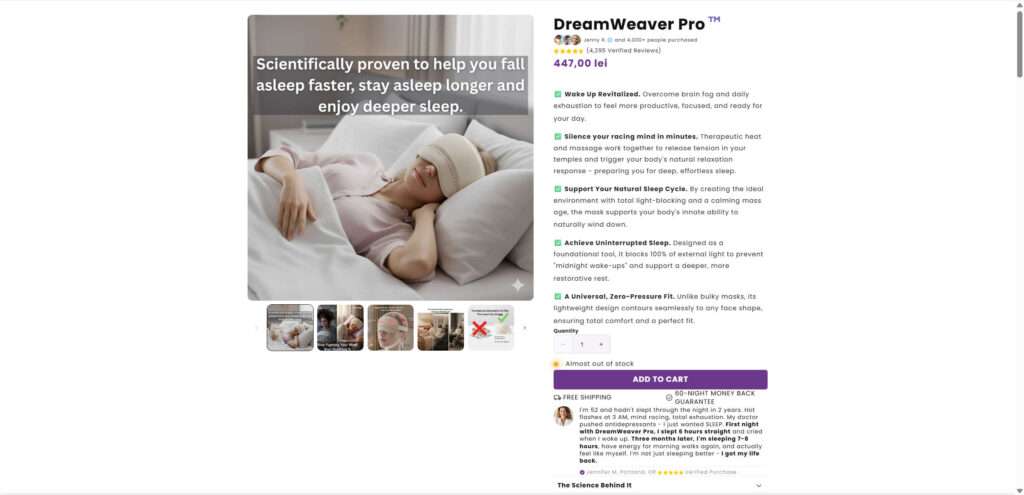
The DreamWeaver Pro Sleep Mask is presented as a breakthrough accessory for sleep support and wellness. Its marketing strongly suggests it is more than just a mask; it’s a “sleep system,” a “therapeutic device,” a “massaging heat-mask for the modern sleeper.” The brand behind it is reported as Nubilee (though the site domain and branding are a little inconsistent). The key aspects of the overview:
What the Site Claims
- On the official sales page, the product is offered at a “regular price ~$199.99” but currently “on sale” for ~$149.99. The site lists bold claims such as:
- “Wake up revitalized. Overcome brain fog and daily exhaustion to feel more productive, focused, and ready for your day.”
- “Silence your racing mind in minutes. Therapeutic heat and massage work together to release tension in your temples and trigger your body’s natural relaxation response – preparing you for deep, effortless sleep.”
- “Support Your Natural Sleep Cycle. By creating the ideal environment with total light-blocking and a calming massage, the mask supports your body’s innate ability to naturally wind down.”
- “Achieve uninterrupted sleep. Designed as a foundational tool, it blocks 100% of external light to prevent “midnight wake-ups” and support a deeper, more restorative rest.”
- A “universal, zero-pressure fit … lightweight design contours seamlessly to any face shape.”
- The site also features “4,295 Verified Reviews” and “4,000+ people purchased” numbers.
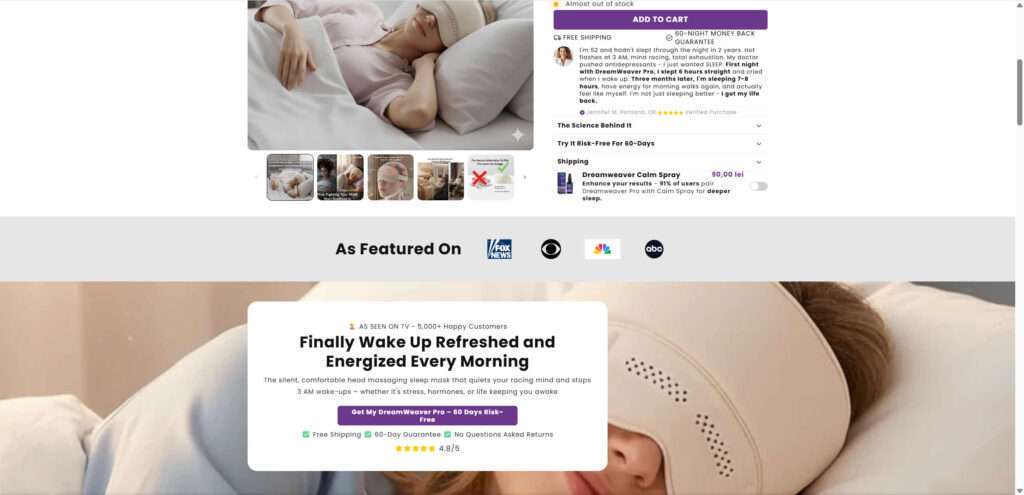
- Under “As Featured On” the site prominently displays logos such as what appear to be major media channels.
The Marketing and Imagery
The product page uses high-quality visuals: models resting peacefully, the mask on, bold white-on-dark text stating “Scientifically proven to help you fall asleep faster, stay asleep longer and enjoy deeper sleep.” The site uses urgency cues: “Save 50%”, “Free Shipping”, “60-Day Money Back Guarantee”. These are classic direct-to-consumer dropshipping cues.
Price & Product Comparison
The page claims ~$199.99 regular price, sale ~$149.99. However, basic sleep masks (non-electronic) on mainstream sites go for under $20. Without clear specification of what “therapeutic massage” or “heat” components exist and how they’re powered, the mark-up is large, and the differential value is unclear.
The “As Featured On” Logos
The site prominently shows logos of major media outlets (e.g., “Fox News”, “CBS”, etc) under the heading “AS SEEN ON TV – 5,000+ Happy Customers”.
However:
- There is no link or citation verifying actual coverage by those outlets.
- The “featured on” badges are a common trust signal in dropship marketing, often misused to imply endorsement where none exists.
- Independent checks did not reveal reputable news pieces reviewing this specific product under those outlets.
Thus, these logos should be treated as marketing visuals rather than validated endorsements.
How the Operation Works
Understanding how this product and its marketing operation is structured helps uncover why so many of these devices are marketed the same way. Here’s how the DreamWeaver Pro style business appears to function:
Step 1: Product Sourcing
- The underlying product appears to be a sleep mask (with light-blocking) plus perhaps built-in “massaging/heat” claims.
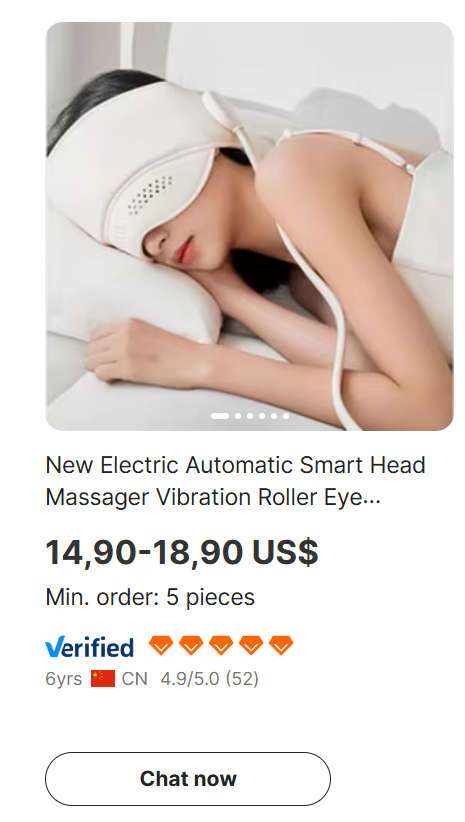
- Such items can often be sourced via low-cost manufacturing platforms (China, etc) for a small cost.
- The markup in retail can be large, given the premium positioning and limited consumer awareness of actual manufacturing cost.
Step 2: Branding & Website Creation
- A brand such as Nubilee is created. The website is built to look like a premium wellness brand: minimalistic design, high-investment visuals, model photography, multiple slides of the mask in use.
- The copy uses “wellness device” language: “therapeutic”, “sleep cycle support”, “brain-fog relief”, “uninterrupted rest”.
- Trust signals are fabricated or exaggerated: “4.8★ from 4,000+ people”, “as seen on”, “scientifically proven”.
- Price inflation is built in: “Regular $199.99, now just $149.99”.
Step 3: Traffic and Conversion
- The marketing uses paid ads on social media (Facebook, Instagram, TikTok) targeting people with sleep issues, brain-fog, fatigue.
- The urgency triggers conversion: “Save 50% today”, “Limited quantities available”, “Free shipping – 60-Day Money Back Guarantee”.
- The checkout likely uses a one-page funnel, upsells, and reinforcement of trust via fake badges and strong visuals.
Step 4: Shipping & Fulfillment
- Once purchased, the product is shipped either from a third-party logistics (3PL) or from the manufacturer’s drop-ship arrangement.
- Shipping may be delayed, or fulfilled from abroad (which impacts returnability and customer service).
Step 5: After-sale Experience
- Support may be weak; refund policies may be vague or hard to execute.
- After a period, as negative feedback or ad account suspensions accumulate, the brand may change domain/name and restart under a new label.
- This model is widespread in direct-to-consumer (DTC) wellness products.
Step 6: Reinvention & Rebranding
- New brand, similar product, same promotional tactics.
- The same mask or version thereof may appear under multiple brand names with new claims and fresh “featured on” logos.
Buyer Experience: What You Should Know
If you’re considering whether to buy the DreamWeaver Pro, here is a breakdown of what to watch, and what your practical expectations should be.
1. Packaging & Product Quality
- Does the box/packaging match premium claims? Is there clear branding, serial numbers, customer support contact?
- Check build quality: materials, straps, electronics (if any), heat/massage functionality. Many buyers report that “massaging/heat” claims are weak or nonexistent.
- Check comfort, fit, light-blocking effectiveness: How well does it actually block light? How comfortable is the wear for side-sleepers?
2. Functionality vs Claims
- The marketing claims include “therapeutic heat”, “massage”, “100% light-block”, “supports your natural sleep cycle” and “brain-fog relief”.
- Ask yourself: Is there independent verification of these claims? The site does not present clinical studies.
- Some users may benefit from the blackout effect and comfort, but that is different from “therapeutic massage heat device”.
3. Price vs Value
- With the $99+ price point (and original claimed $199), you need to justify whether the features provide enough benefit beyond a standard sleep mask (which can cost <$20).
- If the massaging/heat functions are minimal or absent, the value proposition drops.
4. Shipping, Returns & Support
- Make sure the product has a refund policy (the site offers “60-Day Money Back Guarantee”).
- However, verify how easy the return really is: is it a US-based return address, are you responsible for shipping, is support responsive?
- Some buyers of similar products report difficulty obtaining refunds.
5. Real Customer Feedback
- Reddit posts and independent reviews indicate mixed results: > “Not expecting a miracle…”
- Independent review sites highlight that while the product may exist, the marketing oversells it.
- Always look beyond the website’s “verified reviews” — check for external feedback.
6. Credibility Red Flags
- Use of “As Featured On” logos without substantiation. The DreamWeaver Pro page shows major media badges with no verifiable coverage.
- Overuse of terms like “scientifically proven”, “therapeutic device”, “instant brain fog relief”. Without independent validation, these are marketing claims.
- A perpetual “limited time sale” that never changes implies urgency marketing rather than genuine scarcity.
7. Risks to Consider
- Paying premium price for marginal benefit
- Difficult return/refund process
- Potential for alternate brands to pop up with same product and similar claims (making you liable for repeat spending)
- Expectation mismatch: if you expect major “massaging heat therapy” and deep brain-fog elimination, you may be disappointed.
The Bottom Line
In summary: The DreamWeaver Pro Sleep Mask is likely more marketing than medicine. While you may receive a legitimate sleep mask product, the premium claims (therapeutic heat, massage, brain-fog elimination, natural sleep-cycle transformation) are not backed by credible scientific evidence, and the use of “featured on” media logos appears dubious.
If your goal is simply a blackout eye-mask with decent comfort, you may find better value elsewhere for much less cost. But if you are buying this mask because you expect it to transform your sleep via advanced technology, you should temper your expectations.
Bottom line: If you want to try it and understand you’re buying what is essentially a comfort accessory with high expectations, fine. But don’t view it as a medical device that guarantees deep sleep or cures brain fog. Proceed with caution—and always check the return policy.

Join the discussion
0 commentsShare your experience or ask a question about this article.
Discussion
Start the conversation
Have a question or something useful to share? Add the first comment.