

The reel rarely opens with a quiet tip about filling an ordinary tray before bed. It opens with party panic, lukewarm drinks, and a bright plastic box that seems to manufacture ice on demand after one heroic press of a lid.
That framing is why so many apartment dwellers and hosts pause mid-scroll. Real countertop ice makers with compressors already exist as noisy appliances that plug in and harvest cubes on a cycle, yet the viral 48-cube creative borrows machine language for what is still a double-layer freezer tray with a press-out lid and a storage bin.
Overview
This story is a category exposé about overhyped freezer accessories sold as instant ice makers, not about a fake shop that never ships plastic, and not about giveaway phishing that pretends a major appliance brand is handing out machines. Buyers usually receive two trays, a bin, a scoop, and a press plate. The trap is what the ads imply about speed and automation, and what shoppers reasonably expect when they hear ice maker next to one-click release footage.
Machine words on a freezer-tray body
A press-lid double-layer ice tray is a real, sometimes handy kitchen accessory. You fill the trays, place the set in a freezer for hours, then press to pop cubes into the bin. That workflow can beat twisting brittle trays, yet it is still freezing physics, not a compressor appliance that produces ice while sitting on a warm countertop.
Retail funnels often stage the kit around $20 to $40 with dramatic strikethrough pricing, while wholesale twins of the same press-lid form factor commonly land near $2 to $3 in bulk catalogs. That gap explains why the creative works so hard to sound like an appliance upgrade rather than a nicer tray.
What the pitch quietly takes from you
The money loss is modest compared with medical gadgets, yet the disappointment is sharp when guests arrive and the viral box still needs the same multi-hour freeze every other tray needs. More costly than the plastic is the time spent believing an ad that edited away the freezer wait while keeping the satisfying press moment.
Shoppers in small apartments without built-in ice makers are the perfect audience, because the desire for easy cubes is real. The funnel meets that desire with appliance vocabulary, then ships a tray system that still depends entirely on the freezer you already own.
Why this is not the GE giveaway ice-maker scam
A separate scam pattern uses fake prize pages and phishing flows that claim a major brand is giving away a free ice maker if you pay shipping or enter card details. That trap is about credential and payment theft wrapped in a sweepstakes costume. The viral 48-cube story here is different: it is usually a shipping product with overhyped positioning, not a free GE machine lure.
Keeping those lanes distinct protects readers. If your inbox promised a free branded appliance, treat it as a phishing problem. If your feed promised a portable 48-cube maker that still looks like stacked trays in the photo, treat it as overhyped hardware and read for a compressor that is not there.
How These Ads Work
1. Party stress meets an instant-looking plastic hero
Paid placements lean on melted drinks, tiny tray yields, and the embarrassment of running out of ice mid-gathering. The creative shows a hand pressing a colorful lid while cubes cascade into a bin, which is a real party trick after freezing, yet the edit often implies the box itself created the ice in seconds.
Because the hook is hospitality, the click feels practical rather than gullible, and you are not shopping for a toy in that moment. You are shopping for a smoother hosting night, which is exactly when ice maker language outruns a careful look at the missing power cord.
2. The landing page reframes trays as a portable countertop maker
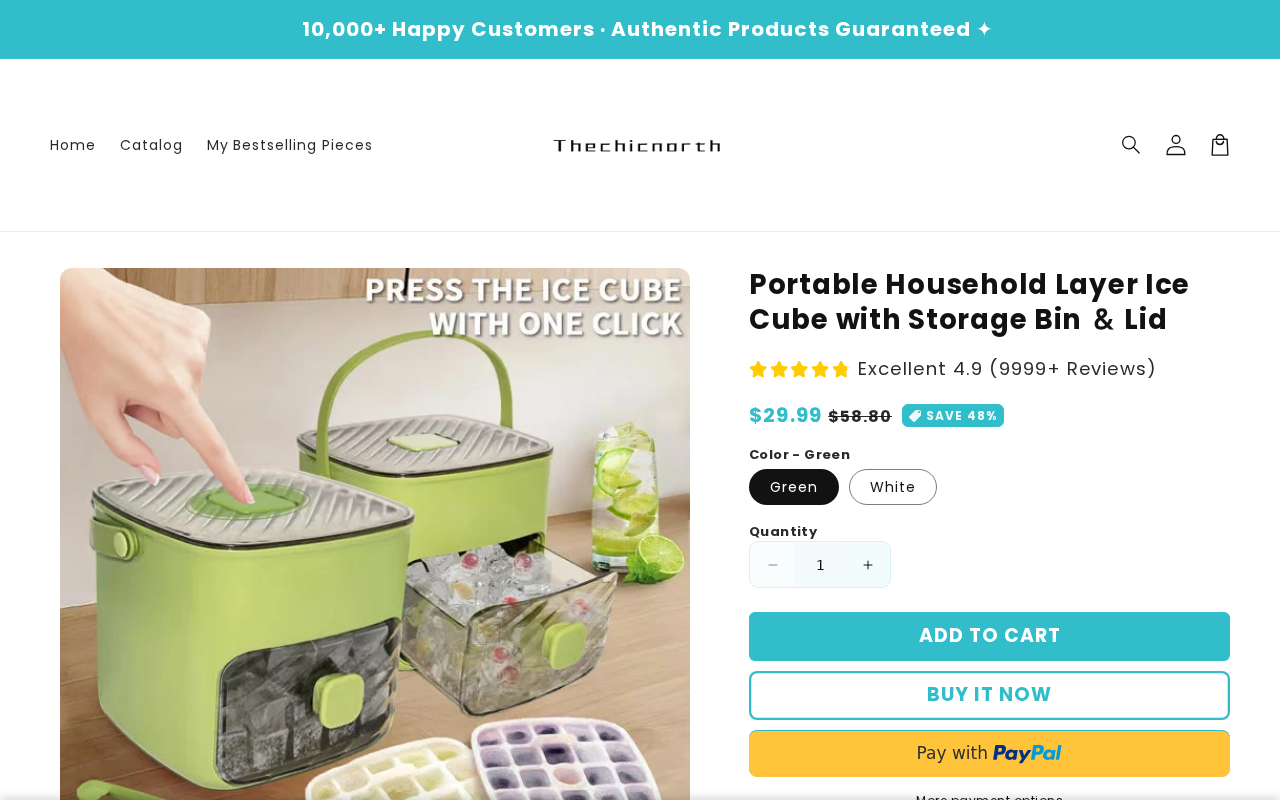
Once you land, titles and banners escalate from ice tray set into portable countertop ice maker, quick demold system, and large-capacity machine energy. The gallery still shows flexible molds, a storage drawer, and a press plate, yet the surrounding copy talks as if you chose among appliances rather than among plastic kits.
That mismatch is the engine, because If the ad only said double-layer freezer tray with press release, fewer buyers would convert at marked-up funnel prices. The conversion depends on keeping machine fantasy in the foreground while the object stays a no-compressor tray.
3. One-press demos hide the hours that came first
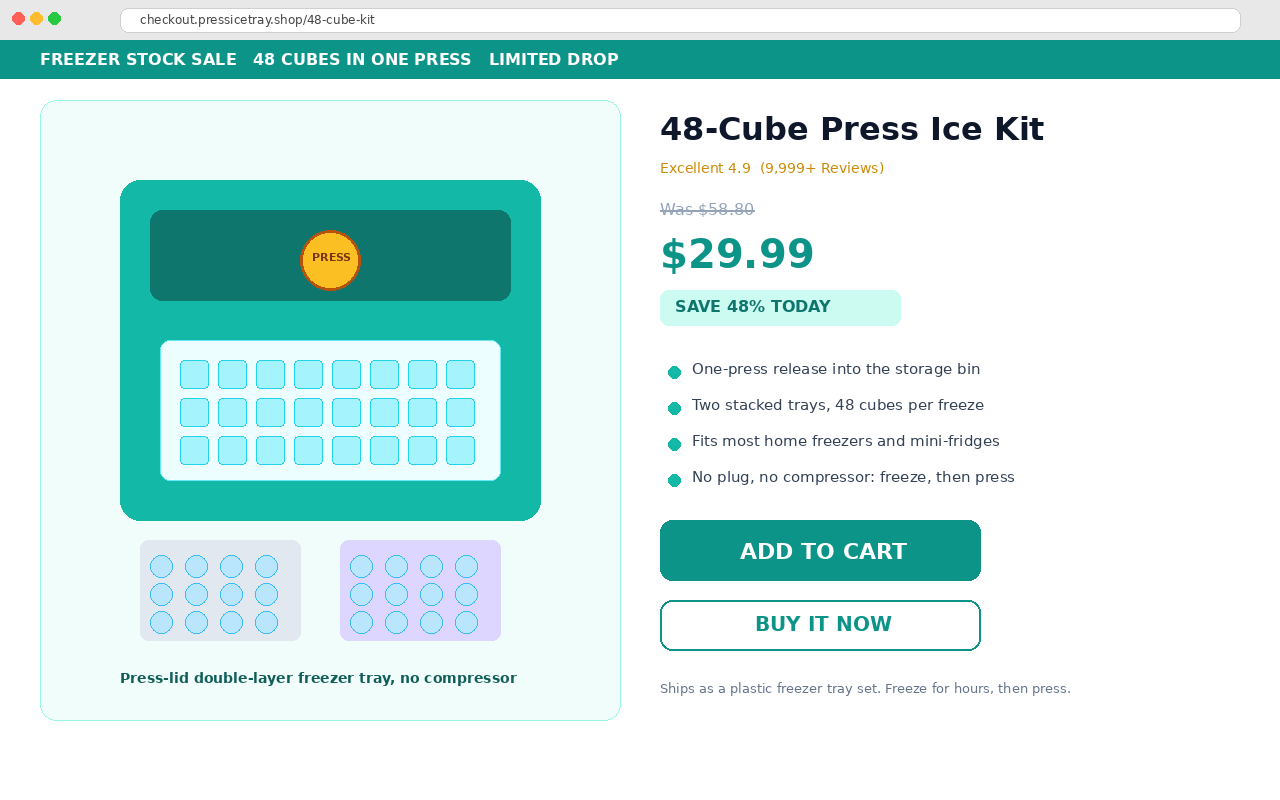
The satisfying moment in every video is the press, when cubes fall cleanly, hands stay dry, and the bin looks abundant. What the video underplays is the earlier step where the trays sat in a freezer long enough for water to become ice, often three hours or more depending on freezer temperature and fill level.
Honest accessory marketing can celebrate easy release after freezing. Overhyped marketing borrows the emotional payoff of that press and lets viewers infer an instant machine. Physics does not care about the inference.
4. Review-rate banners and strikethrough math inflate the bargain
Pages lean on excellent ratings with enormous review counts, save-half badges, and crossed-out prices that make $29.99 feel like a steal against a fictional $58 anchor. Those numbers matter less than the wholesale reality that near-identical kits often cost a couple of dollars before branding.
Mentioning a single example storefront once is enough for pattern recognition: thechicnorth.com has offered a portable household layer ice cube kit with press-lid imagery and heavy social-proof chrome. Neighboring boutiques remix the same plastic story under different lifestyle names.
5. Colorways and handles cosplay as appliance design
Green, white, and pink shells with carrying handles make the kit photograph like a gadget rather than a tray. Insulated bags and scoops widen the unboxing moment so the parcel feels premium even though the core function remains freeze, press, store.
None of those accessories create cold, and they only package the wait more attractively. Shoppers who wanted a plug-in maker for a dorm or RV without freezer space will discover the hard limit immediately: no freezer, no ice.
6. Wholesale twins reveal the tray origin story
Industrial and marketplace listings for press-type ice cube trays with lids and bins describe the same 24-plus-24 cavity layout, scoop, and demold plate. When a social store sells that silhouette as a viral ice maker, the marketing is doing work the plastic cannot finish.
That is why reading for a compressor, a power cord, and a harvest cycle matters more than the hero headline. If those parts are missing, you are looking at a freezer accessory wearing appliance vocabulary.
7. Checkout urgency finishes the sale before skepticism catches up
Limited drops, free-shipping lines, and buy-now buttons collapse the research window. By the time a buyer searches how long ice takes in a home freezer, the order confirmation is already waiting and the ad account has booked the conversion.
After payment, the experience often looks successful in the narrow sense that a colorful kit arrives. The disappointment arrives later, when the first party still requires overnight freezing and the word maker feels like the part of the ad that was doing the lying.
8. The same kit returns under new viral kitchen names
Because the underlying trays are cheap to mold and easy to film, the creative can migrate from hosting hacks to camping coolers to dorm essentials without changing the physics. Readers will keep seeing 48-cube press kits under new pastel brands for as long as the press moment outperforms the freezer disclaimer.
The product does not need to be a non-shipping ghost store for the pitch to mislead. It only needs ice maker language to outrun the quieter truth that you bought a press-lid freezer tray at funnel pricing.
What To Do If You Bought This Kit
1. Separate the trays you received from the machine you were sold
Open the box and ask what the device can physically do on your counter. If there is no compressor, no power cord, and no harvest cycle, treat it as a freezer tray system with a convenient press release. Do not keep calling it an instant ice maker in your own head just because the invoice title used machine language.
Write down the claims that convinced you to buy, especially any promises about instant cubes, countertop making without a freezer, or appliance-level output. Those notes help if you request a refund or dispute a charge for misrepresentation.
2. Use it honestly if you still want the accessory
Fill trays to the recommended line, freeze until solid, then press into the bin and refill if you need volume for a gathering. Plan hours ahead the same way you would with any tray. The press lid can still be useful once you stop expecting miracles from plastic.
If what you actually needed was continuous ice without babysitting trays, research a real compressor countertop maker with clear harvest times and power requirements. Compare noise, size, and water-tank cleaning needs before the next impulse click.
3. Use the refund window while evidence is fresh
If the store advertises a satisfaction path, start that process quickly and keep screenshots of the ice maker claims, the order confirmation, and the unboxing condition. Ask for a full refund when the item was sold as an instant or countertop machine but arrives as trays that only work inside a freezer.
If the merchant stalls, route the dispute through your card issuer or payment provider with the same evidence packet. Emphasize misrepresentation of product category rather than a vague change of mind.
4. Protect your feed from the sequel kitchen virals
After one conversion, platforms often show neighboring press trays, nugget-maker lookalikes, and pastel hosting gadgets with identical emotional beats. Mute or report the ads, and be wary of follow-ups that claim upgraded instant versions without showing a compressor.
Also stay alert for a different threat: fake free ice-maker giveaways that ask for shipping fees or card details under a major brand name. That is phishing territory, not this tray category, and it deserves a harder stop.
5. Recalibrate how you read appliance words on plastic
Before the next purchase, demand a clean answer to three questions: where the cold comes from, how long a full batch takes, and whether a power cord exists. Portable and countertop are not synonyms for compressor, and one-press release is not the same as one-press freezing.
Compare the unboxing reality with wholesale press-lid tray listings when the silhouette looks familiar. If industrial pages sell the same cavities as an ice tray kit while social ads sell it as a viral ice maker, believe the hardware category that matches the object.
6. Plan the party with physics instead of reels
If hosting is why you clicked, write a simple ice plan that starts the night before: how many trays or bags you need, where they freeze, and whether buying bagged ice is cheaper than another gadget. Share that plan with whoever helps set up so the next viral press kit does not become the entire strategy.
If money stress from stacked kitchen impulse buys is part of the fallout, include that in the conversation too. The goal is not to replay every cascading-cube clip you believed. The goal is to stop letting appliance buzzwords steer purchases that a freezer tray can only partially satisfy.
Hosts who entertain every weekend can still get value from a sturdy press-lid set if they treat it as batch prep rather than magic. The honest workflow is simple: freeze overnight, press in the morning, refill, and keep the bin closed so cubes do not pick up freezer odors before guests arrive.
What the viral pitch refuses to say out loud is that bagged ice from a grocery store will beat any tray kit on short notice, and a true compressor maker will beat both when you need continuous harvest without planning. The 48-cube category wins only when you already have freezer space and you want cleaner demolding than twist trays provide.
If an ad still will not show a power cord after you pause the video, believe the absence. Appliance words are cheap to typeset, and cold air inside a freezer remains the only engine these kits actually use.
The Bottom Line
Viral 48-cube ice makers sold through aggressive social ads are often press-lid double-layer freezer trays wearing appliance clothing. The storefront may ship a colorful kit, display refund copy, and stack review-rate banners with one-click release footage, yet the cold still comes from the freezer you already own.
Treat ice maker headlines as a question until you see a compressor, treat strikethrough bargains as fiction until you compare the $2 to $3 wholesale band, and treat party panic as a reason to slow down rather than a reason to hurry. If easier cubes are why you clicked, protect your expectations first: freeze ahead, or buy a real machine, and do not let a press lid pretend it invented ice.
The next ad will probably rename the pastel kit again, yet the tell stays the same. When the copy says instant portable ice maker, and the object in the photo is a double-layer tray that still needs hours in the freezer, you are not looking at a countertop appliance in miniature so much as overhyped plastic sold with borrowed machine gravity.

Reviews & discussion
0 commentsShare a firsthand experience, or ask a question.
Community reviews
Viral 48-Cube Ice Maker
Moderated reader experiences, not an editorial verdict.
Start the conversation
Have a question or something useful to share? Add the first comment.