

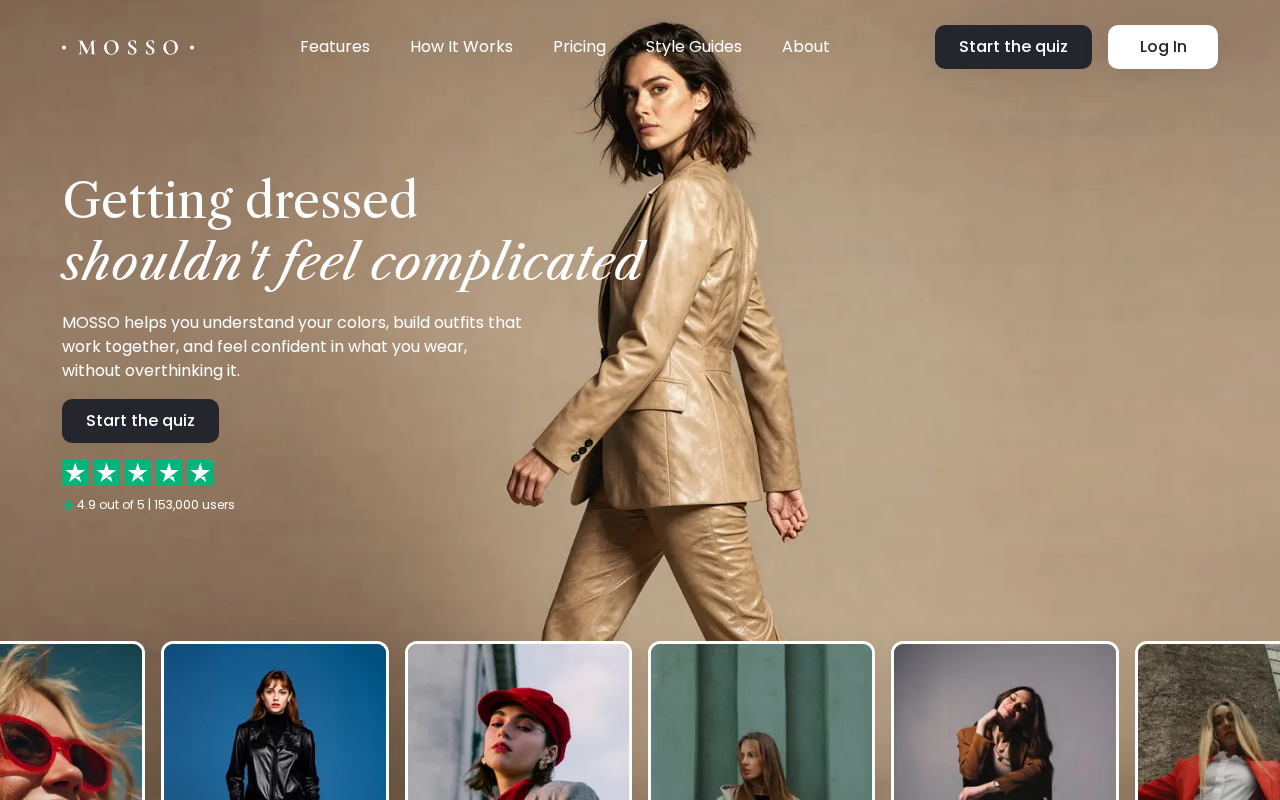
The quiz begins like a friendly closet coach, asking about your features, preferences, and lifestyle while promising that getting dressed should stop feeling complicated every morning before work or school drop off.
Lifestyle photography and a high star rating make Mosso feel like a calm stylist in your pocket rather than a subscription form waiting for a card. What arrives later for many shoppers is glitchy try on output, a color analysis upsell, and recurring charges under names like HELPMOSSOAI that do not feel like the one time experiment they thought they finished after the report landed.
Mosso is a real AI styling app operated with public terms naming Moonway LLC in Delaware. The overhype and the pain live in billing design and quality gaps that outrun the polished quiz, not in a missing website or an empty download page.
Overview
Mosso presents itself as a personal fashion stylist that helps you understand flattering colors, build outfits that work together, and feel more confident without overthinking every morning decision in front of a crowded closet. The funnel usually starts with a style and color quiz, then promises a personalized style report, capsule wardrobe guidance, and virtual try on so you can visualize combinations before you buy more clothes you will not wear past one weekend.
The public home for that pitch is the Mosso site, and the company paperwork shoppers meet in the terms identifies Moonway LLC, a Delaware entity with a Dover registered agent style address pattern common to many online services, as the provider behind the product experience. That corporate naming matters later when bank descriptors, support emails, and refund replies start using strings that do not look like the friendly quiz brand you remember from the Instagram ad.
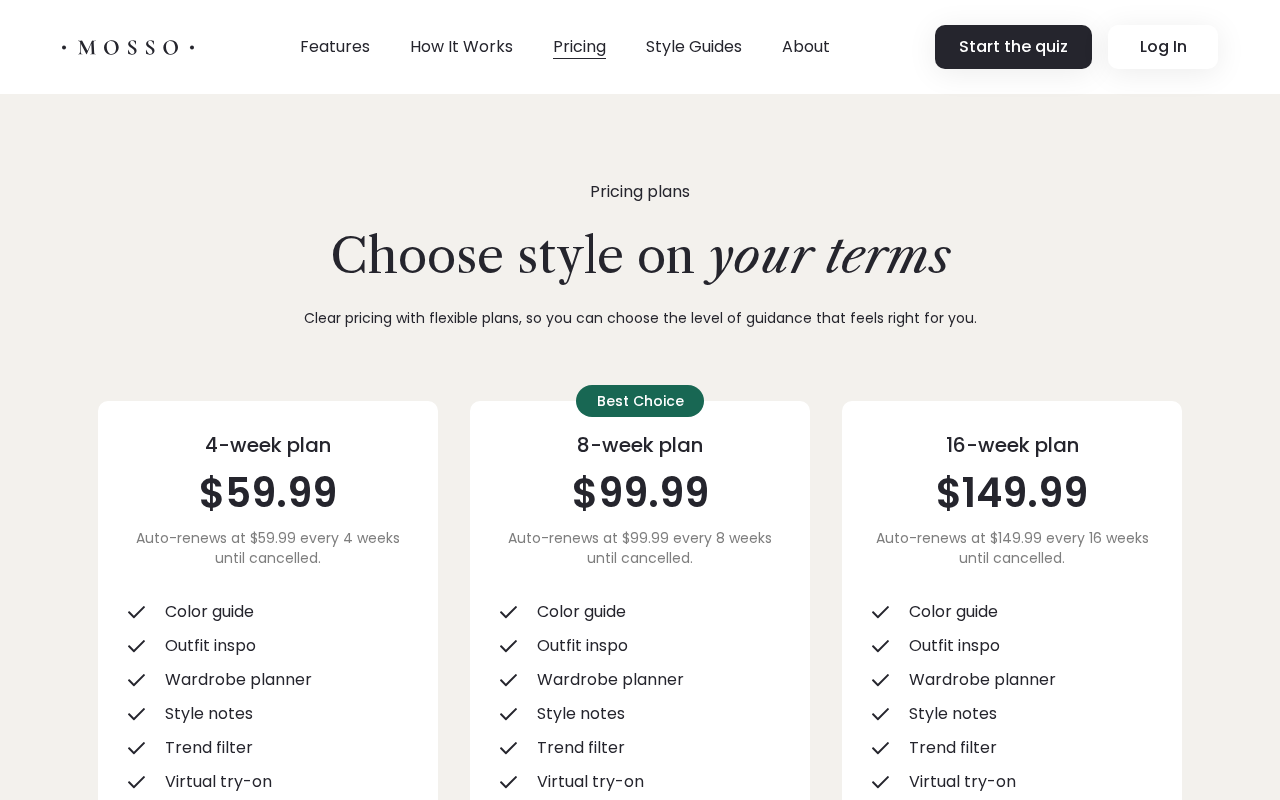
Public pricing currently advertises recurring plans rather than a simple one off download or a single stylist appointment fee. A four week plan appears at $59.99 and auto renews every four weeks until cancelled, an eight week plan appears at $99.99 with the same renew logic across a longer window, and a sixteen week plan appears at $149.99 with still longer renew cycles that continue until you actively stop them in the account.
User reports also describe smaller color analysis style purchases near the low twenties that later convert into HELPMOSSOAI charges near $58 and above, which matches the four week plan neighborhood even when the shopper believed they paid once for a PDF style report. That gap between a quiz fee feeling and a subscription reality is the billing trap this article focuses on, because it is where trust breaks even for people who liked parts of the advice.
Quality complaints focus on virtual try on hallucinations that ignore stated preferences, outfit suggestions that clash with the wardrobe the user carefully described, and recommendations that feel generic after a long questionnaire that asked for nuance. Those problems matter because the marketing sells precision, body awareness, and personalization that should reduce decision fatigue rather than create a second layer of second guessing in the mirror.
Refund friction shows up repeatedly in public reviews across Trustpilot style forums and complaint threads. Shoppers describe prompt cancellation requests answered with partial refunds, vague money back windows that nobody can calendar, or citations of digital content policies that treat almost any access as enough delivery to deny a full return. Terms language about immediate digital delivery and limited refunds supports that hard line even when the ad experience felt like a try before you commit wardrobe experiment with a human tone of voice.
None of this requires inventing a fake shop narrative, since Mosso ships an app experience, publishes pricing, and names a company entity. The overhype is the stylist certainty layered onto imperfect generators, and the trap is recurring money that is easy to authorize during a quiz high and hard to unwind after the first disappointing outfit batch.
This article treats Mosso as a real app with overhyped stylist claims and recurring billing traps. You may receive a report, palette guidance, and outfit suggestions that occasionally help. The risk is paying again and again for glitchy guidance while support treats the subscription as locked in after a short goodwill window that was never clearly timed in the ad.
How These Ads Work
1. A soft quiz lowers defenses before money language arrives
Ads and landing pages invite you to start a thoughtful quiz about colors, body archetype, and lifestyle instead of dumping a price table in the first screen. That sequence feels like self knowledge and care, which is why people answer carefully and emotionally invest before they see auto renew sentences in smaller type under a Start button.
By the time results are ready, the sunk time of the quiz makes paying feel like collecting a report you already earned through honesty about your closet. The funnel uses that psychological completion urge to push checkout while your critical reading energy is lowest and your hope for simpler mornings is highest.
2. Color analysis is framed like a one-time reveal rather than a seat
Creative often emphasizes discovering your palette, receiving a style report, and finally understanding which colors make you look rested on camera and in fluorescent offices. Those promises sound like a single deliverable, similar to a seasonal color appointment, rather than a recurring software seat that renews every few weeks whether you opened the app or not.
When a smaller analysis charge posts first, many shoppers reasonably assume the transaction is finished and the relationship is complete. Later HELPMOSSOAI renewals near the four week plan price feel like a second purchase they never meant to authorize, even if checkout text somewhere mentioned subscription language that scrolled past during excitement.
3. Virtual try on sells magic while output can ignore your inputs
Try on demos suggest you will see realistic outfits on a body that resembles yours, which is a powerful antidote to impulse shopping, return shipping fees, and fitting room fatigue after a long day. The feature is central to why Mosso looks more advanced than a static inspiration board or a random list of affiliate links.
Users nevertheless report generations that contradict preferences, fail to update after corrections, or propose combinations that feel random after a long questionnaire. When the magic layer glitches, the remaining product is mostly a report and shopping links, which is a steep price at roughly sixty dollars every four weeks for advice you could partially recreate with free tools.
4. Pricing cards make recurrence look like flexible guidance tiers
The pricing page presents four, eight, and sixteen week plans with identical feature lists and green best choice labeling on the middle tier that draws the eye toward a larger prepayment. The visual design suggests you are choosing a coaching intensity, while the fine print states each plan auto renews at the same price until cancelled through the account path.
Identical features across tiers mean you are mainly buying a billing interval and a psychological commitment, not a deeper human stylist who knows your city climate. That structure rewards the company with repeated charges and rewards hesitant shoppers with confusion about whether they bought a fixed package or an ongoing membership.
5. Bank descriptors and brand names diverge just enough to slow reaction
Charges appearing as HELPMOSSOAI or similar strings do not always match the soft MOSSO wordmark from the homepage hero with spaced letters. People searching their statement for Mosso can miss the line until days later, which compresses the time left for a clean dispute and for catching the next renew before it posts.
Moonway LLC in the terms is the durable entity name to remember when you contact a bank or write support with a formal tone. Keeping screenshots of the plan you clicked, the price, the date, and the email used at checkout helps more than arguing about how friendly the quiz felt during the first evening.
6. Refund policy language favors the merchant after any digital access
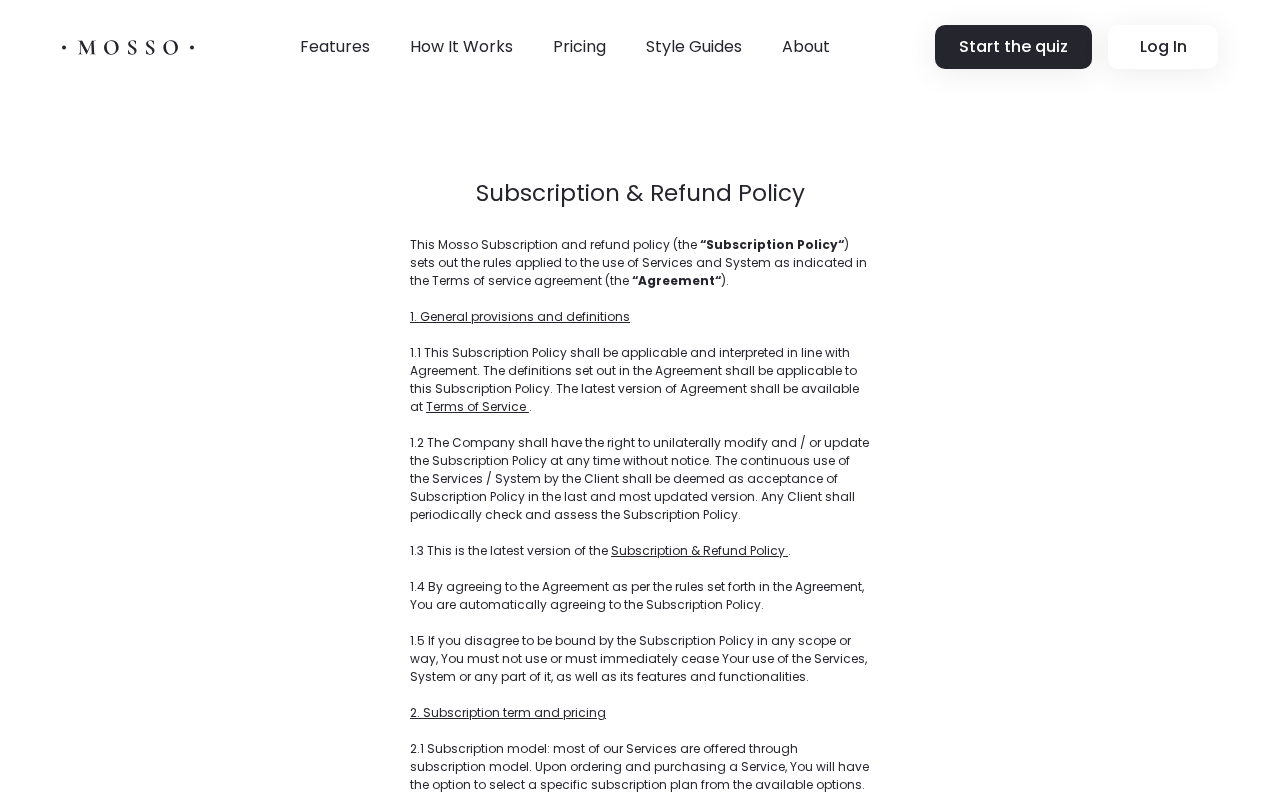
Subscription and refund policy text explains that most services run on recurring subscriptions and that digital content delivery can limit refunds once access begins, even if you barely opened the report. Support replies quoted by customers often offer fifty percent as goodwill after claiming a money back window has closed without clearly stating when that window started on the clock.
That pattern turns a styling experiment into a negotiation that rewards persistence more than fairness. If you only wanted a one time color report, you need to cancel immediately, document everything, and be ready to escalate beyond the first partial offer that sounds generous while still keeping half the money.
7. The stylist promise outruns what a quiz plus generators can reliably deliver
A human stylist can ask follow ups, notice fabric behavior under real light, and revise when a look fails in your actual hallway mirror. An AI quiz can approximate preferences and generate options at scale, yet it cannot absorb every constraint you live with across budget, climate, workplace dress codes, sensory comfort, and the clothes already hanging in your closet.
Overhype begins when marketing language treats that approximation as precision wardrobe engineering that finally solves morning stress forever. Recurring billing then charges premium coaching prices for an approximation that many users describe as inconsistent after the honeymoon screenshots fade and the same wrong silhouettes return.
8. Social proof and user counts soften the risk of a recurring seat
Homepages lean on star ratings and large user counts that make the quiz feel socially validated before you read a single renew sentence. Testimonials emphasize confidence and wearing what you already own, which sounds thrifty even while the plan prices sit near sixty dollars every four weeks.
Social proof is not a substitute for a cancellation rehearsal. Before you pay, open the pricing page, read the auto renew line aloud, and decide whether the stylist output would still be worth that cadence if the try on feature disappointed you on day two.
What To Do If You Are Stuck In Mosso Billing
1. Locate the exact merchant string and date on your statement before you argue about what you thought you bought during a late night quiz. HELPMOSSOAI style descriptors, Moonway references, and card processor names all help your bank map the charge to the checkout you remember from the color analysis flow.
2. Cancel inside the Mosso account controls immediately and request written confirmation by email so you have a timestamp independent of chat widgets that disappear after the session ends. Do not assume closing the app or ignoring outfit notifications ends a four week renew cycle that was authorized at checkout.
3. Save screenshots of the pricing plan you selected, any color analysis receipt near the low twenties, and the later recurring charge near $58 or higher if that sequence matches your case closely. Those images show the gap between one time expectations and subscription reality in a format banks understand.
4. Ask support for a full refund in plain language, cite the date you cancelled, and reject vague goodwill percentages if you never wanted a recurring seat after a report style purchase. If they refuse, keep the refusal email unedited for your card issuer packet and for any regulator complaint.
5. File a dispute with your card issuer when charges continue after cancellation or when the offer was presented as a one time analysis that converted without clear consent you can document with screenshots. Provide the images, emails, and a short timeline rather than a long emotional narrative about closet stress.
6. If you still want styling help after you escape the renew cycle, compare free retailer quizzes, library image search boards, and a single paid session with a human stylist against another auto renewing month at $59.99. Many people need accountability and fit feedback more than another generator with affiliate energy.
7. Watch your statement for at least two full renewal windows after you cancel, because some billing systems post one more cycle when cancellation lands late in the period or when email confirmations lag. Early monitoring beats discovering a surprise charge during a busy travel week when you lack time to fight.
8. Report deceptive subscription practices to consumer protection channels in your country when the funnel hid auto renew behind a quiz and a palette story. Pattern reports help investigators even when your individual refund is already decided by a bank and you personally have moved on.
The Bottom Line
Mosso is a real AI styling product with a polished quiz funnel, public pricing cards, and a Delaware company name in its paperwork rather than a blank phishing page with stolen photos of someone else’s closet.
The overhype is precision stylist language sitting on top of glitchy try on behavior and color analysis framing that too often converts into HELPMOSSOAI renewals near sixty dollars every four weeks. Refund replies that lean on digital delivery rules deepen the trap after the ad made the purchase feel like a single report you could pocket and forget.
Take the quiz only if you are willing to pay for a recurring seat at the posted plan price and cancel on day one if the output fails your real wardrobe. Read the auto renew line before you chase closet calm, because wardrobe clarity is not worth an accidental membership you have to fight through partial refunds to escape.

Join the discussion
0 commentsShare your experience or ask a question about this article.
Discussion
Start the conversation
Have a question or something useful to share? Add the first comment.