

The ad promises sharper vision at every distance with one lightweight pair, which sounds like the end of juggling readers, screen glasses, and a second pair for the grocery aisle after sunset.
Product pages talk about progressive multifocal technology, blue light blocking, and automatic adjustment when you look near or far, sometimes under brand frames that also say no optometrist visit is required to get started. What independent chart tests keep finding is fixed magnification sold with adaptive theater, not a mechanism that rewrites your prescription on the fly for whoever opens the box.
VisionSync style multifocal readers are overhyped optics marketed as adaptive vision for everyday life. They are distinct from other viral glasses brands with different names and different funnels, and they are not a substitute for an eye exam when your sight is changing or when driving safety is on the line.
Overview
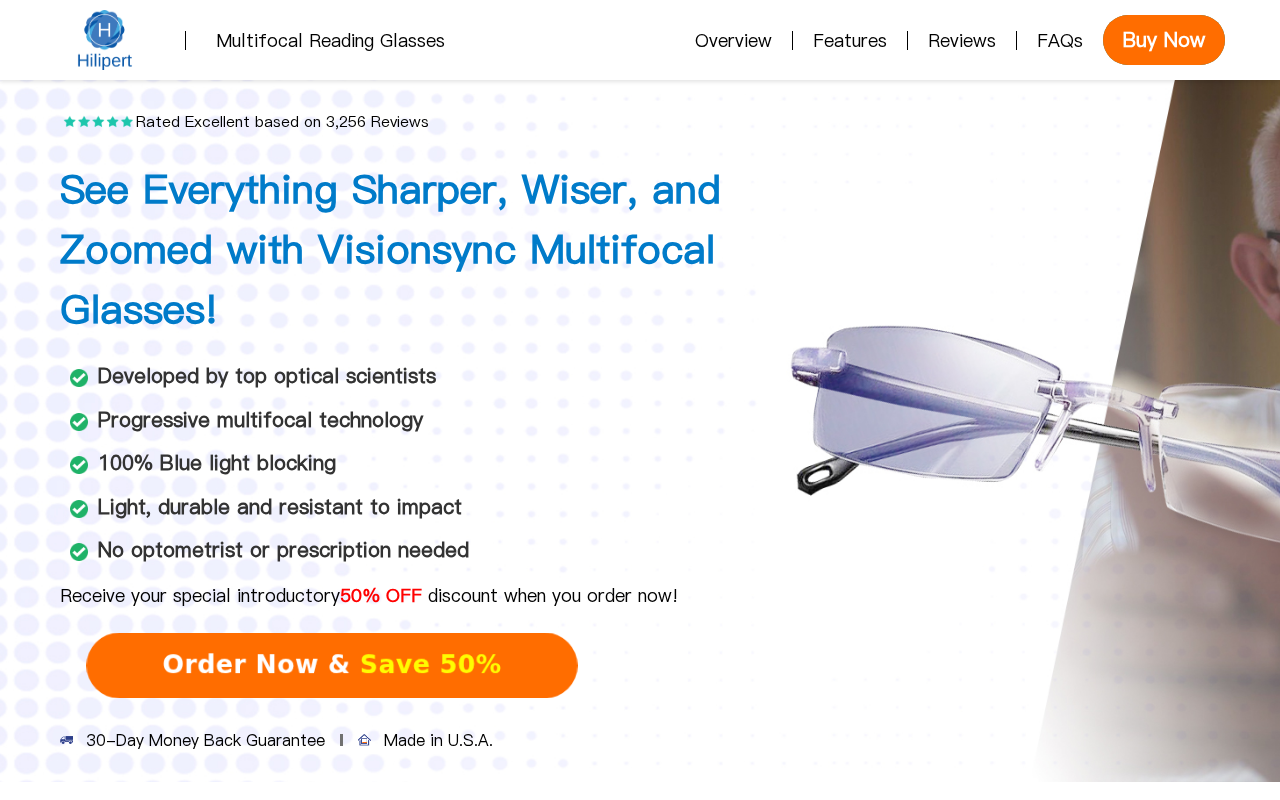
VisionSync multifocal glasses are sold through direct response pages that describe progressive zones for distance, intermediate, and near tasks inside one frame that looks like ordinary eyewear you might wear to a cafe. Marketing often adds adaptive or intelligent language, wide corridor claims, German engineering vibes without clear factory proof, and lifestyle stories about reading to grandchildren, driving, and working on screens without swapping pairs every hour.
One live claim home for that pitch is the VisionSync glasses site, where FAQ style copy has told shoppers they do not adjust lenses because the product supposedly adjusts when you look at different distances across a diopter range pitched as broadly useful. Related retail pages also describe three continuous zones and adaptive lens technology while pricing the pair far below custom progressive lenses from an optician who measures your eyes in person.
Build quality in hands on reviews is often described as light plastic or thin rimless styling that feels flimsy compared with prescription frames you trust for daily wear and for accidental drops. That alone does not make the product fraudulent or invisible in the mail. It does clash with premium engineering stories that appear beside fifty percent off banners, countdown urgency, and claims that you can finally retire every other pair in the house.
Independent testers who compared VisionSync style pairs against a Snellen chart and against their own prescription glasses report worse acuity with the product on, sometimes worse than unaided vision for distance tasks that matter for street signs. They also note the absence of any movable optical element, fluid lens, electronics, or mechanical adjuster inside the transparent or open frame that would allow true adaptive focus across different people and different working distances in one afternoon.
Fixed readers and inexpensive progressive readers can help some people with near work when the magnification happens to match their needs for a paperback or a phone. They cannot replace a refraction for astigmatism, unequal prescriptions between eyes, prism needs, medical eye disease, or accurate distance correction for night driving. Ads that say you can see everything sharply without an optometrist visit erase those limits for the sake of conversion and for the sake of a simpler checkout story.
This subject is also easy to confuse with other viral glasses funnels that use different brand names and slightly different claims in the same social feed week after week. VisionSync should be judged on its own pages and its own hardware, not blended with unrelated products simply because algorithms push eyewear to adults who recently searched for readers or progressive lenses.
Clinically, the safer mental model is simple and slightly boring on purpose. If a pair helps you read a label at arm’s length and costs little, it may earn a drawer slot as a backup tool. If a pair claims adaptive vision that replaces exams and custom lenses, you are listening to advertising gravity rather than optics, and you should slow down before you trust it on a highway.
This article treats VisionSync multifocal glasses as overhyped fixed reading style optics sold with adaptive vision language. You may receive a wearable pair of glasses in a box with a cloth and a case. You should not treat them as medical eye care, and you should not expect a sticker price miracle to outperform a prescription that was measured for your eyes by someone who can also check your eye health.
How These Ads Work
1. Multi distance frustration becomes the emotional hook
Creatives open on the annoyance of owning several pairs, losing readers around the house, and squinting at phones then road signs in the same afternoon while hunting for the right case. That frustration is real for many adults over forty, which is why a one pair solution feels like relief instead of a gadget impulse bought under a flashing timer.
Once relief is the frame, technical skepticism drops faster than it should for a medical adjacent purchase. People stop asking how a mass produced lens can match every face and every prescription, and they start asking how fast shipping arrives under the discount clock that always seems to be ending tonight.
2. Adaptive and intelligent wording upgrades ordinary progressive talk
Progressive multifocal readers are a known category with fixed zones that you learn to look through after a few days of awkward head posture. Ads upgrade that category with adaptive, automatic, and intelligent phrasing that implies the lens itself changes for you the way an autofocus camera changes when a subject moves.
FAQ lines that say you do not adjust anything because the glasses adjust for distance are the clearest version of that upgrade on pages that want zero friction. Without a mechanism that can change power, the sentence is marketing poetry around fixed plastic, not a description of hardware behavior you could demonstrate on a workbench.
3. Chart tests collapse the adaptive story in ordinary living rooms
Testers who put the glasses on and read a Snellen chart against their prescription pair repeatedly show blur arriving earlier on the chart, not clarity expanding to smaller lines. Distance letters that were readable with Rx lenses become mush, and there is no settling period where the lens suddenly locks onto the right focus for a new person with a different refraction.
That outcome matches fixed magnification behaving like readers tuned for near work, not like custom progressives measured for your pupillary distance and your exact adds. If the product helped everyone adaptively, chart performance would not crater for people who already have working prescriptions and who know what clear distance vision feels like.
4. No adaptive mechanism appears when you inspect the frame carefully
Hands on inspections of clear or open frames show ordinary lenses seated in plastic or thin metal without pumps, dials, liquid chambers, Alvarez style sliders, or electronics that would explain automatic focus. There is nothing to tune when a second person with a different prescription puts the same pair on and expects a personal correction.
True adjustable eyewear that changes power exists in specialized products with obvious controls or sophisticated optics, and those designs do not look like a silent discount reader sold under a fifty percent banner. VisionSync style ads borrow the fantasy of adjustment while shipping the geometry of a fixed lens that cannot renegotiate physics for each face.
5. Discount theater and review counts replace optical evidence
Pages lean on fifty percent off banners, made in USA badges, money back timers, and thousands of reviews that are difficult for a casual shopper to audit for duplicates or incentives. Those trust marks are common across direct response eyewear and do not answer whether the lens power matches your eyes or whether distance blur is safe for driving.
Optical evidence would be measured powers from a lensometer, verified progressive corridors, and clinical comparisons published with methods. Instead the funnel offers lifestyle photos, star stacks, and a promise that you can skip the optometrist, which is a dangerous shortcut when vision changes can signal medical problems that ads never mention.
6. Blue light and gaming extras pad the feature list without fixing focus
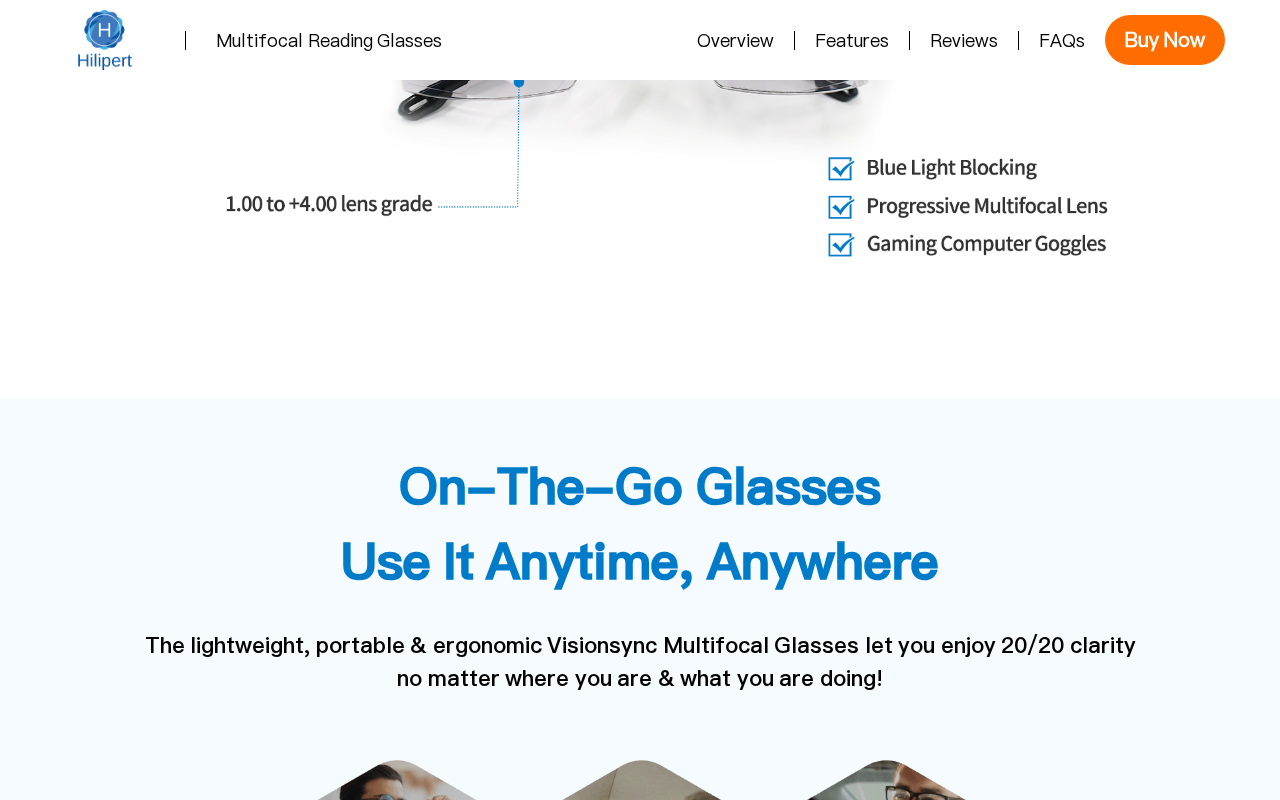
Feature checklists add blue light blocking, gaming computer goggles language, and impact resistance claims beside the multifocal story so the pair feels modern. Extra adjectives make the product feel like a complete digital age solution rather than a cheap reader with a gradient and a glossy landing page.
Coatings can be real and still irrelevant to the core overhype about adaptive clarity. If the magnification is wrong for your distance needs, a purple reflection on the lens will not restore letters on a chart, subtitles on a television across the room, or road signs at night in the rain.
7. Health risk hides inside the convenience pitch about skipping exams
Skipping an eye exam to save time can delay detection of glaucoma, diabetic retinal changes, macular problems, or simple prescription drift that affects driving safety for you and for everyone sharing the road. Overhyped readers become harmful when they replace care rather than sitting in a drawer as an emergency near pair for a hotel Bible or a menu.
A responsible purchase decision treats these glasses as optional readers at best and as a marketing experiment at worst. Any sudden vision change, headaches, double vision, eye pain, or difficulty driving deserves a professional exam rather than another viral pair from a feed that profits when you avoid the clinic.
8. Brand confusion in the feed keeps the category feeling larger than one SKU
Social platforms rotate similar eyewear creatives with different logos, which makes shoppers feel as if the whole internet agrees that adaptive glasses finally arrived. That consensus is an ad auction artifact, not a clinical consensus from optometry organizations.
Keeping VisionSync separate from other funnels helps you chase the correct refund desk and the correct evidence. It also prevents you from smearing unrelated products that may be ordinary readers sold with quieter claims and fewer medical adjacent promises.
What To Do If You Bought VisionSync Style Glasses
1. Stop using the glasses for driving, cycling, operating machinery, or any task where misjudged distance could cause injury, because fixed blur is not a training period that magically resolves for every wearer after a weekend. Safety comes before sunk cost arguments about the discount percentage you already congratulated yourself for catching.
2. Book an eye exam if you bought the pair because your vision has been changing, because advertisements are not a refraction and cannot rule out medical causes that need treatment rather than shopping. Tell the clinician what you have been wearing so they understand your recent visual environment and can advise you clearly.
3. Request a refund under the merchant money back policy while the window is open, and ship the pair with tracking if a return label or address is required by the seller. Keep the order email, the product page claims about adaptive adjustment, and photos of the plain lens assembly without hidden machinery.
4. If the seller refuses despite an advertised guarantee, escalate with your card issuer using a misrepresentation packet that quotes adaptive language beside the absence of any adjustable mechanism in the frame. Stick to documented claims and dated screenshots rather than insult contests in support chat that go nowhere.
5. Do not mix this product in your mind with unrelated glasses brands that appear in neighboring ads with similar grandparents and similar blue reflections. Different funnels use different factories and different copy, and your refund path follows the exact site and card descriptor that charged you.
6. If you need multifocal correction that works across a desk and a dashboard, plan for a measured progressive or occupational lens from an optician who fits corridor width and pupillary distance to your face. Cheap readers can still help at a nightstand for a medicine bottle, yet they are not the same tool as a custom lens.
7. Be skeptical of any future ad that promises twenty twenty clarity across all distances with no exam, no custom measurement, and no discussion of astigmatism. Convenience language is the tell that optics have been replaced with storytelling optimized for clicks rather than for acuity.
8. Teach relatives who click health gadgets to separate readers from medical care, especially older adults targeted with grandparent lifestyle creatives and huge review counts. A loving share of an ad is not a diagnosis and should not delay a real appointment that might catch something an adaptive slogan cannot fix.
The Bottom Line
VisionSync multifocal glasses arrive as wearable eyewear with progressive reader marketing, discount urgency, and adaptive vocabulary that suggests the lens will meet you wherever you look without a clinic visit.
Hands on chart comparisons and frame inspections keep pointing to fixed magnification without an adaptive mechanism, which is why acuity can look worse than a real prescription and sometimes worse than no glasses for distance tasks. Blue light extras and review badges do not repair that mismatch between poetry and plastic.
Use readers only when they honestly help near tasks you can test at home, and keep eye care with professionals when sight matters for safety and for long term health. Overhyped adaptive claims are a sales costume on fixed lenses, not a reason to skip the exam you already know you should schedule this year.

Join the discussion
0 commentsShare your experience or ask a question about this article.
Discussion
Start the conversation
Have a question or something useful to share? Add the first comment.