

A stock tip chat scam can begin with a message that appears oddly specific. The sender knows the exchange, the ticker, and the exact moment the price is supposedly ready to move.
Inside the attached chat group, dozens of members seem to agree. Some post winning trades, others thank the mentor, and almost nobody asks the uncomfortable question: who benefits when everyone buys the same small stock?
Overview
The chat is built to manufacture confidence
A stock tip chat scam rarely begins with a demand to wire money. It begins with useful-looking market commentary, a friendly mentor, and a group full of people who appear to be making sensible trades.
Early recommendations may even rise. That does not prove the mentor has special access. The scammers can highlight ordinary market winners, delete failed predictions, and use accomplices to celebrate selected calls.
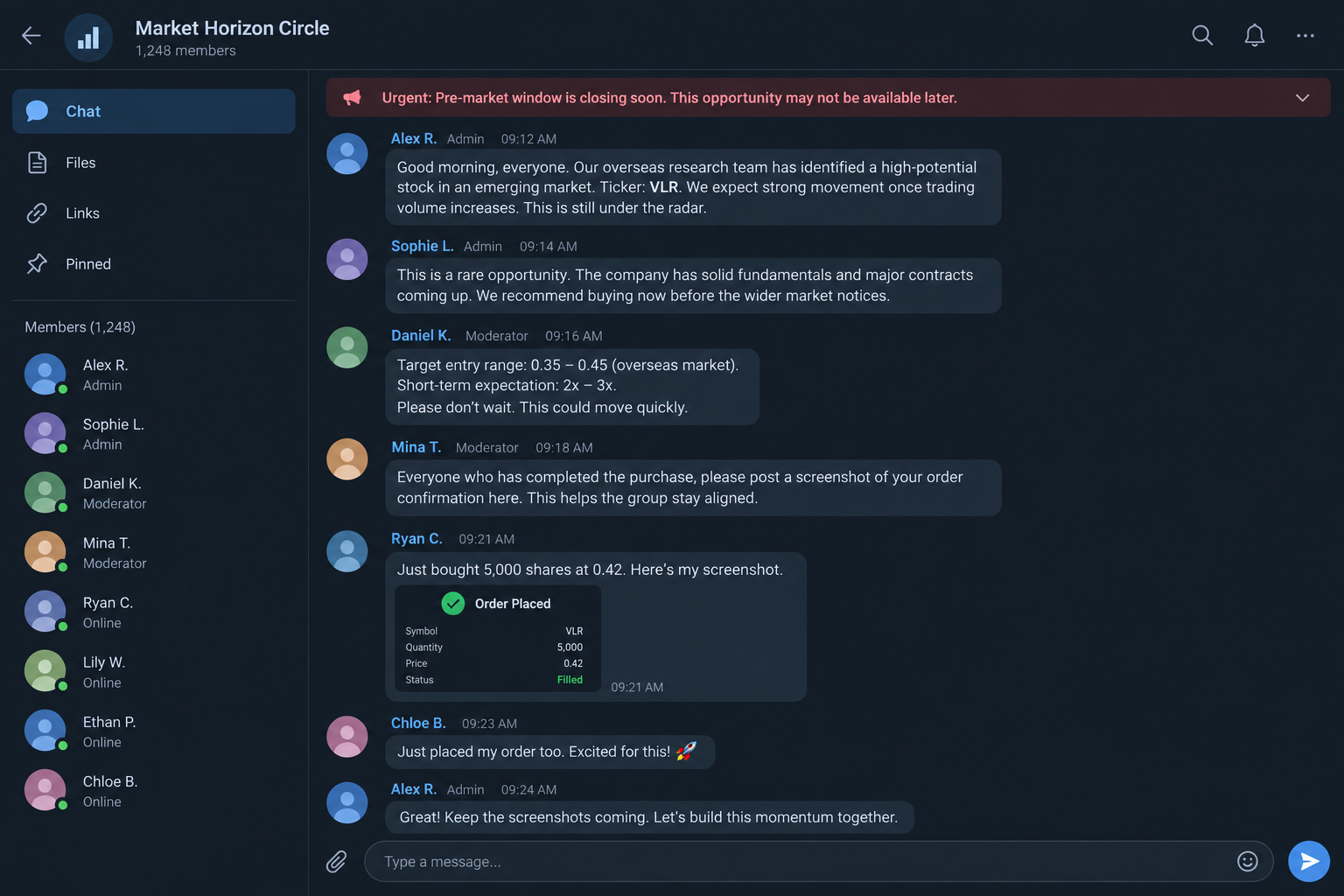
Once members trust the room, the conversation narrows to one overseas-listed company. The stock is described as overlooked, undervalued, or about to receive news that the public has not understood yet.
The victim buys real shares in a manipulated market
This scheme can be confusing because the brokerage account may be genuine and the shares may really exist. The deception sits in the recommendation and the artificial demand behind it.
Fraudsters and their partners already hold the promoted shares. They need outside buyers, so the chat supplies a coordinated wave of demand while making each victim believe the decision is personal.
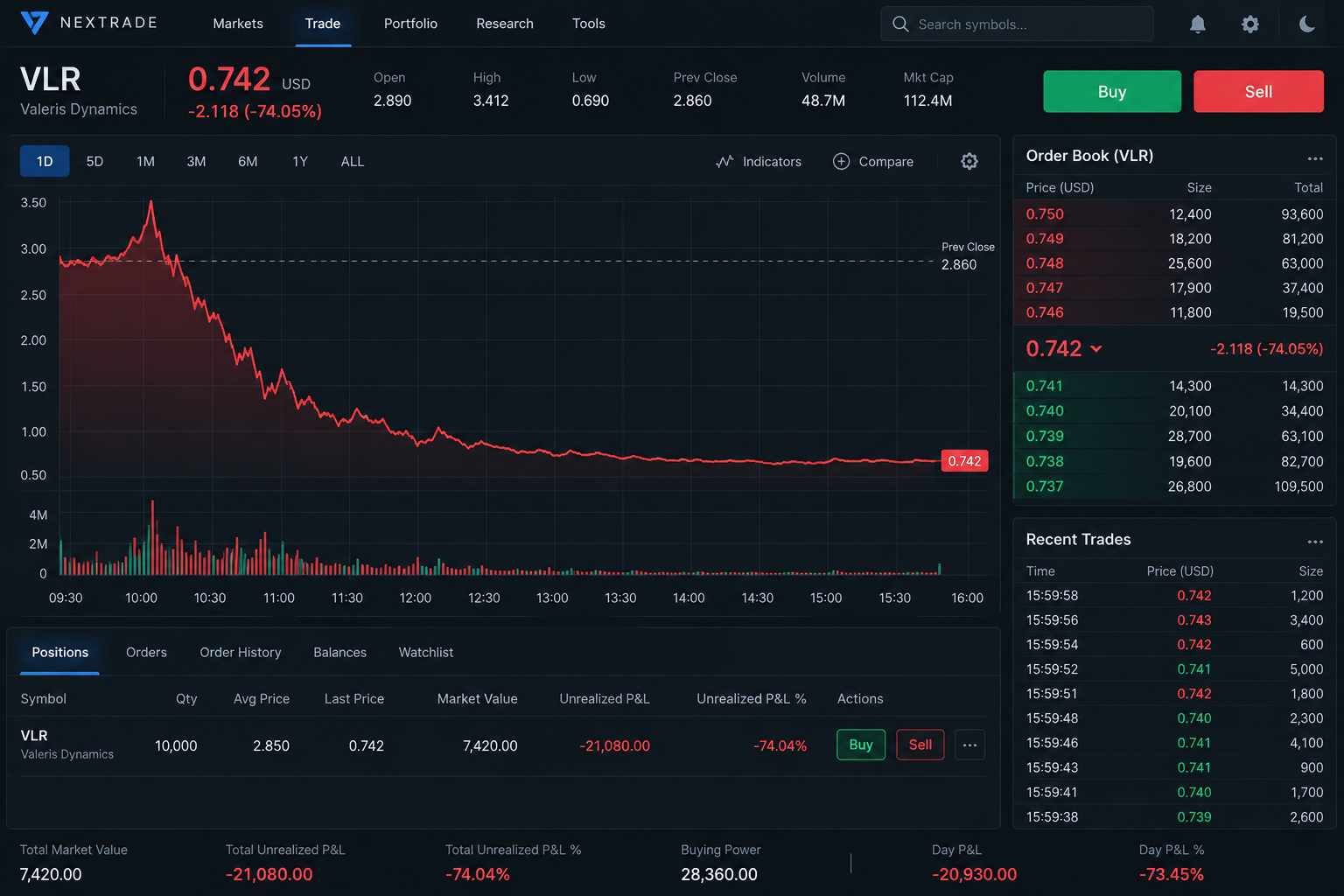
When enough members buy, the promoters sell their holdings. The price loses its artificial support, sometimes within minutes, and late buyers are left owning stock that may be difficult to sell.
Police have documented the same coordinated pattern
The Singapore Police Force warned about this exact campaign in September 2026. At least 21 cases had been reported since July.
In one example cited by police, five victims bought 1,037,000 shares in a Hong Kong-listed company after an expert’s recommendation. The price fell almost 75% within a week, creating combined losses above HKD4.6 million.
Common warning signs include:
- an unsolicited invitation to a Facebook, WhatsApp, or Telegram investing group;
- a mentor who claims to know when an overseas stock will surge;
- constant profit screenshots from members who never discuss losing trades;
- pressure to buy immediately after the ticker is revealed;
- a thinly traded company with little independent analyst coverage;
- requests to send screenshots proving how many shares you purchased;
- promises that the mentor will reimburse any loss;
- excuses, silence, or a new opportunity after the promoted price collapses.
A Real Brokerage Account Does Not Make the Tip Honest
Many online investment scams send victims to a fake platform. A pump-and-dump campaign can do something subtler: it tells victims to buy an actual security through their own broker.
That detail lowers suspicion. The victim sees a recognizable exchange, a real ticker, and a completed order in an account they already use. None of those facts verifies the promoter’s claims.
The crucial question is whether demand arose from genuine information or coordinated promotion. If the people giving the advice hold the stock and plan to sell into the buying they created, the market is being used as the payment channel.
Small-cap and low-liquidity shares are attractive to manipulators because a concentrated burst of orders can move the price. A widely traded company requires much more money to create the same visible effect.
The chart can reinforce the story. As members rush to buy, the rising price looks like confirmation that the mentor was right. In reality, the group itself may be producing the movement.
The screenshot request is another clue. An honest commentator does not need proof that strangers followed a public opinion. A promoter may want those screenshots to measure buying pressure, calculate commissions, or decide when to sell.
Loss guarantees are especially dangerous. No stranger in a private chat can remove market risk, and a promise is worth little when the person can delete an account and vanish.
How the Stock Tip Chat Scam Works
Step 1: A mentor offers accessible market guidance
The approach may come through a social media post, direct message, sponsored ad, or unexpected group invitation. The pitch sounds educational rather than reckless.
Members are promised research, trading lessons, or a community where beginners can learn from experienced investors. Charging a small membership fee can make the group appear more professional.
Step 2: Early calls build a believable track record
The mentor discusses familiar companies and may recommend shares already moving with public news. Successful calls are repeated, while misses receive little attention.
Fake members post grateful messages and screenshots. Because these accounts appear unrelated, newcomers mistake coordinated promotion for independent approval.
Step 3: The group reveals a high-potential overseas stock
After days or weeks, the mentor announces an exclusive opportunity. The company is often small, lightly traded, and listed in a market that group members do not routinely research.
The pitch may mention an acquisition, government contract, institutional buyer, or secret strategy. The evidence remains vague because the urgency is meant to replace verification.
Step 4: Members are told to buy at once
Administrators give a ticker, target price, and narrow buying window. Private messages reinforce the instruction and warn that hesitation will mean missing the move.
Some victims are asked to buy a precise quantity or submit an order screenshot. That gives the operation visibility into the group’s combined demand.
Step 5: The buying creates the appearance of success
Orders from the group can push up a thinly traded share. The rising chart excites members, confirms the mentor’s prediction, and attracts buyers outside the chat.
Victims may increase their positions because the call appears to be working. This is often the moment when the promoters obtain the best exit price.
Step 6: Insiders sell while members are told to hold
The fraudsters unload shares into the demand they created. Group messages may still promise a larger target so victims do not sell while the promoters exit.
Once coordinated support disappears, the price can fall rapidly. Limited trading volume may prevent victims from selling near the price shown on screen.
Step 7: The mentor explains away the collapse
Administrators blame short sellers, market makers, unexpected news, or members who disobeyed instructions. Promised compensation is delayed or tied to another trade.
The group may close, change its name, or promote a new ticker. A victim chasing the first loss can then be pulled into a second manipulation.
What Makes an Online Stock Tip Verifiable
Start with information that exists outside the chat. Read the issuer’s regulatory filings, official announcements, financial statements, and exchange notices. Search for the claimed event rather than a copied summary posted by the mentor.
Look at trading volume and market capitalization. A sudden social-media campaign around a low-volume company deserves more caution than ordinary discussion of a heavily traded stock.
Search the promoter’s name and business through the appropriate securities regulator. Registration does not guarantee good advice, but an unverifiable identity removes an important layer of accountability.
Ask whether the promoter owns the stock, receives compensation, or has a relationship with the issuer. Refusal to discuss conflicts matters more than a polished biography.
Do not rely on the group’s chart. Compare price and volume over several months through an independent market-data source. A sharp rise immediately after coordinated messages may be the warning, not the opportunity.
Give the idea time. Genuine public information remains available long enough to read. A demand to buy before you can complete basic research protects the promoter’s timetable, not your portfolio.
Never assume a loss guarantee is real without an enforceable agreement from a regulated entity. A direct message promising reimbursement cannot make a risky share safe.
Why Smart Investors Still Get Pulled In
The campaign uses several true details at once. The company exists, the market is real, the share can be purchased, and the price may initially rise. That mixture makes the false conclusion feel earned.
Group consensus also changes how risk feels. When many profiles report buying, waiting seems more dangerous than acting. The victim worries about missing a move rather than questioning who controls the room.
Scammers often avoid cartoonish promises. They speak about liquidity, support levels, catalysts, and position sizing. Familiar vocabulary can disguise the absence of independent evidence.
A profitable early recommendation becomes an emotional anchor. Victims may treat it as proof of expertise even when the call was selected after the stock had already begun moving.
The price rise completes the illusion. People naturally trust visible market movement more than a private message, yet in this scheme the private group may be causing that movement.
None of this means the victim was careless. Manipulation is designed to make separate pieces appear independent when they were arranged by one operation.
The Questions to Ask Before You Place the Trade
Ask why the opportunity must remain inside a private chat. If the investment case is genuine, its important facts should be visible in exchange filings, audited accounts, or public company announcements.
Ask why the timing is measured in minutes. A promoter who will not allow independent research is protecting a coordinated buying window, not helping you understand the business.
Finally, ask what happens if nobody in the group buys. If the answer is that the predicted surge depends on members acting together, the chat may be creating the demand it claims to foresee.
Company, Address, and Fulfillment Checks
The promoter needs a traceable regulated identity
Confirm the person’s full name, firm, license, and disciplinary history through the relevant securities regulator. Contact the registered firm using independently sourced details.
A profile badge, certificate image, or business card in the group is not independent confirmation.
The company’s address must lead to the same legal entity
Compare the chat profile, website terms, regulator entry, corporate record, and payment details. Different names or jurisdictions require a clear explanation.
A prestigious office tower in a signature proves only that somebody knows the address.
Support should exist outside the private group
Check whether the firm has a public telephone number, compliance contact, and documented complaint process. Call the official number and ask whether it operates the group.
If the mentor, administrator, and complaint desk are the same account, there is no independent escalation path.
The recommendation must have a traceable evidence trail
Real research identifies sources, assumptions, risks, and conflicts. A mystery catalyst, disappearing post, or screenshot without an original filing cannot be audited.
Keep copies of every claim before buying. If the promoter discourages that record, walk away.
What to Do if You Have Fallen Victim to This Scam
- Stop following the group’s instructions. Do not buy more to average down and do not enter a second ticker offered as compensation.
- Contact your broker immediately. Explain that you believe the trade resulted from coordinated manipulation. Ask what can still be canceled and how to preserve order records.
- Save the complete evidence. Export chats, capture usernames, telephone numbers, ticker instructions, timestamps, screenshots, voice notes, and promises to reimburse losses.
- Report the manipulation. Notify the exchange, securities regulator, and local police. US investors can also submit details to IC3.gov.
- Secure financial and email accounts. Change reused passwords, enable multifactor authentication, and remove unfamiliar sessions or connected apps.
- Check the device if files were opened. If the group supplied an app, attachment, or installer, disconnect the device and run a full Malwarebytes scan for credential-stealing malware.
- Block the route back to the campaign. AdGuard can reduce exposure to known malicious ad destinations and redirects, but it cannot judge whether a stock tip is honest.
- Tell a trusted person. A second set of eyes can help review the timeline and resist pressure to recover the loss through another urgent trade.
- Watch for identity misuse. If you sent identification or account statements, monitor credit files and ask the issuing authority about protective measures.
- Reject guaranteed recovery offers. Anyone demanding an upfront fee to recover a market loss may be targeting the victim again.
Frequently Asked Questions
Is every private stock chat a scam?
No, but a private group provides no automatic proof of expertise or honesty. Verify the promoter, evidence, conflicts, and company independently before trading.
Can a pump-and-dump use a real listed company?
Yes. The shares and brokerage trade can be real while the claims and coordinated promotion are deceptive.
Why do scammers request purchase screenshots?
The images may help them measure demand, verify that an accomplice recruited a buyer, and choose when insiders should sell.
Does an early profitable tip prove the mentor is legitimate?
No. The result may reflect public momentum, selective reporting, or a deliberate trust-building stage before the manipulated recommendation.
Should I buy more after the price collapses?
Do not follow the promoter’s recovery instructions. Speak with a licensed independent adviser and report suspected manipulation before making another decision.
Can police or a regulator recover the loss?
They may investigate and freeze identifiable proceeds, but recovery is not guaranteed. Fast reporting and complete records improve the available options.
The Bottom Line
A stock tip chat scam turns a private group’s enthusiasm into real buying pressure, then leaves ordinary investors holding the shares after insiders sell.
The broker, ticker, and rising chart can all be genuine without making the recommendation honest. If a mentor controls the room, demands immediate purchases, and asks for proof, stop and investigate who benefits before placing the order.








