

“Adaptive” glasses that supposedly handle every reading distance without an eye exam sound like a clever shortcut. The Alpine Wear promotion turned that promise into an impulse purchase.
Today, the original storefront no longer sells anything. Its disappearance, the product’s continued circulation, and a remarkable complaint record tell a much less futuristic story.
Overview
What Alpine Wear advertised
Alpine Wear marketed VisionSync Multifocal Glasses as adaptive eyewear. The offer suggested one pair could adjust across distances and suit buyers within selected age ranges.
The product page used a discounted price, technology language, and easy online ordering. Shoppers did not need to provide a proper optical prescription.
What buyers say arrived
Numerous public reviews describe lightweight fixed-strength reading glasses rather than an adaptive optical device. Complaints also mention slow shipping, weak support, and return difficulties.
These are customer allegations, not laboratory findings. Their volume and consistency nevertheless create a significant warning that the delivered item differed from expectations.
Why we classify this as a scam
The combination is unusually strong: extraordinary technology claims, extremely poor independent feedback, a reported mismatch, return obstacles, and an expired original domain.
Key findings include:
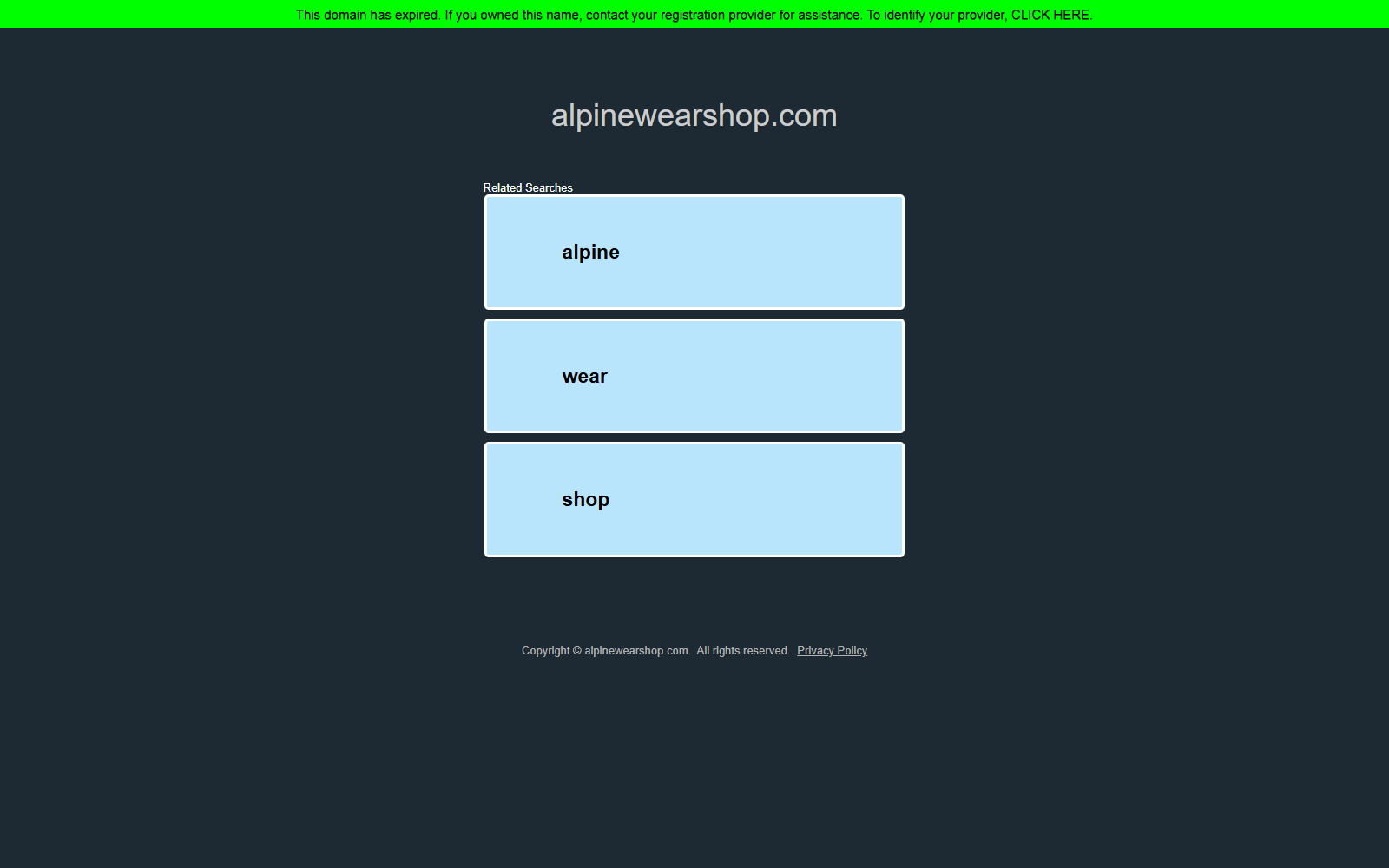
- Alpinewearshop.com now displays an expired-domain page
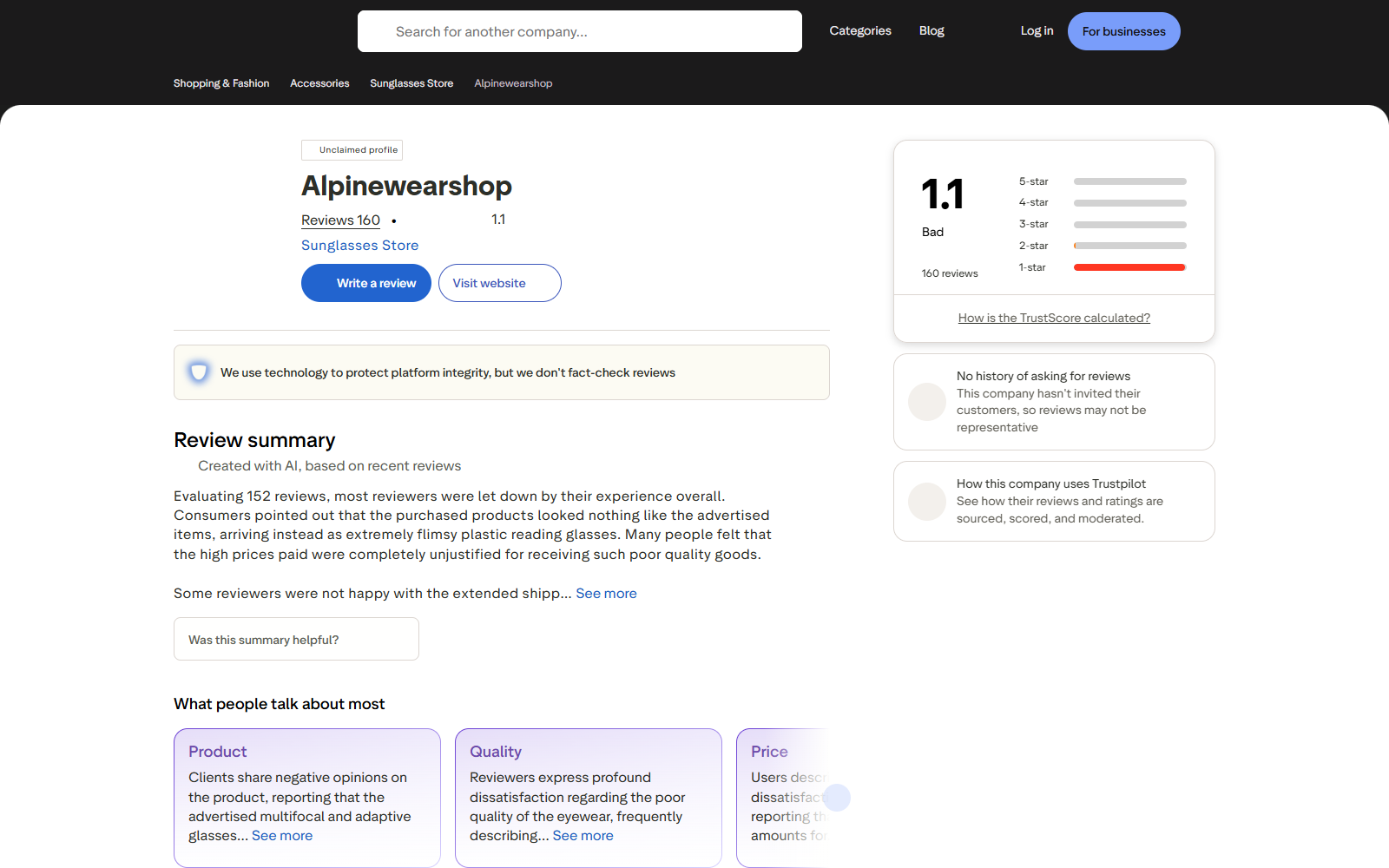
- Trustpilot showed a 1.1 score from 160 reviews during our check
- The review profile was overwhelmingly concentrated at one star
- Customers repeatedly described ordinary or flimsy readers
- A BBB Scam Tracker report described a product mismatch
- Near-identical VisionSync listings continue on other storefronts
This evidence goes beyond ordinary disappointment. It indicates a product offer whose central “adaptive technology” story was not supported by typical buyer experiences.
The Adaptive-Glasses Promise Does Not Make Optical Sense
Presbyopia is the age-related loss of near focusing ability. Reading additions are selected according to visual needs, working distance, and individual eye measurements.
Multifocal lenses can combine optical powers in defined zones. They do not automatically diagnose each eye or electronically reshape themselves merely because the wearer changes distance.
True autofocus eyewear exists mainly as specialized research or expensive emerging technology. Such systems require sensors, power, moving or tunable optics, and transparent technical documentation.
A low-cost pair without batteries, controls, electronics, or individualized measurements has no obvious mechanism for automatic focusing.
Some inexpensive readers use progressive-style zones. That can feel different from single-vision lenses, but it is not intelligent adaptation to every user’s eyes.
Age bands do not replace a prescription. Two people of the same age can need different powers, astigmatism correction, prism, or no reading addition at all.
Poorly matched lenses may cause blur, eyestrain, headaches, distorted peripheral vision, or unsafe depth perception. They should not be used for driving without proper assessment.
How the VisionSync Story Was Sold
The promotion presented ordinary-looking glasses as a technological breakthrough. Terms such as “adaptive,” “multifocal,” and “smart” did the persuasive work.
Investigations into the campaign also identified AI-generated advertising imagery and questionable testimonial presentation. Artificial people can supply authority without a real expert standing behind the claim.
The price was high enough to imply innovation but low enough for an impulse order. A dramatic markdown made delay feel like losing an opportunity.
Age selectors added a veneer of customization. Choosing “55–58” feels personalized, although age alone cannot determine the correct optical prescription.
The product’s continued appearance on unrelated shops demonstrates how quickly a commodity listing can be recycled after one storefront disappears.
A new seller may change the name, discount, colors, or backstory. The same adaptive-glasses promise survives because the marketing asset is more valuable than the brand.
How the Alpine Wear Glasses Scam Works
Step 1: Social advertising introduces a breakthrough
A video or sponsored post claims that conventional glasses are outdated. VisionSync supposedly adjusts automatically for reading, screens, and distance.
The message targets people frustrated by switching glasses or paying for eye care. Convenience becomes more emotionally important than technical plausibility.
Step 2: AI imagery and invented authority reduce doubt
Polished lifestyle scenes, apparent experts, and professional narration make the offer resemble a technology launch. Viewers may assume somebody verified the science.
AI-generated spokespeople cannot be interviewed, licensed, or held accountable. Their realistic appearance is advertising material, not evidence.
Step 3: The landing page simulates customization
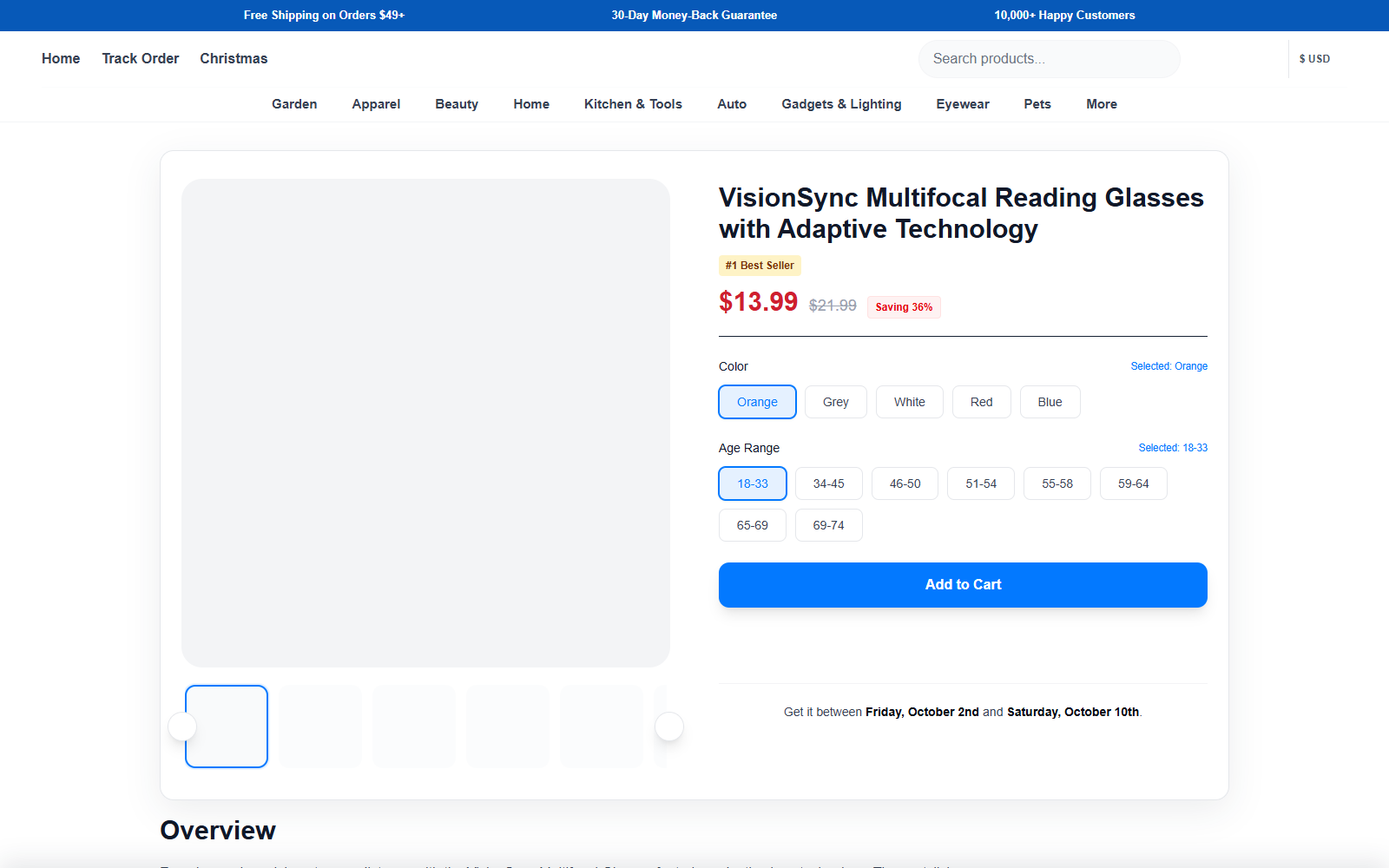
The shopper chooses an age range and color. This simple interaction creates a sense that the glasses are being matched personally.
No refraction, pupillary distance, binocular assessment, medical history, or separate-eye measurement occurs. Essential optical information is absent.
Step 4: The checkout captures an impulse order
A temporary discount and broad guarantee language encourage immediate payment. Additional pairs may be offered as gifts, backups, or bundle savings.
The buyer often learns the merchant descriptor, shipping origin, and actual return destination only after the card is charged.
Step 5: Cheap readers arrive after a delay
According to numerous reviewers, the parcel contains flimsy reading glasses that do not change focus as promised. Some report inappropriate or fixed magnification.
The low apparent manufacturing cost makes fulfillment cheaper than delivering anything resembling the advertised invention.
Step 6: Support stretches the dispute window
Customers describe repetitive responses, partial-refund proposals, and difficulty obtaining a practical return address. Long exchanges consume time while card-dispute deadlines approach.
International return postage can cost a substantial share of the purchase. The seller may exploit that economics to make a small partial refund seem preferable.
Step 7: The storefront disappears, but the item continues
The Alpine Wear domain is now expired. That removes the original sales page, policies, and direct route many buyers would use for help.
Meanwhile, VisionSync-named glasses remain available elsewhere. A recycled product can outlive the store that created the original advertising trail.
The Complaint Pattern Is Too Consistent to Ignore
Trustpilot displayed 160 reviews and a 1.1 rating during our investigation. Its summary said buyers frequently reported products unlike the advertised adaptive glasses.
Public complaints repeatedly use similar descriptions: cheap plastic, fixed magnification, disappointing quality, delayed delivery, and little meaningful assistance.
Independent review platforms are not infallible. A single angry customer cannot establish a universal result, and businesses can receive unfair feedback.
Here, however, the concentration, repetition, and alignment with the product’s implausible premise strengthen each other. The pattern is the evidence.
A BBB Scam Tracker submission separately described receiving inexpensive reading glasses instead of the promised adaptive product. It reported a financial loss.
Consumers should save these records quickly. An expired domain or removed listing can make the original representation difficult to prove later.
Why the Expired Domain Matters
A closed store is not automatically fraudulent. Legitimate businesses fail, rebrand, merge, or stop selling products for ordinary reasons.
In this case, closure removes the seller’s own policies while complaints remain unresolved. It also prevents new shoppers from comparing recycled listings with the original wording.
An expired domain can later be registered by someone unrelated. Do not assume a future site at the same address represents the previous merchant.
Never submit payment or personal details to a parked page. The bright expiration notice is not customer support.
Search archived transaction emails for the legal seller and card descriptor. Those records may identify a payment processor or business name still reachable.
For disputes, the domain’s current state supports the timeline, but the strongest evidence remains the saved advertisement and what actually arrived.
The Same Product Can Reappear Under New Sellers
VisionSync-labeled adaptive glasses were still listed on another store for $13.99 during our review. The layout again used age choices and technology wording.
A lower resale price does not prove identical supply, but it reinforces the commodity-product concern. Buyers should reverse-search product images and exact phrases.
Generic manufacturers often provide photos and descriptions that many storefronts reuse. A marketer can add an invented origin story and a much higher reference price.
Search the unusual product name in quotation marks. Then search descriptive phrases without the brand to find clones that use a different label.
Compare frame shape, lens tint, color choices, age ranges, and packaging. Identical combinations across unrelated stores suggest a catalog item rather than exclusive technology.
Even a functional reader must match your eyes. The cheapest listing is not automatically a sensible or safe optical purchase.
How to Test Any Future “Adaptive Glasses” Offer
Start by asking what physically changes focus. Credible answers should identify lenses, sensors, power, controls, range, response time, and limitations.
Search for a model number and technical manual. A genuine optical technology should have specifications beyond a marketing adjective and lifestyle photographs.
Look for independent testing using an optical bench or lensmeter. A testimonial saying “everything looks clearer” cannot map power across the lens.
Check whether the frame contains batteries, charging contacts, motors, liquid-crystal elements, or another mechanism. Automatic focus cannot emerge from an unexplained plastic frame.
Demand separate values for distance, intermediate, and near correction. “Works for every distance” is not a prescription and ignores astigmatism.
Ask an optometrist to inspect the listing. Professionals can often identify recycled readers, impossible claims, and measurements missing from the offer.
Reverse-search advertising images. Stock models, AI-generated faces, or photos copied from unrelated products expose a weak evidence trail.
Search exact testimonial sentences. Identical praise across unrelated shops suggests promotional copying rather than spontaneous customer experience.
Compare the supposed retail price with wholesale marketplaces. Large markups are not illegal, but they undermine claims of exclusive engineering.
Read the return policy before choosing an age band. Look for overseas postage, unopened-only requirements, approval delays, and deductions.
Pay by a method offering dispute rights. Avoid wire transfers, cryptocurrency, gift cards, and payment links sent privately after checkout trouble.
Do not replace prescribed eyewear based on an advertisement. Keep using appropriate correction until a qualified eye-care professional advises otherwise.
Report sudden vision changes, eye pain, flashes, or a curtain-like shadow urgently. No online reader addresses those warning signs.
A legitimate innovation becomes more credible as technical questions increase. A scam offer becomes vaguer, more urgent, or more hostile.
Company, Address, and Fulfillment Checks
The vanished seller identity
The expired Alpine Wear domain no longer provides an accessible operating company, current customer-service channel, or reliable copy of the original terms.
The address must match the transaction
Use the order email, parcel label, payment statement, and old policy copies. If each names a different entity or country, document every discrepancy.
The return destination can expose the model
Complaints about overseas returns and partial-refund bargaining are common in direct-shipping schemes. Never mail the glasses without trackable written authorization.
The supplier is not the advertiser
A fulfillment center or factory can ship a generic item without making the claims. Responsibility for the advertised technology belongs with the contracting seller.
What to Do if You Have Fallen Victim to This Scam
- Preserve the offer. Save the adaptive claims, age selector, discount, guarantee, confirmation, card descriptor, tracking page, and domain-expiration screen.
- Photograph the delivered glasses. Include packaging, labels, printed power, frame markings, defects, and any difference from the listing.
- Do not drive in unsuitable eyewear. Stop using the glasses if they cause blur, distortion, headaches, dizziness, or depth-perception problems.
- Request a full refund in writing. State that the product was materially different from the adaptive technology advertised. Set a reasonable response deadline.
- Reject endless delay tactics. A small partial refund does not erase misrepresentation. Do not let repetitive emails consume the card-dispute window.
- Contact the payment provider. Submit evidence under merchandise not as described, rather than merely saying the glasses were disappointing.
- Monitor the card. Report unfamiliar follow-up charges and consider replacement if the transaction page appeared insecure or the merchant identity changed.
- Report the campaign. Notify the advertising platform, consumer-protection agency, domain registrar, and review platform with concise documentation.
- Check the device used for ordering. Run Malwarebytes if the page pushed a download, notification permission, or unknown browser extension.
- Reduce repeat exposure. AdGuard can block many known ad and tracking endpoints, although recycled domains require continued skepticism.
After resolving the payment, schedule an eye examination if vision remains unclear. The correct prescription can change, and online readers may have masked the problem.
Keep the disputed glasses as evidence until the bank, regulator, or seller confirms they are no longer needed. Do not mail them to an unverified address.
If another advertisement reuses the same footage, report the connection with screenshots. Platform reviewers can act more effectively when repeated assets are documented together.
Frequently Asked Questions
Do VisionSync glasses really adjust automatically?
We found no credible evidence that the low-cost glasses contained an autofocus mechanism. Buyer reports commonly describe ordinary fixed readers.
Is alpinewearshop.com still operating?
No active store appeared during our review. The domain redirected to a page stating that registration had expired.
Can age determine reading-glass strength?
Age can correlate with presbyopia, but it cannot replace an eye examination or determine separate prescriptions, astigmatism, alignment, and working distance.
Why is VisionSync sold on other sites?
Commodity products and marketing assets are frequently reused. Another listing does not prove the original technology claim or shared ownership.
Should I accept a partial refund?
Consider the amount, return cost, dispute deadline, and evidence. Do not accept terms that waive stronger rights without understanding them.
Are cheap reading glasses always unsafe?
No. Properly labeled nonprescription readers can help some adults. The concern here is a mismatch between ordinary readers and extraordinary adaptive claims.
The Bottom Line
Alpine Wear sold VisionSync through a breakthrough-technology story that conflicts sharply with the complaint record and the apparent commodity nature of the glasses.
The original store is gone, but the pitch can return under another domain. Judge the mechanism, seller identity, prescription logic, and return route before paying.








