

The joke lands before you notice the price: a worksite face covering that makes an ordinary shift look like a costume party.
If the advertisement brought you here, this Site Faces Ski Mask review looks at buying details that deserve as much attention as the mask.
Overview
The current offer is a novelty, not protective equipment
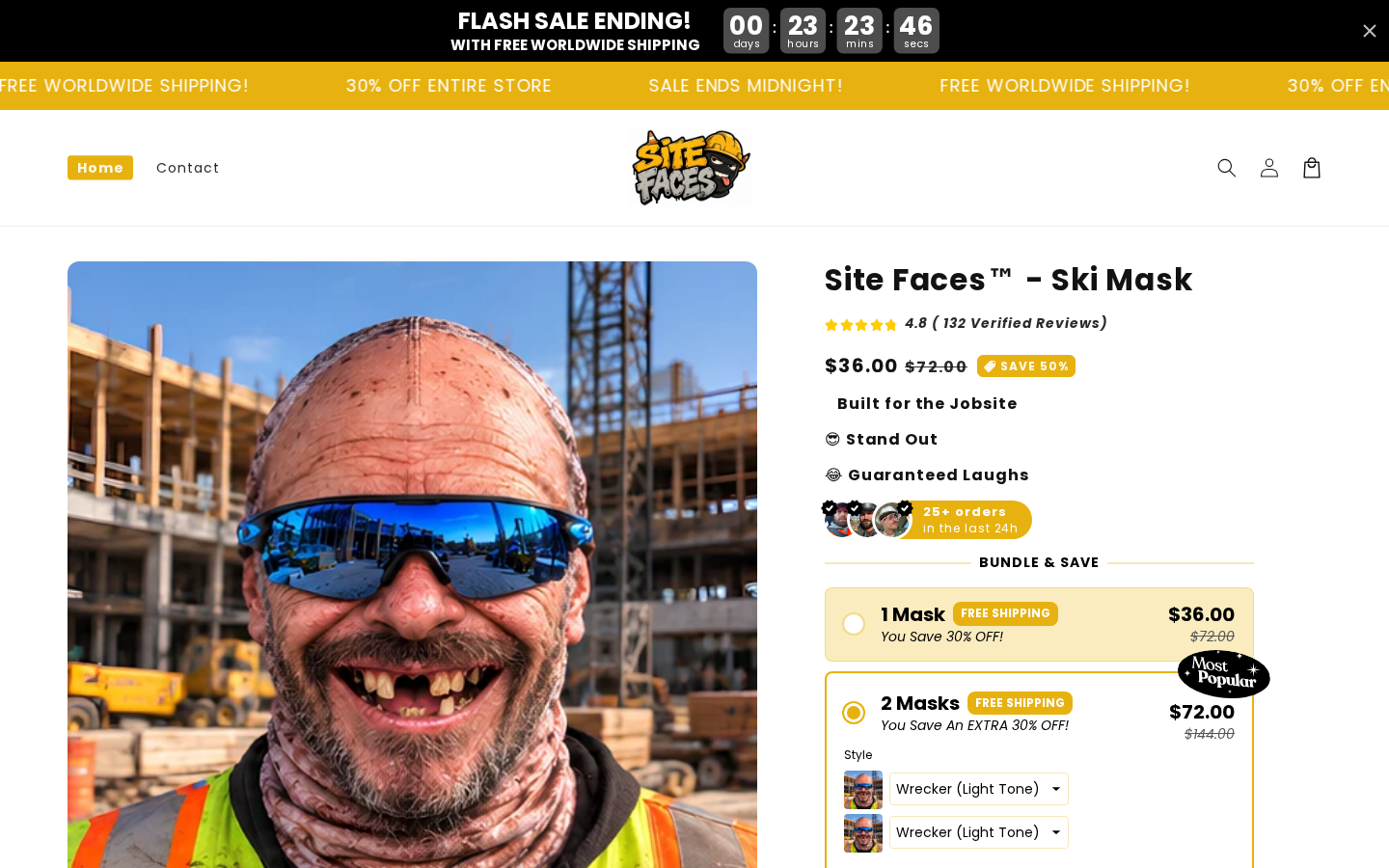
Sitefaces.shop markets a product titled Ski Mask, but the version reviewed on October 2, 2026 emphasized humorous construction-site characters.
Its own FAQ describes the mask as a novelty or fashion item. It expressly says it is not certified PPE or a replacement for required safety equipment.
That disclaimer matters more than the worksite setting used in the promotion. A construction-themed design does not establish any protective capability.
We reviewed the store and its published information without ordering or physically testing a mask. This is not a comfort, durability, or protection certification.
The price presentation needs a careful second look
The captured offer displayed $36 against $72, with a 50% saving badge. A separate storewide banner advertised 30% off.
The bundle panel showed two masks selected at $72 during our visit. That is a concrete reason to inspect quantity before buying.
- Check whether one or two masks are selected.
- Read the amount due, not only the saving language.
- Confirm each design and variation separately.
- Get the actual return conditions before treating the guarantee as a trial.
A confusing offer is not automatically a fraudulent business
We have not established that Site Faces takes money without delivering, uses stolen payment details, or runs an undisclosed subscription.
The concerns are narrower: inconsistent discount messaging, a multi-item selection, incomplete purchase-policy access, and limited detail about the material and business behind the product.
Those questions justify caution without calling an ordinary novelty mask a scam. The decision should turn on clear terms and the product you actually want.
What the Jobsite Theme Does and Does Not Mean
A playful advertisement can make a product feel like part of normal work clothing. That impression should not override the seller’s explicit novelty disclaimer.
Ask your employer or site supervisor whether the accessory is permitted. Site requirements, visibility, equipment fit, and communication needs take priority over the visual joke.
Do not replace required protective equipment with this mask. The seller does not present it as certified PPE in the FAQ we examined.
A funny customer quotation about a hard hat is not a technical instruction. Humor should not become the basis for deciding what protection to wear.
The word ski in the title also leaves practical questions. It does not tell you the fabric composition, warmth, moisture handling, or fit under your own equipment.
Someone buying a party accessory has different priorities from someone preparing for a day outdoors. Match the purchase to the intended use.
If the material description simply says soft and flexible, ask for its actual composition and care label. Those details help you compare it with alternatives.
We have no physical sample from which to verify thickness, smell, print quality, or prolonged comfort. Promotional photographs cannot settle those questions.
How the Site Faces Ordering Journey Works
Step 1: The character design wins your attention
The mask is sold through its effect on other people. The buyer is invited to imagine coworkers laughing and remembering the character.
That is a reasonable reason to want a novelty item. It is not evidence that the seller has a long delivery record or a reliable returns department.
Separate those decisions. First decide whether you like the design; then decide whether this particular store has given you enough information to buy.
You do not need to reject the entire idea to decline an unclear offer. A product concept and a merchant’s reliability are different questions.
Step 2: The countdown pushes the decision forward
Our capture included a flash-sale countdown and a midnight-ending banner. These messages make the opportunity feel temporary.
We did not test whether the timer resets or whether the sale genuinely ends. It would be inaccurate to describe it as a proven fake countdown.
Nevertheless, urgency is not a reason to skip questions. If sizing, delivery, or returns remain unclear, the clock does not make the purchase safer.
A useful rule is to decide what information you need before considering the timer. Otherwise, the advertisement sets both your expectations and your deadline.
Step 3: The bundle can change the number of masks
The observed bundle selector favored two masks. A shopper focused on the prominent single-item price could miss the larger selection below it.
Two at $72 works out to $36 each before any other charges. In that captured state, the arithmetic did not itself show a lower per-mask price.
That is worth checking against any extra-saving language. Do not infer a bundle discount from a badge when the visible numbers need clarification.
If you want one, select one and verify that the order summary follows your choice. Check both quantity and the total amount authorized.
This observation does not establish that the store secretly adds products after payment. It concerns a visible selection that a hurried buyer might overlook.
Step 4: Variation choices determine the actual purchase
Choose the design for each item in a bundle. Do not assume a second mask automatically comes in a different style from the first.
Read the variation labels in the final summary. A picture at the top of the page may not update every part of a multi-item selection.
If the store cannot provide measurements, ask how fit is assessed. A one-size description would not guarantee that the printed features align on every wearer.
Keep a copy of the selected combination. That gives you a concrete reference if the parcel contains a different character or quantity.
Step 5: The guarantee needs an actual return procedure
The product page promises help within thirty days, but that short assurance does not answer every return question.
Our request for the conventional refund-policy page returned an error, and the visible footer did not provide a detailed refund-policy link.
Ask whether an opened or tried-on mask is eligible, who pays postage, and where it must be sent. Clarify hygiene-related restrictions before testing it.
A missing page is not proof that no return will be accepted. It does mean the customer should not have to guess the arrangement.
Company, Address, and Fulfillment Checks
The trading name is clearer than the legal identity
The storefront consistently uses Site Faces. We did not independently identify a registered company behind that trading name through the reviewed store material.
That does not mean no lawful business exists. Sole traders and companies can use trading names, but the buyer still needs to know their contracting party.
Ask who will issue the invoice and what merchant name will appear on the statement. Keep the answer alongside the order confirmation.
If the charged name differs, seek clarification rather than immediately treating it as another unauthorized purchase. Payment descriptors can differ from a store’s brand.
The privacy address does not locate the stock
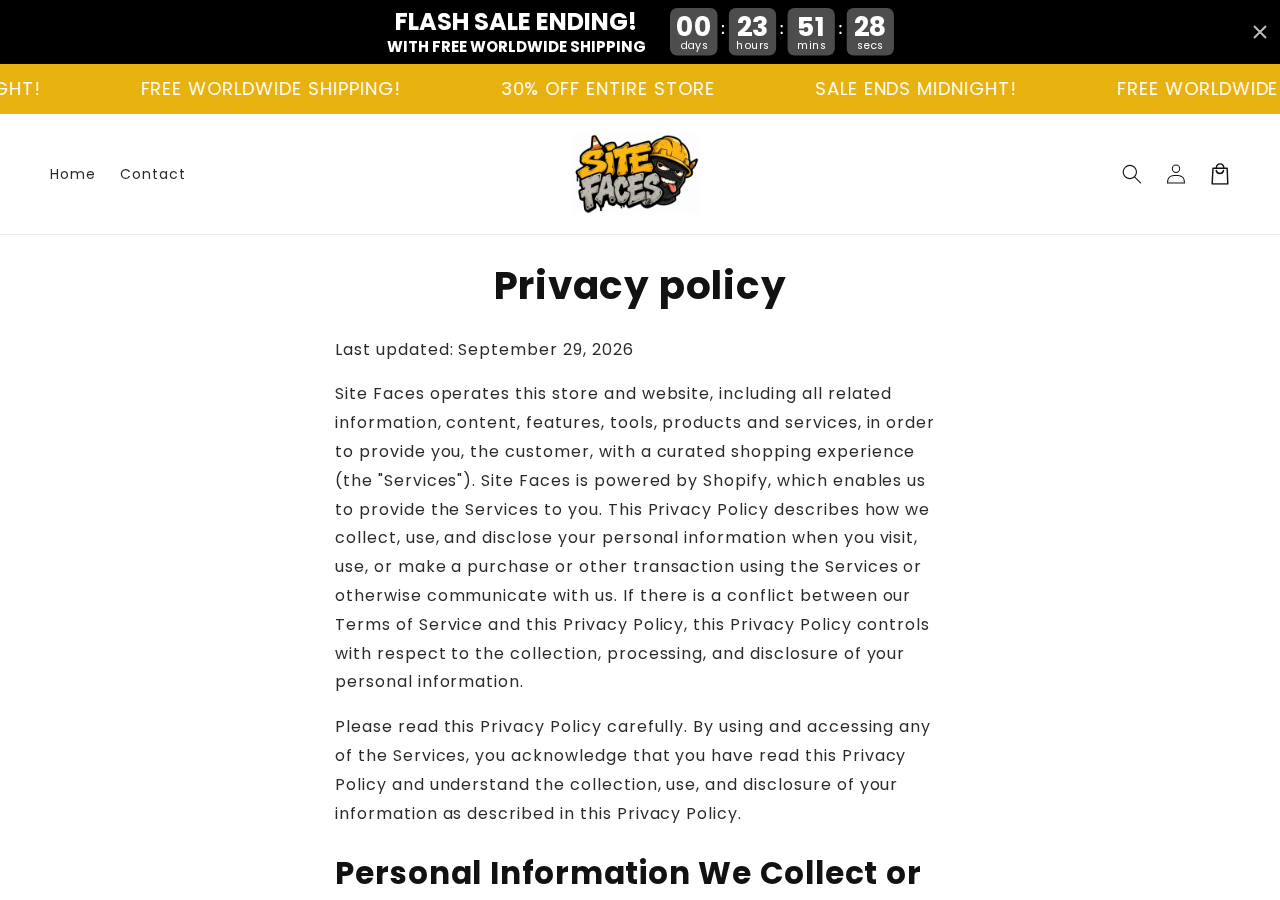
The privacy policy publishes a contact address in Kitchener, Ontario, Canada.
We have not verified that location as an office, warehouse, manufacturer, or return facility. There is no basis to call it a fake address.
A privacy contact location serves a specific purpose. It does not automatically tell a buyer where a mask is dispatched or where a parcel should be returned.
Request the return country before ordering. For an inexpensive accessory, cross-border postage can materially change whether the purchase is worth the risk.
There are contact details, but no completed service test
The same policy lists sitefaces@outlook.com and +1 226-339-2694. The contact page also supplies a message form.
We have not called the number or assessed email response times. We therefore cannot claim that either channel is inactive or reliable.
Using a public email provider is not evidence of fraud. The more useful test is whether support answers specific order and return questions clearly.
If you use the form, save your message before submitting it. A form may not automatically give you a complete copy of what you sent.
The production details remain limited
The page uses broad comfort and durability language. That is not the same as a named manufacturer, fabric composition, model specification, or independently verified test.
We did not establish a manufacturing country for the exact masks supplied by this store. Calling them Chinese-made would be an unsupported assumption here.
Ask for the care instructions and material label, especially if you expect repeated use. Confirm whether the print and construction suit the cleaning method you need.
Do not treat visual resemblance to another listing as proof of the same supplier. Similar designs can be reproduced with different materials and finishing.
Reading the Reviews Without Reading Too Much Into Them
The store displayed a 4.8 rating and 132 verified reviews. It also showed recent-order activity and short customer quotations.
Those figures were presented by the seller. We did not independently match the displayed reviewers with completed transactions.
That limits what the badges prove, but it does not establish that the customers are fabricated. Verification needs evidence in either direction.
Repeated quotations appeared in the page markup. A scrolling carousel can duplicate elements for animation, so repetition alone is not proof of fake reviews.
Look for feedback that discusses delivery time, the exact variation received, how the mask fit, and what happened when a customer asked for help.
A funny one-line reaction is less useful for evaluating a merchant than an account with those practical details. Enjoy the joke without mistaking it for an audit.
The images also require restraint. We did not establish their production history and cannot reliably label them AI-generated based only on appearance.
The decision remains simpler than an image-forensics debate: request real product details and a clear remedy if the delivered mask does not match the offer.
What to Do If You Ordered a Site Faces Mask
- Check the quantity on your confirmation.
Look specifically for a two-mask bundle if you intended to buy one. Compare the paid total and selected designs with what you remember choosing.
If there is a mistake, request correction immediately. State the desired quantity and ask the seller to confirm the adjustment before dispatch.
- Ask for the complete guarantee terms now.
Request the return window, acceptance conditions for tried-on items, destination, and postage responsibility. Preserve the product-page assurance you saw at purchase.
A written explanation is useful even if you currently expect to keep the mask. It prevents the first serious policy discussion from happening after a problem.
- Assess the delivered item against the order.
Document the design, labels, packaging, quantity, and any visible defect. Compare them with the selected variation rather than an unrelated promotional image.
If the item differs materially, describe each difference and send clear photographs. Keep the item unchanged while requesting an appropriate resolution.
- Keep novelty use separate from workplace protection.
Follow the site’s own disclaimer and your workplace requirements. Do not use the mask as a substitute for required protective equipment.
If fit interferes with visibility or other equipment, stop using it in that setting. A costume effect is not worth compromising basic work requirements.
- Escalate an unresolved transaction accurately.
For non-delivery, a significant mismatch, or an outstanding agreed refund, contact your payment provider and ask about its process and applicable deadlines.
Submit the receipt, relevant photographs, and correspondence. Explain what you authorized and what went wrong without overstating the evidence.
- Protect the records and avoid unnecessary disclosures.
Do not send your full card details or passwords in a support message. Order identifiers and a clear explanation are normally the starting point.
Be skeptical of unrelated accounts promising a guaranteed refund for a fee. Continue through the seller’s published channels and the payment provider you used.
Frequently Asked Questions
Is Site Faces a confirmed scam?
We have not established that. The review identifies purchase-information gaps and confusing offer details, not a proven theft or non-delivery scheme.
Is the mask certified protective equipment?
No certification was established. More importantly, the seller explicitly describes it as a novelty or fashion mask, not certified PPE.
Why might my order contain two masks?
Our captured page had the two-mask bundle selected. Your session may differ, so inspect the quantity and summary before authorizing payment.
Is the advertised discount 30% or 50%?
Both appeared in different parts of the offer we reviewed. Use the final total and ask the seller to clarify the applicable discount.
Does Site Faces publish an email address?
Yes. Its privacy policy lists sitefaces@outlook.com. We found contact details but did not test their response performance.
Can I assume the thirty-day guarantee allows a worn-mask return?
No. Ask for the full acceptance conditions, particularly for opened or tried-on masks. The brief product-page promise does not settle those details.
The Bottom Line
This Site Faces Ski Mask review does not condemn the novelty concept. It asks buyers to check quantity, price, product details, and the return procedure.
Buy a joke because you want it, not because a countdown rushes you. And keep the seller’s own distinction clear: novelty clothing is not protective equipment.








