

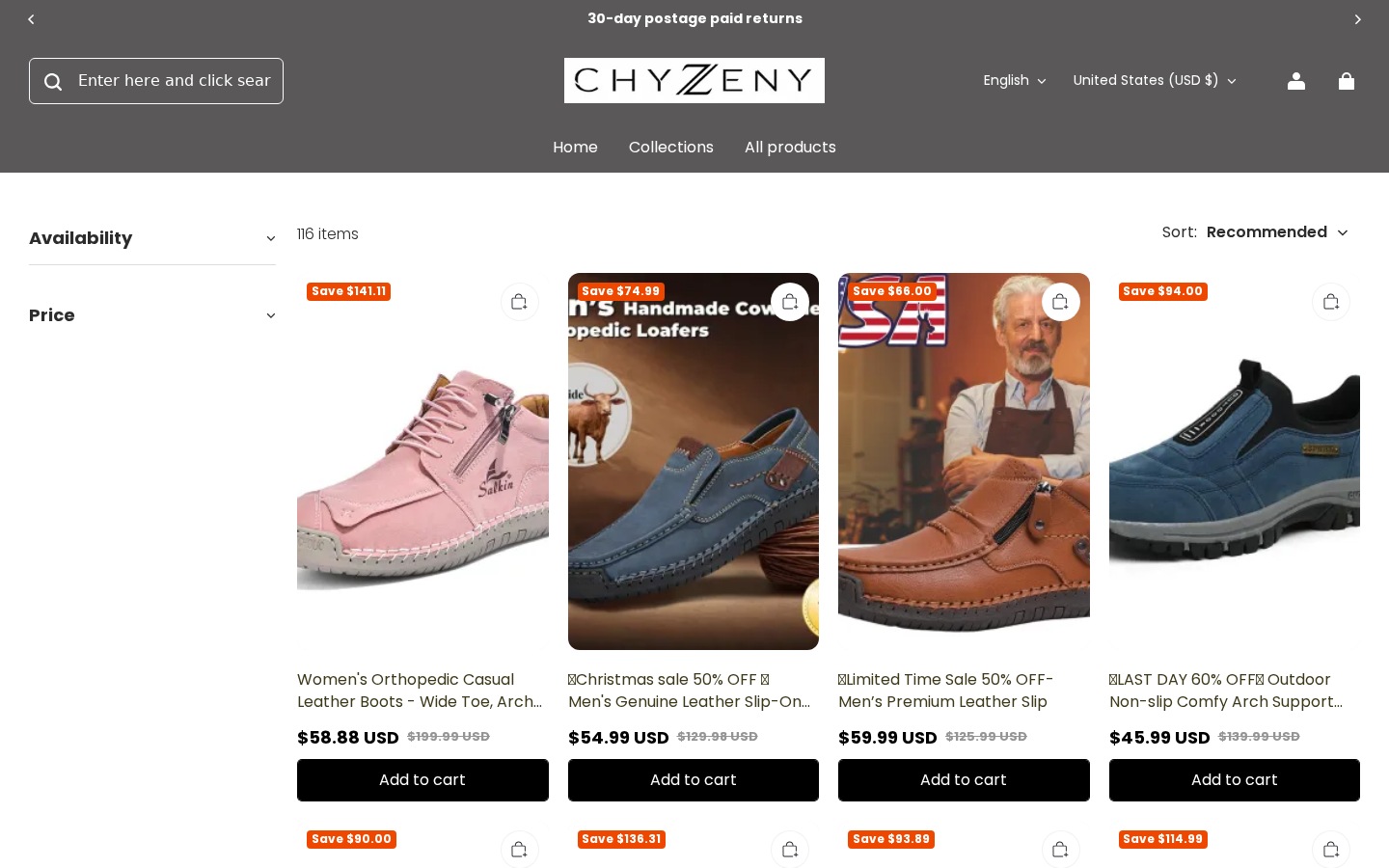
A shoe or dress appears on Chyzeny at half its crossed-out price. The store adds a reassuring promise across the top of the screen.
That promise matters most when the parcel arrives, so we followed it past the product card and into the site’s written terms.
Overview
The verdict: the return pitch is materially misleading
Chyzeny is an operating online store, but its return marketing does not match its detailed return policy.
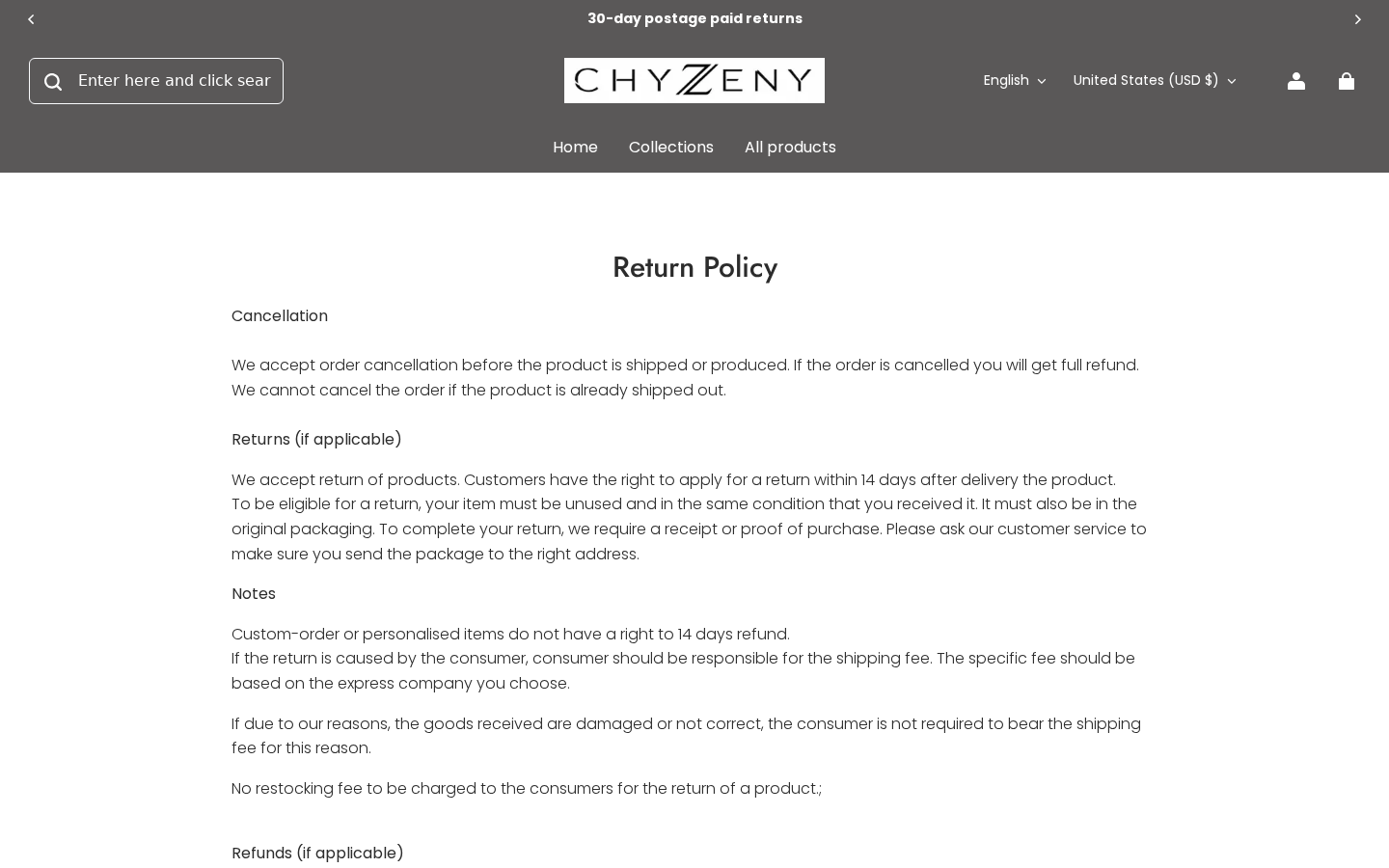
The shop prominently says “30-day postage paid returns” and elsewhere promotes a 30-day refund guarantee. The policy gives customers 14 days after delivery to apply.
It also makes customers pay shipping for returns caused by buyer preference. The seller covers it for a damaged or wrong item.
That distinction is central, not small print. A shopper expecting a month and prepaid postage could lose both protections under the written policy.
Markdowns and urgency make the promise more influential
Chyzeny’s catalog mixes footwear and clothing with large crossed-out prices, “last day” language, and prominent savings labels.
One product card showed a $199.99 comparison price against $58.88. The crossed-out amount is the store’s claim, not proof of typical market value.
For a buyer unsure about sizing or fabric, an easy-return banner can be the deciding factor. That is why the contradictory terms matter.
Our conclusion is caution, not an invented delivery story
We did not place an order or establish that Chyzeny fails to ship purchases. Nor did we establish where every product is made.
We can establish the conflict between the site’s promotional return message and its policy. Until corrected, we would not recommend an impulse purchase.
Before paying, pin down the following in writing:
- Is the return-request window 14 days or 30 days after delivery?
- Does “postage paid” apply to an ordinary sizing or preference return?
- Must the item remain unused, with tags and original packaging?
- What is the return destination and likely shipping cost?
- Which business appears on the receipt and card statement?
- How quickly will support answer a defective-item report?
Why the Return Contradiction Matters More Than the Discount
Online fashion returns are not unusual. A buyer may receive a garment that technically matches the photo but feels wrong in person.
Fit, texture, thickness, stitching, and color can be difficult to judge on a phone. A practical return policy is part of the product’s value.
Chyzeny’s banner creates one expectation: a full month to decide and postage paid when returning.
The policy creates another: a request within 14 days, untouched goods in their original condition, and customer-paid shipping for buyer-caused returns.
The seller might voluntarily honor the more generous banner. We have not tested its actual customer-service decisions.
Until Chyzeny confirms otherwise, shoppers should assume the shorter deadline could be applied to them. Planning around a possible exception is a poor way to protect a purchase.
But customers should not need goodwill to obtain what the storefront appeared to promise. The written rule should be unambiguous before checkout.
It is also worth asking whether a partial refund or store credit would be offered instead of the payment-method refund described in the policy.
Consider someone away when the parcel arrives. A 14-day clock can run quickly, particularly if a response is needed before the return address is supplied.
The policy asks buyers to contact customer service so the parcel goes to the correct destination. It does not offer a universal return address upfront.
That may be normal logistics, but it makes an exact postage estimate impossible without support’s answer.
Now add the cost of shipping a bulky shoe box. A discount becomes less attractive if a failed fit is expensive to reverse.
The product must also be unused and in the same condition received. A buyer should ask whether indoor try-on is permitted.
Do not assume that the word “guarantee” overrides those conditions. A guarantee is only as useful as the process implementing it.
Even if a shopper qualifies, the policy says the seller will inspect the parcel and approve or reject the refund afterward.
In contrast, the homepage reduces all of that to a short reassurance. The compression benefits the sale, not necessarily the buyer.
That is the core of this investigation. The contradiction is visible before any complaint, delivery problem, or allegation about product origin.
How the Chyzeny Shopping Journey Works
Step 1: A dramatic markdown creates the bargain
The catalog displays sale prices alongside much higher comparison prices. Labels such as “last day” give ordinary browsing a deadline.
That presentation can make a $40 garment feel like a rare $90 opportunity, even before a customer checks similar items elsewhere.
A crossed-out number does not prove the item regularly sold at that amount. Compare specifications and current competitor prices, not just two figures on one card.
Look especially closely at material composition. “Cotton linen” in a title may not tell you the percentage of either fiber.
The listing should be judged by exact fabric, measurements, construction, and buyer protections after the excitement of the discount wears off.
Step 2: A broad return banner lowers hesitation
The header says “30-day postage paid returns.” A customer naturally reads that as a low-risk opportunity to inspect the item.
Yet the detailed policy limits requests to 14 days and assigns postage differently depending on why the item is returned.
That gap is not cured by placing the restrictive wording on a separate page. The two claims should agree.
If a shopper sees the banner but not the policy, the store has gained trust from a promise that may not describe the real experience.
Save a screenshot of the banner and policy before checkout. Terms can change, and a dated record helps resolve later disputes.
Step 3: The order moves into fulfillment with limited reversibility
The policy accepts cancellation before an item is shipped or produced. It says cancellation is unavailable after shipment.
That makes the period immediately after ordering important. Check the confirmation for item count, sizes, total price, and shipping information.
If something is wrong, contact support immediately in writing. Do not wait for the carrier scan before asking.
We did not verify an automatic subscription or multi-item upsell on Chyzeny. Buyers should still inspect the final cart rather than assume the promoted price is the total.
Keep the payment confirmation and any change request together. A vague telephone conversation is much harder to document.
Step 4: The physical item tests the sales page
Once the parcel arrives, photograph the sealed package and label before opening it. Record the delivery date shown by the carrier.
Compare the garment with the listing: fiber content, measurements, color, workmanship, and any included accessories.
For shoes, photograph size labels and soles before walking outdoors. Ask support whether an indoor fitting affects return eligibility.
Do not discard packaging while you decide. Chyzeny’s policy requires original packaging for an ordinary return.
If the item is wrong or damaged, the policy says the seller should bear the return shipping. Report the defect promptly with clear photographs.
Step 5: A return request exposes the real policy
The buyer must contact support before mailing the item, obtain the correct destination, and stay inside the applicable deadline.
For a change-of-mind return, the policy assigns shipping to the buyer. That directly conflicts with a broad reading of “postage paid returns.”
Ask support to state whether the banner is limited to defective items, a specific region, or some other condition.
If support cites 14 days, ask why the site also advertises 30. Keep its written answer and do not miss the shorter deadline while debating.
Use tracked shipping if you proceed. An untracked parcel weakens the buyer’s evidence when the refund depends on receipt and inspection.
Claims on a Clothing Listing Still Need Verification
The Chyzeny assortment includes products styled as orthopedic footwear and clothing promoted with eye-catching seasonal descriptions.
“Orthopedic” in a product name should not be treated as a medical certification. Look for a named manufacturer, model, and measurable support features.
For anyone with foot pain or a clinical condition, a marketing label should not replace a professional fitting or medical advice.
Clothing descriptions can be just as slippery. A photograph may show how something hangs on a model, not how the exact purchased size will fit.
Compare the size chart with your own measurements, then save the chart. A changed page can otherwise erase the standard you relied on.
If a listing uses phrases such as “last day” repeatedly, ask whether the offer really expires or simply restarts.
We did not track those specific promotions over multiple days. The safe conclusion is to avoid treating urgency language as independent evidence of a bargain.
The same goes for “save” labels. A higher original price means little unless there is a reliable selling history at that price.
Search the product image and distinctive title. Similar-looking merchandise under different store names may help you judge price and likely quality.
An image match does not prove a shared company, common warehouse, or counterfeit item. It is a reason to investigate, not to leap to a verdict.
The practical question is whether Chyzeny can provide a product specific enough to compare against alternatives.
If it cannot, the return policy becomes even more important. That is precisely where its current messaging is least clear.
Company, Address, and Fulfillment Checks
A store label is not the complete seller identity
The site presents the Chyzeny brand and a support email. The pages reviewed did not prominently explain a registered entity behind the storefront.
Ask what company will invoice you and whether that same company accepts returns and card disputes.
An unfamiliar billing descriptor is not automatic proof of fraud, but it should be identified while the order is fresh.
The return destination arrives only after contact
The policy tells shoppers to ask customer service for the correct address. That prevents a reliable pre-purchase postage estimate.
A warehouse can handle returns without being the seller’s headquarters. The destination alone does not establish ownership or manufacturing origin.
Insist on an exact address, recipient, authorization number, and delivery method before mailing anything.
The published email must work when a deadline is short
Chyzeny lists service@chyzeny.com and says its team will respond within 24–48 hours. We did not test that response claim.
Because the return clock may be 14 days, send questions promptly. Keep a timestamped copy of every message.
If no reply arrives, try the site’s contact form and preserve the submission confirmation. Do not let silence consume the deadline.
Manufacturing claims require actual evidence
Nothing in the reviewed pages proves that all Chyzeny goods are manufactured in China, the United States, or any other country.
Check the physical label and customs information when the item arrives. Ask the seller to identify the maker of a safety-relevant product.
Cheap-looking imagery can be suspicious, but the documented issue here is the return-policy conflict, not a guessed supply chain.
What to Do if You Already Ordered From Chyzeny
- Save the terms you saw. Capture the sale banner, product page, order total, 30-day promise, and 14-day return policy with dates and URLs.
- Check the order confirmation. Verify quantity, size, shipping method, and payment amount. Request any cancellation or correction immediately, before dispatch.
- Start the return clock at delivery. Record the carrier delivery date and send a return request within 14 days, even if the banner suggests 30.
- Document the item’s condition. Photograph packaging, labels, size, measurements, damage, and differences from the listing before wearing or washing anything.
- Ask who pays postage. If the product is wrong or damaged, cite the policy’s seller-paid shipping language. For a preference return, ask why the banner says postage paid.
- Get written return instructions. Do not send the parcel until support identifies the destination and any authorization needed. Use tracking and retain proof of delivery.
- Escalate unresolved discrepancies. If a clearly promised refund is denied, contact your payment provider before its dispute deadline with the saved pages and correspondence.
Frequently Asked Questions
Is Chyzeny a confirmed scam?
No. We verified conflicting return claims, not that every order fails or that the business is fictitious.
Does Chyzeny really allow 30 days to return an item?
The promotional wording says 30 days, but the linked policy gives customers 14 days after delivery to apply. Obtain clarification before ordering.
Are all Chyzeny returns postage paid?
The policy says buyers pay return shipping for their own preference returns. The seller covers shipping when goods are damaged or incorrect.
Can I cancel after the order ships?
The site’s policy says it accepts cancellation before production or shipment and cannot cancel after shipping.
Where should a return be mailed?
The policy instructs customers to contact support for the correct address. Do not guess from an unrelated address found online.
Are Chyzeny products proven to come from China?
We did not verify a universal manufacturing origin. Check item labels and ask the seller for product-specific information.
The Bottom Line
Chyzeny’s shopper-facing promise says 30-day postage-paid returns. Its written policy says 14 days and buyer-paid shipping for an ordinary change of mind.
That is a concrete, consequential discrepancy. Treat the deep discounts as irrelevant until the store resolves it in writing.
We would avoid ordering a size-sensitive item from this offer while the return terms remain inconsistent.








