

An invitation to an honor society can feel like a reward for years of hard work. Then a payment screen asks you to make a decision.
For students and parents, the question is not only whether the organization exists. It is what the fee buys and which promises hold up.
Overview
SCLA is real, and the refund language is contradictory
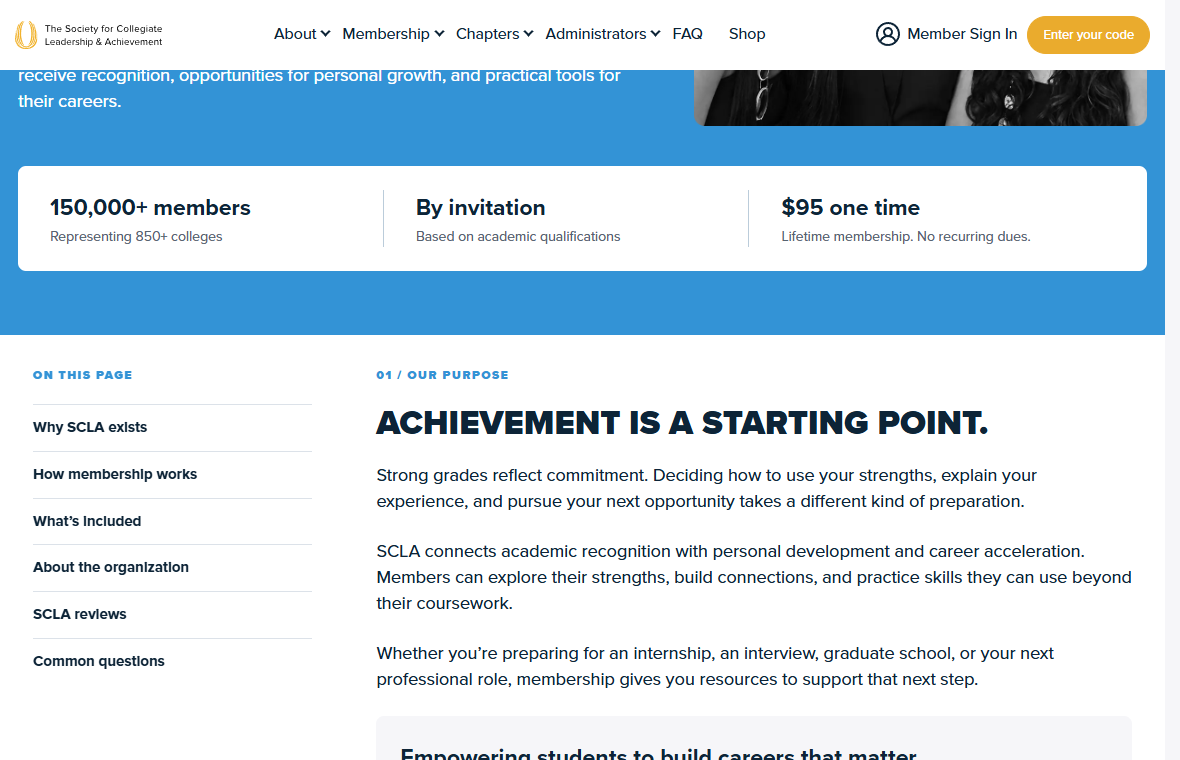
The Society for Collegiate Leadership & Achievement, or SCLA, is an operating honor society. The University of North Carolina Wilmington maintains a current SCLA chapter page.
That university page describes a one-time $95 honor society membership fee. Receiving an invitation does not obligate a student to join.
The concern in this investigation is more precise than “Is SCLA fake?” Its own public pages give conflicting answers about refunds.
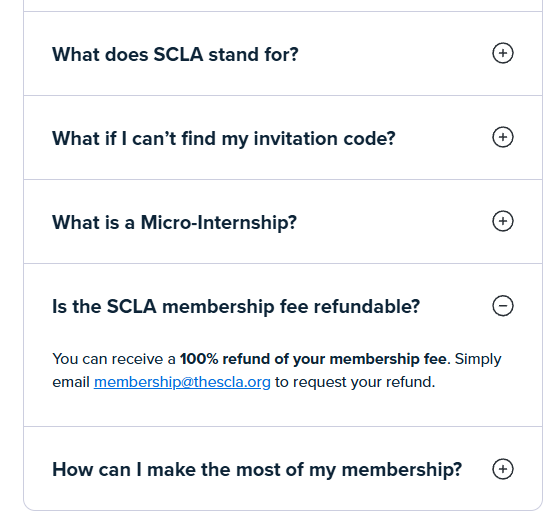
SCLA’s membership FAQ says a member can receive a 100% refund by emailing its membership address.
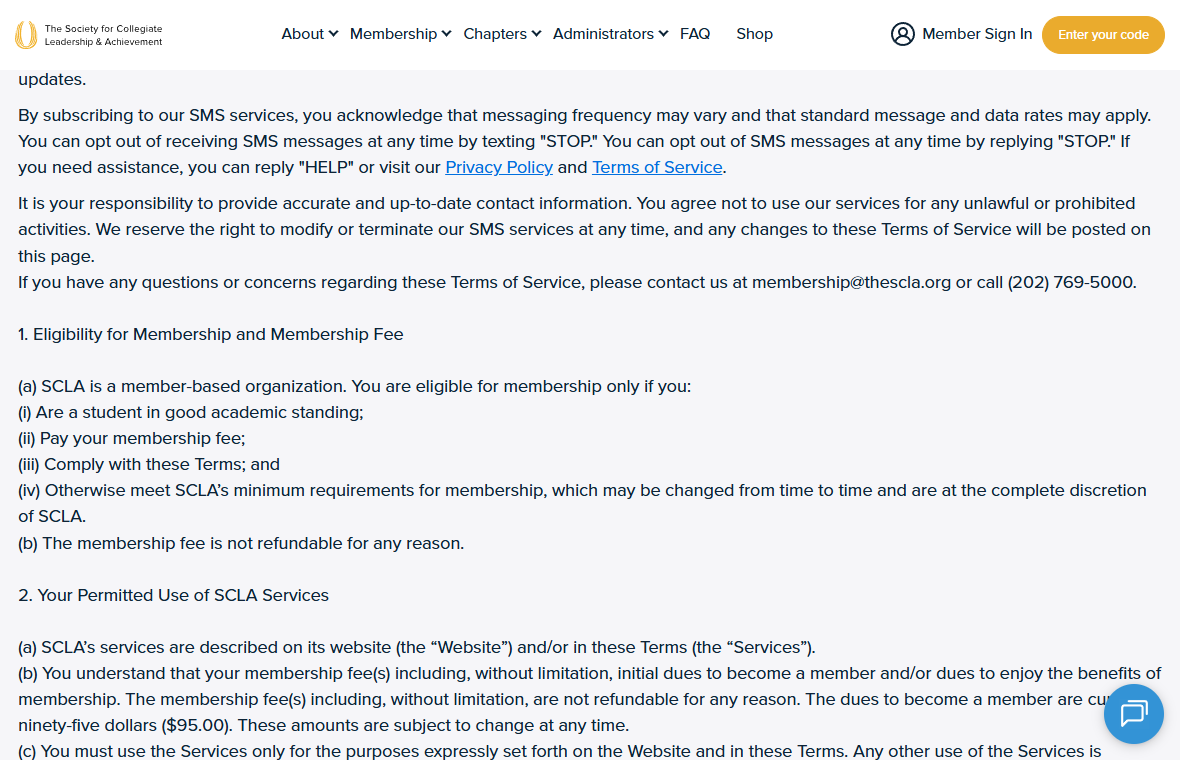
The terms of service say the membership fee is not refundable for any reason. They also say the terms control when website statements conflict.
A one-time membership is not the same as Academy billing
SCLA advertises its honor society fee as $95 once for lifetime membership, with no recurring dues. That is different from SCLA Academy’s separate subscription offering.
UNCW explicitly describes Honor Society and Academy as distinct opportunities. It says students can subscribe to Academy without joining the honor society.
SCLA’s parent guide says honorary members receive lifetime Academy access. A separate Academy signup deserves its own price and renewal review.
Do not describe every SCLA payment as a refill or subscription trap. The evidence shows two different products and billing paths.
Our conclusion: verify the refund promise before paying
SCLA has real campus relationships and identifiable membership benefits. The conflicting refund language is still a material buyer concern.
If you would join only because the public page promises a full refund, ask SCLA for written confirmation that the promise applies to your invitation.
Get answers to these questions before entering a card:
- Is this the one-time Honor Society fee or a separate Academy subscription?
- What exact benefits are included with this particular invitation?
- Can the $95 fee be refunded after you access member resources?
- Which written policy controls if the FAQ and terms disagree?
- Who at your campus can independently confirm the invitation?
What a Real SCLA Invitation Actually Means
A legitimate invitation can recognize academic eligibility without guaranteeing that membership will transform a student’s career. Those are different claims.
UNCW says its chapter identifies students using academic benchmarks. The university also says invited students can decide whether they want membership.
That is important because a student may read “selected” as “required.” The invitation offers a paid opportunity, not an obligation imposed by the college.
Some campus pages describe local chapters, mentoring, career tools, and scholarship opportunities. Availability and usefulness can vary by institution and student.
An invitation does not mean you have won a scholarship. It does not mean a job, internship placement, or recommendation letter is guaranteed.
SCLA’s parent guide calls its micro-internship an educational project tied to a company. It expressly distinguishes that project from employment.
The guide says one such project is included and additional projects cost $149 each. That detail matters when comparing benefits with the $95 entry fee.
A student already using a campus career center may find some tools duplicative. Another student may value the structured resources or networking.
Neither reaction is universal. The sensible test is whether you can identify benefits you will actually use within the next academic year.
Ask your school whether the local chapter is active, who advises it, and which activities are available now. A national benefits page may not describe campus reality.
UNCW’s page is a useful example of transparent local context: it names the chapter, distinguishes Academy, and gives campus contacts.
If your invitation claims a partnership with another school, verify it through that school’s own website or student affairs office.
The Refund Contradiction in SCLA’s Own Words
The most consequential finding did not come from an angry review. It came from comparing two current pages published by SCLA itself.
On its membership FAQ, SCLA says students can receive a 100% refund of the membership fee by sending an email.
The parent guide repeats that promise for families. It presents the refund beside the one-time $95 fee as a reason to feel comfortable joining.
Yet Section 1 of the terms says the membership fee is not refundable for any reason. Section 2 repeats the nonrefundable language.
The terms add that, if a website statement conflicts with them, the terms apply. That makes the contradiction harder to dismiss as a minor wording issue.
We did not submit a paid membership or test a refund request. We cannot say how SCLA would handle every individual case.
We can say the written materials conflict, and a reader should not rely on the generous promise without direct clarification.
A company may choose to grant refunds more generously than its contract requires. If that is the policy here, its published terms should say so clearly.
Until the pages agree, save screenshots of the FAQ, parent guide, terms, invitation, and checkout. Include the date and complete URL.
Ask whether there is a deadline, a use restriction, or any required reason for a refund. The public FAQ does not spell out those conditions.
Request a reply from the official membership address before paying. A written answer tied to your invitation is more useful than a reassuring social-media comment.
How the SCLA Membership Decision Works
Step 1: An invitation creates a sense of recognition
Students receive an invitation framed around achievement and select eligibility. That can be meaningful, especially after a demanding semester.
The feeling of recognition can also compress the decision. A student may click through before asking whether the honor society fits their plans.
Read the sender and landing domain carefully. A genuine SCLA organization does not prevent unrelated impostors from sending copied invitation emails.
If your school has a listed chapter, confirm the invitation with its adviser or student affairs office rather than relying only on the email.
Step 2: The $95 membership offer lists broad benefits
The public site presents a one-time $95 lifetime fee. Benefits include member tools, learning resources, and access to specific development opportunities.
Those benefits should be judged as services, not as proof of future employment. Read what is included now and what requires additional payment.
SCLA says one micro-internship is included. Its parent guide lists additional projects at $149 each, so “access” is not always “unlimited use.”
Ask whether your own campus supports a local chapter and whether the program you care about is currently available.
Step 3: The refund statement reduces hesitation
The FAQ and parent guide offer a 100% refund of the membership fee. For a student on a tight budget, that changes the perceived risk.
A prominent refund promise may encourage someone to try membership who would otherwise wait. That is why the conflicting terms matter.
Do not assume the public wording overrides the contract. The contract expressly says its provisions govern conflicts with other website statements.
Ask the organization to reconcile those pages before buying. A concise email can quote both URLs and request a yes-or-no answer.
Step 4: Checkout determines the actual payment path
Verify whether the payment page says Honor Society membership, Academy subscription, or another program. Those labels should not be treated as interchangeable.
UNCW says the Honor Society is a one-time fee with no recurring dues. Academy is a distinct subscription for open-enrollment users.
Review the final total and any optional add-ons. Do not infer that every student automatically enters recurring billing.
Use a payment method that supplies a clear receipt and dispute process. Save the order confirmation before closing the browser.
Step 5: The member has to use the promised resources
After joining, a student should test the specific features that motivated the purchase. Can they access the tool, project, or chapter promised?
If a benefit is unavailable, document the missing feature promptly. A precise service complaint is stronger than general disappointment.
Ask the local chapter what events and contacts are active. A lifetime membership has little value if the student never uses it.
Set a reminder to reassess the purchase while the refund question is fresh. Do not wait until after graduation to investigate a mismatch.
Honor Society Versus Academy: The Difference That Prevents Billing Confusion
The similar branding can make SCLA’s two offerings look like one product. UNCW’s current explanation draws a useful line between them.
Honor Society membership is invitation-based and recognizes academic eligibility. Its advertised fee is one-time, with no recurring honor society dues.
Academy is an open-enrollment learning program. A student can subscribe without qualifying for or joining the Honor Society.
SCLA’s parent guide says Honor Society members receive lifetime access to Academy. That does not mean every Academy customer joined the Honor Society.
If your statement shows a recurring charge, inspect the original checkout and receipt. It may relate to Academy rather than the lifetime membership.
Do not accuse the organization of unauthorized recurring membership dues based solely on a charge descriptor. Establish which offer was accepted.
If a separate subscription was not clear at signup, ask SCLA for the enrollment record, price disclosure, and cancellation instructions.
If a family paid for both programs unnecessarily, request an explanation of overlapping benefits and any available refund.
A college-branded page does not mean the college processed the payment. The organization and the campus play different roles.
Campus staff can confirm affiliation and local benefits. The billing entity is responsible for its own terms, receipts, and refunds.
Company and Contact Checks That Matter Here
SCLA is not an anonymous storefront. Its terms identify The Society for Collegiate Leadership & Achievement, LLC, and the site supplies a membership email and phone.
The public site lists a Tysons, Virginia address. A listed address does not by itself settle a refund dispute or prove every claim.
For this case, the most important identity check is the connection between your invitation and a real campus chapter.
Search your college’s own domain for SCLA. If the school has no relevant page, call student affairs before sending payment.
Contact SCLA through details on its current formal site, not a phone number pasted into an unexpected message or social ad.
Ask the representative to confirm your fee type, promised benefits, and applicable refund policy. Keep the reply with your receipt.
A credible organization should be able to explain why one page promises a full refund while another says refunds are impossible.
That is a sharper test than arguing online about whether all honor societies are “worth it.” The contradictory text is concrete and fixable.
What to Do If You Already Paid SCLA
- Identify the product purchased. Check whether the receipt says Honor Society, Academy, or both. Note any renewal date rather than assuming every charge recurs.
- Save the relevant pages. Capture the public refund promise, nonrefundable terms, invitation, checkout, and payment receipt with visible dates and URLs.
- Ask for a written refund decision. Email the official membership address. State the amount, date, and reason, and ask which policy controls your purchase.
- Describe missing benefits precisely. If a promised tool, project, or chapter activity is unavailable, include screenshots and your correspondence with campus staff.
- Cancel any separate Academy plan. If the receipt shows a recurring subscription you do not want, obtain cancellation instructions and confirmation before the next billing date.
- Escalate an unresolved billing issue. If the organization denies the advertised refund or a charge was not authorized, ask your card issuer about dispute rights and deadlines.
- Keep the campus role distinct. Your college can verify affiliation and local resources, but the organization that collected the fee handles its payment policy.
Students should not feel embarrassed about asking whether a paid honor society helped them. A clear question about fees and benefits is reasonable.
Do not pay another party to “recover” a $95 membership fee. Use the organization’s official contacts and your payment provider.
Frequently Asked Questions
Is SCLA a real honor society?
Yes. University pages, including UNCW’s, describe active SCLA participation. That does not resolve the separate contradiction in its refund wording.
Is SCLA membership mandatory after an invitation?
No. UNCW says receiving an invitation does not obligate a student to join. Evaluate the benefits and cost first.
How much does SCLA Honor Society membership cost?
SCLA currently advertises a one-time $95 fee and no recurring honor society dues. Confirm the exact checkout before paying.
Is the SCLA membership fee refundable?
Its public FAQ promises a 100% refund, while its terms say no refund for any reason. Ask for written clarification about your purchase.
Is SCLA Academy the same as Honor Society membership?
No. UNCW describes Academy as a distinct subscription open to students who may not qualify for the invitation-based Honor Society.
Does SCLA guarantee a job or paid internship?
No such guarantee follows from membership. Its micro-internship is described as an educational project, not employment or placement.
The Bottom Line
SCLA is a real organization with real campus ties. The serious issue is its contradictory refund language, not whether the society exists.
Before paying $95, confirm which program you are buying and obtain a written answer about refunds. If you already paid, document the promise and ask directly.








