

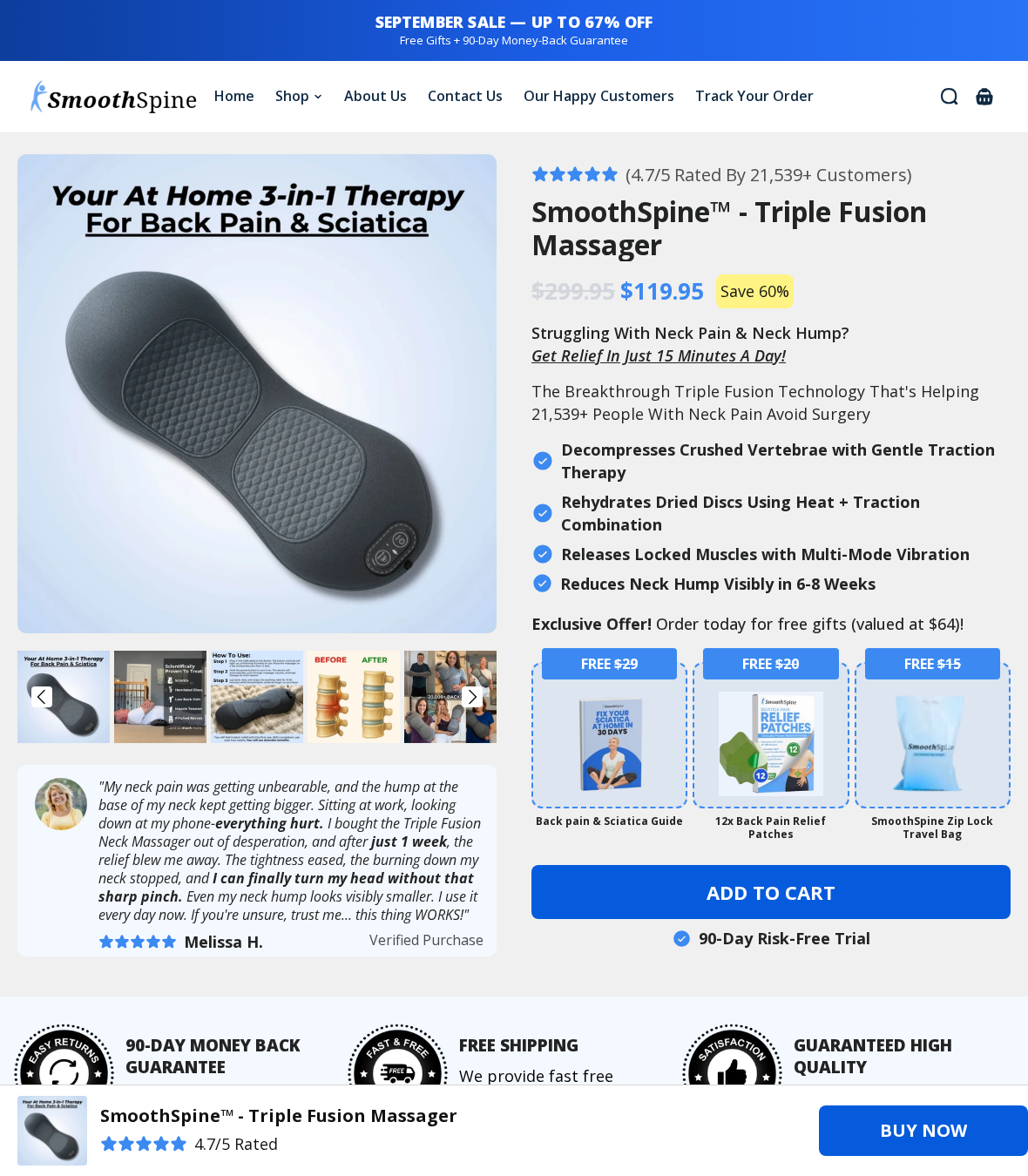
The SmoothSpine Triple Fusion massager is marketed for neck pain, posture, and a visible neck hump. Its presentation makes using it at home sound straightforward.
For someone tired of discomfort, that is an appealing combination. The purchase deserves closer attention before the medical promises start making the decision for you.
Overview
The medical claims are stronger than the available product evidence
Our SmoothSpine Neck Massager review found substantial promises about disc rehabilitation, posture, and avoiding more expensive treatment. The page does not provide a verifiable clinical report supporting them.
The problem is not that heat or massage can never feel helpful. It is the jump from possible comfort to a specific product claiming to reverse spinal problems.
The neck landing page invokes a clinical trial, gives impressive percentages, and compares its results with major treatment options. Those figures need independently checkable documentation.
A person should not cancel treatment or diagnose the cause of a neck hump from that presentation.
The guarantee comes with real conditions
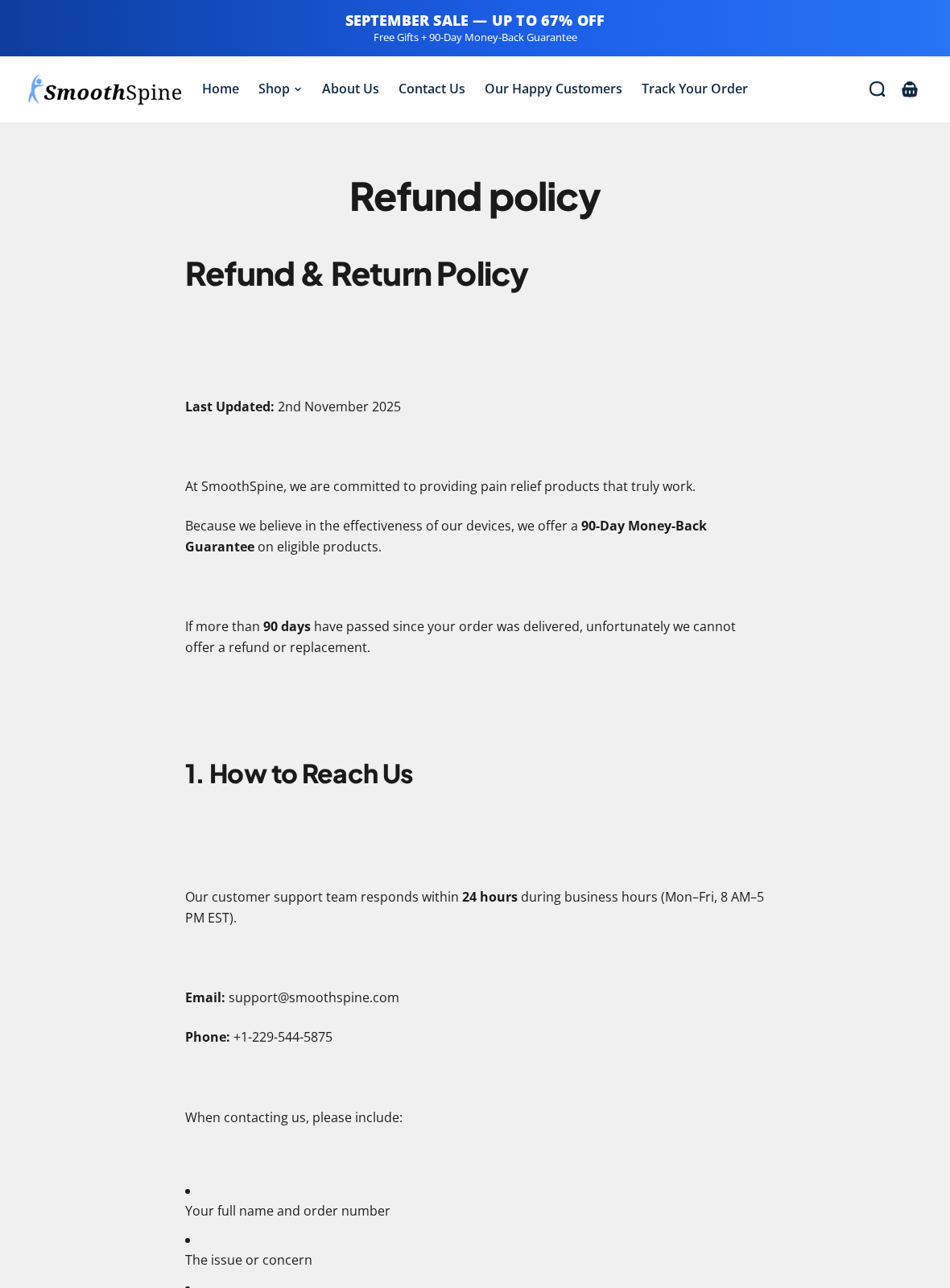
The reviewed refund policy describes a 90-day allowance for eligible physical devices, but also requires authorization and customer-paid postage to a Nevada warehouse.
Important distinctions include:
- A device return is different from returning consumables, free accessories, or a digital warranty.
- A satisfaction guarantee does not establish a clinical benefit.
- A future subscription cancellation does not automatically reverse a shipped order.
- A model photograph does not authenticate a named patient testimonial.
- A neck-device claim should be checked separately from a back-device campaign.
Our recommendation
We would not buy this device expecting verified disc repair, permanent rehabilitation, or a replacement for professionally recommended care.
If you consider it for comfort, first ask a clinician whether this type of heat, vibration, and traction is appropriate for your condition.
Then obtain the exact product specifications, complete price, and return costs. Those questions should be settled before you accept a supposedly risk-free purchase.
This report examines the product’s neck-focused offer. Our separate back-massager billing investigation covers a related sales story. Different advertising labels do not establish different hardware.
What the Triple Fusion Neck Massager Claims to Do
The landing page combines three features: traction, heat, and vibration. Each is presented as contributing to a broader process of spinal recovery.
However, having three functions does not establish that they deliver every advertised outcome. You need evidence for the actual device, settings, users, and treatment conditions.
A change in how a person’s neck feels immediately after a session is different from a durable change in the underlying condition.
Similarly, an anatomical illustration showing more space between vertebrae does not demonstrate that a consumer device repaired a damaged disc.
The phrase medical-grade also needs clarification. Ask which specification, certification, or regulatory status the seller means, and whether it applies to the exact model.
The captured offer displayed $119.95 against $299.95, with free promotional items. That is the observed offer, not a verified previous selling price or future checkout total.
Its product artwork described back pain and sciatica while the adjoining sales text focused on the neck. Obtain the manual and intended-use details before assuming suitability.
Do not infer approval or suitability from scientific diagrams, a white coat, or a clinical-looking comparison chart. Those are presentation choices until substantiated.
How the SmoothSpine Neck Massager Sales Funnel Works
Step 1: The page ties everyday pain to an easily explained cause
The offer gives a simple account of why discomfort and posture problems occur, then presents the massager as the tool that addresses that explanation.
A straightforward story can feel reassuring after a long period of pain. It can also make different conditions seem more alike than they really are.
A visible bump at the neck or upper back can have different causes. A sales page cannot establish the cause in an individual person.
MedlinePlus explains that a dorsocervical fat pad is not itself a diagnosis. Appropriate assessment matters before choosing a claimed solution.
If the seller’s explanation does not fit your actual condition, the proposed benefit may be irrelevant. Buying the device will not resolve that missing diagnosis.
Bring the advertisement to your clinician if you are unsure. Ask about the particular claimed mechanism, rather than simply whether massage is generally helpful.
Step 2: Clinical-looking numbers make the promise seem settled
The neck page describes a 90-day trial with 312 participants and advertises these results:
- 91% experienced significant pain reduction within the first week.
- 87% showed improved disc height on imaging after six weeks.
- 89% reduced neck-hump appearance by at least 40%.
These are the seller’s assertions, not findings we independently authenticated. The claim presentation does not provide enough information to evaluate how those outcomes were obtained.
A useful report would identify the researchers, participant selection, comparison group, actual device, measurements, adverse effects, and complete results.
Ask whether a trial was published or registered, and request the identifying reference. A percentage by itself cannot show the quality of the research behind it.
Also ask what significant pain reduction means in that study. A clinically meaningful outcome needs a definition, not simply an impressive-looking number.
The absence of an accessible report on the reviewed page does not prove that a study never existed. It means the advertised certainty remains unsupported for buyers.
Step 3: Testimonials and treatment comparisons strengthen the emotional pull
The page includes accounts about dramatic relief and avoiding expensive treatment. Someone facing an intimidating medical decision may understandably find those stories compelling.
A testimonial cannot establish that the massager caused an imaging change or made surgery unnecessary. Clinical decisions require more information than an advertisement supplies.
Nor can a seller-created chart establish that its device outperforms physical therapy, injections, or surgery across different conditions and patients.
Comparisons are meaningful only when they use appropriate populations, defined outcomes, comparable follow-up, and reliable sources. A list of prices beside percentages is insufficient.
The site’s disclaimer also says people shown in photographs are models unless otherwise stated. Treat that as a reason to verify patient stories separately from their illustrations.
It does not prove every testimonial is fabricated. It does mean the photograph should not be taken as identification of an independently verified patient.
Step 4: A guarantee appears to remove the purchase risk
The neck offer advertises a results-or-refund proposition. That can make uncertain evidence seem less important because the shopper expects to recover the money if disappointed.
The written policy, however, limits eligibility and requires an approved return. Read which items are covered and how the seller handles different kinds of problems.
The reviewed policy excludes several consumables, promotional items, and digital plans from ordinary device returns. A bundle should not be assumed to have one uniform refund rule.
It also says buyers pay return shipping and do not receive prepaid labels. That is a real cost even when a device qualifies for a refund.
For a damaged or defective item, the policy asks for prompt documentation. Do not spend weeks repeatedly trying a faulty unit while waiting for a promised benefit.
Check your own order for continuing billing or optional plans. Their appearance in a general policy does not prove every neck-device purchase includes a subscription.
Step 5: The delivered device must be evaluated without the sales narrative
If a package arrives, check the model, manual, condition, accessories, and electrical information against the order. Delivery alone does not authenticate the medical claims.
Follow the supplied safety instructions and professional advice appropriate to you. Do not increase heat or traction simply because the expected result has not appeared.
The landing page lists multiple heat settings, including a high setting of 65°C. That is a claimed specification, not a recommended temperature for your skin or condition.
People with reduced sensation may not recognize excessive heat normally. Ask a clinician before using a heated device when relevant health conditions or medications could affect safety.
Stop and obtain appropriate medical advice if use produces concerning symptoms. Do not interpret worsening discomfort as proof that the device is working.
SmoothSpine Company, Support, and Return Checks
The claimed clinical work needs a responsible source
A product described as developed with specialists should identify enough information to verify that role. The claim presentation reviewed does not supply a complete, checkable clinical report.
Ask who conducted the research and which model they tested. An answer about a different massager or general traction research does not establish the advertised result.
The party accepting payment and the party manufacturing a device may also differ. Obtain the exact merchant identity from the receipt rather than the brand logo alone.
The warehouse is a return destination, not clinical proof
The published policy refers to a Nevada returns warehouse. That location does not establish where the device was engineered, manufactured, or medically tested.
Get the full return address after authorization and ask about likely postage costs. A large or bundled package can make a buyer-funded return less attractive.
We did not establish this neck device’s country of manufacture. Generic appearance or overseas supply-chain similarities are not sufficient evidence to label its origin.
Support must answer specific purchase questions
The reviewed policy lists support@smoothspine.com and +1 (229) 544-5875. We did not test response speed or call-handling quality.
Before buying, ask whether the selected order includes any continuing payments, what the guarantee covers, and who pays shipping for the remedy you may need.
A response should address the exact device and package. A broad statement about customer satisfaction does not clarify exclusions or verify clinical percentages.
Specifications and safety records matter independently
Request the manual, manufacturer information, power requirements, safety warnings, and relevant certification details. Verify that any cited record matches the model being sold.
A statement that materials are medical-grade does not tell you which testing was performed or whether the device is appropriate for your particular neck problem.
The site’s comfort-oriented disclaimer also deserves comparison with its stronger medical presentation. Read the complete claims together rather than selecting whichever sentence sounds most reassuring.
Comfort, Rehabilitation, and Medical Decisions Are Different Outcomes
There is research on massage for certain pain conditions, but results and evidence quality vary. NCCIH’s massage guidance provides a broader clinical context.
That background does not establish the performance of this consumer device. General research should not be presented as a trial of a particular branded massager.
Temporary comfort may still have value to someone using an appropriate device safely. It should be described honestly rather than inflated into permanent repair.
If a treatment recommendation is based on examination or imaging, discuss changes with the professional responsible for that care. A sales testimonial cannot replace the assessment.
The strongest buying decision is therefore conditional on a realistic purpose: appropriate comfort use, clear specifications, and acceptable costs, rather than a promised cure.
What to Do If You Ordered the SmoothSpine Neck Massager
-
Confirm the exact model and order. Save the neck-device offer, receipt, amount, package contents, and guarantee. Distinguish it from other SmoothSpine products.
Photograph what arrived before discarding packaging. The model and accessories help establish a wrong-item, damage, or specification complaint.
-
Keep medical decisions separate from purchase recovery. Ask an appropriate clinician about use if you have a diagnosed neck condition or concerning symptoms.
Do not cancel prescribed treatment because the advertisement promised disc rehabilitation. Obtaining a refund does not resolve the underlying health problem.
-
Request substantiation for the promised results. Ask for the trial identifier or publication supporting the specific neck-device claims that affected your decision.
Keep the response. If it provides only testimonials or general research, explain precisely why that does not answer your question about this model.
-
Request an authorized return promptly. State the reason and preserve the deadline. Ask for the return address, required contents, refund amount, and postage responsibility.
For damage or a fault, provide clear evidence immediately. Describe that problem separately from dissatisfaction with a correctly functioning product’s results.
-
Check continuing payments on your actual receipt. If an unwanted subscription exists, request cancellation and retain confirmation before the next charge.
Do not assume returning the device also cancels a separate consumable order or plan. Ask support to identify each agreement and its status.
-
Escalate an unresolved purchase problem accurately. Give your payment provider the sales claim, order terms, correspondence, and return or delivery evidence.
Ask about the applicable deadline and process. A precise complaint is more useful than claiming every device or purchase is fraudulent without supporting evidence.
Frequently Asked Questions
Is the advertised clinical trial independently verified?
We did not authenticate it. The reviewed claim presentation lacks enough study information to evaluate the asserted outcomes. Request a publication or identifying reference.
Can temporary relief prove that a disc was repaired?
No. A change in comfort is a different outcome from documented rehabilitation. The advertised medical conclusion needs appropriate clinical evidence of its own.
Does every neck hump have the cause described in the advertisement?
No. An individual’s cause requires assessment. A seller’s general explanation should not be used to diagnose a visible change or select treatment automatically.
Are SmoothSpine returns free?
The reviewed policy requires customer-paid return shipping to its warehouse and does not provide prepaid labels. Confirm any remedy-specific costs for your order.
Is every neck-massager purchase an automatic subscription?
We did not establish that. The policy describes subscription arrangements, but your order and consent must determine whether one applies to your purchase.
Is this a confirmed scam product?
The device may provide comfort, but the reviewed evidence does not substantiate the stronger medical results. We recommend withholding a treatment-based purchase until those claims are supported.
The Bottom Line
SmoothSpine’s neck-device page makes medical promises that its available evidence does not establish. A guarantee and testimonial do not fill that gap.
Do not use the pitch to replace clinical care. If considering a comfort device, verify suitability, specifications, total charges, and the practical cost of returning it.








